Korean Red Ginseng (홍삼): Korea's Prized Adaptogenic Root
Discover Korean Red Ginseng (홍삼, Hong Sam) — how steaming transforms Panax ginseng into a ginsenoside-rich root with 2,000 years of Korean heritage, from Goryeo Dynasty tributes to modern wellness research.
Medical Disclaimer: This content is for educational and informational purposes only and is not medical advice. The information presented is not intended to diagnose, treat, cure, or prevent any disease. Always consult a licensed healthcare practitioner before starting any new herbal practice or supplement. Statements regarding traditional herbal use have not been evaluated by the FDA.
Affiliate Disclosure: This article contains affiliate links. We may earn a commission if you purchase through these links, at no additional cost to you. We only recommend products we believe align with our editorial standards.
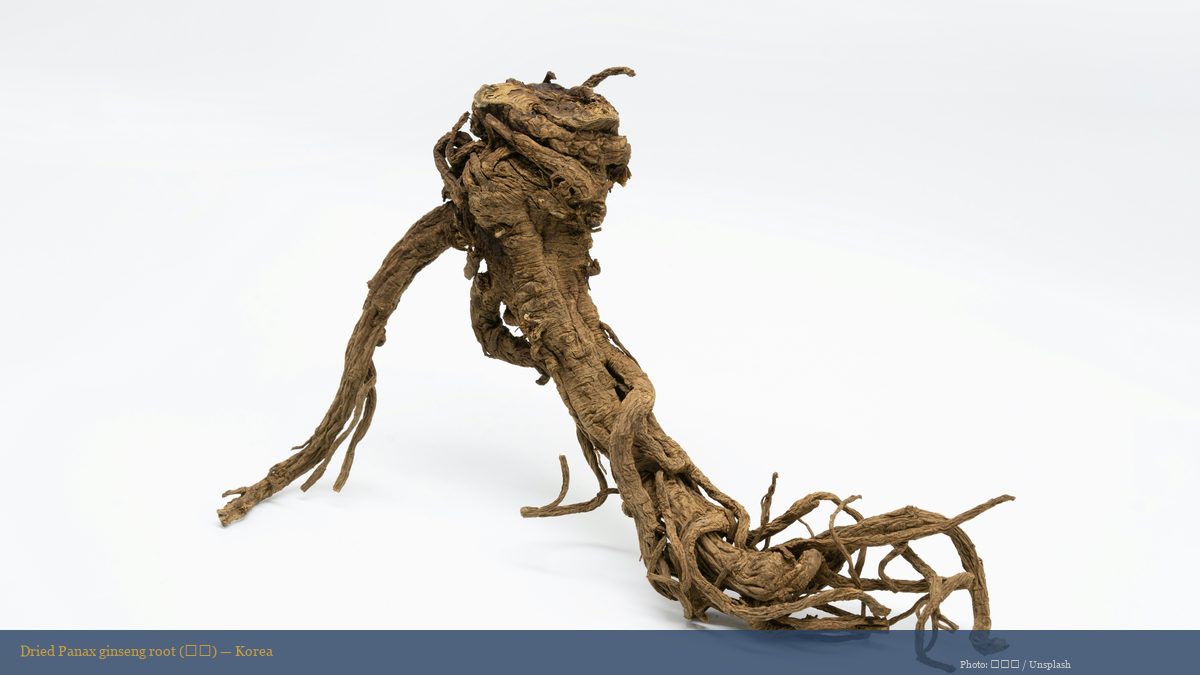
There are herbs that are popular, and then there are herbs that have shaped the identity of an entire nation for over two thousand years. Korean Red Ginseng — known in Korean as 홍삼 (Hong Sam) — belongs firmly in the second category. Unlike most herbal roots simply dried and ground, red ginseng undergoes a deliberate transformation: fresh Panax ginseng C.A. Meyer roots are steamed at high temperatures and then dried, a process that turns the pale, cream-coloured raw root into the characteristic deep amber-red root that has made Korea famous in the global wellness world.
What makes this transformation remarkable is not just the colour change — it is chemistry. The steaming process creates an entirely new set of bioactive compounds, most notably ginsenoside Rg3, which is found only in red ginseng and not in its unprocessed white ginseng counterpart. This molecular distinction helps explain why Korean Red Ginseng has earned its own extensive body of scientific research and why South Korea's food safety authority officially recognises it for multiple wellness functions under Korean health-functional food law.
History and Heritage: Korea's Royal Root
The story of Korean Red Ginseng begins in the Goryeo Dynasty (고려시대, 918–1392 CE), from which the very word "Korean" ginseng takes its name. During the Goryeo period, ginseng was produced in large quantities across the Korean peninsula and became one of the most prized commodities in East Asian trade networks. The China-facing tribute system placed Korean ginseng at the centre of diplomacy — roots were sent as gifts to the imperial court and carried enormous symbolic and commercial value [Korea.net, Korean Ginseng Heritage].
Two regions became synonymous with the finest Korean ginseng: Kaesong (개성), now located in North Korea and home to the legendary Kaesong merchants (개성상인) who built their fortunes on the ginseng trade, and Geumsan (금산) in South Chungcheong Province, where ginseng farming has been documented for over 500 years and which remains Korea's largest ginseng trading hub today. The Geumsan Ginseng Market handles millions of roots annually and is considered the spiritual home of Korean ginseng culture.
The tribute ginseng system (진상품, jinsangpum) formalised ginseng's royal status during the Joseon Dynasty (1392–1897). Detailed records in the Joseonwangjosilok — the annals of the Joseon kings spanning 518 years — reveal that ginseng was managed as a state-controlled tribute called gongsam, overseen by the royal treasury. Analysis of over 384,000 historical records shows that kings Jeongjo, Yeongjo, Sejong, and Soonjo showed the highest documented interest in ginseng — using it as a wellness tonic, a diplomatic gift, and a ritual offering [Kim M-H, Oriental Medicine & Pharmacology Archives, 2024]. The emergence of processed red ginseng (홍삼) is documented in 18th-century Joseon records, reflecting advances in cultivation and processing technology that enabled the roots to be preserved for long-distance trade.
This deep historical embedding — two millennia of cultivation, royal patronage, and cross-continental trade — is why Korean Red Ginseng occupies a uniquely authoritative position in the Korean cultural imagination. It is not merely an herbal supplement; it is a living piece of Korean heritage.
The Red Transformation: Why Steaming Matters
The difference between white ginseng and red ginseng is not simply a matter of processing preference — it is a fundamental chemical transformation that creates an entirely different molecular profile.
White ginseng is simply the fresh root peeled and sun-dried or air-dried at low temperatures. It retains the original ginsenoside profile found in the living plant: predominantly polar ginsenosides such as Re, Rb1, Rc, Rb2, and Rg1.
Red ginseng is produced by steaming the fresh root at 95–100°C for two to three hours, followed by careful sun-drying. This heat treatment triggers a cascade of chemical reactions — primarily demalonylation (loss of malonyl groups) and deglycosylation (removal of sugar units) — that transform the polar ginsenosides into a new set of less-polar, pharmacologically distinct compounds.
The most significant product of this transformation is ginsenoside Rg3, a compound essentially absent in white ginseng that increases sharply during steaming. Research published in Scientific Reports documented that the total number of ginsenoside types expands from 18 in fresh ginseng to 42 after steaming, with optimal conditions at 100°C for one hour [Yao et al., Scientific Reports, 2021]. The characteristic deep amber-red colour of red ginseng is itself a product of these Maillard-type reactions during heat processing — the colour signals the chemical transformation rather than merely indicating oxidation or age.
The traditional Korean steaming method, documented as having been refined over more than 1,000 years since the Goryeo Dynasty, was developed empirically long before modern chemistry could explain why it worked. Today, researchers understand that the transformation also improves the relative bioavailability of certain ginsenosides, since the less-polar forms produced by steaming have smaller molecular structures and may be absorbed more readily across the intestinal wall [Kim et al., Evidence-based CAM, 2022].
Key Bioactive Compounds in Korean Red Ginseng
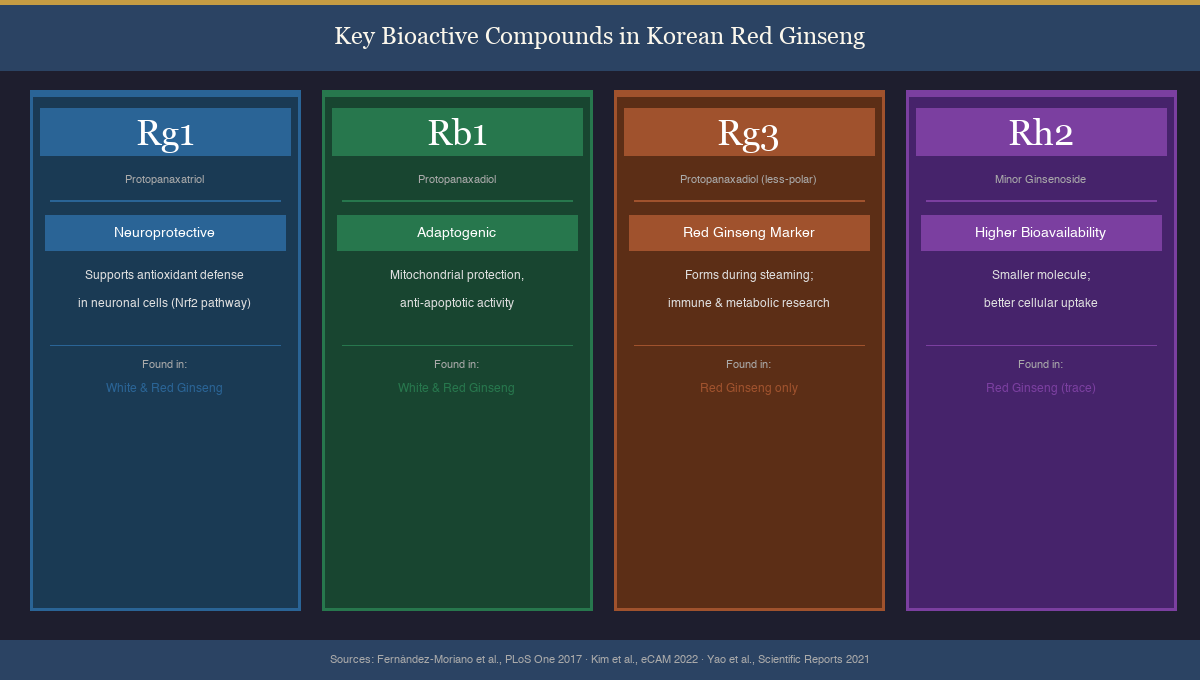
Korean Red Ginseng contains a complex web of bioactive molecules, but the most studied — and most central to its identity — are the ginsenosides: a family of steroidal saponins unique to the genus Panax. Red ginseng contains over 40 ginsenoside types; four are particularly important for understanding its biological character.
Ginsenoside Rg1 — Neuroprotective Pioneer
Rg1 belongs to the protopanaxatriol family and is present in both white and red ginseng. It is among the most studied ginsenosides for neuroprotection. Laboratory research has shown that Rg1 activates the Nrf2 transcription factor — a master regulator of the cell's antioxidant defence system — leading to increased expression of cytoprotective enzymes. Pre-treatment with Rg1 significantly reduced markers of oxidative stress and protected mitochondrial membrane potential in neuronal cell models [Fernández-Moriano et al., PLoS One, 2017].
Ginsenoside Rb1 — Adaptogenic Foundation
Rb1 is the most abundant ginsenoside by weight in whole ginseng root. A protopanaxadiol-type compound, it has shown anti-apoptotic activity in cell studies — meaning it may help protect cells from programmed cell death under oxidative stress conditions. Research on Rb1 in neuronal models found preserved mitochondrial calcium homeostasis and reduced pro-apoptotic protein expression at doses of 2.5 μM [Fernández-Moriano et al., 2017]. Like Rg1, Rb1 shows poor blood-brain barrier permeability, which is a key consideration for research interpretation.
Ginsenoside Rg3 — The Red Ginseng Marker
Rg3 is the compound that most distinguishes red ginseng from its white counterpart. Produced during steaming through heat-induced transformation of polar precursors, Rg3 is found in negligible amounts in fresh or white ginseng but accumulates substantially in the red ginseng. It is the primary constituent that has attracted research interest in immune function and metabolic wellness. Because Rg3 is uniquely associated with the steaming process, its presence — and its concentration — is used as a quality marker in standardised Korean Red Ginseng products.
Ginsenoside Rh2 — Bioavailability Advantage
Rh2 is a minor ginsenoside present in trace amounts in red ginseng. Its significance lies in its smaller molecular structure compared to the major ginsenosides — this reduced size is associated with better cellular uptake. Pharmacokinetic research in healthy Korean volunteers found that less-polar minor ginsenosides including Rh2 and Compound K showed dramatically higher absorption rates compared to the primary polar ginsenosides, particularly when roots underwent additional bioconversion processing [Kim et al., eCAM, 2022].
Beyond ginsenosides, Korean Red Ginseng also contains acidic polysaccharides (particularly ginsan, studied for immune-modulating properties), malonyl ginsenosides (which convert to more active forms during steaming), panaxans (a type of polysaccharide), phenolic compounds, and various amino acids. The whole-root complexity is considered important — isolated ginsenosides behave differently in research than whole-root extracts.
How Do People Use Korean Red Ginseng Today?
Korean Red Ginseng is one of the most commercially developed herbal products in the world, with an entire infrastructure of standardised products, government-regulated quality grades, and a domestic consumption culture unlike any other herbal tradition.
Red ginseng extract (홍삼 엑기스, Hong Sam Ekgiseu) is perhaps the most iconic form. A thick, dark, syrup-like concentrate, it is produced by boiling red ginseng roots repeatedly and reducing the liquid to a dense paste. The concentrated extract is consumed by dissolving a small spoonful in warm water to make a tonic drink, or taken directly. Leading Korean brands like Korea Ginseng Corp (정관장, Jung Kwan Jang) produce standardised extracts guaranteeing specific ginsenoside concentrations per serving.
Hong sam tea (홍삼차) is a lighter daily preparation — tea bags or single-serving liquid sachets containing red ginseng powder or diluted extract. These are widely consumed in Korean households as an everyday wellness drink, particularly in the autumn and winter months when Korean wellness tradition emphasises warming, tonifying practices.
Hong sam tonic drinks are single-serve liquid ampules — small glass vials containing a measured dose of red ginseng extract — widely sold at Korean pharmacies and health stores. These are a popular gift item, especially around Korean New Year (설날) and Chuseok, when wellness gifting is a central cultural practice.
Red ginseng candy and confections (홍삼 캔디) make the distinctive bitter-sweet flavour of red ginseng accessible in a convenient daily format. These are among the most widely available red ginseng products and are often the first introduction to the flavour for younger consumers and international visitors.
Individual responses to Korean Red Ginseng vary considerably; what works well as part of one person's daily wellness routine may not suit another, and personal experimentation under practitioner guidance is always recommended.
What Does the Research Say About Korean Red Ginseng?
Korean Red Ginseng is among the most clinically studied herbal products globally — a distinction partly driven by significant South Korean government and industry investment in ginseng research over several decades. The research base is more robust than for most adaptogens, though the picture remains nuanced.
Immune function is perhaps the area with the strongest human clinical evidence. A randomised, double-blind, placebo-controlled trial published in the Journal of Ginseng Research found that 100 healthy adults taking 2g of Korean Red Ginseng daily for 8 weeks showed significant increases in T cells (CD3, CD4, CD8) and B cells compared to placebo, with no clinically significant adverse effects [Yoo et al., Journal of Ginseng Research, 2021]. This suggests that regular use may support the adaptive immune response in healthy individuals — though researchers note that findings in healthy subjects do not necessarily translate directly to therapeutic benefit in illness.
Physical fatigue has been addressed in multiple trials. An 8-week, double-blind, placebo-controlled study of 107 subjects undergoing sub-high-intensity exercise found that Korean Red Ginseng significantly reduced blood lactate levels, creatine phosphokinase (CK) — a muscle damage marker — and subjective fatigue compared to placebo [Yang et al., Journal of Ginseng Research, 2021]. The NCCIH's 2023 review of ginseng research found that Asian ginseng may have a small beneficial effect on general fatigue, while noting the evidence remains preliminary [NCCIH, Asian Ginseng].
Cognitive function is an area of research interest but with more cautious conclusions. The NCCIH notes limited evidence suggesting possible benefits for abstract thinking and reaction time in middle-aged adults, but not consistently in younger populations. Studies examining Korean Red Ginseng for memory and concentration have produced mixed results, and current evidence does not support strong claims in this area.
Korean government recognition is a distinctive feature of red ginseng's regulatory context. South Korea's Ministry of Food and Drug Safety (식품의약품안전처, MFDS) officially recognises Korean Red Ginseng for seven functional health claims under health-functional food regulations, including immunity enhancement, fatigue improvement, blood flow support, antioxidant activity, memory function support, menopausal wellness, and blood glucose regulation. This governmental recognition — based on a review of clinical and preclinical evidence — is not a cure claim but reflects a formal assessment of the research base as supporting these traditional wellness functions [Korea Consumer Agency / MFDS standards, 2021].
In all areas, it is important to note that most studies use standardised red ginseng extracts at specific doses over defined periods. The compound and dose delivered by a daily Hong Sam candy or a light tea may differ substantially from clinical trial protocols. Individual experiences vary considerably.
Traditional Preparation and Classic Forms
Long before modern extraction technology, Korean households and court practitioners developed refined methods for preparing and consuming red ginseng that balanced potency, palatability, and practicality.
The classic preparation is a simple decoction: red ginseng slices are simmered in water for one to two hours over low heat, sometimes combined with Korean dates (대추, daechubarrel) and honey, to produce a warming tonic liquid. This preparation is still common in Korean homes and is considered the most traditional way to consume the root. The flavour — earthy, slightly bitter, with a distinctive warming and slightly sweet finish — is an acquired taste that Koreans often describe as deeply comforting.
Insam cha (인삼차), or ginseng tea, is a lighter daily preparation using thin slices of red ginseng root steeped in near-boiling water. This is distinct from the concentrated extract tonic — it is a gentle, everyday drink rather than a therapeutic dose. Korean wellness tradition suggests drinking warm ginseng tea in the morning to begin the day with energy, or in the early evening to aid recovery.
Hongsam ju (홍삼주) — red ginseng liquor — is a traditional preparation in which red ginseng roots are infused in rice wine or Korean soju. This form has been used in Korean traditional practices for centuries, though it requires careful attention to total alcohol consumption.
Modern preparations have expanded enormously. Today's Korean consumers have access to red ginseng in extract form, capsules, liquid ampoules, functional beverages, skincare products (the ginsenoside Rg3 has attracted significant interest in anti-ageing cosmetics), and even ginseng-infused fermented foods. The Korean beauty and wellness industry has leveraged red ginseng's centuries-old reputation to build an internationally recognised category.
Quality and Grading: What Makes the Best Red Ginseng?
Korean Red Ginseng quality is governed by one of the most formalised grading systems of any herbal product in the world, reflecting the deep cultural and commercial investment in maintaining standards.
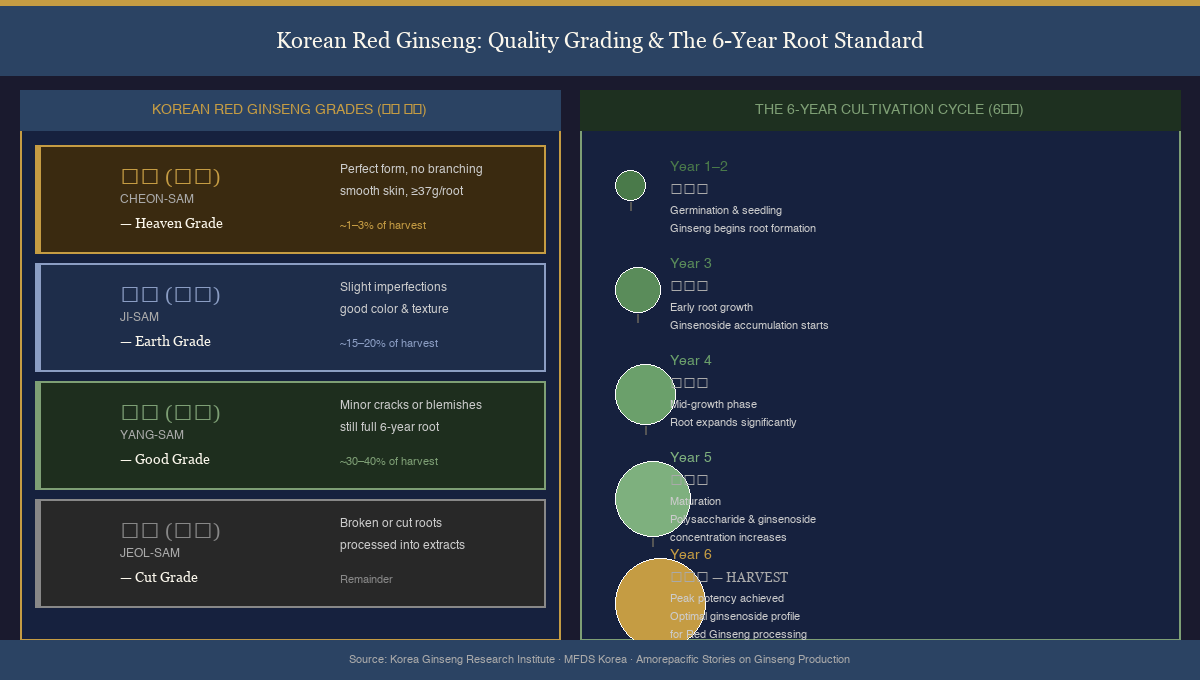
The traditional three-tier grading system uses the designations 천 (Cheon / Heaven), 지 (Ji / Earth), and 양 (Yang / Good) — with Heaven representing the highest quality. Heaven-grade roots possess perfect, unbroken form with smooth skin and a weight of at least 37 grams per root; they represent only 1–3% of any harvest. Earth-grade roots show slight imperfections but maintain good colour and texture. Good-grade roots have minor cracks or blemishes but are still complete 6-year roots. Cut-grade (절삼) roots — broken, branched, or otherwise imperfect — are typically processed into concentrated extracts rather than sold whole.
The 6-year root standard (6년근) is perhaps the most important quality indicator. Korean Red Ginseng regulations require that roots be grown for exactly six years before harvest — not four years (which are cheaper but significantly lower in ginsenoside content) and not more than six years (which risks root degradation). Six-year-old roots have reached their peak ginsenoside accumulation: the polysaccharides, Rg1, Rb1, and crucially the Rg3 formed during subsequent steaming, are at their highest natural concentration. Reputable Korean brands include year-of-harvest and root-age certification on packaging.
When purchasing Korean Red Ginseng products internationally, the Korea Ginseng Research Institute and MFDS-certified products guarantee this 6-year standard and undergo third-party verification of ginsenoside concentration per serving. The Korean Consumer Agency (한국소비자원) has documented significant variation in ginsenoside content between brands — a practical reminder that product quality varies considerably even within the Korean market, making certification marks meaningful [Korea Consumer Agency, 2021].
Important Precautions and Considerations
Korean Red Ginseng's long history of use and robust research profile does not mean it is without important precautions. The following considerations apply to any serious discussion of red ginseng as a wellness practice.
- Drug interactions — warfarin: Ginseng has been documented to interact with warfarin (an anticoagulant / blood thinner). Studies suggest ginseng may reduce warfarin's anticoagulant effect, potentially reducing its protective function. Anyone taking warfarin should consult their prescribing physician before using red ginseng products in any form [NCCIH, Asian Ginseng].
- Blood pressure medications: Ginseng may affect blood pressure and could interact with antihypertensive medications. People managing hypertension with prescription drugs should seek medical advice before adding Korean Red Ginseng to their routine.
- Diabetes medications: Korean Red Ginseng has been studied for blood glucose effects. While this may be of interest in general wellness contexts, it can interact with diabetes medications (insulin, metformin, and others) — potentially affecting blood sugar control in unpredictable ways. Diabetics should always consult their healthcare provider.
- Stimulant-like effects: Some individuals experience insomnia, headache, or increased heart rate — particularly with higher doses or concentrated extracts. Ginseng is often described as energising; for sensitive individuals, evening use may disrupt sleep. Starting with lower doses and observing personal response is prudent.
- Pregnancy and breastfeeding: The NCCIH advises that ginseng is not recommended during pregnancy. Animal studies have raised concerns about potential effects on foetal development. Pregnant and breastfeeding individuals should avoid Korean Red Ginseng supplementation.
- Children: While traditional Korean culture has used gentle ginseng preparations for children in specific contexts, standardised red ginseng extracts and supplements are not recommended for infants and young children without specific medical guidance.
- Duration of use: Short-term use (up to 6 months) is considered generally safe for most healthy adults. Long-term safety data is more limited. Periodic breaks in use are often suggested in both traditional practice and by natural health practitioners.
- Individual responses vary considerably: The same dose of red ginseng may produce a noticeable energising effect in one person and no perceptible effect in another, depending on individual metabolic differences, gut microbiome composition (which affects ginsenoside conversion), age, and health status. Personalised experimentation under qualified guidance is always recommended.
Frequently Asked Questions
What is the difference between Korean Red Ginseng and white ginseng?
The key difference is the processing method and the resulting chemical profile. White ginseng is simply the fresh Panax ginseng root that has been peeled and air-dried, retaining its original ginsenoside composition. Korean Red Ginseng is steamed at 95–100°C before drying, which triggers chemical transformations that create new ginsenosides — most notably Rg3 — that are essentially absent in white ginseng. Research has documented that steaming expands the ginsenoside types from 18 in fresh root to 42 in the processed red form. The steaming also gives red ginseng its characteristic dark amber colour, earthier flavour, and traditionally longer shelf life.
What does Korean Red Ginseng taste like?
Korean Red Ginseng has a distinctive flavour that is quite different from most herbal teas or roots. It is earthy, moderately bitter, and slightly astringent, with a warm, lingering sweetness that develops after swallowing — this finish is often described as characteristic of quality red ginseng. Concentrated extracts are intensely flavoured and somewhat syrupy. Lighter preparations like red ginseng tea are gentler. Many Koreans describe the taste as ssal ssalhan (쌀쌀한) — somewhat austere but with an inner warmth — and consider the acquired taste itself part of the wellness experience. International consumers often add honey to balance the bitterness.
How long before Korean Red Ginseng takes effect?
Research trials showing immune and fatigue effects have typically used 8-week protocols, suggesting that consistent use over several weeks is more relevant than single-dose effects. Clinical studies on immune cell changes found statistically significant results at 8 weeks of daily use. Individual responses vary considerably — some people report noticing changes in energy or general wellbeing within 2–4 weeks of consistent use, while others notice little change. Korean wellness tradition generally views tonifying herbs as practices requiring seasonal continuity rather than immediate dramatic effects.
Does Korean Red Ginseng interact with medications?
Yes — several documented interactions warrant attention. The most significant are with warfarin (blood thinner), where ginseng may reduce anticoagulant effectiveness; with diabetes medications, where ginseng's blood sugar effects may create unpredictable interactions; and with blood pressure medications. The NCCIH recommends discussing ginseng use with your healthcare provider if you take any prescription medications, particularly anticoagulants, diabetes drugs, or antihypertensives. Ginseng may also interact with some immunosuppressant medications. This is not a complete list — always consult your pharmacist or physician.
Is Korean Red Ginseng safe to take every day?
For most healthy adults, Korean Red Ginseng consumed at standard doses (typically 1–3g of standardised extract per day) appears safe for periods of up to 6 months based on clinical trial evidence. Korean wellness tradition and South Korea's MFDS guidelines endorse regular daily use at established serving sizes. However, health circumstances vary considerably — those with cardiovascular conditions, autoimmune disorders, hormone-sensitive conditions, or who take medications should consult a healthcare practitioner before establishing a daily regimen. Taking periodic breaks (e.g. after 3 months of daily use) is a common practice recommendation.
Why does Korean Red Ginseng require 6-year-old roots?
The 6-year standard is grounded in the chemistry of ginsenoside accumulation. Studies have shown that Panax ginseng roots accumulate ginsenosides progressively over their growth cycle, reaching peak concentration around year six. Younger roots (3–4 years) have measurably lower total ginsenoside content and a less developed secondary root structure. Roots left beyond 6 years may begin to degrade rather than continue accumulating beneficial compounds. The 6-year standard, formalised in Korean ginseng regulations, thus represents the scientific optimum — not merely a marketing claim. Premium Korean Red Ginseng products include certification of root age, and reputable brands undergo third-party verification.
About This Article
Written by: Health Diary Editorial Team — researchers and writers specialising in Korean wellness traditions, adaptogenic herbs, and evidence-based wellness content.
Editorial review: This article has been reviewed by the Health Diary editorial team for clarity, structure, and adherence to sourcing standards. Key claims were cross-checked against NCCIH Asian Ginseng guidance, PMC peer-reviewed literature (Fernández-Moriano et al. 2017; Yang et al. 2021; Yoo et al. 2021; Yao et al. 2021; Kim et al. 2022), the Korea Consumer Agency (한국소비자원) comparative report, Korean academic records analysis (Kim M-H, 2024), and Korea.net official cultural documentation. It is not a clinical review and should not replace consultation with a licensed healthcare practitioner.
Reviewed on: June 14, 2026.
Editorial process: We cite peer-reviewed and government sources where possible. When a clinical reviewer is added to this article, attribution will appear here with verifiable credentials.
References
- Yoo DG, Kim MC, Park MK, et al. (2021). Immuno-enhancement effects of Korean Red Ginseng in healthy adults: a randomized, double-blind, placebo-controlled trial. Journal of Ginseng Research. 45(1):191–198. https://pubmed.ncbi.nlm.nih.gov/33437171/
- Yang Y, et al. (2021). Safety and antifatigue effect of Korean Red Ginseng: a randomized, double-blind and placebo-controlled clinical trial. Journal of Ginseng Research. PMC9270647. https://pmc.ncbi.nlm.nih.gov/articles/PMC9270647/
- Fernández-Moriano C, González-Burgos E, Iglesias I, Lozano R, Gómez-Serranillos MP. (2017). Evaluation of the adaptogenic potential exerted by ginsenosides Rb1 and Rg1 against oxidative stress-mediated neurotoxicity in an in vitro neuronal model. PLoS One. 12(8):e0182933. https://pmc.ncbi.nlm.nih.gov/articles/PMC5558939/
- Yao F, Li X, Sun J, et al. (2021). Thermal transformation of polar into less-polar ginsenosides through demalonylation and deglycosylation in extracts from ginseng pulp. Scientific Reports. 11:1507. https://pmc.ncbi.nlm.nih.gov/articles/PMC7810680/
- Kim H, et al. (2022). Pharmacokinetics of Ginsenoside Rb1, Rg3, Rk1, Rg5, F2, and Compound K from Red Ginseng Extract in Healthy Korean Volunteers. Evidence-based Complementary and Alternative Medicine. PMC8803428. https://pmc.ncbi.nlm.nih.gov/articles/PMC8803428/
- National Center for Complementary and Integrative Health (NCCIH). Asian Ginseng: Usefulness and Safety. U.S. National Institutes of Health. https://www.nccih.nih.gov/health/asian-ginseng
- Kim M-H. (2024). A Study of Ginseng Culture within 'Joseonwangjosilok' through Textual Frequency Analysis. Oriental Medicine & Pharmacology Archives. https://www.e-ompa.org/journal/view.html?uid=384&vmd=Full
- Korea Consumer Agency (한국소비자원). (2021). 홍삼 스틱 제품별 진세노사이드 함량 비교 (Comparative analysis of ginsenoside content in Korean red ginseng stick products). https://www.kca.go.kr/webzine/board/view?menuId=MENU00307&linkId=352&div=kca_2110
- Korea.net — Official website of the Republic of Korea. Treasure Rooted in Fertile Soil: Korean Ginseng Heritage. https://www.korea.net/NewsFocus/Culture/view?articleId=190380
- Amorepacific Stories. Edition 2: The Life of Ginseng and Production Technology. https://stories.amorepacific.com/en/edition-2-the-life-of-g/