Poria (Fu Ling / Phục Linh) Guide: The Pine-Root Fungus & Its Four Grades
Poria (fu ling, phục linh, 茯苓) explained: the pine-root fungus behind the Four Gentlemen Decoction — its four distinct grades, key compounds, uses in soups and formulas, and safety.
Medical Disclaimer: This content is for educational and informational purposes only and is not medical advice. It is not intended to diagnose, treat, cure, or prevent any disease. Always consult a licensed healthcare practitioner before using herbs. Statements regarding traditional herbal use have not been evaluated by the FDA.
Affiliate Disclosure: This article may contain affiliate links. We may earn a commission if you purchase through these links, at no additional cost to you. We only recommend products we believe align with our editorial standards.
Some of the most important herbs in Chinese medicine are not herbs at all. Poria — known as fú líng (茯苓) in China and phục linh in Vietnam — is one of them: not a leaf, root, or flower, but a pale fungus that grows underground on the roots of pine trees. Gentle enough to be eaten as food yet foundational enough to appear in some of the most famous classical formulas, poria is quietly one of the most-used ingredients in the entire tradition. This profile is part of our wider guide to Asian herbal traditions.
What Is Poria (Fu Ling)?
Poria is the dried sclerotium — a compact underground mass — of the wood-decay fungus Wolfiporia cocos (formerly Poria cocos), which grows on the roots of pine trees (Nie et al., 2020). So it is neither a plant nor the familiar cap-and-stem mushroom; it is a hidden fungal body harvested from the soil, then dried and cut into white cubes or slices. In Vietnam it was historically imported from Yunnan and later found growing locally, including around Đà Lạt (Đỗ Tất Lợi).
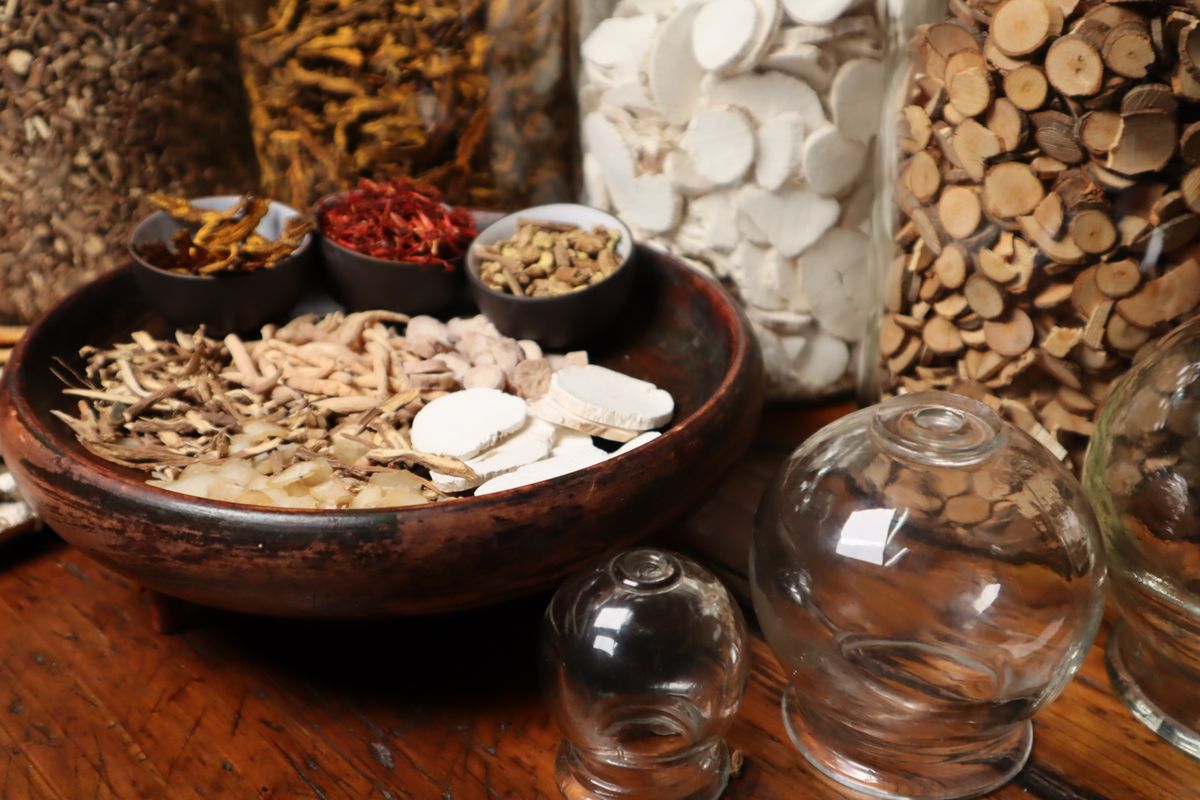
In traditional Chinese medicine, poria is regarded as a sweet, bland, neutral herb with three classic actions: it drains "dampness" (a mild diuretic role), strengthens the spleen and digestion, and calms the mind (Journal of Ethnopharmacology, 2025). It is even described as a "medicine and food of the same origin" (药食同源) ingredient — safe enough to be a food, valued enough to be a medicine.
The Four Grades of Fu Ling
Here is something most articles miss entirely: "fu ling" is not one single thing. Traditional pharmacy divides the fungus into four parts, each with a different use (Guangdong TCM Administration):
- Bai fu ling (白茯苓) — the white inner part; the everyday tonic that both drains dampness and strengthens the spleen. It is "tonifying without being harsh, draining without being aggressive."
- Chi fu ling (赤茯苓) — the reddish part; works more on "damp-heat" and enters the blood level, without the tonic action.
- Fu ling pi (茯苓皮) — the peel/skin; focused on draining water and reducing swelling (edema).
- Fu shen (茯神) — the portion that wraps around the pine root; specifically chosen to calm the mind and settle the spirit, used traditionally for restlessness, palpitations, and poor sleep.
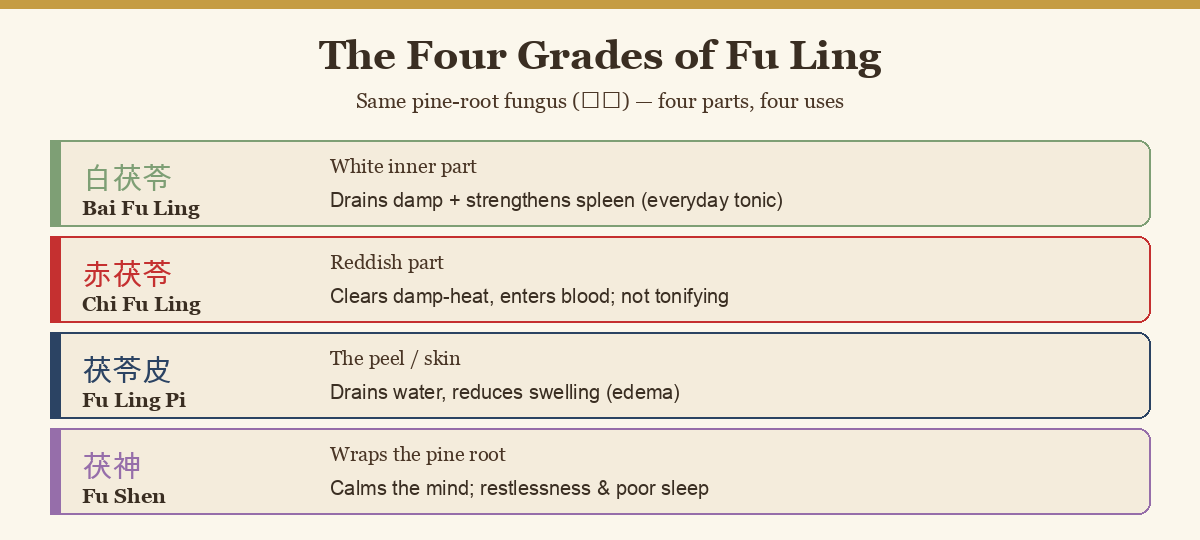
This is genuinely useful to know as a buyer: a formula for sleep may specify fu shen, while one for swelling may call for fu ling pi — they come from the same fungus but are not interchangeable.
What Is Poria Made Of?
Poria's two main compound classes are triterpenoids — including pachymic acid (considered characteristic of poria) and the poricoic acids — and polysaccharides, chiefly a β-glucan called pachyman (Nie et al., 2020). Vietnamese materia medica notes that pachyman can make up a large share of the dried fungus, alongside ergosterol and other sterols (Đỗ Tất Lợi). These are the compounds most modern research focuses on.
Poria in the Classic Formulas
Poria's real importance shows in how often it appears in famous prescriptions. It is one of the four herbs in Si Jun Zi Tang (四君子汤), the "Four Gentlemen Decoction" — the foundational qi-and-spleen tonic — alongside ginseng (or codonopsis), atractylodes, and licorice (Sacred Lotus, Si Jun Zi Tang). From that base grow many larger formulas, including the eight-herb Ba Zhen tonic and the calming Gui Pi Tang family.
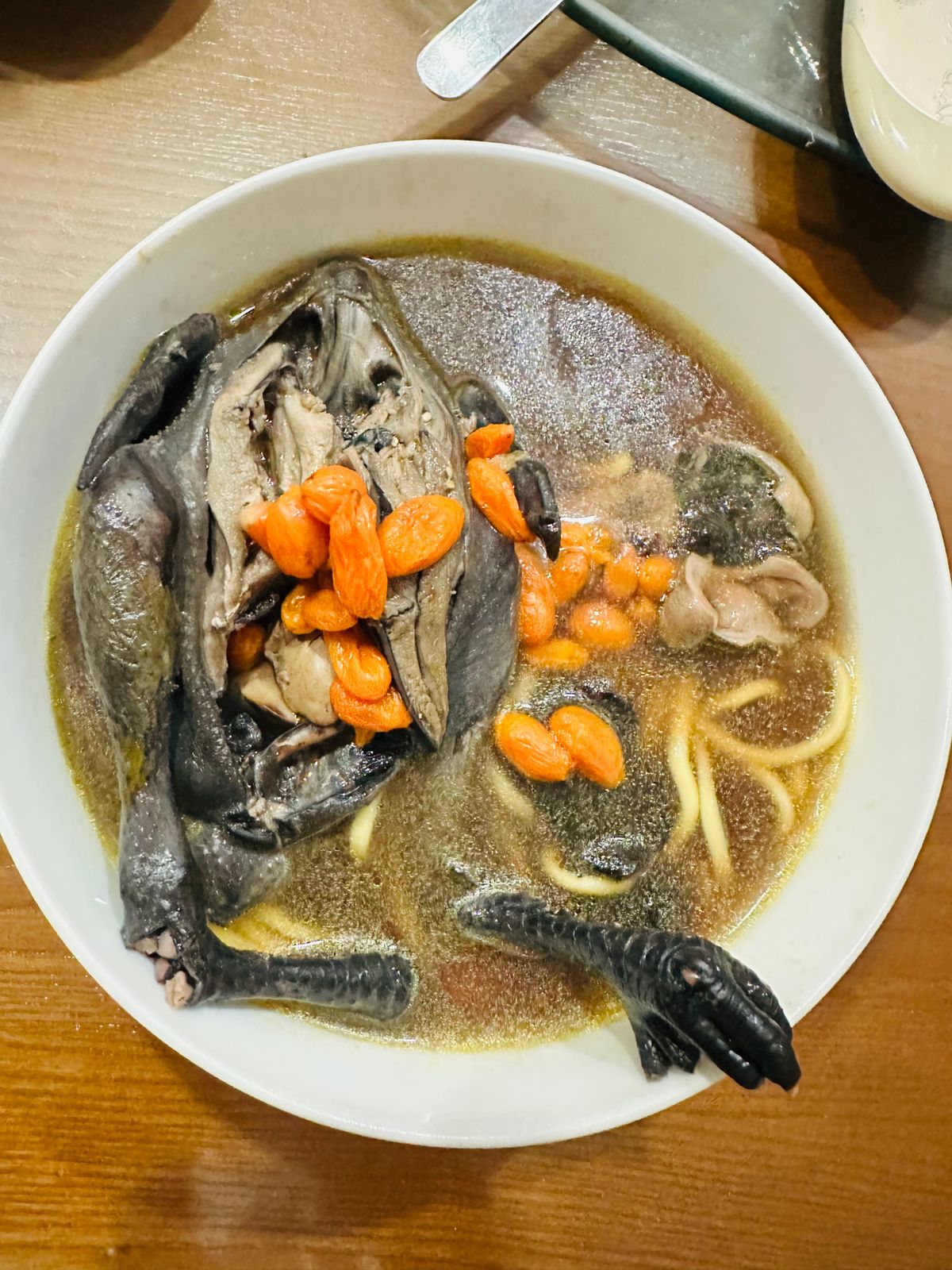
It is also a food. The historic Beijing court snack "fu ling cake" (茯苓饼) is made with poria, and the fungus is a common addition to slow-simmered tonic soups. Its bland, gentle character is exactly why cooks can add it to a family soup pot without overpowering the dish — much like codonopsis and other mild tonics. For more on this style of cooking, see our guide to traditional Asian soups and broths.
What Does Modern Research Say?
Laboratory and animal studies report a broad range of activities for poria's triterpenoids and polysaccharides — diuretic, anti-inflammatory, immune-modulating, sedative, metabolic, and kidney-protective effects, with detailed work on how its triterpenoids act on kidney-signalling pathways (Guo et al., 2025). But the honest picture is cautious: reviews of poria state plainly that large, high-quality human clinical trials are still lacking, and professional drug references conclude there is not yet enough clinical evidence to recommend poria for any specific condition (Drugs.com).
In other words, poria is a time-honoured, gentle, food-grade ingredient with promising but still largely preclinical science behind it. Enjoy it for its role in traditional cooking and formulas, not as a proven treatment. Individual responses vary considerably.
How Is Poria Used?
Poria is most often simmered as part of a herbal decoction (as in Si Jun Zi Tang), added to tonic soups, or made into cakes and porridge. Traditional texts use it in modest amounts — commonly around 5–10 g of the dried fungus in a decoction, sometimes more (Đỗ Tất Lợi). Because it is bland and neutral, it blends easily with other herbs and foods rather than standing alone.
Is Poria Safe?
- Very mild. Poria is considered one of the gentler, safer tonic ingredients — a large reason it is used in food as well as medicine (Guangdong TCM Administration).
- Diuretic action. Because it gently promotes urination, be thoughtful if you already take diuretic medication or have issues with excessive urination, and consult a professional (Đỗ Tất Lợi).
- Pregnancy and medication. If you are pregnant, breastfeeding, or taking prescription medicine, check with a qualified practitioner before using concentrated extracts (Drugs.com).
- Quality. Buy from a reputable supplier, and note the grade (bai fu ling, fu shen, etc.) matches your intended use.
Frequently Asked Questions
Is poria a mushroom or a plant?
Neither in the everyday sense. It is the underground sclerotium (a compact fungal mass) of the wood-decay fungus Wolfiporia cocos, which grows on pine roots.
What is the difference between the grades of fu ling?
White (bai fu ling) both tonifies and drains dampness; red (chi fu ling) targets damp-heat without tonifying; the peel (fu ling pi) reduces swelling; and fu shen — the part around the pine root — is used to calm the mind and support sleep.
What are poria's main active compounds?
Triterpenoids such as pachymic and poricoic acids, and polysaccharides — chiefly the β-glucan pachyman — along with sterols like ergosterol.
Does science support poria's traditional uses?
Lab and animal studies show diuretic, anti-inflammatory, sedative, metabolic, and kidney-protective activity, but robust human trials are still lacking, so these remain preliminary.
Is poria safe to use?
It is considered very mild and is even used in food, but pregnant people and anyone on diuretics or other medication should consult a qualified practitioner first.
How is poria taken?
Usually in decoctions like Si Jun Zi Tang, in tonic soups, or as fu ling cake and porridge, typically around 5–10 g of dried fungus in a decoction.
The Bottom Line
Poria is a quiet workhorse of Chinese and Vietnamese medicine — a pale pine-root fungus that drains dampness, steadies digestion, and calms the mind, appearing in everything from the Four Gentlemen Decoction to court pastries. Knowing that "fu ling" actually comes in four distinct grades, and that its impressive-sounding research is still mostly preclinical, lets you appreciate it for what it truly is: a gentle, food-grade tonic ingredient with deep roots in tradition — not a stand-alone remedy. For the bigger picture, explore our traditional wellness practices guide.
Editorial Review
Written by: Health Diary Editorial Team — writers and researchers focused on making traditional Asian wellness knowledge clear, accurate, and culturally grounded.
Editorial review: This article has been reviewed by the Health Diary editorial team for clarity, structure, and adherence to our sourcing standards. Claims were cross-checked against peer-reviewed reviews, a professional drug reference, and native-language (Chinese government TCM and Vietnamese materia medica) sources; we clarify that poria is a fungal sclerotium, detail the four grades, and keep the modern research honestly preclinical. It is not a clinical review and should not replace consultation with a licensed healthcare practitioner.
Reviewed on: August 5, 2026.
References
- Nie A, et al. Phytochemistry and Pharmacological Activities of Wolfiporia cocos (Poria cocos). Frontiers in Pharmacology. 2020. https://pmc.ncbi.nlm.nih.gov/articles/PMC7533546/
- Guo M, et al. Traditional uses and renoprotective triterpenoids of Poria cocos. Acta Pharmacologica Sinica. 2025. https://www.nature.com/articles/s41401-024-01404-7
- A multidimensional perspective on Poria cocos. Journal of Ethnopharmacology. 2025. https://www.sciencedirect.com/science/article/pii/S0378874125005537
- Poria — professional monograph. Drugs.com. https://www.drugs.com/npp/poria.html
- 同样叫茯苓,功效却不同的4味药 (the four grades of fu ling) — 广东省中医药局 (Guangdong Provincial TCM Administration). http://szyyj.gd.gov.cn/zyyfw/ysbj/content/post_4269769.html
- Phục linh (bạch phục linh) — Những cây thuốc và vị thuốc Việt Nam, Đỗ Tất Lợi. https://vnras.com/duoc-lieu-phuc-linh-bach-phuc-linh-nhung-cay-thuoc-va-vi-thuoc-viet-nam-do-tat-loi/
- Si Jun Zi Tang (Four Gentlemen Decoction) — Sacred Lotus. https://www.sacredlotus.com/go/chinese-formulas/medicine/si-jun-zi-tang