
Codonopsis (Dang Shen) Guide: Poor Man’s Ginseng, Uses & Soups
Codonopsis (dang shen, đảng sâm) explained: the sweet, gentle “poor man’s ginseng,” why it differs from real ginseng, its role in Four Gentlemen Decoction, tonic soups, and safety.
Medical Disclaimer: This content is for educational and informational purposes only and is not medical advice. It is not intended to diagnose, treat, cure, or prevent any disease. Always consult a licensed healthcare practitioner before making changes to your diet or using herbs. Statements regarding traditional herbal use have not been evaluated by the FDA.
Affiliate Disclosure: This article may contain affiliate links. We may earn a commission if you purchase through these links, at no additional cost to you. We only recommend products we believe align with our editorial standards.
If ginseng is the celebrity of Chinese tonic herbs, codonopsis is its humble, everyday cousin — the root that families actually reach for when they simmer a nourishing soup. Known in Chinese as dang shen (党参) and in Vietnam as đảng sâm, it has earned the affectionate nickname "poor man's ginseng" because it has long been used as a gentler, far cheaper stand-in for expensive ginseng root. But codonopsis is not simply cut-price ginseng — it is its own plant with its own chemistry and its own place in the kitchen. This profile is part of our wider guide to Asian herbal traditions.
What Is Codonopsis?
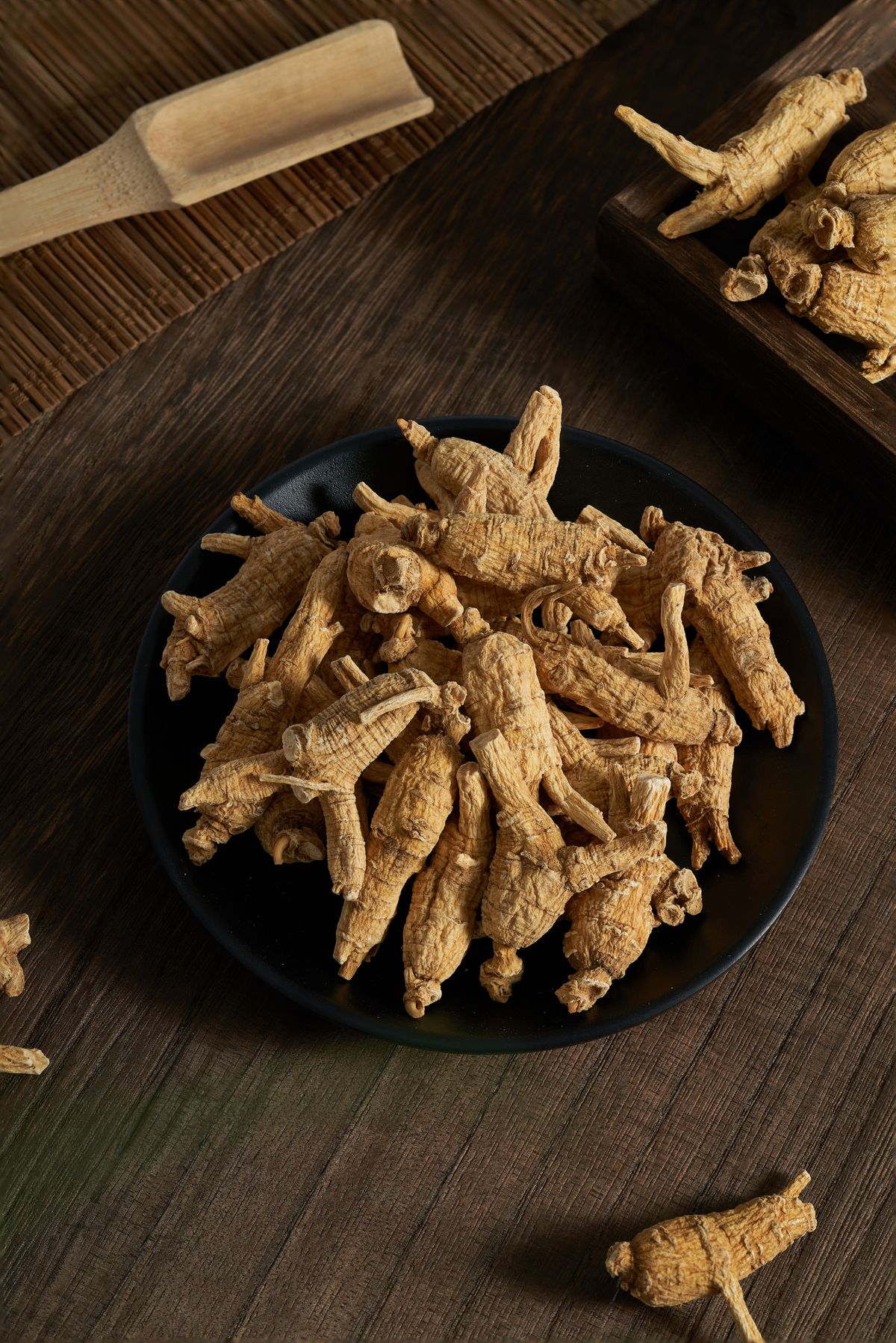
Codonopsis is the dried root of Codonopsis pilosula (and closely related species; in Vietnam the local Codonopsis javanica is common), a twining, bell-flowered perennial in the Campanulaceae family. The prepared root is soft, sweetish, and pale tan, with a distinctive wrinkled "head." In traditional Chinese medicine it is classed as a sweet, neutral tonic for "qi" (vital energy), acting mainly on the spleen and lung systems (Baidu Baike, 党参).
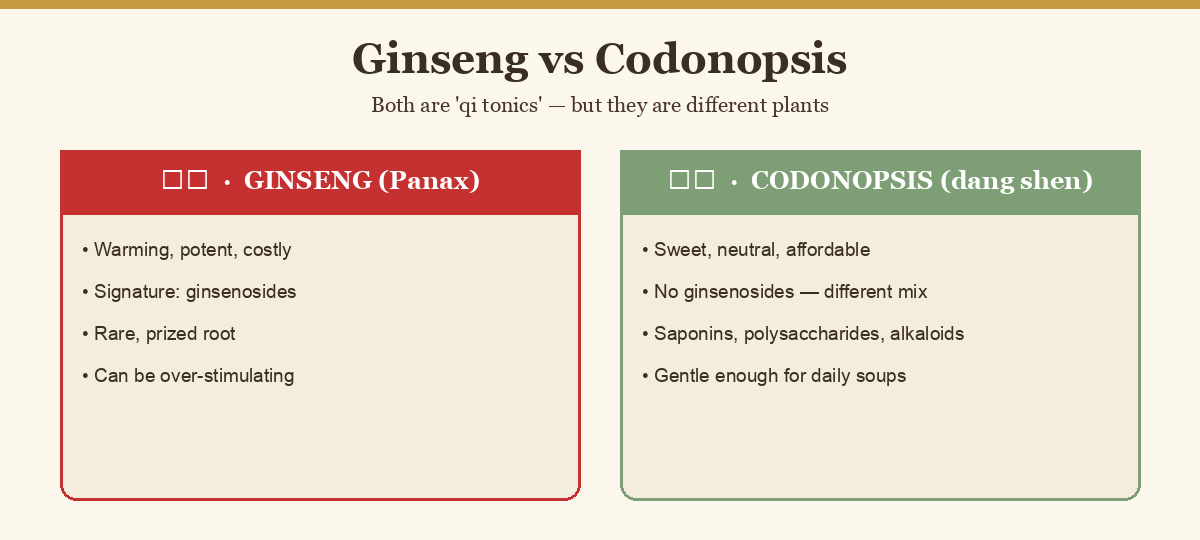
That "sweet and neutral" profile matters. Where ginseng is warming and potent — sometimes too stimulating for everyday use — codonopsis is mild enough to be eaten regularly in food. It is the tonic you can put in the family soup pot without worrying that it is too strong, which is exactly why it became a household staple across China and Vietnam.
Why Is It Called "Poor Man's Ginseng"?
Codonopsis rose to popularity precisely because true ginseng was rare and costly. Practitioners found that dang shen could stand in for ginseng in many "qi-tonifying" roles at a fraction of the price, and today it is often used this way in gentler formulas and in cooking (Herbal Reality, Codonopsis). In Vietnamese tradition it is likewise described as "nhân sâm của người nghèo" — the ordinary family's ginseng — used as a restorative for tiredness, poor appetite, and general weakness (Vinmec, đảng sâm).
Here is the information most articles miss, though: codonopsis is a functional substitute, not a chemical twin. It does not contain the ginsenosides — the signature saponins — that define Panax ginseng. Instead, its activity is attributed to a different mix of compounds: its own triterpenoid saponins (such as lancemasides), polysaccharides (including fructan-type sugars and inulin), polyacetylenes like lobetyolin, and alkaloids (Codonopsis pilosula systematic review, 2025). So the "ginseng of the poor" earns its role through tradition and a distinct chemistry — not by being the same molecule cheaper.
How Is Codonopsis Used in Traditional Medicine?
In classical Chinese herbalism, dang shen is a foundational "qi tonic." Its most famous home is Si Jun Zi Tang (四君子汤), the "Four Gentlemen Decoction" — one of the base formulas for strengthening the spleen and qi, where codonopsis frequently substitutes for the more expensive ginseng in the everyday version. It is also paired with astragalus, goji berries, red dates (jujube), and angelica in a wide range of restorative recipes (Codonopsis radix review, 2024).
Traditionally, it is reached for in states described as "qi deficiency" — tiredness, weak appetite, a feeble digestion, and low stamina. In Vietnam the same root is used as a general restorative and to "sinh tân dịch" (generate fluids) for dryness and thirst (Vinmec). These are traditional frameworks, not proven medical treatments — a distinction worth keeping in mind.
Codonopsis in the Kitchen
Codonopsis truly shines as a food. Its gentle sweetness makes it one of the easiest tonic herbs to cook with, and it is a classic addition to slow-simmered Chinese and Vietnamese soups. A typical "tonic soup" might pair a few pieces of dang shen with red dates, goji berries, and astragalus, simmered with chicken or pork into a mild, subtly sweet broth (Herbal Reality).
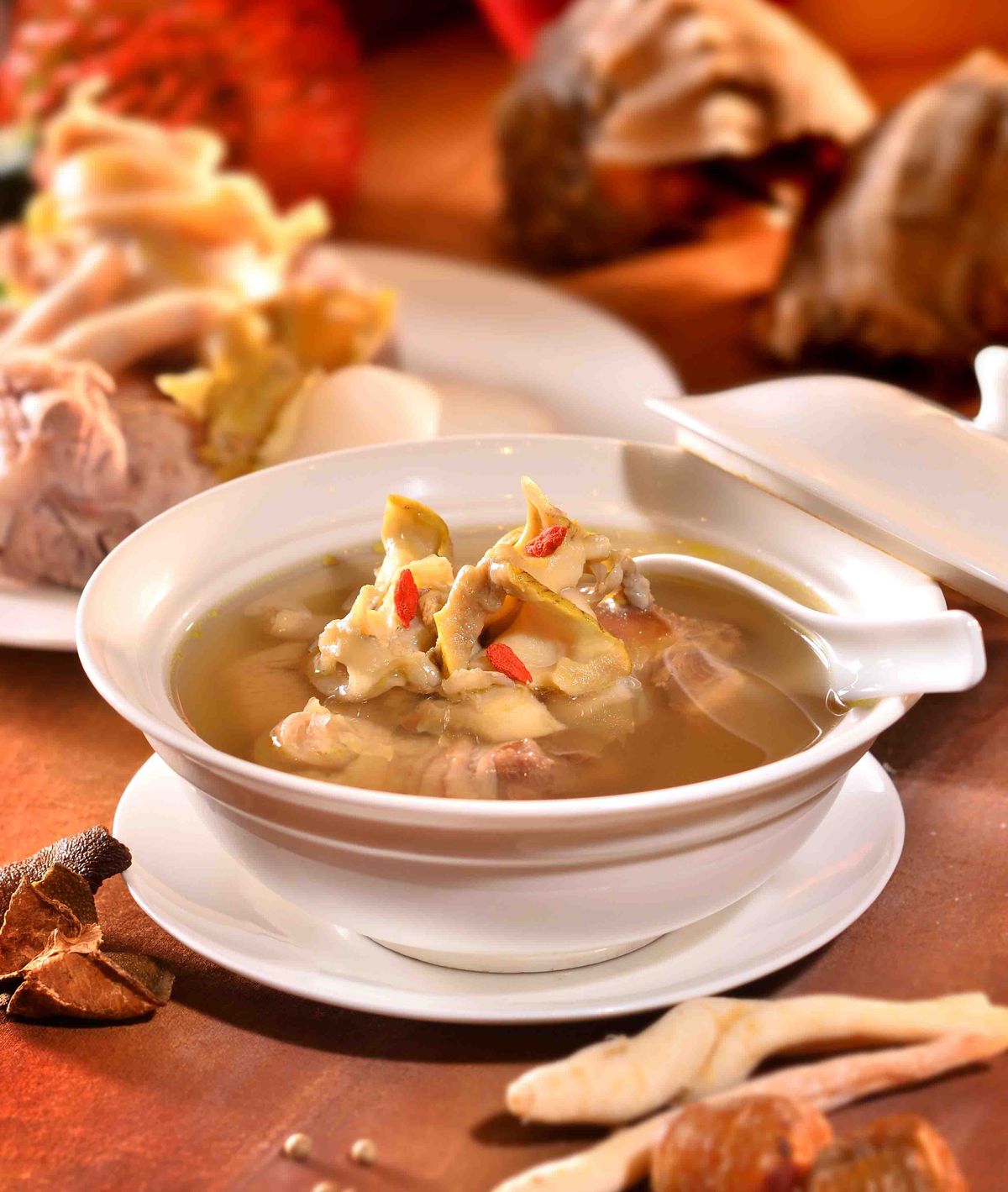
Because it is neutral rather than heating, codonopsis suits year-round cooking and is considered gentle enough for older family members and children in these food quantities. For more on this style of nourishing cooking, see our guide to traditional Asian soups and broths.
How to Choose and Store Codonopsis
Good-quality dang shen roots are firm, pale golden-brown, and pleasantly sweet, with the characteristic wrinkled "lion's head" top and fine longitudinal lines along the body. Softer, sweeter roots are generally prized for cooking. Store the dried root in a sealed container away from heat and humidity, where it keeps for many months; if it smells sour or shows any mould, discard it. When buying, favour clearly labelled roots from a reputable herbal supplier, since lower-grade tonic roots are sometimes blended or substituted with cheaper look-alikes.
What Does Modern Research Say?
Most modern interest in codonopsis centres on its polysaccharides. Laboratory and animal studies have reported that these sugars show immunomodulating, antioxidant, and gastroprotective activity, and reviews catalogue a broad range of preclinical effects (polysaccharides review, 2021). Its saponins and polyacetylenes have also drawn research attention.
The honest bottom line, however, is that this evidence is overwhelmingly preclinical — cell cultures and animal models — rather than large, high-quality human trials. Codonopsis has a long and trusted traditional record and a genuinely interesting chemistry, but there is not yet robust clinical proof that it resolves specific diseases in people. Enjoy it as a nourishing, food-grade tonic in the tradition it comes from, and keep expectations grounded. Individual responses vary considerably.
Is Codonopsis Safe?
Codonopsis is generally regarded as one of the milder, better-tolerated tonic herbs, which is a large part of why it is used so freely in food. Still, a few sensible cautions apply:
- Dose. Traditional texts use it in modest amounts (often around 6–12 g of dried root in a decoction). Culinary amounts in soup are gentler still (Vinmec).
- Pregnancy and medication. If you are pregnant, breastfeeding, or taking prescription medicine, check with a qualified practitioner or pharmacist before using concentrated extracts.
- Quality. Buy from a reputable supplier; cheap tonic roots are sometimes mislabelled or blended.
- Not a substitute for care. Persistent tiredness or poor appetite deserves a proper medical check rather than self-medicating with herbs.
Frequently Asked Questions
Is codonopsis the same as ginseng?
No. It is used as a gentler, cheaper substitute for ginseng in many qi-tonic roles, but it is a different plant and does not contain ginseng's ginsenosides.
What does dang shen taste like?
Mild and slightly sweet, which is why it is easy to add to soups without overpowering them.
What is codonopsis used for traditionally?
As a "qi tonic" for tiredness, weak appetite, and low stamina, and as a nourishing ingredient in family tonic soups. These are traditional uses, not proven medical treatments.
Can I eat codonopsis every day?
In small culinary amounts it is considered gentle and neutral, but for regular or concentrated use it is best to consult a qualified practitioner.
Is codonopsis safe in pregnancy?
Culinary amounts are traditionally considered mild, but concentrated extracts should only be used in pregnancy with professional guidance.
The Bottom Line
Codonopsis is the quiet workhorse of Chinese and Vietnamese tonic cooking — sweet, gentle, affordable, and deeply woven into everyday family soups. Its "poor man's ginseng" nickname captures its role but hides a nice piece of nuance: it is a substitute in function, with its own distinct chemistry, not a cheap copy of ginseng. Modern research on its polysaccharides is promising but still preclinical, so it is best appreciated for what it has always been — a mild, nourishing food-tonic to be enjoyed as part of a balanced diet, not as a remedy. For the bigger picture, explore our traditional wellness practices guide.
Editorial Review
Written by: Health Diary Editorial Team — writers and researchers focused on making traditional Asian wellness knowledge clear, accurate, and culturally grounded.
Editorial review: This article has been reviewed by the Health Diary editorial team for clarity, structure, and adherence to our sourcing standards. Key claims were cross-checked against peer-reviewed reviews and native-language (Chinese and Vietnamese) sources, and we take care to note that codonopsis does not contain ginseng's ginsenosides. It is not a clinical review and should not replace consultation with a licensed healthcare practitioner.
Reviewed on: August 4, 2026.
References
- A Systematic Review of the Phytochemical Profile and Potential Medicinal Functions of Codonopsis pilosula. PMC. 2025. https://pmc.ncbi.nlm.nih.gov/articles/PMC11848418/
- Extraction, purification, structural characteristics and biological properties of the polysaccharides from Codonopsis pilosula: A review. Int. J. Biol. Macromol. 2021. https://www.sciencedirect.com/science/article/abs/pii/S0144861721002502
- Codonopsis radix: a review of resource utilisation, postharvest processing, quality assessment, and polysaccharide composition. PMC. 2024. https://www.ncbi.nlm.nih.gov/pmc/articles/PMC11091420/
- Codonopsis (Codonopsis pilosula): Benefits, Uses, Safety — Herbal Reality. https://www.herbalreality.com/herb/codonopsis/
- Vị thuốc đảng sâm có tác dụng gì? — Vinmec. https://www.vinmec.com/vie/bai-viet/vi-thuoc-dang-sam-co-tac-dung-gi-vi
- 党参 — Baidu Baike. https://baike.baidu.com/item/党参/244575


