Medical Disclaimer: This content is for educational and informational purposes only and is not medical advice. It is not intended to diagnose, treat, cure, or prevent any disease. Always consult a licensed healthcare practitioner before using herbs, especially if you take medication. Statements regarding traditional herbal use have not been evaluated by the FDA.
Affiliate Disclosure: This article may contain affiliate links. We may earn a commission if you purchase through these links, at no additional cost to you. We only recommend products we believe align with our editorial standards.
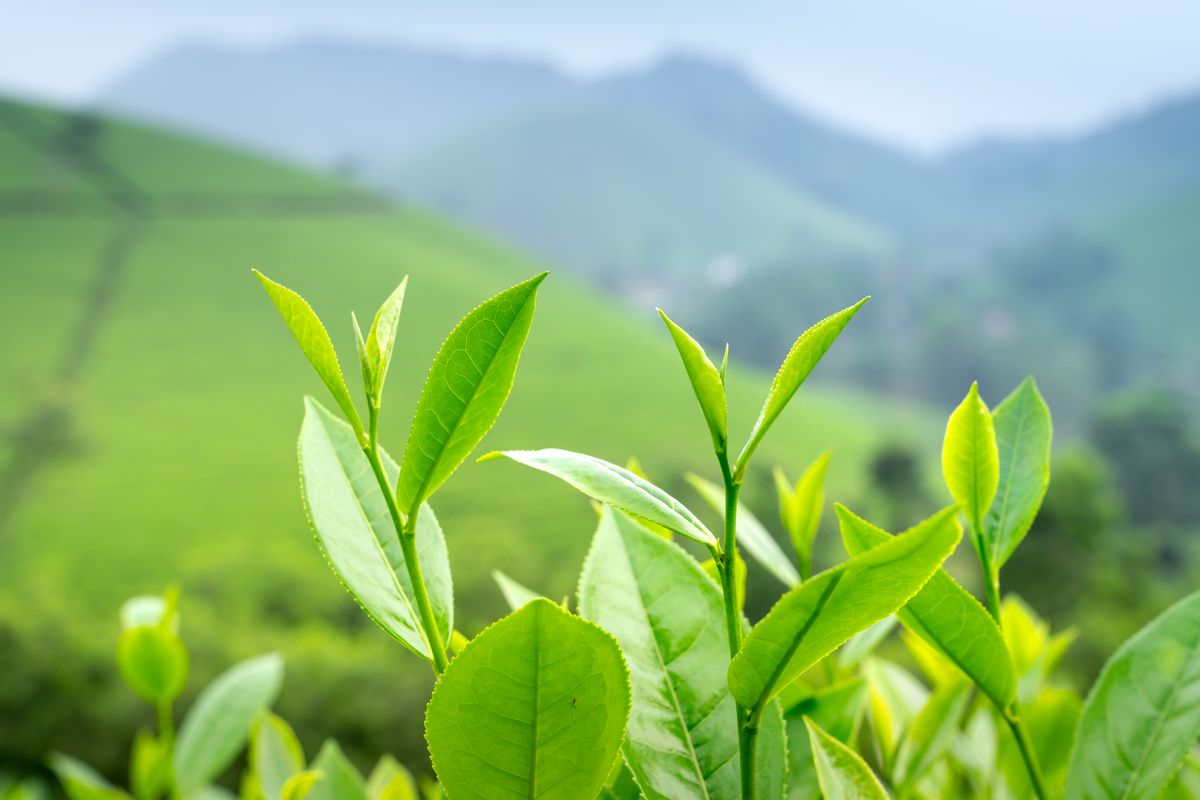
In the misty mountains of southern China there is a humble climbing vine that locals have brewed as a daily tea for generations — and in the villages where it grows, people were said to live remarkably long lives. That vine is jiaogulan (绞股蓝), known in Vietnam as giảo cổ lam and often marketed in the West as "southern ginseng" or even the "herb of immortality." It is one of the most interesting herbs in this whole guide, because — unlike most traditional tonics — it actually has a fair amount of human research behind it. This profile is part of our wider guide to Asian herbal traditions.
What Is Jiaogulan?
Jiaogulan (Gynostemma pentaphyllum) is a perennial climbing vine — and here is the first surprise: it is not a ginseng at all. It belongs to the Cucurbitaceae family, the same botanical family as cucumbers, melons, and gourds (Razmovski-Naumovski et al., 2005). It earned the nickname "southern ginseng" purely because of its chemistry, not its lineage.
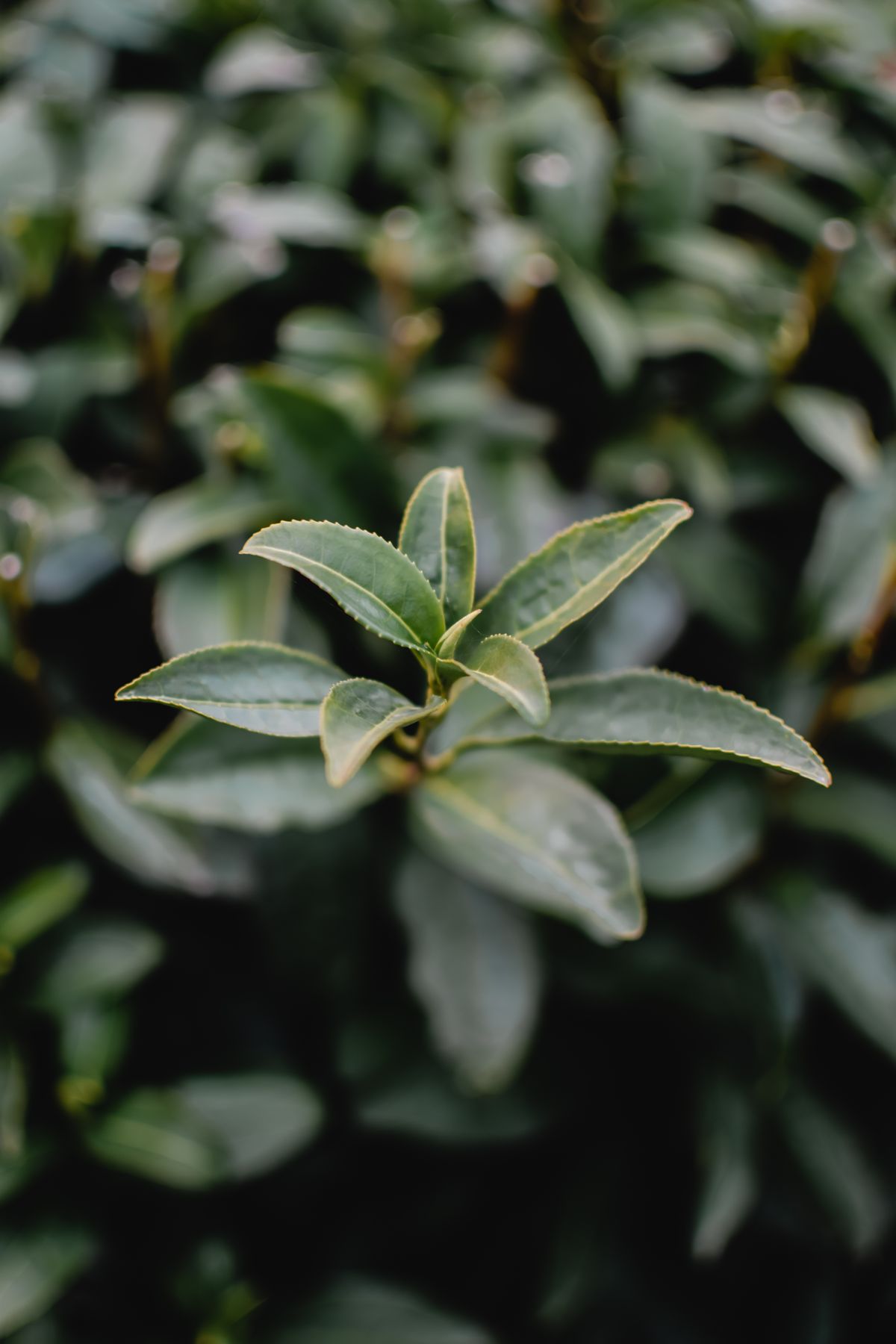
Traditionally it was a mountain tea of southern China — particularly around Guizhou and Fanjing Mountain — where its association with local "longevity villages" gave rise to the romantic "herb of immortality" name (Razmovski-Naumovski et al., 2005). That folklore is charming, but it is folklore: there is no evidence that any herb extends human lifespan, and "immortality" is best read as heritage marketing rather than fact.
Why Is It Called "Southern Ginseng"?
The link to ginseng is real, but it is chemical, not botanical. Jiaogulan is rich in gypenosides — more than a hundred dammarane-type saponins, several of which are structurally identical to ginsenosides (the signature compounds of true ginseng), including ginsenoside-type molecules such as Rb1 and Rd (Viện Dược liệu, giảo cổ lam). Alongside these it carries flavonoids and polysaccharides.
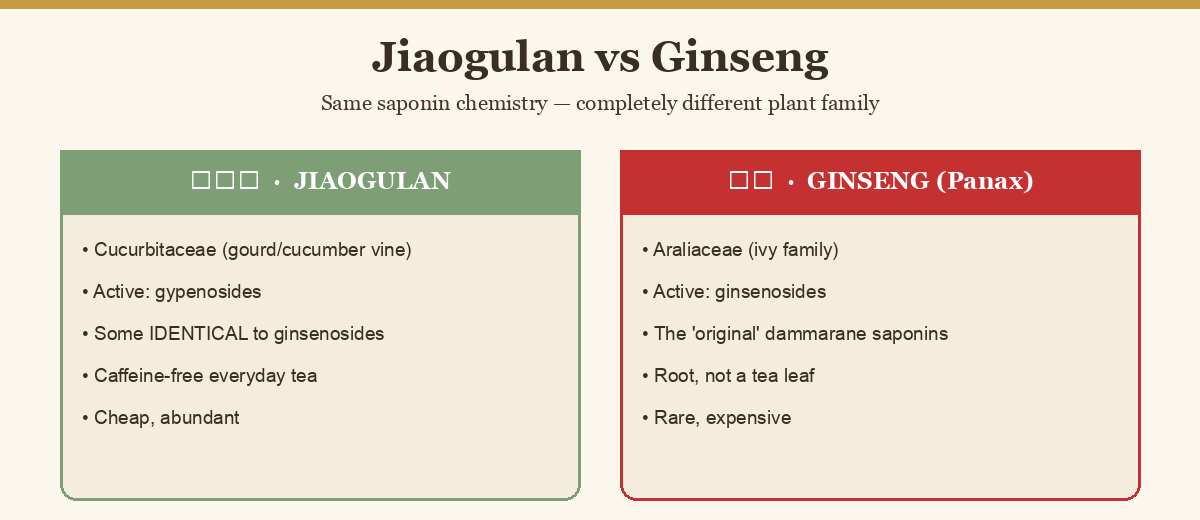
So the accurate way to think about jiaogulan is this: a gourd-family vine that happens to make some of the same "adaptogenic" saponins as ginseng, at a fraction of the cost, in a form you can drink as an everyday tea. Much of the modern research interest centres on how these compounds activate an energy-sensing enzyme called AMPK, a key regulator of metabolism (Nayyar et al., 2023).
Jiaogulan in Vietnam
Few Western articles mention it, but Vietnam is one of the great homes of jiaogulan research and use. Giảo cổ lam is sold widely as a wellness tea, and a genuine research lineage sits behind that popularity: the Central Institute of Medicinal Materials (Viện Dược liệu) and Hanoi Medical University — in one case collaborating with Sweden's Karolinska Institutet — have studied it for blood sugar, blood lipids, and blood pressure, and even isolated a characteristic compound (phanoside) from Vietnamese material (Viện Dược liệu). In Vietnamese folk framing it is described with the neat phrase "ba giảm, ba chống" — three reductions, three protections.
What Does the Research Actually Show?
This is where jiaogulan stands out: it has more human data than most traditional tonic herbs, though the studies are still small and the certainty modest.
- Cholesterol and blood lipids. A 2022 systematic review pooled 22 randomised controlled trials (over 2,400 people with dyslipidemia) and found jiaogulan's effects on cholesterol and triglycerides were broadly comparable to conventional lipid drugs, with fewer side effects — but the authors rated the overall certainty of the evidence only "very low to moderate" (Dai et al., 2022).
- Blood sugar. A double-blind Vietnamese RCT gave newly diagnosed type-2 diabetes patients 6 g/day of jiaogulan tea for 12 weeks and saw meaningful drops in fasting glucose and HbA1c versus control, with no hypoglycemia — but only 24 people took part (Huyen et al., 2010).
- Exercise and metabolism. A 2023 placebo-controlled crossover trial in 16 healthy men found supplementation raised muscle AMPK activity after exercise and modestly improved a 20-km cycling time trial (Nayyar et al., 2023).
The honest summary: promising and unusually well-studied for a folk tea, but the trials are small, the evidence certainty is low, and the saponins have limited oral bioavailability (Li et al., 2019). Jiaogulan may support healthy metabolism as part of a good diet — it is not a substitute for prescribed treatment, and none of this makes it a proven medicine. Individual responses vary considerably.
How Is Jiaogulan Used?
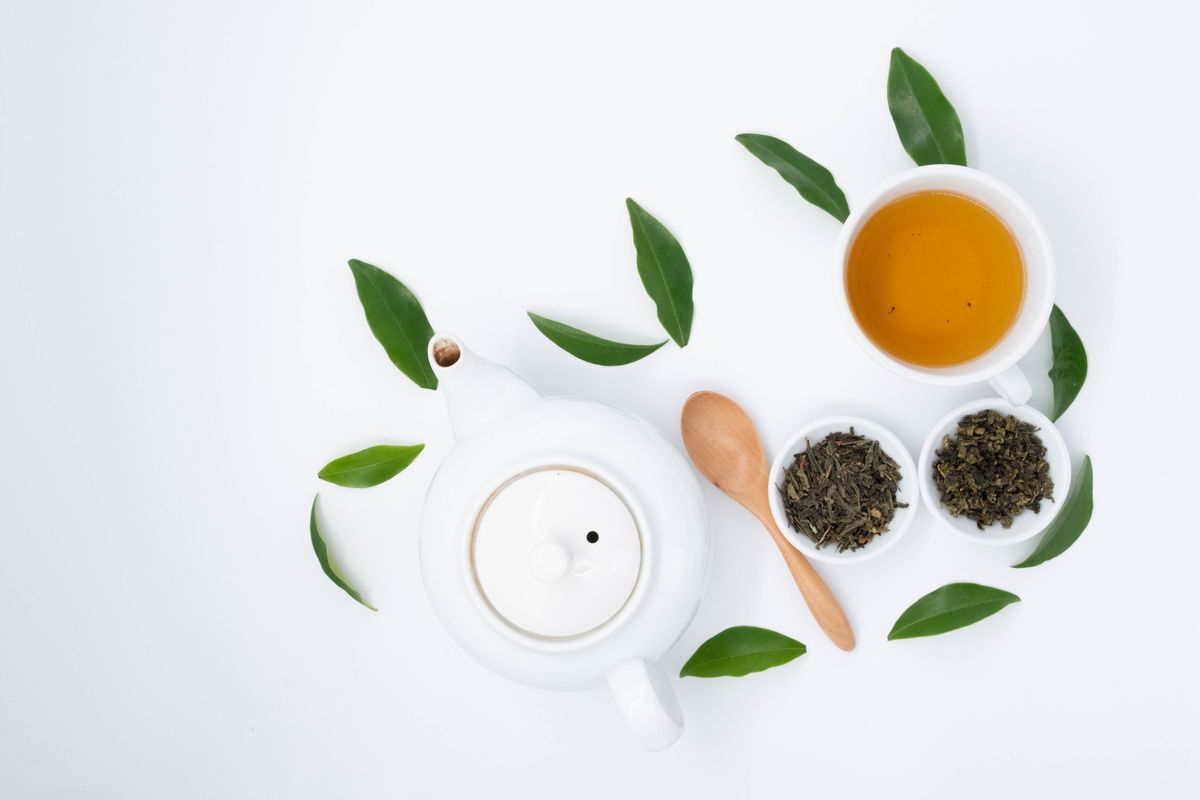
Jiaogulan is almost always taken as a tea. The dried leaves are steeped in hot (not boiling) water for a few minutes to give a light, grassy, faintly sweet-then-bitter brew that can be re-infused several times. Human studies have typically used around 6 g of dried herb a day, which is a realistic everyday amount for a tea drinker (Huyen et al., 2010). It is also sold as teabags, powders, and capsules.
Because it is caffeine-free, many people drink it in the afternoon or evening in place of caffeinated tea. If you enjoy herbal infusions, it slots naturally into the same ritual as our other Asian herbal teas.
Is Jiaogulan Safe?
As a tea, jiaogulan is generally well tolerated, and the lipid review actually recorded fewer adverse events in the herb groups than in the drug groups (Dai et al., 2022). Still, some sensible cautions apply:
- Mild side effects. Some people report nausea, upset stomach, or dizziness, especially at higher doses (WebMD).
- Medication interactions (precautionary). Because it can lower blood sugar and blood lipids and may affect immune activity, it is sensible to be cautious — and check with a clinician — if you take diabetes, blood-pressure, anticoagulant/antiplatelet, or immunosuppressant medication, as effects could add up (Huyen et al., 2010).
- Pregnancy and breastfeeding. There is not enough safety data, so it is best avoided unless a professional advises otherwise (WebMD).
- Quality. Buy from a reputable supplier, since wellness teas are sometimes blended or mislabelled.
Frequently Asked Questions
Is jiaogulan the same as ginseng?
No. It is an unrelated gourd-family vine. The "southern ginseng" nickname comes from shared dammarane saponins (some identical to ginsenosides), not from any botanical relationship.
What is jiaogulan good for?
It is traditionally a longevity and energy tonic tea. Modern research shows early, small-scale signals for cholesterol, blood sugar, and exercise metabolism — but the evidence is limited and it is not a proven treatment for any disease.
Does jiaogulan have caffeine?
No. It is naturally caffeine-free, which is why many people drink it in the evening.
How much jiaogulan tea can I drink?
Human studies commonly used around 6 g of dried herb per day. Start modestly, and consult a professional if you take medication or have a health condition.
Who should avoid jiaogulan?
Pregnant or breastfeeding women, and anyone on diabetes, blood-pressure, anticoagulant, or immunosuppressant medication should check with a clinician first because of possible additive effects.
Is it really the "herb of immortality"?
That is folklore from Guizhou longevity villages, not a medical claim. No herb extends lifespan; treat "immortality" and "miracle" marketing as unproven.
The Bottom Line
Jiaogulan is a rare thing among traditional tonics: a folk tea with a genuine, if still preliminary, evidence base. It is not a ginseng, and it is certainly not an elixir of immortality — but it is a pleasant, caffeine-free vine tea whose gypenosides show real promise for metabolic health in early human studies. Enjoyed as part of a balanced lifestyle, and with sensible caution around medications, it is a worthy addition to the Asian herbal-tea shelf. For the bigger picture, explore our traditional wellness practices guide.
Editorial Review
Written by: Health Diary Editorial Team — writers and researchers focused on making traditional Asian wellness knowledge clear, accurate, and culturally grounded.
Editorial review: This article has been reviewed by the Health Diary editorial team for clarity, structure, and adherence to our sourcing standards. Because jiaogulan has more human data than most tonic herbs, we cross-checked claims against a systematic review and individual RCTs, kept the evidence honestly hedged (small samples, low certainty), and clarified that it is botanically unrelated to ginseng. It is not a clinical review and should not replace consultation with a licensed healthcare practitioner.
Reviewed on: August 5, 2026.
References
- Dai N, et al. Gynostemma pentaphyllum for dyslipidemia: a systematic review of randomized controlled trials. Frontiers in Pharmacology. 2022. https://www.frontiersin.org/journals/pharmacology/articles/10.3389/fphar.2022.917521/full
- Huyen VTT, et al. Antidiabetic effect of Gynostemma pentaphyllum tea in randomly assigned type 2 diabetic patients. Horm. Metab. Res. 2010. https://pubmed.ncbi.nlm.nih.gov/20213586/
- Nayyar D, et al. Gynostemma Pentaphyllum Increases Exercise Performance and Alters Mitochondrial Respiration and AMPK in Healthy Males. Nutrients. 2023. https://pmc.ncbi.nlm.nih.gov/articles/PMC10675532/
- Razmovski-Naumovski V, et al. Chemistry and Pharmacology of Gynostemma pentaphyllum. Phytochemistry Reviews. 2005. https://link.springer.com/article/10.1007/s11101-005-3754-4
- Li K, et al. Medicinal Value and Potential Therapeutic Mechanisms of Gynostemma pentaphyllum: An Overview. Curr. Top. Med. Chem. 2019. https://pubmed.ncbi.nlm.nih.gov/31724506/
- Giảo cổ lam — Công dụng, cách dùng. Viện Dược liệu (Tra cứu dược liệu). https://tracuuduoclieu.vn/giao-co-lam.html
- Jiaogulan: Uses, Side Effects, Interactions — WebMD. https://www.webmd.com/vitamins-supplements/jiaogulan