
Dendrobium (Thạch Hộc) Guide: First of the Nine Immortal Herbs
Dendrobium (tie pi shi hu, thạch hộc tía) explained: the medicinal orchid crowned first of the “nine immortal herbs,” why to buy cultivated, its polysaccharides, research and safety.
Medical Disclaimer: This content is for educational and informational purposes only and is not medical advice. It is not intended to diagnose, treat, cure, or prevent any disease. Always consult a licensed healthcare practitioner before using herbs. Statements regarding traditional herbal use have not been evaluated by the FDA.
Affiliate Disclosure: This article may contain affiliate links. We may earn a commission if you purchase through these links, at no additional cost to you. We only recommend products we believe align with our editorial standards.
Most orchids are grown for their flowers. Dendrobium is grown for its stems — and those unassuming green canes are one of the most prized, most expensive, and most endangered herbs in the entire Chinese materia medica. Known as tiě pí shí hú (铁皮石斛) in China and thạch hộc tía in Vietnam, this medicinal orchid has been ranked, for over a thousand years, at the very top of a legendary list of "immortal herbs." This guide explains what it is, why it sits above even ginseng in that ranking, and why buying it responsibly matters more than for almost any other herb. It is part of our wider guide to Asian herbal traditions.
What Is Dendrobium?
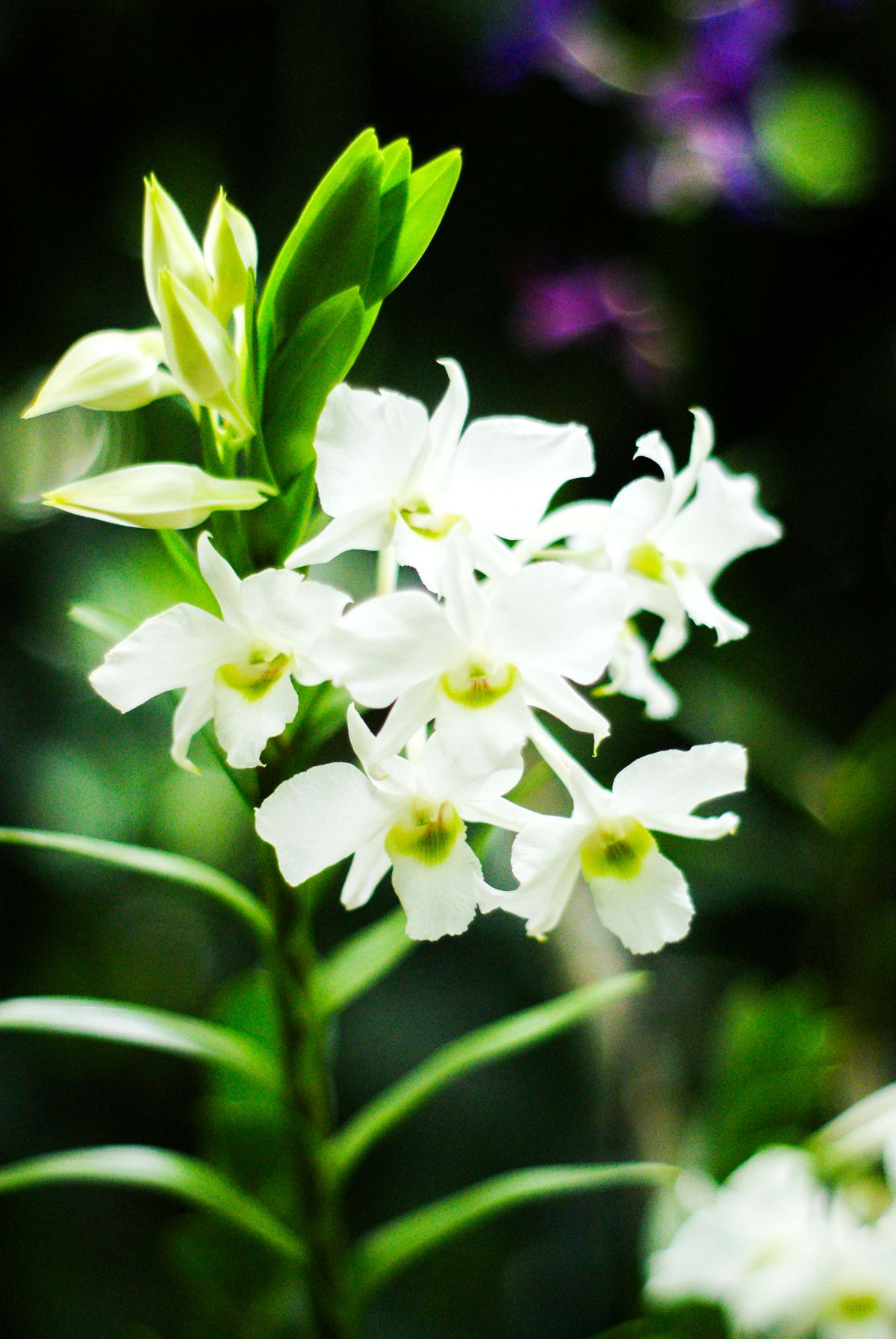
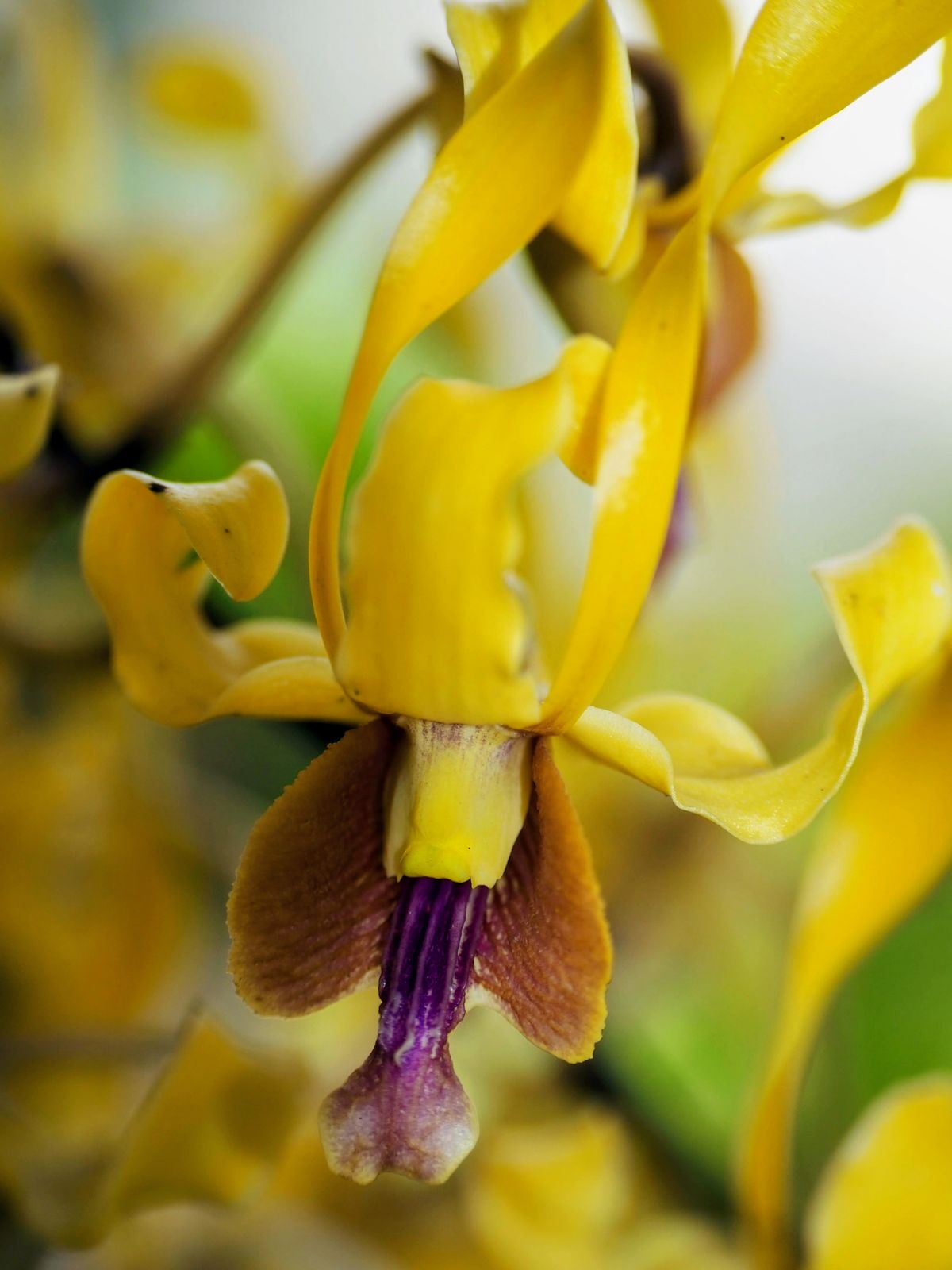
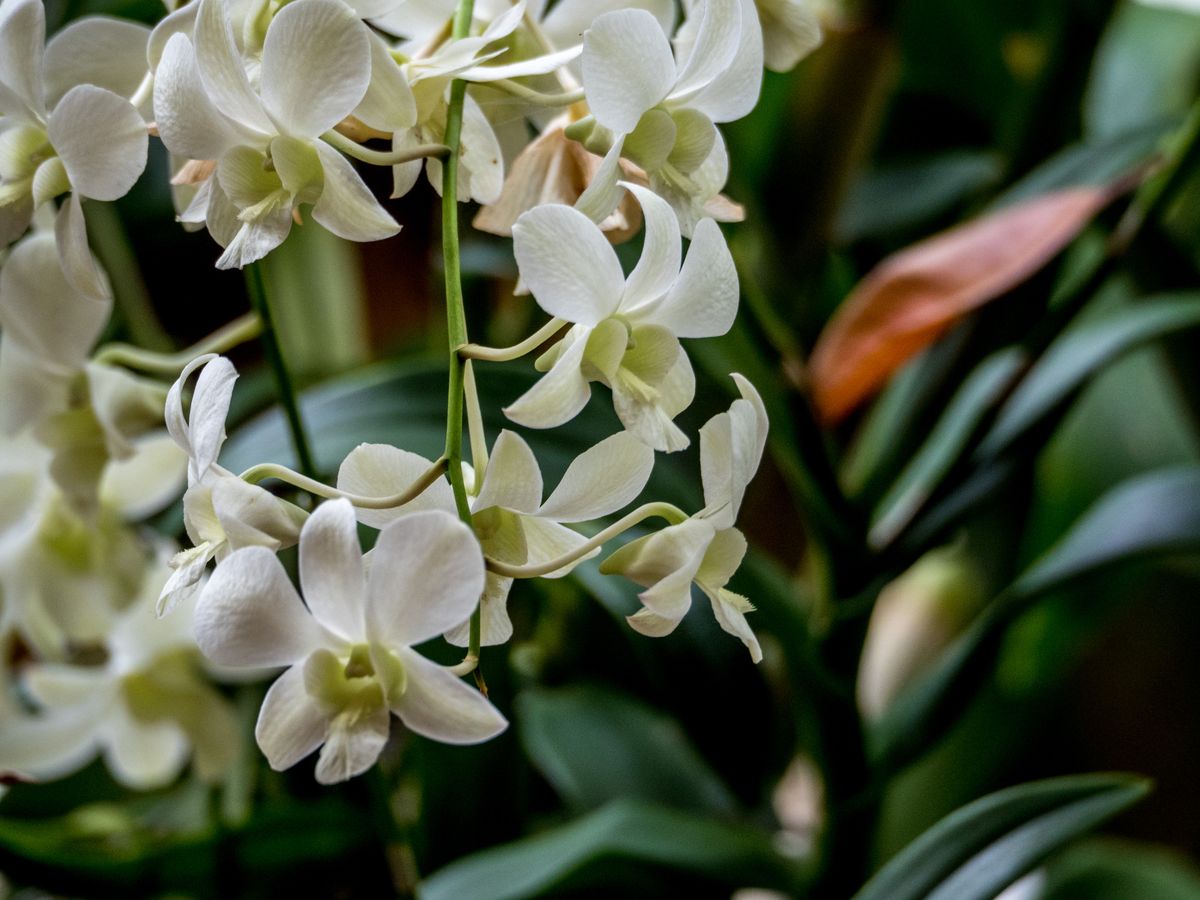
Dendrobium (Dendrobium officinale, and related "shí hú" species) is an epiphytic orchid — a plant that grows clinging to trees and rocks rather than in soil. The medicinal part is the fleshy stem, harvested and often dried into tight golden spirals called fēngdǒu (枫斗). In traditional Chinese medicine it is classed as a sweet, slightly cold "yin tonic," valued for nourishing fluids (sinh tân / 生津), easing dryness and thirst, soothing the stomach, and supporting the eyes (Thủ Dầu Một University journal, thạch hộc tía).
Because its traditional role is to "nourish yin and generate fluids," it has long been reached for in states described as dryness — a parched mouth, dry throat, or the depletion that can follow illness. As with all such frameworks, these are traditional descriptions, not proven medical treatments.
Why Is Dendrobium Called the First of the "Nine Immortal Herbs"?
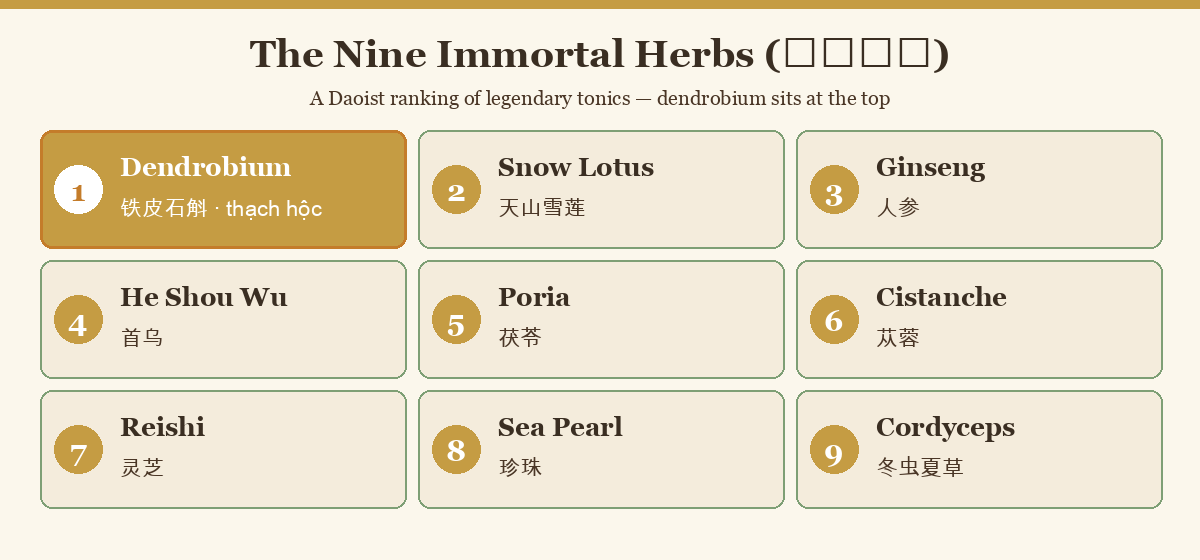
Dendrobium's fame rests on a remarkable piece of heritage. A Daoist classic (the Dàozàng) named nine "immortal herbs" (九大仙草), and dendrobium was placed first — ahead of famous names like Tianshan snow lotus, ginseng, he shou wu, reishi, and cordyceps (Sohu, 铁皮石斛 as first of the nine immortal herbs). Vietnamese sources repeat the same ranking, listing thạch hộc at the head of the nine, followed by snow lotus, ginseng, fo-ti, poria, and the rest (Thủ Dầu Một University journal).
That top ranking is a cultural judgement about rarity and prestige, not a modern medical verdict — but it explains why dendrobium commands such extraordinary prices and reverence, and why it has become a byword for luxury tonics in China.
Endangered in the Wild — Why You Should Buy Cultivated
Here is the single most important practical point about dendrobium, and one many articles skip. Wild Dendrobium officinale is genuinely rare and slow-growing, its wild populations are severely threatened, and unsustainable harvesting has pushed it to the brink; medicinal Dendrobium species are subject to conservation protection, and products advertised as "wild" are frequently either cultivated anyway or, worse, harvested illegally (Challenges in the industrial application of Dendrobium officinale).
The good news is that dendrobium is now widely and successfully cultivated. Choosing clearly cultivated dendrobium is both the ethical choice and usually the more honest one — it protects a threatened species and avoids paying a premium for a "wild" label that often is not true. If a seller leans heavily on "wild-harvested" marketing, treat that as a red flag rather than a selling point.
What Is Dendrobium Actually Made Of?
Modern analysis has isolated more than 180 compounds from dendrobium, including bibenzyls, flavonoids, and small amounts of alkaloids — but the plant's defining component is its polysaccharides (often abbreviated DOP) (Modern interpretation of Shihu, 2022). This is worth knowing because dendrobium is sometimes marketed around "dendrobine," its namesake alkaloid — yet in Dendrobium officinale the alkaloid content is extremely low (dendrobine is on the order of hundredths of a percent), while polysaccharides dominate. In other words, a "high-dendrobine" pitch for this species is largely marketing noise.
What Does Modern Research Say?
Most research interest centres on those polysaccharides. Laboratory and animal studies have reported antioxidant, immunomodulating, and blood-sugar-related activity, and there is particular scientific interest in dendrobium polysaccharides for metabolic and diabetes-related research (Frontiers in Nutrition, 2021). A dedicated review of the polysaccharide catalogues antioxidant, immune, and gut-related effects in preclinical models (Dendrobium officinale polysaccharide review, 2024).
The honest bottom line is familiar: promising chemistry, real preclinical signals, but a shortage of large, high-quality human trials. Dendrobium is a fascinating and revered herb, but its traditional prestige runs well ahead of the clinical evidence. Enjoy it as a premium traditional tonic, not as a proven remedy. Individual responses vary considerably.
How Is Dendrobium Used?
Traditionally, fresh dendrobium stems are chewed or blended into juice, while the dried fēngdǒu spirals are simmered into a long, slow decoction, steeped as a tea, ground into powder, or added to tonic soups. Chinese sources describe everyday amounts on the order of 10–20 g of fresh stem, or a smaller weight of the concentrated dried form (Sohu). Because its character is cooling and fluid-nourishing, it is often paired with other yin tonics rather than with warming herbs.
If you want to explore it, start with a reputable, clearly cultivated product, use modest amounts, and treat it as an occasional premium tonic. For the broader context of tonic herbs and how they are cooked, see our guide to traditional Asian soups and broths.
Is Dendrobium Safe?
- Cooling nature. As a "slightly cold" yin tonic, dendrobium may not suit everyone; those who tend to feel cold or have weak, damp digestion should use it cautiously or with practitioner guidance.
- Pregnancy and medication. If you are pregnant, breastfeeding, or taking prescription medicine, consult a qualified practitioner before using concentrated dendrobium.
- Quality and adulteration. Because it is so valuable, dendrobium is one of the more commonly adulterated or mislabelled herbs; buy from a trusted, transparent source that states the species and that the product is cultivated (industrial application review).
- Not a substitute for care. No premium herb replaces proper medical assessment for a persistent health concern.
Frequently Asked Questions
What is dendrobium (thạch hộc / shi hu)?
A medicinal orchid whose fleshy stems are used as a sweet, slightly cold "yin tonic" in Chinese and Vietnamese tradition, prized for nourishing fluids and easing dryness.
Why is dendrobium so expensive?
It is slow-growing, was historically rare and wild-harvested, and carries enormous cultural prestige as the first of the "nine immortal herbs" — all of which drive high prices.
Should I buy wild or cultivated dendrobium?
Cultivated. Wild populations are threatened and protected, and "wild" products are often mislabelled or unsustainably harvested; cultivated dendrobium is the ethical and usually more honest choice.
Is dendrobium good for diabetes?
Its polysaccharides are an active area of blood-sugar research, but the evidence is largely preclinical. It is not a proven treatment for diabetes and should never replace prescribed care.
What does "dendrobine" content mean?
Dendrobine is dendrobium's namesake alkaloid, but in Dendrobium officinale it is present only in tiny amounts; the plant's main components are polysaccharides, so "high-dendrobine" marketing for this species is misleading.
The Bottom Line
Dendrobium is a genuine treasure of Asian herbal culture — an orchid grown for its stems, crowned the first of the nine immortal herbs, and steeped in a thousand years of prestige. Its polysaccharides make for genuinely interesting science, but the clinical evidence still trails the legend, so it is best enjoyed as a premium traditional tonic rather than a proven remedy. Above all, because its wild populations are threatened, the responsible way to appreciate dendrobium is to choose cultivated stock from a transparent source. For more, explore our traditional wellness practices guide.
Editorial Review
Written by: Health Diary Editorial Team — writers and researchers focused on making traditional Asian wellness knowledge clear, accurate, and culturally grounded.
Editorial review: This article has been reviewed by the Health Diary editorial team for clarity, structure, and adherence to our sourcing standards. Claims were cross-checked against peer-reviewed reviews and native-language (Chinese and Vietnamese) sources, and we emphasise the conservation status and the polysaccharide-vs-dendrobine point. It is not a clinical review and should not replace consultation with a licensed healthcare practitioner.
Reviewed on: August 4, 2026.
References
- Modern interpretation of the traditional application of Shihu — phytochemistry and pharmacology of Dendrobium officinale. PubMed. 2022. https://pubmed.ncbi.nlm.nih.gov/36351476/
- Critical review on chemical structure, bioactivities and mechanisms of Dendrobium officinale polysaccharide. Int. J. Biol. Macromol. 2024. https://www.sciencedirect.com/science/article/abs/pii/S0141813024011188
- Mechanisms and Active Compounds (Polysaccharides and Bibenzyls) of Medicinal Dendrobiums for Diabetes Management. Frontiers in Nutrition. 2021. https://www.frontiersin.org/journals/nutrition/articles/10.3389/fnut.2021.811870/full
- Challenges and Strategies in the Industrial Application of Dendrobium officinale. PMC. https://www.ncbi.nlm.nih.gov/pmc/articles/PMC11548159/
- 铁皮石斛:中华"九大仙草"之首 — Sohu. https://www.sohu.com/a/871760103_121118848/
- Giá trị dược liệu của cây lan thạch hộc tía (Dendrobium officinale) — Tạp chí Khoa học, Đại học Thủ Dầu Một. https://vjol.info.vn/index.php/tdm/article/view/23163


