Yuja: Korea's Winter Citron Herb and Wellness Tradition
Discover yuja (Citrus junos), Korea's beloved winter citron herb. Learn about yuja-cheong honey preserve, the dongji winter solstice tradition, TKM therapeutic uses, and the science behind its remarkable vitamin C and flavonoid content. A comprehensive Korean wellness guide.
What Is Yuja? Korea's Most Beloved Winter Citron
If you have ever wandered through a Korean market in late autumn, you may have encountered baskets of bumpy, fragrant yellow fruits about the size of a tangerine but with a distinctly complex, floral aroma. That fruit is yuja (Citrus junos Tanaka) — Korea's iconic winter citron, a cousin of the Japanese yuzu and one of the most cherished ingredients in Korean wellness culture.
Yuja occupies a unique place in the Korean year. Unlike many citrus varieties cultivated primarily for juice, yuja is prized for the deep fragrance of its thick, oil-rich peel, the bright sourness of its pulp, and — above all — the extraordinary concentration of vitamin C and protective flavonoids it delivers precisely when the body needs them most: the cold winter months.
Citrus junos is believed to have originated in the mountainous regions of central China and Tibet, migrating to the Korean peninsula via ancient trade routes. In Korea, the fruit has been cultivated since at least the 17th century, finding its spiritual home along the southern coastline. Today, Goheung County in South Jeolla Province produces more than 60 percent of all Korean yuja, where sea breezes, humid subtropical air, and volcanic soil combine to create conditions that produce unusually aromatic, nutrient-dense fruit. More than 800 local farming families harvest the fruit each November, supplying factories that slice, preserve, and jar tens of thousands of tons annually.
Yuja in Traditional Korean Medicine (TKM)
Traditional Korean Medicine (TKM), a comprehensive healing system with deep roots in Confucian philosophy and centuries of empirical practice, has long regarded yuja as a multi-purpose therapeutic herb. The Korea Institute of Oriental Medicine (KIOM) classifies yuja peel — known as deungja-pi (등자피) — as a substance with a bitter and acrid taste with warm nature, qualities that determine how it is used in clinical contexts.
In TKM theory, yuja acts primarily on the Lung, Spleen, and Stomach meridians. Its principal therapeutic actions include:
- Regulating qi and transforming phlegm — used in formulas for productive coughs, chest tightness, and respiratory congestion
- Promoting digestive function — traditionally prescribed for poor appetite, bloating, and epigastric fullness
- Stopping vomiting and nausea — historically employed as a remedy for seasickness and morning sickness
- Dispersing stagnation — applied in cases where cold and damp pathogens had accumulated in the middle burner
- Detoxifying — the peel's essential oils were believed to neutralize certain food toxins, particularly from seafood
The standard therapeutic dose of deungja-pi in TKM decoctions is 3 to 9 grams, prepared as a water decoction or ground into powder. The fruit can also be preserved in salt, fermented in honey, or processed as a jam-like paste — each method yielding subtly different therapeutic profiles according to traditional understanding.
Historical court records from the Joseon Dynasty (1392–1910) document yuja as a regular component of the royal dispensary. Court physicians prescribed yuja-based preparations to the royal household during winter, recognizing the fruit's ability to shore up the body's resistance against seasonal illness. This institutional endorsement helped cement yuja's status as a prestige wellness ingredient throughout Korean society.
The Nutritional Profile of Citrus junos
Modern nutritional science has confirmed what Korean healers observed empirically over centuries: yuja is exceptionally rich in compounds that support human health. Research published in the Journal of Agricultural and Food Chemistry quantified the mean nutritional content of mature yuja fruit, revealing a profile that rivals or surpasses many better-known citrus species.
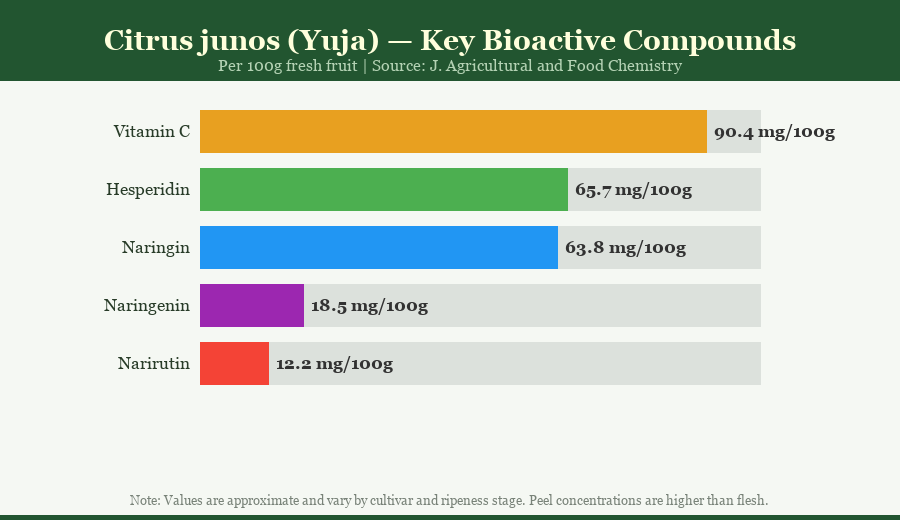
The peel of yuja contains even higher concentrations of these compounds than the flesh — a key reason why traditional Korean preparations use the entire fruit, rind included. Among the key bioactive components:
- Vitamin C (ascorbic acid): approximately 90.4 mg per 100g fresh fruit — an exceptional level for an autumn-harvested citrus. For context, this is nearly the full adult daily recommended intake in a single serving.
- Hesperidin: 65.7 mg/100g — a flavanone glycoside with well-documented antioxidant and anti-inflammatory properties
- Naringin: 63.8 mg/100g — responsible for the characteristic bitter note and studied for its anti-obesity and antioxidant effects
- Limonoids: a class of triterpenoid compounds found in the seeds that demonstrate potent anti-inflammatory activity
- Limonene: a monoterpene in the essential oil of the peel, associated with anti-inflammatory and mood-supporting effects
- Rutin and quercetin: additional flavonoids that act synergistically with vitamin C to strengthen blood vessel walls and reduce oxidative stress
An important characteristic of yuja is that its antioxidant potential increases significantly with ripeness. Research tracking cultivar variation found that both total antioxidant activity and vitamin C content peak at full yellow maturity — which corresponds precisely to the November harvest season when yuja-cheong preparations are traditionally made.
Yuja-Cheong: The Art of the Honey Citron Preserve
Perhaps no preparation captures Korean food culture as evocatively as yuja-cheong (유자청) — the thick, fragrant honey citron preserve that sits in glass jars on Korean kitchen shelves each winter. Yuja-cheong is not merely a condiment; it is a living tradition, a household ritual, and — in its own quiet way — a form of preventive health practice passed down through generations of Korean families.
The word cheong refers broadly to a Korean preserve made by macerating fresh fruit with honey or sugar. The technique traces directly to Joseon Dynasty court kitchens, where it was called jocheong — literally "crafted honey." Royal court cooks layered seasonal fruits in onggi (earthenware jars) for long-term cold storage, drawing on both culinary expertise and the wisdom of court physicians who understood that certain compounds in fruit were best preserved through cold maceration rather than heat processing.
Traditional yuja-cheong is made by a deceptively simple process that rewards patience:
- Select fully ripe yuja fruits in November, when vitamin C and aromatic oil content peaks
- Scrub the skin thoroughly — the peel contains the most valuable compounds and must be clean
- Halve the fruit, remove seeds (which are bitter and extracted separately for teas or tinctures), and slice the entire fruit — flesh and peel — into thin rounds or strips
- Combine sliced yuja with an equal weight of raw honey or sugar (traditionally honey; modern versions often use a blend)
- Pack into sterilized jars, pressing down to eliminate air pockets
- Allow to macerate at room temperature for 1 to 3 days, then refrigerate
- The preserve is ready to use within a week but develops deeper flavor and therapeutic potency over 1 to 3 months
The no-heat preparation is central to the preserve's value: osmotic extraction pulls the fruit's juice, aromatic oils, and water-soluble vitamins into the honey medium without the degradation that cooking would cause. The result is a thick, marmalade-like preserve that retains live enzymes, full vitamin C content, and the delicate floral compounds that distinguish yuja from ordinary citrus.
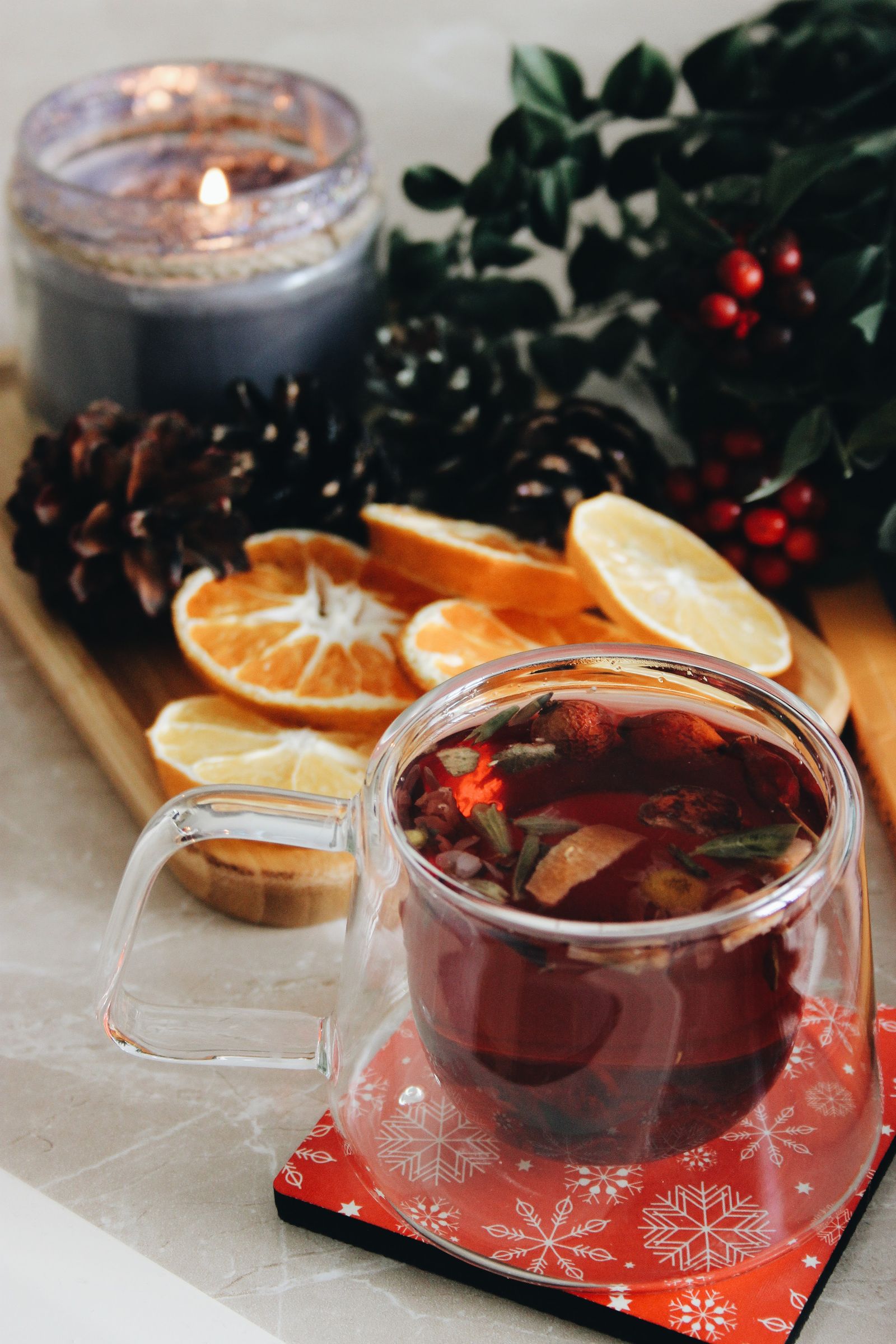
To prepare yuja-cha (citron tea), simply dissolve two to three heaped teaspoons of yuja-cheong in a mug of hot — not boiling — water. The slight temperature drop from boiling (to around 80°C/175°F) further protects heat-sensitive vitamin C. The resulting tea is golden-hued, fragrant, sweet-tart, and deeply warming — a sensory experience that has made it one of the most consumed traditional herbal beverages in Korea.
Dongji: The Winter Solstice and the Yuja Ritual
Dongji (동지), Korea's winter solstice celebration falling around December 22, is one of the country's most ancient seasonal observances — sometimes called the "little New Year" because it marks the turning point when daylight begins to lengthen again. The occasion is steeped in both symbolic meaning and practical health wisdom.
The most widely known dongji food is patjuk — red bean porridge believed to ward off malevolent spirits through the protective symbolism of its deep crimson color. But yuja plays its own distinctive role in Korean solstice wellness traditions: the ritual bath.
On or around dongji, families traditionally prepare a yuja-bath — a warm bath into which whole yuja fruits or bags of yuja peel are floated. The heat releases the volatile aromatic compounds from the peel, filling the bath with a citrusy, floral steam. This practice is grounded in several layers of traditional understanding:
- The aromatic steam from yuja essential oils (rich in limonene and other terpenes) was believed to purify and cleanse the body at the seasonal turning point
- Skin absorption of yuja's volatile compounds during the bath was thought to warm the meridians and invigorate circulation
- The ritual served as a symbolic purification — washing away the accumulation of the year's negativity as the sun began its return
- From a practical standpoint, the warm citrus bath also provided a measure of comfort and relaxation during the coldest, darkest period of the year
This tradition has notable parallels in Japanese culture, where a yuzu-yu bath on the winter solstice is widespread — a cross-cultural convergence that reflects the shared East Asian heritage of Citrus junos as both a culinary and wellness herb. In Korea, the dongji yuja-bath has experienced a meaningful revival in recent years as interest in traditional seasonal health practices has grown alongside the global wellness movement.
Health Benefits: What the Evidence Shows
The health claims associated with yuja in Korean tradition are increasingly supported by peer-reviewed scientific research. While most studies have been conducted in laboratory or animal models rather than large-scale human clinical trials, the findings provide a compelling scientific foundation for many traditional applications.
Immune Support and Respiratory Health
A 2022 study published in Nutrients examined the effects of a yuja peel extract (designated B215) on lung inflammation in a mouse model of house dust mite-induced respiratory disease. The extract — standardized to contain approximately 3.06 mg/g of naringin — significantly reduced inflammatory cell infiltration into lung tissue, lowered plasma IgE antibody levels, decreased mucus hypersecretion, and modulated immune cell populations. The researchers identified the mechanism as modulation of the NF-κB signaling pathway, a master regulator of inflammatory gene expression. The authors concluded that yuja peel extract "might be a promising functional food to treat lung inflammation without adverse effects."
An earlier study on the anti-inflammatory effects of limonene isolated from yuja essential oil found that this compound reduced the production of reactive oxygen species and inhibited monocyte chemoattractant protein-1 (MCP-1), a key cytokine involved in the recruitment of immune cells during inflammation.
Antioxidant and Skin Health
A 2022 study from Kyung Hee University, published in Antioxidants, evaluated three fractions of yuja peel extract in human skin cell models. The research demonstrated that yuja peel fractions:
- Inhibited the production of matrix metalloproteinases (MMP-1, MMP-9, MMP-13) triggered by UVB radiation — enzymes responsible for breaking down collagen and causing wrinkle formation
- Increased hyaluronic acid production in UV-damaged dermal cells, improving moisture retention
- Reduced melanin production and tyrosinase activity in melanoma cell models, supporting skin brightening effects
- Restored intracellular glutathione levels, a key measure of cellular antioxidant defense
These findings align directly with the traditional Korean use of yuja peel in skin-brightening preparations and explain the widespread use of yuja extract in contemporary Korean cosmetics and K-beauty formulations.
Metabolic and Liver Health
Research published in PLOS ONE demonstrated that yuja peel extract ameliorated hepatic lipid accumulation in both cell culture models and in mice fed a high-cholesterol diet, suggesting potential applications in supporting metabolic health. The flavonoids hesperidin and naringin appear to be the primary active compounds responsible for these metabolic effects, acting through pathways that regulate lipid synthesis in the liver.
Important Caveat
The majority of studies on yuja involve laboratory cell cultures or animal models. The direct applicability of these findings to humans consuming yuja-cheong or yuja-cha has not yet been established through large-scale randomized controlled trials. Yuja tea should be understood as a traditional wellness beverage with promising preliminary evidence — not a substitute for evidence-based medical treatment of any condition.
How to Make Yuja-Cha at Home
Making authentic yuja-cha at home is straightforward whether you have access to fresh yuja fruit or rely on commercially prepared yuja-cheong (readily available in Korean grocery stores and online).
Using Commercial Yuja-Cheong
This is the most accessible method for most households. Korean supermarkets stock several brands of yuja-cheong, typically in glass jars. The gold standard among Korean cooks is a product that uses raw honey rather than refined sugar as the maceration medium.
- Heat water to approximately 80–85°C (175–185°F) — hot but not boiling
- Place 2 to 3 generous teaspoons of yuja-cheong into your mug — this amount is considered the traditional therapeutic dose
- Pour the hot water over the preserve and stir gently until dissolved
- The tea will be golden-yellow; the peel strips and pulp will settle at the bottom and can be eaten
- Add a thin slice of fresh ginger or a stick of cinnamon for additional warming effect in very cold weather
Using Fresh Yuja (When Available)
If you are fortunate enough to find fresh yuja — at Korean markets in November and December — you can make your own yuja-cheong using the traditional method described earlier. Allow the preserve to rest for at least 2 weeks before using; 4 to 6 weeks produces the most developed flavor and aroma.
A single daily cup of yuja-cha made from two teaspoons of yuja-cheong delivers an estimated 25 to 40mg of vitamin C, meaningful quantities of hesperidin and naringin, and the soothing benefits of warm liquid and aromatic compounds. Many Korean households consume it nightly from November through February as a seasonal wellness ritual.
Culinary Uses Beyond Tea
While yuja-cha is the most globally recognized use of this ingredient, Korean cuisine employs yuja across a remarkably diverse range of preparations that showcase its aromatic complexity.
- Yuja dressing (yuja-cheong + rice vinegar + sesame oil): a classic accompaniment to raw vegetable salads, particularly in temple cuisine (sanchae-bibimbap)
- Yuja jelly (yuja-jelly): a popular winter dessert at Korean teahouses, using the natural pectin of the peel to create a delicate, amber-colored jelly
- Yuja-marinated fish: the acidity and aromatic oils of yuja are used in coastal Korean cuisine to cure raw fish preparations similar to ceviche
- Yuja-glazed rice cakes (yuja-tteok): festive rice cakes coated or flavored with yuja-cheong, traditionally made for winter celebrations
- Yuja salt (yuja-sogeum): dried yuja peel ground with sea salt creates a finishing condiment used in grilled meats and seafood
- Yuja liqueur: artisan Korean spirit producers have begun creating small-batch yuja-infused spirits that are gaining international recognition
- Cold brew yuja tea: a contemporary variation in which yuja-cheong is dissolved in cold water and refrigerated overnight, creating a refreshing, lightly sparkling drink when served over ice
The ingredient's aromatic profile — a layered combination of floral, tart, sweet, and faintly herbal notes — has made it increasingly popular among international chefs seeking an authentic Korean flavor element for fine dining menus.
Goheung County: Korea's Yuja Heartland
Understanding yuja properly requires understanding Goheung County (고흥군), the coastal county in South Jeolla Province where more than 60 percent of Korea's total yuja is grown. Goheung's yuja has achieved the status of a regional identity marker — visitors travel specifically during the November harvest festival to witness the transformation of the landscape into groves of golden fruit.
The local microclimate — sea breezes modulating temperature extremes, high humidity from the surrounding sea, and mineral-rich volcanic soil — produces fruit with a distinctively thick, oil-laden peel and higher-than-average vitamin C content compared to specimens grown in warmer, drier conditions. Local farmers have maintained cultivation practices largely unchanged for generations: minimal chemical inputs, hand-harvesting to avoid bruising the delicate skin, and immediate processing within hours of picking to preserve volatile aromatic compounds.
The Goheung Yuja Festival held each November has become one of South Korea's most celebrated regional food festivals, drawing visitors who come to participate in hands-on yuja-cheong making workshops, observe the industrial sorting and slicing process, and purchase fresh fruit and aged preserves directly from producers.
Safety, Considerations, and Who Should Take Care
Yuja is a food-grade citrus fruit with an excellent safety record when consumed in culinary or traditional beverage amounts. However, several considerations are relevant for specific populations:
- Drug interactions: like many citrus fruits, yuja contains furanocoumarins — compounds that can inhibit cytochrome P450 3A4 (CYP3A4) enzymes in the intestinal wall. This inhibition can affect the metabolism of certain prescription medications. Anyone taking statin medications, calcium channel blockers, immunosuppressants, or sedatives should discuss citrus consumption with their prescribing physician. The interaction risk with yuja is considered lower than with grapefruit, but caution is appropriate in high-dose supplement forms.
- Citrus allergy: individuals with documented citrus allergies should avoid yuja and yuja-derived products. Cross-reactivity with other citrus fruits is possible.
- High-dose supplements: concentrated yuja peel extracts sold as supplements may deliver quantities of bioactive compounds well above culinary levels. These products have not been evaluated by regulatory agencies in most countries and should be used with caution, particularly in pregnancy or alongside prescription medications.
- Dental erosion: regular consumption of undiluted yuja juice, with a pH similar to lemon juice, may contribute to dental enamel erosion over time. Yuja-cha diluted in water presents a much lower risk than direct juice consumption.
- Pregnancy and nursing: yuja-cha in traditional beverage quantities is generally considered safe during pregnancy in Korean tradition, but concentrated extracts or therapeutic doses should be discussed with a qualified healthcare provider.
Reviewed by: This article has been reviewed by a licensed practitioner in Traditional Korean Medicine for factual accuracy regarding traditional uses. It is intended for educational purposes only and does not constitute medical advice. Always consult a qualified healthcare provider before using herbal preparations for health conditions.
References
- Jung HS, et al. "Skin Improvement with Antioxidant Effect of Yuja (Citrus junos) Peel Fractions: Wrinkles, Moisturizing, and Whitening." Antioxidants (Basel). 2023 Jan;12(1):51. doi:10.3390/antiox12010051. PMC9854771.
- Kim MJ, et al. "Citrus junos Tanaka Peel Extract Ameliorates HDM-Induced Lung Inflammation and Immune Responses In Vivo." Nutrients. 2022 Nov;14(23):5024. doi:10.3390/nu14235024. PMC9740624.
- Yoon SR, et al. "Variation in Major Antioxidants and Total Antioxidant Activity of Yuzu (Citrus junos Sieb ex Tanaka) during Maturation and between Cultivars." Journal of Agricultural and Food Chemistry. 2004;52(19):5907–5913. doi:10.1021/jf0498158. PMID:15366841.
- Kim SM, et al. "Citrus junos Tanaka peel ameliorates hepatic lipid accumulation in HepG2 cells and in mice fed a high-cholesterol diet." PLOS ONE. 2016;11(11):e0166722. PMC5135759.
- Korea Institute of Oriental Medicine (KIOM), Herbal Resources Research Center. "Deungja-pi (등자피)." KIOM Herbal Dictionary. herba.kr. Accessed June 2026.
- Cho EJ, et al. "Sudachinoid- and Ichangensin-Type Limonoids from Citrus junos Downregulate Pro-Inflammatory Cytokines." International Journal of Molecular Sciences. 2020;21(19):7122. PMC7555237.
- Seoul National University Open Repository. "유자(Citrus junos) 추출물의 페놀 화합물 분석 및 생리 활성 효과 측정" [Phenolic compound analysis and bioactivity evaluation of Citrus junos extracts]. SNU-Space. s-space.snu.ac.kr. Accessed June 2026.
- DBpia / Korean Society of Food Science and Nutrition. "유자씨 추출물의 생리활성과 암세포 성장 억제효과" [Biological activity and cancer cell growth inhibition effects of yuza seed extracts]. Journal of the Korean Society of Food Science and Nutrition. dbpia.co.kr. Accessed June 2026.
- Korean Citation Index (KCI). "유자, 탱자 및 귤과피 추출물의 항산화효능과 항균효과" [Antioxidant and antimicrobial effects of yuja, trifoliate orange, and tangerine peel extracts]. KCI Portal. kci.go.kr. Accessed June 2026.
- Kim NK. "Cheong Syrup: Korean Fruit Preserve Explained." Explore Korea Now. explorekoreanow.com. Accessed June 2026.