Yuzu (柚子): Japan's Golden Citrus for Wellness
Discover yuzu (Citrus junos), Japan's golden citrus prized for centuries — from the Tōji winter solstice bath (yuzu-yu) to hesperidin-rich peel extracts and linalool-containing essential oil studied for stress relief. A deep dive into tradition, bioactive compounds, and practical preparation.
Medical Disclaimer: This content is for educational and informational purposes only and is not medical advice. The information presented is not intended to diagnose, treat, cure, or prevent any disease. Always consult a licensed healthcare practitioner before starting any new herbal or dietary practice. Statements about traditional use have not been evaluated by the FDA.
Affiliate Disclosure: This article may contain affiliate links. We may earn a small commission if you purchase through these links, at no additional cost to you.
Pick up a yuzu and bring it to your nose. The aroma that meets you is unlike any other citrus in the world — a complex, layered fragrance that blends floral notes with a sharp piney brightness, something between lemon zest, mandarin peel, and grapefruit, with an almost herbaceous green quality underneath. In Japan, this distinctive scent has been a fixture of daily life for more than a thousand years: in the kitchen, in the bath, in the winter festival calendar, and increasingly in the science laboratory.
Yuzu (Citrus junos Sieb. ex Tanaka) is a small, knobby citrus fruit native to East Asia, with a flavor so intense and complex that even a teaspoon of its juice can transform an entire dish. Yet for much of its history, yuzu was not primarily a culinary ingredient — it was a wellness fruit, used in folk tradition for everything from warming winter baths to preparing tonics against the cold. Today, researchers are examining the bioactive compounds behind these long-standing practices, finding hesperidin, narirutin, limonene, and linalool at the intersection of tradition and contemporary wellness science.
This article explores yuzu from the ground up: its origins in East Asian horticultural history, the Tōji winter solstice bath tradition that still takes place across Japan every December, its remarkable culinary heritage, the specific compounds in peel and essential oil that have attracted scientific attention, and how you can incorporate yuzu into a modern wellness routine through tea, aroma, and cooking.
Origins and Traditional History: From China's Mountains to Japan's Gardens
Yuzu did not originate in Japan. Botanical evidence and historical records point to the highlands of China — the Yangtze River basin, at altitudes where harsh winters would have shaped the plant's remarkable cold-hardiness — as the species' ancestral home. Citrus junos is believed to be a natural hybrid of Citrus ichangensis (Ichang lemon) and a mandarin variety (C. reticulata), a cross that occurred perhaps thousands of years ago in central China.
The fruit arrived in Japan during the Asuka and Nara periods (roughly 6th–8th centuries CE), carried along the same cultural and horticultural routes that brought Buddhism, Chinese script, and Tang Dynasty arts to the Japanese archipelago. Once established in Japan's variable mountain climate — particularly in the Shikoku region, which remains the country's primary yuzu-producing area today — the fruit adapted and was selectively cultivated into the distinctive yuzu variety known to Japanese culture.
In China, yuzu and its close relatives are known collectively as xiāng yuán (香橼) or in specific varieties as yòuzi (柚子, though the character set often refers to pomelo). In classical Chinese pharmacy, the dried peel of citrus fruits — known as chénpí (陳皮, aged peel) — holds a place in Kampo and Traditional Chinese materia medica as an ingredient used to support digestion and warm the body. In Korean culture, the equivalent fruit is called yuja (유자), and the traditional preparation known as yuja-cheong (honey-preserved yuzu syrup) is a staple winter wellness drink still found in every Korean household.
Japan's own relationship with yuzu deepened across the Heian period (794–1185 CE), when the Imperial court embraced the fruit's aromatics in cosmetic and bathing preparations. By the Edo period (1603–1868), yuzu had become woven into seasonal festivals, folk wellness practice, and the emerging tradition of the public bathhouse.
The Tōji Tradition: Yuzu-yu and the Winter Solstice Bath
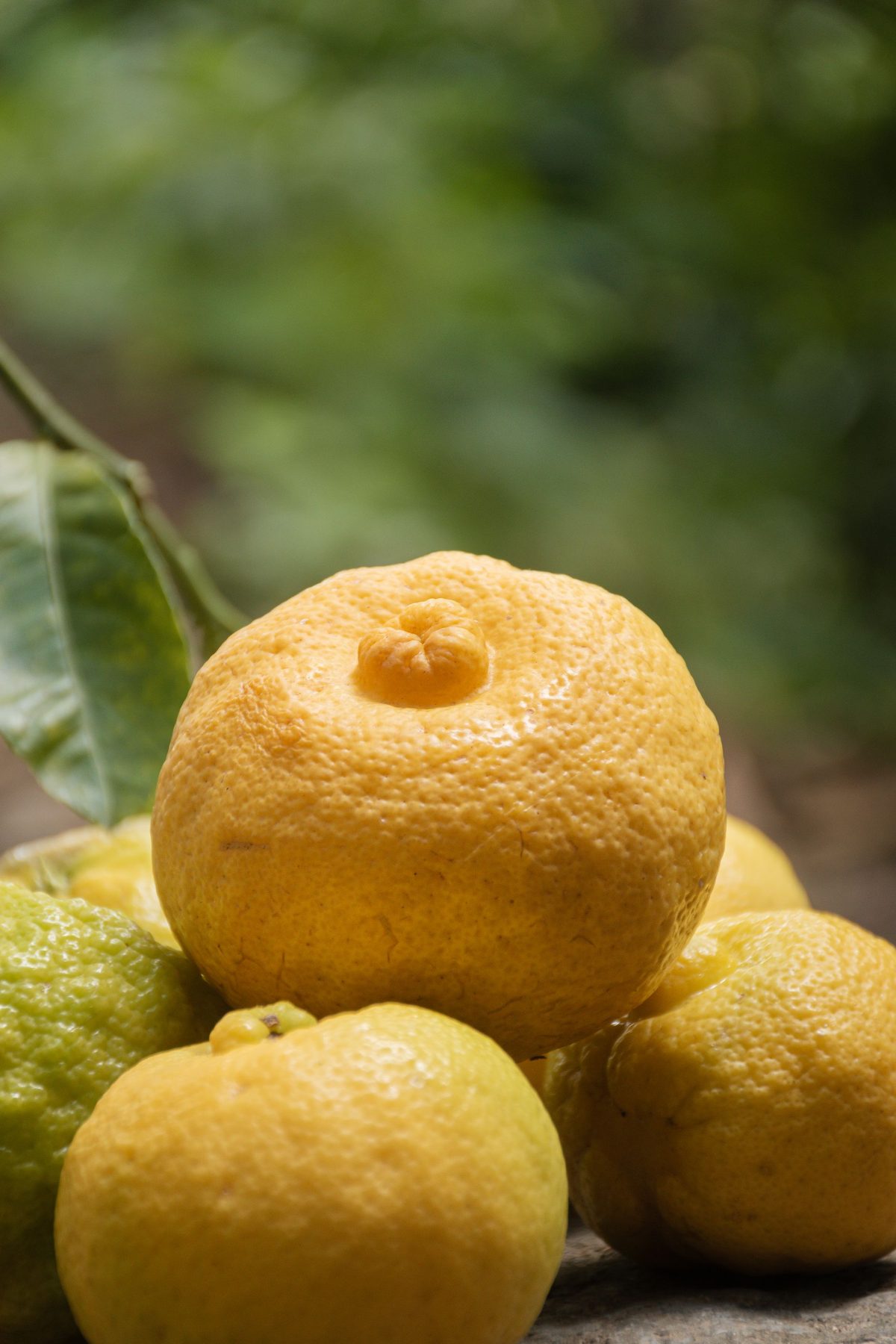
Every year around December 21st or 22nd, Japan observes Tōji (冬至) — the winter solstice. Tōji marks the year's longest night and the symbolic turning point when sunlight begins to return, a shift from yin energy to yang, from cold to warmth. Across Japan, households and public bathhouses (sentō) observe the season by floating whole yuzu fruits in the hot bathwater, creating the practice known as yuzu-yu (柚子湯) — literally "yuzu hot water."
The tradition's origins lie in the Edo period, when public bathhouses became social and cultural centers. The earliest textual record appears in the Tōto Saijiki (東都歳時記), an early 19th-century encyclopedia of Edo seasonal customs, which describes yuzu baths as a fixture of Tōji observance [JCCCW, Yuzu Bath tradition]. A linguistic playfulness also underlies the custom: the words tōji (冬至, winter solstice) and tōji (湯治, hot-spring cure) share the same pronunciation — a goroawase (語呂合わせ) wordplay that connected bathing with seasonal healing.
Folk wellness beliefs held that plants with strong aromas possessed protective qualities — capable of warding off illness and malevolent spirits that might exploit the vulnerability of the season's coldest night. Yuzu, with its exceptionally potent essential oil, was considered particularly powerful. The aromatic oils released by yuzu peel into hot bathwater were believed to warm the body deeply, protect against winter colds, and soften dry, chapped skin.
Today, yuzu-yu is observed not only in homes and traditional bathhouses but in modern spas and hot spring (onsen) resorts across Japan. During the Tōji season, bags of whole yuzu are sold at grocery stores specifically for bath use. The practice endures because, as many Japanese describe it, the warmth of the yuzu bath and its citrus fragrance filling the bathroom create a moment of genuine seasonal comfort — what the Japanese might call a form of sensory omotenashi (hospitality) that one offers oneself on the darkest night of the year.

Culinary Heritage: Yuzu Kosho, Ponzu, and Beyond
If yuzu's bathing tradition reflects its role as a folk wellness fruit, its culinary applications reveal the extraordinary depth of Japanese ingredient culture. Yuzu is rarely eaten whole — the fruit contains relatively little juice and a large seed-to-flesh ratio — but its peel and juice are irreplaceable in Japanese cooking.
Yuzu kosho (柚子胡椒) is perhaps yuzu's most distinctive culinary expression. This fermented condiment from Kyushu — made by combining fresh green or yellow yuzu zest with green or red chili peppers and salt, then allowing the mixture to ferment — delivers an intense, complex heat that is simultaneously citrusy, herbal, and peppery. It is traditionally served alongside hot pot dishes (nabemono), grilled fish, sashimi, and miso soup, adding a small but transformative touch of complexity. Despite its name, kosho refers not to black pepper (koshō) but to a dialectal Kyushu term for chili pepper [Wikipedia, Yuzu koshō].
Ponzu (ポン酢) — the ubiquitous Japanese citrus-soy dipping sauce — derives much of its characteristic brightness from yuzu juice (or a blend of Japanese citrus). Used as a dipping sauce for shabu-shabu, dressings for salads and cold tofu, and a marinade base, ponzu represents yuzu's contribution to everyday Japanese dining. Authentic ponzu made with freshly squeezed yuzu juice has a fragrance and depth quite different from mass-produced versions made with lemon or imported citrus.
Beyond these flagship applications, yuzu appears as zest in chawanmushi (savory egg custard), as juice in rice seasonings, as a fragrant component of miso preparations, and as the defining flavour in countless regional confections. In Shikoku — the primary yuzu-growing region, particularly Umaji Village in Kochi Prefecture — local producers have developed dozens of yuzu-based products including vinegar, sake, liqueur, chocolates, and skincare.
Internationally, yuzu has become one of the most sought-after Japanese ingredients in fine dining since the 1990s, appearing on menus from Copenhagen to New York as chefs discovered its ability to provide citrus acidity with an aromatic complexity no Western citrus can replicate.
Key Bioactive Compounds
What makes yuzu scientifically interesting is the concentration and variety of its bioactive compounds, particularly in the peel — the part of the fruit that carries its signature aroma and that has been used in folk wellness practice for centuries.
Hesperidin and Narirutin
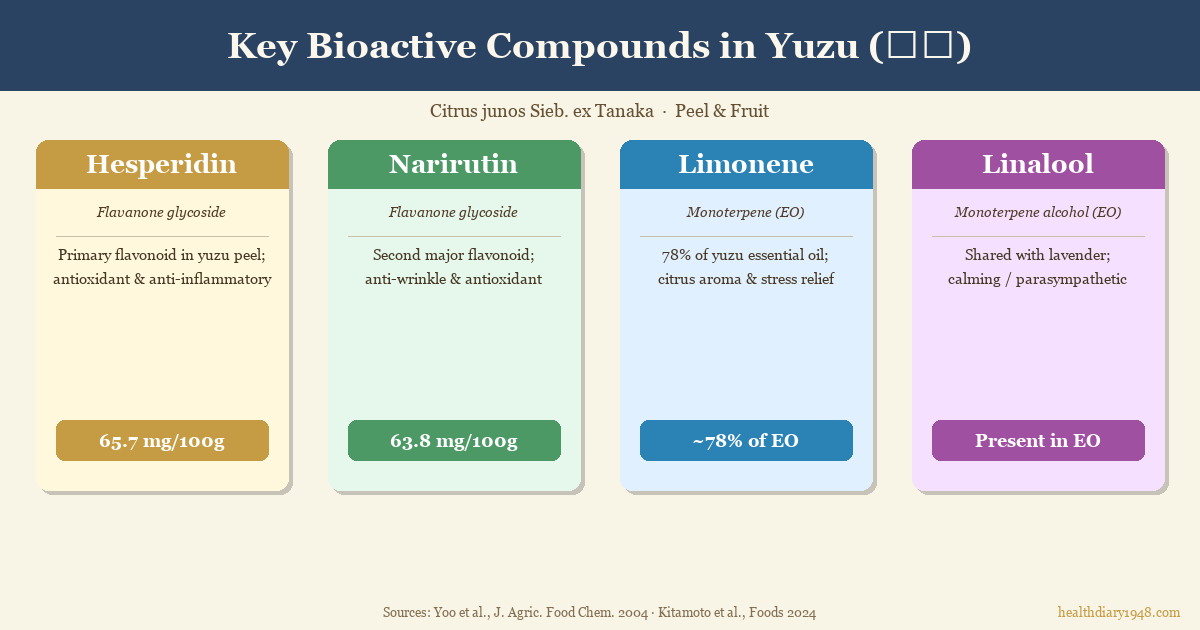
The two dominant flavonoid glycosides in yuzu peel are hesperidin and narirutin. A foundational study by Yoo et al. published in the Journal of Agricultural and Food Chemistry (2004) analyzed yuzu cultivars across maturation stages and found hesperidin at 65.7 mg/100g and narirutin at 63.8 mg/100g — both among the highest concentrations found in any citrus fruit [Yoo et al., J. Agric. Food Chem., 2004, DOI: 10.1021/jf0498158]. The study also established that vitamin C (90.4 mg/100g) plays a key role in total antioxidant activity, which increases as the fruit matures.
A 2023 study published in Biochemical Engineering Journal specifically examined extraction and purification of hesperidin and narirutin from green (unripe) yuzu (Citrus junos) and evaluated their biological activities [Extraction and purification of narirutin and hesperidin from green yuzu, Biochem. Eng. J., 2023]. Both compounds demonstrated antioxidant and anti-inflammatory properties in laboratory assays, consistent with findings across other hesperidin-containing citrus fruits.
Limonene
Limonene is the dominant monoterpene in yuzu essential oil, comprising approximately 78% of the oil's composition. As the primary carrier of yuzu's fresh citrus character, limonene has been studied extensively across citrus species for potential antioxidant and anti-inflammatory properties in preclinical models. In yuzu's aromatic profile, limonene contributes the bright, clean citrus top note before deeper floral and sulfurous character compounds emerge.
Linalool and Aroma Compounds
Linalool, a monoterpene alcohol found in both lavender and yuzu essential oil, is the compound that has attracted particular attention in stress-response research. A landmark study using J-STAGE resources — Yukawa et al. (1995) published in the Journal of the Japanese Society of Food Chemistry — conducted systematic GC-MS analysis of yuzu peel oil and identified its character impact compound as 1-p-menthene-8-thiol, alongside a full suite of terpene and aroma compounds including linalool, γ-terpinene, and β-pinene [Yukawa et al., J. Japanese Soc. Food Chem., 1995, DOI: 10.18891/jjfcs.1.1_46].
More recent research (Kitamoto et al., Foods, 2024) studied synthetic yuzu fragrance components including terpinen-4-ol, limonene, and linalool in both human participants (n=34) and mouse models. In humans, heart rate was significantly lower in the yuzu fragrance group during mental stress tasks compared to controls, suggesting a calming effect on sympathetic nervous system activity. The study also found increased hippocampal expression of BDNF (brain-derived neurotrophic factor) in mice exposed to yuzu fragrance — a preliminary finding requiring further investigation [Kitamoto et al., Foods, 2024, DOI: 10.3390/foods13193051].
How Do People Use Yuzu for Wellness Today?
Contemporary yuzu wellness practices draw on both centuries-old tradition and modern aromatherapy interest, with the understanding that individual responses vary considerably and that no single approach suits everyone.
- Yuzu bath at home: Following the Tōji tradition, floating 2–4 whole yuzu fruits (or yuzu bath salts) in hot bathwater releases essential oils from the peel. Many people in Japan practice this year-round, not only at the winter solstice, as a way to unwind after a long day. The warmth of the bath combined with the aromatic steam creates a multisensory experience that many find genuinely calming.
- Yuzu tea (yuja-cha): The Korean and Japanese tradition of preparing yuzu as a warm citrus infusion — either from preserved yuja-cheong syrup or fresh juice — provides an alternative to caffeinated beverages that is particularly popular in winter. Unlike most "teas," yuja-cha contains no tea leaves and no caffeine.
- Yuzu essential oil aromatherapy: Cold-pressed yuzu peel oil has become available from specialty aromatherapy suppliers. Used in diffusers or diluted in carrier oils for massage, yuzu EO provides a complex citrus-floral aroma distinct from common citrus oils. As with all essential oils, skin application requires appropriate dilution.
- Culinary wellness: Incorporating yuzu zest and juice into everyday cooking adds its antioxidant flavonoids to the diet in the same way that using lemon zest does. In Japanese dietary culture, yuzu has always been understood as food first — a seasoning that makes food more appealing while contributing nutrients from a whole-food source.
- Yuzu kosho and fermented preparations: The fermentation process that produces yuzu kosho may support gut microbiome diversity, though research specifically on yuzu kosho in this context remains limited.
What Does the Research Say About Yuzu?
The scientific evidence around yuzu is promising but still developing. It is important to distinguish between what laboratory and preliminary human studies suggest and what has been established through large-scale clinical trials — the latter of which does not yet exist for yuzu specifically.
The strongest human-subject evidence comes from aromatherapy research. Matsumoto, Kimura, and Hayashi (2016) conducted a single-blind randomized controlled crossover study with 21 women examining yuzu aroma's effects on psychoemotional states and autonomic nervous system activity across the menstrual cycle. Published in BioPsychoSocial Medicine, the study found that yuzu fragrance inhalation for 10 minutes reduced tension-anxiety, anger-hostility, confusion, and total mood disturbance scores while increasing parasympathetic nervous system activity (measured via heart rate variability) — effects comparable in direction to those seen with lavender [Matsumoto et al., BioPsychoSocial Medicine, 2016, DOI: 10.1186/s13030-016-0063-7].
A subsequent study by the same lead researcher (Matsumoto, Kimura, Hayashi, 2017) in the Journal of Alternative and Complementary Medicine extended this work to 17 women with subjective premenstrual symptoms, finding that yuzu fragrance alleviated premenstrual emotional symptoms including anxiety and fatigue with effects similar in direction to lavender aromatherapy [Matsumoto et al., J. Altern. Complement. Med., 2017, DOI: 10.1089/acm.2016.0328].
For the flavonoid compounds in yuzu peel, the research base is primarily in vitro (cell culture) and animal studies. While hesperidin and narirutin consistently show antioxidant activity in laboratory settings, translating these findings to human dietary benefits requires substantially more clinical research. The antioxidant properties of hesperidin in cell assays do not directly predict equivalent effects from drinking yuzu tea at typical concentrations.
The overall picture is of a fruit with a genuinely interesting biochemical profile and preliminary human-subject support for its aromatic properties, but one where the research is at an early stage. These findings should be interpreted as directional and encouraging rather than definitive.
Yuzu Tea (Yuja-cha): Preparing a Traditional Citrus Infusion
Yuzu tea — called yuja-cha (유자차) in Korean and yuzu-cha (柚子茶) in Japanese — is one of the most accessible ways to incorporate yuzu into daily life. Unlike most herbal infusions, it contains no actual tea leaves and therefore no caffeine, making it suitable for all ages at all times of day.
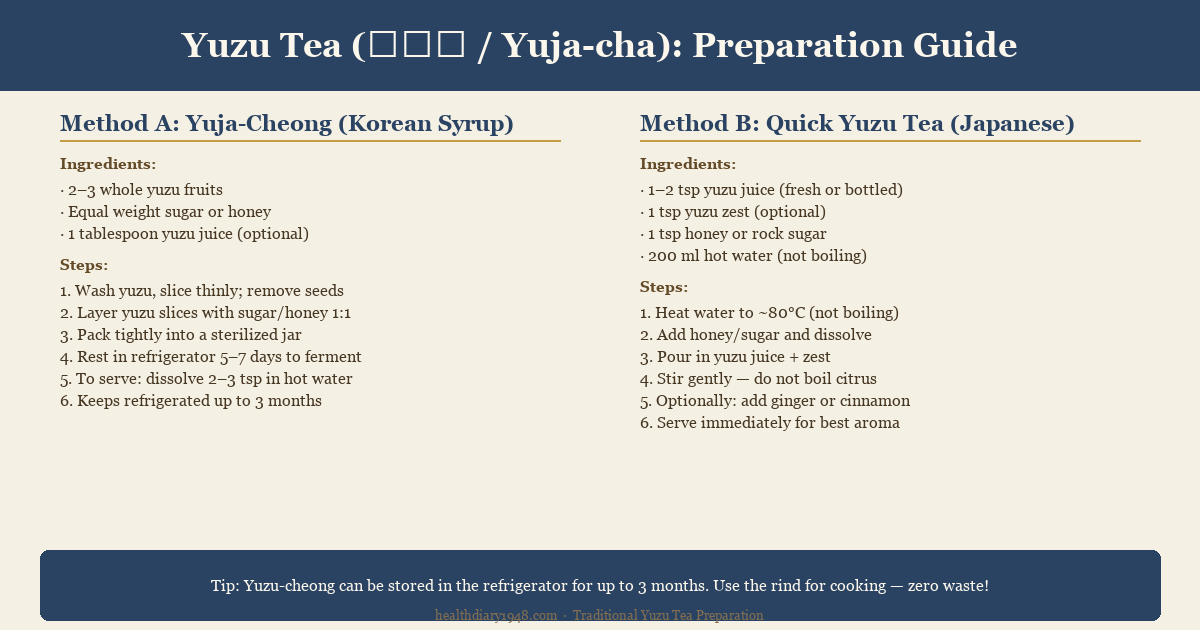
The Korean method begins with making yuja-cheong (유자청) — a preserved citrus syrup that keeps in the refrigerator for months. Wash 2–3 whole yuzu fruits, slice them thinly, and remove the seeds. Layer the slices with an equal weight of sugar or honey in a sterilized glass jar. Press firmly, seal, and refrigerate for 5–7 days to allow the sugar to draw out the citrus juices and begin gentle fermentation. To serve, dissolve 2–3 teaspoons of this syrup in a cup of hot water (approximately 80°C — not boiling, which would degrade the delicate aromatic compounds). The resulting tea carries both the sweetness of the syrup and the complex floral-citrus aroma of fresh yuzu.
For a quicker Japanese-style preparation, combine 1–2 teaspoons of fresh yuzu juice with 1 teaspoon of honey or rock sugar dissolved in 200 ml of water heated to 80°C. Add a small piece of yuzu zest for additional fragrance. Ginger or cinnamon can be included for warming depth, which aligns with the traditional folk wellness use of warming the body in winter.
Fresh whole yuzu is available in Japan and Korea seasonally (primarily October through December) and can sometimes be found at Japanese or Korean grocery stores internationally. Bottled yuzu juice, yuzu-cheong syrup, and freeze-dried yuzu powder are available year-round through specialty retailers and provide acceptable alternatives for those outside the fruit's seasonal and geographic range.
Precautions and Practical Guidance
Yuzu consumed as a food or beverage in typical culinary amounts is generally considered safe for healthy adults. A few considerations are worth noting:
- Drug interactions (citrus caution): Grapefruit is well-known for inhibiting CYP3A4, an enzyme involved in metabolizing many medications. Yuzu contains some furanocoumarins, though at significantly lower concentrations than grapefruit. The clinical significance at normal culinary amounts is considered low, but individuals taking statins, immunosuppressants, certain anticoagulants, or calcium channel blockers should inform their prescribing physician about regular yuzu consumption.
- Essential oil safety: Yuzu essential oil is photosensitizing and should not be applied to skin that will be exposed to sunlight without appropriate dilution and testing. All essential oils require proper carrier oil dilution before topical use and should be kept away from children and pets.
- Pregnancy and breastfeeding: Yuzu as a food ingredient is not contraindicated in pregnancy, but concentrated yuzu extracts or supplements have not been studied in pregnant populations. Pregnant individuals should follow their healthcare provider's specific guidance.
- Allergies: Cross-reactivity with other citrus fruits is possible in individuals with citrus allergies. Those with known citrus allergies should exercise appropriate caution.
- Yuzu-cheong sugar content: Traditional yuja-cheong is made with a 1:1 ratio of fruit to sugar, making it high in free sugars. Individuals monitoring blood glucose or total sugar intake should be mindful of serving sizes or opt for honey-based preparations with smaller amounts.
- Sourcing: Yuzu peel is often used with peel-on preparations; selecting organic or minimally treated fruit reduces exposure to pesticide residues concentrated in citrus peel.
Frequently Asked Questions
What does yuzu taste like?
Yuzu has an extraordinarily complex flavor — simultaneously tart like lemon, floral like mandarin, slightly bitter like grapefruit, and possessed of a unique piney, almost herbal quality that no single Western citrus replicates. Its juice is very acidic (more so than lemon) and intensely fragrant. The zest is the most aromatic part; even a small amount transforms a dish. Many people describe yuzu as the citrus fruit with the most personality — one that you recognize immediately once you have experienced it.
Is yuzu the same as Japanese citron or yuja?
These names all refer to the same fruit — Citrus junos. In Japanese it is yuzu (柚子), in Korean yuja (유자). The term "Japanese citron" is used in English to distinguish it from true citron (Citrus medica), which is a different species. Despite the "citron" label, yuzu is botanically closer to mandarin and Ichang lemon. All names refer to the same aromatic, cold-hardy East Asian citrus with the characteristic bumpy skin and knobbed apex.
What is the Tōji yuzu bath (yuzu-yu) tradition?
Tōji (冬至) is Japan's winter solstice, observed around December 21–22 each year. The traditional practice of floating whole yuzu fruits in hot bathwater on this night — called yuzu-yu (柚子湯) — dates to the Edo period (1603–1868). The tradition combines folk wellness belief (that yuzu's strong aroma wards off winter illness and cold) with a linguistic wordplay: both "winter solstice" (冬至, tōji) and "hot-spring cure" (湯治, also tōji) share the same pronunciation. Today, this tradition continues in homes, public bathhouses, and onsen resorts across Japan every December.
Can I use yuzu essential oil on my skin?
Yuzu essential oil can be used topically, but it must be properly diluted in a carrier oil (typically 1–2% concentration, or 1–2 drops per teaspoon of carrier oil). Cold-pressed citrus oils including yuzu are photosensitizing — applying undiluted or even diluted oil to skin that will be exposed to sunlight may cause irritation or pigmentation changes. Perform a patch test before wider application, and avoid sun exposure for 12–24 hours after topical use. Steam-distilled yuzu EO has lower phototoxicity risk than cold-pressed versions. Consult an aromatherapy professional for personalized guidance.
How does yuzu compare to other citrus fruits for wellness?
Yuzu stands out primarily through its aromatic complexity and flavonoid concentration. Its hesperidin content (65.7 mg/100g) and narirutin content (63.8 mg/100g) are among the highest measured in citrus, and its essential oil profile — with limonene at ~78% plus linalool and characteristic sulfur compounds — is uniquely complex. Research on yuzu's aromatherapy effects specifically has produced encouraging preliminary results in human studies, something not all citrus oils can claim. However, yuzu is much harder to source fresh outside East Asia than lemon or orange, and in terms of vitamin C content, it is comparable to but not dramatically superior to other common citrus fruits.
Where can I buy yuzu outside Japan?
Fresh yuzu is seasonally available (October–December) at Japanese grocery stores, specialty Asian supermarkets, and some high-end food retailers in major cities globally. For year-round use, bottled 100% yuzu juice (available from Japanese specialty importers), frozen yuzu zest, yuzu kosho condiment, and yuja-cheong syrup (widely available in Korean grocery stores as "citron tea syrup") are reliable alternatives. Yuzu essential oil is available from aromatherapy specialty retailers. Quality varies considerably; look for products with minimal added ingredients and, for juice, "Citrus junos" on the ingredient label.
About This Article
Written by: Health Diary Editorial Team — researchers and writers specializing in traditional Asian wellness practices, Japanese food culture, and evidence-informed wellness content.
Editorial review: This article has been reviewed by the Health Diary editorial team for accuracy, structure, and adherence to sourcing standards. Key claims were cross-checked against peer-reviewed literature on Citrus junos bioactive compounds, PubMed-indexed aromatherapy studies, J-STAGE Japanese food chemistry research, and established cultural sources on Tōji tradition. This article is educational in nature and does not constitute clinical guidance.
Reviewed on: June 14, 2026.
Editorial process: We cite peer-reviewed sources where available. When a clinical reviewer is added to this article, their credentials will appear here.
References
- Yoo, K.M., Lee, K.W., Park, J.B., Lee, H.J., & Hwang, I.K. (2004). Variation in major antioxidants and total antioxidant activity of Yuzu (Citrus junos Sieb ex Tanaka) during maturation and between cultivars. Journal of Agricultural and Food Chemistry, 52(19), 5907–5913. https://pubmed.ncbi.nlm.nih.gov/15366841/
- Yukawa, C., Osaki, K., & Iwabuchi, H. (1995). 柚子(Citrus junos Sieb.ex T.Tanaka)の香気成分に関する研究 [Research on aroma components of yuzu]. 日本食品化学学会誌 (Journal of the Japanese Society of Food Chemistry), 1(1), 46–49. https://doi.org/10.18891/jjfcs.1.1_46
- Matsumoto, T., Kimura, T., & Hayashi, T. (2016). Aromatic effects of a Japanese citrus fruit — yuzu (Citrus junos Sieb. ex Tanaka) — on psychoemotional states and autonomic nervous system activity during the menstrual cycle: a single-blind randomized controlled crossover study. BioPsychoSocial Medicine, 10, 11. https://pubmed.ncbi.nlm.nih.gov/27103942/
- Matsumoto, T., Kimura, T., & Hayashi, T. (2017). Does Japanese Citrus Fruit Yuzu (Citrus junos Sieb. ex Tanaka) Fragrance Have Lavender-Like Therapeutic Effects That Alleviate Premenstrual Emotional Symptoms? A Single-Blind Randomized Crossover Study. The Journal of Alternative and Complementary Medicine, 23(6), 461–470. https://www.liebertpub.com/doi/10.1089/acm.2016.0328
- Kitamoto, et al. (2024). Antistress Effects of Terpinen-4-ol and Compounds of Mimicked Yuzu Synthetic Fragrance in Humans and Mice. Foods, 13(19), 3051. https://pmc.ncbi.nlm.nih.gov/articles/PMC11475151/
- Extraction and purification of narirutin and hesperidin from green yuzu (Citrus junos) and evaluating their biological activities. (2023). Biochemical Engineering Journal. https://www.sciencedirect.com/science/article/abs/pii/S1359511323002775
- Japanese Cultural and Community Center of Washington. Yuzu Bath — A Japanese Tradition for the Winter Solstice. https://www.jcccw.org/nikkei-news/yuzu-bath-a-japanese-tradition-for-the-winter-solstice
- Wikipedia contributors. Yuzu koshō. Wikipedia. https://en.wikipedia.org/wiki/Yuzu_kosh%C5%8D