Daily Wellness Routines Inspired by Asian Traditions for Healthy Aging
Discover daily wellness routines from Japanese, Chinese, Korean, and Vietnamese traditions -- morning rituals, herbal teas, movement practices, and seasonal eating habits for healthy aging.
Medical Disclaimer: This content is for educational and informational purposes only and is not medical advice. The information presented reflects traditional Asian cultural practices and folk traditions and is not intended to diagnose, treat, cure, or prevent any disease. Always consult a licensed healthcare practitioner before starting any new wellness practice, herbal routine, or supplement. Statements regarding traditional practices have not been evaluated by the FDA.
Affiliate Disclosure: This article may contain affiliate links. We may earn a commission if you purchase through these links, at no additional cost to you. We only recommend products we believe align with our editorial standards.
Across Asia, healthy aging has never been seen as something that happens by accident. From the morning parks of Beijing to the tea rooms of Kyoto, from the family kitchens of Seoul to the herbal gardens of Hanoi, daily life is shaped by small, consistent rituals that communities have refined over many generations. These are not dramatic interventions -- they are quiet, repeatable habits woven into the texture of an ordinary day.
Modern research has begun to examine what practitioners of these traditions have long understood: that how we structure our mornings, what we drink throughout the day, how we move our bodies, what we eat across the seasons, and how we wind down in the evening all play a meaningful role in how we age. This article draws on traditional practices from Japan, China, Korea, and Vietnam -- alongside current research -- to explore daily wellness routines that modern readers may find worth incorporating into their own lives. Individual experiences vary considerably; what works well for one person may not suit another.
What Morning Routines Support Healthy Aging?
In many Asian wellness traditions, the morning is considered the most important part of the day. The body is transitioning from rest to activity, and how that transition is handled -- gently or abruptly -- may set the tone for hours to come.
Warm water on waking is one of the most widely shared morning practices across China and much of East Asia. Rather than reaching for cold water or coffee immediately, many people in these cultures begin with a cup of plain warm or hot water. From a traditional Chinese wellness perspective, this is thought to gently activate the digestive system and encourage circulation after overnight rest. While research specifically on warm water as a morning ritual is limited, the broader habit of starting the day with hydration before eating is widely supported as a sensible wellness practice.
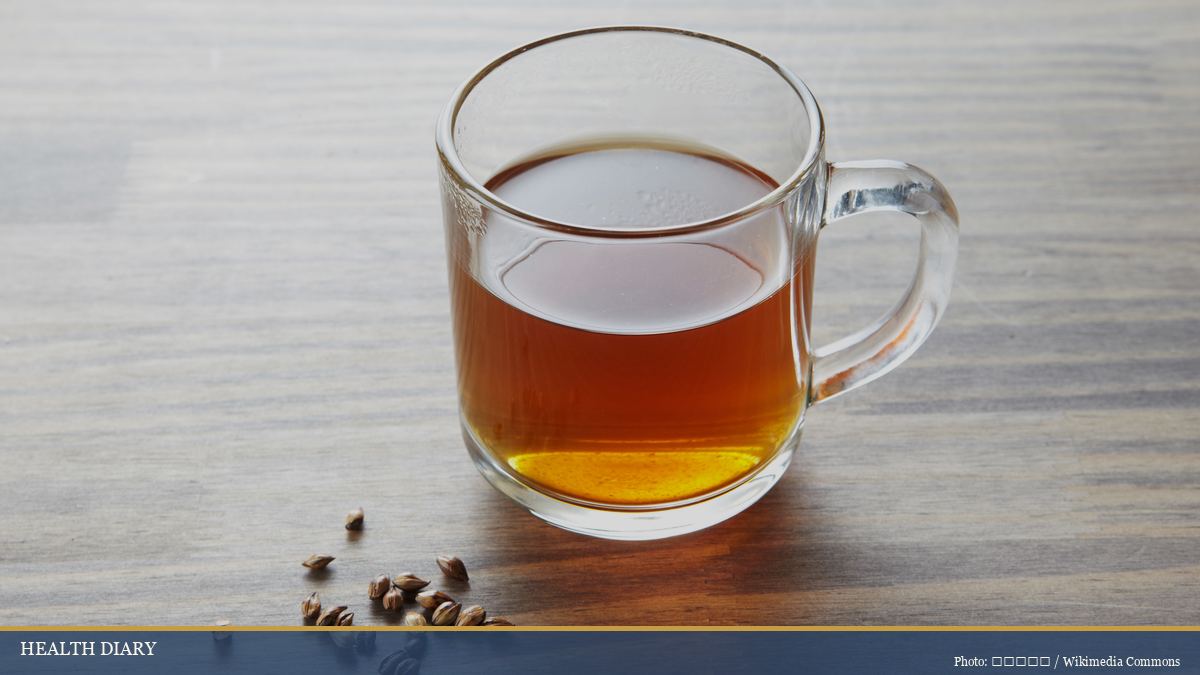
Morning herbal tea follows naturally. In Japan, a cup of green tea -- often sencha or matcha -- is a fixture of the morning routine for millions of people. A 2021 study published in Nutrients examining 5,668 Japanese adults aged 65 and over found that habitual green tea consumption was associated with lower prevalence of frailty: men who drank three or more cups per day showed 71% reduced odds of frailty (OR=0.71), while women who drank one to two cups daily showed 49% reduced odds (OR=0.51) [1]. In Korea, boricha (roasted barley tea) is a traditional morning staple -- naturally caffeine-free, warm, and gently earthy. These are cultural habits that many people find enjoyable as part of a morning routine, with some preliminary research suggesting potential wellness associations.
Movement in the morning park is perhaps the most visually iconic element of Asian morning culture. In cities across China, public parks fill with older adults practicing tai chi, qigong, and social dance from the early hours. Research examining outdoor physical activity and subjective well-being in older adults found that tai chi had the strongest correlation with well-being among the physical activities studied, with outdoor environment playing a meaningful mediating role [2]. In Japan, Radio Taiso -- a structured morning exercise routine traditionally performed to radio broadcasts -- has its own research base: a 2023 study published in the Journal of Physical Therapy for Prevention found that early morning Radio Taiso participation significantly improved mobility measures (5-meter walking time, Timed Up and Go test, p<0.01) and increased social support in friendships among community-dwelling older adults [3].
Herbal Tea as a Daily Wellness Ritual
Tea in Asian traditions is rarely just a drink. It is a pause, a practice, a daily act of attentiveness to the body and the moment.
The Japanese tea ceremony (chado, or the way of tea) is perhaps the most formalized expression of this idea. Its four core principles -- harmony (wa), respect (kei), purity (sei), and tranquility (jaku) -- describe not just the making of tea but a complete approach to mindful presence. A recent peer-reviewed feasibility study found that a simplified tea ceremony experience reduced state anxiety scores from 51.5 to 44.2, with participants reporting sensory calmness (9 of 10 participants) and positive distraction as key themes [4]. While this was a small study requiring further research, it suggests that the ritual dimension of tea preparation -- independent of the tea itself -- may contribute meaningfully to stress reduction.
Chinese gongfu tea (gongfu cha) is another formalized daily practice, particularly common in Fujian, Guangdong, and Taiwan. Small clay teapots, multiple short steepings of high-grade oolong or pu-erh tea, and careful attention to water temperature turn a simple afternoon break into something closer to a moving meditation. The tradition values slowness and deliberateness -- qualities that may themselves have wellness value in fast-paced modern life.
In Korea, the tradition of cha-do (the way of tea) similarly emphasizes unhurried preparation and contemplative drinking. And in Vietnam, the morning practice of boiling nuoc la -- herbal water made from fresh leaves such as lemongrass, pandan, or perilla -- is a folk tradition found in households across the country [5]. This is not ceremonial tea-drinking but practical daily wellness in the simplest form: hot water infused with aromatic, seasonal plants that grow in the home garden or local market.
The common thread across all these traditions is the afternoon tea pause -- a scheduled break in the middle of the day, distinct from meals, that provides a moment of rest and warmth. This cultural habit of building structured pauses into the workday is increasingly recognized in wellness research as a contributor to sustainable daily energy and stress management. Individual responses to tea rituals vary; some people find them deeply calming while others may prefer other forms of mindful rest.
Traditional Movement and Body Practices
Asian movement traditions for older adults are distinguished by their emphasis on slowness, breath coordination, and balance -- qualities that are particularly relevant for healthy aging.
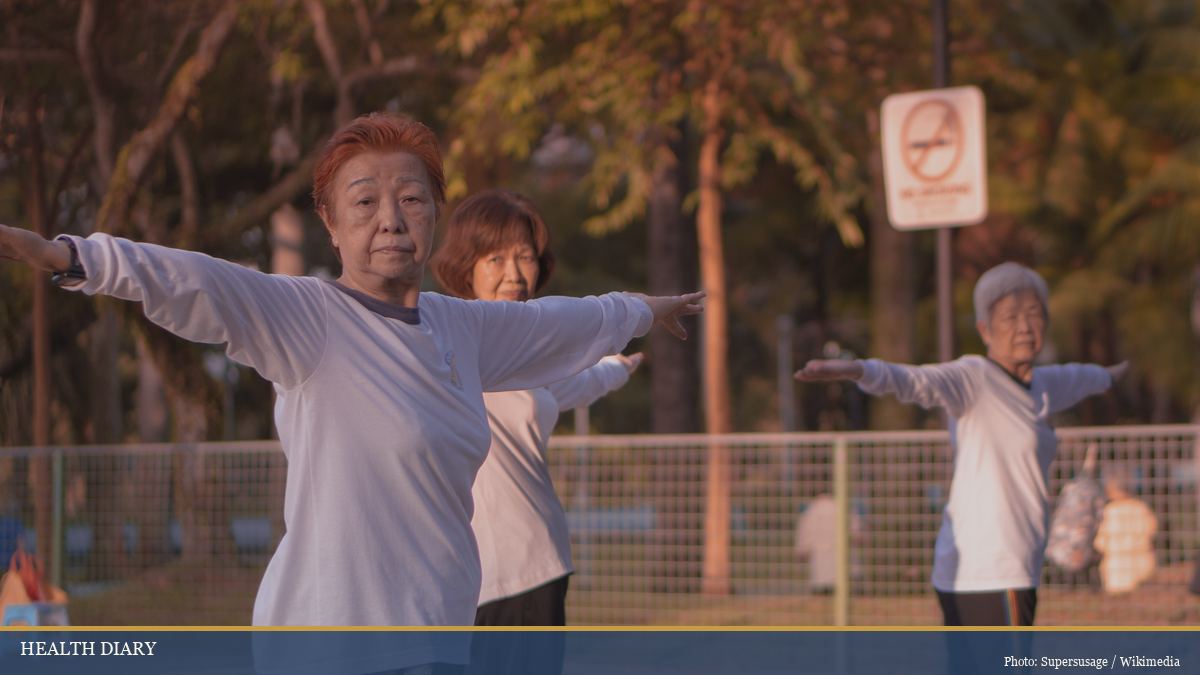
Tai chi is the most extensively studied of these practices. A 2020 systematic review and meta-analysis published in the Brazilian Journal of Medical and Biological Research analyzed 10 randomized controlled trials involving 1,170 older adult participants. The meta-analysis found that tai chi had a statistically significant positive impact on overall quality of life (SMD=1.23, 95% CI: 0.56-1.98, p<0.0001) and on the physical component of quality of life (MD=5.90, p=0.02) [6]. The interventions studied ranged from 4 to 24 weeks in duration, with sessions of 15 to 90 minutes, two to five times weekly -- a range that maps reasonably well onto what many older adults in Chinese communities practice informally in public parks each morning.
Qigong -- a broader category of breath-and-movement practices -- has also been examined in the research literature. The National Center for Complementary and Integrative Health (NCCIH/NIH) notes that reviews of 13 to 14 studies in older adults with chronic disease found qigong had a significant positive effect on quality of life and helped improve physical ability, depression, balance, and functioning [7]. The NCCIH emphasizes that more methodologically rigorous research is needed to establish definitive conclusions.
Dao yin -- sometimes translated as guiding and pulling -- is an older category of breathing and stretching exercises from classical Chinese wellness traditions that forms the conceptual foundation of both qigong and many yoga-adjacent practices. Walking meditation, practiced both in Zen Buddhist traditions and in everyday Chinese park culture, represents another accessible form of mindful movement that requires no equipment and no special training.
What these traditions share is their social dimension. Morning park exercises in Chinese cities are group activities. Radio Taiso in Japan draws neighbors into shared practice. This combination of gentle movement with social connection may partly explain why these traditions appear in populations known for healthy longevity. Individual experiences vary considerably, and people with existing health conditions should consult a healthcare practitioner before beginning any new movement practice.
Seasonal Eating for Healthy Aging
One of the most distinctive features of classical Chinese wellness thinking -- codified in texts such as the Huangdi Neijing -- is its emphasis on eating in accordance with the seasons. Rather than a fixed diet followed year-round, the traditional approach adapts what we eat to match the energy and needs of each season.
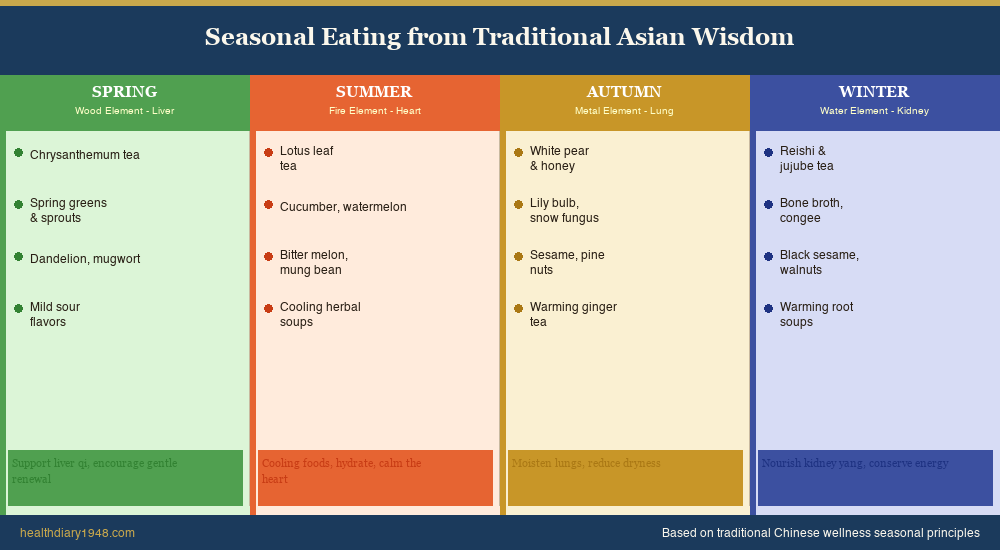
Spring is associated with the Wood element and the liver organ system in TCM. Traditional wellness practices for spring emphasize lighter foods, mild sour flavors, and fresh green vegetables -- dandelion greens, spring sprouts, chrysanthemum tea, and gently cooked bitter greens. The intent is to encourage the body's natural renewal after the conserving energy of winter.
Summer is linked to the Fire element and the heart. Cooling, hydrating foods take center stage: cucumber, watermelon, mung bean soup, lotus leaf tea, and bitter melon. These are foods that many people in hot climates across China, Vietnam, and Korea traditionally reach for during the warmest months -- cooling drinks, light soups, and foods with high water content. This principle aligns broadly with modern nutritional advice about hydration in warm weather.
Autumn corresponds to the Metal element and the lungs. Traditional wisdom recommends moistening foods to counteract seasonal dryness: white pear with honey, lily bulb, snow fungus soup, sesame seeds, pine nuts, and warming ginger tea. These recommendations reflect a practical attention to the body's changing needs as temperatures drop and dry winds arrive.
Winter is associated with the Water element and the kidneys. Warming, nourishing foods take priority: bone broth, congee with warming spices, black sesame, walnuts, and slow-cooked root vegetable soups. Reishi mushroom tea and jujube (red date) teas traditionally associated with winter wellness are also widely used during this season. The principle is conservation -- building reserves of warmth and energy to sustain the body through cold months.
These seasonal frameworks are cultural traditions that many people find resonant as a practical guide to varying their diet across the year. They align in broad strokes with modern nutritional advice about eating locally and seasonally, even if the classical explanatory framework differs from contemporary nutritional science. Individual dietary needs vary; those with specific health conditions should discuss significant dietary changes with a qualified healthcare provider.
How Do Asian Cultures Wind Down in the Evening?
Just as Asian wellness traditions give particular attention to morning, they also emphasize the importance of a considered evening routine -- transitions that prepare the body and mind for rest.
Chinese herbal foot soaking (pao jiao) is one of the most widely practiced evening wellness rituals across China. A basin of warm water, often infused with ginger, mugwort (ai ye), or other warming herbs, is prepared for a 20-30 minute foot soak before bed. From a classical Chinese wellness perspective, the feet are understood as convergence points for several major meridian pathways -- and soaking them is thought to encourage circulation and help the body's energy settle downward after a full day. Clinically, warm foot soaks before bed are often associated with improved sleep onset and relaxation responses, though large-scale rigorous trials remain limited.
The light evening meal is another broadly shared tradition across Asian cultures. Congee -- thin rice porridge -- appears as an evening food across Chinese, Vietnamese, Korean, and Japanese households. It is warm, easy to digest, economical, and infinitely variable. The general principle of eating lighter in the evening, allowing the body adequate time to begin its overnight work, aligns with contemporary nutritional chronobiology research on meal timing and metabolic health.
Evening herbal teas for rest and relaxation are a long-standing folk tradition across East and Southeast Asia. Reishi mushroom tea has been traditionally associated with calm and restful sleep in Chinese wellness traditions. Jujube (red date) and lotus seed teas are similarly traditional evening companions, valued for their mild, warming, and settling qualities. These are wellness folk traditions with deep cultural roots; they are not clinical interventions and individual responses vary considerably.
Social Connection and Longevity
Perhaps no aspect of Asian daily wellness traditions is more striking -- or more supported by research -- than the emphasis on social connection as a core component of healthy aging.
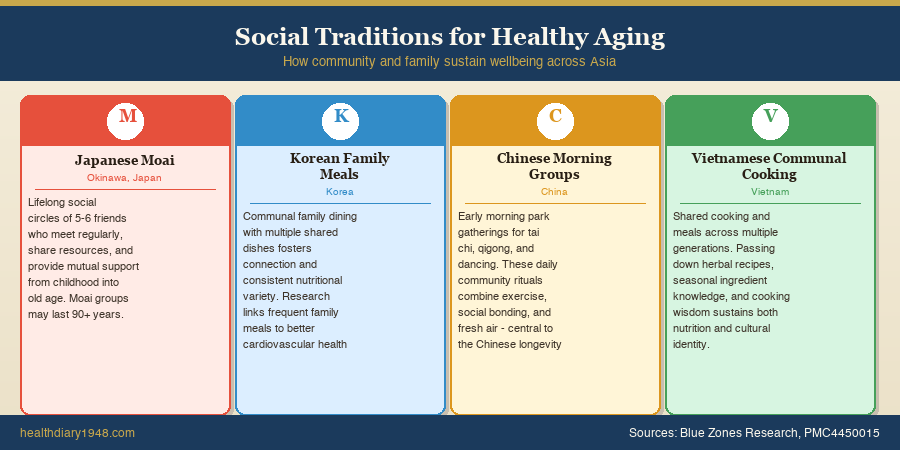
The Japanese concept of moai -- originally a mutual financial support system in Okinawa -- has evolved into a broader cultural institution of lifelong social commitment. Groups of approximately five people form bonds in childhood and maintain them through regular meetings that may continue for 90 years or more. Blue Zones research documenting Okinawa's exceptional longevity notes that moai membership provides social, financial, health, and spiritual support, rooted in the Okinawan value of yuimaru -- reciprocal social obligation [8]. Loneliness has been associated with reductions in life expectancy of approximately eight years, according to Blue Zones research. Each meaningful close friendship may increase happiness by approximately 15%.
Korean generational family meals (bapsang) embody a similar principle. The traditional Korean table, laden with shared side dishes (banchan), is a daily expression of communal life. Research published in PMC (PMC4450015) found that family meal frequency was associated with cardiovascular health risk factors in Korean elderly, with older adults in family settings showing better dietary quality and nutritional variety than those eating alone [9].
Chinese morning park culture brings together the physical and social dimensions of morning exercise in a particularly vivid way. Older adults in Chinese cities do not typically exercise alone -- they gather in groups, often with the same people, on the same patch of ground, at the same hour, year after year. The social consistency of these gatherings provides something beyond exercise: a daily confirmation of belonging and mutual recognition.
Vietnamese communal cooking traditions pass herbal and culinary knowledge across generations. Knowledge of which herbs to use in seasonal soups, how to prepare warming broths, which morning herbal waters to brew -- this is transmitted in kitchens, not textbooks. The act of preparing food together sustains cultural identity and intergenerational connection alongside nutritional benefits.
Across all these traditions, a consistent pattern emerges: healthy aging in Asian cultures is rarely imagined as a solitary individual project. It is understood as something that happens within webs of relationship, daily shared practice, and mutual care. Individual experiences vary, but the weight of research consistently suggests that social connection is among the most potent wellness practices available.
Frequently Asked Questions
Can I practice tai chi or qigong without any prior experience?
Yes. Both tai chi and qigong are traditionally practiced by people of all ages and fitness levels, including those new to movement practices. Many community centers, parks, and online platforms offer beginner-friendly instruction. Starting with a qualified instructor is generally recommended to learn correct form. Those with balance issues, joint conditions, or other health concerns should check with a healthcare provider before beginning.
What is the best Asian herbal tea to start a morning wellness routine?
This depends on personal preference and any specific sensitivities. Japanese green tea (sencha, gyokuro) is widely studied and easy to find. Korean barley tea (boricha) is caffeine-free and mild. Chinese chrysanthemum tea is gentle and traditionally associated with spring wellness. Vietnamese lemongrass water is easy to prepare at home. None of these are medical recommendations -- they are cultural wellness habits that many people find enjoyable as part of a morning routine. Individual responses vary; those with caffeine sensitivity should opt for caffeine-free options.
Is seasonal eating based on traditional Asian wisdom practical for modern life?
Many people find that the core principle -- choosing foods that broadly align with what is locally in season -- is both practical and enjoyable, even without following classical frameworks strictly. Buying what is abundant and inexpensive at a local market naturally leads to seasonal eating in most regions. The TCM framework provides additional context for why certain foods may feel right at certain times of year, which some people find resonant. It is not a clinical prescription and individual needs vary widely.
How does the Japanese moai tradition differ from ordinary friendship groups?
Traditional moai groups in Okinawa are distinguished by their formal commitment structure -- members join with an intention of lifelong mutual commitment -- and by their origin in community necessity rather than purely recreational interest. Over time, they provide a form of social insurance: members support each other through illness, financial difficulty, grief, and celebration. Modern moai-inspired groups in various countries attempt to replicate this structure through intentional community-building, though research on outcomes outside Okinawa is still limited.
Are evening herbal foot soaks safe for everyone?
Warm foot soaks are generally well tolerated by most people and are widely practiced across China and Vietnam as a folk wellness habit. However, people with diabetes-related nerve damage (peripheral neuropathy), vascular conditions, or open wounds on the feet should exercise caution with hot water soaks, as reduced sensitivity can make it difficult to gauge temperature safely. Always consult a healthcare practitioner if you have any relevant medical conditions. The water temperature should be comfortably warm rather than hot.
Can these Asian daily wellness habits realistically fit into a busy modern life?
Many of them are specifically designed for integration into ordinary daily life rather than as separate wellness additions. A cup of warm water on waking takes thirty seconds. A morning walk can be incorporated into a commute. A cup of tea in the afternoon replaces a less intentional break. The principle common across these traditions is consistency of small habits rather than occasional large interventions. Individual schedules and circumstances vary considerably, and even partial adoption of practices may be more sustainable than attempting a complete routine overhaul.
About This Article
Written by: Health Diary Editorial Team -- specialists in traditional Asian wellness education and evidence-based wellness content.
Editorial review: This article has been reviewed by the Health Diary editorial team for clarity, structure, and adherence to our sourcing standards. Key claims were cross-checked against NCCIH (NIH), PubMed/PMC peer-reviewed literature, Blue Zones research, and J-STAGE Japanese academic sources. It is not a clinical review and should not replace consultation with a licensed healthcare practitioner.
Reviewed on: June 16, 2026.
Editorial process: We cite peer-reviewed and government sources where possible. When a clinical reviewer is added to this article, attribution will appear here with verifiable credentials.
References
- Nanri H, Yoshida T, Watanabe Y, et al. The Association between Habitual Green Tea Consumption and Comprehensive Frailty as Assessed by Kihon Checklist Indexes among an Older Japanese Population. Nutrients. 2021.
- Physical activity and subjective well-being of older adults: Mediating role of outdoor exercise environment. PMC9629274. 2022.
- Ueda T, Shiba Y, Shikanai S, et al. Effects of early morning Radio-Taiso exercise on the physical, mental, and social aspects of community-dwelling older adults. Journal of Physical Therapy for Prevention. 2023.
- A Simplified Tea Ceremony Experience for Palliative Care Staff: A Feasibility and Acceptability Study. PMC12872583. 2024/2025.
- Vietnamese herbal teas: A journey into health and culture. Vinpearl.com.
- Wang D, Wang P, Lan K, Zhang Y, Pan Y. Effectiveness of Tai chi exercise on overall quality of life and its physical and psychological components among older adults: a systematic review and meta-analysis. Brazilian Journal of Medical and Biological Research. 2020.
- National Center for Complementary and Integrative Health (NCCIH). Qigong: What You Need To Know. NIH, 2024.
- Blue Zones. Moai -- This Tradition is Why Okinawan People Live Better, Longer. 2018.
- Effects of Family Meal Frequency on Risk Factors for Cardiovascular Disease in Korean Elderly. PMC4450015. 2015.
This article is for educational purposes only and reflects traditional Asian cultural practices. It does not constitute medical advice. Consult a qualified healthcare provider before making significant changes to your diet or lifestyle.