Autumn Nourishing Foods of Asia: Pears, Roots & White Foods
A tour of traditional autumn nourishing foods across China, Japan, Korea, and Vietnam: pear, lotus root, snow fungus, lily bulb, kabocha, and honey.
Medical Disclaimer: This content is for educational and informational purposes only and is not medical advice. The information presented is not intended to diagnose, treat, cure, or prevent any disease. Always consult a licensed healthcare practitioner before starting any new herbal practice or supplement. Statements regarding traditional herbal use have not been evaluated by the FDA.
Affiliate Disclosure: This article contains affiliate links. We may earn a commission if you purchase through these links, at no additional cost to you. We only recommend products we believe align with our editorial standards.
As summer's heat fades and the air turns crisp and dry, kitchens across Asia quietly shift again. The cooling, watery foods of summer give way to something softer and more comforting: a bowl of pear-and-snow-fungus dessert soup, a lily-bulb congee, roasted chestnuts, a wedge of steamed kabocha. The season has changed, and so has the plate.
These autumn nourishing foods are not chosen at random. Across China, Japan, Korea, and Vietnam, autumn eating is shaped by a shared instinct — that the dry season calls for foods that moisten, soften, and gently replenish the body. This article walks through those traditional fall foods, from the pale “white” foods believed to soothe dryness to the warm, starchy staples of the harvest, alongside what modern nutrition has begun to notice about them.
Why Autumn Cooking Turns Toward Moisture
Autumn is the harvest, but it is also the moment the weather dries out. Cooler winds pull humidity from the air, lips crack, skin tightens, and throats feel scratchy. Long before anyone measured humidity, cooks noticed this pattern and steered the table toward foods that felt soothing and hydrating rather than drying.
The result is a striking rhyme across four cuisines. China fills its autumn markets with pears, lotus root, and snow fungus; Japan celebrates persimmons, chestnuts, sweet potato, and kabocha; Korea leans on jujube, chestnut, and Asian pear; Vietnam on lê, ngó sen, and gentle simmered soups. Different produce, same underlying idea: as the world dries, reach for what restores moisture and warmth.
What Does “Eating for Autumn” Mean in Traditional Medicine?
In traditional Chinese thought, each season pairs with one of the Five Phases, and autumn belongs to Metal, the phase associated with the Lung and with the color white. Because the Lung is considered especially sensitive to dryness, autumn guidance centers on the idea of run zao (润燥) — moistening dryness — and on nourishing yin, the body's cooling, fluid aspect. Public health guidance from the Hangzhou municipal government describes the seasonal custom of “eating white” (吃白): favoring pale, moistening foods such as pear, lotus root, snow fungus, lily bulb, and white radish that are traditionally linked to the Lung (Hangzhou Municipal Government, 2024).
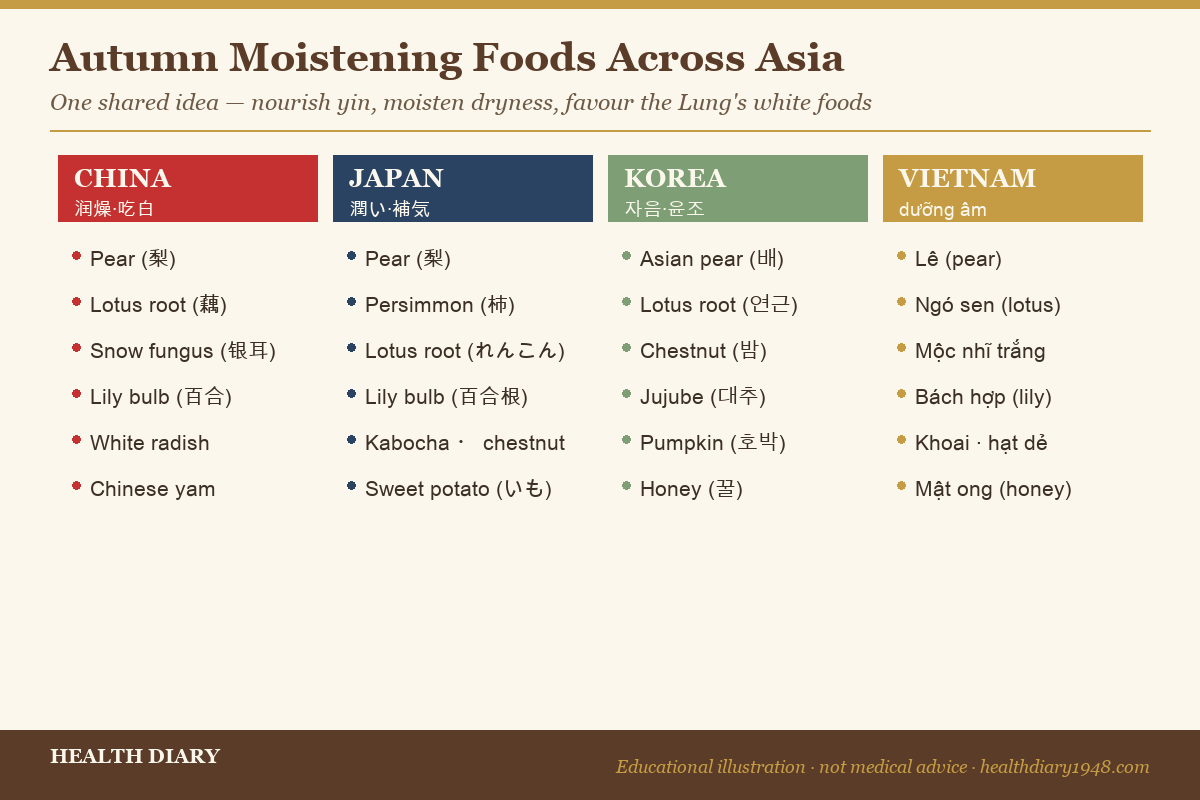
Vietnamese dưỡng sinh (nourishing-life) practice arrives at almost the same place. The autumn principles are thu đông dưỡng âm (nourish yin in autumn and winter) and phòng táo giữ âm (guard against dryness, preserve fluids). Traditional guidance from the Ha Tinh Department of Health even splits the season in two: early autumn's “warm dryness” calls for cooling foods like radish, lotus root, and pear, while late autumn's “cool dryness” shifts toward neutral, gently warming foods like sesame, white fungus, and honey (Sở Y tế Hà Tĩnh). There is even an old flavor rule — thiểu tân tăng toan, “less pungent, more sour” — advising people to ease off chilies, raw garlic, and ginger in favor of milder, slightly sour fruits. Japanese Kampo tradition frames autumn the same way: the dry season taxes the Lung (肺), and foods that add moisture (潤い) — radish, lotus root, lily bulb, yam, white fungus, honey, pear, and persimmon — help carry the body through it (Kracie Kampo, 2024).
The Moistening “White” Foods of Autumn
If autumn has a signature food group, it is the pale, watery, faintly sweet foods traditionally associated with the Lung. These are the classics of the season across the region.
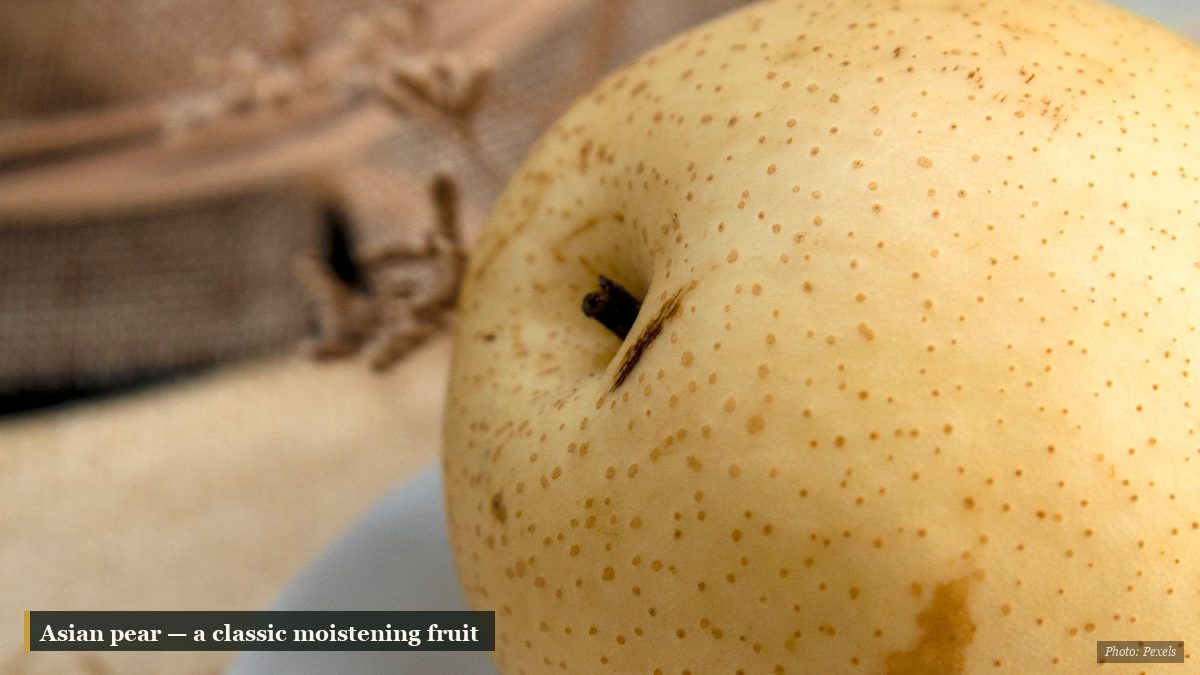
Pear is the quiet star. Sweet, cool, and juicy, it has been eaten for centuries as the archetypal dryness-soothing fruit — often gently stewed with rock sugar, or steamed and hollowed to hold a spoon of honey. Its very high water content and mild sweetness are exactly why traditional texts reach for it first when the air turns dry.
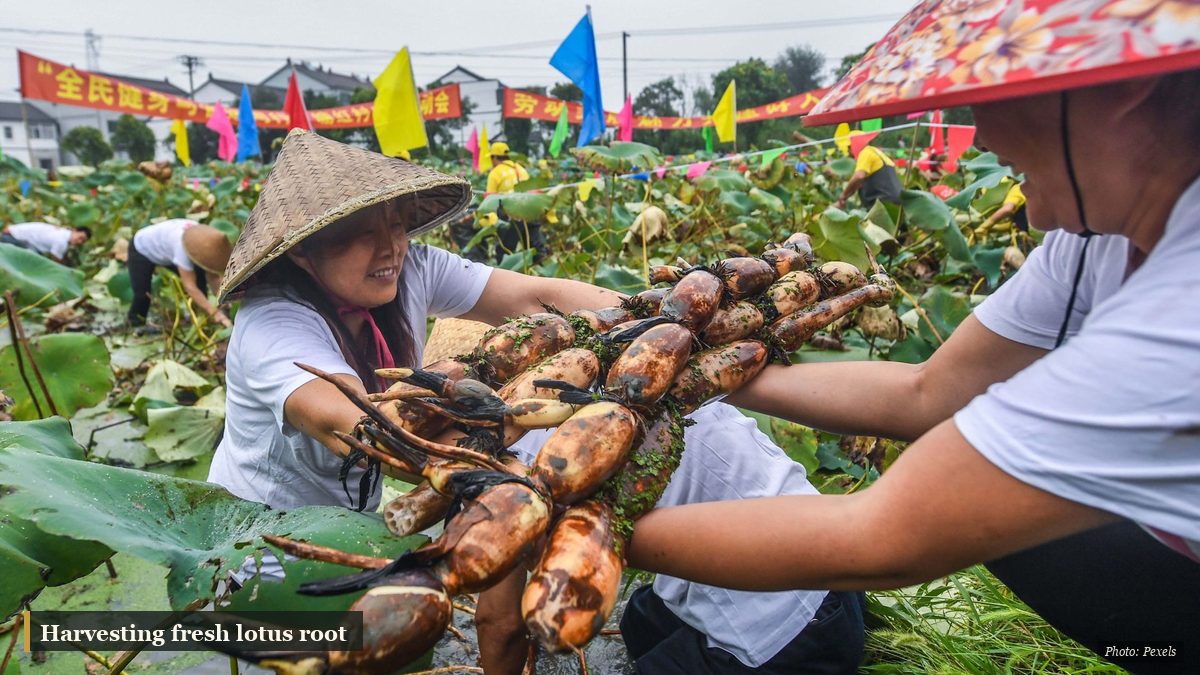
Lotus root (藕 / ngó sen / れんこん) is the crisp, starchy rhizome that appears in autumn soups from Guangzhou to Hanoi, simmered for hours until sweet and tender. Snow fungus (银耳, also called tremella, white fungus, or tuyết nhĩ) is the season's most iconic dessert ingredient — a pale, gelatinous mushroom slow-cooked with pear, red dates, and lily bulb into a silky sweet soup that is practically shorthand for “moistening” food. Lily bulb (百合 / bách hợp) adds soft, slightly bitter petals to congees, while white radish and Chinese yam round out the savory side. Honey, stirred into warm water or drizzled over stewed pear, is the sweetener of choice — valued as a throat-soothing food as the weather dries.
The Warming, Qi-Replenishing Foods of Autumn
Autumn is not only about moisture. It is also the harvest of dense, starchy, comforting foods — and traditions across the region prize these as bu qi (补气), gently replenishing the body's energy as it prepares for winter. In Japan the trio is so beloved it has its own shorthand: imo, kuri, kabocha — sweet potato, chestnut, and kabocha squash.
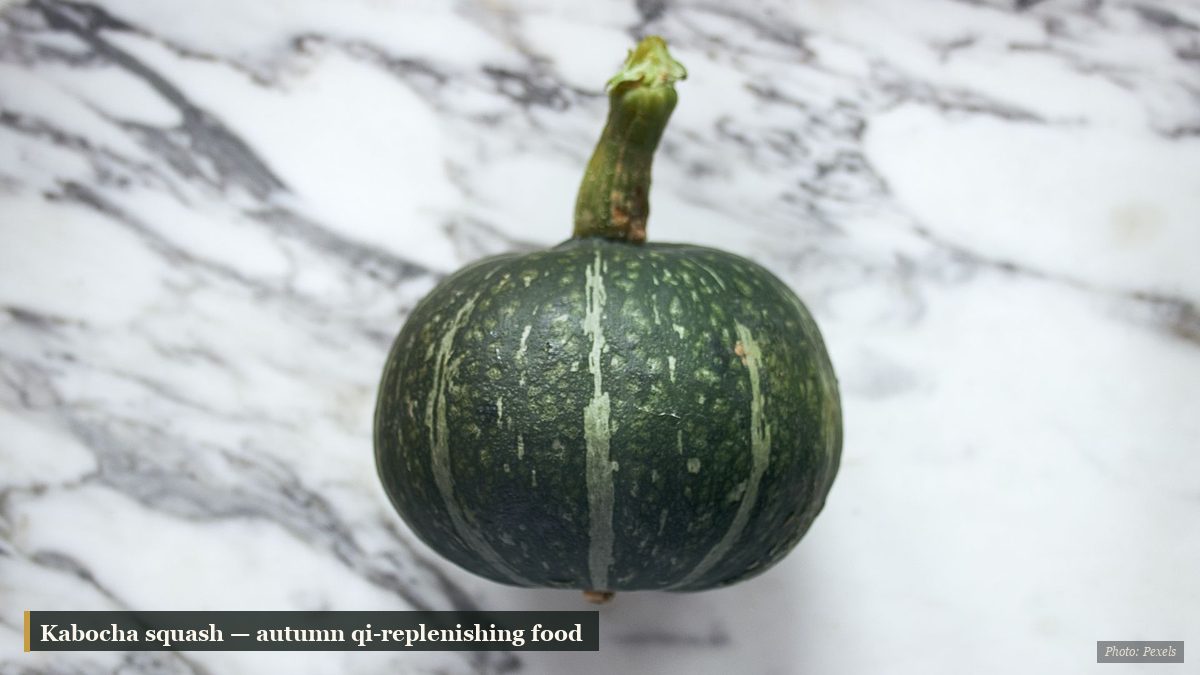
Pumpkin and kabocha bring a mellow, orange sweetness to autumn tables, steamed, simmered in miso soup, or folded into porridge. Sweet potato and taro are roasted whole as street snacks and stirred into congees; chestnuts are simmered with rice or candied; and in Korea and China, jujube (red dates) sweeten tonics and teas. These foods lean warm and grounding rather than cooling — a natural counterweight to the cool, moistening group above. A well-rounded autumn plate, in the traditional view, draws from both: something white and moistening, something warm and replenishing.
What Does Modern Research Say About These Autumn Foods?
Modern nutrition is only beginning to examine these traditional foods, and the picture is still preliminary — promising in the laboratory, far from proven as remedies. Still, some of what researchers are finding gently echoes the old logic.
Pears turn out to be more than water and fiber: a review of pear cultivars documented substantial phenolic acids, flavonols, the hydrochalcone arbutin, and the triterpene ursolic acid, with meaningful antioxidant activity in laboratory assays (Reiland & Slavin, 2020). Snow fungus has drawn attention for its polysaccharides: a 2025 review in Frontiers in Nutrition summarized preclinical studies suggesting antioxidant, immune-modulating, and skin-hydrating behavior, while noting that most evidence remains laboratory- or animal-based (Frontiers in Nutrition, 2025). Pumpkin and kabocha are rich in carotenoids — β-carotene (a vitamin-A precursor), plus lutein and zeaxanthin — though heavy cooking can degrade some of these compounds (Kulczyński & Gramza-Michałowska, 2022).
Honey has the most direct modern echo of its traditional autumn role. A 2023 systematic review found low-quality evidence that honey may ease acute cough symptoms and improve sleep in children more than no treatment, though the authors stressed that better trials are needed (Abuelgasim et al., 2023). The Mayo Clinic likewise notes that honey may calm coughs in adults and children over one year of age (Mayo Clinic). What the research reinforces, gently, is an old and sensible idea: a varied plate of fresh, colorful, minimally processed seasonal foods is worth enjoying — not because any single one is a remedy, but because the whole pattern is nourishing.
How Do People Enjoy Autumn Foods Today?
The pleasure of autumn eating is how naturally it fits into everyday cooking. Across Asia, the preparations stay simple and slow, coaxing sweetness and softness out of humble ingredients.
- Snow fungus and pear dessert soup: tremella slow-simmered with Asian pear, red dates, lily bulb, and a little rock sugar into a silky, faintly sweet soup — the definitive autumn comfort dish across China and Vietnam (银耳雪梨羹 / chè tuyết nhĩ).
- Stewed or steamed pear: whole pear hollowed and steamed with a spoon of honey and a few goji berries, eaten warm.
- Lily-bulb and lotus-seed congee: a soft rice porridge (cháo bách hợp hạt sen) prized as a calming, moistening breakfast.
- Lotus root soup: fresh root simmered for hours with a little pork or simply on its own until sweet and tender.
- Roasted autumn starches: sweet potato, chestnut, taro, and kabocha roasted or steamed and eaten warm as harvest-season snacks.
One thread runs through much of it: gentle, slow cooking. Many autumn foods are stewed, steamed, or simmered rather than eaten raw or cold — a way of making them easier to digest and, in the traditional view, warmer and more moistening for the body as the season cools. Individual responses vary considerably; what suits one person may not suit another, and personal experimentation under practitioner guidance is always recommended.
Important Limitations and Considerations
Traditional autumn foods are, for the most part, ordinary produce eaten in ordinary amounts — but a few cautions matter, especially around the sweet and the “cooling” foods of the season.
- Honey should never be given to infants under 12 months. Because of the risk of infant botulism, honey is not safe for babies under one year old, even in tiny amounts — a point worth remembering when stewed-pear-and-honey dishes are shared around the family table.
- Sweet dishes affect blood sugar. Many autumn favorites — honey, rock-sugar pear soup, red-date tonics, sweet potato, and rich tremella desserts — are naturally high in sugar or easily digested carbohydrate. Anyone managing diabetes or blood-sugar concerns should enjoy them modestly and account for them, ideally with a healthcare practitioner's input.
- Cool, moistening foods may not suit everyone. In traditional thinking, pear, snow fungus, and other cooling foods are considered less suitable for people with a weak “Spleen” or easily upset digestion, who may do better with them gently cooked and eaten warm rather than raw or chilled.
- Cook pond and root vegetables well. Lotus root and other aquatic vegetables should be cleaned and cooked thoroughly rather than eaten raw, and produce should come from a trusted source.
- Pregnancy, breastfeeding, and existing conditions. Concentrated tonics and herbal additions (goji, certain tonic herbs) differ from everyday culinary amounts; anyone pregnant, breastfeeding, or living with a health condition should check with a doctor before leaning on them.
- Individual response varies. Age, constitution, medications, and existing conditions all shape how a food sits with you. Anyone with a health concern should speak with a licensed healthcare practitioner before making meaningful changes to their diet.
Frequently Asked Questions
What are the most common autumn nourishing foods in Asian traditions?
The classics fall into two groups. The cooling, moistening “white” foods include pear, lotus root, snow fungus (tremella), lily bulb, white radish, and honey. The warming, replenishing foods include pumpkin and kabocha, sweet potato, taro, chestnut, and jujube (red dates). A traditional autumn plate usually draws from both.
Is honey safe for everyone in autumn?
Honey is a traditional autumn favorite and may help calm coughs in adults and children over one year old, but it should never be given to infants under 12 months because of the risk of infant botulism. People managing blood sugar should also enjoy honey and other sweet autumn dishes in moderation.
What does “eating for autumn” actually mean?
In traditional medicine, autumn is linked with the Metal phase and the Lung, and the season's dryness is the main concern. Eating for autumn generally means favoring moistening, yin-nourishing foods and gently warming, energy-replenishing staples — often lightly cooked — while easing off very pungent, drying seasonings. Vietnamese practice frames the same idea as dưỡng âm nhuận táo, nourishing yin and moistening dryness.
Are these autumn foods a treatment for coughs or dry skin?
No. These are traditional, nourishing foods, not remedies. While some research on individual ingredients like honey and pear is encouraging, it remains preliminary, and no single food should be treated as a remedy. Persistent cough, dry skin, or other symptoms deserve a conversation with a qualified healthcare practitioner.
A Gentle Note on Eating with the Seasons
Part of what makes autumn eating meaningful is simply paying attention — noticing when the air turns dry, how your throat and skin feel, and which foods seem to settle you as the light shortens. That awareness is easy to lose when every fruit and vegetable is available year-round. Keeping a simple record of what you eat and how you feel through the seasons can make these rhythms visible again. Health Diary is built around exactly that gentle habit of noticing.
A Soft Closing Note
The autumn tables of China, Japan, Korea, and Vietnam were never about a single miracle food. They reflect a shared, very human response to the turning season: as the air dries and cools, we reach for what feels soft, warm, and restoring. You can explore these traditions one dish at a time — a bowl of snow-fungus-and-pear soup, a wedge of steamed kabocha, a spoon of honey in warm water. Whatever you try, listen to your own body, keep the sensible cautions above in mind, and enjoy the quiet comforts of the harvest season.
About This Article
Written by: Health Diary Editorial Team — a group of writers and researchers focused on traditional Asian wellness, food culture, and responsible, well-sourced health content.
Editorial review: This article has been reviewed by the Health Diary editorial team for clarity, structure, and adherence to our sourcing standards. Key claims were cross-checked against NCCIH, NIH PubMed, and Mayo Clinic where applicable. It is not a clinical review and should not replace consultation with a licensed healthcare practitioner.
Reviewed on: July 18, 2026.
Editorial process: We cite peer-reviewed and government sources where possible. When a clinical reviewer is added to this article, attribution will appear here with verifiable credentials.
References
- Reiland, H. & Slavin, J. (2020). Bioactive Compounds and Health-Promoting Properties of Pear (Pyrus) Fruits. https://pmc.ncbi.nlm.nih.gov/articles/PMC7582546/
- Frontiers in Nutrition. (2025). Recent advances in polysaccharides from Tremella fuciformis: isolation, structures, bioactivities and application. https://pmc.ncbi.nlm.nih.gov/articles/PMC12672291/
- Kulczyński, B. & Gramza-Michałowska, A. (2022). Nutritional Value, Phytochemical Potential, and Therapeutic Benefits of Pumpkin (Cucurbita sp.). https://pmc.ncbi.nlm.nih.gov/articles/PMC9182978/
- Abuelgasim, H. et al. (2023). Honey for acute cough in children — a systematic review. European Journal of Pediatrics. https://pmc.ncbi.nlm.nih.gov/articles/PMC10570220/
- Mayo Clinic. Honey: An effective cough remedy? mayoclinic.org
- Hangzhou Municipal Government (杭州市人民政府). (2024). 寒露养肺,宜食"白"!此"白物"滋阴润燥 (Cold Dew: nourish the lung, eat white). hangzhou.gov.cn
- Sở Y tế Hà Tĩnh (Ha Tinh Department of Health). Phép dưỡng sinh ăn uống mùa thu (Autumn nourishing-life eating). soyte.hatinh.gov.vn
- Kracie (クラシエ). (2024). 漢方セラピー 日々是漢方:秋の乾燥と肺の養生 (Kampo therapy: autumn dryness and lung care). kracie.co.jp