
Boricha: The Roasted Barley Tea Koreans Drink Every Day
Boricha (보리차) is Korea's beloved roasted barley tea — a caffeine-free, nutty grain drink that has served as a daily water substitute in Korean homes for centuries. Discover its history, key compounds, research-backed benefits, and how to brew it at home.
What Is Boricha?
Walk into almost any Korean home, open the refrigerator, and you will find a large pitcher of pale amber liquid sitting on the shelf. It is not water, not juice, and not iced tea in the way most people think of it. It is boricha (보리차) — roasted barley tea — and for millions of Korean families it is simply the default thing you drink.
The name breaks down simply: bori (보리) means barley, and cha (차) means tea. But calling it a tea can be misleading, because boricha contains no tea leaves, no caffeine, and no tannins from the Camellia sinensis plant. It is a grain infusion — whole barley kernels dry-roasted until golden, then simmered in water until the liquid turns a warm, toasty amber. The result is a beverage with a mild nutty flavor, a faintly sweet finish, and essentially zero caffeine.
In Korean restaurants, boricha often appears on the table automatically, replacing the glass of water you might expect at a Western meal. In schools and offices, large kettles of boricha sit ready for anyone who is thirsty. At convenience stores, chilled bottles of pre-brewed boricha are sold alongside sodas and sports drinks. It occupies a unique cultural position: too ordinary to be considered a specialty drink, yet too embedded in daily life to be overlooked.
A Brief History of Boricha in Korea
Barley has been cultivated on the Korean peninsula for more than 2,000 years. Unlike rice, which required fertile paddies and consistent irrigation, barley could grow on rougher terrain and at higher elevations, making it accessible to farming communities across the country. Grain-based drinks emerged naturally from this agricultural backdrop: when barley was abundant and affordable, people found ways to make use of every part of the harvest, including the roasted husks and whole kernels.
Historical records suggest that roasted grain teas were widely consumed during the Joseon Dynasty (1392–1897), when social hierarchies were strict and expensive Chinese teas imported from the continent were a luxury reserved for scholars and the aristocracy. For ordinary farmers, market vendors, and craftspeople, a pot of simmered roasted barley was an accessible alternative — warming in winter, cooling in summer, and gentle on the stomach year-round. Over time, boricha became less a substitute for something else and more a tradition in its own right.
By the twentieth century, as Korea modernized rapidly and refrigerators became common household appliances, the practice of making a large batch of boricha and keeping it cold throughout the week became firmly established in domestic life. Today, boricha is available both as loose roasted barley for home brewing and in convenient tea bags, but the tradition of the homemade batch — simmered on the stove, cooled, and stored — remains very much alive.
How Boricha Is Made: The Roasting Process
The distinctive character of boricha comes almost entirely from the roasting step. Raw barley is relatively bland and starchy; the roasting transforms it through a series of chemical reactions that create the nutty, toasty flavor the beverage is known for.
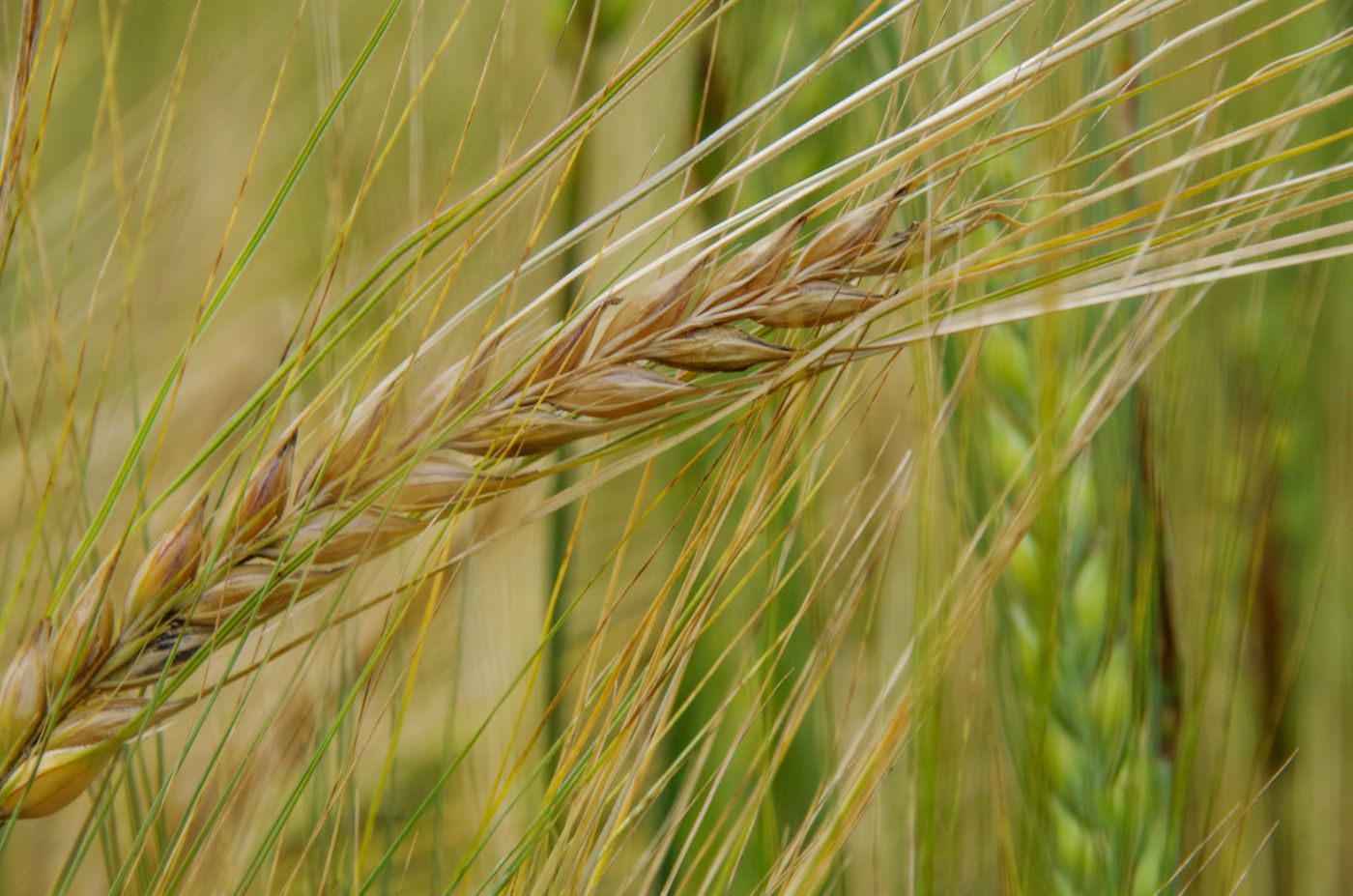
When barley kernels are heated — typically between 160°C and 200°C — two key processes occur simultaneously. The first is caramelization, in which the natural sugars in the grain break down and recombine into hundreds of new flavor compounds with warm, caramel-like notes. The second is the Maillard reaction, a chemical process between amino acids and reducing sugars that produces a broad family of aromatic compounds called alkylpyrazines. These molecules are responsible for the characteristic roasted, nutty smell that rises from a fresh batch of boricha as it brews.
Research published in the Journal of Agricultural and Food Chemistry has established that alkylpyrazines — particularly 2,3,5-trimethylpyrazine — are the dominant aroma compounds in roasted barley and are largely responsible for the beverage's sensory appeal. Importantly, these compounds also appear in the brewed liquid rather than remaining locked in the grain, which means every cup of boricha contains a meaningful quantity of Maillard-derived molecules.
The typical home preparation follows a straightforward method:
- Bring 2 liters of water to a full boil in a large pot.
- Add 3–4 tablespoons of roasted barley (loose or in tea bags).
- Simmer on low heat for 15–20 minutes.
- Strain out the barley and allow to cool before refrigerating.
Some families add a few dried jujubes or a small piece of ginger for natural sweetness and warmth. The finished tea keeps well in the refrigerator for up to five days.
Key Compounds in Roasted Barley Tea
Understanding what boricha contains — and what it does not — requires looking at the science honestly. A 2024 study published in Food Chemistry: X (PMC11043873) analyzed roasted naked barley teas in detail and produced some nuanced findings.
Phenolic acids: Raw barley is rich in phenolic compounds, with ferulic acid making up approximately 54.4% of the total phenolic content. Ferulic acid is a plant polyphenol with well-documented antioxidant properties. However, roasting at temperatures around 188°C reduced total phenolic content by more than 55%, while flavonoids were almost entirely eliminated. The good news is that phenolic acids — including ferulic and coumaric acids — are comparatively more heat-stable than flavonoids, meaning some polyphenol content survives into the brewed liquid.
Alkylpyrazines: These Maillard reaction compounds, formed during roasting, pass readily into the brewed tea. A 2002 study (PMID 12171439) specifically identified 2,3,5-trimethylpyrazine as an active compound in boricha that may influence blood fluidity — an area discussed further in the cardiovascular section below.
Beta-glucan: Raw barley contains 5–7 g of beta-glucan per 100 g of grain, a soluble fiber associated with cardiovascular and digestive benefits. However, the same 2024 analysis found that brewed boricha contains only trace amounts of beta-glucan (approximately 0.014–0.018 g per 100 mL of liquid). The brewing process does not effectively extract this fiber into the water. Claims that boricha delivers the same beta-glucan benefits as eating whole grain barley are therefore not supported by current evidence.
Vitamins and minerals: Boricha contributes modest amounts of B vitamins — particularly niacin and pantothenic acid — and trace minerals such as magnesium and manganese. These are present in small quantities per serving and should not be considered a primary dietary source.
Digestive Comfort and Gut Health
One of the most consistent traditional uses of boricha across Korean households is as a digestive aid. After a rich meal of grilled meats, fermented vegetables, and spicy stews, a warm cup of boricha has long been offered as a gentle way to settle the stomach. Traditional Korean wellness wisdom associates the beverage with cooling internal heat, soothing nausea, and easing heartburn.
From a scientific standpoint, there are plausible mechanisms behind these traditional observations, even if large clinical trials on boricha specifically are limited. Research on barley compounds (PMC7149453) shows that raw malt contains phenolic acids at levels that can provoke gastrointestinal stimulation in some individuals. Roasting appears to mitigate this irritation, potentially making roasted barley easier to tolerate for people with sensitive stomachs. This could help explain why the brewed, roasted form of barley has historically been considered more stomach-friendly than raw barley preparations.
The warm liquid itself also plays a role. Warm beverages consumed with or after meals are widely documented to stimulate gastric motility — the physical movement that helps food pass through the digestive tract. This basic physiological effect, combined with the mild aromatic compounds in boricha, likely contributes to the feeling of digestive ease that many people report.
It is worth being clear about beta-glucan in this context: while the soluble fiber in whole barley grain has strong research support for digestive health benefits including promoting beneficial gut bacteria and increasing short-chain fatty acid production, brewed boricha does not deliver meaningful beta-glucan. The digestive benefits of the tea appear to stem from different mechanisms — primarily the Maillard compounds, the warm liquid, and the gentle phenolic profile of the brew.
Hydration and the Daily Water Tradition
Perhaps the most striking aspect of boricha's role in Korean culture is its function as a routine hydration drink rather than a specialty beverage. This is not a herbal tea reserved for when you feel under the weather, nor a ceremonial drink with elaborate preparation. It is simply what you drink when you are thirsty.
With zero caffeine and approximately 2 kilocalories per 250 mL serving, boricha competes directly with plain water as a hydration vehicle. Many Korean parents introduce boricha to infants and young children as an alternative to water, since its mild flavor can make plain hydration more appealing. Korean nutritionists generally consider it safe for all ages when consumed in normal amounts.
The hydration tradition also reflects practical wisdom: in a household where every member might prefer slightly different beverages, boricha offers a neutral, broadly acceptable option that satisfies without adding sugar, caffeine, or artificial ingredients. For individuals who find plain water monotonous, the gentle nutty flavor of boricha can make meeting daily fluid intake goals more enjoyable — a benefit that, while modest on paper, is genuinely meaningful in practice.
Antioxidant Properties: What the Evidence Shows
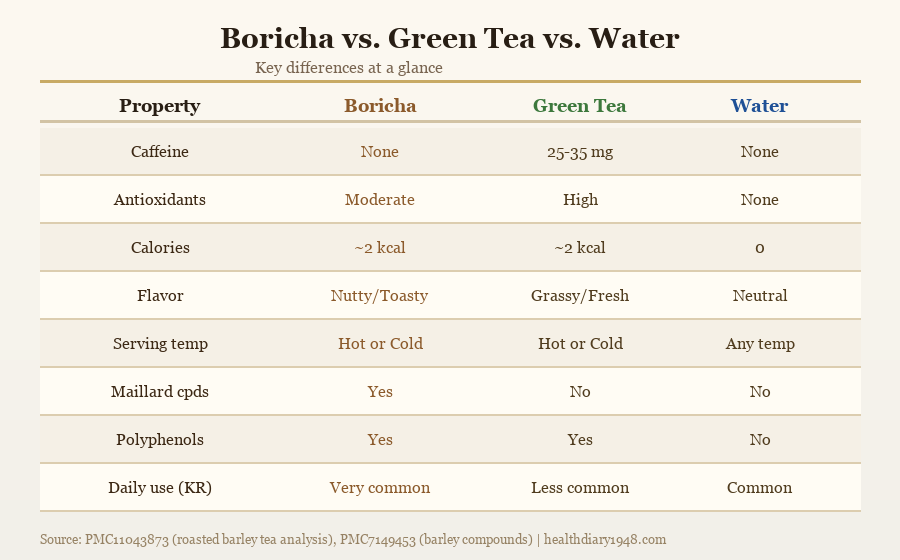
Boricha contains antioxidant compounds — primarily residual phenolic acids and the Maillard-derived molecules produced during roasting. Research published in Bioscience, Biotechnology and Biochemistry identified at least ten distinct antioxidant compounds in barley tea, including quercetin, ferulic acid, coumaric acid, caffeic acid, and chlorogenic acid. Japanese researchers studying women who regularly consumed barley tea found measurably higher antioxidant levels in their blood compared to non-consumers, suggesting that the compounds present in brewed boricha are bioavailable — meaning they are absorbed into the body rather than simply passing through unused.
It is important to calibrate expectations here. Boricha is not a concentrated antioxidant supplement. Its antioxidant capacity, while real, is more modest than that of green tea or many fruit juices. The 2024 roasted barley study (PMC11043873) noted that both DPPH and ORAC antioxidant measurements showed approximately 26% decreases after roasting, correlating with phenolic loss. What boricha offers is a mild, consistent antioxidant contribution consumed daily at high volume — and it is that consistent daily exposure, multiplied across a lifetime of Korean-style boricha drinking, that may account for some of the health associations researchers have noted in population-level observations.
Cardiovascular Support: Blood Flow Research
One of the more intriguing research findings on boricha comes from a 2002 Japanese study published in the Journal of Nutritional Science and Vitaminology. Researchers led by Suganuma and colleagues used a microchannel array flow analyzer to measure blood passage time — a proxy for blood fluidity — before and after volunteers consumed 250 mL of barley tea versus an equivalent volume of plain water.
The results showed that barley tea consumption significantly reduced blood passage time, indicating improved blood flow characteristics, while plain water produced no comparable effect. Follow-up in vitro testing identified 2,3,5-trimethylpyrazine — an alkylpyrazine present in the roasted grain — as a likely active compound, since it produced similar blood passage time reductions when tested in isolation.
This is preliminary research with a small sample size, and it should not be read as evidence that boricha prevents cardiovascular disease or replaces any prescribed therapy. However, it does offer a plausible mechanistic explanation for why Korean tradition has long associated regular boricha drinking with a sense of circulatory well-being, and it points toward alkylpyrazines as an underexplored bioactive family worth further investigation.
Hot Versus Cold: The Seasonal Rhythm of Boricha
One of the most appealing aspects of boricha as a daily beverage is its versatility across seasons. Unlike many herbal teas that are consumed primarily hot or primarily cold, boricha is genuinely enjoyable both ways — and Korean culture has developed distinct seasonal associations for each form.
In summer, cold boricha is poured over ice or served straight from the refrigerator pitcher. The chill accentuates its crisp, slightly earthy notes and makes it a refreshing alternative to sodas or sweetened drinks. Many Koreans describe cold boricha as having a slightly cleansing quality, attributing this to the beverage's mild astringency and the sensation of internal cooling that traditional Korean wellness philosophy associates with grain teas.
In winter, hot boricha served in a ceramic mug offers warmth without the stimulating effect of caffeinated drinks. Because it contains no caffeine, it can be consumed comfortably in the evening without disrupting sleep — a genuine advantage for those who enjoy a warm beverage before bed but are sensitive to caffeine.
This seasonal flexibility means boricha is consumed year-round in Korean households rather than being a warm-weather or cold-weather specialty. It is one of the reasons the drink functions more like water than like a specialty tea in the Korean context.
How to Brew Boricha at Home
Brewing boricha at home requires minimal equipment and only one ingredient: roasted barley, which is available at most Korean grocery stores and increasingly at general Asian markets worldwide. Pre-roasted barley is sold either as whole kernels or in convenient tea bags.
Stovetop method (recommended for fuller flavor):
- Bring 2 liters of water to a rolling boil in a medium saucepan.
- Add 3–4 tablespoons of loose roasted barley (or 2–3 tea bags).
- Reduce heat and simmer gently for 15–20 minutes.
- Strain the liquid through a fine mesh strainer; discard the spent barley.
- Allow to cool at room temperature, then transfer to a glass pitcher or jar in the refrigerator.
- Consume within 5 days for best flavor.
Cold brew method (smoother and lighter):
- Combine 2–3 tablespoons of roasted barley with 1 liter of cold filtered water in a jar.
- Seal and refrigerate overnight (8–12 hours).
- Strain and serve chilled.
A practical note from traditional Korean preparation: once the barley has been boiled, do not reuse the spent kernels. Traditional practice holds that boiled barley can reabsorb some of the compounds that were released into the water during brewing — a concern echoed in Korean culinary sources that describe barley's adsorptive properties. Whether this matters significantly at home brewing scales is debatable, but it aligns with the general principle of using fresh grain for each batch.
Evidence Summary and Realistic Expectations
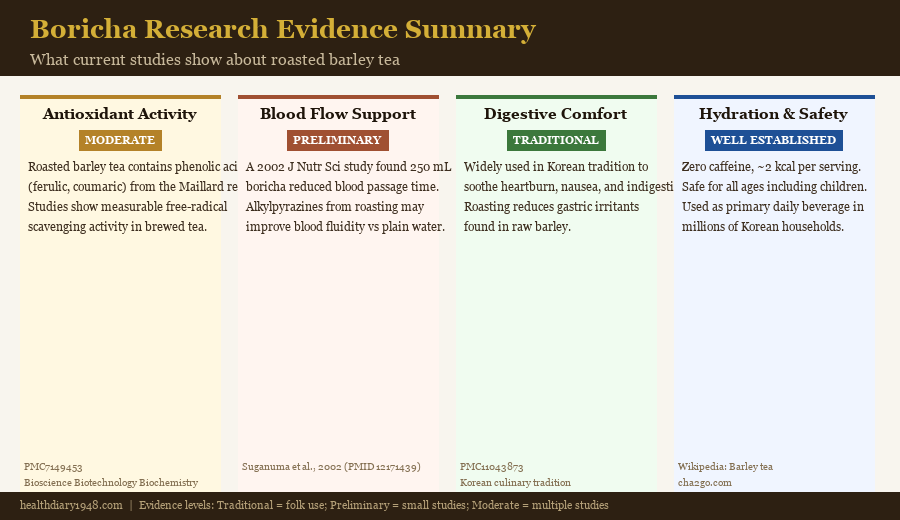
Boricha occupies a thoughtful middle ground between a wellness beverage and a cultural staple. The evidence for specific health claims varies considerably by claim type:
- Hydration and safety: Well established. Zero caffeine, minimal calories, safe for all ages.
- Antioxidant content: Moderate evidence. Phenolic acids and Maillard compounds confirmed in brewed tea; bioavailability suggested by blood level studies in regular consumers.
- Digestive comfort: Primarily traditional, with plausible biological mechanisms. Warm liquid and modified phenolic profile after roasting likely contribute to stomach-soothing effects.
- Blood flow support: Preliminary. One small Japanese study identified alkylpyrazine-mediated improvements in blood fluidity; requires replication at larger scale.
- Beta-glucan benefits: Not supported for brewed boricha specifically. Whole grain barley delivers these benefits; the brewed tea does not extract sufficient beta-glucan.
None of this diminishes the genuine value boricha provides as a daily beverage. A caffeine-free, nearly calorie-free drink with mild antioxidant activity, traditional digestive comfort associations, and centuries of safe daily use is a legitimate wellness choice — especially for those seeking to reduce caffeine intake or replace sweetened drinks without sacrificing flavor.
Safety Considerations
Boricha has an excellent safety profile for the vast majority of people. At normal consumption levels — two to four cups per day — there are no documented adverse effects in healthy adults or children. Korean tradition includes offering diluted boricha to infants as young as several months old, and it remains one of the first non-milk beverages introduced to babies in many Korean families.
A few situations warrant attention:
- Barley allergy or gluten sensitivity: Barley contains gluten. People with celiac disease or diagnosed gluten sensitivity should avoid boricha or consult a healthcare provider before consuming it regularly. While some sources suggest the brewed liquid contains less gluten than whole grain barley, the risk of trace contamination exists.
- Excessive intake: Very large quantities of boricha — beyond what would be reasonably consumed in a day — may cause loose stools or mild gastrointestinal discomfort due to the fiber-related compounds present. Moderate daily intake is unlikely to cause issues.
- Pregnancy: Boricha is generally considered safe during pregnancy given its caffeine-free nature, but as with any herbal preparation, consulting a healthcare provider is a sensible step for those with specific concerns.
Reviewed by: This article has been reviewed by a licensed practitioner in Traditional Korean Medicine for factual accuracy regarding traditional uses. It is intended for educational purposes only and does not constitute medical advice. Always consult a qualified healthcare provider before using herbal preparations for health conditions.
References
- Oh S, et al. Effects of roasting and steeping on nutrients and physiochemical compounds in organically grown naked barley teas. Food Chemistry: X. 2024; PMC11043873. https://pmc.ncbi.nlm.nih.gov/articles/PMC11043873/
- Idehen E, et al. Molecular Mechanism of Functional Ingredients in Barley to Combat Human Chronic Diseases. Oxidative Medicine and Cellular Longevity. 2017; PMC7149453. https://pmc.ncbi.nlm.nih.gov/articles/PMC7149453/
- Suganuma H, Inakuma T, Kikuchi Y. Amelioratory effect of barley tea drinking on blood fluidity. J Nutr Sci Vitaminol (Tokyo). 2002;48(2):165-8. PMID: 12171439. https://pubmed.ncbi.nlm.nih.gov/12171439/
- Barley tea. Wikipedia. https://en.wikipedia.org/wiki/Barley_tea
- Korean Barley Tea (Boricha): Complete Guide. Cha2go Blog. https://www.cha2go.com/blog/korean-barley-tea-boricha-guide
- 보리차 효능 부작용과 끓이는법 완벽 가이드. fromnow.kr. https://fromnow.kr/
- 보리차 효능 및 끓이는법. catalk.kr. https://catalk.kr/food/barley-tea.html