Butterfly Pea Flower Tea: The Color-Changing Blue Herbal Infusion
Discover butterfly pea flower tea — Southeast Asia's stunning blue herbal infusion that shifts to purple when you add lemon. Learn its history, science, and how to brew it.
Medical Disclaimer: This content is for educational and informational purposes only and is not medical advice. The information presented is not intended to diagnose, treat, cure, or prevent any disease. Always consult a licensed healthcare practitioner before starting any new herbal practice or supplement. Statements regarding traditional herbal use have not been evaluated by the FDA.
Affiliate Disclosure: This article contains affiliate links. We may earn a commission if you purchase through these links, at no additional cost to you. We only recommend products we believe align with our editorial standards.
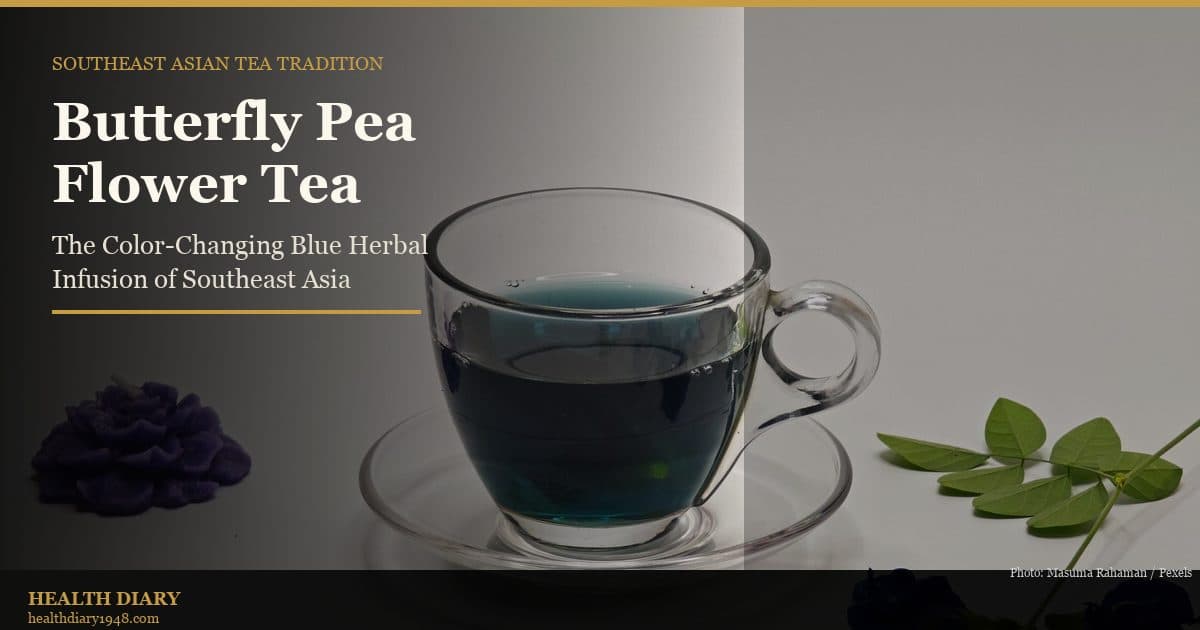
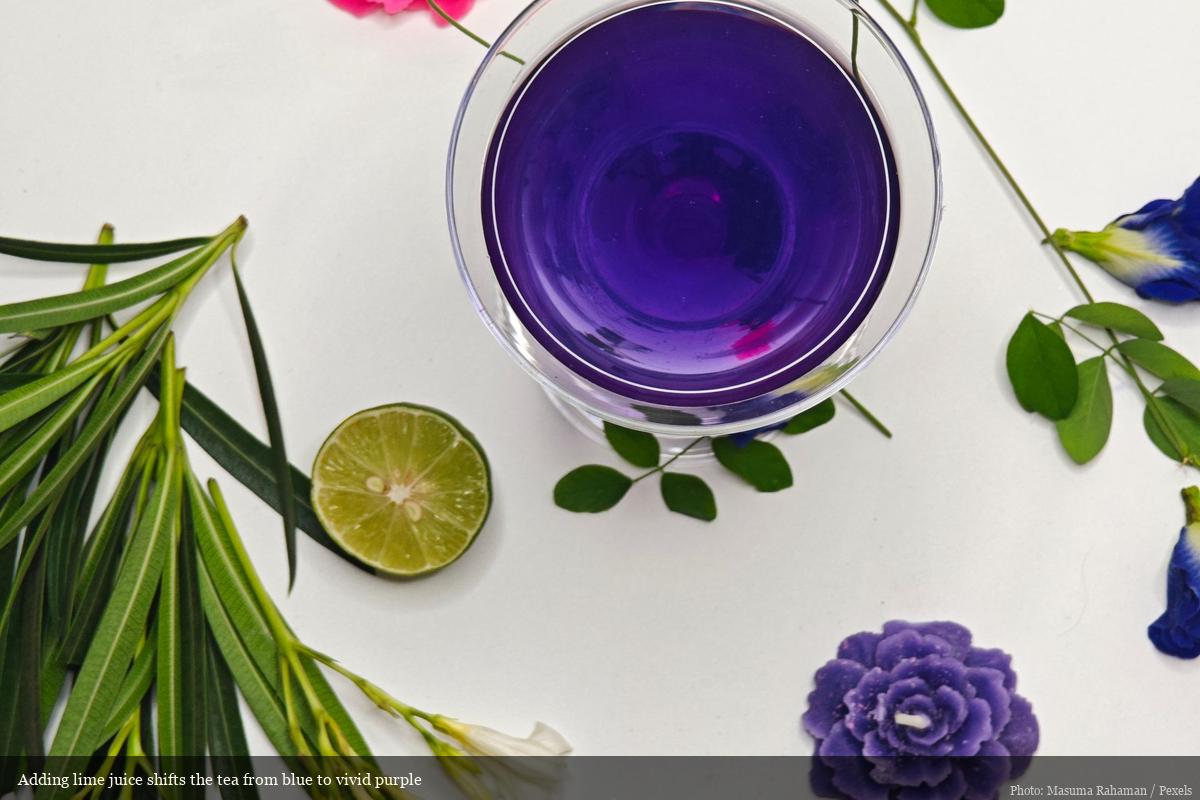
Pour a cup of butterfly pea flower tea and you are holding something genuinely remarkable: a deep, electric blue liquid brewed from the petals of a climbing vine that has wound its way through the gardens, kitchens, and wellness traditions of Southeast Asia for centuries. Add a squeeze of lemon and watch it transform — in seconds — from cobalt blue to vivid violet, then magenta pink. No food dye. No trick. Just chemistry.
Known as dok anchan in Thailand, đậu biếc in Vietnam, and bunga telang in Malaysia and Indonesia, this tea is simultaneously a folk remedy, a culinary colourant, a ceremonial beverage, and — increasingly — a modern wellness curiosity that has captured the attention of scientists and baristas alike. This guide explores the botany, history, science, and simple joy of brewing it yourself.
What Is Butterfly Pea Flower?
Clitoria ternatea is a twining perennial vine belonging to the legume family (Fabaceae). It is native to tropical and subtropical regions spanning from West Africa through South and Southeast Asia, and it has been cultivated and naturalised across the tropics for so long that its exact origin is debated. The plant grows vigorously in warm, humid conditions — you will find it climbing garden fences, roadside trellises, and the edges of rice paddies from India to the Philippines.
The flowers are the star: intensely pigmented, typically a deep indigo-blue with a small white and yellow centre, although white, pale blue, and double-petalled cultivars also exist. Each flower is roughly 3–4 cm across and shaped distinctively — a characteristic that gives the plant its Latin species name and botanical legacy. The vine also produces slender seed pods 5–7 cm long, and these seeds have their own traditional uses in folk preparations across Southeast Asia.
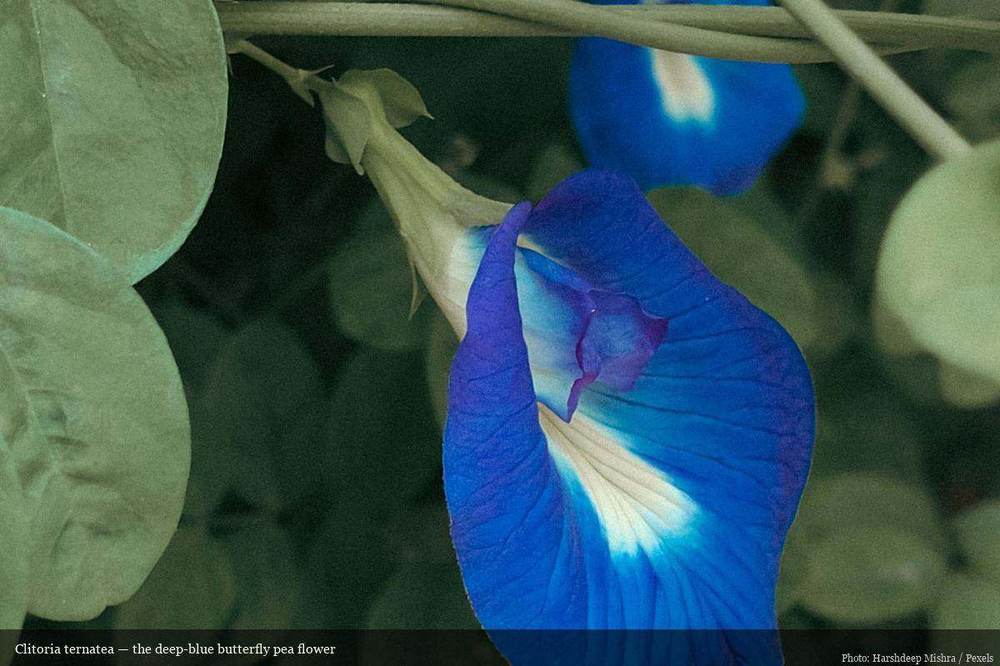
The plant is a nitrogen fixer — its root nodules host bacteria that convert atmospheric nitrogen into a form usable by plants — making it valuable not only as a beverage source but as a cover crop and soil improver in tropical agroforestry systems. Researchers have also registered a commercial insecticide (Sero-X) based on the plant's unique cyclic peptides, called cyclotides, which deter crop pests [1].
A Pan-Southeast Asian History
Butterfly pea flower has no single country of origin in cultural terms — it belongs to a broad swath of Southeast Asia and South Asia simultaneously, and each tradition has shaped it differently.
In the Indian Ayurvedic system, the plant is known as Aparajita ("the unconquered") and classified as a Medhya Rasayana — a category of herbs considered rejuvenating for the mind. Ayurvedic scholars associate it with the classical herb Shankhapushpi, traditionally used to enhance memory, sharpen mental clarity, and calm the nervous system. This framing of the plant as a brain-supportive tonic is one of the oldest documented uses of Clitoria ternatea in formal written tradition [2].
In Thailand, dok anchan (literally "anchan flower") has been a household beverage for generations. It is served after dinner at family tables and in hotel lobbies alike — a gentle, slightly earthy, caffeine-free infusion that needs only a spoon of honey and a slice of lime to become one of the most visually arresting drinks in the world. Thai folk traditions associated it with eye health and hair vitality.
In Vietnam, đậu biếc (blue pea) is a familiar sight in rural gardens and is used both as a tea and as a natural food colourant for glutinous rice and sweet puddings. Vietnamese traditional health sources document its use for supporting circulation, eye health, and general vitality [3].
In Malaysia, particularly in the northeastern state of Kelantan, bunga telang is an essential ingredient in nasi kerabu — a ceremonial rice dish in which the grain is dyed a striking blue by boiling it in butterfly pea flower water. Beyond rice, the flowers colour traditional kuih (sweets) such as pulut tai tai and pulut inti. In Malay folk practice, the leaves and roots have been used to address eye infections and inflammation [4]. In Indonesia, the flowers have been used in batik dyeing traditions for their reliable indigo-blue pigment.
The Color-Changing Science: pH and Anthocyanins
The most dramatic feature of butterfly pea tea — its ability to shift colour in real time — is the result of elegant plant chemistry that any high-school pH lesson cannot fully prepare you to appreciate.
The responsible compounds are anthocyanins — specifically a group unique to this plant called ternatins. Researchers have identified 15 distinct ternatin structures (A1-A3, B1-B4, C1-C5, and D1-D3), all of which are polyacylated derivatives of delphinidin 3,3',5'-triglucoside. This complex molecular architecture makes them unusually stable compared to most food anthocyanins — they hold their colour well at moderate temperatures and across a wide range of storage conditions [5].
The colour-change mechanism is pH-dependent structural transformation:
- pH 7 (neutral water): The anthocyanin exists as a quinoidal base — this gives the brew its iconic deep blue.
- pH 4–6 (weak acid): Mixed equilibrium forms produce purple and violet tones.
- pH 1–3 (strong acid — fresh lemon juice): The molecule converts to a protonated flavylium cation — vivid pink to magenta.
- pH 8–10 (alkaline): Ionised quinoidal base shifts toward teal or blue-green.
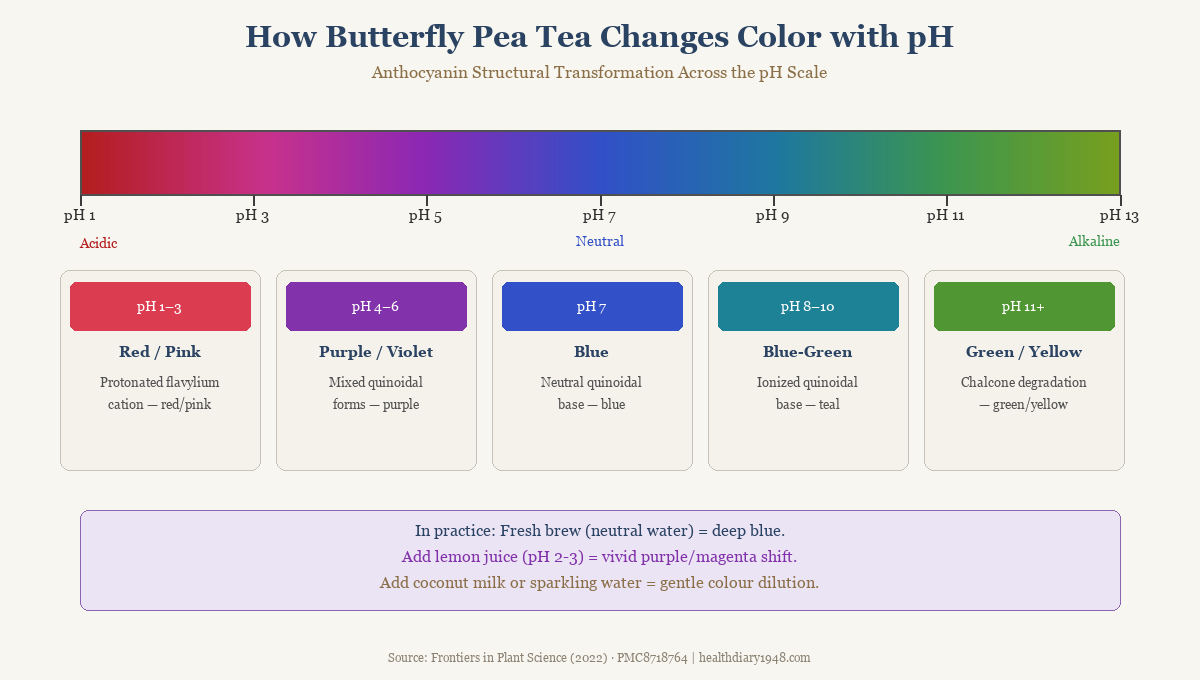
This transformation is reversible — you can shift the colour back and forth with acid and base additions. In practical kitchen terms: brew the tea in neutral or filtered water, then watch it perform its colour shift live when you squeeze in a citrus wedge. No other common herbal tea does this as vividly.
Key Bioactive Compounds
Beyond their visual drama, the compounds in butterfly pea flower have attracted scientific interest for their potential biological activities.
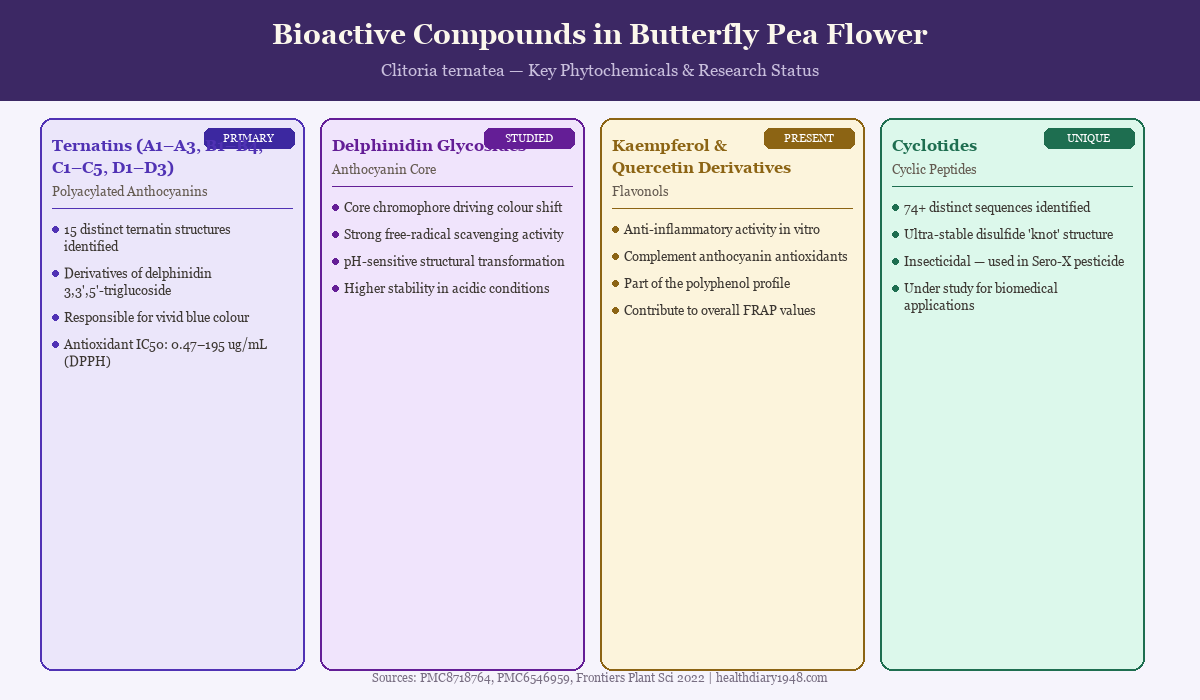
Ternatins and delphinidin glycosides are the primary anthocyanins. Their antioxidant capacity has been measured at an IC50 of 0.47–195.5 µg/mL on the DPPH radical-scavenging assay (variation depends on extraction method and purity), and FRAP values up to 19.8 mg gallic acid equivalent per gram of extract have been recorded [5]. These numbers place butterfly pea flower anthocyanins among the more potent natural antioxidant sources studied in laboratory conditions.
Kaempferol and quercetin derivatives (flavonols) complement the anthocyanins. Kaempferol glycosides have shown anti-inflammatory activity in cell studies, and together with quercetin derivatives they contribute to the overall polyphenol profile of the flower.
Cyclotides are cyclic peptides with an unusual disulfide-knotted backbone that makes them exceptionally resistant to heat and enzymatic degradation. More than 74 distinct cyclotide sequences have been identified in C. ternatea tissues. Their biological roles in the plant — including pest deterrence — have led to commercial applications, and they are under investigation for potential biomedical uses [1].
What Does Research Suggest About Butterfly Pea Tea?
It is important to frame current findings accurately: most studies use concentrated extracts at doses far higher than a typical cup of tea delivers, and human clinical evidence is limited. With that context:
Antioxidant activity is the most consistently demonstrated property in laboratory and cell-based studies. Anthocyanin-rich fractions inhibit free-radical activity in multiple assay systems and have shown protective effects in human keratinocytes and immune cell lines.
Anti-inflammatory potential has been demonstrated in macrophage cell studies, where ternatin anthocyanins reduced NF-κB translocation and suppressed inflammatory mediators including iNOS and nitric oxide production [6]. These are in-vitro findings and do not translate directly to human outcomes.
Blood glucose management has been studied in both animal models and a small human trial. In hyperglycaemic animal models, butterfly pea flower extract reduced serum glucose and improved insulin sensitivity [7]. In a randomised crossover trial in 15 healthy men, consuming butterfly pea flower extract alongside sucrose suppressed the postprandial blood glucose and insulin spike compared to sucrose alone. The proposed mechanism is inhibition of carbohydrate-digesting enzymes (similar to how berries may slow starch absorption). These findings are preliminary and should not be interpreted as treatment claims.
Cognitive and brain support is one of the most historically compelling areas, rooted in the Ayurvedic Medhya Rasayana classification. Animal studies with C. ternatea root and leaf extracts have shown improvements in spatial working memory and reference memory tasks, as well as increased acetylcholine levels in the brain [8]. These are animal findings, and no large human trials have confirmed cognitive effects from regular tea consumption. The traditional framing as a brain tonic remains culturally significant but scientifically preliminary.
Individual responses vary considerably; what one person notices from a daily cup may differ substantially from another's experience, and personal experimentation under practitioner guidance is always recommended.
Culinary Uses Across Southeast Asia
Butterfly pea flower's most celebrated application may be culinary rather than strictly wellness-oriented. Its pigments are remarkably effective natural food colourants that leave no discernible flavour — the tea itself has a mildly earthy, slightly woody taste, often compared to mild chamomile.
- Blue rice (nasi kerabu): In Malaysian Kelantan, glutinous or jasmine rice is boiled in butterfly pea flower water to produce a vibrant blue or lavender-blue grain. The same technique is used in Thai khao yum herb salads.
- Traditional sweets: Malaysian pulut tai tai, pulut inti, and Nyonya rice dumplings use the flower water for colouring. Vietnamese sticky rice preparations follow similar logic.
- Butterfly pea lemonade: The most popular modern adaptation — brew a strong tea, pour it over ice, then squeeze lemon juice in tableside. The colour-change reaction is a crowd-pleasing spectacle at cafes across Bangkok, Ho Chi Minh City, Kuala Lumpur, and beyond.
- Cocktails and mocktails: Bartenders in Southeast Asian cities use butterfly pea flower as a natural tinting agent. The colour shift can be timed with citrus additions for dramatic presentation.
- Butterfly pea lattes: Layering the blue brew with warm coconut milk or steamed oat milk creates an ombre drink with a gentle, naturally sweet flavour.
How to Brew Butterfly Pea Flower Tea
Brewing is simple and forgiving — you do not need specialist equipment.
Basic hot brew (1 cup):
- Place 7–10 dried butterfly pea flowers in a cup or teapot (fresh flowers work too, but dried are more practical).
- Pour 200 ml of hot water at around 90–95°C (not boiling, to preserve colour intensity).
- Steep for 3–5 minutes. The water will turn deep blue almost immediately and deepen with time.
- Remove the flowers. The tea can be enjoyed as-is, lightly sweetened with honey.
Classic butterfly pea lemonade (colour-change version):
- Brew a strong concentrate using 15–20 flowers in 200 ml of hot water for 5 minutes. Let cool.
- Fill a glass with ice. Pour in the cooled blue concentrate.
- Stir in 15–20 ml of fresh lemon or lime juice.
- Watch the colour shift from blue to purple to pink as you stir.
- Add sparkling water and a little honey or sugar syrup to taste.
The flowers themselves have a gentle, slightly grassy aftertaste and are edible — some people add them to salads or garnish desserts with whole fresh flowers.
Individual experiences vary considerably — some people enjoy the earthy flavour plain, while others prefer sweetening or blending with lemon verbena or mint for brightness.
Frequently Asked Questions
Can I drink butterfly pea flower tea every day?
Many people in Southeast Asia enjoy one or two cups daily as part of their regular routine, and Vietnamese health sources suggest limiting intake to 1–2 cups per day as a reasonable guideline. There is no established upper limit from clinical evidence, but as with any concentrated botanical, moderate use is prudent. If you take any prescription medications, check with your healthcare provider before making it a daily habit.
Does butterfly pea tea contain caffeine?
No. Butterfly pea flower is naturally caffeine-free. This makes it a popular choice for evening beverages and for people sensitive to stimulants. It is also suitable for children in small amounts in some regional traditions, although the safety profile in young children has not been formally studied.
Why does the color change when I add lemon juice?
The blue pigments (ternatins) are pH-sensitive anthocyanins. At the neutral pH of plain water (around 7), they appear blue. Lemon juice has a pH of approximately 2–3. Adding it drops the pH rapidly, causing the anthocyanin molecules to undergo a reversible structural change that shifts their light absorption — displaying purple, then vivid pink or magenta. The more acid you add, the further the colour shifts.
Is butterfly pea flower safe during pregnancy?
Caution is advised. Vietnamese and Malaysian traditional sources, as well as some preclinical research, suggest that butterfly pea flower preparations may have uterine-stimulating properties. Pregnant women and nursing mothers should avoid consuming it without consulting a qualified healthcare practitioner. This caution is also noted for women during menstruation in some traditional frameworks.
Does butterfly pea tea interact with medications?
Preclinical evidence suggests possible interaction with anticoagulant medications (blood thinners) and diabetes medications due to the flower's potential effects on blood glucose and platelet function. If you take warfarin, aspirin, or diabetes medications, consult your doctor or pharmacist before using butterfly pea flower products regularly.
What does butterfly pea tea taste like?
The flavour is mild, slightly earthy, and gently woody — some people describe hints of green tea or chamomile. The tea is not bitter. On its own it is fairly neutral, which is why it pairs so well with honey, lemon, mint, or sparkling water. It has essentially no aroma when brewed alone, which makes it easy to combine with other herbs or flavours.
Important Limitations and Considerations
Butterfly pea flower is a well-tolerated traditional beverage in Southeast Asia, but several important considerations apply:
- Pregnancy and nursing: As noted, traditional sources advise against use during pregnancy due to potential uterine-stimulating effects. Consult a healthcare provider.
- Anticoagulant medications: Possible interaction with blood-thinning drugs. Discuss with a doctor or pharmacist.
- Diabetes medications: Preliminary evidence of blood glucose effects means caution is appropriate when combining with antidiabetic drugs.
- Young children: Vietnamese pharmacy sources note that the seeds (not the flowers) contain oils that may be problematic for young children. Flower tea is generally regarded as distinct, but no pediatric safety data exists.
- Allergic reactions: Rare but reported. Discontinue if you experience nausea, skin reactions, or gastrointestinal discomfort.
- Quality variability: Dried flowers vary widely in pigment concentration and may be blended or adulterated. Source from reputable suppliers who provide origin transparency.
- Extract vs. tea: Many research studies use concentrated extracts at doses not achievable from a regular cup of tea. Health findings from extract studies should not be assumed to apply directly to tea consumption.
Individual responses vary considerably; the same preparation may be well-tolerated by one person and cause mild discomfort in another. Starting with a single cup and observing your response is sensible when trying any new botanical.
About This Article
Written by: Health Diary Editorial Team — specialists in Southeast Asian and South Asian traditional wellness practices, with a focus on evidence-informed herbal beverage content.
Editorial review: This article has been reviewed by the Health Diary editorial team for clarity, structure, and adherence to our sourcing standards. Key claims were cross-checked against NCCIH, NIH PubMed, PMC, and peer-reviewed journals (Frontiers in Plant Science, Journal of Ethnopharmacology, Journal of King Saud University Science) where applicable. It is not a clinical review and should not replace consultation with a licensed healthcare practitioner.
Reviewed on: June 15, 2026.
Editorial process: We cite peer-reviewed and government sources where possible. When a clinical reviewer is added to this article, attribution will appear here with verifiable credentials.
Reviewed by: This article has been reviewed for factual accuracy regarding traditional and evidence-based uses of Clitoria ternatea. It is intended for educational purposes only and does not constitute medical advice. Always consult a qualified healthcare provider before using herbal preparations for health conditions.
References
- Poth AG et al. Butterfly Pea (Clitoria ternatea), a Cyclotide-Bearing Plant With Applications in Agriculture and Medicine. Frontiers in Plant Science, 2019.
- Mukherjee PK et al. The Ayurvedic medicine Clitoria ternatea — From traditional use to scientific assessment. Journal of Ethnopharmacology, 2009.
- Hello Bacsi. Hoa đậu biếc có tác dụng gì? 10 tác dụng của hoa đậu biếc. 2023.
- Nik Rosli NN. Know Thy Herbs — Bunga Telang. ResearchGate, 2021.
- Zhu Y et al. Anthocyanins From Clitoria ternatea Flower: Biosynthesis, Extraction, Stability, Antioxidant Activity, and Applications. Frontiers in Plant Science, 2022.
- Nair V et al. Protective Role of Ternatin Anthocyanins and Quercetin Glycosides from Butterfly Pea Blue Flower Petals against LPS-Induced Inflammation in Macrophage Cells. Journal of Agricultural and Food Chemistry, 2015.
- Ramadhania ZM et al. Butterfly pea flower (Clitoria ternatea L.) extract displayed antidiabetic effect through antioxidant, anti-inflammatory pathways. Journal of King Saud University — Science, 2023.
- Taranalli AD et al. Neuroprotective and nootropic activity of Clitoria ternatea Linn. leaves on diabetes-induced cognitive decline. Ancient Science of Life, 2014.