Chinese Longevity Traditions: Ancient Wellness Practices for Healthy Aging
Explore China's ancient longevity traditions — from Eight Treasures Congee and TCM wellness philosophy to longevity herbs, qigong, and the dietary secrets of Bama County centenarians.
Medical Disclaimer: This content is for educational and informational purposes only and is not medical advice. The information presented is not intended to diagnose, treat, cure, or prevent any disease. Always consult a licensed healthcare practitioner before starting any new herbal practice or supplement. Statements regarding traditional herbal use have not been evaluated by the FDA.
Affiliate Disclosure: This article contains affiliate links. We may earn a commission if you purchase through these links, at no additional cost to you. We only recommend products we believe align with our editorial standards.
For thousands of years, Chinese culture has woven the pursuit of a long, vital life into the fabric of everyday living. From sunrise qigong in neighborhood parks to the fragrant steam of a pot of eight-ingredient congee simmering on a winter morning, the traditions associated with healthy aging in China are not grand rituals reserved for scholars and monks — they are practiced in kitchens, courtyards, and open-air plazas by ordinary people across generations.
The classical text known as the Huangdi Neijing (Yellow Emperor's Inner Classic), compiled roughly around the 2nd century BCE, articulated the foundational principles that still inform Chinese wellness thinking today: human beings thrive when they harmonize with nature, cultivate their inner resources, and eat and move in accordance with the seasons. The text famously states that the natural lifespan of a person may extend to 100–120 years when these principles are honored — a claim that modern geroscience researchers have found intriguing when studying China's longevity communities.1
This article explores key elements of that tradition: the celebrated Eight Treasures Congee, the philosophical framework of jing, qi, and shen, the role of longevity foods in everyday Chinese cooking, the daily movement practices of qigong and tai chi, seasonal eating principles, and the extraordinary centenarian communities of Guangxi Province.
Eight Treasures Congee: A Traditional Longevity Food
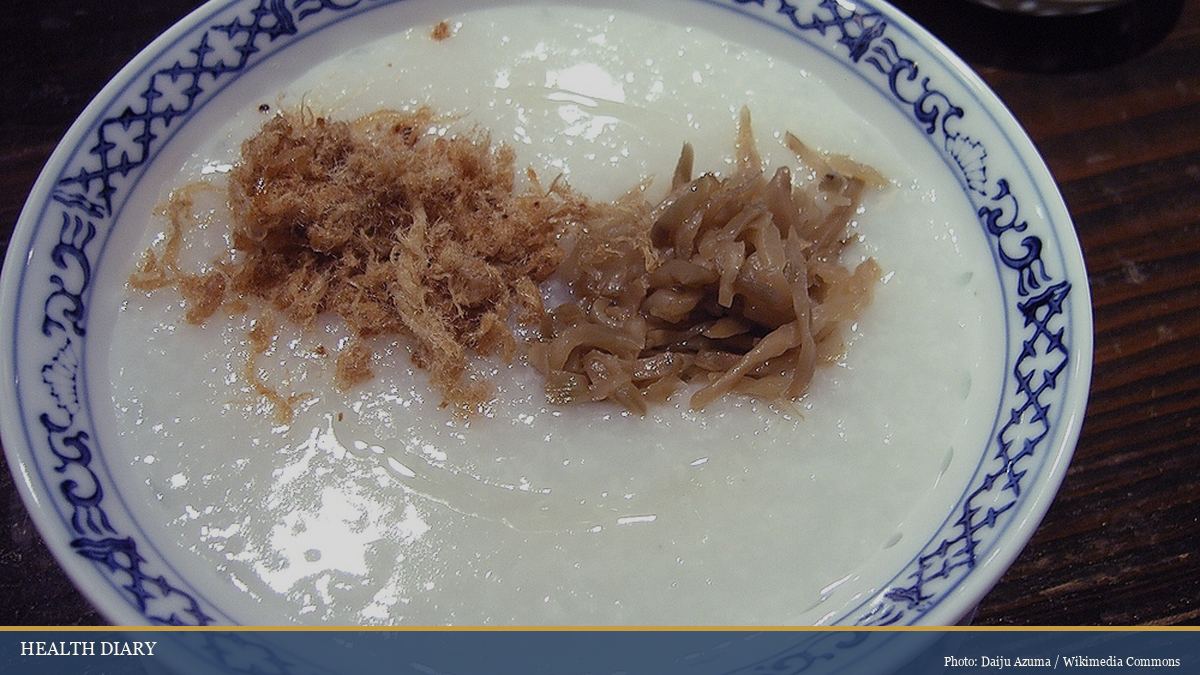
Perhaps no food in Chinese tradition carries as much layered meaning as ba bao zhou — Eight Treasures Congee. Made from eight (or more) grains, legumes, and dried fruits simmered slowly together into a thick, warming porridge, this dish has been prepared in Chinese households and Buddhist temples for more than a thousand years.2
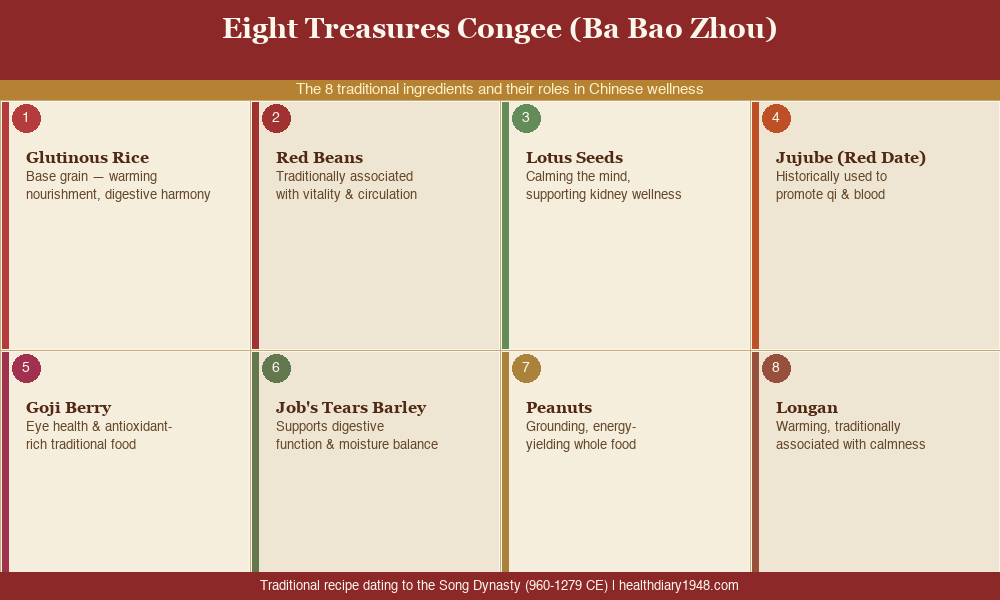
The eight classical ingredients most commonly associated with the dish are:
- Glutinous rice — the warming, filling base
- Red beans (adzuki) — traditionally associated with promoting circulation and vitality
- Lotus seeds — historically used for calming and kidney support
- Jujube (red dates) — one of the most beloved tonifying foods in Chinese cooking
- Goji berry — prized for eye health and antioxidant-rich nourishment
- Job's Tears barley (yi yi ren) — used to aid digestive ease and moisture balance
- Peanuts — a grounding, energy-yielding whole food
- Longan (dragon eye fruit) — warming, traditionally associated with calm and mental clarity
The tradition of making this porridge is most strongly associated with La Ba Jie, the 8th day of the 12th lunar month, when Chinese households historically prepared large pots to share with neighbors, commemorate the harvest, and honor Buddhist teachings. BUCM (Beijing Univ. of Chinese Wellness Sciences) scholars have documented that the dish's roots lie in both pre-Buddhist grain-offering rituals and later temple cooking traditions, with the Buddhist connection arising from the legend of Siddhartha Gautama accepting a bowl of grain porridge from a village girl before his enlightenment.2
Regional variations abound: northern Chinese versions tend to be sweeter and more grain-forward, often adding black sesame and lily bulb; Cantonese versions frequently include dried longan, lotus seeds, and barley in a less sweet preparation. In Sichuan, a spiced variant with jujube paste and brown sugar is traditional. What unites all versions is the concept of combining complementary whole foods to create a nourishing, warming meal that promotes vitality through the cold season — a concept deeply aligned with the seasonal principles of the Huangdi Neijing.
Traditional Chinese Wellness View of Aging
To understand Chinese longevity traditions, it helps to understand how TCM conceptualizes the aging process itself. Rather than viewing aging primarily as a mechanical deterioration of cells and organs, classical Chinese wellness thinking frames it through the lens of three fundamental treasures: jing, qi, and shen.
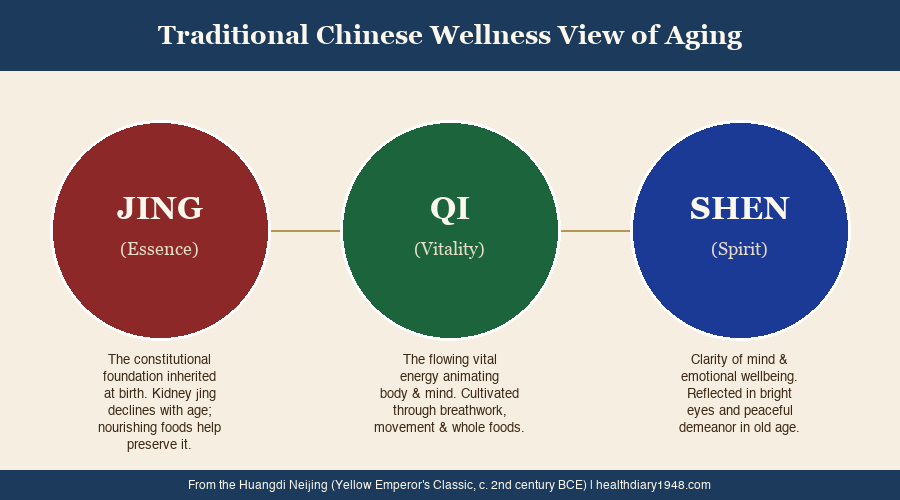
Jing (Essence) is the most fundamental of the three. Often described as the constitutional blueprint inherited from one's parents, jing governs growth, reproduction, and the body's foundational reserves. In the TCM framework, jing is stored primarily in the kidneys and naturally depletes over time. The art of longevity practice, in this view, is partly about conserving and supplementing jing through appropriate diet, sleep, and lifestyle — not burning through it with excess stress, overwork, or poor nutrition.
Qi (Vital energy) is the animating force that flows through the body's meridian pathways. While jing provides the reserves, qi provides the moment-to-moment vitality. It is cultivated through breath practices, gentle movement, whole foods, and emotional balance. The classical text notes that yin energy reaches its peak around age 35 and begins to decline, while yang peaks around age 48 — though the text emphasizes that conscious cultivation of qi through appropriate practices can significantly influence how this natural arc unfolds.1
Shen (Spirit or Mind) encompasses mental clarity, emotional equilibrium, and what might broadly be called conscious presence. A person of advanced years whose eyes remain bright and alert, who engages warmly with those around them, is said to have preserved their shen — a quality that depends, in this framework, on the adequate grounding of both jing and qi below it.
Together, jing-qi-shen form an integrated triad in which the health of each element influences the others. This systems-level view of aging — in which constitutional reserves, daily energy cultivation, and mental wellbeing are all interconnected — resonates with modern integrative health perspectives that increasingly recognize the role of lifestyle and psychosocial factors in healthy aging.
What Longevity Foods Are Used in Chinese Wellness Cooking?
Chinese culinary tradition makes no strict distinction between food and wellness ingredients. Many of the plants most strongly associated with longevity in Chinese culture are simply everyday cooking ingredients — used in soups, porridges, teas, and desserts — rather than specialized treatments. Here are five of the most historically significant:
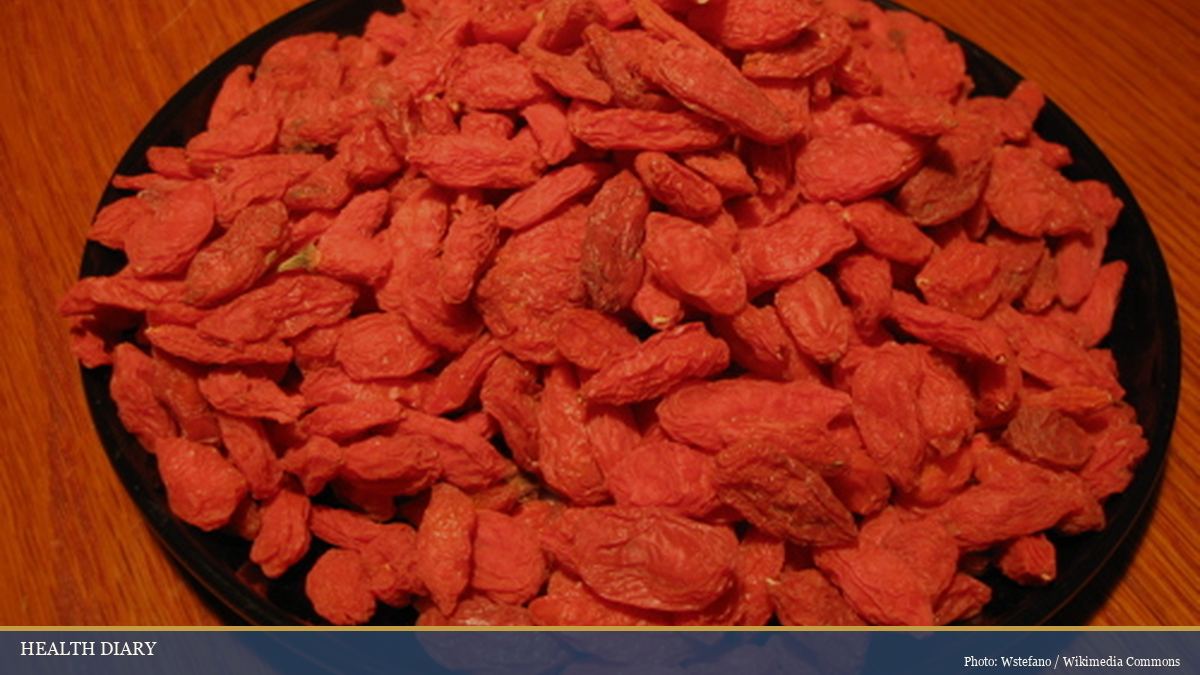
Goji berry (Lycium barbarum) has been cultivated in China for more than 2,000 years. The berries, bright red when dried, are ubiquitous in Chinese cooking — dropped into soups, simmered into teas, added to rice porridge, or eaten as a snack. Research published in PMC Nutrition (2021) found that Lycium barbarum extracts extended lifespan in Caenorhabditis elegans model organisms, with effects mediated through the sir-2.1 gene pathway.3 Human evidence for goji's antioxidant and immune-modulating properties is still developing, but its place in the Chinese wellness kitchen is well established.
Astragalus root (Huang Qi) is one of the most widely used tonic herbs in Chinese wellness cooking. Its dried slices are commonly added to soups and broths, imparting a mild, slightly sweet flavor. Modern research interest has focused on cycloastragenol, a compound isolated from astragalus that has been studied for its ability to activate telomerase — the enzyme associated with telomere maintenance. A 2011 study by de Jesus et al. in Aging Cell demonstrated that a cycloastragenol-derived compound (TA-65) elongated short telomeres and increased health span in mice without increasing cancer incidence.4 While human research on telomerase activation remains in early stages, astragalus's long history in Chinese wellness soup-making gives it an accessible and culinary-friendly entry point.
Jujube (red date, Ziziphus jujuba) is the workhorse of Chinese wellness cooking. Its warming, slightly sweet taste makes it a natural addition to teas, congee, soups, and desserts. Jujube is traditionally associated with nourishing blood, supporting the digestive system, and calming the mind. It contains polysaccharides, flavonoids, and triterpenoids that have attracted attention from researchers exploring immune function and antioxidant activity.
Chinese yam (shan yao, Dioscorea opposita) is a mildly flavored root vegetable used fresh, dried, or powdered. In the TCM framework, it is traditionally associated with tonifying the spleen, lung, and kidney — three organ systems linked to digestive vitality, respiratory ease, and foundational jing reserves. Research published in ScienceDirect (2023) reviewed its key polysaccharides, allantoin, and mucilage content, noting antioxidant, immune-modulating, and gastrointestinal-supportive properties in laboratory models.5
Lotus seeds (lian zi) appear in congee, sweet soups, mooncakes, and herbal teas. They have a mild, slightly starchy flavor and are traditionally associated with calming the heart and supporting kidney wellness. They contain alkaloids, flavonoids, and policosanol, and have been studied for potential anti-inflammatory properties, though human clinical evidence remains limited.
Individual responses to these traditional foods vary considerably; what works well for one person may not suit another, and personal experimentation under practitioner guidance is always recommended.
What Does Research Say About Daily Movement for Healthy Aging?
If there is one image that crystallizes Chinese longevity tradition for outside observers, it is the sight of elderly men and women practicing tai chi or qigong in a public park at dawn. This practice — community exercise in outdoor spaces as a daily, lifelong ritual — is one of the most distinctive features of aging culture in China.
Qigong refers to a family of breath- and movement-based practices designed to cultivate and regulate qi. The related practice of dao yin (guiding and stretching) described in classical texts is considered an ancestor of modern qigong. Practitioners coordinate regulated breathing, gentle flowing movements, and focused mental attention. According to the National Center for Complementary and Integrative Health (NCCIH), research has found that qigong may improve quality of life in community-dwelling older adults, with sufficient evidence to recommend its use for balance training and fall prevention.6 A 2020 review of 13 studies in adults with mild cognitive impairment suggested qigong improved cognition and memory after 3–6 months of practice, though authors noted the need for more rigorous trials.
Tai chi is perhaps the best-studied of China's traditional movement arts. A 2023 systematic review and meta-analysis published in PMC (PMC10509476) examining randomized controlled trials found that tai chi significantly reduced fall risk and improved balance in older adults.7 A broader review published in PMC (PMC10242998) found that tai chi and qigong combined produced benefits in both physical function and cognitive outcomes in older adults across multiple randomized clinical trials.8 Tai chi has also been studied in the context of Parkinson's disease, knee osteoarthritis, heart failure, and fibromyalgia.
The NCCIH notes that tai chi and qigong are generally considered safe forms of activity, with minimal reported adverse events in research settings — making them particularly well-suited to older adults who may have musculoskeletal limitations that preclude higher-impact exercise.9
The social dimension of park exercise culture should not be overlooked. Group morning practice creates a community structure around aging that combines gentle physical activity with social connection — both of which are independently associated in research literature with positive aging outcomes.
Seasonal Eating and Healthy Aging
One of the most elegant ideas in the Huangdi Neijing is that the path to a long, healthy life runs through alignment with nature's rhythms. The classical text devotes considerable attention to how eating, sleeping, and exercising should shift with each season — not as rigid rules, but as a general orientation toward living in harmony with the changing world outside.
Spring is associated in the TCM framework with the Wood element and the liver. Dietary emphasis traditionally shifts toward lighter, upward-moving foods: fresh greens, sprouts, lightly cooked vegetables. The principle is to assist the liver's role in smoothly circulating qi throughout the body as it stirs with the energy of the new season.
Summer calls for bitter foods and cooling ingredients — chrysanthemum tea, bitter melon, mung bean soup — to counteract heat and protect what TCM calls heart qi. This is the season of most active outward expression.
Autumn brings a shift toward moistening, lung-nourishing foods: white pears, lily bulb, honey, and snow fungus (tremella). The lungs, associated with this season in the TCM system, are understood to benefit from richly hydrating foods as the air becomes drier.
Winter is the season most explicitly linked to kidney health and longevity in classical texts. This is the time for warming, deeply nourishing foods: bone broths, black sesame, black beans, walnuts, and — notably — the Eight Treasures Congee prepared during the winter La Ba festival. The principle of conservation governs winter: rest more, eat warming whole foods, and avoid depleting activities. Research on dietary patterns in Bama County centenarians found that year-round emphasis on dietary fiber and plant-based foods — a pattern fully consistent with seasonal vegetable availability in Guangxi — was significantly associated with the longevity profiles of the community.10
Traditional Chinese Longevity Regions
Bama County in the Guangxi Zhuang Autonomous Region of southern China has attracted significant scientific attention as one of the world's recognized longevity zones. According to data from China's 2020 Population Census, Bama has approximately 43 centenarians per 100,000 residents — far above the United Nations threshold of 7.5 per 100,000 used to designate a longevity zone.11
Research conducted in Bama has examined diet, gut microbiota, and metabolic profiles of centenarians in comparison to younger elderly populations. A study published in PMC (PMC5037549) found that Bama centenarians consumed significantly less energy, protein, fat, and cholesterol than comparison groups — with energy intake approximately 20% lower and dietary fiber intake 1.7-fold higher than non-longevous region controls. The authors concluded that elevated dietary fiber intake, achieved through a lower-calorie, largely plant-based diet, appeared to be a meaningful contributor to the metabolic profiles associated with exceptional longevity in this population.10
The traditional diet in Bama is notably aligned with classical Chinese seasonal-eating principles: sweet potatoes, millet, leafy greens, hemp seed oil, legumes, and whole grains form the staple base, with minimal processed food. Physical activity remains continuous through agricultural work and daily walking in the mountainous terrain. Social cohesion within multigenerational families is also a frequently noted characteristic of the community.
Other traditional longevity areas in China include parts of Jiangxi, Sichuan, and coastal Guangdong — each with distinct dietary emphases, but common threads of plant-forward eating, regular physical activity, and strong community structure.
Frequently Asked Questions
What is Eight Treasures Congee and when is it traditionally eaten?
Eight Treasures Congee (ba bao zhou) is a traditional Chinese porridge made from eight or more grains, legumes, dried fruits, and seeds simmered together slowly. It is most traditionally associated with La Ba Jie — the 8th day of the 12th lunar month — though it is enjoyed throughout the year, particularly in winter months. The exact ingredients vary by region and household, but the classic eight include glutinous rice, red beans, lotus seeds, jujube, goji berry, Job's Tears barley, peanuts, and longan.
What is the jing-qi-shen framework and how does it relate to aging?
In traditional Chinese wellness thinking, jing (essence), qi (vital energy), and shen (spirit) are three fundamental resources that sustain life and health. Jing — stored in the kidneys — provides the constitutional foundation; qi provides daily vitality; and shen encompasses mental and emotional clarity. The TCM view of aging involves the gradual depletion of these resources, and longevity practices are understood to help preserve and replenish them through appropriate diet, movement, sleep, and emotional balance.
Is astragalus root safe to use in cooking?
Astragalus root is commonly used as a cooking ingredient in Chinese cuisine — dried slices are typically added to soups and broths and removed before eating, similar to a bay leaf. When used as a food ingredient in this way, it is generally considered safe for most healthy adults. However, astragalus may interact with immunosuppressant medications and is not recommended for people with autoimmune conditions or those taking certain drugs. Always consult a healthcare provider before using it as a supplement. Individual responses vary considerably.
Does tai chi actually help with healthy aging?
Multiple systematic reviews and meta-analyses have found evidence supporting tai chi for several outcomes relevant to healthy aging, including improved balance, reduced fall risk, and better quality of life in older adults. Research published in PMC (2023) found significant benefits for fall prevention and balance across randomized controlled trials. However, like all exercise research, effect sizes vary, and tai chi is not a replacement for comprehensive healthcare. It is generally safe and accessible for most older adults, including those with limited mobility.
What did centenarians in Bama County traditionally eat?
Research on centenarians in Bama County, Guangxi, has found that their dietary patterns are characterized by high dietary fiber intake, a plant-forward whole-food base (sweet potatoes, millet, leafy vegetables, legumes, hemp seed), low overall calorie density, and minimal processed food. Studies found their energy, fat, and cholesterol intake was significantly lower than comparison groups, while dietary fiber was 1.7-fold higher. These patterns align broadly with the general dietary principles described in classical Chinese wellness texts.
Can goji berries be eaten every day?
Goji berries are a common everyday food in Chinese cooking — eaten dried, brewed into tea, simmered in soups, or added to congee. Most healthy adults can enjoy small daily amounts as part of a varied diet without issue. However, goji berries may interact with warfarin (a blood thinner) and medications for diabetes or blood pressure. If you take any of these, speak with a healthcare provider before making goji berry a consistent part of your daily routine. Individual responses vary considerably.
Important Considerations
Traditional Chinese wellness practices are best understood as lifestyle and cultural approaches to supporting wellbeing, not as alternatives to conventional medical care. Several practical considerations apply:
- Herb and food quality: The quality of dried herbs and ingredients varies significantly by source. The NCCIH and others have noted that Chinese herbal products can vary widely in quality and purity — purchasing from reputable sources and checking for third-party testing where possible is advisable.
- Drug interactions: Several traditional foods used in Chinese wellness cooking may interact with medications. Goji berry may interact with warfarin and diabetes medications. Astragalus may affect immunosuppressant drugs. Jujube has been noted to potentially affect certain CNS medications. Always consult a healthcare provider if you take prescription medications.
- Pregnancy and breastfeeding: Many traditional herbs have not been studied in pregnant or breastfeeding populations. Consult a qualified practitioner before using herbal preparations during pregnancy.
- Individual variation: Responses to dietary changes and movement practices vary significantly between individuals. Age, health status, genetics, and existing conditions all influence outcomes. What supports one person's wellbeing may not be appropriate for another.
- He Shou Wu (Fo-Ti) caution: This herb appears in some historical Chinese longevity discussions but has documented associations with liver toxicity (hepatotoxicity). It is not recommended and is explicitly excluded from this article's recommendations. If you encounter it in products, exercise significant caution.
A Note on Integrating These Traditions
The longevity traditions described in this article — whether a bowl of eight-treasure congee on a winter morning, an hour of tai chi in the park at dawn, or the habit of eating seasonal vegetables from the local market — are not exotic or inaccessible practices. They are, at their core, applications of common-sense principles: eat diverse whole foods, move your body gently and consistently, maintain social connections, sleep well, and adapt your lifestyle to the natural rhythms of the year.
What Chinese culture has done is embed these principles into specific, culturally meaningful practices that have been transmitted across generations. Whether or not one adopts the TCM theoretical framework that underlies them, the observable lifestyle patterns associated with China's longest-lived communities offer a compelling picture of what everyday longevity-supportive living might look like.
This article is for educational purposes only and reflects traditional Chinese cultural practices. It does not constitute medical advice. Consult a qualified healthcare provider before making changes to your diet or lifestyle.
About This Article
Written by: Health Diary Editorial Team — specialists in Asian wellness traditions and food culture research.
Editorial review: This article has been reviewed by the Health Diary editorial team for clarity, structure, and adherence to our sourcing standards. Key claims were cross-checked against NCCIH, NIH PubMed, and PMC peer-reviewed literature where applicable. It is not a clinical review and should not replace consultation with a licensed healthcare practitioner.
Reviewed on: June 16, 2026.
Editorial process: We cite peer-reviewed and government sources where possible. When a clinical reviewer is added to this article, attribution will appear here with verifiable credentials.
References
- Gu Y, et al. "TCM and aging." Aging (Albany NY). 2019;11(22):10536–10553. PMC6880673. https://pmc.ncbi.nlm.nih.gov/articles/PMC6880673/
- BUCM Museum. "Laba Porridge and Eight Treasures Congee." Traditional Chinese Food Culture Series. https://bowuguan.bucm.edu.cn/kpzl/zyyzs/44070.htm
- Zhu J, et al. "Lycium barbarum Extracts Extend Lifespan and Alleviate Proteotoxicity in Caenorhabditis elegans." Front Nutr. 2021;8:815947. https://www.frontiersin.org/journals/nutrition/articles/10.3389/fnut.2021.815947/full
- de Jesus BB, et al. "The telomerase activator TA-65 elongates short telomeres and increases health span of adult/old mice without increasing cancer incidence." Aging Cell. 2011;10(4):604–621. https://onlinelibrary.wiley.com/doi/10.1111/j.1474-9726.2011.00700.x
- Yan H, et al. "Chinese yam (Dioscorea): Nutritional value, beneficial effects, and food and pharmaceutical applications." Food Res Int. 2023;168:113043. https://doi.org/10.1016/j.foodres.2023.113043
- National Center for Complementary and Integrative Health (NCCIH). "Qigong: What You Need To Know." 2024. https://www.nccih.nih.gov/health/qigong-what-you-need-to-know
- Huang L, et al. "Tai Chi for fall prevention and balance improvement in older adults: a systematic review and meta-analysis of randomized controlled trials." BMC Geriatr. 2023. PMC10509476. https://pmc.ncbi.nlm.nih.gov/articles/PMC10509476/
- Zou L, et al. "Effects of Tai Chi and Qigong on cognitive and physical functions in older adults: systematic review, meta-analysis, and meta-regression of randomized clinical trials." BMJ Open. 2023. PMC10242998. https://www.ncbi.nlm.nih.gov/pmc/articles/PMC10242998/
- National Center for Complementary and Integrative Health (NCCIH). "TCM: What You Need To Know." NCCIH. 2024. https://www.nccih.nih.gov/health/traditional-chinese-medicine-what-you-need-to-know
- Shi Z, et al. "Nutrient Intake Is Associated with Longevity Characterization by Metabolites and Element Profiles of Healthy Centenarians." Nutrients. 2016;8(9):564. PMC5037549. https://pmc.ncbi.nlm.nih.gov/articles/PMC5037549/
- Lv X, et al. "The Age-Accompanied and Diet-Associated Remodeling of the Phospholipid, Amino Acid, and SCFA Metabolism of Healthy Centenarians from a Chinese Longevous Region." Front Nutr. 2022. PMC9612356. https://pmc.ncbi.nlm.nih.gov/articles/PMC9612356/