Cooling Foods in Summer: Asian Traditions of Eating for the Heat
Explore cooling foods in summer across Asian traditions, from mung bean soup and bitter melon to watermelon and patbingsu, plus what modern nutrition says.
Medical Disclaimer: This content is for educational and informational purposes only and is not medical advice. The information presented is not intended to diagnose, treat, cure, or prevent any disease. Always consult a licensed healthcare practitioner before making significant changes to your diet or starting any new herbal practice. Statements regarding traditional food and herbal use have not been evaluated by the FDA.
Affiliate Disclosure: This article contains affiliate links. We may earn a commission if you purchase through these links, at no additional cost to you. We only recommend products we believe align with our editorial standards.
When the heat of high summer settles over much of Asia, kitchens shift their rhythm. In Guangzhou, a pot of mung beans goes on to simmer into a pale-green soup. In Hanoi, blenders whir with pennywort leaves and cooked mung bean for a jade-colored drink. In Seoul, spoons dig into mountains of snow-fine shaved ice crowned with sweet red bean. Across these very different tables runs a single, old idea: that some foods are cooling, and that summer is precisely the season to reach for them.
This is not about the temperature of the food on your tongue. A bowl of warm mung bean soup and a chilled slice of watermelon can both be considered "cooling" in traditional Asian food thinking. The concept describes what a food is believed to do inside the body once eaten — and, as it turns out, many of these foods are genuinely nourishing and hydrating in the eyes of modern nutrition too.
What Are "Cooling Foods," Really?
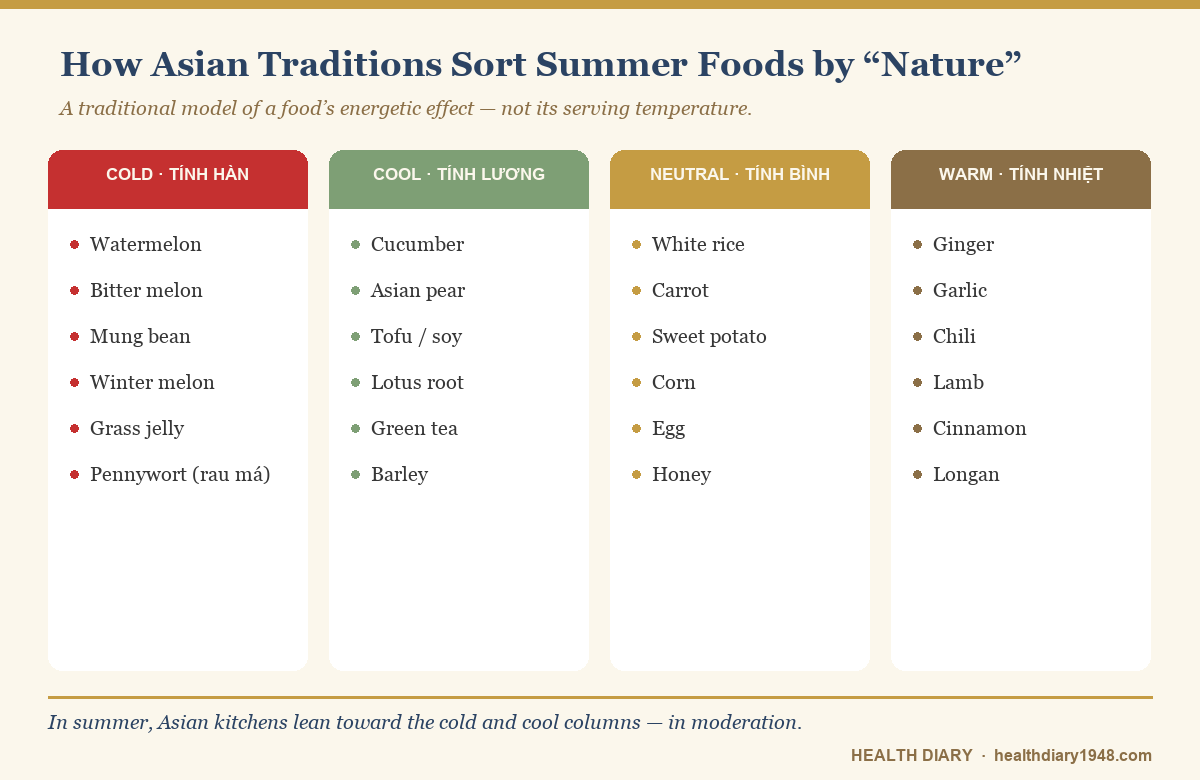
In the traditional dietary frameworks of China, Vietnam, Korea, and much of East and Southeast Asia, every food is thought to carry an energetic "nature" or temperament. Chinese dietary therapy sorts foods along a spectrum of four thermal natures: hot, warm, neutral, and cool-to-cold. Vietnamese folk practice uses a close parallel — tính hàn (cold nature) and tính lüơng (cool nature) at one end, tính nhiệt (hot nature) at the other. Korean and Japanese traditions carry their own versions of the same intuition.
Crucially, this "nature" is about the food's perceived effect on the body's internal balance, not the temperature it is served at as guides to Chinese food energetics explain. Cooling foods are those traditionally described as helping the body feel less overheated during hot, humid weather — the season when, in traditional thinking, the body accumulates "summer heat." Warming foods, by contrast, are saved for cold months. It is a way of eating in dialogue with the seasons, the same logic that makes watermelon a July food and slow-simmered lamb a January one.
It is worth being honest from the start: this thermal classification is a traditional model refined over centuries of observation, not a system validated by modern controlled trials. Its value lies in the seasonal, balanced eating habits it encourages — and many of the foods it recommends happen to be light, water-rich, and nutrient-dense.
How Do Asian Traditions Decide a Food Is "Cooling"?
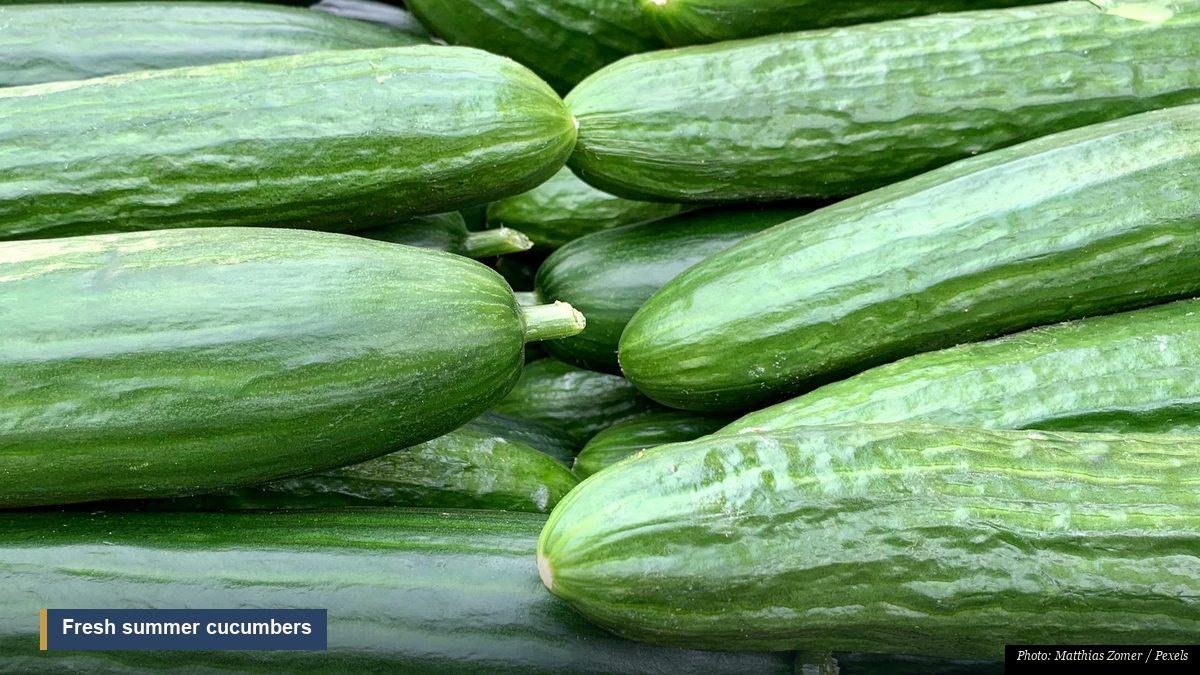
Practitioners and home cooks lean on a few rough signals. Foods that grow abundantly in summer, that are watery and juicy, that taste bitter or bland rather than rich, and that are pale or green in color are often placed in the cooling camp. Bitter melon is a textbook example — intensely bitter, and considered strongly cooling. Watermelon, cucumber, winter melon, and mung bean are all watery and mild, and all sit firmly on the cool side.
Government health messaging still echoes this. A summer-heat guide from the Beijing Municipal Health Commission, drawing on traditional Chinese medicine, lists mung bean (sweet and cold in nature), watermelon, winter melon, bitter melon, and cucumber among the everyday cool-natured foods people reach for in hot weather — while reminding readers not to overdo cold foods if their digestion runs sensitive in its public guidance. Even the tradition itself builds in moderation.
The Classic Cooling Foods of an Asian Summer
Ask grandmothers across the region what belongs on a hot-weather table and you will hear a remarkably consistent list. Here are the staples that appear again and again:
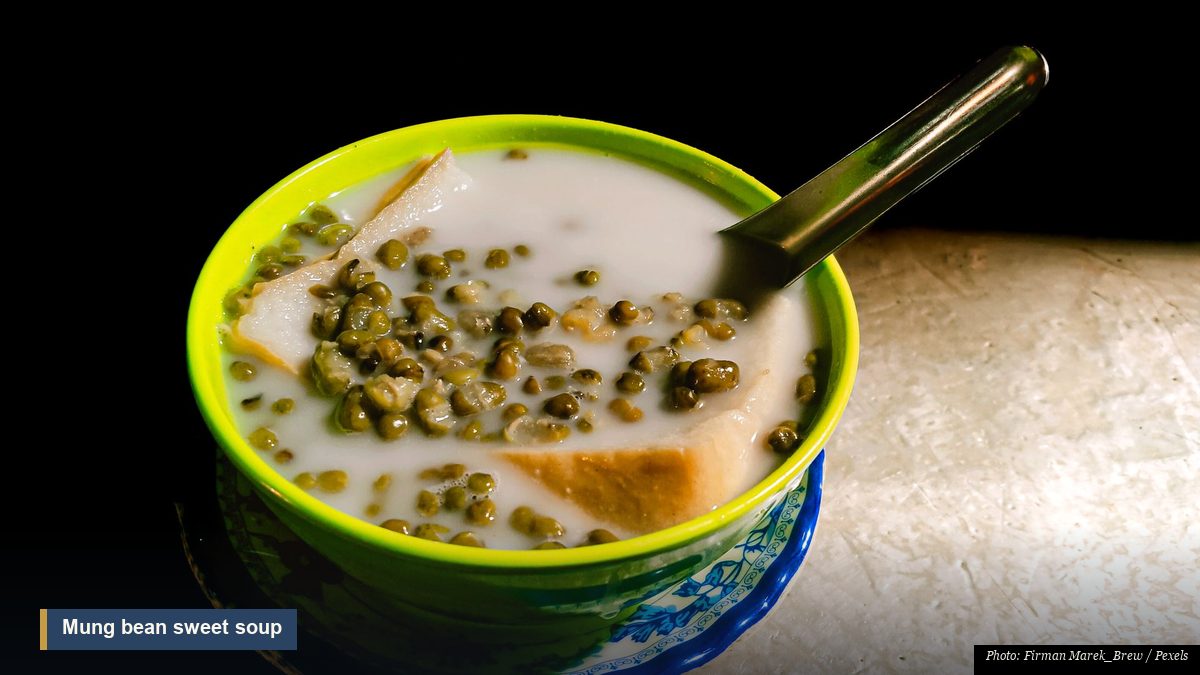
- Mung bean (green bean) — The most iconic summer food in Chinese and Vietnamese kitchens, simmered into a light soup (lü dou tang / chè đậu xanh).
- Bitter melon (khổ qua / 苦瓜) — Stir-fried, stuffed, or dropped into soup; its bitterness is exactly what makes it prized in summer.
- Cucumber — Sliced into salads, lightly pickled, or eaten raw with a little salt.
- Winter melon (đông qua / 冬瓜) — Despite the name, a summer favorite simmered into clear, mild soups.
- Pennywort (rau má / Centella asiatica) — In Vietnam, blended with mung bean into a beloved giải nhiệt (heat-clearing) green drink.
- Grass jelly and agar jellies — Faintly herbal desserts (sương sáo, xian cao) served over ice with syrup.
- Watermelon and Asian pear — Juicy, sweet fruits eaten by the plateful; the pear is considered gently moistening.
- Tofu and soy-based dishes — Silky and mild, served chilled with ginger syrup or in light soups.
- Umeboshi (Japanese salted plum) — A tiny, intensely sour plum traditionally eaten in Japan's humid summers.
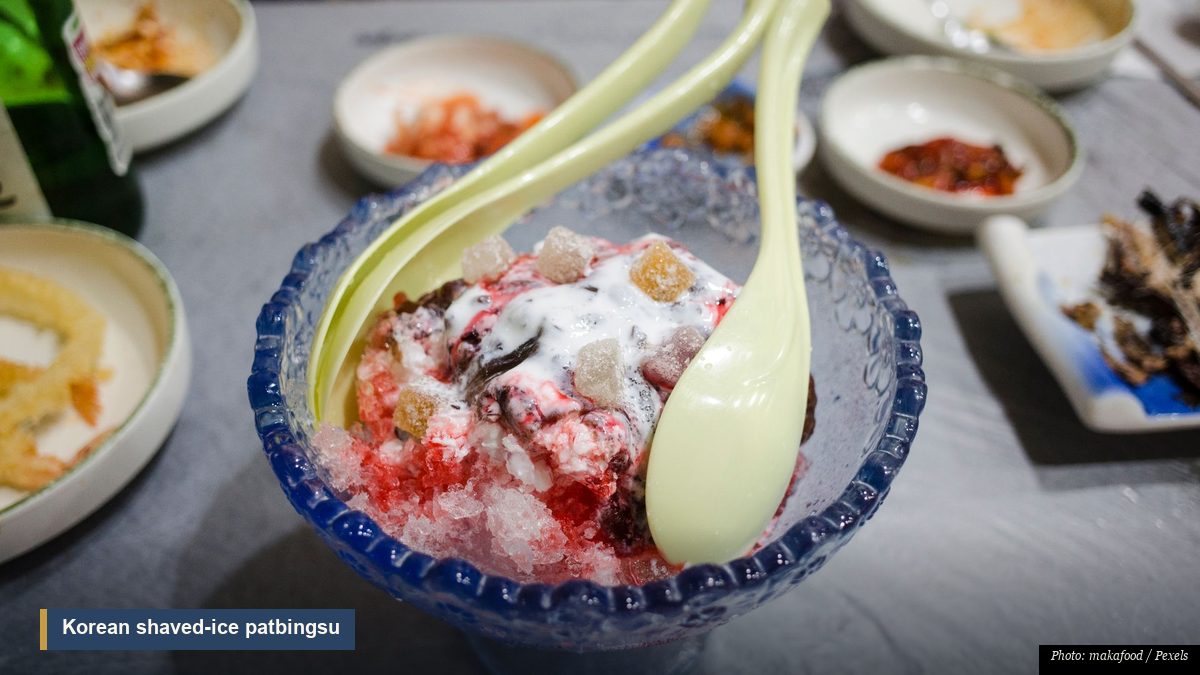
- Patbingsu (Korean shaved ice) — The dessert end of the spectrum: snow-fine ice with sweet adzuki red bean, condensed milk, and fruit. Ice was once a royal luxury in Joseon-era Korea, stored through winter in riverside ice houses.
What ties this list together is a shared aesthetic of summer eating: light over heavy, watery over dry, mild or bitter over rich, and often green or pale in color.
What Does Modern Nutrition Say About These Foods?
Traditional classifications aside, many cooling foods are simply excellent hot-weather nutrition — and here the modern evidence is more concrete.
Hydration first. Harvard Health notes that water-rich produce like cucumber is roughly 95% water, and that eating the recommended servings of fruits and vegetables can contribute meaningfully to daily fluid intake — though it stresses that food never fully replaces drinking water in its guidance on using food to stay hydrated. Watermelon, cucumber, and leafy greens rank among the most hydrating summer foods, a point echoed by Cleveland Clinic. When summer sweat pulls fluid from the body, these watery "cooling" foods are quietly doing real work.
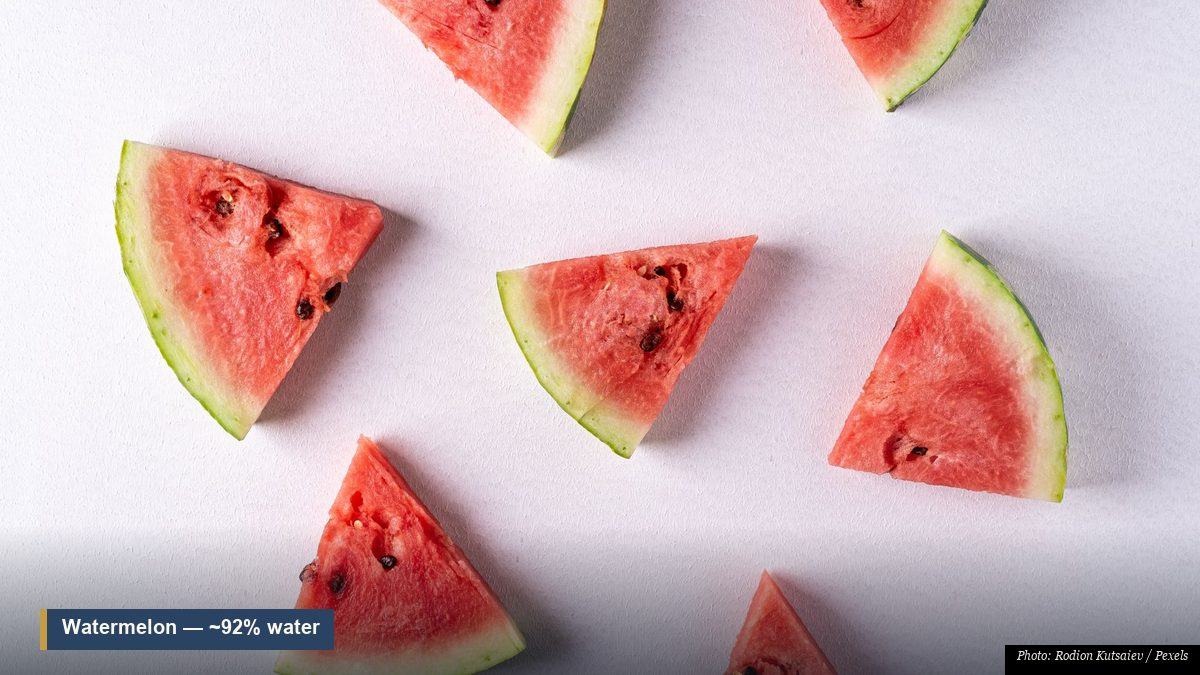
Watermelon's compounds. A 2025 narrative review in the journal Nutrients describes watermelon as roughly 92% water and naturally rich in L-citrulline, lycopene, and beta-carotene. L-citrulline is a precursor the body converts toward nitric oxide, involved in relaxing blood vessels, while lycopene is a well-studied antioxidant carotenoid according to the review. The fruit tradition calls "cooling and thirst-quenching" turns out, in nutritional terms, to be a hydrating and nutrient-dense one.
Mung bean's antioxidants. The summer mung bean soup has drawn scientific curiosity too. A 2011 study in PLoS ONE identified vitexin and isovitexin — flavonoids concentrated in the bean's seed coat — as its major antioxidant components, and found that mung bean coat extract reduced several markers of oxidative stress in heat-stressed rats in an animal model. The authors are careful, though: this was a rat study and no substitute for hydration. It is a hint of biology behind the folk habit, not proof of any health claim.
How Do People Enjoy Cooling Foods in Summer?
The pleasure of these foods is inseparable from how they are eaten. In southern China and Vietnam, a pot of mung bean soup is made in the morning, cooled, and sipped through the day — sometimes warm, sometimes over ice. Vietnamese families blend pennywort with cooked mung bean into a bright green drink appreciated on sweltering afternoons as Vietnamese health writing describes.
Grass jelly and tofu puddings arrive in the afternoon, ladled over crushed ice with a thread of syrup. Cucumbers and winter melon slip into light lunchtime soups and salads. And in Korea, patbingsu is a shared, sociable dessert — a towering bowl of shaved ice meant to be dismantled together as the day's heat breaks. Across all of it, the theme is moderation and pleasure rather than dosing: these are foods woven into daily life, not measured out as supplements.
Individual experiences vary considerably; what feels refreshing and agreeable for one person may not suit another, and the best approach is gentle experimentation, ideally with guidance from a healthcare practitioner if you have specific health concerns.
Important Limitations and Considerations
Cooling foods are ordinary foods, and for most healthy people, enjoying them in summer is simply pleasant, seasonal eating. Still, a balanced picture matters:
- Don't overdo the cold. Traditional systems themselves warn against too many cold or icy foods, which are believed to strain the digestive "spleen-stomach" (tỷ vị / 脾胃). In practical terms, very large amounts of iced desserts and raw cold foods can leave some people with bloating or an unsettled stomach. Moderation is the traditional watchword for a reason.
- Balance and variety. A summer diet built only around watery, cooling foods can be light on protein, healthy fats, and calories. Cooling foods work best as part of a varied plate, not a whole diet.
- Bitter melon and pregnancy. Bitter melon in particular is often advised against in large amounts during pregnancy in traditional practice; anyone who is pregnant or breastfeeding should speak with a healthcare provider before making it a regular fixture.
- Blood-sugar and medications. Some cooling foods, bitter melon among them, are studied for effects on blood sugar. If you take medication for diabetes or any chronic condition, talk with your doctor before eating large or concentrated amounts.
- Added sugar. Many summer "cooling" desserts — sweet soups, jellies, patbingsu — carry considerable added sugar and condensed milk. The base ingredients may be humble, but the sweetened versions are treats.
- Individual variation. People differ. A food that feels cooling and comfortable to one person may not agree with another, especially those with sensitive digestion.
Frequently Asked Questions
What does "cooling" mean if the food isn't cold?
In traditional Asian food thinking, "cooling" describes a food's perceived energetic effect on the body during hot weather, not its serving temperature. A warm bowl of mung bean soup is still considered cooling. It is a centuries-old classification system, and while it guides sensible seasonal eating, it has not been validated by modern controlled trials.
Can I eat cooling foods every day in summer?
Many people across Asia enjoy mung bean soup, cucumber, watermelon, and similar foods daily through the hot months as ordinary meals and snacks. Traditional wisdom simply advises moderation with the very cold and iced versions, and variety so the diet stays balanced. Individual responses vary, so pay attention to how your own body feels.
Are cooling foods good for hydration?
Many of them are genuinely water-rich — cucumber is about 95% water and watermelon roughly 92% — so they do contribute to your daily fluids, as health organizations like Harvard Health note. That said, water-rich foods complement drinking water; they do not replace it, especially during heavy sweating.
Is mung bean soup actually good for you, or just tradition?
It is both. Mung beans provide plant protein and fiber, and laboratory research has identified antioxidant flavonoids in the bean coat. The strongest evidence so far comes from animal and test-tube studies, so it is best thought of as a wholesome seasonal food rather than a remedy.
Which cooling foods should I be careful with?
Bitter melon deserves the most caution: it is often advised against in large amounts during pregnancy and may affect blood sugar, so those who are pregnant or on diabetes medication should consult a doctor. Sweetened cooling desserts can also carry a lot of added sugar. As a general rule, enjoy variety and avoid excess of any single item.
A Note on Tracking Your Seasonal Habits
Cooling foods are, at heart, a form of seasonal attention — eating in a way that responds to the weather and to how your body feels. That is easier to sustain when you can see your own patterns: which summer foods left you refreshed, which felt too heavy or too cold, how your appetite shifted with the heat. Over a season, small notes like these reveal what genuinely suits you.
Health Diary is built around exactly this kind of gentle, personal tracking. If you enjoy noticing the rhythm of your own eating through the year, you can explore ways to log seasonal habits and reflect on what works for your body.
A Soft Closing Note
The idea of cooling foods has endured across so many Asian cultures for a simple reason: it makes the hottest time of year a little more livable, through the everyday pleasures of the table. A jade-green bowl of mung bean soup, a wedge of cold watermelon, a shared mountain of shaved ice — these are traditions of comfort as much as of health. Approached with curiosity, balance, and a little moderation, they are a lovely way to eat through summer. As always, let your own experience and, where needed, a trusted healthcare practitioner be your guide.
About This Article
Written by: Health Diary Editorial Team — a group of writers and researchers focused on making traditional Asian wellness practices accessible, accurate, and responsibly framed for a modern audience.
Editorial review: This article has been reviewed by the Health Diary editorial team for clarity, structure, and adherence to our sourcing standards. Key claims were cross-checked against Harvard Health, NIH PubMed / PMC, and peer-reviewed nutrition literature where applicable. It is not a clinical review and should not replace consultation with a licensed healthcare practitioner.
Reviewed on: July 15, 2026.
Editorial process: We cite peer-reviewed and government sources where possible. When a clinical reviewer is added to this article, attribution will appear here with verifiable credentials.
References
- Cao D, et al. "Antioxidant Properties of the Mung Bean Flavonoids on Alleviating Heat Stress." PLoS ONE 6(6):e21071, 2011. https://pmc.ncbi.nlm.nih.gov/articles/PMC3112222/
- "Watermelon Nutritional Composition with a Focus on L-Citrulline and Its Cardioprotective Health Effects — A Narrative Review." Nutrients 17(20):3221, 2025. https://www.mdpi.com/2072-6643/17/20/3221
- Harvard Health Publishing. "Using food to stay hydrated." https://www.health.harvard.edu/healthy-aging-and-longevity/using-food-to-stay-hydrated
- Cleveland Clinic Health Essentials. "Foods To Help Keep You Hydrated This Summer." https://health.clevelandclinic.org/hydrating-foods
- Open Spice Box. "Hot vs Cold Foods in Chinese Medicine: A Complete Guide." https://openspicebox.com/blog/hot-cold-foods-chinese-medicine
- Beijing Municipal Health Commission. "How to relieve summer heat — TCM methods." https://wjw.beijing.gov.cn/...
- Sức khỏe & Đời sống (Vietnam Ministry of Health). "Pennywort and mung bean cooling drink for summer." https://suckhoedoisong.vn/...