Fish Mint (Diep Ca): Vietnam's Distinctive Herb and Its Traditional Wellness Uses
Discover diep ca — Vietnam's boldly scented fish mint herb. Explore its traditional cooling uses, key compounds like houttuynin, and important safety notes before adding it to your routine.
Medical Disclaimer: This content is for educational and informational purposes only and is not medical advice. The information presented is not intended to diagnose, treat, cure, or prevent any disease. Always consult a licensed healthcare practitioner before starting any new herbal practice or supplement. Statements regarding traditional herbal use have not been evaluated by the FDA.
Affiliate Disclosure: This article contains affiliate links. We may earn a commission if you purchase through these links, at no additional cost to you. We only recommend products we believe align with our editorial standards.
Few herbs in Vietnamese cuisine are as instantly recognizable as diếp cá — and few are as polarizing. Its distinctive fish-like scent stops first-time visitors mid-bite, yet for millions of Vietnamese families, that same aroma signals freshness, vitality, and a centuries-old connection to the land. The herb that divides the table may also be one of Vietnam's most storied traditional wellness plants.
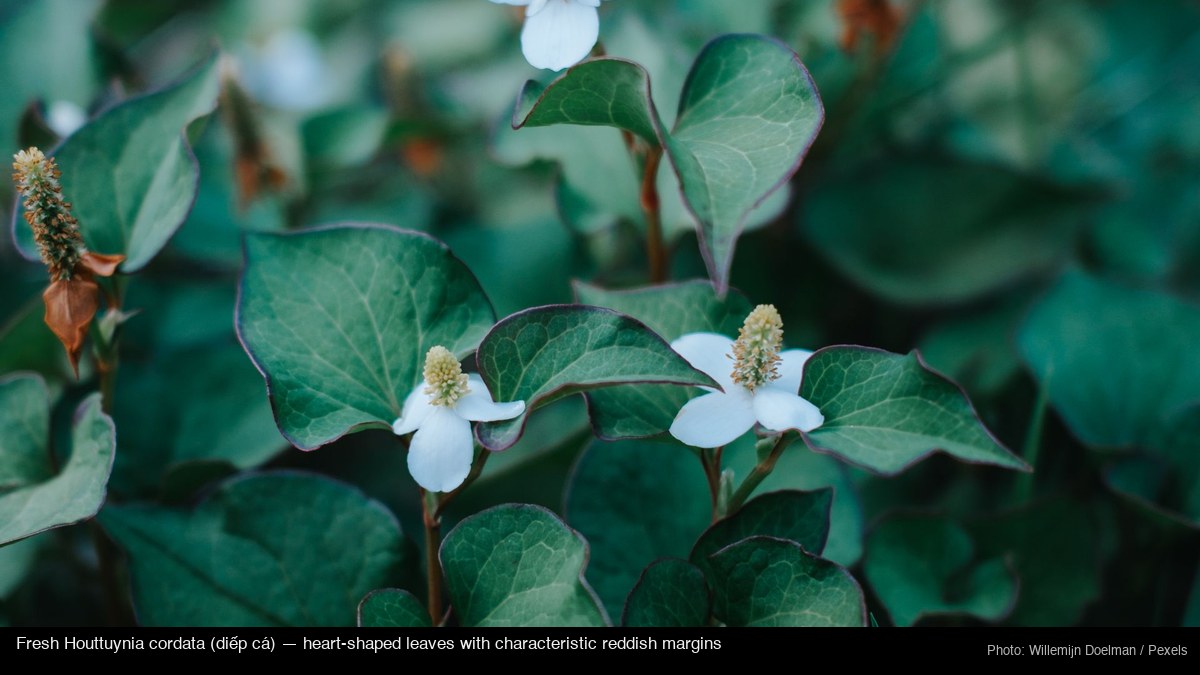
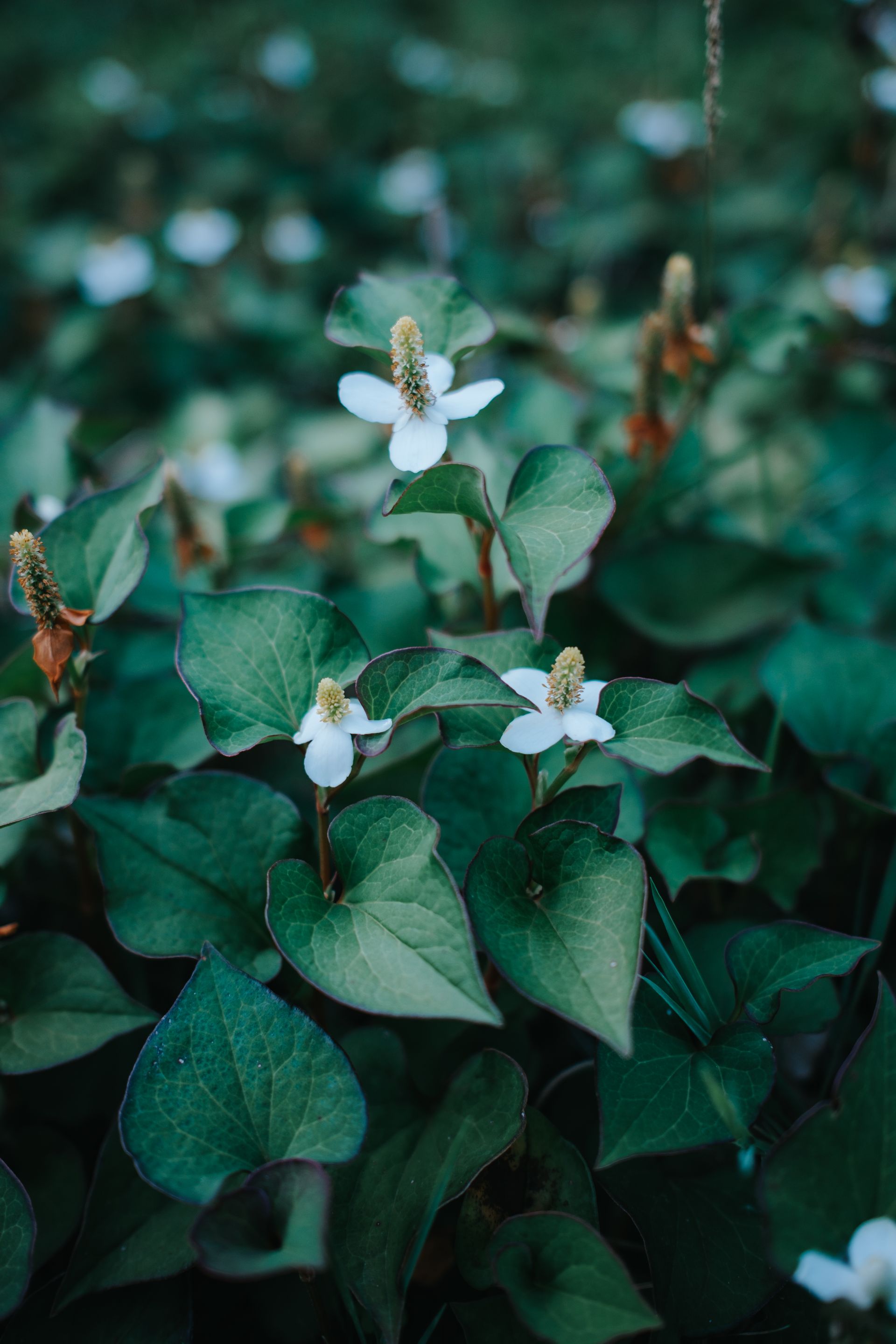
Known botanically as Houttuynia cordata Thunb., diếp cá grows in moist, shaded soils across Southeast and East Asia. Its heart-shaped leaves with reddish-purple margins are unmistakable — as is the intense odor produced by a volatile compound called decanoyl acetaldehyde (also known as houttuynin). That compound, it turns out, is also at the center of modern scientific curiosity about this ancient herb.
The Herb That Divides a Nation — and Defines It
Walk through any morning market in Hanoi, Ho Chi Minh City, or Da Nang, and you will almost certainly pass a vendor selling diếp cá by the bunch. The heart-shaped leaves, sometimes flushed with deep reddish-purple at the edges, are stacked alongside other beloved Vietnamese aromatics: perilla, culantro, and mint.
For those raised with it, the scent of diếp cá is the scent of home — of bún bò Huế steaming in a clay pot, of bánh xèo sizzling on a cast-iron pan, of gỏi cuốn assembled at the dinner table on a rainy afternoon. The herb is served raw, as a garnish or wrapped inside fresh spring rolls, where its sharp, almost fishy bite cuts through rich, fatty flavors and adds a distinctly Vietnamese character that no substitute can replicate.
For those encountering it for the first time, the experience is less nostalgic. The smell — likened variously to fish sauce, damp earth, or something entirely its own — can be intensely off-putting. Vietnamese people themselves often joke that diếp cá is the herb you either love completely or cannot bring yourself to touch.
That cultural duality makes diếp cá an especially fascinating subject. It is not a niche ethnobotanical curiosity — it is a daily food, a home remedy, and a point of national identity, all at once.
What Vietnamese Herbal Tradition Teaches About Diếp Cá
Within Vietnamese traditional wellness practice (y học cổ truyền), which shares foundations with Traditional Chinese wellness theory while incorporating distinctly Vietnamese plant knowledge, diếp cá is understood through a framework of thermal properties and meridian pathways rather than biochemical composition.
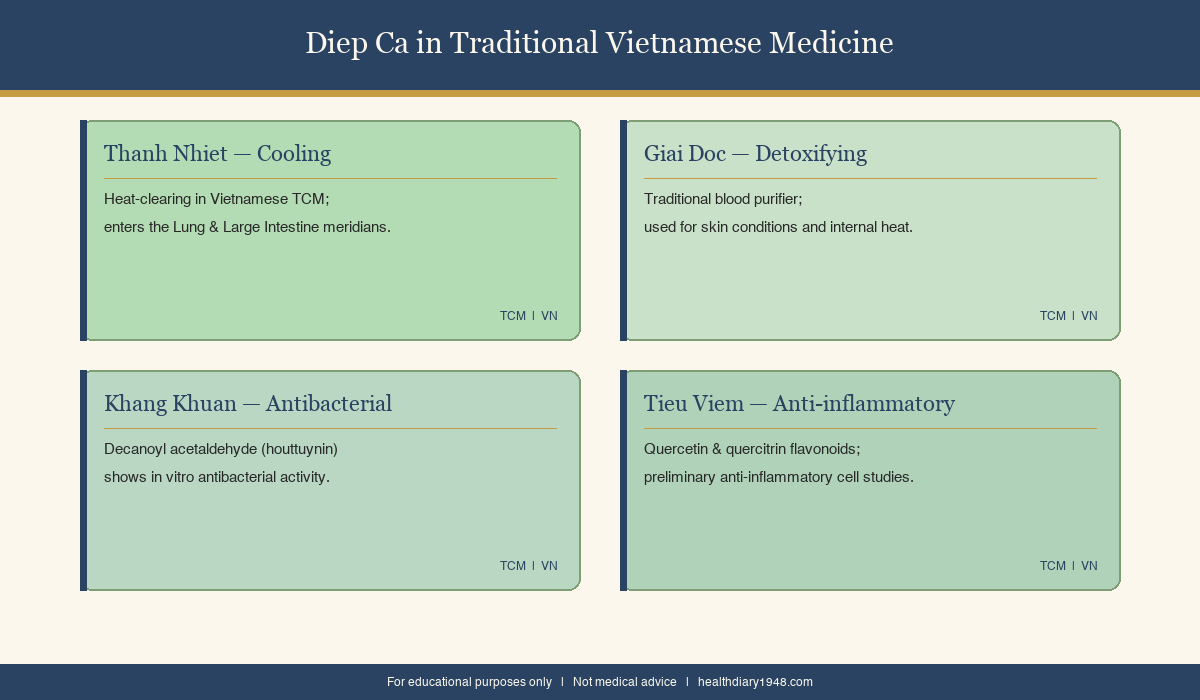
Practitioners describe the herb as having vị cay, tính lạnh — a pungent taste and a cold (cooling) thermal nature. This places it in the category of herbs used to address conditions characterized by excess heat in the body: inflammation, fever, skin eruptions, and what traditional practitioners call internal heat or nhiệt [1].
Diếp cá is traditionally said to enter two meridians: the Phế (Lung) and the Đại Tràng (Large Intestine). This meridian mapping reflects its historical use in addressing respiratory complaints and digestive conditions. Traditional preparations include:
- Thanh nhiệt giải độc (clearing heat and resolving toxins) — the primary traditional action, applied to skin conditions, mild infections, and internal heat
- Lợi tiểu (promoting urination) — used for urinary tract discomfort and to support fluid clearance
- Tiêu viêm (reducing inflammation) — applied to swollen or inflamed tissue, both internally and topically
- Giải độc (detoxifying) — a broad traditional category for clearing accumulated toxins or impurities
These traditional categories are not clinical diagnoses — they are conceptual frameworks developed over centuries of empirical observation. They describe patterns of use, not guaranteed outcomes.
How Is Fish Mint Used in Vietnamese Cooking and Daily Life?
Diếp cá occupies an unusual space in Vietnamese culture: it is simultaneously a culinary herb, a home remedy, and a skincare ingredient, often all within the same household.
As a culinary herb, it is most commonly served raw as part of the mixed herb plate (đĩa rau sống) that accompanies many Vietnamese dishes. Gỏi cuốn (fresh spring rolls), bún bò Huế (spicy beef noodle soup from Huế), and bánh xèo (Vietnamese sizzling pancakes) are among the dishes where diếp cá is most traditional. Its sharp, piercing flavor acts as a counterbalance to richness and provides what Vietnamese cooks describe as a cleansing quality on the palate.
As a home remedy, many Vietnamese families prepare nước ép diếp cá — fresh-pressed diếp cá juice. A common preparation involves blending 30–50 grams of fresh leaves with cooled boiled water, straining the mixture, and consuming the juice. This is used by some families for general wellness, to support the body during hot weather, or to address mild skin breakouts. Some households also prepare a decoction by simmering 10–20 grams of dried herb per liter of water for 10–15 minutes.
As a topical folk remedy, crushed fresh diếp cá leaves are sometimes applied as a poultice to acne-prone skin, insect bites, or minor irritations. This external use is grounded in the herb's traditional anti-inflammatory and antimicrobial reputation.
Individual experiences vary considerably; what works well for one person may not suit another, and personal experimentation under practitioner guidance is always recommended.
What Early Research Has Explored About Houttuynia cordata
Modern scientific interest in diếp cá has grown alongside the broader field of ethnopharmacology — the study of traditional plant remedies. Researchers have identified and characterized dozens of compounds in Houttuynia cordata, and early laboratory studies have begun exploring what some of these compounds do in controlled settings.
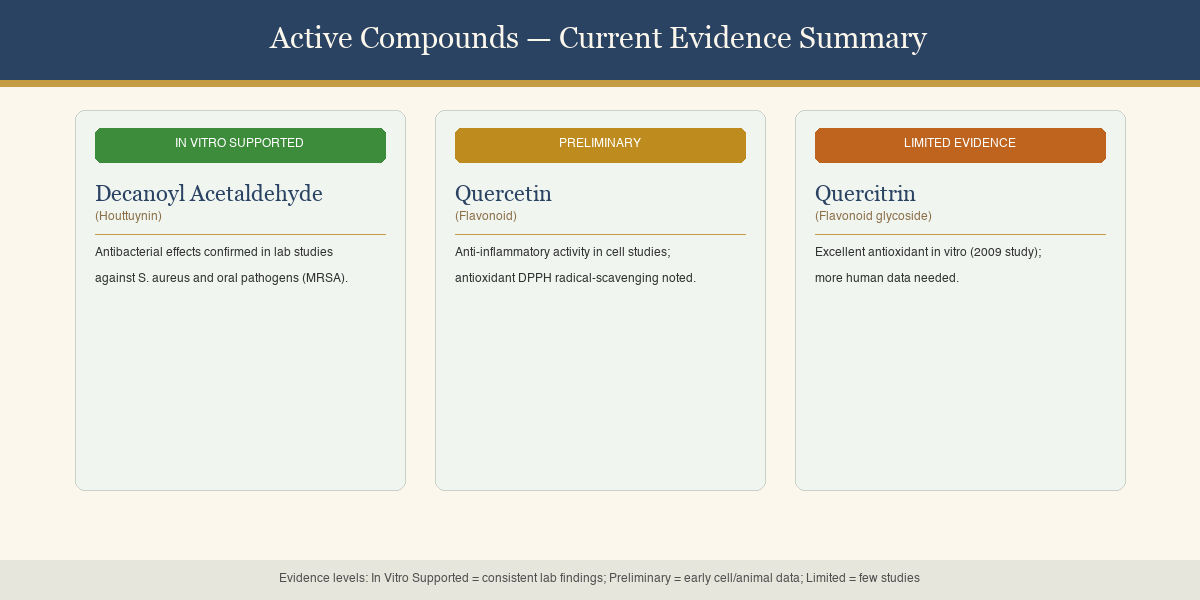
Decanoyl acetaldehyde (houttuynin) is the compound responsible for the herb's characteristic fish-like odor, and it has attracted the most research attention. In vitro (laboratory) studies have shown that houttuynin demonstrates antibacterial effects against several bacterial strains, including methicillin-resistant Staphylococcus aureus (MRSA) and other oral pathogens [2]. A 2017 study found that a water decoction of dried diếp cá leaves showed moderate antimicrobial effects against MRSA and antibiofilm activity against multiple oral microorganisms, without causing toxicity to human cells at the doses tested.
Quercetin and quercitrin, two flavonoid compounds found in abundance in Houttuynia cordata, have been the subject of antioxidant and anti-inflammatory investigations. A 2009 phytochemical study isolated 40 compounds from the plant, finding that quercitrin and related flavonoids demonstrated excellent DPPH radical-scavenging activity in laboratory settings — a measure of antioxidant capacity [3]. Separately, a 2022 comprehensive review noted that these flavonoids, along with sodium houttuyfonate, showed preliminary anti-inflammatory activity by reducing inflammatory markers like TNF-α and IL-1β in cell studies [4].
It is essential to read these findings with appropriate caution. In vitro results — those conducted in lab dishes or test tubes — do not automatically translate to effects in living humans. The concentrations used in laboratory experiments may differ significantly from what is absorbed when eating the herb as food. Human clinical trials on diếp cá remain limited, and no health authority has formally approved it for the treatment of any condition.
How Some Families Incorporate Fish Mint Today
Across Vietnam, diếp cá continues to be integrated into daily life in several practical ways that have changed little from generation to generation.
Many families keep a small pot of diếp cá on a balcony or in a kitchen garden, treating it much like a Western household might keep a pot of basil. The leaves are harvested fresh and used immediately, since the volatile compounds that give the herb its flavor and traditional reputation degrade relatively quickly after harvesting.
During summer months, when the Vietnamese concept of internal heat is considered most relevant, some households increase their consumption of diếp cá as a seasonal practice. Fresh juice, served chilled, is regarded by many as a refreshing and cleansing warm-weather drink. Some urban Vietnamese now purchase commercially packaged diếp cá extract drinks — a newer format that reflects growing consumer interest in the herb among younger generations.
In certain provinces, particularly in Central Vietnam, diếp cá is used in traditional preparations for children's fevers — a use documented in Vietnamese medical literature and still practiced by some families today, typically under the guidance of a traditional wellness practitioner.
Individual responses vary considerably; what works well for one person may not suit another, and consulting a qualified practitioner before using diếp cá as a remedy — particularly for children — is strongly recommended.
Important Considerations Before Use
Diếp cá has a long history as a food herb in Vietnam, and moderate culinary consumption as part of a varied diet is generally how the plant has traditionally been used. However, several important considerations apply — particularly for therapeutic or concentrated use.
Cold thermal nature and digestive sensitivity: Vietnamese folk herbal practice emphasizes that diếp cá's cold nature makes it unsuitable for prolonged heavy consumption by individuals with spleen deficiency, cold digestion, or chronic abdominal discomfort. Traditional practitioners typically recommend balancing it with warming herbs such as basil or perilla when consumed regularly [5].
High-dose concerns: Animal studies have raised concerns about high-dose consumption. Extended administration at doses of 500–1,000 mg/kg per day over 28 days led to liver and kidney changes in rats in one study [6]. While food-level consumption is very different from pharmacological doses, this finding suggests caution with concentrated extracts or prolonged high-quantity use.
Aristolactam content: Some research has identified aristolactam compounds in Houttuynia cordata, which belong to a class of substances that have been associated with kidney toxicity (nephrotoxicity) in high-dose animal studies. The clinical relevance at typical food consumption levels is not established, but it is a reason to avoid very large or prolonged therapeutic doses without medical guidance.
Allergic reactions: Reported adverse effects from injectable forms (sodium houttuyfonate, used in some Asian clinical settings) include allergic reactions. While these are different from oral food use, people with known plant allergies should proceed carefully.
Pregnancy and breastfeeding: Vietnamese herbal tradition advises that pregnant and nursing women consult a qualified traditional wellness practitioner (thầy thuốc y học cổ truyền) before using diếp cá beyond its typical culinary role. The safety of concentrated preparations during pregnancy has not been evaluated in clinical trials.
Potential drug interactions: Concentrated extracts may interact with medications. If you take prescription medications — particularly for liver function, kidney conditions, or blood pressure — consult your healthcare provider before using diếp cá as a supplement or in concentrated form.
Individual variation: As with any herbal practice, individual responses differ. What suits one person's constitution may not suit another's, particularly when traditional frameworks of thermal nature and meridian balance are considered.
Frequently Asked Questions
What does fish mint taste like?
Fish mint has a sharp, pungent, and distinctly fishy flavor that many people find surprising the first time. The aroma is intense — produced by a volatile compound called decanoyl acetaldehyde (houttuynin) — and is often described as a mix of fish sauce and fresh greenery. Cooked or briefly blanched leaves lose much of this intensity, offering a milder flavor. Raw leaves have the strongest taste and are how the herb is most traditionally served in Vietnamese cuisine.
Can I eat fish mint every day?
Many Vietnamese people consume diếp cá regularly as part of a varied diet, particularly as a raw herb alongside meals. At typical culinary quantities, this is how the herb has traditionally been used for generations. However, consuming large quantities daily — especially as juice or concentrated extract — is different from using it as a table herb. Vietnamese folk herbal practice suggests moderation and advises balancing it with warming herbs for those with cold or sensitive digestion. Individual responses vary considerably.
Is fish mint the same as Vietnamese coriander?
No. Vietnamese coriander (Persicaria odorata, known as rau răm) is a different herb entirely. It belongs to the knotweed family, has elongated leaves with dark markings, and a flavor closer to cilantro with a peppery note. Fish mint (Houttuynia cordata, diếp cá) is in the Saururaceae family, has heart-shaped leaves with reddish edges, and its distinctive fishy scent is immediately distinguishable. Both are common in Vietnamese herb plates, but they are botanically and aromatically distinct.
Does fish mint interact with any medications?
Concentrated extracts of Houttuynia cordata have shown potential interactions in some research contexts. The plant contains compounds that affect inflammatory pathways and may influence liver enzyme activity. If you take medications for liver or kidney conditions, blood pressure, or any chronic health issue, consult your healthcare provider before using diếp cá in supplement or extract form. As a culinary herb in ordinary food quantities, it is consumed widely in Vietnam without documented concerns at the population level — but individual circumstances vary.
Is fish mint safe during pregnancy?
The safety of Houttuynia cordata during pregnancy has not been studied in human clinical trials. Vietnamese herbal tradition recommends that pregnant women consult a qualified traditional wellness practitioner before using diếp cá beyond its typical role as a small culinary garnish. The precautionary principle applies here: when in doubt, seek guidance from a qualified healthcare provider familiar with both conventional and traditional wellness practices.
What is the traditional use of fish mint in Vietnam?
In Vietnamese herbal tradition, diếp cá is primarily used for its heat-clearing (thanh nhiệt) and detoxifying (giải độc) properties. Traditionally, it has been applied to address conditions associated with excess internal heat: skin eruptions, mild infections, urinary discomfort, and inflammatory conditions. It also has a well-documented folk use as a topical poultice for acne and minor skin irritations. These are traditional wellness uses, not medical treatments, and they reflect centuries of empirical practice rather than clinical evidence.
Exploring Diếp Cá Further
If you are curious about incorporating more Vietnamese herbal traditions into your daily life, diếp cá is one of many fascinating plants in a rich tradition that also includes gotu kola, perilla leaf, lotus, and artichoke. Each herb has its own character, its own traditional story, and its own set of considerations worth understanding before adding it to your routine.
Some people explore Vietnamese herbal wellness through fresh herb plates at meals, through traditional herb teas prepared at home, or through the guidance of a traditional wellness practitioner. Whatever your starting point, approaching traditional wellness plants with curiosity, respect for tradition, and informed caution tends to be the most rewarding path.
A Note on Traditional Wisdom and Modern Life
Diếp cá is a reminder that traditional wellness knowledge is not a relic — it is a living practice, evolving as it meets new questions and new contexts. Generations of Vietnamese cooks, mothers, and traditional practitioners have shaped how this herb is understood and used, and that accumulated wisdom carries real value even as modern science works to understand it more precisely.
At the same time, traditional use and modern evidence are complementary, not interchangeable. The fact that diếp cá has been used for centuries does not automatically confirm its efficacy for any specific purpose; and the fact that laboratory studies have found interesting compounds does not mean those findings translate directly to everyday use. Both lenses are useful. Neither tells the complete story alone.
Approaching diếp cá — and traditional herbs generally — with this dual awareness tends to lead to more informed, more sustainable choices about how to engage with these plants as part of a broader wellness practice.
About This Article
Written by: Health Diary Editorial Team — writers and researchers focused on traditional Asian wellness traditions, ethnobotany, and evidence-informed herbal content.
Editorial review: This article has been reviewed by the Health Diary editorial team for clarity, structure, and adherence to our sourcing standards. Key claims were cross-checked against NCCIH, NIH PubMed, Frontiers in Pharmacology, and Vietnamese Ministry of Health-affiliated sources where applicable. It is not a clinical review and should not replace consultation with a licensed healthcare practitioner.
Reviewed on: June 14, 2026.
Editorial process: We cite peer-reviewed and government sources where possible. When a clinical reviewer is added to this article, attribution will appear here with verifiable credentials.
References
- Trường Đại học Lao động Xã hội. Cây diếp cá – Vị thuốc Y học cổ truyền với công dụng chữa bệnh hiệu quả. 2024.
- Sekita Y, et al. Antibiofilm and Anti-Inflammatory Activities of Houttuynia cordata Decoction for Oral Care. Evidence-Based Complementary and Alternative Medicine. 2017.
- Chou SC, Su CR, Ku YC, Wu TS. The constituents and their bioactivities of Houttuynia cordata. Chemical and Pharmaceutical Bulletin. 2009;57(11):1227-1230.
- Rafiq S, Hao H, Ijaz M, Raza A. Pharmacological Effects of Houttuynia cordata Thunb (H. cordata): A Comprehensive Review. Pharmaceuticals. 2022;15(9).
- Vinmec International Hospital. Rau diếp cá có tác dụng gì? Vinmec Health Blog. 2023.
- Wu Z, Deng X, Hu Q, et al. Houttuynia cordata Thunb: An Ethnopharmacological Review. Frontiers in Pharmacology. 2021;12:714694.