Ginger Chicken Soup: A Nourishing Tradition Across Asian Kitchens
From Korea's Sam Gye Tang to Chinese postpartum broths and Vietnamese ga hap gung, ginger chicken soup is one of Asia's most enduring food traditions. Explore the history, regional variations, and wellness wisdom behind this nourishing bowl.
What Is Ginger Chicken Soup? A Pan-Asian Tradition
Across Asia, few dishes carry as much cultural weight as a steaming bowl of ginger chicken soup. This simple combination — chicken simmered with fresh ginger and a handful of warming herbs — appears in Korean mountain villages, Chinese family kitchens, and Vietnamese garden homes in remarkably consistent forms. Yet each version tells a different story shaped by local ingredients, seasonal rhythms, and generations of kitchen wisdom.
Ginger chicken soup is not simply food. In Korean tradition, it is a seasonal ritual eaten on the hottest days of summer to restore what the heat has taken away. In Chinese households, it is the cornerstone of postpartum recovery — a bowl prepared with the same care as any restorative practice. In Vietnam, it is the gentle remedy a grandmother reaches for when a family member is under the weather, combining ginger, lemongrass, and fresh herbs from the garden.
What unites these traditions is a shared belief: that the right food, prepared thoughtfully, can nourish the body in ways that go beyond simple nutrition. This is the essence of food therapy — a practice embedded so deeply in Asian culinary traditions that it is rarely named. It is simply how families have cooked for centuries.
This article explores ginger chicken soup through three distinct cultural lenses — Korean, Chinese, and Vietnamese — to understand not just how these soups are made, but why they have endured for so long.
Sam Gye Tang: Korea's Iconic Summer Restoration Soup
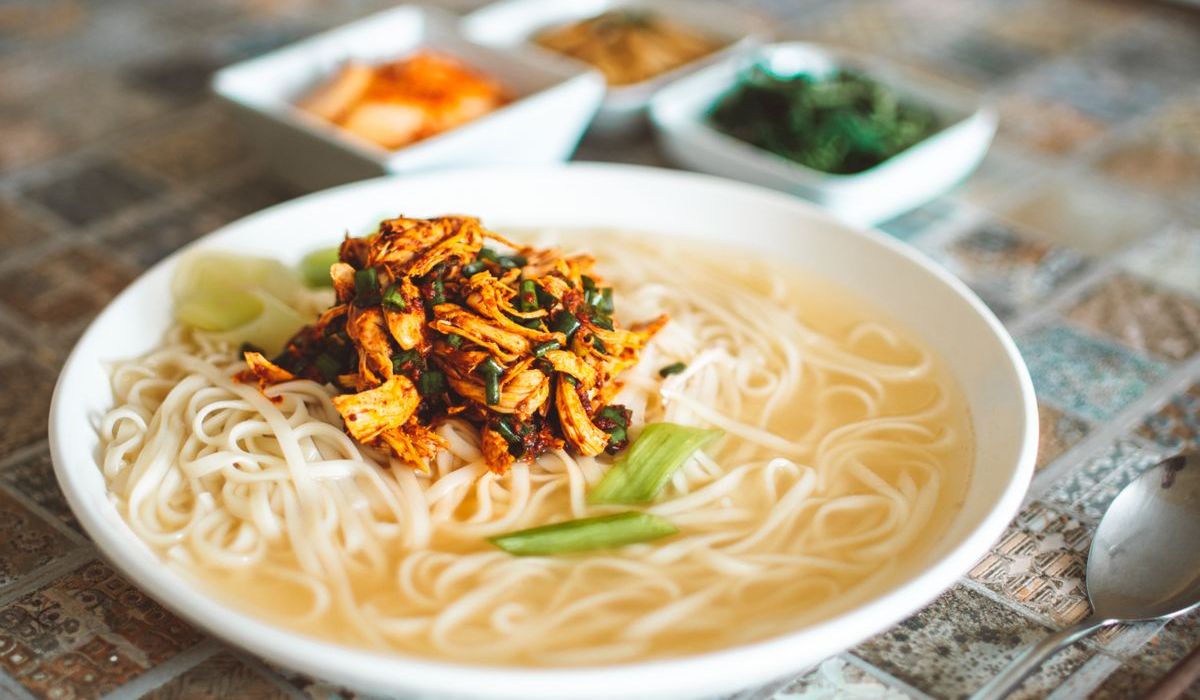
To many Koreans, summer does not truly arrive until the first bowl of Sam Gye Tang (samgyetang) is placed on the table. This whole-chicken soup — stuffed with Korean ginseng, glutinous rice, jujube (red dates), and garlic — is one of the most recognized wellness dishes in Korean food culture, and its seasonal context is unlike anything else in the Asian culinary world.
Boknal: Eating Heat to Beat the Heat
The tradition of eating Sam Gye Tang is tied to Boknal — a set of three days on the lunar calendar marking Korea's most intense summer heat. These three days, called Chobok, Jungbok, and Malbok, typically fall between mid-July and mid-August.
On these days, Koreans traditionally eat warming, nourishing foods — and the practice follows a philosophy called iyeol chiyeol (meaning: fight heat with heat). The idea is that consuming hot, warming food on sweltering days pushes the body to sweat and circulate internally, restoring balance. Rather than cooling down artificially, the body strengthens itself by meeting the heat on its own terms.
According to Korea's Cultural Heritage Administration, the Boknal custom has roots in ancient philosophy that sees summer's intense heat as a temporary suppression of autumn's cool energy [K1]. Historical records from the Joseon period (1392–1897) document that the royal court distributed ice and nourishing foods to officials during this period as an act of care [K1].
The Making of Sam Gye Tang
The dish centers on a whole young chicken — typically a spring chicken or poussin — whose cavity is stuffed with a carefully selected combination of ingredients before the bird is simmered in water until the broth becomes deeply golden and the chicken falls tender.
Classic Sam Gye Tang stuffing includes:
- Korean ginseng (insam) — one whole root, prized for its warming and qi-building properties in traditional Korean practice
- Glutinous rice (chapssal) — soaked and packed inside the chicken, thickening the broth as it cooks
- Jujube (daechu) — red dates traditionally associated with blood-nourishing and spirit-calming qualities
- Garlic — whole cloves for warmth and protective qualities
- Chestnuts or ginger — added in many family variations
The Hankyung newspaper notes that while chicken soup exists in many cultures, only in Korea — the homeland of ginseng cultivation — did the tradition develop of placing an entire ginseng root inside a whole chicken in a broth-based preparation [K2]. The Korean medical classic Dong Ui Bo Gam, compiled in the early 17th century, records that chicken warms the five organs and builds the body's resistance [K2].
Sam Gye Tang has been commercially available since the 1940s, initially under the name gyesam-tang (chicken-ginseng soup). By the 1960s, as ginseng became more accessible and refrigeration enabled storing whole roots, the dish took on its modern form and current name [S4].
Chinese Ginger Chicken Soup: Warming and Postpartum Tradition
In Chinese households, ginger chicken soup — often called jiang ji tang — occupies a particularly sacred role: it is the soup prepared for new mothers during the postpartum recovery period known as Zuo Yue Zi, or the sitting month.
Zuo Yue Zi and the Warming Kitchen
Zuo Yue Zi is a 30- to 40-day period following childbirth in which a new mother rests, avoids cold foods and temperatures, and eats carefully selected warming dishes. This practice is traditionally grounded in the belief that birth depletes the body's yang energy and warmth, leaving the new mother vulnerable to cold, fatigue, and weakness.
Ginger is the foundation of the confinement kitchen. In this traditional framework, fresh ginger is classified as a warming food that expels cold and wind from the body — both seen as harmful forces that enter during the vulnerable postpartum period [S6]. Ginger's ability to stimulate circulation and warm the digestive system makes it a cornerstone of recovery cooking.
A classic Chinese ginger chicken broth for postpartum use might include:
- Whole chicken pieces or a whole young chicken, sometimes sesame-oil fried first
- Abundant fresh ginger, sliced or lightly crushed
- Scallions (spring onions)
- Goji berries and red dates (jujube)
- Sometimes dang gui (angelica root), astragalus, or lotus seeds for added nourishing effect
- Rice wine or Shaoxing wine — traditionally believed to circulate blood and warm the body
The soup is simmered slowly, often for two or more hours, until the broth is deeply golden and richly flavored. It is consumed warm, multiple times daily in some traditional households during the recovery period [S6].
Beyond Postpartum: A Year-Round Warming Soup
While Zuo Yue Zi is the most structured context for Chinese ginger chicken soup, the tradition extends well beyond postpartum care. Across Chinese communities in mainland China, Hong Kong, Taiwan, and the diaspora, ginger chicken broth is a widely recognized cold-season nourishing dish — prepared when family members feel rundown, when temperatures drop, or simply as comfort food in the winter months.
The underlying logic remains consistent: ginger warms, chicken nourishes, and together they create something greater than the sum of their parts.
Vietnamese Ginger Chicken: Healing Broth from the Garden Kitchen
Vietnamese kitchen tradition approaches ginger chicken from a slightly different angle — here, the emphasis is less on ceremonial occasion and more on the practical wisdom of everyday healing. Two preparations stand out: ga hap gung (ginger-steamed chicken) and chao ga gung (ginger chicken congee).
Chao Ga Gung: The Healing Congee
When a Vietnamese family member catches a cold, feels exhausted, or needs gentle nourishment after illness, ginger chicken congee is often the first thing prepared. The dish is a rice congee — rice simmered with water and chicken until both break down into a soft, easily digestible porridge — to which generous slices of fresh ginger are added.
The Vietnam Food Administration (VFA), a body under the Ministry of Health, documents ginger congee as a traditional folk remedy used to ease cold-season symptoms, including chills, headaches, and nasal congestion [V1]. The preparation is simple: cook rice porridge, pour it hot into a bowl containing sliced fresh ginger and scallion, eat immediately while the heat releases the ginger's warmth [V1].
The ginger chicken variation layers the same logic: the chicken provides protein and qi-building qualities, while ginger warms and circulates. Lemongrass, a fragrant Southeast Asian herb, is often added to Vietnamese preparations for its aromatic and digestion-supporting character. Fresh perilla leaf (tia to) may also appear — a herb with a long history of use in Vietnamese seasonal wellness cooking.
Garden Kitchen Wisdom
What distinguishes Vietnamese ginger chicken from its Korean and Chinese counterparts is a particular relationship with the kitchen garden. Many Vietnamese households, especially in rural and semi-rural areas, maintain small gardens that supply not just vegetables but also herbs, ginger roots, lemongrass stalks, and perilla. The healing broth is rarely prepared from purchased herbs alone — it draws on what is growing nearby.
This garden-to-bowl quality gives Vietnamese ginger chicken a freshness and seasonality that connects the dish deeply to its specific place and time. A bowl of ginger chicken congee prepared in January in the Mekong Delta carries the flavor of that season, those herbs, and that family's particular combination.
The Role of Ginger in Traditional Asian Food Therapy
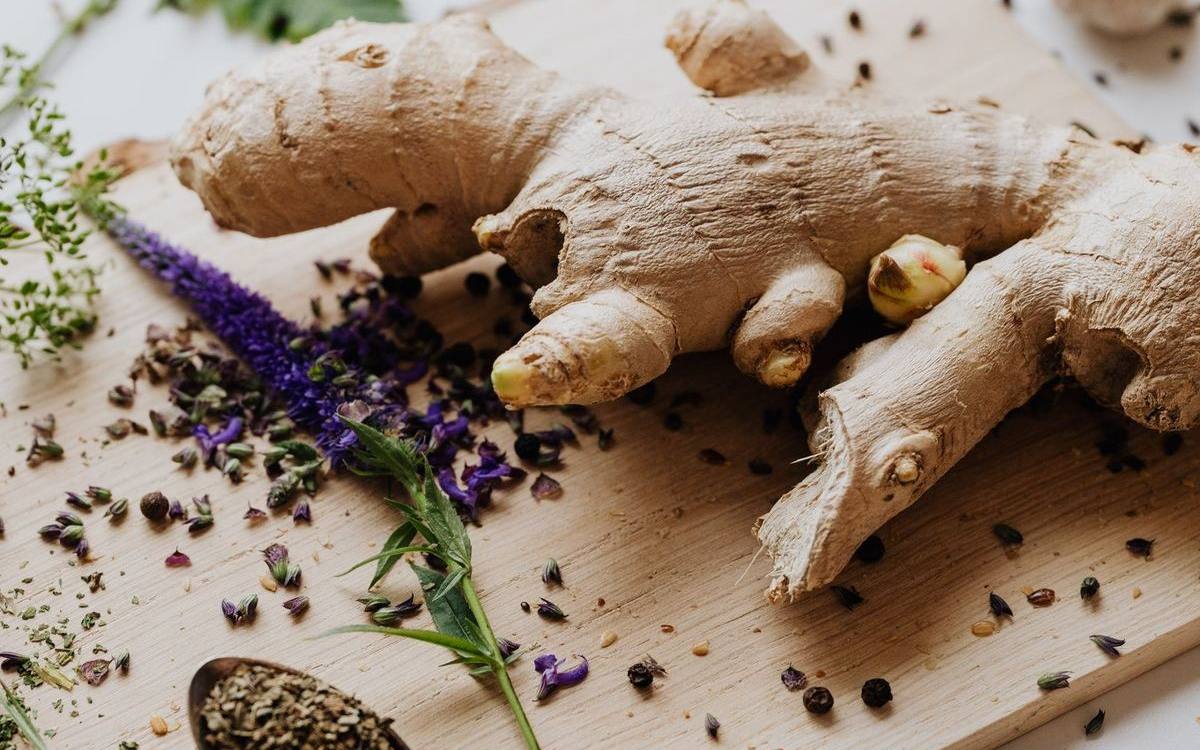
Across Korean, Chinese, and Vietnamese traditions, ginger (Zingiber officinale) holds a central place not simply as a flavoring agent but as a warming, activating ingredient with distinct properties recognized in traditional wellness frameworks.
Ginger as a Warming Agent
In traditional East and Southeast Asian food practices, foods are understood to have thermal qualities — warm, cool, or neutral. Ginger is universally classified as a warm-to-hot food that:
- Activates and promotes circulation
- Warms the digestive system and supports appetite
- Expels cold and wind — forces traditionally associated with illness and weakness
- Supports the body during cold weather, postpartum recovery, and illness
Fresh ginger is considered more warming and dispersing than dried ginger, which is seen as hotter and more penetrating. This distinction matters in traditional recipes: fresh ginger warms gently; dried ginger warms deeply.
The Five Directions of Ginger in Asian Soup Traditions
Traditional food wisdom across Asia attributes multiple roles to ginger in chicken soup preparations:
- Warming — activating circulation and internal warmth
- Digestive support — historically used to ease nausea and settle the stomach
- Balancing — offsetting the cooling nature of chicken in some frameworks
- Flavor enhancement — masking raw aromas in meat
- Seasonal protection — especially emphasized during damp, cold, or transitional seasons
Key Ingredients and Their Traditional Significance
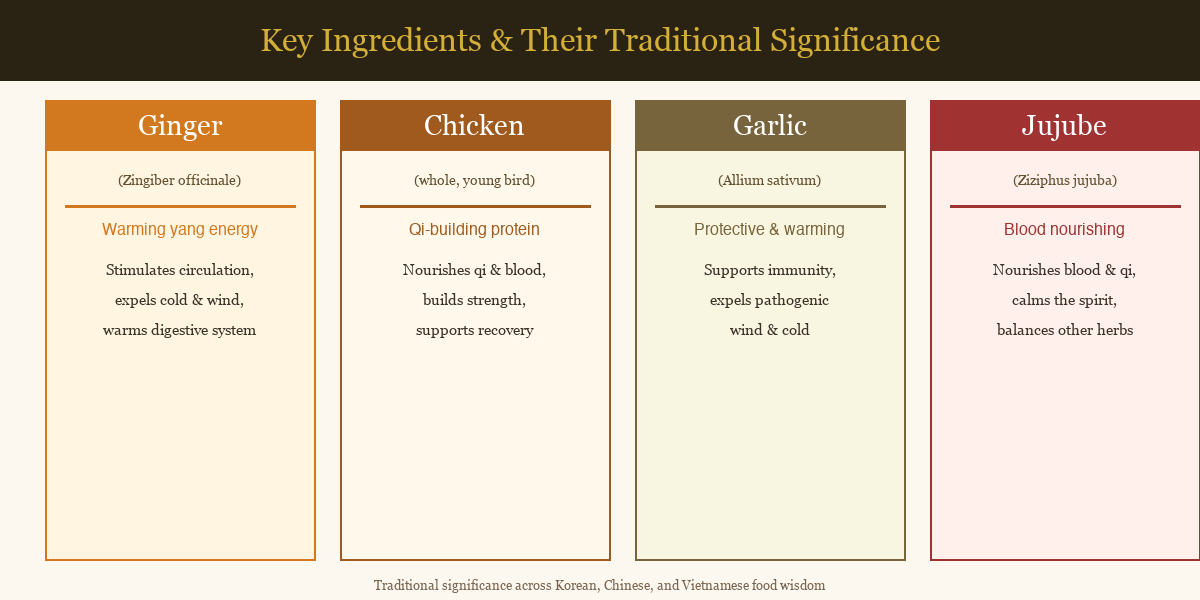
The power of Asian ginger chicken soup lies not in any single ingredient but in the combination. Each element plays a role recognized across multiple Asian food traditions, and the traditional knowledge of why these ingredients work together is one of the defining features of Asian food therapy.
Ginger (Zingiber officinale)
The root that defines the dish. Fresh ginger provides warmth, supports digestion, and is traditionally associated with expelling cold from the body. Used in all three traditions covered here — Korean, Chinese, and Vietnamese. Added as slices, crushed, or julienned depending on the regional style.
Chicken
In traditional Asian frameworks, chicken — particularly young, whole chickens — is considered qi-building and warming. The Dong Ui Bo Gam records chicken as warming the five organs; Chinese postpartum practices center chicken for blood and qi replenishment. The collagen from slow-simmered chicken bones contributes a richness to the broth that has long been associated with nourishment and restoration.
Garlic
Present in Korean Sam Gye Tang and many Chinese ginger chicken preparations, garlic (Allium sativum) is valued in traditional food practices for its warming and protective qualities. Whole garlic cloves, slow-simmered in broth, mellow considerably — contributing flavor while retaining their traditional wellness associations.
Jujube / Red Date (Ziziphus jujuba)
Jujube appears in both Korean and Chinese ginger chicken preparations. In traditional frameworks, it is associated with nourishing blood, calming the spirit, and complementing stronger warming herbs like ginseng. The natural sweetness of jujube also balances the pungency of ginger in the broth.
Ginseng (Korean Sam Gye Tang only)
The distinguishing ingredient of Korean Sam Gye Tang, ginseng (Panax ginseng) is classified in Korean traditional practice as a premier qi-tonifying herb. Its presence elevates the soup from a simple chicken broth to a full expression of Korean food therapy tradition. Used whole inside the chicken cavity — a practice unique to Korea [K2].
Lemongrass and Perilla (Vietnamese variations)
Vietnamese ginger chicken preparations frequently include lemongrass (Cymbopogon citratus) and perilla leaf (Perilla frutescens). Lemongrass adds its characteristic fragrant warmth and is traditionally used in Vietnamese cooking to support digestion. Perilla leaf brings aromatic contrast and is widely used in Vietnamese seasonal wellness cooking during rainy and transitional seasons.
How to Make a Traditional Ginger Chicken Broth at Home
While each tradition has its own approach, these foundational steps capture the shared essence of Asian ginger chicken soup and can be adapted for any of the three regional styles.
Base Broth Method (All Traditions)
Ingredients:
- 1 whole young chicken (about 1.2–1.5 kg) or equivalent bone-in pieces
- 50–80g fresh ginger root, sliced into thick coins
- 4–6 cloves garlic, lightly crushed
- 2–3 scallions (whole)
- 2 liters cold water
- Salt to taste
For Korean style: Add 1 small ginseng root, 4–5 jujube, and 3 tablespoons soaked glutinous rice inside the chicken cavity. Tie cavity closed with kitchen twine.
For Chinese style: Add 6–8 jujube, a handful of goji berries, and optionally a small piece of dang gui (angelica root). A splash of Shaoxing rice wine is traditional.
For Vietnamese style: Add 1 stalk bruised lemongrass, 3–4 perilla leaves, and finish with fresh herbs at the table.
Method:
- Blanch the chicken in boiling water for 3 minutes, then rinse under cold water — this step removes impurities and produces a cleaner broth.
- Place the prepared chicken in a heavy pot. Add cold water, ginger, garlic, and scallions.
- Bring to a gentle boil, skim carefully, then reduce to a steady simmer.
- Simmer for 60–90 minutes (whole chicken), or until the broth is golden and the meat is fully tender.
- Season with salt. Serve the entire chicken (or pieces) in the broth, garnished with fresh scallion and a small bowl of salt-pepper dipping mixture on the side.
Note: The long simmering time is not incidental — traditional kitchen wisdom across Asia has consistently emphasized slow extraction as the key to a truly nourishing broth.
When Traditions Recommend Ginger Chicken Soup
One of the most striking aspects of Asian ginger chicken soup traditions is how precisely each culture has identified the contexts in which this dish is most appropriate. Rather than being an all-purpose daily meal, ginger chicken soup appears at specific moments:
Korea: The Three Boknal Days
Sam Gye Tang is intimately tied to the three Boknal calendar days of summer — Chobok, Jungbok, and Malbok. On these days, Korean families gather to share the soup as a communal act of seasonal preparation. Restaurant reservations are made weeks in advance; specialty Sam Gye Tang restaurants see their busiest days of the year. The ritual is so embedded that it functions almost like a national wellness tradition [S5].
China: The Postpartum Month and Cold Seasons
In Chinese tradition, the postpartum period is the most concentrated use case — ginger chicken broth may be consumed daily for 30 days following birth. Beyond this, the soup is also recommended during cold and damp weather, for elderly family members who feel cold, or during the recovery from minor illness [S6].
Vietnam: Rainy Season, Illness Recovery, and Family Care
In Vietnam, ginger chicken congee is most commonly associated with illness recovery and the cold rainy season (typically November through February in northern Vietnam). It is a dish of gentle care — prepared by mothers and grandmothers for those who need extra nourishment. The Vietnam Food Administration specifically recommends ginger-based congee for cold-season symptom support [V1].
Modern Research on Ginger and Chicken Broth
Traditional food wisdom has long attributed warming and nourishing properties to ginger chicken soup. Contemporary research offers some context for understanding these long-held beliefs — though it is important to note that this research addresses individual ingredients and does not specifically study traditional soup preparations or make clinical disease-treatment claims.
What Research Has Found About Ginger
Ginger (Zingiber officinale) has been the subject of substantial scientific investigation. A widely cited 2005 review published in the J Med Food documented that ginger suppresses prostaglandin synthesis by inhibiting cyclooxygenase-1 (COX-1) and cyclooxygenase-2 (COX-2) enzymes, and also blocks leukotriene production via 5-lipoxygenase inhibition — mechanisms that may help explain its traditional association with supporting comfort during inflammation [S1].
A 2024 review published in Frontiers in Nutrition identified four primary active compounds in ginger — gingerol, shogaol, paradol, and zingerone — and documented their roles in activating Nrf2-mediated antioxidant pathways and inhibiting NF-kB inflammatory signaling [S2].
The U.S. National Center for Complementary and Integrative Health (NCCIH) notes that research shows ginger may be helpful for nausea and vomiting associated with pregnancy, and that it has been historically used in Asian food traditions for digestive wellness. NCCIH recommends consulting a healthcare provider before using ginger therapeutically, particularly for individuals taking medications [S3].
What Research Has Found About Chicken Broth
Slow-simmered chicken broth contains collagen, gelatin, and amino acids including glycine, cystine, and histidine. Research from nutrition institutions notes that these compounds may contribute to anti-inflammatory support and gut-barrier integrity, and that type II collagen from chicken is particularly relevant to joint health. These findings offer nutritional context for the traditional emphasis on long-simmered broth as the core of nourishing soups across Asia.
Important note: The research summarized above reflects general nutritional science and ingredient-level studies. Traditional ginger chicken soup, as described in this article, is a nourishing food tradition — not a medical treatment. Always consult a qualified healthcare professional for health concerns.
Frequently Asked Questions
What makes Sam Gye Tang different from other Asian chicken soups?
Sam Gye Tang is unique because the chicken is stuffed whole with ginseng, glutinous rice, jujube, and garlic before simmering — so the stuffing absorbs the chicken's flavors while the chicken absorbs the herbs. No other Asian tradition places a whole ginseng root inside the chicken in this way. Sam Gye Tang is also specifically tied to the Boknal calendar days of Korean summer, giving it a seasonal ritual dimension that most other chicken soups do not share.
Why do Koreans eat hot soup on the hottest days of summer?
This practice follows the traditional philosophy of iyeol chiyeol — fighting heat with heat. The belief is that eating warming, stimulating food during summer's most intense heat helps the body circulate internally and sweat naturally, restoring balance. It is the opposite of the instinct to eat cold foods, and reflects a deep understanding of the body as a system that benefits from active engagement rather than passive cooling.
Is ginger chicken soup safe to eat during pregnancy or postpartum?
Ginger chicken soup is a food, not a supplement, and is widely consumed across Asia during pregnancy and postpartum. However, the NCCIH notes that while ginger appears safe during pregnancy in food amounts, evidence on high-dose ginger supplements during pregnancy is limited [S3]. If you are pregnant, postpartum, or have any health condition, consult your healthcare provider before making any dietary changes based on traditional wellness practices.
Can I make a simplified version of Sam Gye Tang without ginseng?
Yes — many home cooks prepare a simplified version using jujube, garlic, rice, and optionally astragalus root, omitting ginseng for cost or availability reasons. The result is a deeply nourishing broth-based chicken soup that captures much of the spirit of the dish, though ginseng is the defining ingredient of the traditional Korean preparation. Some modern Korean restaurants also offer variations with different herbs based on seasonal availability.
What is the Vietnamese equivalent of Sam Gye Tang?
There is no direct Vietnamese equivalent, but the closest in spirit is ginger chicken congee — a soft, easily digestible rice porridge cooked with chicken and generous amounts of fresh ginger. Where Sam Gye Tang is ceremonial and seasonal, Vietnamese ginger chicken congee is gentle and everyday — a dish of care rather than ritual. Vietnamese cooking also features ga hap gung (ginger-steamed chicken), which is closer in texture to Sam Gye Tang but prepared differently.
Does ginger chicken soup actually work as a wellness food?
From a traditional food wisdom perspective, ginger chicken soup has been trusted across multiple Asian cultures for centuries — and that longevity of tradition reflects real experience with the dish's nourishing qualities. From a nutritional science perspective, ginger contains active compounds (gingerols, shogaols) that have been studied for their anti-inflammatory and antioxidant properties, and chicken broth provides amino acids and collagen associated with restorative nutrition [S1, S2]. That said, ginger chicken soup is a nourishing food tradition, not a medical treatment. It works best as part of a balanced diet and lifestyle.
References
- Grzanna R, Lindmark L, Frondoza CG. Ginger — an herbal product with broad anti-inflammatory actions. J Med Food. 2005;8(2):125–32. https://pubmed.ncbi.nlm.nih.gov/16117603/
- Ayustaningwarno F et al. A critical review of Ginger's (Zingiber officinale) antioxidant, anti-inflammatory, and immunomodulatory activities. Frontiers in Nutrition. 2024 Jun 6. https://pmc.ncbi.nlm.nih.gov/articles/PMC11187345/
- National Center for Complementary and Integrative Health. Ginger: Usefulness and Safety. https://www.nccih.nih.gov/health/ginger
- Wikipedia. Samgye-tang. https://en.wikipedia.org/wiki/Samgye-tang
- Gulf News. Why Koreans eat Samgyetang or ginseng and chicken soup on the hottest days of summer. https://gulfnews.com/food/why-koreans-eat-samgyetang-or-ginseng-and-chicken-soup-on-the-hottest-days-of-summer-1.1687438547420
- East West Functional Family Medicine. Nourishing Postpartum Chinese Chicken Soup Recipe. https://www.eastwestfunctionalfamilymedicine.com/post/nourishing-postpartum-chinese-chicken-soup-recipe-a-traditional-healing-dish-for-mamas
- Korea Cultural Heritage Administration. Boknal and Samgyetang. https://www.cha.go.kr/cop/bbs/selectBoardArticle.do?nttId=14484
- Hankyung. Sam Gye Tang — born and developed in Korean food culture. https://www.hankyung.com/article/202307209218Y
- Vietnam Food Administration / Ministry of Health. Chao gung, hanh — traditional cold remedy. https://vfa.gov.vn/dinh-duong-hop-ly/chao-gung-hanh-bai-thuoc-giai-cam-mua-dong-xuan.html