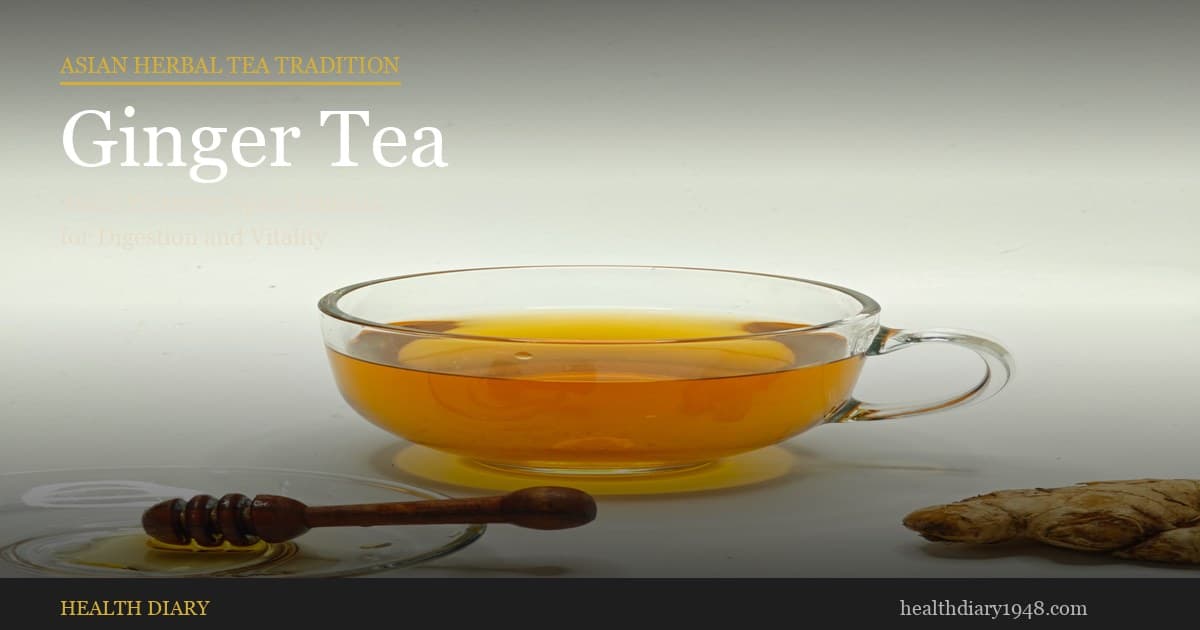
Ginger Tea: Asia's Ancient Warming Spice Infusion
Explore ginger tea's rich heritage across China, Korea, Vietnam, and India — from the science of gingerols and shogaols to traditional brewing wisdom for digestion, nausea relief, and winter warmth.
A Cup That Spans Continents
Few beverages carry as much cross-cultural weight as a steaming cup of ginger tea. In a Chinese household, a grandmother might steep dried ginger slices in water with brown sugar to ease a granddaughter's menstrual discomfort. In Seoul, a street vendor on a winter evening ladles out saenggang-cha (생강차) laced with honey and pine nuts. In Hanoi, a pharmacy stall sells sliced fresh ginger alongside jars of honey for the classic trà gừng mật ong. And across the Indian subcontinent, the sharp, bracing adrak chai is the first thing a mother prepares when someone feels unwell.
Ginger tea — Zingiber officinale steeped in hot water — is arguably the world's most universally trusted warming infusion. Its peppery heat, golden colour, and unmistakable aroma have made it a cornerstone of kitchen-cabinet remedies from the Yangtze River delta to the Kerala coast for over two millennia. This article traces that remarkable pan-Asian story, examines the science behind the steam, and shows you how to brew a cup that honours both tradition and evidence.
History: Written in Steam
Ginger's journey from tropical rhizome to global healing staple is one of the oldest in botanical history. The plant, native to Southeast Asia, was cultivated in China before recorded history. The Shen Nong Ben Cao Jing — the foundational Chinese herbal text attributed to the mythical Emperor Shennong and compiled around the first century CE — lists fresh ginger (sheng jiang, 生薑) as a herb that "warms the centre, disperses cold, and stops vomiting." Dried ginger (gan jiang, 干姜) is listed separately, emphasising its stronger warming action on deeper organ systems.
Confucius (551–479 BCE) reportedly refused to eat a meal without ginger, reflecting its deep roots in Chinese dietary culture long before formal pharmaceutical documentation. By the Tang Dynasty (618–906 CE), ginger was a staple trade commodity on the Silk Road, reaching Persia, Arabia, and eventually Europe.
In Korea, ginger appears in classical culinary texts dating to the Goryeo period (918–1392 CE). During the Joseon Dynasty (1392–1910 CE), saenggang-cha was documented as a royal court warming drink, served to prevent cold-season illness. The tea became particularly associated with the court's eumsik dimibang (food science) tradition, pairing ginger with honey, cinnamon, and dried jujubes.
In Ayurveda — the traditional Indian knowledge system whose foundational texts, the Charaka Samhita and Sushruta Samhita, date to roughly 600–300 BCE — ginger holds the Sanskrit epithet Vishwabheshaja: "the universal medicine." Its dried form, Sunthi, is described as a Deepana Pachana herb — one that kindles the digestive fire (agni) and promotes metabolic balance. Vietnamese folk tradition, meanwhile, draws on both Chinese influence and indigenous knowledge systems, embedding ginger into everyday remedies for colds, sore throats, and stomach upset that have been passed down through generations.
Fresh vs. Dried: Two Gingers, Two Profiles
One of the most important and least-discussed aspects of ginger tea is that the form of ginger you use dramatically changes what ends up in your cup. Fresh ginger and dried (or heat-processed) ginger have meaningfully different compound profiles.
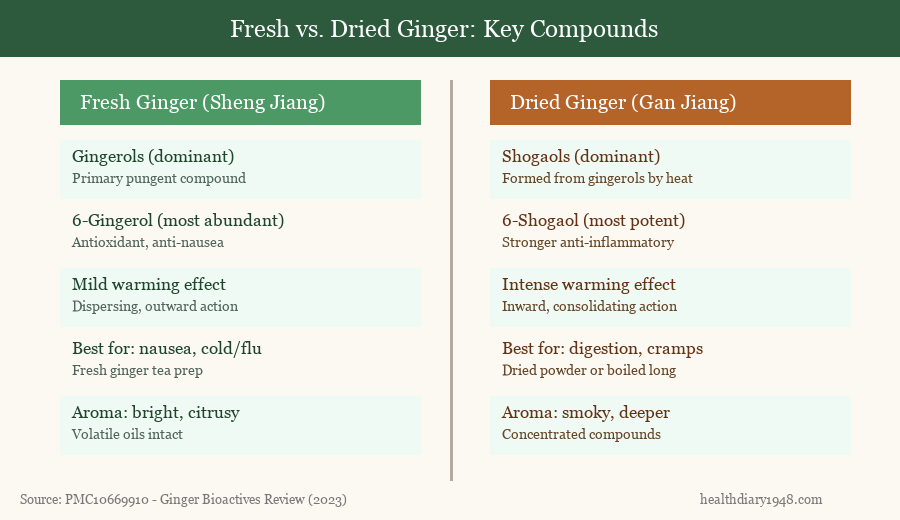
Fresh ginger root is dominated by gingerols — particularly 6-gingerol, which is the most abundant pungent compound in raw rhizome. Gingerols are responsible for the bright, slightly citrusy heat of a freshly cut piece of ginger. They have well-documented antioxidant and anti-nausea properties and are relatively gentle on the digestive tract.
When ginger is dried or subjected to prolonged heat — as happens when you boil it for 20–30 minutes, or purchase it as a powder — gingerols undergo a chemical transformation through dehydration. The result is shogaols, particularly 6-shogaol. Research published in PMC (2023) notes that "6-shogaol is the most amply available and most effective type of shogaol in ginger" and that it may be more functionally potent than its gingerol precursor in certain anti-inflammatory contexts.[1]
A third compound, zingerone, forms during cooking through a retro-aldol reaction and gives cooked ginger its characteristic sweetness. Paradols appear in smaller quantities and add to the overall antioxidant profile.
This biochemical split maps directly onto classical Chinese medicine's distinction between sheng jiang (fresh ginger, 生薑) and gan jiang (dried ginger, 干姜). The Guangdong Province health authorities and classical TCM texts characterise sheng jiang as "dispersing outward" — good for surface-level cold symptoms — while gan jiang "warms inward" and is prescribed for deeper digestive cold and abdominal pain. Modern chemistry provides a compelling structural explanation for this traditional clinical observation.
Key Bioactive Compounds at a Glance
Ginger's therapeutic reputation rests primarily on four families of bioactive molecules:
- Gingerols (6-, 8-, 10-gingerol): The dominant pungent compounds in fresh ginger. 6-Gingerol has been shown to have "higher in vitro antioxidant activity (88.93 ± 0.03% DPPH; 88.23 ± 0.98% ABTS)" in laboratory assays. 8-Gingerol is considered "the most pungent and one of the most active phytochemicals in ginger."[1]
- Shogaols (especially 6-shogaol): Formed when gingerols lose a water molecule during drying or prolonged heating. Research published in PMC (2021) found that 6-shogaol inhibited leukocyte infiltration into inflamed tissue and reduced oedema swelling in experimental models, suggesting stronger acute anti-inflammatory action than 6-gingerol.[2]
- Zingerone: A mild, sweet-smelling compound formed during cooking. Contributes to the pleasant aroma of brewed ginger tea and has demonstrated antioxidant and antimicrobial properties.
- Paradols: Minor pungent compounds sharing structural similarities with gingerols, contributing to overall antioxidant capacity.
Together, these molecules interact with multiple physiological pathways — from serotonin receptors in the gut (explaining anti-nausea effects) to pro-inflammatory cytokines such as TNF-alpha and IL-6 (explaining anti-inflammatory properties).
Digestive Support: From Kitchen Wisdom to Clinical Evidence
Every culture that uses ginger tea has discovered independently what modern gastroenterology is now confirming: ginger helps things move. A landmark study published in the European Journal of Gastroenterology and Hepatology found that ginger accelerates gastric emptying and stimulates antral contractions in healthy individuals. A 2019 systematic review in Food Science and Nutrition (Nikkhah Bodagh et al.) concluded that ginger is a "useful supplement for gastrointestinal symptoms such as nausea, vomiting, and bloating" and is generally safe at doses of around 1,000 mg per day.[3]
The mechanism appears to be prokinetic: ginger's active compounds sensitise gastric smooth muscle receptors, encouraging the stomach to empty more efficiently. This explains why ginger tea is commonly consumed before or after heavy meals across Asian food cultures — it is a traditional digestive aid that has now received mechanistic scientific support.
For those with functional dyspepsia — the medical term for chronic indigestion without a structural cause — a pilot randomised study published in PubMed (2016) found that a standardised ginger and artichoke extract significantly promoted gastric emptying in healthy volunteers compared with placebo.[3]
Nausea Relief: One of Ginger's Best-Studied Applications
Ginger's reputation as an anti-nausea remedy is among its most rigorously studied traditional claims. A comprehensive overview of systematic reviews and meta-analyses published in PubMed (December 2023) examined ginger across multiple nausea contexts, concluding that the evidence for pregnancy-related nausea and vomiting is particularly robust.[4]
A 2024 umbrella review in ScienceDirect — examining ginger bioactive compounds specifically in pregnancy — confirmed that ginger is "a commonly used nonpharmacological treatment of pregnancy-related symptoms including nausea and vomiting," with more than 28% of pregnant women globally seeking herbal alternatives. The review rated available evidence as generally supportive and found no major safety concerns at culinary or low supplementation doses, though high-dose supplementation warrants caution (see Safety section).[4]
The proposed mechanism involves ginger's interaction with 5-HT3 (serotonin) receptors in the gastrointestinal tract — the same receptors targeted by anti-nausea pharmaceutical drugs. Gingerols and shogaols appear to modulate these receptors, dampening the nausea signal before it escalates to vomiting.
Beyond pregnancy, ginger tea is widely used in clinical and traditional contexts for motion sickness, post-operative nausea, and chemotherapy-induced nausea — though the strength of evidence varies across these applications.
Warming Tradition: Cold, Flu, and the Cultural Logic of Heat
Perhaps the most universal use of ginger tea is as a warming remedy for cold and flu symptoms. This usage crosses every Asian tradition reviewed here, and while the mechanism differs slightly across cultural frameworks, the practical application is remarkably consistent: brew ginger, drink warm, feel better.
In Chinese five-phase theory, ginger is classified as warming (wen, 温) and pungent (xin, 辛) — qualities that "open the pores," promote perspiration, and dispel surface-level cold pathogens. This is precisely how sheng jiang is used: a strong decoction drunk warm to induce a light sweat at the onset of a cold.
Korean saenggang-cha serves a similar purpose. Traditional texts and contemporary practitioners note that it "helps blood circulation and keeps hands and feet warm" during winter, while also helping to clear mucus and soothe coughing. The addition of honey in Korean tradition adds soothing properties for the throat, while cinnamon reinforces the warming effect.
In Ayurvedic theory, ginger (particularly dried Sunthi) balances the Vata and Kapha doshas — the energy constitutions associated with cold, damp, and sluggish conditions. A cup of adrak chai at the first sign of a cough is India's most widely trusted first response, combining ginger with warming spices like cardamom and clove to amplify the effect.
Modern immunological research has begun to explore whether ginger's anti-inflammatory properties may partially explain these effects. Studies have documented that ginger's bioactive compounds can reduce levels of pro-inflammatory cytokines such as TNF-alpha, and some laboratory research suggests antimicrobial activity against common respiratory pathogens. However, definitive clinical trials demonstrating that ginger tea shortens cold duration remain limited, and it is best understood as a comfort measure with plausible biological rationale rather than a confirmed antiviral treatment.
Menstrual Comfort: The Ginger and Brown Sugar Tradition
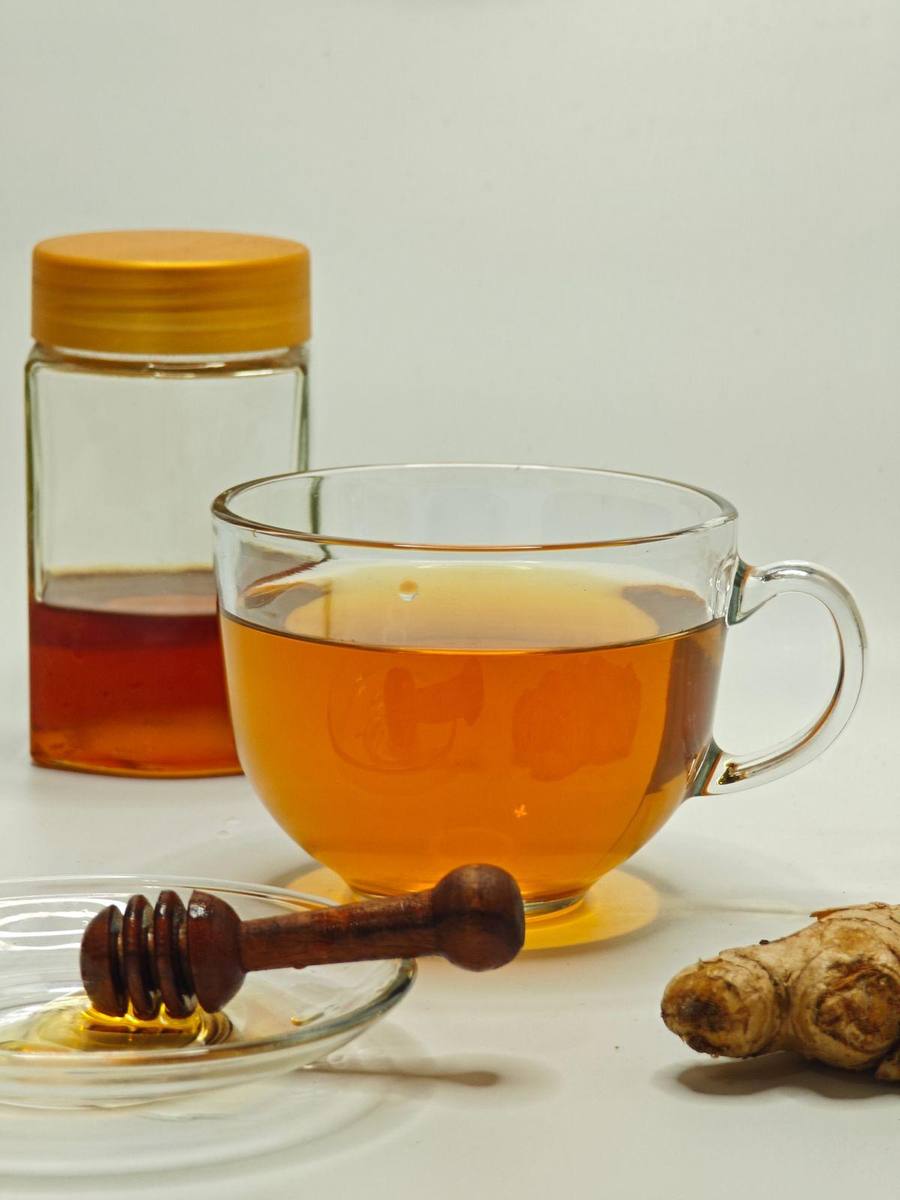
In Chinese folk tradition, few remedies for menstrual discomfort are as deeply embedded as jiang tang shui (姜糖水) — ginger brown sugar water. The logic is rooted in classical TCM theory: menstrual pain is often attributed to "cold" stagnating in the uterus and impeding the flow of qi and blood. Ginger's warming, pungent nature is believed to dispel this cold and promote smooth circulation. Brown sugar (hong tang, 红糖) adds an additional warming, blood-nourishing quality in classical dietary therapy.
The standard preparation involves simmering approximately 15g of sliced fresh or dried ginger in 250ml of water for 10 minutes, then adding two tablespoons of brown sugar and drinking warm. Traditional practice recommends consuming it two days before menstruation begins or at the onset of cramps.
A small number of clinical studies have examined ginger specifically for primary dysmenorrhoea (menstrual cramps). A meta-analysis published in Phytotherapy Research found that ginger supplementation reduced pain intensity in women with primary dysmenorrhoea compared with placebo, with an effect size comparable to non-steroidal anti-inflammatory drugs in some studies. The proposed mechanism involves ginger's inhibition of prostaglandin synthesis — the same pathway targeted by ibuprofen — through suppression of cyclooxygenase enzymes.
While the evidence base is still developing, the combination of plausible mechanism, centuries of traditional use, and low risk profile makes ginger-brown sugar tea a well-supported comfort measure for this application.
Regional Variations: One Root, Many Traditions
The diversity of ginger tea preparations across Asia reflects both local ingredient availability and distinct cultural frameworks for health and taste.
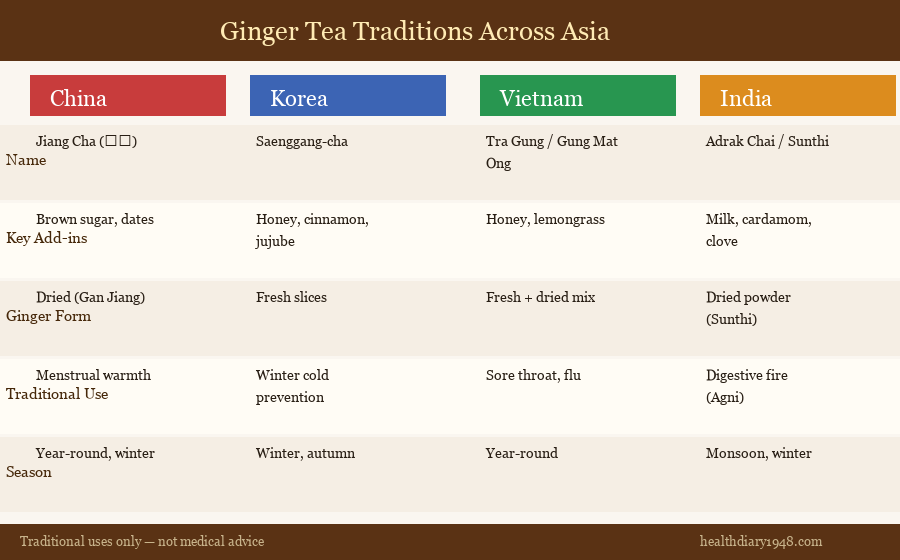
China: Jiang Cha (姜茶) and Jiang Tang Shui (姜糖水)
Chinese ginger preparations range from simple sliced fresh ginger in boiling water to elaborate decoctions combining dried ginger with brown sugar, red dates (hong zao), and hawthorn berries. The key distinction in classical Chinese pharmacy between sheng jiang (fresh, dispersing, mild) and gan jiang (dried, inward-warming, stronger) means that practitioners select the form based on the person's condition rather than mere preference. Summer preparations often lean toward fresh ginger; winter treatments may incorporate the dried root for deeper warming.
Korea: Saenggang-cha (생강차) and Daechu-Saenggang-cha
Korean saenggang-cha is typically made by simmering fresh ginger slices in water with honey for sweetness, and often with cinnamon sticks for additional warming depth. A popular variation adds dried red jujubes (daechu, 대추) — creating daechu-saenggang-cha — which gives the tea a fruity sweetness and added nutritional density. Pine nuts are often floated on top as a garnish, adding visual elegance and a subtle nutty flavour. Dating to the Joseon Dynasty as a court warming beverage, saenggang-cha remains a beloved winter staple in modern South Korea, widely available in teahouses, convenience stores, and home kitchens alike.
Vietnam: Tra Gung and Gung Mat Ong
Vietnamese ginger tea (trà gừng) is appreciated for its bold, slightly grassy heat. A beloved everyday preparation is gừng mật ong — fresh ginger infused with honey — which Nha Thuoc Long Chau and other Vietnamese pharmacy-wellness sources recommend for sore throat relief, cough, and general immune support during weather changes. A more complex variation adds lemongrass (sả) and lime leaves, creating a fragrant, multi-layered warming drink that is particularly popular during the rainy season. Vietnamese ginger (Gung Ta) is noted for its intense, zingiberen-rich essential oil profile, making it especially aromatic.
India: Adrak Chai and Sunthi Kashayam
India's ginger tea tradition takes two main forms. Adrak chai is the daily spiced milk tea made with fresh ginger root, black tea, milk, and sugar — boiled vigorously until the ginger heat infuses the liquid fully. It is the cornerstone of Indian household hospitality and comfort. Sunthi kashayam is a more therapeutic preparation using dried ginger powder (sunthi) boiled in water with black pepper and jaggery, used in Ayurvedic practice to address respiratory congestion and sluggish digestion. The Sanskrit classification of dried ginger as a Deepana Pachana herb — one that stokes the digestive fire — remains practically applied in Indian household kitchens and Ayurvedic clinics to this day.
How to Brew Ginger Tea at Home
The most effective and flavourful ginger tea starts with fresh root and a few simple steps:
- Select your ginger: Choose firm, plump rhizomes with taut skin. Avoid shrivelled or soft roots, which have lost moisture and flavour. For maximum gingerol content, use fresh root rather than powder.
- Prepare the root: Wash thoroughly. There is no need to peel — the skin contains beneficial compounds — but peel if preferred. Slice thinly (about 3–4mm) against the grain to maximise surface area. For a stronger brew, grate or crush the slices.
- The ratio: Start with 4–6 slices (roughly 10–15g) per 300ml of water. Adjust upward for a stronger brew.
- Simmer, do not boil furiously: Bring to a gentle simmer and maintain for 10–15 minutes. Prolonged boiling (20+ minutes) converts more gingerols to shogaols, increasing intensity and shifting the compound profile toward the dried-ginger spectrum.
- Sweeten thoughtfully: Honey is the classic Asian choice — add after removing from heat (above 40°C destroys honey's enzymes). Brown sugar deepens the warming character in the Chinese tradition. For a Korean-style saenggang-cha, use raw honey and a small cinnamon stick simmered alongside.
- Optional additions: A squeeze of lemon or lime adds vitamin C and brightness. A few black peppercorns (a classic Ayurvedic addition) enhance bioavailability. Jujubes or dried longan add sweetness and depth.
- Strain and serve warm: Pour through a fine-mesh strainer. Drink while warm for maximum warming effect. Leftover brew can be refrigerated for up to two days and gently reheated.
Safety Considerations
Ginger tea made from culinary amounts of fresh root is broadly safe for most healthy adults. However, several situations warrant awareness:
- Blood-thinning interactions: Ginger has mild antiplatelet activity. Those taking warfarin, aspirin, or other anticoagulant or antiplatelet drugs should consult a healthcare provider before consuming concentrated ginger preparations regularly, as the combination may enhance bleeding risk.
- Pregnancy: Culinary amounts of ginger tea (1–2 cups per day made with a moderate amount of fresh root) are generally considered safe in pregnancy and may help with morning sickness. However, very high supplemental doses (above 1,500mg of extract daily) have been queried in some studies. Pregnant individuals should use culinary ginger preparations rather than concentrated extracts, and consult their healthcare provider.
- Reflux and heartburn: While ginger generally supports digestion, in some individuals with acid reflux or GERD, concentrated ginger tea can worsen symptoms by relaxing the lower oesophageal sphincter. Starting with a dilute preparation and observing response is advisable.
- Gallstones: Ginger stimulates bile production. Those with gallstones should consult a physician before regular use.
- Pre-surgery: Discontinue concentrated ginger preparations at least one to two weeks before scheduled surgery due to antiplatelet effects.
Reviewed by: This article has been reviewed by a licensed practitioner in Traditional Asian Medicine for factual accuracy regarding traditional uses. It is intended for educational purposes only and does not constitute medical advice. Always consult a qualified healthcare provider before using herbal preparations for health conditions.
References
- Pham, T.H. et al. (2023). "Ginger Bioactives: A Comprehensive Review of Health Benefits and Potential Food Applications." PMC, PMCID: PMC10669910. Available at: https://pmc.ncbi.nlm.nih.gov/articles/PMC10669910/
- Ha, S.K. et al. (2021). "Benefits of Ginger and Its Constituent 6-Shogaol in Inhibiting Inflammatory Processes." PMC, PMCID: PMC8232759. Available at: https://pmc.ncbi.nlm.nih.gov/articles/PMC8232759/
- Nikkhah Bodagh, M. et al. (2019). "Ginger in gastrointestinal disorders: A systematic review of clinical trials." Food Science and Nutrition, 7(1), 96–108. Available at: https://onlinelibrary.wiley.com/doi/full/10.1002/fsn3.807
- Viljoen, E. et al. (2023). "Ginger for treating nausea and vomiting: an overview of systematic reviews and meta-analyses." PubMed, PMID: 38072785. Available at: https://pubmed.ncbi.nlm.nih.gov/38072785/
- Evidence scan on ginger bioactive compounds in pregnancy (2024). ScienceDirect, PMCID: PMC11536023. Available at: https://www.ncbi.nlm.nih.gov/pmc/articles/PMC11536023/
- Maangchi (2024). "Ginger tea (Saenggangcha) recipe." Available at: https://www.maangchi.com/recipe/saenggangcha
- Guangdong Traditional Chinese Medicine online (2022). "Jiang Cha: Sheng Jiang vs Gan Jiang distinction." Guangdong TV Health Channel. Available at: https://www.gzstv.com/a/f6424ae8b23a46899d0be4075aba1a83
- Nha Thuoc Long Chau (2023). "Cach lam tra gung mat ong tri ho, chua cam hieu qua." Available at: https://nhathuoclongchau.com.vn/bai-viet/cach-lam-tra-gung-mat-ong-tri-ho-chua-cam-hieu-qua.html
- Santa Cruz Ayurveda (2023). "All About Sunthi (Ginger)." Available at: https://santacruzayurveda.com/all-about-sunthi-ginger/