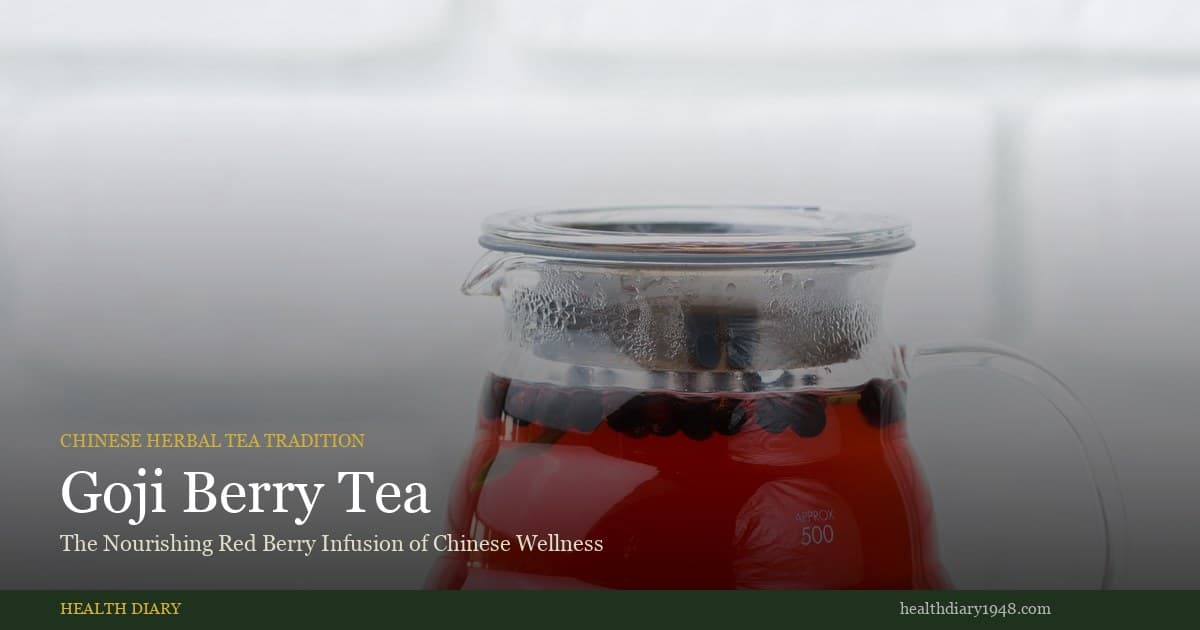
Goji Berry Tea: The Nourishing Red Berry Infusion of Chinese Wellness
Discover Gou Qi Zi Cha — the ancient Chinese wolfberry tea brewed from Lycium barbarum berries. Learn hot brew vs cold steep methods, classic combinations with chrysanthemum and red dates, the science behind LBP polysaccharides, and how this brilliant red infusion supports eye health, anti-aging, and daily vitality.
There is a cup that millions of Chinese households begin their day with — its color a warm amber-red, its flavor gently sweet, and its berries floating softly at the surface like tiny lanterns. This is Gou Qi Zi Cha (枸杞茶), goji berry tea, one of the oldest and most beloved herbal infusions in the Chinese wellness tradition. Long before "superfoods" became a marketing term, dried wolfberries were steeped in hot water across China as a daily act of nourishment — a ritual as ordinary as boiling water itself.
A Berry Steeped in History
The wolfberry — Lycium barbarum L., known in Chinese as Gou Qi Zi (枸杞子) — has been part of Chinese culture for at least two thousand years. Its first formal documentation appeared in the Shennong Bencao Jing (神农本草经), the foundational classical herbal text attributed to the legendary Emperor Shennong and compiled around 200 BCE. The text ranked Gou Qi Zi among the highest-grade herbs — substances deemed so beneficial and so safe that they could be taken daily without harm. The berry even earned a poetic alias: que lao zi (却老子), meaning "the seed that wards off old age."[1]
The most prized wolfberries come from Ningxia (宁夏), along the upper Yellow River, where the alkaline soil, intense sunshine, and cold nights concentrate the berries' nutrients. For over 700 years, Ningxia goji has carried a geographic distinction — a regional identity as much as an agricultural product, comparable to how Champagne differs from other sparkling wines.
From peasant households to imperial courts, goji berry tea has persisted across dynasties and centuries. It requires no elaborate preparation — just a handful of dried berries, hot water, and a few quiet minutes.
What Chinese Wellness Tradition Says About Goji Berry Tea
In the framework of Chinese herbalism, Gou Qi Zi is classified as a tonic herb for Yin deficiency. Its nature is neutral and sweet (甘平 — gan ping), meaning it neither heats nor cools the body, making it suitable for year-round daily use. It enters three channels: the Liver, Kidneys, and Lungs.
The core functions attributed to Gou Qi Zi in classical texts are:
- Zi Bu Gan Shen (滋补肝肾) — Nourish and tonify the Liver and Kidneys
- Yi Jing Ming Mu (益精明目) — Benefit Essence and brighten the eyes
- Run Fei Zhi Ke (润肺止咳) — Moisten the Lungs
The brightening of the eyes — ming mu — is one of the most consistently cited functions across all classical sources. From the Bencao Gangmu (本草纲目), Li Shizhen's 16th-century encyclopedic herbal work, to the modern Chinese Pharmacopoeia (中华人民共和国药典), goji's relationship with vision health has never been in doubt within the tradition. The standard dosage in classical decoctions is 6–12 grams of dried berries, with up to 15–20 grams used in therapeutic contexts — amounts that translate naturally to the everyday cup of tea.[2]
The Beijing Municipal Health Commission's official wellness guidance (北京市卫生健康委员会) recommends goji berry infusion prepared at 60–70°C rather than fully boiling water, preserving heat-sensitive compounds while still releasing the water-soluble polysaccharides that give the tea its amber color.[3]
The Science of What Goji Berry Tea Contains
Modern phytochemistry has identified a rich array of bioactive compounds in Lycium barbarum. When berries are steeped in hot water, the extraction dynamics depend heavily on each compound's solubility:
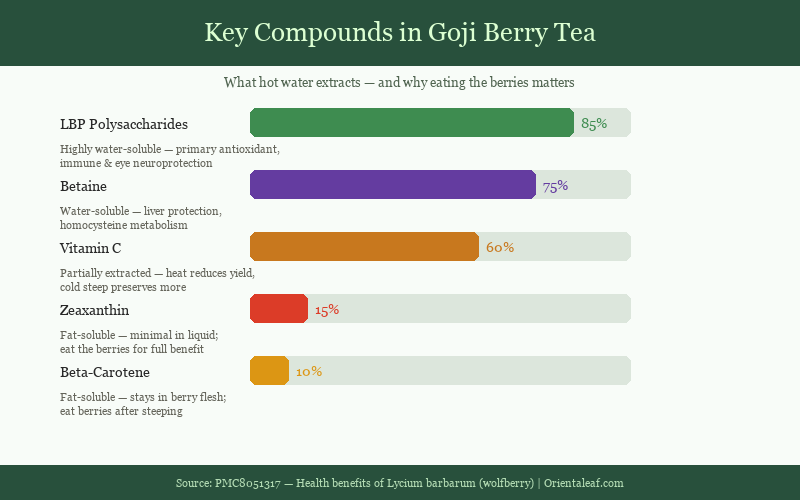
Lycium Barbarum Polysaccharides (LBP) are the primary bioactive fraction and are highly water-soluble. The polysaccharide-protein complex designated LBP4 comprises six monosaccharide units and carries most of the berry's antioxidant, immune-modulating, and neuroprotective activity. A systematic review published in Exploration of Foods and Foodomics (2023) confirmed that LBP is the compound most responsible for goji's biological effects across dozens of studies.[4]
Betaine is highly water-soluble and dissolves readily into the infusion. It plays a role in liver protection and homocysteine metabolism — a connection that helps explain goji's classical reputation for supporting Liver function.
Vitamin C is partially lost during hot steeping — cold steep (soaking in cool water for several hours) preserves more. Neither method extracts fat-soluble compounds like zeaxanthin or beta-carotene, which remain in the berry's flesh.
Zeaxanthin is perhaps the most clinically interesting compound in goji berries — and the one least available from drinking the tea alone. This carotenoid concentrates naturally in the human retina, particularly in the macula. Studies have shown that regular consumption of wolfberries can increase plasma zeaxanthin levels by as much as 26%, supporting the classical claim that goji brightens the eyes. But because zeaxanthin is fat-soluble, it stays in the berry flesh rather than dissolving into the water. This is the central practical reason why eating the rehydrated berries after steeping is always recommended alongside drinking the tea.
Eye Health: Ancient Insight, Modern Confirmation
The TCM function of ming mu — brightening or benefiting the eyes — has been validated by a substantial body of modern research. Multiple peer-reviewed studies have examined LBP's protective effects on retinal cells, finding that these polysaccharides reduce oxidative stress-induced apoptosis in retinal ganglion cells, protect against blood-retinal barrier disruption, and activate the Nrf2/HO-1 antioxidant pathway in the retina.[5]
A 2025 review in Frontiers in Pharmacology found LBP relevant to glaucoma, diabetic retinopathy, age-related macular degeneration, and dry eye syndrome, concluding that its multi-pathway neuroprotective mechanism makes it a promising candidate for further clinical research. For the millions spending long hours in front of screens, this ancient eye-nourishing tradition has gained a very modern second life.
Anti-Aging Tradition
The alias que lao zi — the seed that wards off old age — was not mere poetic license. Goji's anti-aging reputation rests on several intersecting mechanisms: polysaccharides that modulate immune function and reduce oxidative damage; carotenoids that protect cell membranes; and betaine that supports liver detoxification pathways.
In Chinese household culture, goji berry tea is not thought of as a therapeutic intervention but as an ordinary act of maintenance. The berries are neutral in temperature, suitable across all seasons, and considered safe for most adults at roughly 10–15 grams per day — a framing of wellness as daily ritual rather than occasional cure.
Classic Combinations: The Art of Chinese Herbal Pairing
Goji berry is rarely drunk alone in traditional Chinese households. The culture of herbal pairing — combining ingredients whose properties complement or amplify each other — is deeply embedded in Chinese tea practice. Three combinations stand out as the most historically documented and practically useful:
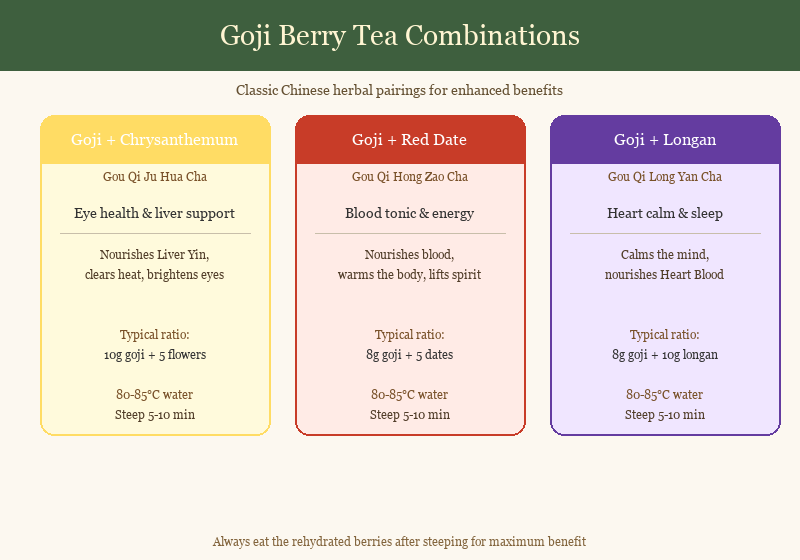
Goji + Chrysanthemum (Gou Qi Ju Hua Cha)
This is arguably the most famous herbal tea pairing in all of Chinese culture. Chrysanthemum flowers (Ju Hua, 菊花) enter the Liver channel and are used in Chinese herbalism to gently clear Liver heat, relieve eye irritation, and calm headaches associated with excess heat rising to the head. Goji, working in the same Liver channel, nourishes the underlying Yin and Blood that the heat has depleted.
Together, they form what practitioners describe as a perfect complementary pair: chrysanthemum addresses the symptom (heat, redness, dryness in the eyes), while goji addresses the root (deficient Yin and Blood in the Liver). The visual result is beautiful — white or pale yellow chrysanthemum petals floating against bright orange-red goji berries in a pale golden liquid.
A typical preparation uses 10g of dried goji berries with 3–5 dried chrysanthemum flowers. Water should be around 80–85°C (not fully boiling), and the tea should steep covered for 5–10 minutes. Honey or rock sugar can be added to taste. The same berries can often be re-steeped two or three times before the flavor diminishes.[6]
Goji + Red Date (Gou Qi Hong Zao Cha)
Red dates — Da Zao (大枣), also called jujubes — are one of the most widely used tonic ingredients in Chinese cooking. In Chinese herbalism, they tonify the Spleen and Stomach, nourish the blood, calm the spirit, and are considered warming in nature. Combined with goji's neutral Yin and Blood tonic action, this pairing is particularly popular for women, especially during menstruation, postpartum recovery, or periods of fatigue and blood deficiency.
The preparation is slightly more involved: dates are usually simmered (not just steeped) in water for 15–20 minutes before goji berries are added in the final 5 minutes. This longer cooking time is needed to release the jujubes' sweetness and tonic properties. The resulting liquid is a deep reddish-brown, naturally sweet, and warming — a classic remedy for cold winter evenings and early mornings.
Goji + Longan (Gou Qi Long Yan Cha)
Longan fruit (Long Yan Rou, 龙眼肉) — sometimes called the dragon's eye fruit — is sweet, warm, and enters the Heart and Spleen channels. In Chinese herbalism, it nourishes Heart Blood and calms the mind (shen). Combined with goji's Liver-Kidney nourishing action, this blend addresses both the mental and physiological dimensions of fatigue and restlessness.
The goji-longan tea is particularly suited for those experiencing difficulty sleeping or restlessness associated with Blood deficiency. A warming evening cup has been a home remedy across generations of Chinese families.
How to Brew Goji Berry Tea
Goji berry tea is one of the most forgiving herbal infusions to prepare — no grinding or straining required. Here is how to brew it well:
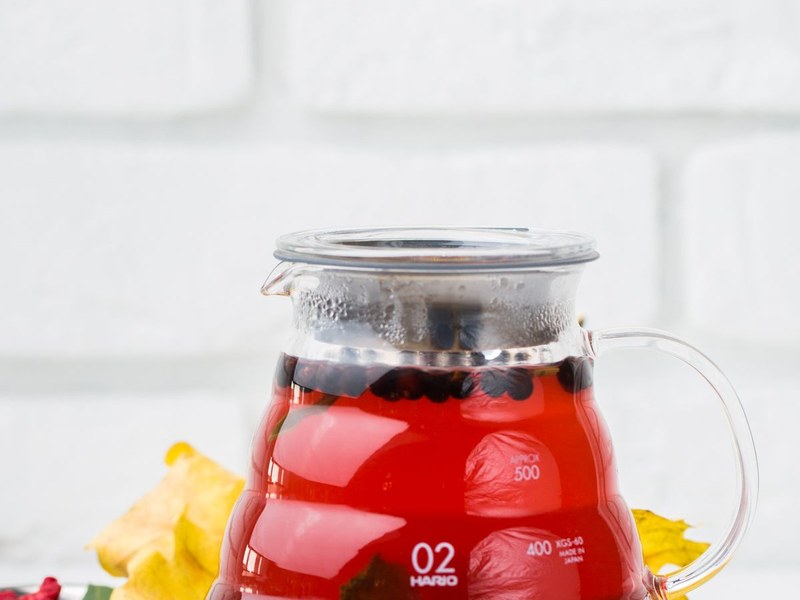
Hot Brew (Traditional Method)
- Rinse 10–15g of dried goji berries briefly under cold water to remove surface dust.
- Place berries in a glass or ceramic cup or teapot.
- Pour water heated to approximately 80–85°C (not fully boiling) over the berries. Fully boiling water can degrade some heat-sensitive compounds.
- Cover and steep for 5–10 minutes. The water will turn from pale pink to a rich amber-red as polysaccharides and pigments dissolve.
- Drink the tea and then eat the softened berries — this is important for obtaining the fat-soluble zeaxanthin and beta-carotene.
- The berries can typically be re-steeped 2–3 times before flavor diminishes significantly.
Cold Steep (Modern Variation)
Cold steeping has gained popularity among those who prepare their tea the evening before or prefer a milder flavor. Place 10–15g of berries in a lidded jar or bottle with 400–500ml of room-temperature or cold water. Refrigerate for 6–8 hours or overnight. The resulting infusion will be lighter in color and lower in extracted polysaccharides but will retain more vitamin C. Eat the berries after drinking.
Identifying Quality Berries
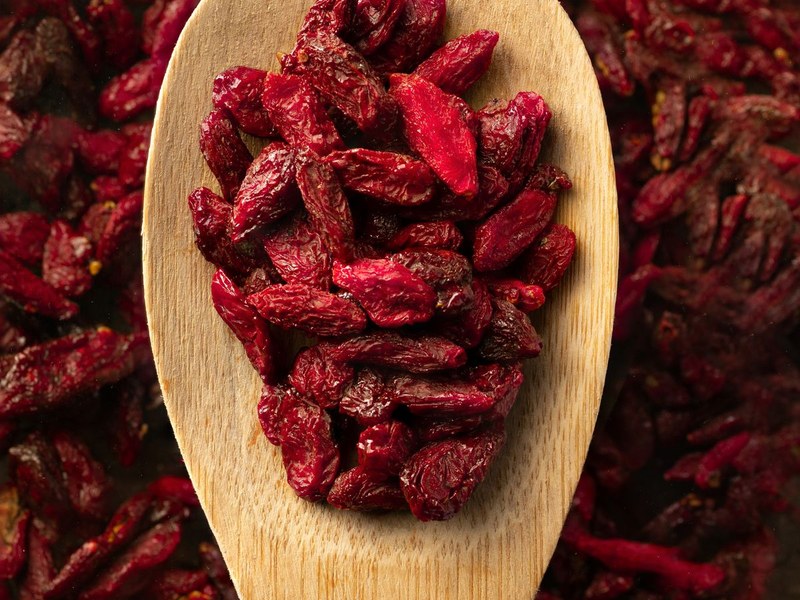
Good dried goji berries should be a vibrant red-orange color, not brownish or artificially bright red. They should be slightly sticky to the touch, plump, and have a mildly sweet flavor when chewed dry. Ningxia-origin berries are generally considered the benchmark for quality. Avoid berries that clump heavily or have a fermented smell.
Eating the Berries After Steeping
A crucial — and often overlooked — aspect of goji berry tea culture is that the berries themselves are eaten after steeping, not discarded. This practice is embedded in Chinese tea culture as a matter of course.
The reason is biochemical: zeaxanthin and beta-carotene do not dissolve into water — they remain locked in the berry's flesh even after extended steeping. Eating the rehydrated berries delivers these compounds directly, especially when consumed alongside a small amount of fat, which enhances carotenoid absorption. Studies quantifying zeaxanthin increases in human plasma consistently used whole berry consumption, not infusion alone.
In practical terms, the rehydrated berries have a pleasant soft texture and a gentle sweetness — nothing like the slightly chewy, concentrated fruit in the dry state. Many people in China simply eat them out of the cup with a spoon, or stir them into a small amount of porridge alongside the morning tea.
Safety Considerations and Drug Interactions
Goji berry tea is generally safe for most healthy adults at typical daily quantities of 10–15 grams. However, several considerations are worth understanding:
Warfarin interaction: Multiple published case reports have documented a clinically significant interaction between goji berries and warfarin (an anticoagulant blood-thinning drug). Goji berry consumption appears to potentiate warfarin's anticoagulant effect, potentially increasing the risk of bleeding. Anyone taking warfarin or other anticoagulant drugs should avoid goji berry tea and discuss any herbal use with their prescribing physician.[7]
Pregnancy: Goji berries contain betaine, a compound that has been associated with uterine stimulation at high doses. Pregnant women should consult a healthcare provider before regular consumption.
Nightshade sensitivity: Goji belongs to the Solanaceae family. Those with known sensitivity to tomatoes, peppers, or potatoes may experience reactions.
Heat-type constitution: Though classified as neutral, some practitioners recommend pairing goji with chrysanthemum for individuals with signs of internal heat such as persistent thirst, dry mouth, or constipation.
Reviewed by: This article has been reviewed by a licensed practitioner in Traditional Chinese Medicine for factual accuracy regarding traditional uses. It is intended for educational purposes only and does not constitute medical advice. Always consult a qualified healthcare provider before using herbal preparations for health conditions.
Goji Berry Tea in the Modern World
The past two decades have transformed goji berries from a regional Chinese ingredient into a globally recognized wellness food. Western markets discovered them in the mid-2000s as a superfood berry, and what was once a humble morning cup became an ingredient in smoothies, supplements, and specialty cafes from London to Los Angeles.
In China itself, the thermos flask or glass bottle containing goji berries in water — sometimes combined with chrysanthemum or red dates — has become an iconic image of contemporary office culture. Young urban professionals have embraced the goji habit as a practical daily tool: eye strain relief, a gentle energy tonic, and a caffeine-free alternative to coffee.
This continuity — from imperial court to open-plan office, from Shennong's legendary garden to Ningxia's modern farms — is perhaps the most remarkable thing about goji berry tea. It has survived not because it was mandated or marketed, but because it has continued, quietly and reliably, to offer a simple, warming, nourishing cup at the start of each day.
References
- PMC8051317 — He, M. et al. (2021). Health benefits of wolfberry (Gou Qi Zi, Fructus barbarum L.) on the basis of ancient Chinese herbalism and Western modern medicine. Pharmacological Research — Modern Chinese Medicine. https://pmc.ncbi.nlm.nih.gov/articles/PMC8051317/
- Me & Qi — Gou Qi Zi TCM Herb Reference. Channels, dosage, and classical functions. https://www.meandqi.com/knowledge-base/herbs/gou-qi-zi
- Beijing Municipal Health Commission — Correct method of steeping goji in thermos (2022). Official wellness guidance on goji berry infusion preparation. https://www.beijing.gov.cn/fuwu/bmfw/
- Exploration of Foods and Foodomics (2023) — From botany to bedside: a review of the health benefits of Lycium barbarum as a functional food. https://www.explorationpub.com/Journals/eff/Article/101070
- PMC9966716 — Distinct Role of Lycium barbarum L. Polysaccharides in Oxidative Stress-Related Ocular Diseases. Frontiers in Pharmacology (2023). https://www.ncbi.nlm.nih.gov/pmc/articles/PMC9966716/
- China Sichuan Food — Chrysanthemum Tea with Goji Berry. Recipe and pairing context. https://www.chinasichuanfood.com/chrysanthemum-tea-with-goji-berry/
- PMC5598317 — Bleeding due to a probable interaction between warfarin and Gouqizi (Lycium Barbarum L.). Toxicology Reports (2017). https://pmc.ncbi.nlm.nih.gov/articles/PMC5598317/