Goji Berry Traditional Uses: History, Culture, and Culinary Traditions in Asia
Explore goji berry's rich cultural history in Chinese tradition — from ancient texts to Ningxia cultivation, traditional culinary uses in soups and teas, cultural symbolism, and how to use dried goji berries at home.
Medical Disclaimer: This content is for educational and informational purposes only and is not medical advice. The information presented is not intended to diagnose, treat, cure, or prevent any disease. Always consult a licensed healthcare practitioner before starting any new herbal practice or supplement. Statements regarding traditional herbal use have not been evaluated by the FDA.
Affiliate Disclosure: This article contains affiliate links. We may earn a commission if you purchase through these links, at no additional cost to you. We only recommend products we believe align with our editorial standards.
Few ingredients hold the same place of reverence in Chinese culinary and wellness tradition as the small, red goji berry. Known as gou qi zi (枸杞子) in Mandarin and commonly called wolfberry in English, this vivid orange-red fruit from the Lycium barbarum shrub has been woven into Chinese daily life for well over two thousand years. From soups simmering in family kitchens to ceremonial gifts at New Year celebrations, the goji berry is far more than a modern superfood — it is a living thread connecting contemporary wellness culture to one of the world's oldest food traditions.
This article explores that cultural story: where goji berries come from, how they have been used across Chinese history, what they symbolize, and how you can bring these same time-honored traditions into your own kitchen today.
A History of Goji Berry in Chinese Tradition
The goji berry's journey through Chinese history is remarkable for both its length and its consistency. While many folk wellness ingredients have faded from use over the centuries, the goji berry has remained central across multiple dynasties and social classes.
The earliest written record of gou qi zi appears in the Shennong Bencao Jing (神农本草经, Classic of Herbal Medicine), a foundational text of Chinese folk wellness compiled around 200 CE and attributed to the legendary Emperor Shennong. The text classified gou qi zi among the superior grade of herbs — those considered gentle enough for regular, long-term use by ordinary people [1]. This classification reflected a core idea in Chinese wellness thinking: that certain foods, taken consistently over time, were believed to nourish the body gradually rather than act as acute remedies.

By the Tang Dynasty (618–907 CE), goji berries were recorded as part of imperial court tonics, reflecting their status as a prestige wellness food among the elite. Accounts suggest the berry was included in formulas associated with the first Qin Dynasty emperor (259–210 BCE), making its folk use even older than the earliest written records [2].
The most comprehensive classical treatment of goji berry came from the great Ming Dynasty scholar-physician Li Shizhen in his monumental Bencao Gangmu (本草纲目, Compendium of Materia Medica), completed in 1578 after 27 years of research. Li described goji berry in extraordinary detail, distinguishing regional varieties and noting that the Ningxia cultivar — grown along the fertile floodplains of the Yellow River — was superior to others. He described it as a ping bu zhi yao (平补之药), meaning a gentle, balanced tonic — something that could be incorporated into daily life without excess [3].
Notably, Li also recorded that all four parts of the goji shrub had distinct folk uses across the seasons: the leaf in spring (called 天精草, tian jing cao), the flower in summer (长生草, chang sheng cao), the fruit in autumn (枸杞子, gou qi zi), and the root bark in winter (地骨皮, di gu pi) [1]. This seasonally integrated approach reflects a distinctly Chinese way of thinking about plants as part of the natural cycle rather than isolated compounds.
During the Qing Dynasty, Ningxia's status as the premier goji-growing region became further entrenched. The Chinese Pharmacopoeia, which has been updated through modern editions, has since 1977 recognized Ningxia Lycium barbarum as the sole official pharmaceutical-grade source for gou qi zi in China [4]. Today, Ningxia remains the world's dominant goji berry producer — the 2022 harvest alone covered 380,000 mu (approximately 62,600 acres) and yielded 300,000 tons of fresh fruit [5].
Traditional Culinary Uses of Goji Berry
In Chinese food culture, goji berries have always occupied a fluid space between ingredient and wellness food — what the Chinese tradition calls yao shi tong yuan (药食同源), or food and folk wellness sharing the same origin. This philosophy meant that goji berries appeared not in apothecary shops alone, but in everyday kitchens.
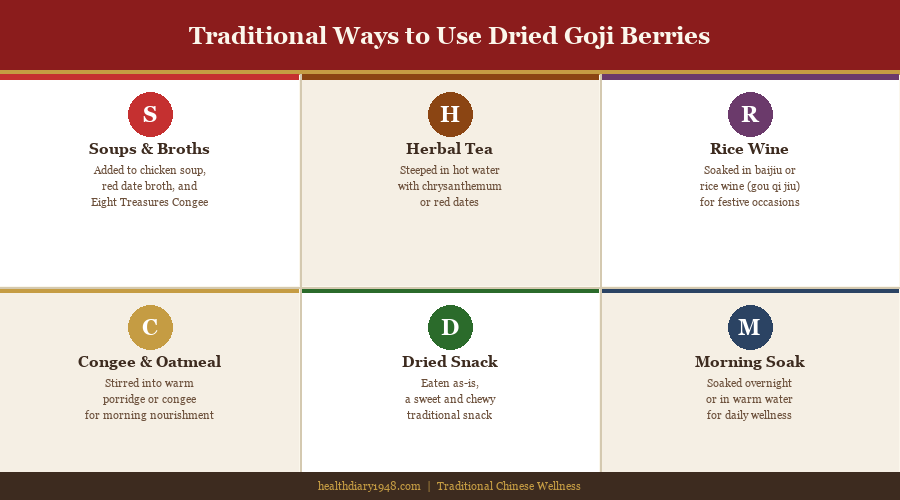
Soups and broths represent the most traditional home use. Dried goji berries are added to simmering chicken or pork bone broth, where they soften and release their slightly sweet flavor while imparting a deep red-orange color to the liquid. A classic preparation is Eight Treasures Congee (八宝粥, ba bao zhou), which combines goji berries with red dates, lotus seeds, longan, peanuts, and other ingredients to create a warming rice porridge. Red date and goji soup (红枣枸杞汤) is another household staple, particularly brewed for women in Chinese food-as-wellness tradition.
Herbal teas offer a simpler route to daily goji consumption. The most popular combination involves steeping dried goji berries with chrysanthemum flowers — a pairing so common in China that it has its own name: 菊花枸杞茶 (ju hua gou qi cha). The mild sweetness of the goji complements the slightly bitter, floral chrysanthemum, and the red-and-yellow combination is visually striking. Red dates (jujube) are often added for a touch more sweetness.
Rice wine infusions, called gou qi jiu (枸杞酒), have a long folk history particularly in rural northwestern China. Dried goji berries are soaked in rice wine or baijiu for weeks to months, creating a reddish-amber tonic that is traditionally consumed in small amounts at festivals and celebrations. This practice reflects a broader Chinese tradition of infusing botanicals into alcohol to concentrate and preserve their properties over time.
Congee and porridge remain a daily vehicle for goji berries in many Chinese households. A small handful of berries added to cooking rice softens them perfectly and adds a natural sweetness that reduces the need for other sweeteners. The same applies to oatmeal — a simple modern adaptation of the ancient congee tradition that translates well globally.
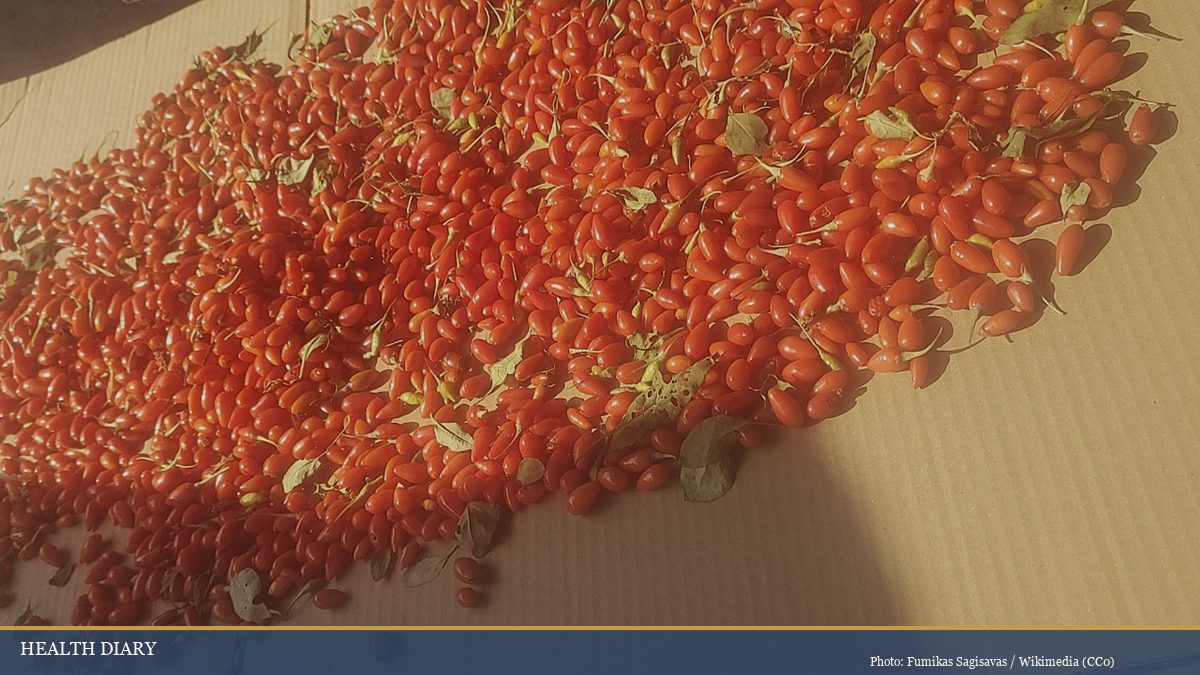
Finally, dried goji berries as a snack are widely consumed as-is — sweet, chewy, and slightly tart. Street markets in Ningxia and throughout China sell goji berries by the sack alongside dried red dates, longan, and other traditional dried fruits. Individual responses to taste and texture vary considerably; what one person finds perfectly sweet another may find too intense, and personal preference guides how people choose to use them.
Goji Berry in Chinese Cultural Symbolism
Beyond their role as a food ingredient, goji berries carry deep symbolic meaning in Chinese culture — meaning that shapes when and how they are given and shared.
The berry's most powerful symbolic association is with longevity. In Chinese aesthetic and literary tradition, the goji plant — particularly its arching red-fruited branches — appears frequently in paintings, embroideries, and decorative objects as a symbol of a long and flourishing life. The red color itself carries auspicious meaning in Chinese culture: red symbolizes good fortune, vitality, and celebration. A bowl of bright red goji berries thus carries layered meanings beyond its flavor.
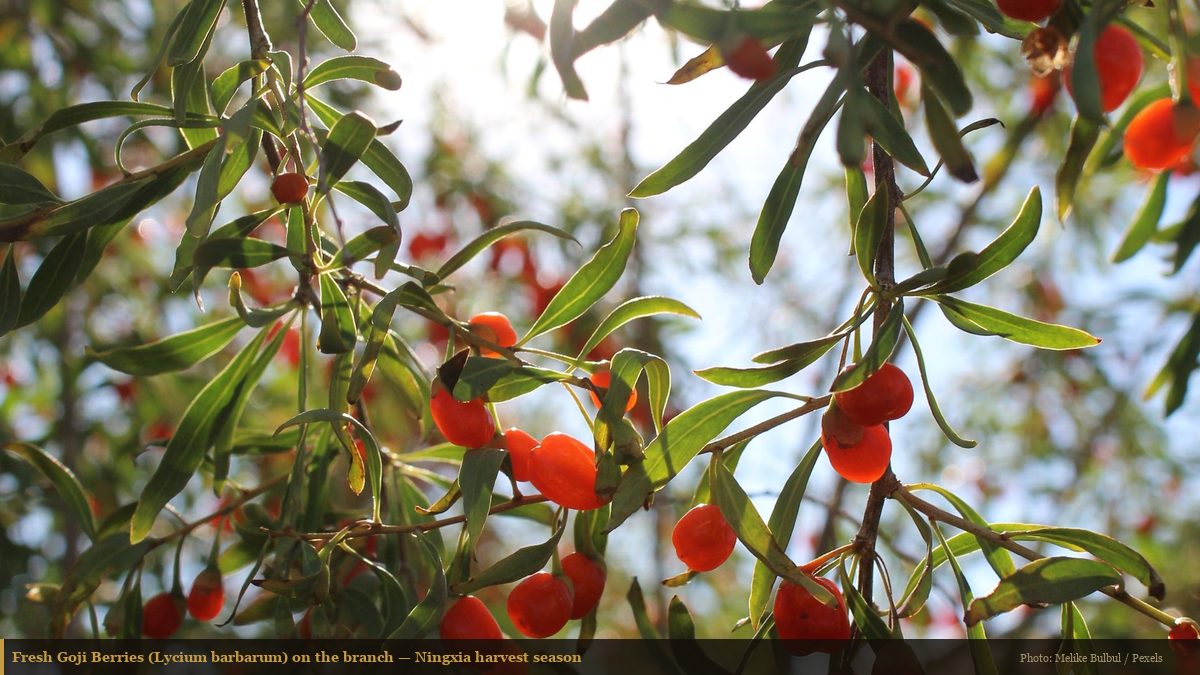
During the Lunar New Year and other important festivals, dried goji berries are included in gift baskets alongside red dates, longan, and other traditional botanicals. These gifts communicate wishes for health and long life for the recipient — making goji berries not just a food but a gesture of care.
One of the most charming folk traditions associated with goji berry is the legend of the gouqi well (枸杞井). According to a story recorded in several classical Chinese texts, there was once a village well surrounded by goji berry shrubs whose roots had grown down into the water. Villagers who drank from that well were said to live to extraordinary ages with bright eyes and strong health. This legend, while clearly mythological in character, reflects the deep folk belief that goji berries were associated with vitality and longevity — a belief powerful enough to survive more than a millennium in oral and written culture [6].
The berry also earned folk nicknames that reflect this reverence. In Ningxia, goji berries have been called the red diamond (红宝石, hong bao shi) — a term that captures both their color and their perceived value as a regional treasure.
How to Buy and Store Dried Goji Berries
For those new to goji berries, navigating the market can be confusing — quality varies considerably depending on origin, harvest timing, and processing.
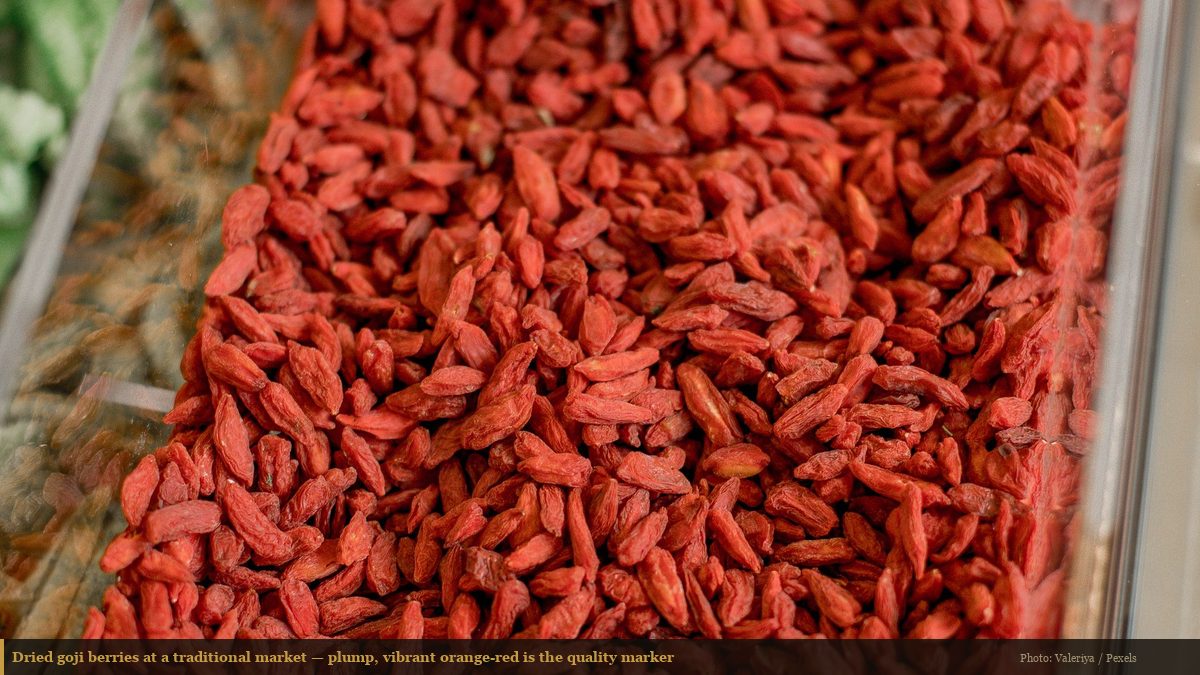
What to look for: High-quality dried goji berries are plump, vibrant orange-red in color, and slightly tacky to the touch without being sticky or wet. They should have a mild sweetness with a slight tartness. Be cautious of berries that are overly bright red, as this can indicate artificial coloring, or berries that are very dark or shriveled, which suggests age or poor handling.
Ningxia vs. other origins: Ningxia goji berries are widely considered the gold standard and are the only variety recognized by the Chinese Pharmacopoeia for pharmaceutical use [4]. They tend to be larger, sweeter, and more deeply colored than goji berries from Xinjiang, Qinghai, or imported varieties from other countries. Look for packaging that specifies Ningxia (宁夏) origin if quality is a priority.
Storage: Dried goji berries keep well in an airtight container in a cool, dark location. They typically maintain quality for 12–18 months when properly stored. Refrigeration can extend shelf life further and helps preserve color vibrancy. Avoid storing near heat or strong odors, as the berries readily absorb surrounding aromas.
Rehydrating: For use in teas and soups, berries benefit from a brief soak in cool or warm water (10–20 minutes) to plump them up. For porridge and congee, simply add them directly to simmering liquid during the last 5–10 minutes of cooking — they will soften naturally.
How to Use Goji Berry at Home
The traditional uses of goji berry translate naturally into modern kitchens. Here are some accessible ways many people incorporate them into daily routines:
- Morning warm water soak: Place a small handful of dried goji berries (approximately 10–15 berries) in a glass of warm water and let them soak for 10 minutes before drinking. This is perhaps the simplest daily habit and mirrors a traditional morning practice in many Chinese households.
- Chrysanthemum goji tea: Steep 1 teaspoon dried chrysanthemum flowers and 10–12 goji berries in hot water (not boiling — around 80–85°C) for 5 minutes. A classic afternoon tradition throughout China.
- Morning oatmeal: Add a small handful of goji berries to oatmeal with the water before cooking. They will soften and sweeten naturally, adding color and mild flavor without added sugar.
- Chicken or vegetable soup: Add 20–30 dried goji berries to any long-simmering broth in the final 15 minutes. They pair particularly well with ginger, red dates, and scallion.
- Rice cooker congee: Add dried goji berries along with rice and water at the start of cooking. By the time the congee is done, the berries will have fully softened and distributed their color throughout.
Individual experiences vary considerably; what one person finds enjoyable or fitting to their routine may not suit another, and personal experimentation is part of finding what works for you.
Goji Berry in Other Asian Cultures
While China is the heartland of goji berry cultivation and tradition, the plant and its folk uses have spread to neighboring cultures across Asia, each developing their own distinctive relationship with the berry.
In Korea, goji berries are known as gugija (구기자) and have a place in Korean traditional wellness practice (hanbang). Korean traditional wellness, which shares conceptual roots with Chinese wellness thinking, uses gugija in similar ways — in teas, broths, and tonics. Gugija tea (구기자차) is a well-known Korean herbal beverage, particularly associated with autumn and winter wellness routines.
In Japan, the plant is called kuko (クコ) and has been used in Japanese Kampo (traditional herbal practice derived from Chinese foundations) for centuries. Japanese herbal preparations sometimes incorporate kuko fruit alongside other botanicals in multi-herb formulas. The plant also grows wild in parts of Japan, and the young leaves are occasionally used in cooking.
In Vietnam, goji berries are called cau ky tu (câu kỷ tử) and appear in traditional Vietnamese folk wellness preparations. Vietnamese herbal soups and tonics sometimes include cau ky tu alongside ginger, red dates, and other Chinese-origin botanicals — reflecting the significant historical influence of Chinese wellness traditions on Vietnamese herbal knowledge.
Across all three cultures, the berry's role is remarkably consistent: a gentle, warming, nourishing ingredient incorporated into daily cooking and seasonal wellness routines rather than used as an acute treatment for specific ailments.
Frequently Asked Questions
What is the traditional use of goji berry in Chinese culture?
Goji berry (gou qi zi) has been used in Chinese food and folk wellness tradition for over 2,000 years, first recorded in the Shennong Bencao Jing around 200 CE. Traditionally, it was added to soups, brewed in teas, and soaked in rice wine as a nourishing ingredient. It was also used as a ceremonial gift symbolizing longevity and good fortune, particularly during Lunar New Year celebrations.
What does goji berry taste like?
Dried goji berries have a mild, slightly sweet flavor with a hint of tartness — somewhat similar to a cranberry or tart cherry, but gentler. When rehydrated in water or soup, they become plump and slightly jammy. The flavor is subtle enough to blend naturally into teas, soups, and porridges without overpowering other ingredients.
Can I use goji berries every day?
Many people in China and across Asia incorporate small amounts of dried goji berries into their daily cooking — in morning tea, porridge, or soups — as a long-standing cultural food tradition. Most healthy adults tolerate them well as a culinary ingredient. However, if you take blood-thinning medications (such as warfarin), diabetes medications, or blood pressure medications, speak with a healthcare practitioner first, as interactions have been noted [7]. Individual responses vary considerably.
What is the difference between Ningxia and other goji berries?
Ningxia goji berries are widely regarded as the highest quality and are the only variety recognized by China's official Pharmacopoeia for pharmaceutical purposes since 1977. They tend to be larger, more vibrantly colored, and sweeter than goji berries grown in other regions. Ningxia's Yellow River basin provides ideal growing conditions — fertile soil, abundant sunshine, and dry air — that are difficult to replicate elsewhere.
Are there any cautions with goji berries?
Goji berries are generally well-tolerated as a food ingredient, but a few considerations are worth knowing. They may interact with warfarin (a blood-thinning medication) and could affect blood sugar or blood pressure in people on related medications [7]. People with nightshade sensitivities should be aware that goji belongs to the Solanaceae family. Pregnant or breastfeeding individuals and those giving goji to young children should consult a healthcare practitioner before use. As with any food ingredient, individual responses vary.
How do I make goji berry tea at home?
The simplest method is to add 10–15 dried goji berries to a cup and pour hot water (around 80–85°C — not fully boiling) over them. Let steep for 5–8 minutes. The berries will soften and the water will turn a golden-orange color with a mildly sweet flavor. For the classic Chinese pairing, add a small pinch of dried chrysanthemum flowers. The softened berries at the bottom of the cup can be eaten after drinking the tea.
About This Article
Written by: Health Diary Editorial Team — a team of wellness writers and researchers focused on traditional Asian food culture and herbal history.
Editorial review: This article has been reviewed by the Health Diary editorial team for clarity, structure, and adherence to our sourcing standards. Key claims were cross-checked against NCCIH (National Center for Complementary and Integrative Health), PMC peer-reviewed studies on Lycium barbarum polysaccharides, the 中医世家 classical reference database, and the Chinese Pharmacopoeia entry for gou qi zi. It is not a clinical review and should not replace consultation with a licensed healthcare practitioner.
Reviewed on: June 16, 2026.
Editorial process: We cite peer-reviewed and government sources where possible. When a clinical reviewer is added to this article, attribution will appear here with verifiable credentials.
References
- 中医世家 (zysj.com.cn). 枸杞子 — 中药学 classical reference entry. Traditional Chinese Medicine classical database.
- Traditional Medicinals Herb Library. Goji: Benefits, Folklore, Botany and More. Traditional Medicinals, 2024.
- Qi Wei. History of Goji Berries in China. In: Phytochemicals in Goji Berries. Taylor & Francis, 2019.
- 百度百科 (Baidu Baike). 枸杞子. Citing Chinese Pharmacopoeia 2020 edition.
- PMC — National Library of Medicine. A Comprehensive Review of Goji Berry Processing and Utilization. 2023.
- Baker Creek Heirloom Seeds. History of The Goji Berry: Ancient Plant, Super Berry.
- National Center for Complementary and Integrative Health (NCCIH). Goji Berries. U.S. Department of Health & Human Services.
- Fan et al. Extraction, Structural Characterization, and Biological Functions of Lycium Barbarum Polysaccharides: A Review. Oxidative Medicine and Cellular Longevity, 2020.
This article reflects traditional cultural practices and historical food uses. It is not medical advice.