Hojicha vs Green Tea: Differences, Traditions, and How to Brew
Discover what makes hojicha unique among Japanese teas — its Kyoto origins, how it differs from sencha and matcha, when Japanese tradition calls for hojicha, and the best brewing methods.
Medical Disclaimer: This content is for educational and informational purposes only and is not medical advice. The information presented is not intended to diagnose, treat, cure, or prevent any disease. Always consult a licensed healthcare practitioner before starting any new herbal practice or supplement. Statements regarding traditional tea use have not been evaluated by the FDA.
Affiliate Disclosure: This article contains affiliate links. We may earn a commission if you purchase through these links, at no additional cost to you. We only recommend products we believe align with our editorial standards.
Pour a cup of hojicha and something immediately stands out: the color is nothing like green tea. Where sencha pours a bright, vegetal green and matcha whips into a vivid jade foam, hojicha settles into a warm amber-brown — closer to autumn leaves than spring grass. The aroma, too, is distinct: toasty, nutty, faintly caramel, like something has been gently kissed by fire.
This is intentional. Hojicha occupies its own unique space in Japanese tea culture — not just a preparation method, but a tea with a specific seasonal identity, a cultural role in everyday Japanese life, and a flavor story that begins with an act of resourcefulness in 1920s Kyoto. Understanding hojicha means understanding why Japan reaches for different teas at different moments — and what roasting at 200°C actually does to a tea leaf.
What Is Hojicha?
Hojicha (焙じ茶, sometimes romanized as houjicha) is a Japanese tea made by roasting green tea leaves, stems, or stalks at high heat — typically around 200°C (392°F). The roasting process transforms the leaf from green to reddish-brown, drives off much of the grassy bitterness, and creates a distinctive toasted aroma through a chemical process known as the Maillard reaction.
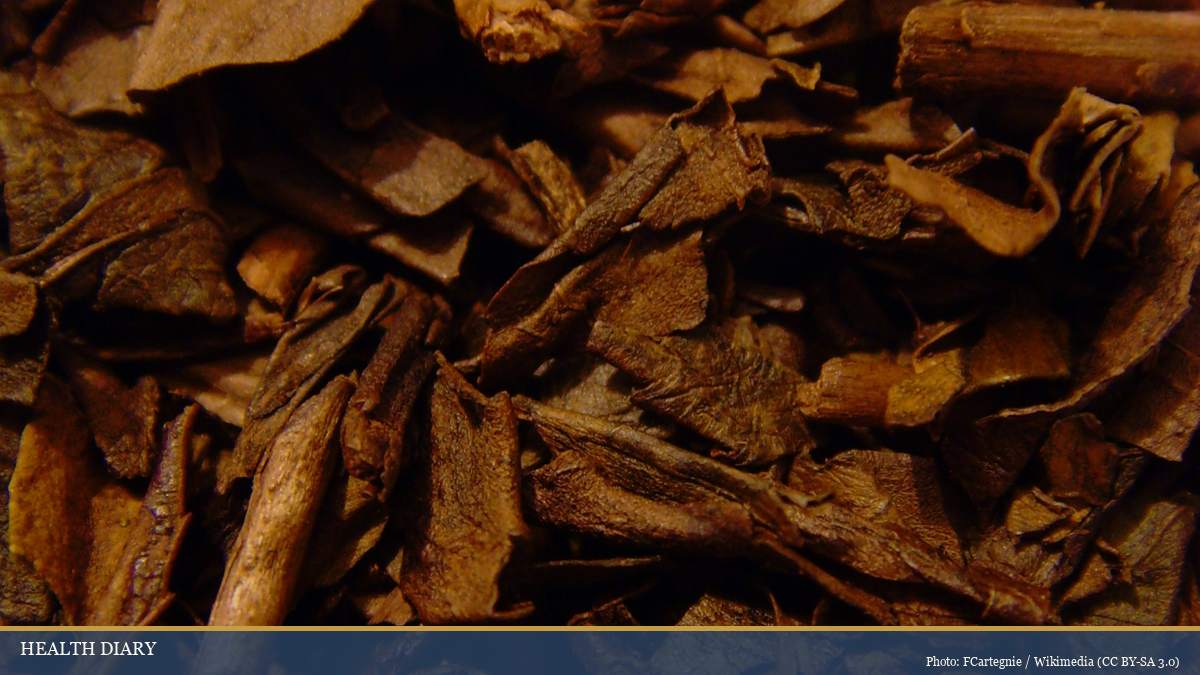
The base material can vary: hojicha may start as bancha (late-harvest tea, coarser leaves), sencha, or kukicha (stems and stalks). The roasting is what defines it. During the high-heat process, amino acids and sugars react to produce pyrazine compounds — the same class of molecules responsible for the aroma of roasted coffee, bread crust, and toasted nuts. The dominant pyrazine in hojicha is 2,3,5-trimethylpyrazine, which contributes the characteristic toasty warmth [1].
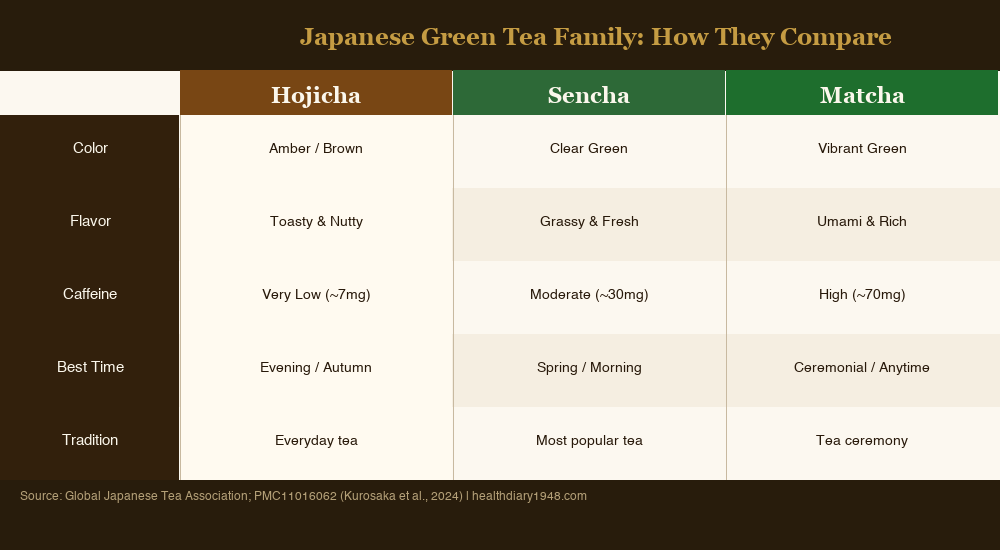
A significant consequence of roasting is the reduction of caffeine. Caffeine begins to sublime (convert from solid to gas) near 178°C, so roasting at 200°C drives off a meaningful portion. A typical cup of hojicha contains around 7–20 mg of caffeine, compared to approximately 30 mg in sencha and up to 70 mg in matcha [2]. This low caffeine profile is central to hojicha's cultural role in Japan.
Hojicha vs Sencha: The Key Differences
Sencha is Japan's most popular tea, accounting for the majority of domestic tea production. It is made from the same Camellia sinensis plant as hojicha, but the production method diverges early: sencha leaves are steamed immediately after harvest to halt oxidation, then rolled and dried. The result is a tea that preserves the leaf's green character — bright color, grassy and slightly vegetal flavor, moderate caffeine, and significant L-theanine content.
Hojicha starts from a finished green tea (often bancha or sencha) and applies an additional roasting step. This second processing stage changes nearly every sensory property:
- Color: Hojicha brews amber to reddish-brown; sencha brews clear yellow-green
- Flavor: Hojicha is toasty, nutty, and smooth with almost no bitterness; sencha is grassy, fresh, and mildly astringent
- Caffeine: Hojicha very low (~7–20 mg/cup); sencha moderate (~30 mg/cup)
- Aroma: Hojicha has a warm toasty note from pyrazines; sencha has a fresh, oceanic aroma
- Season: Japanese tea custom places hojicha in autumn and winter; sencha in spring and summer
- L-Theanine: Hojicha significantly lower (heat degrades the amino acid); sencha retains higher levels
A 2025 study published in Foods examined the stress-relieving potential of Japanese green teas using the CE/TA ratio (caffeine and EGCG relative to theanine and arginine). Seven of eight Japanese green teas — including several grades of sencha — showed stress-relieving potential. Hojicha did not qualify under this measure, because roasting degrades the amino acids (theanine, arginine) that contribute to the calming effect in unroasted teas [3]. This illustrates a key trade-off: hojicha sacrifices some of sencha's amino acid profile in exchange for its signature pyrazine-driven warmth and dramatically lower caffeine.
Hojicha vs Matcha: Two Ends of the Green Tea Spectrum
If sencha and hojicha represent a comparison of siblings, matcha and hojicha are at nearly opposite ends of the Japanese tea family. Matcha is made from shade-grown tea leaves (tencha) that are stone-ground into a fine powder. Because you consume the entire leaf — not just an infusion — matcha delivers concentrated amounts of everything: caffeine (up to 70 mg per serving), L-theanine, EGCG catechins, and chlorophyll. The flavor is intense, umami-rich, and distinctly vegetal.
Hojicha works in opposite fashion. Roasting removes most of what matcha concentrates. Caffeine drops to very low levels. EGCG undergoes epimerization during high-heat roasting, converting to GCG (gallocatechin gallate), which has different absorption characteristics. L-theanine is heat-degraded. What hojicha gains instead are pyrazines — aromatic compounds that matcha and sencha do not contain in meaningful amounts.
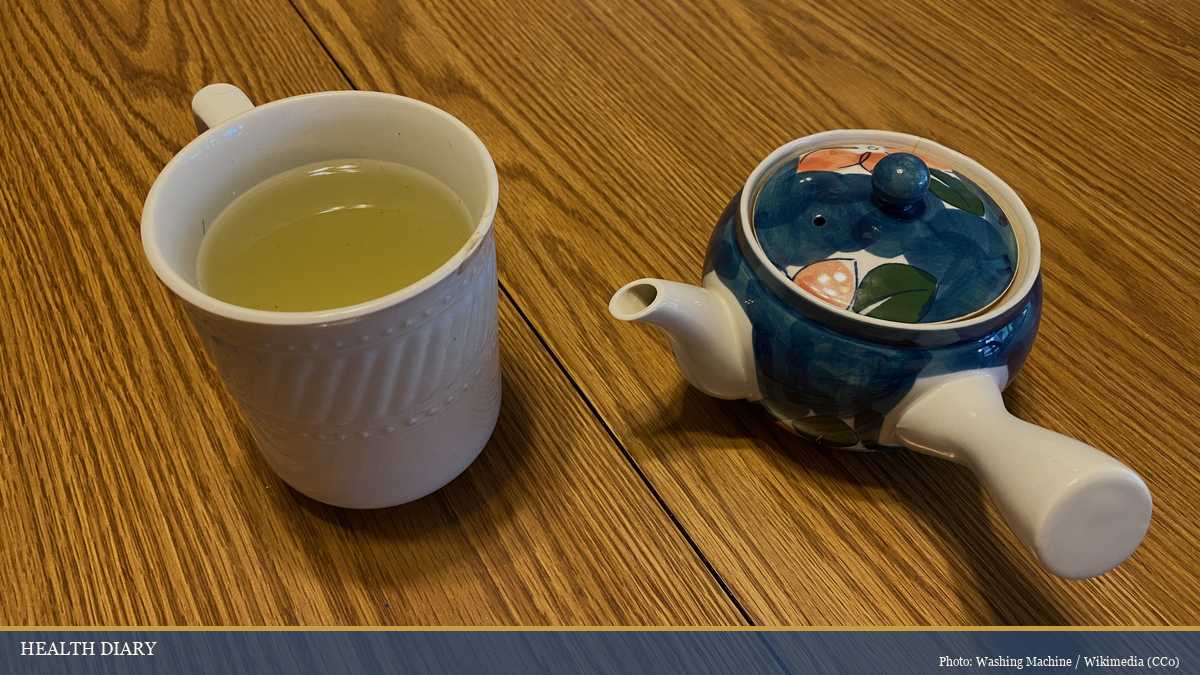
Japanese tea culture recognizes this distinction clearly in how each is used. Matcha carries the weight of ceremony: it features in the formal tea ceremony (chado), requires specific equipment (chakin, chasen, chawan), and is traditionally paired with sweet wagashi confections to balance its bitterness. Hojicha is everyday and informal — brewed in a simple kyusu teapot, enjoyed during meals, shared across generations, and drunk in the evening when caffeine is unwelcome.
A 2024 study in Scientific Reports examined physiological and performance effects of both green tea and roasted green tea. Participants drinking roasted green tea showed significantly higher correct response rates, and notably, "fatigue did not increase after the task in the roasted green tea condition." The researchers proposed that aromatic stimulation from pyrazines — rather than caffeine or theanine content — likely drove these effects, as intake levels were too low for significant bioactive compound absorption [4]. This suggests hojicha's sensory experience operates through a different pathway than the concentrated bioactive approach of matcha.
Kyoto Origins and Hojicha Traditions
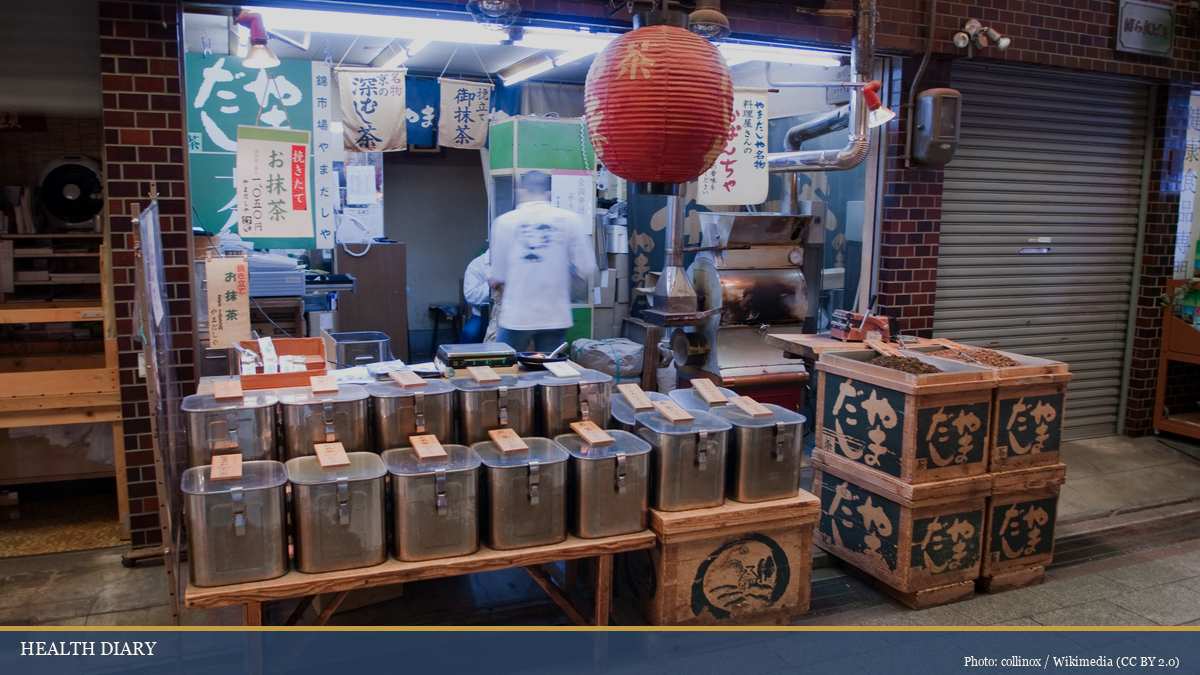
Hojicha is a relatively young tea tradition by Japanese standards. Most accounts place its modern origin in the 1920s in Kyoto, when a tea merchant found himself with unsold bancha leaves — a common problem in an era of economic difficulty and changing consumer habits. The merchant brought the surplus leaves to Kyoto University, where advisors suggested roasting them over charcoal as a way to revive and repurpose the tea. The resulting warm, aromatic brew attracted customers to the shop with its inviting toasted scent, and word spread quickly through Kyoto's tea districts [5].
This origin story reflects a deep principle in Japanese culture: mottainai (もったいない), a concept of respecting resources and avoiding waste. Hojicha was born not from luxury but from practical ingenuity — transforming what might have been discarded into something valued and loved. An earlier predecessor, kaga-boucha (roasted stem tea), was pioneered around 1902 in the Kaga region of Ishikawa Prefecture by the tea merchant Shinbei Hayashiya's lineage, providing roasted tea "accessible to the common people" and later presented to Emperor Showa.
Kyoto's relationship with hojicha runs especially deep. In Kyoto's tea terminology, when locals say bancha, they typically mean hojicha — a local usage that reflects how thoroughly roasted tea became embedded in the city's tea culture. The Japanese Wikipedia entry on hojicha notes: 「京都で番茶という場合には一般的にほうじ茶を指す」("When referring to bancha in Kyoto, it generally indicates hojicha"). High-end Kyoto tea establishments serve quality hojicha at formal gatherings, and the tea's versatility — suitable for both the kaiseki dinner table and the neighborhood family meal — made it a staple across social contexts.
When Japanese Tradition Calls for Hojicha
Part of what makes Japanese tea culture sophisticated is its sense of when to drink which tea. Hojicha has several well-established cultural moments:
Evening and nighttime: The very low caffeine content makes hojicha the natural choice for after-dinner tea in Japanese households. Where sencha or gyokuro might disrupt sleep if consumed in the evening, hojicha allows for the ritual of a warm cup without the stimulant concern. This practice is deeply embedded in everyday Japanese custom.
Children's tea: Hojicha is commonly given to children in Japan — a custom that speaks to how trusted and mild the tea is considered. With roughly 7 mg of caffeine per cup (compared to ~30 mg in sencha), families can brew one pot and serve it to grandparents, parents, and children alike. This multi-generational sharing is a distinctive quality few teas possess.
Ryokan welcome tea: Traditional Japanese inns (ryokan) often serve hojicha as the greeting tea when guests arrive — a choice that speaks to hospitality. The warm, toasted aroma of hojicha is immediately welcoming and non-polarizing, suitable for all guests regardless of caffeine sensitivity or time of arrival.
Autumn and winter: While sencha is associated with spring (particularly shincha, the first harvest of the year), hojicha is a tea of the cooler seasons. Its warm amber color and toasty aroma evoke autumn foliage and winter hearths. Japanese tea practitioners and shops stock and promote hojicha particularly as temperatures drop.
Savory food pairing: Whereas matcha is traditionally paired with sweet wagashi confections to create contrast, hojicha pairs naturally with savory foods — grilled fish, rice dishes, salty snacks, and pickled vegetables. The toasted notes in hojicha complement rather than clash with umami-forward flavors.
Individual responses to tea vary considerably; personal preferences for timing, pairings, and brewing strength differ, and experimentation is part of discovering what works best for each person.
How to Brew Hojicha (Traditional Methods)
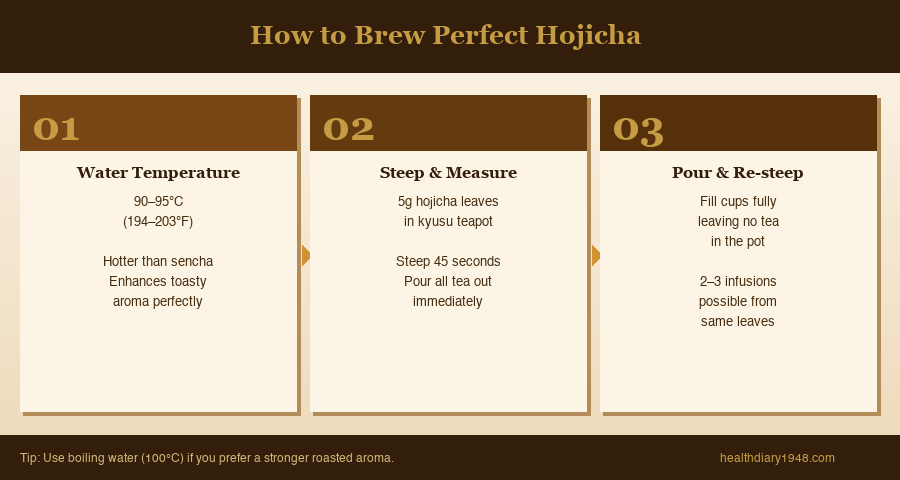
One of hojicha's most appealing qualities for tea practitioners is its forgiving nature. Unlike gyokuro (which requires 50°C water) or high-grade sencha (around 70–75°C), hojicha actually benefits from hotter water — the heat helps extract and amplify the pyrazine aroma compounds that define its character.
Kyusu Teapot Method (Traditional)
- Water temperature: 90–95°C (194–203°F). This is notably hotter than recommended for most sencha. Some Kyoto-style preparations use near-boiling water to maximize the roasted aroma.
- Measure: Use approximately 5g of hojicha leaves (about one heaped tablespoon) for 200ml of water in your kyusu.
- Steep: Pour water over the leaves and steep for 30–45 seconds. Hojicha steeps quickly because the roasted leaves extract rapidly.
- Pour fully: Empty the teapot completely into cups, leaving no tea sitting on the leaves — this prevents over-extraction and bitterness in subsequent infusions.
- Multiple infusions: Hojicha generally yields 2–3 good infusions. Second steeps are slightly lighter in color but retain the toasty character.
Hojicha Latte
A contemporary preparation popular across Japan and increasingly worldwide: brew a concentrated hojicha (10g leaves / 100ml water, 30 seconds) and combine with steamed milk in a 1:2 ratio. The toasted notes carry through dairy particularly well. No sweetener is traditionally added, though some prefer a small amount of honey.
Cold Brew Hojicha
Cold water extracts hojicha more slowly but produces an exceptionally smooth, mellow result. Combine 8–10g of hojicha with 600ml of cold water and refrigerate for 6–8 hours. The resulting brew is lighter in color and almost entirely free of bitterness — a popular summer preparation despite hojicha's autumn/winter reputation. Individual preferences for cold brew concentration vary; adjust ratios to taste.
Frequently Asked Questions
Is hojicha really a green tea?
Yes — hojicha starts as green tea (the same Camellia sinensis plant, processed to stay green), then undergoes an additional roasting step. Botanically and in terms of tea classification, it belongs to the green tea family. However, its flavor, color, and chemical profile after roasting differ so substantially that many people encounter it as an entirely new category. In Japan, it is categorized under the green tea family but recognized as a distinct style.
Can children drink hojicha?
Hojicha is traditionally considered one of the most appropriate teas for children in Japan, specifically because of its very low caffeine content (approximately 7–20 mg per cup). Japanese families commonly serve hojicha to all ages, including young children and the elderly. That said, individual children's sensitivity to caffeine varies, and parents seeking guidance on appropriate beverages for young children should consult a pediatric healthcare practitioner.
Why does hojicha taste so different from sencha if they come from the same plant?
The roasting process at 200°C fundamentally changes hojicha's flavor chemistry. Roasting drives off caffeine, degrades chlorophyll (changing the color from green to amber-brown), and reduces L-theanine and catechins. In their place, the Maillard reaction produces pyrazines — toasty, nutty aromatic compounds found in roasted coffee and bread. The result is a tea that shares a botanical origin with sencha but has almost none of the same flavor characteristics.
What does hojicha pair well with?
Japanese tea tradition pairs hojicha naturally with savory foods: grilled fish, rice dishes, salty crackers, pickled vegetables (tsukemono), and savory wagashi. This is a different pairing logic from matcha, which is traditionally paired with sweet confections. Hojicha's toasted, slightly caramel notes complement umami-forward and salty flavors rather than competing with them. Cold brew hojicha also pairs well with light summer foods.
Is hojicha seasonal?
In Japanese tea practice, yes. Hojicha is most strongly associated with autumn and winter — its warm amber color and toasted aroma evoke cooler seasons. Sencha and shincha (first-harvest green tea) are the teas of spring. That said, cold brew hojicha has become popular in summer, and hojicha lattes are enjoyed year-round. The seasonal association is a cultural custom rather than a rule.
How does hojicha compare to black tea for caffeine content?
Black tea typically contains 40–70 mg of caffeine per cup depending on variety and brewing time. Hojicha, at approximately 7–20 mg per cup, is considerably lower than black tea. For reference, matcha sits at 60–70 mg, sencha at around 30 mg, and hojicha is among the lowest-caffeine hot teas made from Camellia sinensis. Individual caffeine content varies by leaf grade, water temperature, and steeping time.
About This Article
Written by: Health Diary Editorial Team — specialists in traditional Asian wellness practices and tea culture.
Editorial review: This article has been reviewed by the Health Diary editorial team for clarity, structure, and adherence to our sourcing standards. Key claims were cross-checked against PMC/PubMed, the Global Japanese Tea Association, and J-Stage-indexed research where applicable. It is not a clinical review and should not replace consultation with a licensed healthcare practitioner.
Reviewed on: June 16, 2026.
Editorial process: We cite peer-reviewed and authoritative institutional sources where possible. When a clinical reviewer is added to this article, attribution will appear here with verifiable credentials.
References
- Heterocyclic compounds formation in large-leaf yellow tea induced by the Maillard reaction at different roasting temperatures. LWT Food Science & Technology, 2023. ScienceDirect
- Japanese Tea Kinds. Global Japanese Tea Association, accessed 2026. gjtea.org
- Unno K. et al. Stress-Relieving Effects of Japanese Green Tea: Evaluation Using the Molar Ratio of Caffeine and EGCG to Theanine and Arginine as an Indicator. Foods 14(1):103, 2025. PMC11720457
- Kurosaka C. et al. Effects of green tea and roasted green tea on human responses. Scientific Reports, 2024. PMC11016062
- History of Hojicha, One of Japan's Favorite Teas. Yunomi.life, accessed 2026. yunomi.life
This article explores hojicha as a Japanese tea tradition. It is for educational purposes only.