The Japanese Tea Ceremony: A Guide to Chado and Ceremonial Matcha
Explore the Japanese tea ceremony (chado) — its 16th-century origins, four principles of harmony, respect, purity and tranquility, and how to prepare ceremonial matcha in the traditional style.
Disclaimer: This article explores the Japanese tea ceremony as a cultural and aesthetic tradition. It is for educational purposes only and does not constitute medical advice. Individual experiences vary considerably. Always consult a licensed healthcare practitioner before making changes to your diet or wellness routine.
Affiliate Disclosure: This article may contain affiliate links. We may earn a commission if you purchase through these links, at no additional cost to you. We only recommend products we believe align with our editorial standards.
Introduction
In the long history of human ritual, few practices have achieved the depth of refinement found in the Japanese tea ceremony. Known as chado or chanoyu — literally "the way of tea" or "hot water for tea" — this cultural tradition transforms the simple act of preparing and sharing a bowl of powdered green tea into a complete aesthetic and contemplative experience. For nearly five centuries, practitioners across Japan have gathered in small tea rooms, moving through precise choreographed gestures with a quality of attention that is rarely found in daily modern life.
The tea ceremony is not merely about tea. It is a living expression of Japanese aesthetic values — wabi-sabi (the beauty of imperfection and impermanence), Zen-influenced mindfulness, seasonal awareness, and the art of genuine hospitality. This guide explores the history, principles, tools, and preparation methods that define this remarkable tradition, and explains why chado continues to resonate with people worldwide seeking greater depth and intentionality in daily life.
History of the Japanese Tea Ceremony
Tea itself originated in ancient China, where it evolved from a practical beverage during the Tang Dynasty (618–907 CE) into a refined powdered form during the Song Dynasty (960–1279 CE). It was in this powdered form — whisked with hot water in a bowl — that tea first captured the imagination of Zen Buddhist monks.
The pivotal moment in Japanese tea history came in 1191, when the Buddhist monk Eisai returned from study in China carrying tea seeds and the practice of whisked powdered tea. Eisai planted those seeds in the hills around Kyoto and Uji, and in 1211 he wrote Kissa Yojoki ("Record of Drinking Tea for Health"), the first Japanese tea treatise — presenting tea as a substance of cultural and spiritual significance [1]. The document helped shift tea from a curiosity of monks and courtiers into a practice embraced by the ruling class.
Over the following three centuries, tea gatherings evolved in complexity and aesthetics. The tea master Murata Juko (1423–1502) introduced the concept of integrating Zen Buddhist simplicity into the tea space, moving away from elaborate Chinese tea utensils toward a more restrained Japanese aesthetic. His student Takeno Joo (1502–1555) further developed this approach, emphasizing rustic, humble settings.
The figure who codified chado into the form still practiced today was Sen no Rikyu (1522–1591). Serving as tea master to the powerful warlords Oda Nobunaga and Toyotomi Hideyoshi, Rikyu distilled centuries of practice into the philosophy of wabi-cha — tea of quiet simplicity. He articulated the four governing principles, established the aesthetic of the small thatched tea room, refined the choreography of the ceremony, and elevated everyday utensils — a cracked tea bowl, a bamboo whisk — to the status of objects worthy of contemplation. According to the official Urasenke tradition, Rikyu's seven rules of tea emphasized that mastering seemingly simple acts — making satisfying tea, arranging flowers naturally, preparing ahead of guests — requires deep and sustained cultivation [2].
After Rikyu's death in 1591, his descendants established the three main schools of chado: Urasenke, Omotesenke, and Mushakoji-senke. Urasenke, now led by its sixteenth-generation grand master, has become the largest and most internationally active of the three, establishing teaching centers worldwide. Omotesenke is regarded as the most traditional and formally precise. Both schools trace their lineage directly to Sen no Rikyu.
The Four Principles of Chado
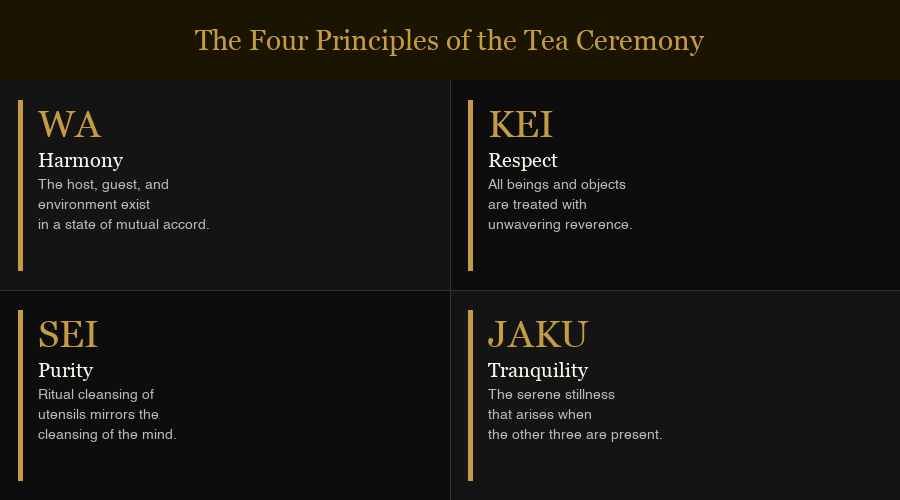
At the philosophical core of chado are four principles that Sen no Rikyu articulated as the spiritual foundation of the practice. These principles are not abstract ideals — they are meant to be enacted in each gesture, each moment of the ceremony.
Wa — Harmony
Wa describes the state of accord that should exist between host, guest, and the surrounding environment. Every element of the ceremony — the choice of tea room decoration, the seasonal flower in the alcove, the temperature of the water — is selected to create a unified whole. Host and guest exist in a shared field of mutual consideration. Nothing jars; nothing is superfluous.
Kei — Respect
Kei refers to the respect shown to all participants and all objects involved in the ceremony. Each utensil — however humble — is handled with the same care given to a precious artifact. Guests remove their outdoor footwear and bow as they enter the tea room. The host prepares each movement with the guest's comfort and experience foremost in mind. This mutual reverence transforms a simple gathering into an occasion of genuine dignity.
Sei — Purity
Sei encompasses both physical and mental purity. The visible ritual cleansing of every utensil at the beginning of the ceremony — wiping the tea scoop with a silk cloth, rinsing the bowl with hot water, cleansing the whisk — is a visible enactment of an internal process: clearing the mind of distraction, grievance, and preoccupation. Practitioners are encouraged to arrive at the tea room having already undergone a kind of internal preparation, leaving the concerns of daily life at the garden gate.
Jaku — Tranquility
Jaku, often translated as tranquility or serenity, is understood as the natural outcome when the first three principles are genuinely present. It is not imposed stillness but the organic quietude that arises when harmony, respect, and purity are fully embodied. Rikyu described it as the deepest quality of tea — a serene presence that both host and guest cultivate together, moment by moment.
Ceremonial Matcha: The Heart of Chado
The tea at the center of chado is matcha — a finely powdered form of shade-grown green tea. Not all matcha is the same, however, and understanding the distinction between ceremonial-grade and culinary-grade matcha is fundamental to appreciating what the tea ceremony involves.
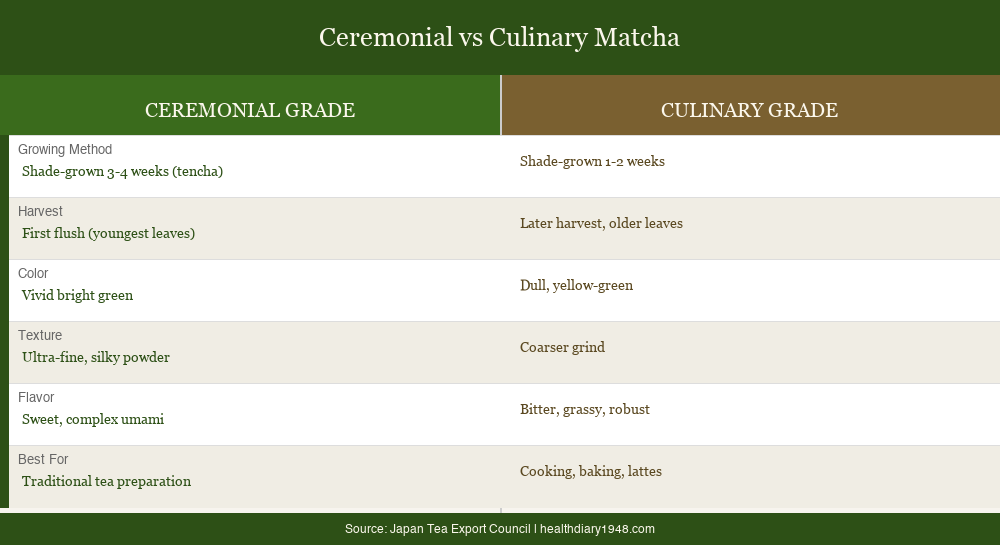
Ceremonial-grade matcha is produced from tencha leaves — the youngest, most tender spring leaves, harvested in the first flush of the season (typically April to May). For three to four weeks before harvest, the tea plants are covered with shade cloth or reed screens, blocking 70–90% of direct sunlight. This shading process triggers the plants to produce elevated levels of chlorophyll (resulting in the vivid, almost luminous green color) and amino acids, particularly L-theanine, which contribute to the characteristic sweet umami flavor profile [3].
After harvest, the leaves are steamed, dried, and carefully de-stemmed and de-veined to isolate only the leaf flesh. This refined product — tencha — is then slowly stone-ground into a powder of extraordinary fineness. A single granite stone mill produces only 30–40 grams of matcha per hour, a pace that preserves the delicate volatile compounds responsible for the tea's complex aroma and flavor.
The two most celebrated production regions in Japan are Uji (near Kyoto), which has cultivated ceremonial tea for over 800 years and remains the acknowledged gold standard for ceremonial matcha, and Nishio (in Aichi Prefecture), Japan's largest matcha-producing region, known for excellent quality at a more accessible price point. Both regions maintain rigorous traditions of shade cultivation and stone milling that distinguish their ceremonial-grade products from lower-grade alternatives.
What Are the Traditional Tea Ceremony Tools?

The utensils of chado are among the most thoughtfully designed objects in Japanese material culture. Each one is shaped by centuries of refinement and carries specific symbolic and practical significance.
- Chawan (tea bowl) — The central object of the ceremony, the chawan is held in both hands and drunk from directly. Ceremonial chawan are typically hand-thrown and deliberately irregular — a cracked glaze or asymmetrical rim is valued as an expression of wabi-sabi, the aesthetic appreciation of imperfection. Summer chawan tend to be shallow and wide, allowing the tea to cool; winter chawan are deeper and narrower to retain warmth.
- Chasen (bamboo whisk) — Perhaps the most technically demanding utensil to produce, the chasen is carved from a single piece of bamboo into up to 120 fine tines. Different chasen styles are used for thick tea (koicha) and thin tea (usucha). A chasen is typically soaked in warm water before use to soften the tines and prevent breakage.
- Chashaku (bamboo scoop) — A slender, gently curved scoop used to transfer matcha powder from its container to the chawan. Traditionally carved from a single piece of bamboo or ivory, the chashaku is handled with particular reverence. Master tea practitioners have been known to write poems on their chashaku before passing them to students.
- Chakin (tea cloth) — A small white linen cloth used to wipe the tea bowl dry after rinsing. The folding and placement of the chakin is a carefully choreographed element of the ceremony.
- Fukusa (silk cloth) — A square silk cloth in the host's color choice, used to ritually cleanse the tea container and tea scoop at the beginning of the ceremony. The folding of the fukusa is one of the first techniques a student learns and takes considerable time to master.
- Natsume (tea container) — A lacquered wooden container used to hold the matcha powder during the ceremony. Natsume come in many lacquer styles — plain black, gold-dusted, painted with seasonal motifs — and their selection is part of the host's overall aesthetic composition for the gathering.
How to Prepare Ceremonial Matcha: A Step-by-Step Guide
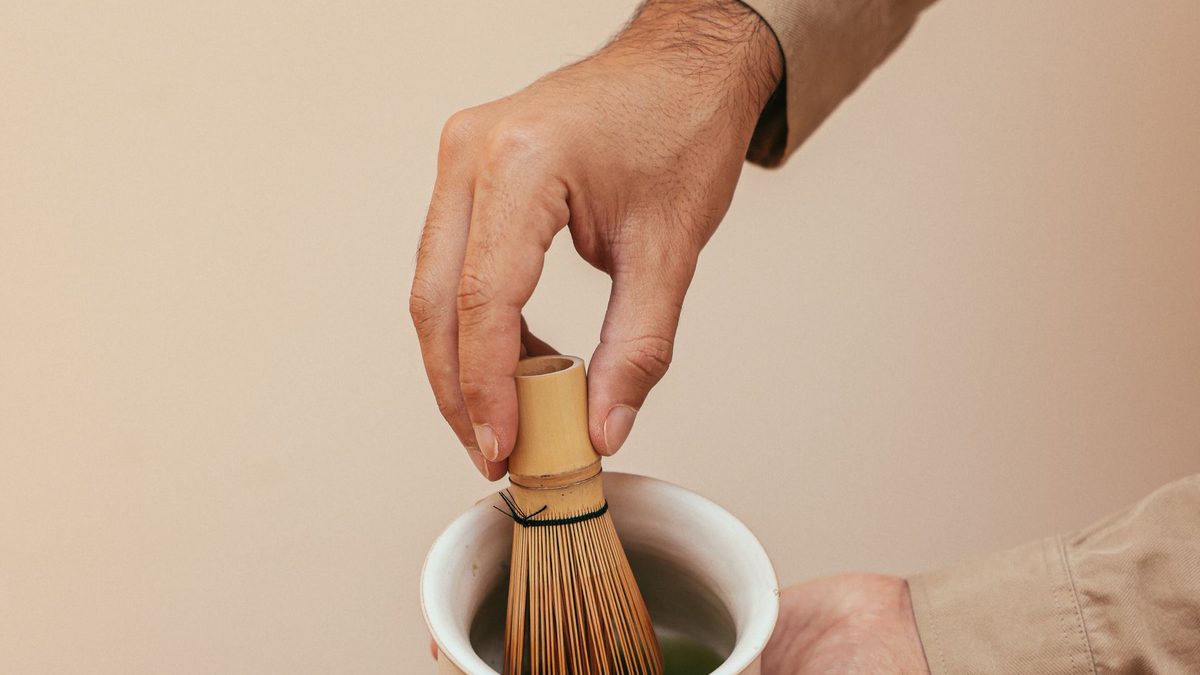
While a full formal tea ceremony requires years of training, the basic preparation of a bowl of ceremonial matcha can be approached at home with care and attention. The following is a simplified method that honors the spirit of the tradition.
- Sift the matcha — Measure approximately 2 grams (about 1.5 level chashaku scoops or 1 teaspoon) of ceremonial-grade matcha through a fine-mesh sieve into a clean, dry chawan. Sifting breaks up any clumps and ensures a smooth, lump-free result.
- Warm the bowl — Pour a small amount of hot water into the chawan, swirl it to warm the ceramic, and discard the water. Dry the bowl with a clean cloth. A warmed bowl helps maintain the temperature of the tea and softens any remaining matcha residue.
- Add water at the correct temperature — Pour approximately 70 ml of water heated to 70–80°C (158–176°F) into the bowl. Water that is too hot will scorch the delicate amino acids in the matcha, producing bitterness. Using a thermometer or allowing boiling water to cool for two to three minutes achieves the right temperature.
- Whisk in a W-motion — Hold the bowl steady with one hand and use the chasen to whisk rapidly in a zigzag or "W" motion (not circular) until the matcha is fully dissolved and a frothy foam of small, even bubbles covers the surface. This takes approximately 20–30 seconds. A proper froth indicates correct whisking technique and water temperature.
- Drink mindfully — The traditional method is to turn the bowl clockwise two quarter-turns before drinking, so that you drink from the side of the bowl rather than the "front." This is a gesture of respect for the craftsmanship of the bowl. Drink the matcha in three or four deliberate sips, appreciating the flavor, warmth, and texture.
Individual experiences vary considerably; what works well for one person may not suit another, and personal experimentation under the guidance of a knowledgeable practitioner is always recommended.
The Tea Room Aesthetic
The physical setting of the tea ceremony — the chashitsu (tea room) — is itself a work of considered design. Sen no Rikyu established a preference for small, rustic tea rooms of approximately two tatami mats in size, a radical departure from the grand banquet halls in which tea had previously been served. This intimate scale enforces equality: all guests must bow and crawl through the small entrance (nijiriguchi), requiring even samurai to set aside their swords and their status.
A defining feature of every formal tea room is the tokonoma — an alcove in which a hanging scroll (kakemono) and a single seasonal flower arrangement are displayed. The scroll might carry a Zen phrase or a poem by the host, and the flower is chosen to reflect the precise season and weather of the day. Nothing is permanent; the decoration changes with each gathering, making every ceremony a singular, unrepeatable occasion — a quality the Japanese aesthetic calls ichigo ichie, "one time, one meeting."
Guests approach the tea room through the roji — a garden path of stepping stones and moss designed to facilitate a gradual transition from the busy world outside. Walking the roji, guests are invited to leave behind distractions and to arrive at the tea room in a receptive state of mind. The garden itself — deliberately understated, often featuring stone lanterns and water basins — is an integral part of the experience.
Chado in Modern Japan and the World
Despite its ancient roots, chado remains a living practice in contemporary Japan. Tea ceremony classes are a standard component of cultural education in many Japanese schools, and private study under a licensed teacher remains a significant cultural pursuit, particularly among adults seeking depth in an era of constant distraction. The major schools — Urasenke and Omotesenke — maintain headquarters in Kyoto and certify teachers across Japan and internationally.
Tea ceremony tourism has grown substantially in recent decades, with visitors to Kyoto, Nara, and Tokyo able to participate in abbreviated ceremony experiences at historic tea houses, gardens, and dedicated cultural centers. These abbreviated ceremonies, while simplified, offer genuine exposure to the atmosphere and philosophy of chado.
Beyond tourism, chado has attracted serious interest from practitioners in North America, Europe, and Australia, where Urasenke branch schools offer structured programs of study. The universality of chado's four principles — harmony, respect, purity, and tranquility — has proven to be remarkably portable across cultural contexts. As a contemplative aesthetic practice that makes space for presence and careful attention, chado speaks directly to concerns that are deeply felt in contemporary life, regardless of cultural background.
The Japan Tea Export Council and regional tea associations continue to promote awareness of authentic Japanese ceremonial matcha internationally, distinguishing genuine shade-grown stone-ground products from lower-quality imitations that have proliferated with the global matcha trend.
Frequently Asked Questions
What is the difference between chado and chanoyu?
Both terms refer to the Japanese tea ceremony, but they carry slightly different nuances. Chanoyu ("hot water for tea") refers specifically to the ritual practice itself — the physical act of preparing and serving tea. Chado ("the way of tea") encompasses the broader philosophical and aesthetic path that the practice represents — a lifelong discipline of self-cultivation through tea. In practice, both terms are often used interchangeably, with chado more commonly used when emphasizing the philosophical dimension.
How long does a traditional tea ceremony take?
A full formal tea gathering (chaji) can last four to five hours and includes a light multi-course meal, a break in the garden, thick tea (koicha), and thin tea (usucha). Abbreviated ceremonies designed for guests or cultural visits typically last 45 to 90 minutes and focus on a single bowl of thin matcha. The length is not the point — in chado, each moment is considered equally worthy of full attention regardless of how long it lasts.
What does ceremonial matcha taste like?
High-quality ceremonial-grade matcha has a distinctive flavor profile that surprises many first-time drinkers: sweet, smooth, and deeply savory — what the Japanese describe as umami. There is a gentle vegetal quality and a pleasant lingering sweetness on the palate. Bitterness, while present, is mild and balanced in truly high-grade matcha. The elevated L-theanine content from shade-growing contributes significantly to the sweetness and the characteristic smooth mouthfeel that distinguishes ceremonial matcha from culinary-grade varieties.
Can I participate in a tea ceremony without any training?
Absolutely. Many tea houses, cultural centers, and temples in Japan offer simplified ceremony experiences designed specifically for visitors with no prior knowledge. A host or guide will explain the basic etiquette — how to accept the bowl, how to turn it before drinking, what to say — and the atmosphere is welcoming rather than intimidating. For those wishing to go deeper, structured classes through Urasenke, Omotesenke, or local tea societies are available in many cities outside Japan as well.
Is there a difference between the Urasenke and Omotesenke styles?
Yes, though both schools descend from Sen no Rikyu and share the same foundational principles. The most visible difference is in the matcha preparation: Urasenke practitioners whisk the tea to a thick, creamy froth, while Omotesenke produces less foam, resulting in a smoother, less frothy surface. Movement vocabulary, the handling of utensils, and the choreography of the ceremony also differ in subtle but distinct ways. Neither style is "more correct" — they represent two refinements of the same shared tradition.
Do I need expensive equipment to practice matcha preparation at home?
A basic home matcha practice requires only a chawan (tea bowl), a chasen (bamboo whisk), a chashaku (bamboo scoop), and quality ceremonial-grade matcha powder. These four items can be acquired at relatively modest cost from Japanese kitchenware suppliers or specialty tea shops. A small fine-mesh sifter and a simple thermometer round out the essentials. The quality of the matcha itself has the greatest impact on the experience — sourcing first-flush, shade-grown matcha from reputable Japanese producers is the single most important investment a beginning practitioner can make.
About This Article
Written by: Health Diary Editorial Team — researchers and writers specializing in Asian wellness traditions, cultural practices, and tea culture.
Editorial review: This article has been reviewed by the Health Diary editorial team for clarity, structure, and adherence to our sourcing standards. Key historical and cultural claims were cross-checked against the official Urasenke Konnichian documentation, Oxford Reference, and peer-reviewed sources including PMC/NCBI and Cureus. It is not a clinical review and should not replace consultation with a licensed healthcare practitioner.
Reviewed on: June 16, 2026.
Editorial process: We cite peer-reviewed and authoritative cultural sources where possible. When a specialist cultural reviewer is added to this article, attribution will appear here with verifiable credentials.
References
- Oxford Reference. Kissa yojoki. Oxford University Press. https://www.oxfordreference.com/display/10.1093/acref/9780190681159.001.0001/acref-9780190681159-e-2209
- Urasenke Konnichian (Official English Website). An Introduction to Chado. https://www.urasenke.or.jp/texte/about/chado/
- Kochman J, Jakubczyk K, Antoniewicz J, Mruk H, Janda K. Health Benefits and Chemical Composition of Matcha Green Tea: A Review. Molecules. 2020 Dec 27;26(1):85. PMC: https://pmc.ncbi.nlm.nih.gov/articles/PMC7796401/
- Nishikori et al. A Simplified Tea Ceremony Experience for Palliative Care Staff: A Feasibility and Acceptability Study. Cureus, 2026. https://pmc.ncbi.nlm.nih.gov/articles/PMC12872583/
- Memorial Sloan Kettering Cancer Center — Integrative Medicine. Green Tea: Herb-Drug Interactions and Safety. https://www.mskcc.org/cancer-care/integrative-medicine/herbs/green-tea
- J-STAGE / Tea Research Journal (茶業研究報告). Sensory Evaluation of Matcha. 2022;134:31–38. https://www.jstage.jst.go.jp/article/cha/2022/134/2022_31/_pdf
- Path of Cha. Four Principles of Japanese Tea Practice (Chado). https://pathofcha.com/blogs/all-about-tea/four-principles-of-japanese-tea-practice-chado
- Mizuba Tea Co. Ceremonial Grade Matcha vs. Culinary Grade Matcha. https://mizubatea.com/blogs/news-1/what-is-the-difference-between-ceremonial-and-culinary-matcha
This article explores the Japanese tea ceremony as a cultural and aesthetic tradition. It is for educational purposes only and does not constitute health or medical advice.