Kampo: Japan's Traditional Herbal Wellness System and Its Daily Practices
Explore Kampo — Japan's 1,500-year-old herbal wellness tradition, its core principles (ki/ketsu/sui), key herbs used in daily life, yakuzen food therapy, and how Kampo has shaped Japanese wellness culture.
Medical Disclaimer: This content is for educational and informational purposes only and is not medical advice. The information presented is not intended to diagnose, treat, cure, or prevent any disease. Always consult a licensed healthcare practitioner before starting any new herbal practice or supplement. Statements regarding traditional herbal use have not been evaluated by the FDA.
Affiliate Disclosure: This article contains affiliate links. We may earn a commission if you purchase through these links, at no additional cost to you. We only recommend products we believe align with our editorial standards.
Introduction: A Living Herbal Tradition
Walk into almost any Japanese pharmacy today and you will find, alongside modern pharmaceutical products, rows of standardized herbal extract packets bearing classical names like Kakkonto and Hochuekkito. These are Kampo preparations — and they are not relics of a forgotten past. They are covered by Japan's national health insurance and prescribed by physicians who also hold conventional medical degrees.
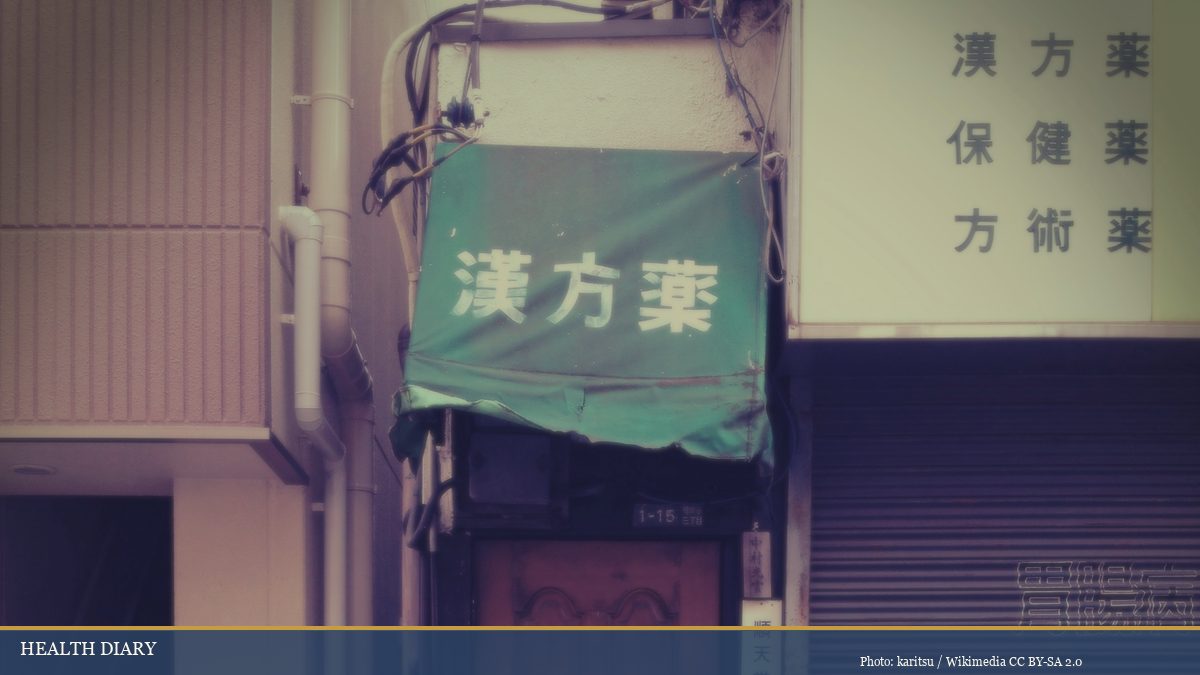
Kampo (漢方) is Japan's adaptation of classical Chinese herbal learning, transformed over 1,500 years into a distinctly Japanese wellness tradition. The name literally means "Han method" — a reference to the Chinese Han dynasty from which its foundational texts originated. Yet what Japan did with those texts, adapting them to local herbs, local climate, and the Japanese concept of individual constitution (taishitsu), produced something genuinely its own. This article explores Kampo as a cultural wellness heritage — its history, its core ideas, the everyday herbs it relies on, and how its philosophy quietly shapes Japanese food culture to this day.
History of Kampo in Japan
Classical Chinese herbal learning first reached Japan during the Asuka period, around 552 CE, traveling through the Korean peninsula. Early adoption followed Chinese texts closely. For several centuries, Japanese practitioners essentially studied and applied Chinese classical works without significant modification.
The decisive shift toward a distinctly Japanese approach came in the 16th century through two pivotal figures. Tashiro Sanki (1465–1537) spent twelve years studying in China, returning with the Jin-Yuan school's most advanced teachings. His most influential student, Manase Dosan (1507–1594), established a medical academy in Kyoto called the Keidiki-in and attracted thousands of disciples. Together they founded the Goseihoha (Later Developments) school, which began adapting Chinese theoretical frameworks to Japanese conditions and the constitutions of Japanese patients.
During the Edo period (1603–1868), a counter-movement emerged: the Kohoha (Ancient Methods school) argued that practitioners had drifted too far from the foundational classical texts, especially the Shang Han Lun (傷寒論), the influential 3rd-century CE treatise compiled by Zhang Zhongjing that remains a cornerstone reference in Kampo practice today. This tension between theoretical elaboration and classical fidelity shaped Kampo into a tradition that prizes both textual grounding and practical observation.
The Meiji Restoration of 1868 brought a dramatic reversal. The new government adopted German-style biomedical science as the national standard and in 1895, Japan's national legislature rejected a petition to preserve official recognition for Kampo practitioners. For several decades, traditional herbal practice survived at the margins, kept alive by dedicated physicians who maintained it alongside conventional training.
Revival came gradually. In 1927, Kyushin Yumoto published Kokan Igaku, a landmark work that reframed Kampo for the modern era. The Japan Society for Oriental Wellness was founded in 1950. By 1976, the Japanese Ministry of Health had listed dozens of Kampo extract formulas under the national health insurance program — a milestone that marked Kampo's formal reintegration into Japanese healthcare [1].
What Makes Kampo Different from Its Chinese Roots?
Kampo and Traditional Chinese wellness practice (often abbreviated TCM) share a common ancestor — the same foundational classical texts, many of the same plant materials, and broad conceptual frameworks around energy, blood, and fluid. Yet they developed significant differences over the centuries.
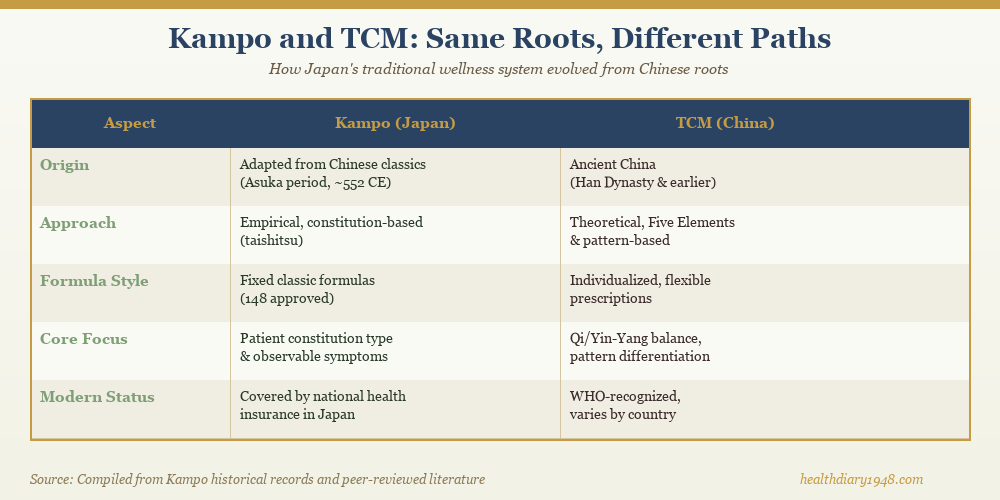
The most practically significant distinction is in formula philosophy. Kampo practitioners work primarily with fixed classical formulas — standardized combinations of herbs whose proportions were established in the classical texts and have been passed down essentially unchanged. Japan's national health insurance system currently covers 148 Kampo extract formulas, and research suggests that about 80 of these account for the large majority of everyday prescriptions [2]. A Kampo practitioner identifies which formula fits the patient rather than compounding an entirely individualized mixture from scratch.
Chinese practice historically allowed and encouraged more flexible, individualized compounding based on a patient's specific pattern diagnosis. This reflects a broader philosophical difference: TCM tends toward elaborate theoretical frameworks involving the Five Elements and Eight Principles as explicit diagnostic tools. Kampo is, as one peer-reviewed analysis described it, "less rigorous about its philosophical or ideological basis" — more empirical, more focused on observable signs and on the classical clinical experience encoded in the formulas themselves [3].
A distinctive Kampo diagnostic practice is fukushin — abdominal palpation. A Kampo practitioner gently examines specific areas of the abdomen for tension, resistance, and tenderness. This form of physical assessment has no direct equivalent in mainstream TCM practice and reflects the Japanese tradition's emphasis on direct, observable constitutional signs.
Core Principles: Ki, Ketsu, and Sui
At the heart of Kampo's view of wellness are three fundamental substances whose balance and flow are seen as essential to vitality:
- Ki (気) — often translated as life energy or vital force, equivalent to the Chinese concept of Qi. In Kampo understanding, ki encompasses both physical energy and mental-emotional vitality. When ki flows freely, a person feels energized and clear-minded; when it stagnates or becomes deficient, various imbalances may arise.
- Ketsu (血) — roughly equivalent to blood, but understood in Kampo as more than the circulatory fluid. Ketsu nourishes the tissues, supports mental clarity, and is considered especially important for women's wellness across the life cycle.
- Sui (水) — the body's fluid systems, encompassing moisture, lymph, and the watery aspect of physiology. When sui accumulates abnormally or becomes insufficient, practitioners see this as contributing to various imbalances.
These three substances interact continuously. A Kampo practitioner assesses whether each is sufficient or excessive, and whether each flows appropriately. Common patterns include ki-kyo (deficient ki), o-ketsu (stagnant blood), and sui-tai (fluid accumulation) [3].
Beyond ki, ketsu, and sui, Kampo also considers the patient's overall taishitsu (体質) — their constitutional type. Some people tend toward warmth and activity; others toward coolness and reserve. Some have naturally robust constitutions; others are more delicate. The same classical formula may be chosen for different individuals because it fits their constitution, not just their immediate complaint. This constitutional orientation gives Kampo a strongly individualized character despite its use of fixed formulas.
Individual responses vary considerably; what resonates with one person's constitution may not suit another, and any exploration of Kampo principles is best guided by a qualified practitioner.
Key Herbs Found in Everyday Japanese Life
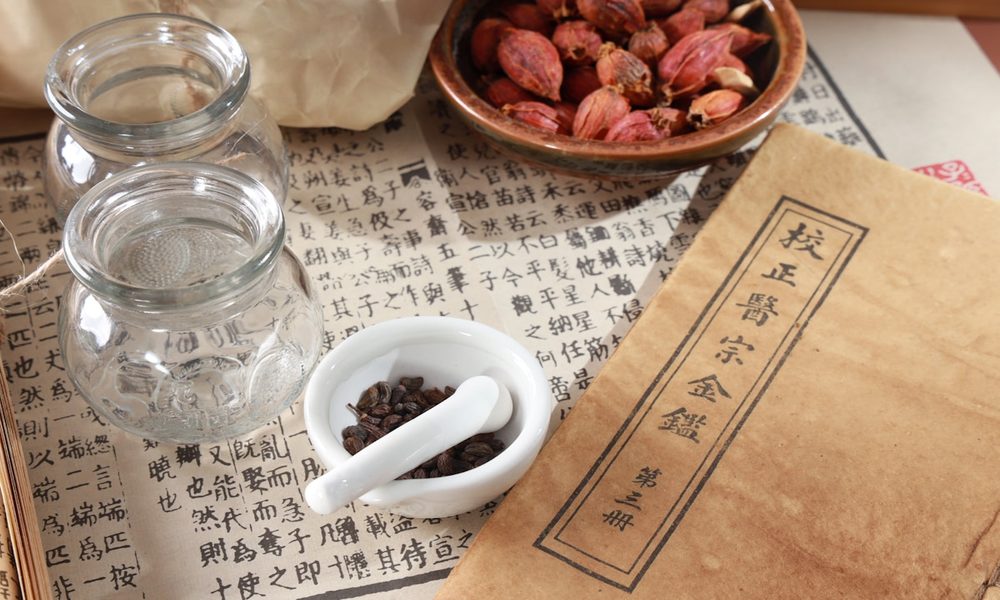
What distinguishes Kampo's cultural footprint is that its core herbs are not exotic rarities locked in specialty pharmacies. Many appear regularly in Japanese kitchens, convenience stores, and household wellness rituals — often without anyone consciously thinking of them as "Kampo herbs" at all.
Kuzu (葛根 / Pueraria montana) is perhaps the most evocative example. The starchy root of the kudzu vine, harvested in winter from the mountains of Yoshino in Nara Prefecture, provides the basis for kuzuyu — a soothing, gelatinous warm drink traditionally enjoyed when feeling chilled or at the onset of cold symptoms. The finest quality, labeled honkuzu, involves a labor-intensive extraction process that has barely changed in centuries. Kuzu starch also thickens soups, stews, and wagashi sweets. In Kampo tradition, it is considered warming and is said to be beneficial for circulation. The classical formula Kakkonto is derived from kuzu root as its primary ingredient [4].
Shiso (紫蘇 / Perilla frutescens) — both the green (aojiso) and purple (akajiso) varieties — is a culinary staple with deep roots in traditional Japanese and Chinese herbal lore. Its warm, slightly peppery character makes it a common summer condiment (with sashimi, in umeboshi, in summer drinks), and it is also used in traditional preparations aimed at supporting digestion and warming the stomach.
Ginger (生姜 / Shoga) appears in more than half of all classical Kampo formulas as a supporting ingredient. In daily Japanese cooking it shows up in pickled form (gari, with sushi), grated fresh alongside fish dishes, and as the base of warming drinks in winter. It is regarded in Kampo tradition as a quintessentially warming herb that promotes circulation and supports the digestive system.
Cinnamon (桂皮 / Keihi) is another classical Kampo ingredient that doubles as an everyday spice. In traditional Japanese confectionery and winter drinks, its warming sweetness mirrors its classical role: cinnamon is considered a warming herb that may help promote circulation to the extremities.
Jujube (大棗 / Taiso), the dried red date, appears in many classical formulas as a harmonizing and nourishing ingredient. In Japan it is also enjoyed as a simple dried snack or infused in warm drinks, particularly in autumn.
Licorice root (甘草 / Kanzoh) is the most ubiquitous Kampo herb of all — it appears as a harmonizing ingredient in the majority of classical formulas. Its gentle sweetness appears in certain Japanese confections and herbal teas, and its role in traditional practice is as a balancing, moderating agent that helps different herbs work together smoothly.
Individual responses to these herbs vary considerably; those with existing health conditions or taking medications should consult a qualified healthcare provider before incorporating herbal preparations into their routines.
What Is Yakuzen? Kampo's Influence on Japanese Food Therapy
If Kampo represents the formal, practitioner-administered side of Japan's herbal wellness tradition, then yakuzen (薬膳) represents its most intimate expression: the idea that every meal is an opportunity to support wellness through thoughtful ingredient choices.
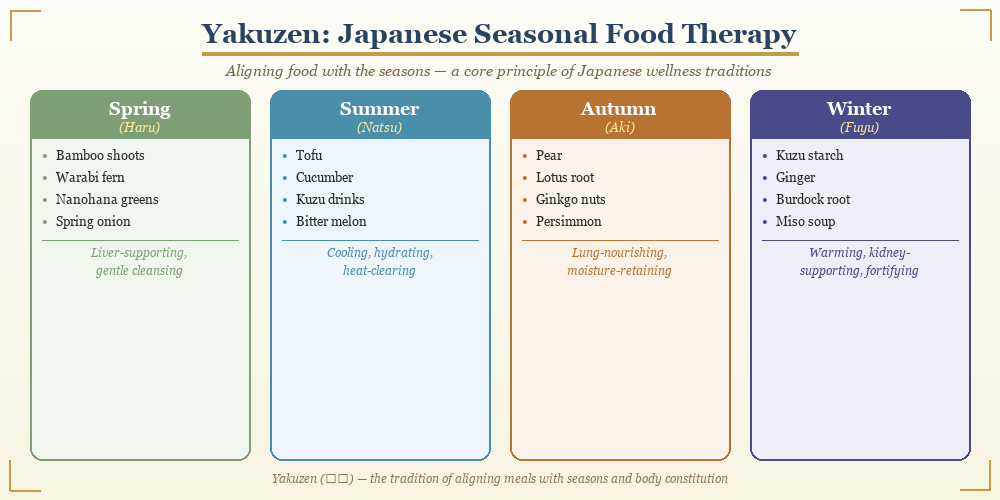
Yakuzen — sometimes translated as "medicated diet" or "food therapy" — adapts the classical Chinese concept of food as wellness to the Japanese kitchen. The foundational principle is ishoku dogen (医食同源): "food and wellness share the same origin." According to this view, the boundary between nourishing food and therapeutic practice is not a sharp line but a continuum, and daily cooking choices can, over time, support or undermine one's constitutional balance.
Research published on J-STAGE, Japan's main academic repository, has examined how yakuzen organizing principles classify over 5,000 food ingredients by their thermal properties (warming, neutral, cooling) and their five flavors, showing how these classifications map systematically to seasonal and constitutional needs [5].
In practice, yakuzen thinking shapes seasonal Japanese cooking in ways both subtle and deliberate:
- Spring: Emphasis on lightly bitter, liver-supporting greens — bamboo shoots (takenoko), warabi fern fronds, nanohana (rapeseed blossoms) — associated with clearing away winter's accumulations and supporting the body's springtime transition.
- Summer: Cooling ingredients to counterbalance heat — silken tofu, cucumber, cold-brewed mugicha (barley tea), bitter melon, and cool kuzuyu drinks. These are considered foods that help the body manage summer heat without depleting it.
- Autumn: Moistening, lung-nourishing foods — Japanese pear (nashi), lotus root (renkon), ginkgo nuts, and persimmon — chosen to help the body adapt to the dry air of autumn and prepare for winter.
- Winter: Warming, fortifying ingredients — kuzu starch drinks, miso soup with root vegetables, ginger, burdock root (gobo), and fermented foods — to sustain internal warmth through the cold season.
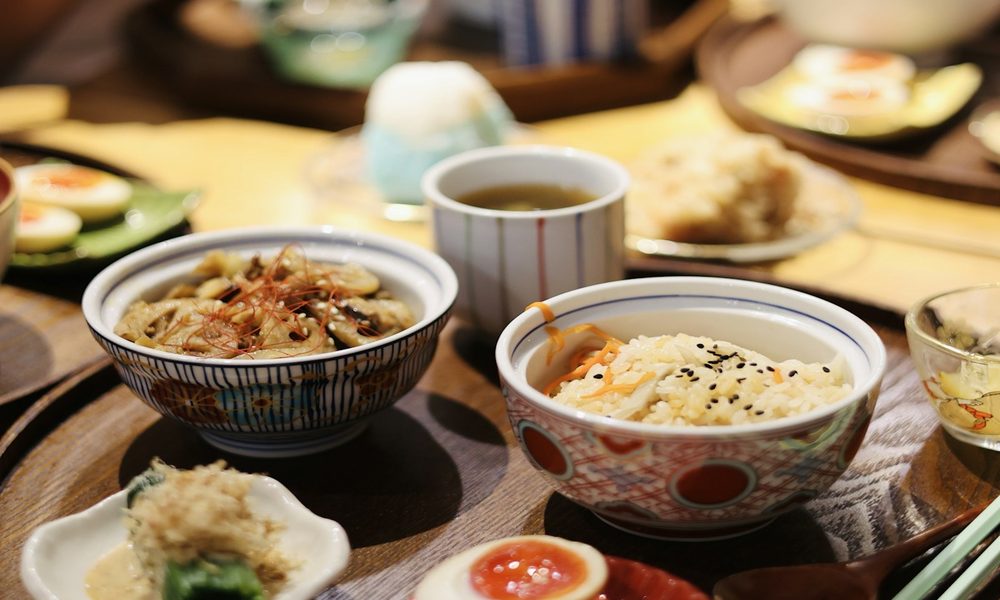
Yakuzen cooking is practiced both at home and in a growing number of specialized restaurants — particularly in Kyoto, where traditional food culture runs deepest. Some kaiseki ryori (traditional multi-course Japanese cuisine) restaurants frame their seasonal menus explicitly in yakuzen terms, though the underlying seasonal alignment has always been present in Japanese high cuisine.
A 2023 study in the Journal of Cookery Science Japan examined yakuzen approaches to seasonal adaptation, further documenting how this food tradition encodes accumulated practical knowledge about seasonal wellness [6].
Individual constitutions vary considerably; what feels warming and nourishing in one person may not suit another's constitution, and seasonal food choices are best explored gradually and with attention to your own responses.
Kampo in Modern Japan
Perhaps the most remarkable aspect of Kampo today is the degree to which it has been normalized within Japan's modern healthcare system — not as an alternative to conventional care, but as a complement routinely integrated within it.
A large-scale survey of Japanese physicians found that 83.5% currently prescribe Kampo formulas in their practice, with the most common reason (cited by 56.4% of respondents) being that conventional treatment alone was not sufficient for certain patients. The same study found that 79.8% of prescribing physicians combine Kampo with standard biomedical treatment rather than using it as a standalone approach [7]. All 80 of Japan's medical schools now include Kampo education in their curricula.
Institutional support for this integration comes from multiple directions. The Japan Society for Oriental Wellness (JSOM), founded in 1950, coordinates clinical research and professional standards. Tsumura & Co., Japan's largest producer of standardized Kampo extracts, manufactures 128 of the 148 nationally insured formulas in modern pharmaceutical-grade extract form — granules or tablets that can be precisely dosed and have passed rigorous quality standards.
Scientific validation efforts continue to grow. As of 2010, there were already 345 randomized controlled trials examining Kampo formulas, and research into the pharmacological mechanisms of classical herbs is appearing in peer-reviewed journals including those indexed by PubMed [8]. Researchers acknowledge that high-quality clinical evidence remains uneven across the 148 formulas, and the field continues to work toward stronger evidence standards. Meanwhile, Kampo's empirical track record — documented over many centuries of clinical practice — is itself taken seriously as a form of accumulated observational evidence.
This coexistence of ancient tradition and modern scientific inquiry is perhaps quintessentially Japanese: respectful of the past, pragmatic about the present, and quietly confident that the two can inform each other.
Frequently Asked Questions
What does "Kampo" mean?
Kampo (漢方) literally means "Han method" — a reference to the Chinese Han dynasty from which classical herbal texts and knowledge originally derived. Over 1,500 years of Japanese practice, this framework was adapted into a distinctly Japanese wellness tradition with its own emphasis on constitution (taishitsu), fixed classical formulas, and specific diagnostic approaches like abdominal palpation (fukushin).
Is Kampo the same as Traditional Chinese wellness practice?
They share the same classical roots and many of the same herbs, but they are distinct traditions. Kampo uses fixed classical formulas rather than individualized compounding, is more empirically than theoretically oriented, and has been shaped by specifically Japanese clinical experience over many centuries. The diagnostic emphasis on constitution type and the use of abdominal palpation are distinctively Kampo features not generally found in contemporary Chinese practice.
Do Japanese doctors actually prescribe Kampo?
Yes, and quite commonly. Surveys suggest more than 80% of Japanese physicians use Kampo formulas in their practice, and 148 Kampo extract formulas are covered by Japan's national health insurance system. Most prescribing physicians combine Kampo with conventional biomedical treatment rather than using it exclusively. All Japanese medical schools now include Kampo education in their curriculum.
What is the difference between Kampo and yakuzen?
Kampo refers to the broader traditional wellness system, including its classical formulas, diagnostic principles, and practitioner-administered practices. Yakuzen (薬膳) is specifically the food therapy tradition that applies Kampo and classical Chinese principles to everyday cooking — choosing seasonal ingredients based on their thermal properties and their relationship to constitutional type. Yakuzen is something anyone can practice at home through mindful seasonal cooking.
What are the most commonly used herbs in everyday Japanese Kampo tradition?
Many Kampo herbs are found in ordinary Japanese kitchens. Kuzu (kudzu root), ginger, cinnamon, shiso (perilla), jujube (red date), and licorice root are among the most common — appearing in traditional drinks like kuzuyu, in everyday cooking, and as ingredients in many classical formulas. Their culinary familiarity is part of what has kept Kampo close to everyday Japanese life.
Can I practice Kampo principles at home without seeing a practitioner?
The cultural and food-related aspects of Kampo — seasonal eating, warming winter drinks like kuzuyu, incorporating ginger and shiso into cooking, and paying attention to how seasonal foods affect your sense of wellbeing — are accessible to anyone interested in Japanese wellness traditions. For more specific concerns, consultation with a qualified Kampo practitioner or licensed healthcare provider is always advisable. Individual responses vary considerably, and professional guidance helps ensure approaches are appropriate for your particular constitution and health situation.
A Closing Note
Kampo's 1,500-year journey — from Chinese texts through Korean scholars to Japanese physicians, through the challenges of the Meiji era, and into the clinics and insurance systems of contemporary Japan — is the story of a living tradition that proved adaptable enough to survive modernization without losing its essential character. It survived not by becoming unchanging but by remaining useful: to the 16th-century physician adapting formulas to a Japanese mountain climate, to the 20th-century doctor who found that certain patients responded to classical preparations when other options had been exhausted, and to the home cook who stirs kuzu powder into warm water on a winter evening, following a habit older than memory.
What makes Kampo particularly interesting as a cultural wellness tradition is that it never fully separated from daily life. Its herbs are kitchen herbs. Its seasonal principles are cooking principles. Its view of the body as something to be gently tended through food, warmth, and attentiveness to seasonal change is a view that remains recognizable in Japanese food culture at every level, from casual home cooking to high kaiseki cuisine.
This article explores Kampo as a Japanese cultural wellness tradition. It does not constitute medical advice. Consult a qualified healthcare provider for health concerns.
About This Article
Written by: Health Diary Editorial Team — researchers and writers specializing in traditional Asian wellness traditions and cultural food practices.
Editorial review: This article has been reviewed by the Health Diary editorial team for clarity, structure, and adherence to our sourcing standards. Key claims were cross-checked against NCCIH, NIH PubMed, J-STAGE, and the JSOM (Japan Society for Oriental Wellness) where applicable. It is not a clinical review and should not replace consultation with a licensed healthcare practitioner.
Reviewed on: June 16, 2026.
Editorial process: We cite peer-reviewed and government sources where possible. When a clinical reviewer is added to this article, attribution will appear here with verifiable credentials.
References
- Tsumura & Co. (2024). History of Kampo. https://www.tsumura.co.jp/english/kampo/history/
- Nishimura K, et al. (2014). Prescription of Kampo Drugs in the Japanese Health Care Insurance Program. Evid Based Complement Alternat Med. PMC3914391
- Yakubo S, et al. (2014). Evidence-based Reconstruction of Kampo: The Concept of Sho. Evid Based Complement Alternat Med. PMC516455
- Nippon.com (2022). Kuzu: An Ancient Root Starch, a Modern Focus on Health. https://www.nippon.com/en/japan-topics/c15314/
- Aoshima H, et al. (2014). Development of Ingredient Selection Tool for Yakuzen Food Education. Journal of the Asian Society for Computer and Information Science (J-STAGE). J-STAGE
- Journal of Cookery Science Japan (2023). Vol. 56 No. 4. J-STAGE PDF
- Ito T, et al. (2012). Usage and Attitudes of Physicians in Japan Concerning Traditional Japanese Herbal (Kampo) Wellness: A Representative Survey. Evid Based Complement Alternat Med. PMC3273038
- Motoo Y, et al. (2011). Traditional Japanese wellness system, Kampo: Its history and current status. Chin J Integr Med. PubMed 21390572