Korean Healthy Aging Traditions: Fermented Foods, Ginseng, and Longevity Wisdom
Explore Korea's traditional approach to healthy aging — from the probiotic power of kimchi and doenjang to Korean Red Ginseng vitality traditions and seasonal wellness practices.
Medical Disclaimer: This content is for educational and informational purposes only and is not medical advice. The information presented is not intended to diagnose, treat, cure, or prevent any disease. Always consult a licensed healthcare practitioner before starting any new herbal practice or supplement. Statements regarding traditional herbal use have not been evaluated by the FDA.
Affiliate Disclosure: This article contains affiliate links. We may earn a commission if you purchase through these links, at no additional cost to you. We only recommend products we believe align with our editorial standards.
Introduction: Korea's Deep Tradition of Healthy Aging
South Korea is home to one of the world's most rapidly aging populations — and also one of the world's most vibrant traditions of wellness-centered daily life. According to statistics from the Korean government, adults over 65 are projected to comprise more than 24% of the population by 2031, a shift that has brought renewed attention to age-old practices that Korean families have relied upon for centuries.
Long before modern nutrition science, Korean households embraced a set of food and lifestyle principles rooted in balance, fermentation, and seasonal awareness. These practices — passing from grandmother to grandchild through kimjang kimchi-making sessions, doenjang jjigae simmering on the stove, and ginseng prepared as a daily tonic — reflect a culture that has historically associated longevity with mindful, food-centered living. This article explores those traditions through the lens of both cultural heritage and contemporary wellness research.
Kimchi: Korea's Fermented Longevity Food
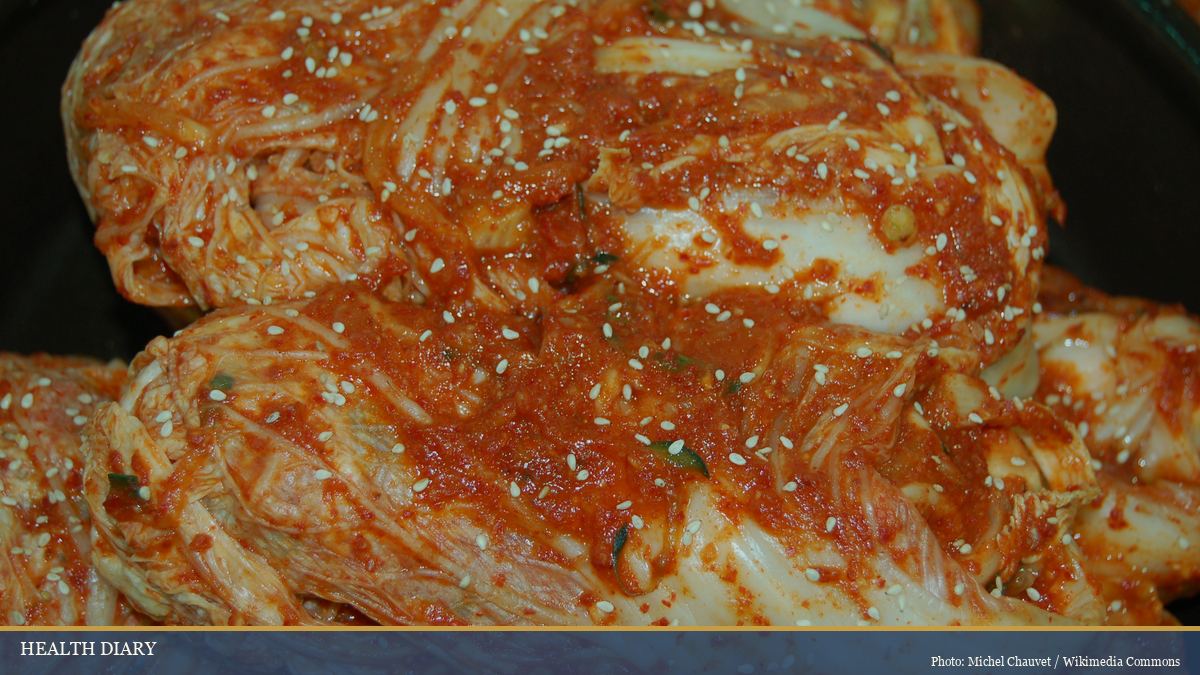
No food better embodies Korean wellness culture than kimchi. For more than 1,500 years, Koreans have fermented vegetables — primarily napa cabbage (baechu), radish (kkakdugi), and cucumber — with combinations of gochugaru (red pepper flakes), garlic, ginger, and salted seafood. The result is a complex, tangy, spicy food that has been a cornerstone of every Korean meal across all generations.
The fermentation process is central to kimchi's nutritional profile. During fermentation, lactic acid bacteria — particularly Lactobacillus plantarum, Leuconostoc mesenteroides, and, uniquely to kimchi, Lactococcus kimchii — proliferate and produce organic acids, enzymes, and bioactive compounds. Research published in PMC (2024) found that Lactococcus kimchii was associated with significantly extended lifespan and improved locomotion in Caenorhabditis elegans, a widely used model organism in aging research, with the mechanism linked to the insulin/IGF-1 signaling pathway — one of the most conserved longevity pathways across species.
Earlier foundational research, published in the Journal of Food Science and Biotechnology (Springer, 2011), evaluated kimchi's anti-aging activity through a stress-induced premature senescence model of human fibroblasts. Optimally ripened kimchi attenuated cellular oxidative stress, increased cell viability, and was associated with extended lifespan in young-, middle-, and old-aged cell models. These findings contributed to growing scientific interest in kimchi as a fermented food with potential anti-aging properties.
A comprehensive review published in PMC (2016) catalogued kimchi's broader wellness associations: antioxidant, anti-inflammatory, and immune-modulating activity, along with positive effects on metabolic parameters including fasting glucose and triglyceride levels. Fermented kimchi showed more pronounced benefits than fresh kimchi for several markers.
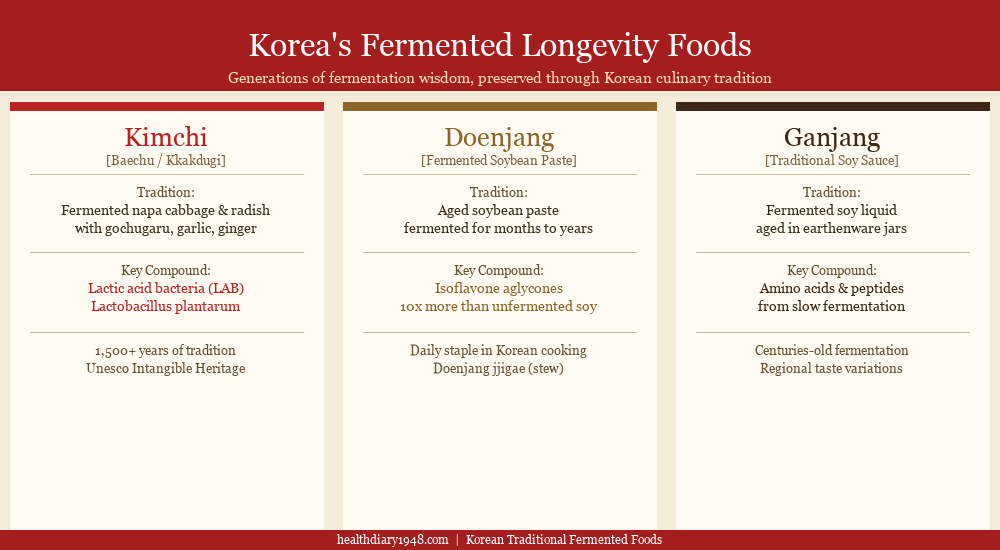
The kimjang tradition — the communal autumn activity of preparing large quantities of kimchi to last through the winter — was inscribed on UNESCO's Intangible Cultural Heritage list in 2013. Kimjang is more than a food preservation technique; it is an intergenerational knowledge transfer and community bonding ritual. Elders pass kimchi-making skills to younger generations, and families often prepare special softer-textured kimchi varieties for elderly members who may have difficulty with firmer textures — a small but meaningful gesture of filial respect embedded in culinary culture.
The traditional Korean philosophy of yak sik dong won — "food and wellness share the same origin" — is nowhere more evident than in how kimchi has been viewed: not merely as a side dish, but as a daily practice of nourishing the body through fermentation. Individual experiences with fermented foods vary considerably; digestive responses and tolerance differ from person to person.
Doenjang: Fermented Soybean Paste and Healthy Aging
If kimchi is Korea's most internationally recognized fermented food, doenjang is perhaps its most quietly powerful. Made from fermented soybeans aged in traditional earthenware onggi jars — sometimes for months, sometimes for years — doenjang has been a staple of Korean cooking for at least a millennium. A daily bowl of doenjang jjigae (fermented soybean paste stew) with tofu, vegetables, and sometimes dried anchovies has long been considered the backbone of a health-supporting Korean diet.
The fermentation process dramatically transforms doenjang's nutritional character. A study published in PMC (2019) found that doenjang contains approximately ten times more isoflavone aglycone content than steamed soybean (152.64 vs. 15.21 mg/kg). Isoflavone aglycones are a class of plant compounds that have been historically associated with several wellness markers, particularly in postmenopausal women, through their interaction with estrogen receptors. A randomized clinical trial conducted in South Korea (NutraIngredients, 2024) found that soybean paste fermented with traditional methods was associated with improvements in menopausal symptom scores over eight weeks.
Beyond isoflavones, doenjang is rich in a range of bioactive compounds produced through microbial fermentation: phenolic acids, soyasaponins, small peptides, gamma-aminobutyric acid (GABA), and vitamin E. A review in the Journal of Ethnic Foods (2024) highlighted doenjang's antioxidant, anti-inflammatory, and antimutagenic activity, attributing these properties largely to the diversity of fermentation microorganisms involved in traditional preparation.
Research examining doenjang's neurological properties has attracted particular interest in the context of aging. A study published in PMC (2019) found that mice fed high-fat diets supplemented with doenjang showed significantly less hippocampal neuronal loss, reduced neuroinflammatory markers (including TNF-alpha and IL-6), and lower levels of oxidative metabolites compared to high-fat diet controls. The authors noted that doenjang's effects appeared to operate partly through upregulation of endogenous antioxidant signaling pathways.
In Korean cultural practice, doenjang is traditionally prepared at home using meju (fermented soybean blocks) dried over winter, then placed in clay pots in spring. The quality of doenjang is often judged by its fermentation age — older doenjang is prized for its deeper flavour and greater concentration of bioactive compounds. Many Korean families maintain jars of doenjang that have been fermenting for decades, passing the practice across generations as a form of edible heritage. Individual responses to fermented soy products vary and are influenced by digestive capacity and personal constitution.
Korean Red Ginseng for Healthy Aging
Korean Red Ginseng (Panax ginseng C.A. Meyer, processed as hong-sam) is perhaps the most globally recognized element of Korea's wellness tradition. Unlike white ginseng (simply dried), Korean Red Ginseng is produced by steaming and drying the root at specific temperatures — a process that creates a distinctive reddish color and significantly alters the root's ginsenoside profile, producing unique compounds such as Rg3, Rg5, and Rk1 that are largely absent in the raw root.
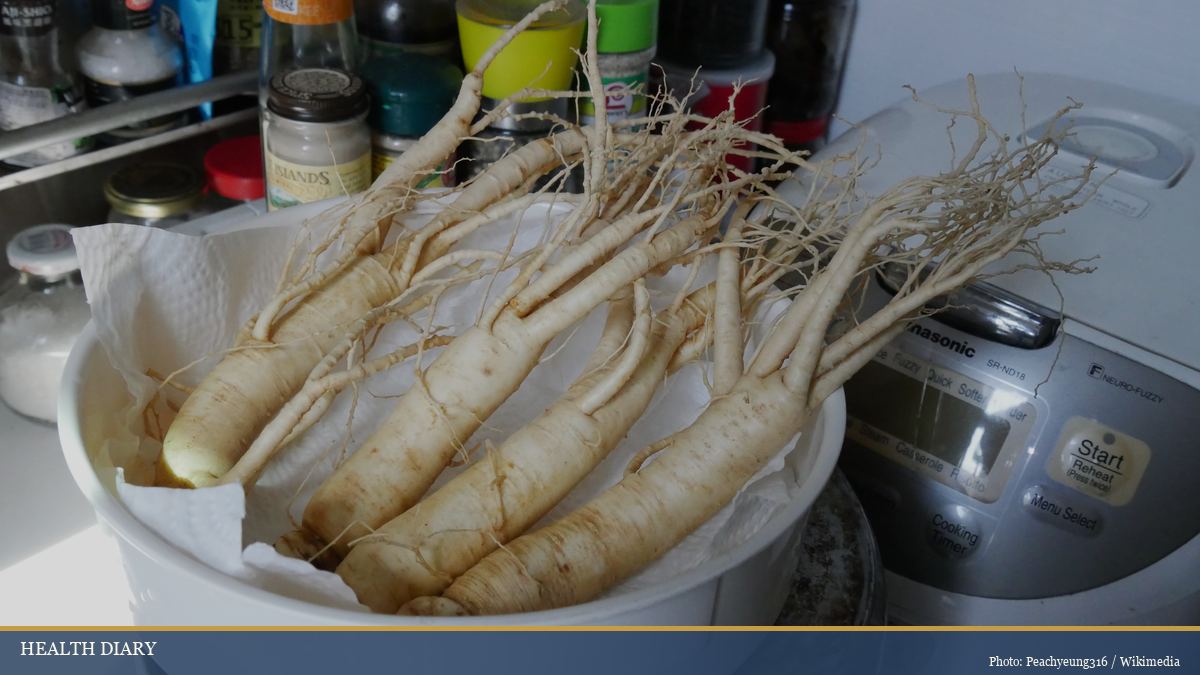
The six-year cultivation tradition is integral to Korean Red Ginseng quality. Korean ginseng regulations specify that roots should be cultivated for a minimum of six years before harvest, allowing time for the full development of ginsenosides — the principal active saponins including Rb1, Rc, Rb2, Rg1, and Rg3. This tradition dates back to the Joseon Dynasty (1392–1897), when Korean Red Ginseng was offered as royal tribute and traded internationally as one of Korea's most valued exports.
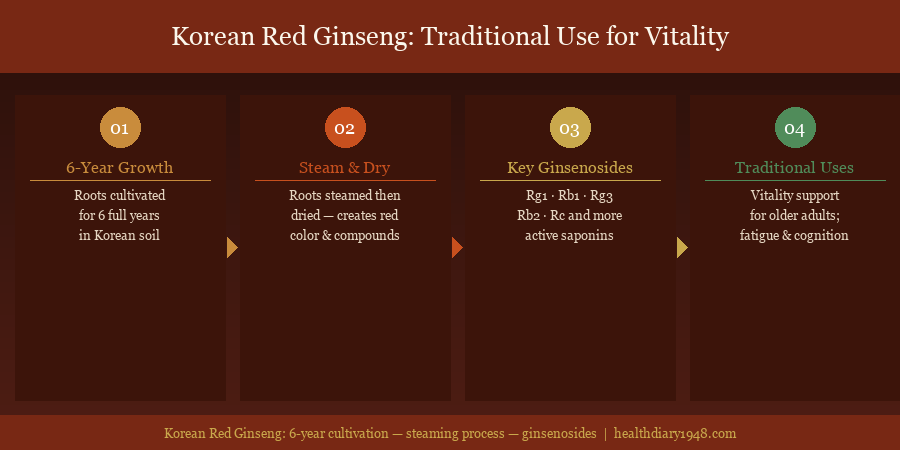
The National Center for Complementary and Integrative Health (NCCIH) acknowledges that Asian ginseng has been used in traditional wellness practices for over 2,000 years and notes that research suggests potential for cognitive support in middle-aged and older adults, along with some evidence for fatigue reduction. A 2023 review identified a small beneficial effect on general fatigue. The NCCIH emphasizes that most clinical trials have been limited in size and duration, and recommends discussing ginseng use with a healthcare provider, particularly due to potential interactions with medications including blood thinners and diabetes drugs.
A randomized controlled trial published in PMC (2021) examined Korean Red Ginseng's effects on biological aging markers in 63 postmenopausal women aged 46–69. Participants receiving 2g of KRG daily for eight weeks showed significantly greater increases in mitochondrial DNA copy number — a marker of mitochondrial biogenesis and cellular vitality — compared to placebo (p=0.023). The KRG group also demonstrated improved total antioxidant status (p=0.011) and reduced fatigue severity scores (p=0.033). The authors noted these findings were consistent with KRG's traditionally recognized role in supporting vitality and resilience in older adults.
A population-based prospective cohort study involving 6,422 Korean elders (mean age 70.2 years), published in Alzheimer's Research and Therapy (2018, PMC), found that lifetime cumulative ginseng intake was associated with better cognitive outcomes in late life. A 2023 study in Frontiers in Aging Neuroscience further explored ginseng intake and Alzheimer's disease-specific cognition outcomes according to genetic risk status.
In Korean households, Korean Red Ginseng is traditionally consumed as a daily tonic — often as an extract or tea (hong-sam-cha), in health beverages, or as whole root slices prepared with honey. The practice of drinking ginseng preparations in the morning before activity is common among older Korean adults, framed within the cultural concept of maintaining energy and resilience throughout the day. As with all supplements, individual experiences vary considerably, and those with specific health conditions should consult a practitioner before regular use.
Traditional Korean Wellness View of Aging
TKM, codified most comprehensively in the Dongui Bogam ("Principles and Practice of Korean Healing Arts"), compiled by royal physician Heo Jun in 1613 and inscribed on UNESCO's Memory of the World Register in 2009, offers a systematic framework for understanding aging and vitality. While deeply rooted in shared East Asian wellness traditions, TKM developed distinctive theoretical approaches — most notably the Sasang constitutional classification system developed in the late 19th century, which tailors wellness recommendations to individual body types.
Central to TKM's understanding of aging is the concept of won-gi (original vitality or source energy) — the constitutional energy one is born with that gradually diminishes across a lifetime. TKM practitioners have historically focused on practices that conserve and restore won-gi, particularly in older adults. This framework parallels concepts found in related East Asian wellness traditions but emphasizes individualized constitutional assessment.
The five-organ balance model in TKM — encompassing the heart, liver, spleen, lung, and kidney systems — provides a framework for understanding how different aspects of aging manifest. The kidney system is particularly associated with aging vitality in TKM theory, with practices ranging from specific food choices to herbal formulations aimed at supporting kidney function as individuals enter later life stages.
Acupuncture and moxibustion (the burning of dried mugwort near acupuncture points) are traditional TKM practices commonly used for older adults in Korean wellness contexts. Research on their use in South Korea has found that they remain among the most commonly sought complementary wellness practices by elderly Koreans, particularly for musculoskeletal comfort and general wellbeing. A study published in PMC (2014) found that the elderly, women, and those with chronic conditions were the primary users of TKM services in South Korea.
A 2023–2024 multicenter cohort study — the KoMAC study (Korean Medicine for Aging Cohort), led by the Korea Institute of Oriental Medicine — is currently enrolling 1,000 participants aged 50–65 to systematically examine the relationship between TKM constitutional patterns and healthy aging outcomes, representing one of the most comprehensive research efforts linking TKM frameworks to contemporary aging science.
What Do Koreans Drink for Daily Wellness?
In Korean households, the daily rhythm of wellness is often marked by beverages rather than supplements. Boricha — roasted barley tea — has been prepared and consumed in Korean homes for centuries. Served hot in winter and cold in summer, boricha is typically brewed by roasting barley grains until golden and then simmering them in water. The resulting drink is nutty, slightly sweet, and naturally caffeine-free, making it suitable for all ages including children and elderly family members.
Boricha's place in Korean daily life is ubiquitous: it is served in restaurants in lieu of water, kept in refrigerators as a household default beverage, and offered to guests as a gesture of welcome. For older adults who may wish to reduce caffeine intake, boricha represents a culturally embedded alternative that keeps them connected to family meal traditions rather than requiring separate "health" preparations.
Omija tea (Schisandra chinensis) occupies a different role — a more intentional, seasonal beverage historically associated with vitality restoration. The name omija ("five flavor berry") reflects the fruit's remarkable sensory complexity: simultaneously sweet, sour, bitter, salty, and pungent. Research on schisandra lignans published in PMC (2021) identified dibenzocyclooctadiene lignans as the principal bioactive compounds, with documented antioxidant and adaptogen-like properties noted in traditional Korean wellness practice. Omija tea is traditionally prepared by soaking the dried berries in cold water overnight and is often served chilled in summer as an omija-hwachae (fruit punch).
Yuja-cha (citron tea) — made from the thick-skinned Korean citron fruit (Citrus junos) preserved in honey — is a traditional winter preparation associated with warmth and immune support during colder months. Elderly Koreans have historically consumed yuja-cha as a warming daily ritual during autumn and winter, with preparation and giving of homemade yuja-cha as a form of seasonal care within families.
Individual responses to herbal teas and drinks vary considerably. Those on medications — particularly blood thinners, diabetes medications, or immunosuppressants — should consult their healthcare provider regarding interactions with schisandra-based preparations.
How Do Koreans Incorporate Wellness Into Daily Life?
Beyond specific foods, Korea's tradition of healthy aging is embedded in daily habits and social structures that reinforce wellbeing throughout the lifespan. Several of these practices align remarkably well with contemporary gerontology's understanding of what supports healthy aging across cultures.
Early morning movement: In Korean parks and neighborhoods, early-morning exercise is a deeply embedded cultural habit among older adults. Activities range from brisk walking and group calisthenics to tai chi-like stretching sequences. Korean public parks are notably designed with outdoor fitness equipment oriented toward older users, and morning exercise participation among Korean seniors is among the highest in the world.
Seasonal eating (sasigeuljol): The four-seasons concept is central to traditional Korean food culture. Foods are selected, prepared, and emphasized according to the season — cooling watermelon and dongchimi (watery kimchi) in summer; warming doenjang jjigae and ginseng preparations in winter; fresh spring greens (namul) in spring. This seasonal attunement aligns with broader wellness principles of aligning diet with environmental rhythms.
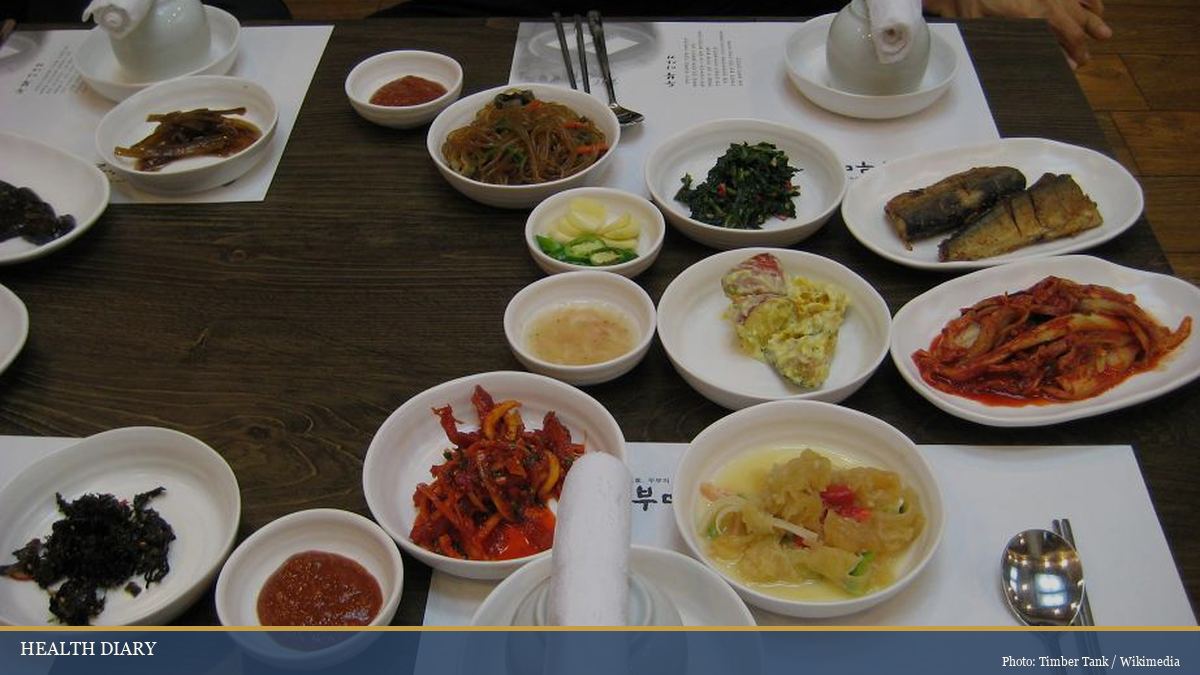
Communal banchan sharing: The Korean table tradition of shared banchan — multiple small side dishes placed at the center of the table for all to take from — promotes variety and moderation simultaneously. A typical Korean meal may include 3–8 or more banchan alongside rice and soup, naturally exposing diners to a diversity of fermented, pickled, fresh, and cooked vegetables. This structural diversity in the Korean diet has attracted attention from nutrition researchers interested in how meal architecture influences nutrient variety.
Filial piety and social connection: Confucian values of respect for elders remain deeply embedded in Korean family and community life. Elderly family members are traditionally cared for within multi-generational households, with food preparation and sharing as a primary expression of family care. Social connection is recognized by contemporary research as one of the most powerful protective factors for cognitive and physical health in older adults — and Korean family meal culture structurally reinforces this connection daily.
Individual experiences with lifestyle practices vary considerably; what is deeply natural within one's cultural context may require conscious adaptation in other settings, and personal experimentation under appropriate guidance is always recommended.
Important Considerations and Limitations
While Korea's fermented food traditions and herbal wellness practices have attracted growing research interest, several important limitations apply to anyone exploring these traditions outside their cultural context:
- Ginseng and medication interactions: Korean Red Ginseng may interact with warfarin (blood thinners), diabetes medications (potentially lowering blood sugar further), and immunosuppressants. Anyone taking prescription medications should consult their doctor before adding ginseng supplements to their routine.
- Fermented foods and sodium: Traditional kimchi and doenjang contain significant amounts of salt, which is important for those managing blood pressure or on sodium-restricted diets. Lower-sodium adaptations exist but may differ in fermentation character.
- Pregnancy and breastfeeding: The NCCIH advises against ginseng use during pregnancy. Fermented food consumption during pregnancy should follow obstetric guidance regarding food safety.
- Schisandra (omija) interactions: Omija/schisandra may affect liver enzyme metabolism and could interact with certain medications. Consult a healthcare provider before using schisandra supplements.
- Individual variation: Responses to fermented foods, herbal teas, and adaptogenic roots vary significantly between individuals. Digestive tolerance, genetic factors, and existing health conditions all influence how the body responds to these traditional preparations.
- Quality variability: Commercially produced kimchi, doenjang, and ginseng products vary widely in quality, fermentation time, and active compound content. Traditionally prepared or well-sourced products may differ considerably from mass-market versions.
Frequently Asked Questions
Is it safe to eat kimchi every day?
Many people incorporate kimchi into their daily diet without difficulty. Korean dietary tradition supports daily kimchi consumption as part of a varied, balanced meal. However, those managing high blood pressure or on sodium-restricted diets should be mindful of kimchi's salt content. People with digestive sensitivities may wish to start with smaller portions, as fermented foods can cause temporary bloating. Individual tolerance varies considerably, and personal adjustment is recommended.
What is Korean Red Ginseng and how does it differ from regular ginseng?
Korean Red Ginseng is Panax ginseng root that has been steamed and dried — a processing step that converts certain ginsenosides into unique compounds (Rg3, Rg5, Rk1) not found in significant quantities in white or fresh ginseng. This processing is thought to enhance stability and alter the root's bioactive profile. Korean regulations specify six years of cultivation for authentic Korean Red Ginseng. Regular white ginseng is simply dried without steaming. The two products have somewhat different compound profiles, though both come from the same plant species.
What is doenjang and how is it traditionally used?
Doenjang is a traditional Korean fermented soybean paste made from meju (fermented soybean blocks) aged in earthenware jars. It has a deeply savory, complex flavor similar in some ways to Japanese miso but with a distinct fermentation profile. In Korean cooking, it is most commonly used in doenjang jjigae (fermented soybean stew with tofu and vegetables), as a vegetable dipping sauce, and as a seasoning base for many dishes. Traditional home-made doenjang is often aged for one to three years or longer.
What is boricha and is it the same as Japanese mugicha?
Boricha and Japanese mugicha are both roasted barley teas and are very similar in preparation and flavor — both are made by roasting barley grains and steeping them in hot water. The tradition of roasted grain teas is shared across Korean, Japanese, and Chinese food cultures, with regional variations in roasting intensity and preparation style. Boricha is caffeine-free and is served in Korean restaurants as a table water alternative. It has a nutty, slightly toasted flavor that is mild enough for all ages.
Does Korean Red Ginseng interact with medications?
Yes — Korean Red Ginseng has documented potential interactions with certain medications. The most commonly cited concern is interaction with warfarin (a blood thinner), where ginseng may reduce the medication's effectiveness. Ginseng may also affect blood sugar levels, which is relevant for those on diabetes medications. Possible interactions with immunosuppressants have also been noted. Anyone taking prescription medications should discuss ginseng use with their healthcare provider before starting a supplementation routine. The NCCIH provides current guidance on herb-drug interactions.
What does TKM (Traditional Korean Wellness System) say about aging?
TKM views aging through the lens of won-gi (original vitality) gradually diminishing over time, with the kidney system playing a central role in age-related changes. TKM practitioners assess individual constitutional type (Sasang classification) to tailor wellness recommendations. For older adults, TKM traditions emphasize conserving energy through appropriate food choices, seasonal alignment, and practices like acupuncture and moxibustion. This framework does not replace modern medical care but reflects a centuries-old perspective on supporting wellbeing across the lifespan. Always consult both a qualified TKM practitioner and a conventional healthcare provider for comprehensive care.
A Note on Exploring Korean Wellness Traditions
Korea's approach to healthy aging is not a collection of isolated supplements or superfoods — it is a integrated cultural system in which fermented foods, herbal preparations, seasonal eating, movement, and multigenerational social bonds reinforce one another across daily life. The most compelling aspect of Korean longevity traditions may not be any single ingredient, but the totality of practices that keep food preparation, community connection, and nature's rhythms central to everyday existence well into old age.
For those curious about incorporating aspects of Korean wellness traditions, exploring fermented foods like kimchi or trying boricha as a daily beverage are gentle, food-based starting points with long cultural precedent. More substantial additions — such as Korean Red Ginseng supplementation — warrant conversation with a healthcare provider. Some people find that adopting even a small daily ritual, such as brewing a cup of roasted barley tea with meals, connects them to the broader spirit of Korean wellness culture in a meaningful way.
About This Article
Written by: Health Diary Editorial Team — specialists in traditional Asian wellness traditions and fermented food culture.
Editorial review: This article has been reviewed by the Health Diary editorial team for clarity, structure, and adherence to our sourcing standards. Key claims were cross-checked against NCCIH, NIH PubMed/PMC, and peer-reviewed sources in the Journal of Ethnic Foods and Frontiers in Aging Neuroscience where applicable. It is not a clinical review and should not replace consultation with a licensed healthcare practitioner.
Reviewed on: June 16, 2026.
Editorial process: We cite peer-reviewed and government sources where possible. When a clinical reviewer is added to this article, attribution will appear here with verifiable credentials.
References
- Yoon SR et al. "Anti-aging effects and mechanisms of kimchi during fermentation under stress-induced premature senescence cellular system." Food Sci Biotechnol. 2011. Springer
- Jang JY et al. "Lactococcus kimchii extends lifespan and alleviates motility decline in Caenorhabditis elegans through ins-20, an insulin-like peptide gene." PMC. 2024. PMC11220334
- Park KY et al. "Health benefits of kimchi (Korean fermented vegetables) as a probiotic food." J Med Food. 2014. PubMed
- Park MH et al. "Doenjang ameliorates neuroinflammation and neurodegeneration in mice fed a high-fat diet." PMC. 2019. PMC6723205
- Kim JH et al. "Effects of Korean Red Ginseng on biological aging and antioxidant capacity in postmenopausal women: A double-blind randomized controlled study." PMC. 2021. PMC8469655
- Lee JH et al. "Effects of lifetime cumulative ginseng intake on cognitive function in late life." Alzheimer's Res Ther. 2018. PMC5968575
- NCCIH. "Asian Ginseng: Usefulness and Safety." National Center for Complementary and Integrative Health. nccih.nih.gov
- Kwak CW et al. "The KoMAC study: Korean wellness for aging cohort protocol." PLOS One. 2024. PLOS One
- Lee KW et al. "Exploring the philosophical values of kimchi and kimjang culture." PMC. 2022. PMC9207881
- Heo Jun. Dongui Bogam. Joseon, 1613. UNESCO Memory of the World, 2009.
This article is for educational purposes only and reflects traditional Korean cultural practices. It does not constitute medical advice. Consult a qualified healthcare provider before making dietary changes.