Lemongrass: Vietnam's Aromatic Herb with a Dual Heritage
Discover how lemongrass (sả) has shaped Vietnamese cooking and traditional wellness for centuries — from canh chua to steam inhalation and herbal tea rituals.
Medical Disclaimer: This content is for educational and informational purposes only and is not medical advice. The information presented is not intended to diagnose, treat, cure, or prevent any disease. Always consult a licensed healthcare practitioner before starting any new herbal practice or supplement. Statements regarding traditional herbal use have not been evaluated by the FDA.
Affiliate Disclosure: This article contains affiliate links. We may earn a commission if you purchase through these links, at no additional cost to you. We only recommend products we believe align with our editorial standards.
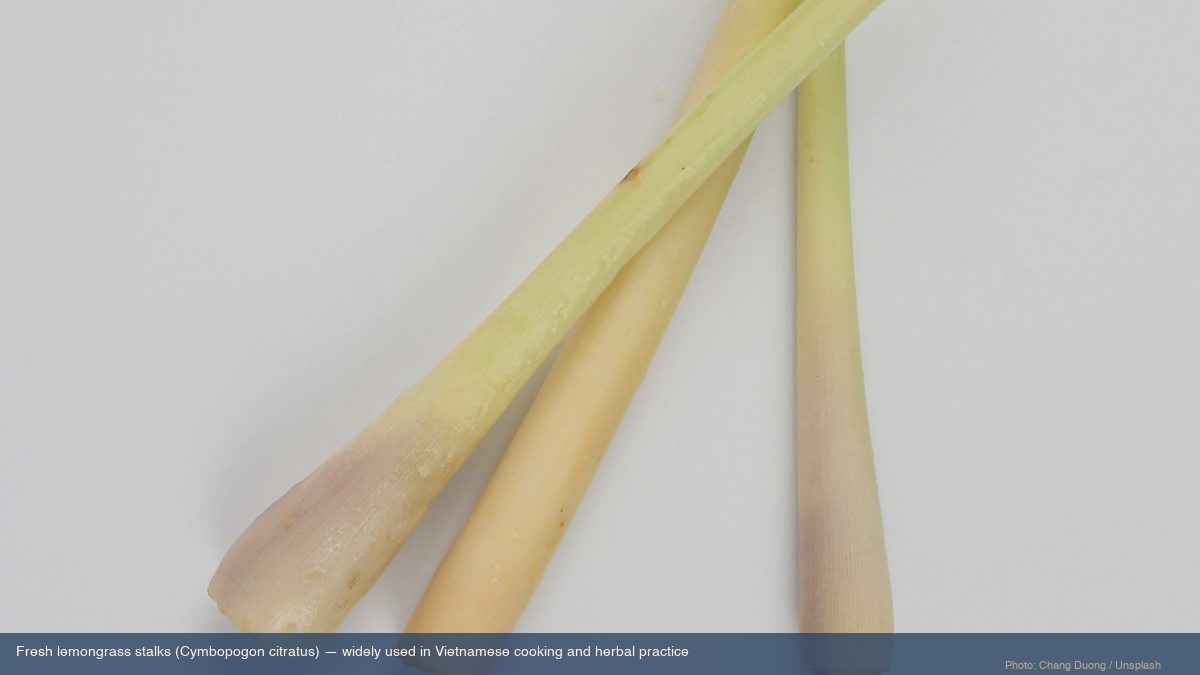
There is a moment that many people raised in Vietnam know well: the kitchen fills with a sharp, bright fragrance the instant a bundle of lemongrass stalks hits the hot oil. That citrusy-grassy scent — instantly recognizable, almost electric — signals that the pot of canh chua (sour soup) or bún bò Huế is well underway. Lemongrass (Cymbopogon citratus, known in Vietnamese as sả or sả chanh) occupies a unique position in Vietnamese life: it is simultaneously the most-used cooking herb in the country and a plant that has been folded into traditional wellness practices for generations. This dual identity — culinary ingredient and herbal ally — makes lemongrass one of the most fascinating herbs in Southeast Asia's botanical heritage.
Background: Origins and Names
Lemongrass belongs to the grass family (Poaceae) and is native to tropical and subtropical Asia. Its scientific name, Cymbopogon citratus (DC.) Stapf, was formally classified in 1906, though humans have cultivated and used the plant for far longer. The plant thrives in warm, humid climates, which is why Southeast Asia — particularly Vietnam, Thailand, Indonesia, and India — became the heart of its cultivation and traditional use.
In Vietnam, the plant is most commonly called sả chanh (lemon grass) or simply sả. In classical Vietnamese pharmacy texts it sometimes appears as hương mao (fragrant grass), reflecting its place within the country's indigenous materia medica tradition. Other regional names include citronelle (French colonial influence) and serai in Malay-speaking neighboring countries, illustrating how the herb was shared and traded across the whole Southeast Asian region for centuries.
Pharmacobotanical records from Vietnam's UMP Ho Chi Minh City note that Vietnamese cultivars of lemongrass are particularly rich in citral, sometimes reaching 80% of the essential oil by weight — higher than many other producing regions. This local abundance may help explain why sả has been woven so deeply into both the kitchen and the wellness repertoire of Vietnamese culture.
What Is Lemongrass Used for in Vietnamese Tradition?
Ask anyone who grew up in Vietnam and the answer will begin with food. Lemongrass is foundational to some of the country's most iconic dishes. A pot of canh chua without sả would taste flat and one-dimensional. Bún bò Huế — the intensely aromatic beef noodle soup from Hue — relies on bruised lemongrass stalks simmered for hours to build its complex broth. Grilled meats marinated with minced lemongrass, garlic, and fish sauce are a staple of nhậu (casual outdoor dining) culture across the country. And no hotpot (lẩu) table is complete without a pile of fresh stalks ready to perfume the bubbling broth.
Beyond cooking, Vietnamese traditional wellness practice assigns lemongrass the role of a warming herb. According to the pharmacognosy reference at Tra Cuu Duoc Lieu, sả has a pungent, warming nature (tính ấm) and enters the lung, spleen, and stomach meridians. In the Vietnamese interpretation of traditional wellness practice, these qualities make it a logical choice for:
- Helping the body warm up and promote perspiration during colds and chills (giải biểu, releasing the surface)
- Easing abdominal bloating, nausea, and digestive discomfort
- Relieving mild aches associated with wind-cold exposure (joint or muscle pain that worsens in cold weather)
- Supporting respiratory comfort when used as a steam inhalation (xông)
The xông practice is particularly distinctive. When someone is coming down with a cold, many Vietnamese families still prepare a large pot of boiling water with lemongrass, grapefruit leaves (lá bưởi), mint, and other aromatic herbs. The sick person bends over the pot, covered by a cloth or blanket, inhaling the steam for 10–15 minutes. The lemongrass provides both aroma and, according to traditional understanding, its warming energy. This practice predates modern aromatherapy by centuries and reflects a deeply practical form of traditional wellness knowledge.
Individual responses to traditional practices like xông vary considerably; always ensure steam is not hot enough to cause burns, and consult a healthcare practitioner if symptoms worsen.
Key Compounds and What Early Research Suggests
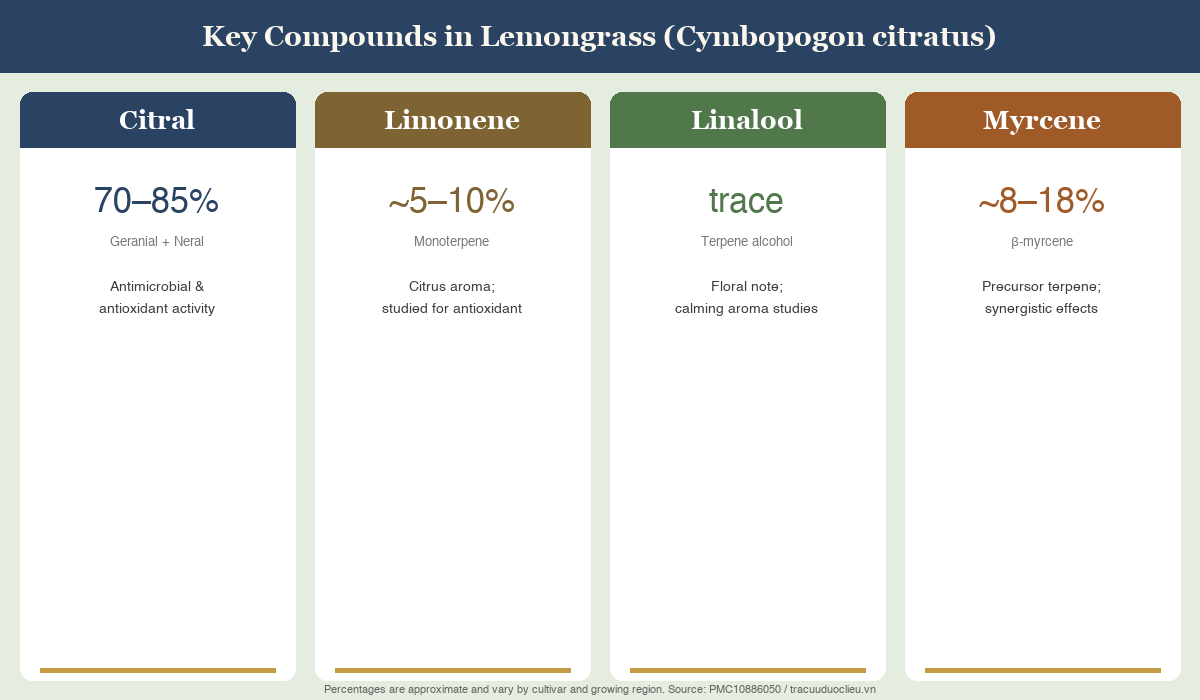
Lemongrass essential oil is dominated by citral, a naturally occurring aldehyde that exists as two geometric isomers: geranial (citral A) and neral (citral B). Together, these account for roughly 70–85% of the oil's composition. Supporting compounds include myrcene (8–18%), limonene (5–10%), linalool (trace amounts), and smaller quantities of geraniol and geranyl acetate.
Early laboratory research has explored what these compounds might do in biological systems. A 2024 study published in Animals (Basel) evaluated lemongrass essential oil in zebrafish larvae — a validated model for inflammation and oxidative stress research. The researchers found that all tested concentrations significantly reduced neutrophil migration (a marker of inflammation) compared to controls, while certain concentrations increased glutathione S-transferase activity, suggesting antioxidant-related protective mechanisms. The primary compounds identified were geranial (43.72%), neral (29%), and myrcene (18.30%).
Earlier cell-based research has documented antimicrobial activity — specifically noting that lemongrass oil at concentrations of 0.1–0.25% may inhibit certain Candida strains — and multiple in vitro studies have described antioxidant properties linked to citral's ability to neutralize free radicals. Meanwhile, animal models have shown that lemongrass essential oil may have anxiolytic-like effects partly via modulation of GABA-A receptors, a mechanism similar to how certain calming compounds interact with the nervous system.
It is important to approach all of this carefully. In vitro and animal studies test compounds at concentrations that may not reflect what happens when you drink a cup of lemongrass tea or use it in a dish. Results from zebrafish or cell cultures are preliminary signals, not proof of effect in human beings. More rigorous human clinical trials are needed before any definitive health claims can be made.
What Does Research Say About Lemongrass and Relaxation?
One area attracting genuine scientific interest is lemongrass's potential role in supporting a sense of calm. A 2025 randomized, placebo-controlled clinical trial examined what happened when adult patients undergoing dental scaling and root planing were exposed to lemongrass aromatherapy. In the 38 participants, the intervention group showed a statistically significant decrease in anxiety scores (STAI-S scale, mean reduction of approximately 6.9 points), along with reductions in systolic and diastolic blood pressure and heart rate, compared to increases observed in the control group. Nearly 95% of the intervention participants reported wanting aromatherapy in future dental visits.
A smaller 2015 study (Brooker et al.) had similarly suggested that brief exposure to lemongrass aroma produced perceived anxiolytic effects in volunteers submitted to a stressful scenario — with the effect appearing within five minutes. The authors explicitly noted that further investigation is needed to understand the clinical relevance and dose-response relationship.
These findings are promising but should be interpreted as preliminary. The 2025 RCT had a small sample (38 participants), was single-blind, and took place in a very specific clinical setting (dental chair). The Memorial Sloan Kettering Cancer Center's integrative herb database notes that lemongrass tea in one study did not lower anxiety, suggesting that route of administration (aromatherapy versus ingestion) may matter considerably. Individual responses vary considerably.
How Do People Use Lemongrass?
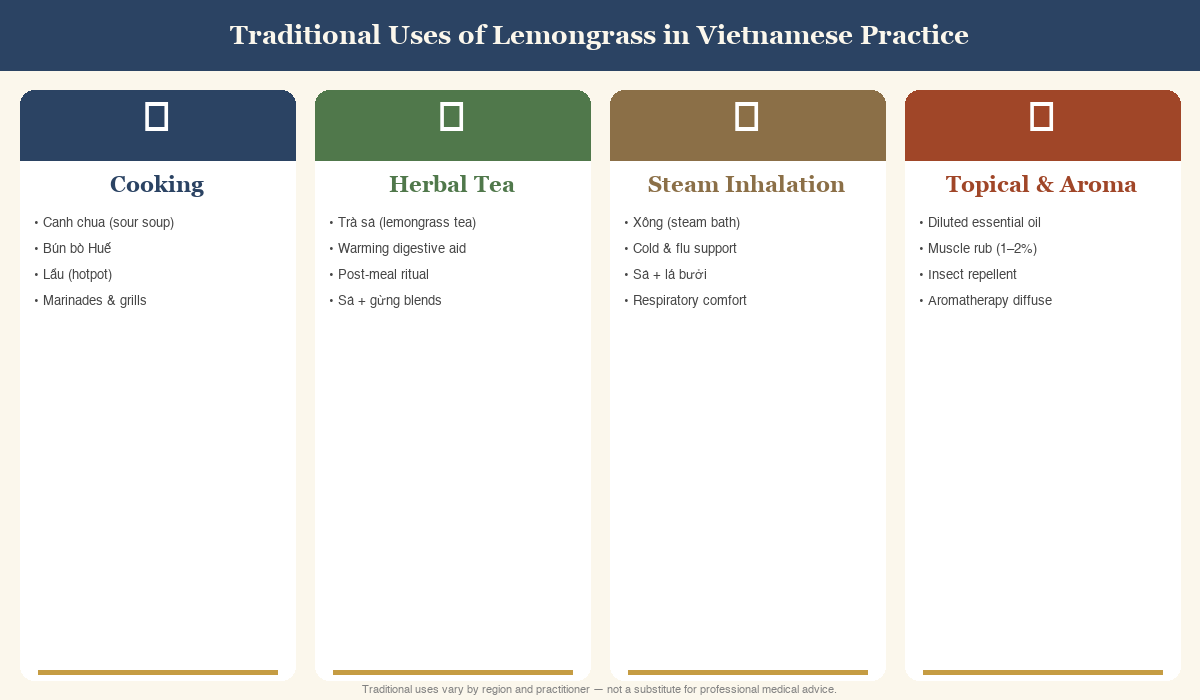
Across Vietnamese and broader Southeast Asian practice, lemongrass appears in several distinct forms, each with its own tradition and appropriate context.
Fresh stalks in cooking. The most common form. The white-to-pale-yellow base of the stalk is finely minced or sliced thin for marinades, curry pastes, and stir-fries. Whole bruised stalks are added to soups and broths for infusion, then removed before serving. This culinary use delivers the plant's aroma compounds in small amounts as part of a balanced meal — a very different exposure than concentrated supplements or oils.
Lemongrass tea (trà sả). Fresh or dried stalks are simmered in water for 10–15 minutes to produce a pale gold tea with a bright, clean citrus character. Vietnamese tradition prescribes this tea after meals to ease bloating and support digestion. It is also offered as a warming drink when someone feels chilly or under the weather. Some families blend it with fresh ginger (sả gừng) for additional warmth. Standard informal use is 1–2 cups of reasonably dilute tea, not concentrated extracts.
Steam inhalation (xông). As described earlier, this is a traditional respiratory comfort practice using fresh lemongrass and other aromatic herbs. It is not intended as a treatment for any condition but as a soothing practice embedded in Vietnamese family wellness culture.
Essential oil — diluted topical or aromatherapy. Lemongrass essential oil is commercially available and used in diffusers for aromatherapy purposes, or diluted in carrier oil for topical application (massage, muscle rub). This form is highly concentrated and comes with its own important safety considerations (see below).
Dried herb and supplements. Dried lemongrass leaf is used in herbal tea blends. Encapsulated extracts exist but are less common in traditional Vietnamese practice and carry more uncertainty regarding dosage and quality.
Individual responses to lemongrass in any form vary considerably; what works well for one person may not suit another, and guidance from a qualified practitioner is always worthwhile.
Important Considerations Before Using Lemongrass
For most people, lemongrass in food and tea amounts is well-tolerated and has a long record of safe culinary use. However, there are meaningful considerations to keep in mind, especially with more concentrated preparations.
Essential oil safety and dilution. Lemongrass essential oil is not the same as lemongrass tea or cooking with the herb. The oil is highly concentrated — a tiny volume contains the equivalent of a large quantity of plant material. Undiluted application to skin causes irritation or contact dermatitis in a significant proportion of users. It should always be diluted to 1–2% in a carrier oil (approximately 6–12 drops per ounce of carrier) before any topical use. Do not ingest lemongrass essential oil unless under the supervision of a qualified practitioner who specializes in internal essential oil use — high doses may damage liver and stomach mucous membranes, according to the Memorial Sloan Kettering integrative herb reference.
Pregnancy and breastfeeding. Animal studies found that high doses of citral and myrcene caused developmental concerns at pharmacological concentrations. Most traditional Vietnamese sources consider culinary use (small amounts in cooking) to be generally acceptable, and a 2016 observational study found no adverse effects in women drinking up to 3 cups of lemongrass tea daily throughout pregnancy. However, concentrated doses or high-dose supplements have not been adequately studied in pregnant women. Out of caution, anyone who is pregnant or breastfeeding should consult their healthcare provider before using lemongrass beyond normal culinary amounts.
Drug interactions. According to the MSK integrative herb reference, lemongrass compounds may affect the activity of CYP450 enzymes and glutathione S-transferase — systems involved in metabolizing many medications. Anyone taking anticoagulants (blood thinners), blood pressure medications, diabetes medications, or drugs metabolized by the liver should inform their healthcare provider about regular lemongrass use beyond culinary amounts.
High-dose tea consumption. Very large amounts of lemongrass tea have been associated with anecdotal reports of digestive discomfort and, in rare cases, kidney-related effects. Reasonable use (1–3 cups of normally brewed tea daily) as a wellness beverage is very different from consuming large quantities of concentrated preparations.
Skin sensitivity. Topical products containing lemongrass oil (lotions, massage oils) may occasionally cause skin rash or contact dermatitis, especially in individuals with sensitive skin or existing skin conditions. Always patch-test diluted preparations on a small area before widespread use.
Children. Essential oils should be kept away from children and used with particular caution (very low concentrations, if at all) around infants and toddlers. Culinary use in family meals is a separate matter.
Frequently Asked Questions
Is it safe to drink lemongrass tea every day?
For most healthy adults, 1–2 cups of lemongrass tea brewed from fresh or dried stalks daily has a long track record as a wellness beverage in Vietnam and across Southeast Asia. Problems tend to arise with concentrated extracts or very large quantities consumed over long periods. If you have existing kidney, liver, or metabolic conditions, or take medications regularly, it is worth discussing the habit with your healthcare provider. Individual responses vary considerably.
What does lemongrass taste like in tea?
Lemongrass tea has a clean, bright, citrus-forward flavor with grassy undertones and a subtle floral note from the linalool content. It is lighter than lemon juice — more aromatic than sharp — and has a pale golden color. Many people find it refreshing hot or chilled, and it pairs well with ginger for a warming winter blend or honey and ice for a summer drink.
Can lemongrass essential oil be used directly on skin?
No — undiluted lemongrass essential oil should not be applied directly to skin. Because of its high citral content, it causes irritation or contact dermatitis in many users when applied neat. Always dilute to 1–2% in a carrier oil (such as coconut, jojoba, or almond oil) before topical use. If you experience redness, stinging, or a rash, discontinue use.
What is the traditional Vietnamese practice of xông (steam inhalation) with lemongrass?
Xông is a traditional Vietnamese steam inhalation practice, typically used during colds or when someone feels chilled. Fresh lemongrass stalks, grapefruit leaves, mint, and other aromatic herbs are simmered in a large pot of water. The person sits with their head over the steam, covered with a cloth or blanket, for about 10–15 minutes. The steam opens airways and the aromatic compounds may provide a soothing effect. It is important to ensure the steam is not scalding — keep a safe distance from the pot, especially with children or elderly individuals.
Is lemongrass the same as lemon balm or lemon verbena?
No — these are entirely different plants. Lemongrass (Cymbopogon citratus) is a tropical grass with characteristic pale, bulbous stalks. Lemon balm (Melissa officinalis) is a mint-family herb with broad leaves, native to Europe. Lemon verbena (Aloysia citrodora) is a woody shrub from South America. All three share a citrus-forward aroma but have different compound profiles, traditional uses, and safety considerations.
Does lemongrass interact with any medications?
Potentially yes, particularly with concentrated forms beyond culinary use. Lemongrass compounds may influence CYP450 liver enzymes, which are responsible for metabolizing many common medications — including some blood thinners, statins, and diabetes drugs. This interaction is more relevant for concentrated supplements or large daily tea intake than for occasional use in cooking. Inform your healthcare provider if you use lemongrass regularly alongside any prescription or over-the-counter medications.
A Note on Wellness Tracking
Herbs like lemongrass have been part of Vietnamese family wellness routines for generations — sipped as an after-dinner tea, added to soups, or prepared as a steam bath at the first sign of a chill. One thing that traditional practitioners understood intuitively, and that modern research is beginning to explore, is that consistency and context matter enormously. A single cup of trà sả tells you very little; how you feel across weeks and months of gentle, regular practice tells you much more.
If you are curious about how herbal wellness practices might fit into your own daily routine, tracking your habits, sleep, energy, and general well-being over time can reveal meaningful patterns. Health Diary is designed to help you do exactly that — logging small daily practices and noticing how they accumulate. Some people find that structured tracking helps them separate what genuinely works for their constitution from what merely feels good in the moment. Others discover that the ritual itself — the act of preparing and sipping a warm cup of lemongrass tea mindfully — is a significant part of the benefit.
Whatever your approach, working with an informed practitioner who understands both conventional healthcare and traditional herbal knowledge will always give you the clearest guidance for your individual situation.
About This Article
Written by: Health Diary Editorial Team — a group of wellness writers and researchers focused on Southeast Asian herbal traditions, traditional wellness systems, and evidence-informed health content.
Editorial review: This article has been reviewed by the Health Diary editorial team for clarity, structure, and adherence to our sourcing standards. Key claims were cross-checked against NCCIH, NIH PubMed (PMC10886050, PMC11899488), Memorial Sloan Kettering's integrative herb database, and Vietnamese pharmacognosy sources (tracuuduoclieu.vn, mplant.ump.edu.vn). It is not a clinical review and should not replace consultation with a licensed healthcare practitioner.
Reviewed on: June 14, 2026.
Editorial process: We cite peer-reviewed and government sources where possible. When a clinical reviewer is added to this article, attribution will appear here with verifiable credentials.
References
- Da Silva KCD, Carneiro WF, Virote BCR, Murgas LDS. Evaluation of the Anti-Inflammatory and Antioxidant Potential of Cymbopogon citratus Essential Oil in Zebrafish. Animals (Basel). 2024 Feb. PMC10886050
- Maybodi FR, Herandi V, Vaezpour MS. Effect of aromatherapy with lemongrass (Cymbopogon citratus) on anxiety during scaling and root planing: a randomized clinical trial. BMC Complementary Medicine and Therapies. 2025. PMC11899488
- Memorial Sloan Kettering Cancer Center. Lemongrass — Herb Information. Herb Reference Database. 2024. mskcc.org
- Blanco MM et al. The GABAergic system contributes to the anxiolytic-like effect of essential oil from Cymbopogon citratus. Journal of Ethnopharmacology. ResearchGate
- Brooker C et al. Effect of Lemongrass Aroma on Experimental Anxiety in Humans. Journal of Alternative and Complementary Medicine. 2015. doi:10.1089/acm.2015.0099
- Tra Cuu Duoc Lieu. Sả Chanh — Cymbopogon citratus (DC.) Stapf. Vietnamese pharmacognosy reference. tracuuduoclieu.vn
- UMP-HCMC (Vietnam Univ. of Pharmacy). Sả — Cymbopogon citratus, Poaceae. Pharmacobotany database. mplant.ump.edu.vn