Lotus Seed Sweet Soup: A Traditional Asian Wellness Dessert
Discover the centuries-old tradition of lotus seed sweet soup across Vietnam and China. From Huế's imperial chè hạt sen to Cantonese lian zi geng tong sui — exploring the history, seasonal wisdom, key ingredients, and what nutrition science says about this nourishing Asian wellness dessert.
What Is Lotus Seed Sweet Soup?
Across Vietnam, China, and much of Southeast Asia, a bowl of gently sweetened lotus seed soup marks celebrations, seasonal transitions, and evening rituals. Known as chè hạt sen in Vietnamese and lian zi geng (莲子羹) or lian zi tang shui (莲子糖水) in Cantonese, this dessert is far more than a confection. It sits at the crossroads of culinary tradition, seasonal awareness, and centuries-old wellness kitchen wisdom.
The preparation is deceptively simple: lotus seeds simmered in water with rock sugar until soft and translucent. Yet that simplicity belies a rich layering of cultural meaning. In the imperial courts of Huế, it was a dish for royalty. In Cantonese households, it was the sweet broth prepared late at night for a family gathering. In both traditions, the lotus plant — Nelumbo nucifera — carried symbolic weight: purity, renewal, and the capacity to rise beautifully from muddy water.
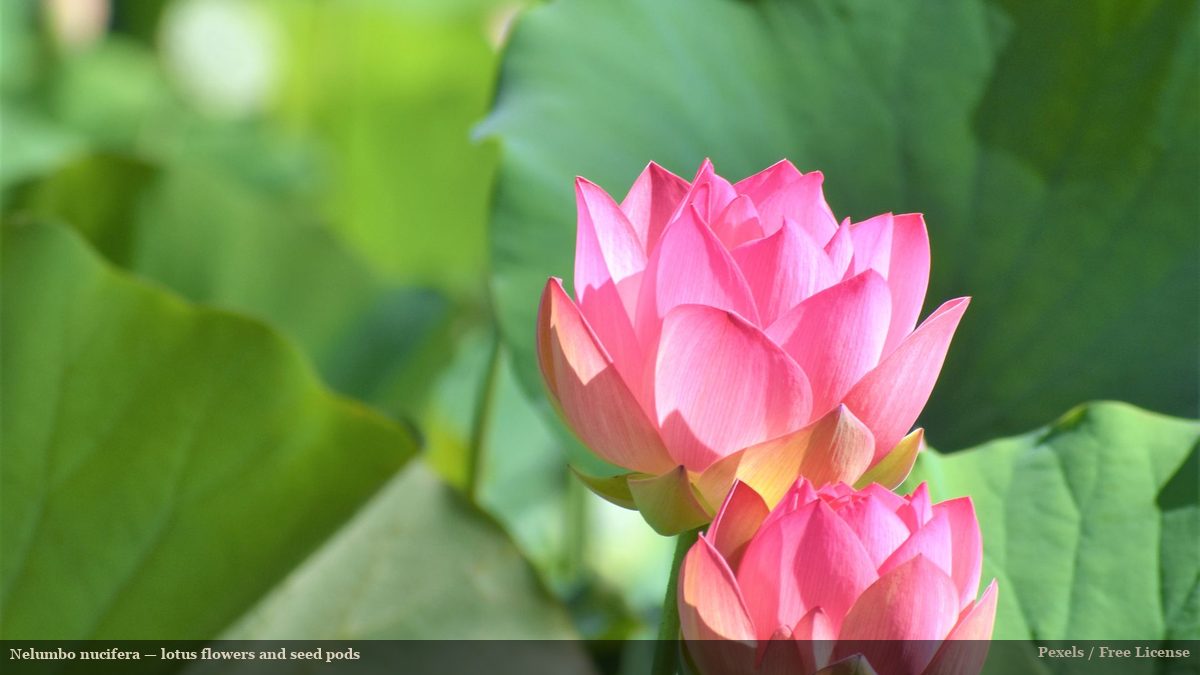
This article explores the traditional roots of lotus seed sweet soup across its two main cultural lineages — Vietnamese and Cantonese — and examines why, today, nutrition science is taking a closer look at what generations of Asian households have long known about this nourishing dessert.
The History of Lotus Seeds in Asian Wellness Traditions
Lotus (Nelumbo nucifera) has been cultivated in Asia as a food source for at least 7,000 years, making it one of the oldest continuously farmed plants in human history [11]. Archaeological evidence traces lotus cultivation to ancient China, India, and the broader Southeast Asian mainland, with seeds and rhizomes serving as staple foods long before they entered formal wellness traditions.
The transition from food to documented wellness ingredient in East Asia accelerated during the Han Dynasty (206 BCE – 220 CE), when classical herbal texts began cataloguing lotus seeds alongside their traditional preparation methods. The foundational text Shennong Bencao Jing (神農本草經), attributed to the mythological emperor Shennong, described lotus seeds as able to "supplement the center, nourish the spirit, boost qi and strength, and eliminate hundreds of diseases" [3].
The most comprehensive classical documentation came in the Ming Dynasty. Li Shizhen's Bencao Gangmu (本草綱目 — Compendium of Materia Medica), completed in 1578 after 27 years of research across more than 800 texts, placed lotus seeds among its most celebrated plant entries. Li famously characterized them as "the fruit of the spleen" (脾之果), noting their "clear fragrant qi" and defining them as nourishing to the heart, spleen, and kidneys [3, 12]. The Compendium was inscribed on the UNESCO Memory of the World Register in 2011, cementing its status as one of humanity's most significant scientific-cultural documents [12].
Crucially, classical East Asian food culture has long operated on the principle of 药食同源 (yào shí tóng yuán) — "medicine and food share the same origin." Within this framework, lotus seed sweet soup was never purely a dessert or purely a tonic; it was both simultaneously. The act of preparing and consuming it was itself considered a form of seasonal self-care.
Vietnamese Chè Hạt Sen: Imperial Court Origins
In Vietnam, the lotus holds a special place in the national imagination. It is the national flower, associated with purity, resilience, and beauty emerging from adversity. And no city embodies the Vietnamese lotus tradition more deeply than Huế, the former imperial capital on the banks of the Perfume River.
Chè hạt sen — lotus seed sweet soup — is considered one of the signature dishes of Huế cuisine, a tradition rooted in the royal court of the Nguyễn dynasty (1802–1945). Court cuisine (ẩm thực cung đình Huế) placed enormous emphasis on refinement: dishes were expected to be not only flavorful but visually elegant, symbolically meaningful, and wellness-aligned. Lotus seed soup checked every requirement [7].
The lotus seeds used in authentic Huế chè hạt sen come from a very specific source: Tinh Tam lake within the imperial citadel grounds. These seeds, harvested in May and June when the lotus blooms peak, are considered superior to varieties found elsewhere in Vietnam. Local growers describe them as smaller, more aromatic, and with a more delicate sweetness — a quality attributed to the lake's particular water composition and centuries of careful cultivation [7].
Traditional Huế preparation is intentionally minimal. Seeds are soaked in plain cold water — never warm, and without any flavoring agents like vanilla — then slowly steamed or simmered until they reach a soft, creamy texture. Rock sugar is dissolved separately and combined with the seeds. Nothing is rushed. The dessert is served in fine porcelain bowls, enjoyed either warm or chilled, and consumed slowly — a deliberate act of appreciation rather than mere eating [7].
Beyond the simple chè hạt sen, the Vietnamese tradition developed several celebrated variations. Chè hạt sen long nhãn (lotus seed and longan sweet soup) combines dried longan fruit with lotus seeds, creating a deeper, more aromatic broth that is traditionally served at festivals and weddings. Chè long nhãn hạt sen variations sometimes include pomelo flower extract for fragrance, a distinctly Huế touch reflecting the court's appreciation for subtle aromatics [8].
Today, chè hạt sen remains one of the most sought-after desserts in Huế restaurants and home kitchens alike, served to honored guests as a gesture of respect and warmth.
Chinese Lian Zi Tang: Cantonese Tong Sui Tradition
In southern China, particularly in Guangdong province and Hong Kong, lotus seed sweet soup exists within a broader tradition of tong sui (糖水) — literally "sugar water," a category of Cantonese dessert soups that represents one of the most distinctive aspects of Guangdong's culinary heritage.
Tong sui encompasses dozens of preparations — from red bean soup to black sesame paste to white fungus soup — each traditionally associated with particular seasonal or wellness purposes. Cantonese tong sui culture is notable for the time of consumption: these desserts are often enjoyed late in the evening, after dinner, as a way to close a meal or a social gathering on a nourishing note [9].
Lotus seed tong sui — lian zi tang shui (莲子糖水) or lian zi geng (莲子羹) — holds a particularly auspicious status within this tradition. The Cantonese name for lotus seed sweet soup at weddings and New Year celebrations is sometimes rendered as Pak Lean Hoe Hup (百年好合), meaning "one hundred years of harmonious marriage." Serving this soup at a wedding is an expression of hope for lasting unity and joy [9].
The Cantonese version of lotus seed soup tends to be less austere than the Huế style. While the foundation remains lotus seeds in rock sugar syrup, Cantonese preparations commonly incorporate additional ingredients: dried red dates (hongzao, 红枣), dried longan (longyan, 龙眼), lily bulb (baihe, 百合), or snow white fungus (tremella, 银耳). Each addition brings its own traditional wellness associations, resulting in a layered soup that functions simultaneously as dessert and as a nourishing evening ritual [10].
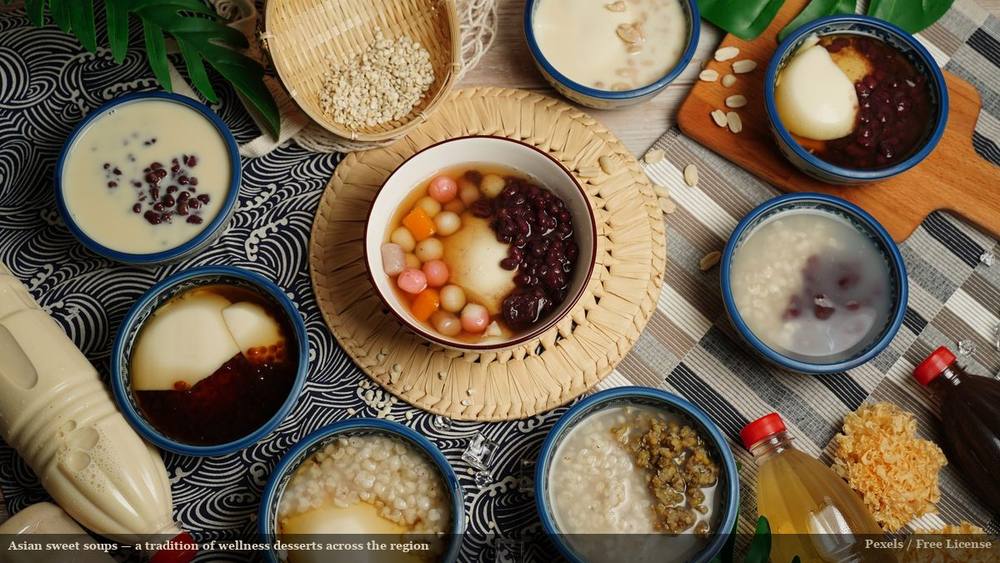
In classical Chinese wellness texts, lotus seeds are described as entering the heart, spleen, and kidney meridians — traditionally used to support a calm spirit, strengthen digestive function, and maintain vitality. The Chinese Academy of Chinese Medical Sciences has described their properties as "sweet and astringent, neutral in nature" (甘、涩,性平), making them considered appropriate for a wide range of individuals across seasons [3].
Key Ingredients and Their Traditional Roles
Lotus Seeds: The Foundation
Lotus seeds (lian zi, 莲子) are the dried or fresh seeds of Nelumbo nucifera, extracted from the distinctive round seed pods that form after the lotus flower blooms. Fresh seeds are bright green, mildly sweet, and slightly creamy in texture; dried seeds are ivory-white, with a denser texture that softens beautifully during prolonged simmering.
Classical preparation wisdom distinguishes between two forms of the lotus seed: the outer seed (lian zi) and the inner green embryo (lian xin, 莲心). Many traditional recipes recommend removing the embryo before cooking the sweet soup, as the embryo is notably bitter and has a stronger cooling nature — considered by classical texts to be unsuitable for those with cold-natured or sensitive digestion [3]. The embryo is often steeped separately as a calming herbal tea.
The lotus seed itself, once the embryo is removed, has a milder, starchy sweetness. It absorbs the rock sugar syrup during cooking, becoming translucent at the edges while maintaining a soft, yielding center — the hallmark of a properly prepared lotus seed sweet soup.
Common Pairings: Longan, Red Dates, and White Fungus
The tradition of combining lotus seeds with complementary ingredients reflects a broader wellness kitchen philosophy: that certain ingredients reinforce or balance each other's qualities, creating a more complete nourishing experience.
Dried Longan (Long Nhãn / 龙眼): Perhaps the most beloved companion to lotus seeds, dried longan contributes a rich, caramel-like sweetness and a deep amber color to the broth. In Vietnamese tradition, chè long nhãn hạt sen is considered one of the most refined desserts in the Huế repertoire. In Chinese tradition, longan is classically described as traditionally used to support a calm spirit and brighten the mood — making the combination with lotus seeds a logical pairing in the wellness kitchen.
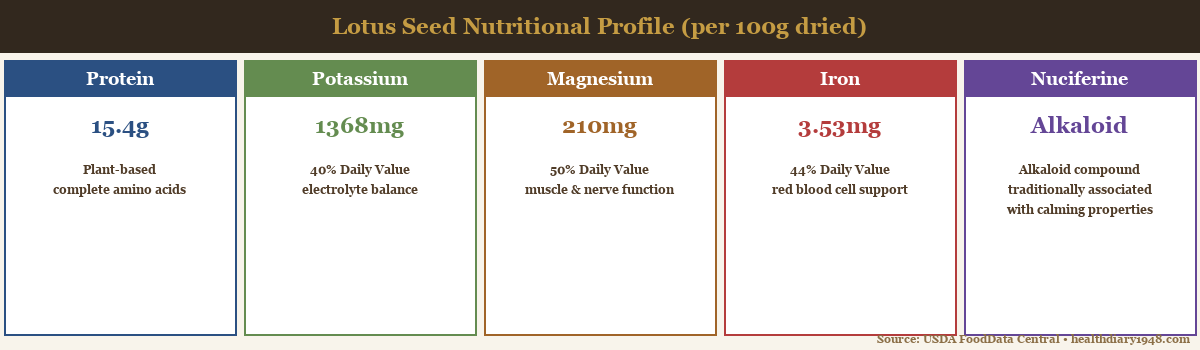
Red Dates (Táo Tàu / 红枣 hongzao): Dried Chinese red dates (jujube) add both sweetness and a rich ruby-red color to lotus seed soups. They are among the most used ingredients in Cantonese tong sui, valued in traditional preparation for their warming nature and their complementary effect when combined with lotus seeds. Red date and lotus seed soup is especially common in winter variations across southern China.
Snow White Fungus / Tremella (Bạch Nhĩ / 银耳 yin er): White fungus — sometimes called "the poor man's bird's nest" in Cantonese tradition due to its similar gelatinous texture — adds a silky, thickening quality to the soup broth. It absorbs the rock sugar syrup and releases a natural gelling compound that gives the finished soup a satiny consistency. The combination of tremella, lotus seeds, and red dates is one of the most celebrated Cantonese tong sui preparations, associated in classical tradition with nourishing the lungs and skin in dry autumn weather [10].
Dried Lily Bulb (Bách Hợp / 百合 baihe): Dried lily bulb petals bring a subtle bitterness that balances the sweetness of rock sugar and longan. They are particularly common in summer lotus seed soups, where classical tradition associates them with supporting rest and soothing the spirit during hot, humid weather.
How to Prepare Traditional Lotus Seed Sweet Soup
The wellness angle of this preparation lies not in any single ingredient but in the patience and attention the tradition requires. Lotus seed sweet soup cannot be rushed. The following outlines the traditional preparation approach:
Selecting your lotus seeds: Both fresh and dried lotus seeds work, though they require different preparation. Dried lotus seeds should be soaked in room-temperature water for 4–6 hours (or overnight) to soften before cooking. Fresh lotus seeds from the pod can be used directly. Remove the green embryo from the center of each seed before proceeding if you prefer a milder flavor.
The traditional Huế method: Soak dried lotus seeds in plain cold water only — Huế tradition explicitly avoids warm water or flavoring agents during the soak, preserving the seeds' natural fragrance. After soaking, steam the seeds on gentle heat until tender (approximately 20–30 minutes), then combine with dissolved rock sugar syrup. This steaming-first approach is considered superior to boiling for maintaining texture and aroma [7].
The Cantonese tong sui method: When preparing a multi-ingredient version with white fungus, red dates, or longan, soak each ingredient separately. White fungus should be soaked until fully expanded (1–2 hours), then all ingredients are combined in a clay pot or heavy saucepan and simmered on low heat for 1.5–2 hours, until the broth thickens naturally. Rock sugar is added only in the final 15–20 minutes of cooking [10].
Temperature and serving: Both Vietnamese and Cantonese traditions serve lotus seed sweet soup both warm and chilled. In summer, chilled lotus seed soup is considered a refreshing and nourishing dessert. In cooler months, it is enjoyed warm. Neither version requires refrigeration of the final preparation for more than 2–3 days.
This article focuses on the cultural and traditional context of lotus seed sweet soup. For medical dietary guidance, please consult a qualified healthcare practitioner.
Seasonal Traditions: When to Enjoy Lotus Seed Soup
In both Vietnamese and Chinese traditions, lotus seed sweet soup is not consumed arbitrarily — it carries seasonal associations that reflect classical approaches to aligning food choices with seasonal change.
Summer (May–August): This is the primary lotus season across Asia, when lotus flowers bloom and fresh seeds are harvested. Traditional Vietnamese and Chinese sources both associate lotus seeds with supporting restful sleep and emotional calm during the hot, humid summer months — qualities particularly valued during a season associated with excess heat and restlessness. Chilled lotus seed soup is the classic summer evening dessert across both traditions.
Festivals and celebrations: The Lunar New Year period (late January–February) is one of the most important times for lotus seed sweet soup in Cantonese tradition. The auspicious symbolism of "harmonious union" associated with the dish makes it a natural choice for New Year tables, weddings, and anniversary celebrations [9].
Autumn and winter: In Cantonese tradition, lotus seed soup combined with tremella (white fungus) is favored in autumn and early winter, when classical preparation wisdom associates the combination with moistening the lungs and addressing seasonal dryness. Red dates are added more generously in winter preparations for their warming quality [10].
Huế traditions: In central Vietnam, chè hạt sen is closely tied to the lotus harvest calendar. Tinh Tam lake's lotus season peaks in May–June, and traditional Huế households celebrate this with fresh-seed sweet soups that are distinctly lighter and more fragrant than dried-seed preparations available year-round [7].
What Nutrition Science Says About Lotus Seeds
Modern nutritional analysis has begun to illuminate some of the properties that traditional wellness kitchen wisdom long associated with lotus seeds. While research into food-sourced wellness is complex and individual results vary, several findings about lotus seed composition are worth noting:
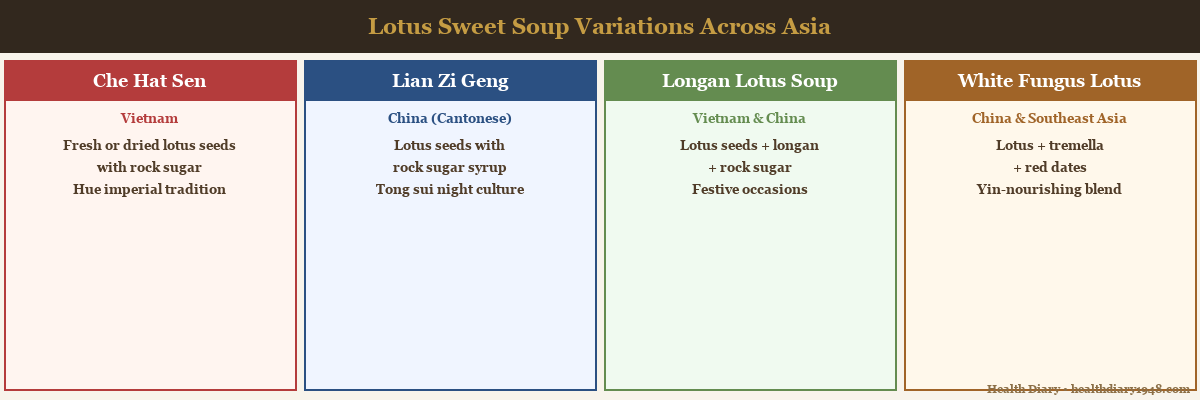
Mineral density: According to USDA FoodData Central data, 100g of dried lotus seeds provide approximately 1,368mg of potassium (around 40% of daily value), 210mg of magnesium (approximately 50% of daily value), and 3.53mg of iron (about 44% of daily value) [6]. This mineral profile is notably higher than many common nuts and grains, positioning lotus seeds as a potentially useful addition to plant-forward diets.
Protein content: Dried lotus seeds contain approximately 15–18% protein by weight — a meaningful plant-based protein source, particularly for communities in Asia where lotus seeds form part of the regular dietary landscape [5].
Alkaloid compounds: Lotus seeds contain a class of compounds known as isoquinoline alkaloids, including nuciferine, neferine, liensinine, and isoliensinine. A 2025 review in PMC examined the neuroprotective potential of these alkaloids, finding they may act as free radical scavengers, suppress inflammatory pathways (NF-κB), and support neurogenesis markers including BDNF [4]. The authors note that human clinical trials remain limited, emphasizing caution in translating preclinical findings to practical conclusions.
Anti-inflammatory polysaccharides: Vinmec Health System's clinical content notes that lotus seed polysaccharides have demonstrated anti-inflammatory properties in research settings, alongside antioxidant activity [1]. Sức Khỏe & Đời Sống, the official health publication of Vietnam's Ministry of Health, similarly notes the presence of calming compounds (chất an thần) in lotus seeds, consistent with their traditional use in supporting rest [2].
It is important to contextualize these findings within the food-therapy framework: lotus seed sweet soup is a cultural nourishment tradition, not a supplement or pharmaceutical preparation. The amounts consumed in a typical bowl of chè hạt sen or lian zi tang represent everyday food quantities, not concentrated extracts. Individuals with specific health conditions — particularly diabetes, given the significant carbohydrate content of lotus seeds — should consider their overall dietary context and consult a healthcare professional [2].
Frequently Asked Questions
What is the difference between chè hạt sen and lian zi tang?
Both are lotus seed sweet soups, but they come from different culinary traditions. Vietnamese chè hạt sen, especially in the Huế style, is typically made with fewer ingredients — primarily lotus seeds and rock sugar, sometimes with pomelo flower essence for fragrance. Cantonese lian zi tang shui more commonly includes additional ingredients such as white fungus, red dates, dried longan, or lily bulb, creating a richer, more complex broth. Both traditions share the use of rock sugar as the sweetener of choice.
Should I remove the green embryo from lotus seeds before making sweet soup?
Classical preparation wisdom recommends removing the bitter green embryo (called lian xin, 莲心) before cooking lotus seed sweet soup. The embryo has a distinctly bitter flavor that contrasts with the mild sweetness expected in the dessert soup. The embryo is often steeped separately as a calming herbal tea. Most commercially packaged dried lotus seeds come with the embryo already removed.
Can I use fresh lotus seeds instead of dried?
Yes — fresh lotus seeds, available during the summer lotus season in Asia, produce a lighter, more delicate soup with a softer texture and more pronounced natural sweetness. Dried seeds require soaking and longer cooking but are available year-round and produce a slightly more starchy, satisfying broth. Both are used in traditional preparations; the choice depends largely on seasonal availability.
What type of sugar is traditionally used in lotus seed sweet soup?
Both Vietnamese and Chinese traditional recipes specify rock sugar (đường phèn in Vietnamese; 冰糖 bīng táng in Chinese) rather than refined white sugar. Rock sugar dissolves more slowly and is considered to produce a cleaner, less cloying sweetness. It also creates a subtly clearer broth. Some Huế recipes use just enough rock sugar to enhance the natural sweetness of the lotus seeds without overwhelming them.
Is lotus seed sweet soup appropriate for all seasons?
Lotus seed sweet soup has traditionally been prepared and enjoyed year-round, with seasonal ingredient adjustments. In summer, the soup is often served chilled with minimal additions. In winter or autumn, Cantonese tradition adds warming companions such as red dates and more generous amounts of longan. Dried lily bulb is favored in summer for its reputed cooling quality. The seasonal flexibility of the dish is one reason it has persisted across so many generations.
How long does lotus seed sweet soup keep?
A freshly made lotus seed sweet soup keeps well in the refrigerator for 2–3 days. The soup thickens as it cools and the lotus seeds continue absorbing the liquid. When reheating, add a small amount of water if needed. If white fungus (tremella) is included, the soup will gel more significantly when chilled — this is normal and indicates a well-prepared batch with good tremella content.
References
- Vinmec Health System. Hạt sen tốt như thế nào cho sức khỏe? (2022). https://www.vinmec.com/vie/bai-viet/hat-sen-tot-nhu-nao-cho-suc-khoe-vi
- Sức Khỏe & Đời Sống — Bộ Y Tế. Những lưu ý khi chế biến, sử dụng và bảo quản cây sen (2022). https://suckhoedoisong.vn/
- China Academy of Chinese Medical Sciences Wangjing Hospital. 药食同源----莲子 (2023). https://wjhospital.com.cn/Html/News/Articles/2057.html
- PMC / NCBI. Neuroprotective Potential of Major Alkaloids from Nelumbo nucifera (Lotus): Mechanisms and Therapeutic Implications (2025). https://pmc.ncbi.nlm.nih.gov/articles/PMC12428744/
- ScienceDirect / Food Chemistry: X. A comprehensive review on lotus seeds (Nelumbo nucifera Gaertn.): Nutritional composition, health-related bioactive properties, and industrial applications (2022). https://www.sciencedirect.com/science/article/pii/S175646462200007X
- USDA FoodData Central. Seeds, dried, lotus seeds — Nutrition Facts. https://tools.myfooddata.com/nutrition-facts/170149/wt2
- Scooter Saigon Adventure. Hue Lotus Seed Sweet Soup (2023). https://scootersaigonadventure.com/hue-lotus-seed-sweet-soup/
- VinWonders. Vietnamese sweet soup (che): Top 12 desserts (2024). https://vinwonders.com/en/
- Wing Hop Fung. Lotus Seed, Dried Lian Zi — Cultural Heritage (2023). https://winghopfung.com/blogs/news/lotus-seed-dried-lian-zi
- Baidu Baike (English). Red Date and Lotus Seed White Fungus Soup. https://baike.baidu.com/en/
- ResearchGate / Journal of Ethnopharmacology. Ethnobotanical uses and pharmacological activities of lotus (Nelumbo nucifera) (2016). https://www.researchgate.net/publication/293183331
- UNESCO Memory of the World. Ben Cao Gang Mu (Compendium of Materia Medica). https://www.unesco.org/en/
Wellness Kitchen Note: The traditional preparation and cultural history described in this article reflects centuries of culinary and wellness kitchen practice. This content is intended for educational and cultural interest. It does not constitute medical advice, diagnosis, or treatment recommendation. Please consult a qualified healthcare professional for personal health guidance.