Moringa (Cây Chùm Ngây): Vietnam's Wellness Green and Its Traditional Roots
Explore the traditional uses of moringa (cây chùm ngây) in Vietnamese wellness culture — from cooling soups and salads to its bioactive compounds and what modern research actually says.
Moringa (Cây Chùm Ngây): Vietnam's Wellness Green and Its Traditional Roots
Walk through any morning market in Ninh Thuận or Bình Thuận province, and you may spot vendors offering clusters of slender, feather-light leaves bundled with string. This is cây chùm ngây — moringa — a tree whose every part has been woven into the fabric of Vietnamese daily life long before nutritional scientists began counting its compounds. Across the globe it is sometimes called the "Miracle Tree" — a label that deserves careful handling — but in Vietnamese kitchens and traditional wellness practice, moringa has always been something more modest and more durable: an everyday green with a quiet reputation.
This article explores moringa's place in Vietnamese herbal traditions, the bioactive compounds that researchers are now studying, what the current evidence actually shows, and the practical ways people incorporate this plant into a modern wellness routine — along with important safety considerations that are too often left off the label.
Botanical Background: More Than a Leafy Vegetable
Moringa oleifera Lam. belongs to the family Moringaceae, a small pantropical family with thirteen species. Native to the sub-Himalayan foothills of northwestern India, it has naturalized across South and Southeast Asia over millennia. In Vietnam the tree thrives in the coastal lowlands of Ninh Thuận, Bình Thuận, and Kiên Giang, as well as Phú Quốc island, and has more recently been cultivated in northern provinces as a nutritious market vegetable.
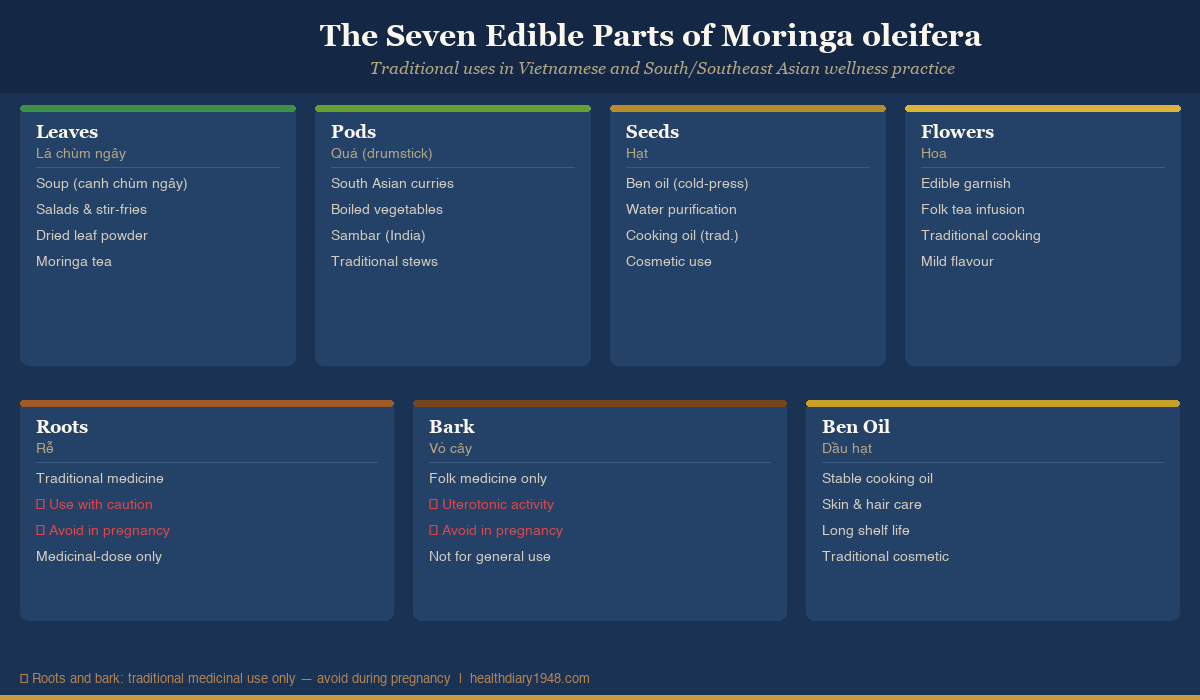
What sets moringa apart botanically is the remarkable utility of nearly every part of the tree. The leaves are the most commonly used portion, but the long, ribbed pods (called "drumsticks" in Indian cooking), the oil-rich seeds, the white flowers, the roots, and the bark all appear in traditional herbal practice and food systems across Asia and Africa. This whole-plant usefulness has contributed to its international reputation — though it also means that different plant parts carry meaningfully different safety profiles, a distinction worth keeping in mind.
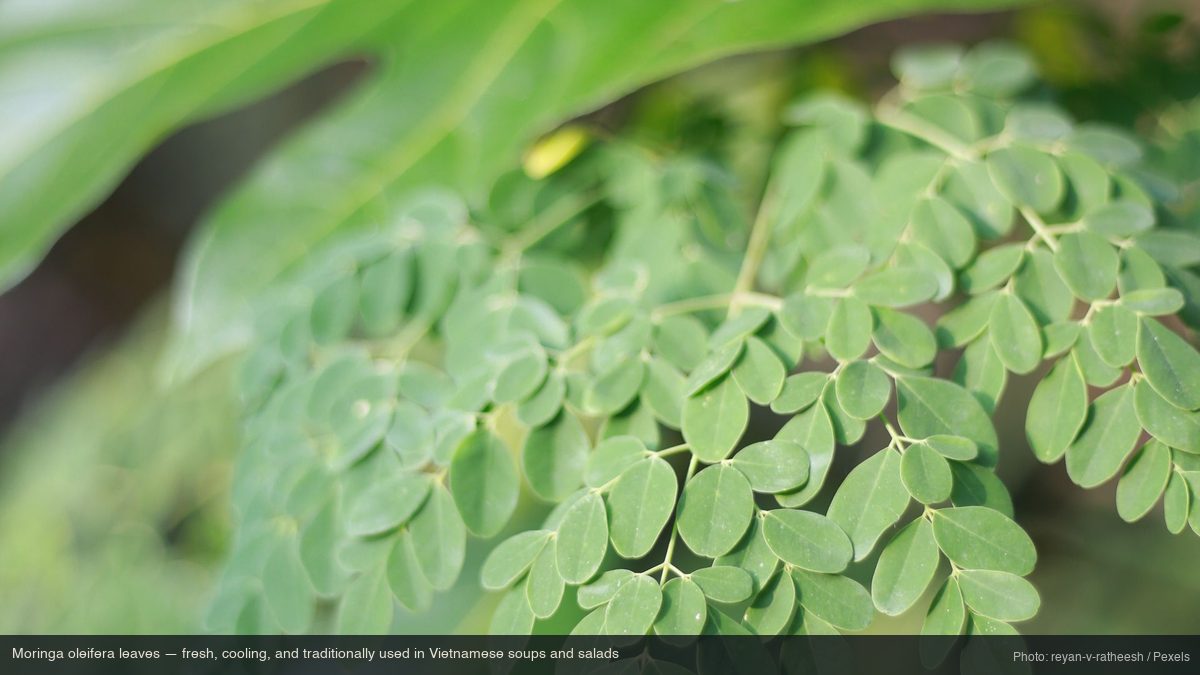
In Vietnamese, the tree carries two common names: cây chùm ngây (the more widely used name) and ba đậu dại (used in some regions). The leaves are described in Vietnamese herbal tradition as having tính mát — a cooling thermal nature — making them a popular ingredient during hot weather and summer wellness preparations.
Moringa in Vietnamese Traditional Wellness: A Cooling Kitchen Herb
Vietnamese traditional medicine (thuốc nam / y học cổ truyền) classifies herbs according to thermal properties, taste, and the organ systems they are said to benefit. Chùm ngây leaves are considered cooling and slightly bitter — properties that traditionally associate them with clearing excess heat, supporting digestion, and acting as a mild diuretic. The Hà Nội Department of Health's traditional wellness resources list moringa among folk remedies used to address wind-damp conditions (phong thấp), digestive complaints, fever, and edema.
In daily life, the most common form is canh chùm ngây: a simple soup made by simmering fresh moringa leaves with pork bones, shrimp, or dried shrimp. The cooking process is light — leaves go in at the very end, just long enough to wilt — preserving their bright green color and delicate flavor. In central and southern Vietnam, moringa leaves also appear in raw salads (gỏi), lightly dressed with lime juice and chili. More recently, dried moringa leaf powder has found its way into morning smoothies and rice congee as a concentrated nutrient addition.
Traditional practitioners have also used moringa roots and bark in folk wellness preparations for inflammatory conditions and as a uterotonic — a property that is the basis of one of the most critical safety warnings around moringa (see the Safety section below). Seeds have traditionally been pressed to produce ben oil, used in food and cosmetics, and placed in water containers to help clarify turbid water — a folk water-purification practice that has some scientific basis, as moringa seed proteins can act as natural flocculants.
Key Bioactive Compounds: What the Science Has Identified
A 2024 comprehensive review published in Nutrients catalogued more than 90 distinct chemical compounds in Moringa oleifera, organized across flavonoids, glucosinolates, phenolic acids, alkaloids, tannins, saponins, and plant hormones [1]. The compounds receiving the most research attention include:
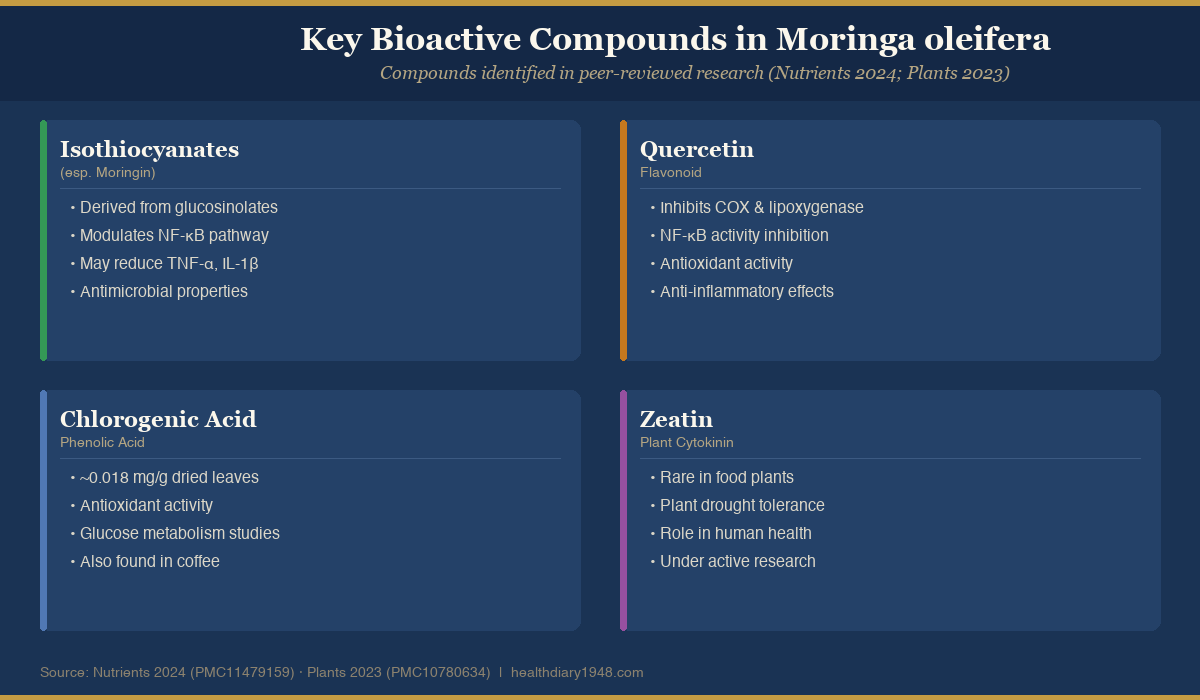
- Isothiocyanates (particularly moringin) — derived when glucosinolates in the plant are hydrolyzed. The signature compound, 4-(α-L-rhamnosyloxy)-benzyl isothiocyanate, has been studied for its role in modulating the NF-κB signaling pathway, which plays a central role in the body's inflammatory response. Researchers note that isothiocyanates may suppress the production of pro-inflammatory cytokines including TNF-α and IL-1β [2].
- Quercetin — a flavonoid found across many plants, but present in meaningful concentration in moringa leaves. Research has highlighted quercetin's ability to inhibit the enzymes cyclooxygenase (COX) and lipoxygenase — enzymes involved in the inflammatory cascade — as well as its capacity to inhibit NF-κB activity [2].
- Chlorogenic acid — a phenolic acid also found in coffee and many other plants; present at approximately 0.018 mg/g in dried moringa leaves. Chlorogenic acid is associated with antioxidant activity and has been studied in the context of blood sugar regulation [1].
- Zeatin — an unusual compound for a food plant; zeatin is a plant cytokinin (plant hormone). Its presence in moringa has attracted scientific interest, though its role in human health remains less well characterized than that of the flavonoids and isothiocyanates.
- Kaempferol, β-carotene, vitamin C, vitamin E — collectively contributing to the antioxidant profile of the leaf. The 2024 Nutrients review describes in vitro antioxidant activity as "exceptional," with animal models showing increased levels of superoxide dismutase, catalase, and glutathione peroxidase [1].
What Does the Research Actually Say?
The pre-clinical (laboratory and animal) evidence for moringa is substantial. Dozens of in vitro and animal studies document antioxidant activity, anti-inflammatory effects, and promising results in models of blood sugar dysregulation and lipid metabolism. The 2023 paper in Plants by Chiș, Noubissi, Pop and colleagues provides a detailed mechanistic map of how moringa's flavonoids and isothiocyanates interact with inflammation pathways — and the picture is scientifically coherent [2].
Human clinical data, however, remains limited and mixed. A 2023 parallel-group randomized clinical trial by Afiaenyi, Ngwu, Okafor, and Ayogu examined the effects of moringa leaf supplementation on blood glucose, blood pressure, and lipid profiles in type 2 diabetic subjects. While the study reported some encouraging trends, the authors — like most researchers in this field — concluded that larger, well-controlled trials are needed before any definitive claims can be made about moringa's clinical efficacy [3].
A broader systematic review examining moringa's potential for improving glucose control found results that were promising in postprandial (after-meal) contexts but variable across study designs. Mechanisms proposed include inhibition of amylase and glucosidase enzymes (which slow glucose absorption) and increased insulin sensitivity — all biologically plausible, but not yet confirmed in large human trials.
In short: moringa shows genuine scientific interest, particularly around antioxidant and anti-inflammatory properties. Blood sugar and lipid effects are worth watching as the research matures. What is not yet supported is the sweeping "superfood" framing that has attached itself to moringa in popular wellness media.
How People Traditionally Incorporate Moringa
Across Vietnamese households, moringa is first and foremost a food — a cooling green that appears seasonally in soups and salads rather than as a concentrated supplement. This traditional mode of consumption has a certain logic to it: food-level doses of whole leaves deliver the plant's bioactive matrix alongside fiber, water content, and the buffering effect of the surrounding meal.
Common traditional preparations include:
- Canh chùm ngây (moringa leaf soup): Leaves added in the final 2–3 minutes of cooking a simple broth. Often paired with pork ribs or dried shrimp. A daily household dish in regions where moringa grows abundantly.
- Gỏi chùm ngây (moringa salad): Young leaves lightly dressed with lime, fish sauce, chili, and sesame. Common in Ninh Thuận as a refreshing warm-weather preparation.
- Moringa leaf tea: Dried leaves steeped in hot water for a mild, slightly grassy infusion. Used in folk wellness to support digestion and as a cooling drink.
- Dried leaf powder: A modern adaptation of traditional use, mixed into rice congee, smoothies, or warm water. Vietnamese wellness practitioners note a traditional guideline of approximately 6 grams per day, and not exceeding three continuous weeks of supplement-level use [6].
- Ben oil (moringa seed oil): Cold-pressed from seeds, used in cooking and topically for skin in some regional traditions. Long shelf life due to high oleic acid content.
Outside Vietnam, moringa drumstick pods feature prominently in South Indian sambar and curry, and the flowers are used in traditional Southeast Asian preparations. This culinary diversity reflects moringa's deep roots as a functional food across a broad geographic range.
Safety Considerations and Limitations
Moringa's safety profile varies considerably by plant part and dose — a distinction that is easily lost in general wellness coverage.
Leaf preparations (food level): Generally considered safe for healthy adults when consumed as part of a normal diet. Animal toxicity studies show high tolerability for leaf extracts, and human studies using powdered leaf preparations have not reported significant adverse events at typical supplemental doses. LiverTox®, the NIH's authoritative hepatotoxicity reference, notes that moringa is "well tolerated and has not been linked to elevations in serum enzymes during therapy" — though one documented case of acute hepatitis following moringa capsule use led to a Likelihood Score of D (possible rare cause of liver injury) [4].
Roots and root bark: Traditional Vietnamese herbal sources explicitly caution against casual use of moringa roots and root extracts. Roots contain more concentrated forms of certain active compounds, and traditional practitioners treat them as high-dose materials requiring specific preparation [6].
Pregnancy: This is the most critical safety flag. Both Vietnamese folk herbal sources and international safety reviews note that moringa — particularly roots, bark, and concentrated extracts — contains compounds with uterotonic activity. Early pregnancy is an absolute contraindication in Vietnamese traditional practice [5]. Pregnant women should avoid all moringa supplements and consult their healthcare provider about dietary amounts.
Drug interactions: Moringa may potentiate the effects of thyroid medications, blood glucose–lowering drugs (including metformin and insulin), and blood pressure medications [6]. Anyone on these medications should consult a healthcare provider before beginning moringa supplementation.
Product quality: Supplement products may vary significantly in concentration and may contain contaminants. This is a practical concern that the LiverTox® entry specifically flags.
Frequently Asked Questions About Moringa
What is moringa called in Vietnamese, and where does it grow in Vietnam?
Moringa is called cây chùm ngây in Vietnamese (occasionally ba đậu dại in some regions). It grows naturally in coastal provinces including Ninh Thuận, Bình Thuận, Khánh Hòa (Nha Trang area), Kiên Giang, and Phú Quốc island. In recent decades it has been cultivated more broadly, including in northern provinces, as awareness of its nutritional value has grown among Vietnamese households and wellness communities.
Is moringa safe to eat every day?
For most healthy adults, moringa leaves consumed as a culinary ingredient — in soups, salads, or teas at typical food amounts — are generally considered safe. The traditional Vietnamese guideline of around 6 grams of dried leaf per day (not exceeding three consecutive weeks of supplement use) reflects a cautious approach developed through generations of practical experience. However, individual responses vary, and moringa is not appropriate for everyone — particularly pregnant women, people on thyroid or blood sugar medications, or those with liver conditions. Consult a healthcare provider for personalized guidance.
Does moringa actually lower blood sugar?
This is one of the most common claims made about moringa online, and it deserves a careful answer. Human clinical trials — including a 2023 randomized controlled trial examining moringa leaf supplementation in type 2 diabetic subjects — have produced promising but preliminary results [3]. The proposed mechanisms (inhibition of amylase and glucosidase, increased insulin sensitivity) are scientifically plausible, and quercetin and chlorogenic acid in moringa have been studied in the context of glucose metabolism. That said, the current evidence base is not sufficient to support claims that moringa treats or prevents diabetes. People managing blood sugar with medication should be especially cautious, as moringa may interact with their treatment.
Can pregnant women eat moringa leaves in soup?
Pregnant women should avoid moringa entirely during the first trimester, and should consult their healthcare provider regarding any use during later pregnancy. Vietnamese folk wellness tradition explicitly flags moringa — particularly roots, bark, and concentrated preparations — as contraindicated in early pregnancy due to uterotonic effects [5]. While small amounts of leaves in a soup may be different from supplemental doses, the traditional caution is clear, and this is not a situation where the precautionary principle should be set aside.
How is moringa used differently in different parts of the plant?
The seven main parts of the moringa tree have distinct traditional roles. Leaves are the most widely used — in soups, salads, and dried powder form. Young pods (drumsticks) are popular in South Asian and some Southeast Asian cooking, boiled or added to curries. Seeds yield ben oil when cold-pressed, used in cooking and cosmetics, and have been used traditionally in water purification. Flowers are edible and used in some Southeast Asian dishes. Roots and bark have traditional wellness applications but contain higher concentrations of active compounds and are treated with more caution — especially during pregnancy. This variation in concentration and traditional caution across plant parts is why moringa cannot be treated as a single uniform supplement.
What does moringa taste like in Vietnamese cooking?
Fresh moringa leaves have a mild, slightly peppery flavor — not unlike a blend of watercress and green peas. In soup (canh chùm ngây), the leaves are tender and absorb the surrounding broth. The flavor is gentle enough that moringa pairs well with simple pork or shrimp broths without overwhelming the dish. Dried moringa leaf powder is more concentrated and slightly earthy — similar in intensity to dried spirulina but with a warmer, more herbal note. Many Vietnamese households describe the flavor as pleasant and undemanding, which is part of why it has remained a stable part of the everyday diet in regions where it grows.
Exploring Moringa Thoughtfully
Moringa's story in Vietnamese wellness is one of quiet continuity rather than dramatic discovery. Generations of households in Ninh Thuận and along the coastal south have cooked with chùm ngây leaves not because of any single compound they read about, but because the plant was available, affordable, cooling, and delicious — the practical criteria by which food traditions tend to survive.
Modern nutritional science has confirmed what traditional practice already understood: that moringa leaves carry a meaningful array of bioactive compounds, with genuine antioxidant and anti-inflammatory properties documented in laboratory settings. The human clinical evidence is younger and more tentative — promising in some areas, requiring more research in others. This is an honest picture, and one that supports incorporating moringa as a flavorful culinary ingredient rather than approaching it as a cure-all supplement.
If you're curious to experience moringa in the way Vietnamese families have long used it, a simple canh chùm ngây — moringa leaf soup with a light pork or shrimp broth — is the most authentic starting point. The soup requires almost no preparation beyond washing the leaves, and the result is a fresh, cooling dish that connects directly to a living food tradition.
As with any herb used in a wellness context, consult a qualified healthcare provider if you are pregnant, managing a chronic condition, or taking medications — and let the traditional guidance that has evolved over centuries inform how you approach this plant.
About This Article
This article draws on peer-reviewed research published in Nutrients (2024), Plants (2023), and clinical trial data indexed in PubMed, alongside Vietnamese herbal tradition sources from the Hà Nội Department of Health and the Thuốc Dân Tộc traditional wellness portal. Safety information was cross-referenced with LiverTox® (NIH, updated July 2024).
Editorial Review: This content was reviewed for accuracy of traditional practice descriptions and YMYL compliance by the Health Diary editorial team. We do not hold medical credentials and do not provide medical diagnoses. The editorial team follows evidence-based wellness journalism standards, citing primary sources and using qualified language throughout. Last reviewed: June 2026.
References
- Divya S. et al. (2024). Exploring the Phytochemical, Pharmacological and Nutritional Properties of Moringa oleifera: A Comprehensive Review. Nutrients, 16(20). PMC11479159
- Chiș A., Noubissi P.A., Pop O.L. et al. (2023). Bioactive Compounds in Moringa oleifera: Mechanisms of Action, Focus on Their Anti-Inflammatory Properties. Plants (Basel). PMC10780634
- Afiaenyi I.C., Ngwu E.K., Okafor A.M., Ayogu R.N.B. (2023). Effects of Moringa oleifera leaves on the blood glucose, blood pressure, and lipid profile of type 2 diabetic subjects. Nutrition & Dietetics. PubMed 37229639
- LiverTox®. Moringa. National Institute of Diabetes and Digestive and Kidney Diseases / NCBI Bookshelf. Updated July 15, 2024. NBK605172
- Sở Y Tế Hà Nội. Thuốc từ cây chùm ngây. Cổng thông tin điện tử Sở y tế Hà Nội. soyte.hanoi.gov.vn
- Thuốc Dân Tộc. Cây chùm ngây: Công dụng, bài thuốc và một số lưu ý. thuocdantoc.vn
- Wikipedia tiếng Việt. Chùm ngây. vi.wikipedia.org