Shiso: Japan's Sacred Herb and Its Traditional Role
Explore shiso (Perilla frutescens var. crispa), the iconic Japanese herb behind sushi garnishes and umeboshi pickles, and its centuries-old role in Kampo traditional wellness.
Medical Disclaimer: This content is for educational and informational purposes only and is not medical advice. The information presented is not intended to diagnose, treat, cure, or prevent any disease. Always consult a licensed healthcare practitioner before starting any new herbal practice or supplement. Statements regarding traditional herbal use have not been evaluated by the FDA.
Affiliate Disclosure: This article contains affiliate links. We may earn a commission if you purchase through these links, at no additional cost to you. We only recommend products we believe align with our editorial standards.
If you have ever placed a piece of sashimi beside a frilly green leaf and wondered what that leaf was for, you have already encountered shiso — one of Japan's most beloved and enduring herbs. The same plant, in its deep red-purple form, is what turns umeboshi plums their characteristic crimson colour. Yet shiso is far more than a garnish or a food dye. For centuries, it has occupied a unique position in Japanese culture: at once a kitchen staple, a flavour cornerstone, and a traditional wellness herb classified in the Kampo pharmacopoeia. This is the story of Perilla frutescens var. crispa — the plant the Japanese call shiso (紫蘇), and what traditional practice and emerging research suggest about its place in a wellness routine.
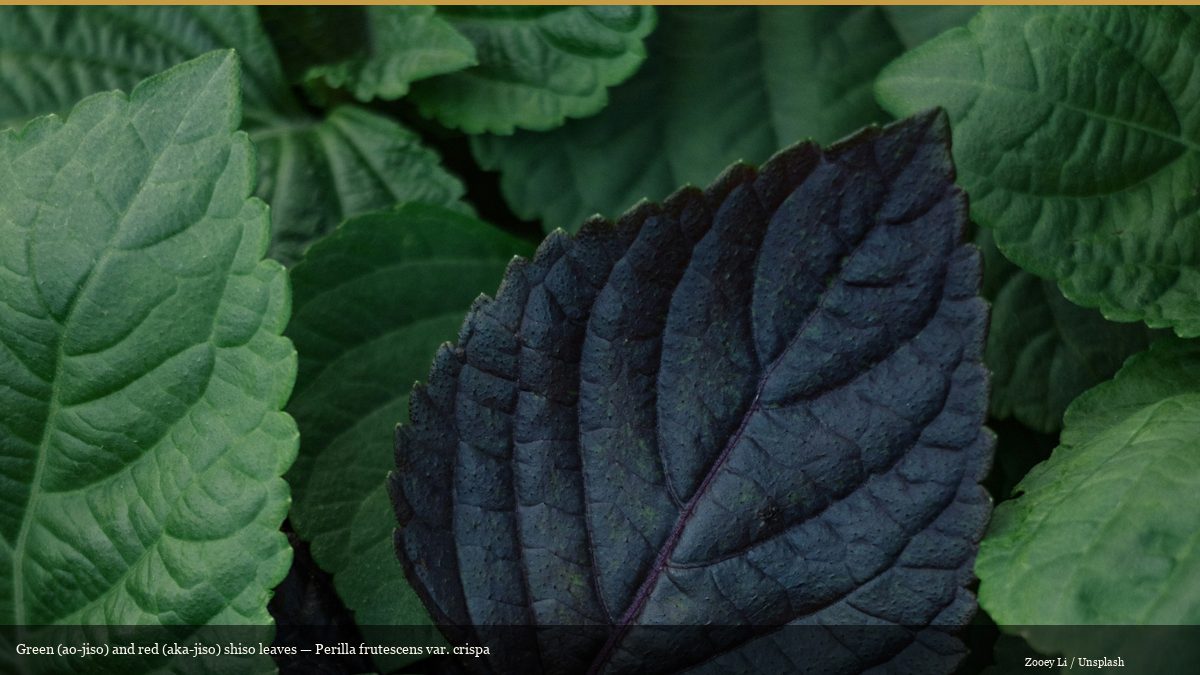
Shiso belongs to the mint family (Lamiaceae) alongside basil, sage, and rosemary — a family well known for aromatic oils and polyphenolic compounds. Its two main forms, green shiso (ao-jiso) and red shiso (aka-jiso), are botanically the same species but strikingly different in appearance, flavour, and traditional use. Together, they offer a window into how Japanese culinary and wellness traditions have long understood food and medicine as inseparable.
The Story Behind Shiso
Shiso's origins trace to southern China and the region spanning modern-day Myanmar, where Perilla frutescens grows wild. Archaeological evidence suggests a long relationship with human cultivation in Japan: shiso seeds have been found in Japanese pottery dating back approximately 2,500 years, indicating deep roots in this country's food culture long before it became the refined garnish we recognise today.
The herb arrived in Japan in a formal sense during the 8th or 9th century — not initially as food, but as an oil crop; its seeds were pressed for lamp fuel. During the Heian period (794–1185), cultivation expanded and the plant moved into gardens, kitchens, and eventually into Kampo medicine chests. The name itself carries meaning: the kanji 紫蘇 (shiso) combines 紫 (purple/violet) with 蘇 (revive/restore) — a poetic reference to the herb's red variety and its traditional association with revitalising the body.
The plant's path from China to Japan mirrors the broader transmission of Chinese medical knowledge that formed the basis of Kampo (漢方), Japan's traditional herbal medicine system. In Chinese materia medica, perilla leaves (known as 蘇葉, zǐ sū yè in Chinese or Soyo in Japanese) were classified as a warming herb that moves Qi — traditionally used in formulas for relieving the external symptoms of cold, calming cough, and easing chest stuffiness. Several Kampo formulas still in use today, including Kososan (香蘇散) and Hangekobokuto (半夏厚朴湯), incorporate perilla leaf as an ingredient.
What Is Shiso Used for in Japanese Tradition?
In traditional Japanese wellness, shiso has been understood primarily as a warming, Qi-moving herb — suited to conditions associated with cold, stagnation, and external pathogens. Kampo practitioners have historically used it in formulas intended for coughs, mild chest congestion, and the early stages of seasonal colds. In some classical texts, it also appears in formulations for nausea and stomach discomfort, particularly when linked to what traditional practice described as cold-type digestive imbalance.
Outside of formal Kampo prescriptions, shiso has long been woven into everyday Japanese preventive food culture. The antimicrobial properties of perillaldehyde — the primary volatile compound responsible for shiso's distinctive fragrance — are thought to underlie the tradition of serving fresh shiso leaves alongside raw fish. According to Nippon.com, this pairing was not merely decorative: it was a practical tradition that developed to help reduce the risk of food spoilage and foodborne illness, a form of empirical food safety long before microbiology formalised the concept.
Red shiso (aka-jiso), meanwhile, has been used seasonally in a different way — primarily as a natural colourant and flavour addition for umeboshi (salted pickled plums), shibazuke pickles, and yukari seasoning. Its intense red-purple pigment comes from a group of compounds called anthocyanins, particularly shisonin and malonylshisonin, which have attracted modern research interest for their antioxidant properties.
Key Compounds and What Research Suggests
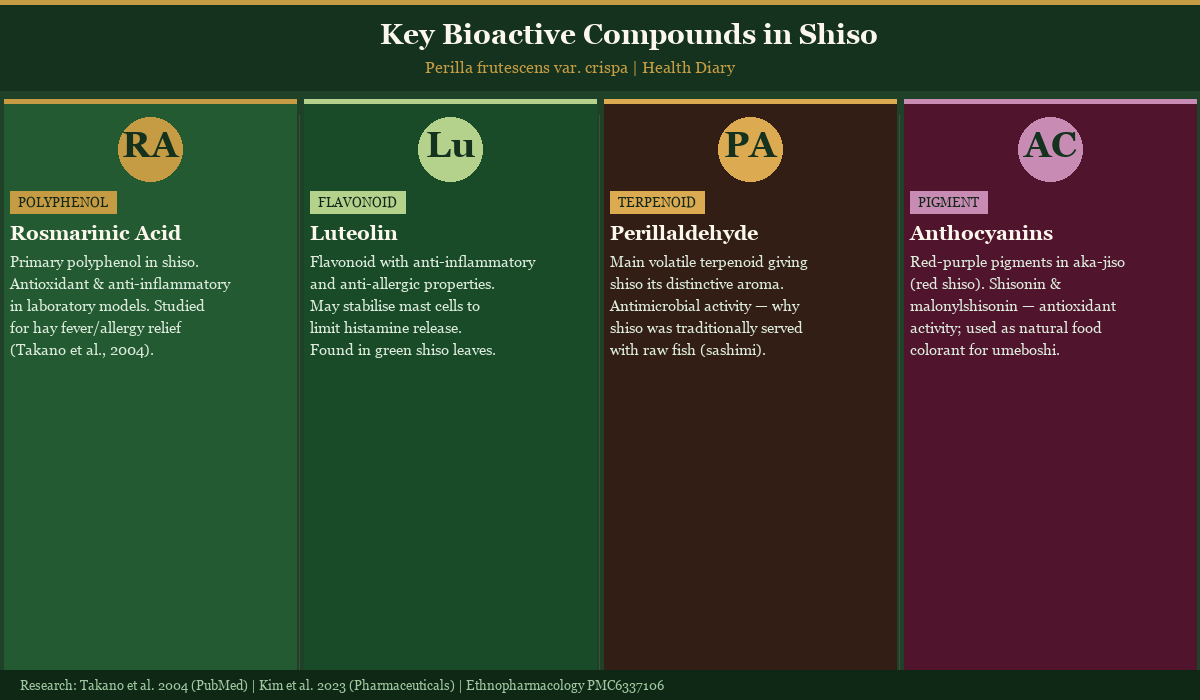
Modern phytochemical analysis of shiso leaves has identified over 270 natural compounds, including phenolic acids, flavonoids, essential oil components, and pigments. The most studied of these fall into four main categories:
Rosmarinic acid is the primary polyphenol in shiso and the compound that has received the most rigorous scientific attention. In a randomised, double-blind, placebo-controlled trial published in Experimental Biology and Medicine (2004), researchers led by Hirohisa Takano tested a Perilla frutescens extract enriched for rosmarinic acid (at 200 mg or 50 mg daily) against placebo in 29 patients with mild seasonal allergic rhinoconjunctivitis over 21 days. The treatment group showed significantly higher responder rates for itchy nose, watery eyes, and total symptoms, with measurable reductions in neutrophil and eosinophil counts in nasal lavage fluid. The authors concluded the extract may be an effective intervention, partly through inhibiting immune cell infiltration. This is one of the few human clinical trials on perilla extract in allergy, and while promising, the sample size was small and replication in larger trials is still needed.
Luteolin is a flavonoid found particularly in green shiso leaves. A peer-reviewed study (PMC6271665) demonstrated that luteolin isolated from perilla leaves exhibits anti-inflammatory and antipruritic (anti-itch) effects, with evidence of mast cell stabilisation in laboratory models — a mechanism that may partially explain traditional use for allergy-type symptoms. A subsequent 2023 study published in Pharmaceuticals (PMC10747482) isolated luteolin 7-O-diglucuronide from Perilla frutescens var. acuta leaves and found dose-dependent suppression of NF-κB transcriptional activity (approximately 57–80% inhibition), alongside reduced expression of inflammatory markers including IL-6, MCP-1, and TNF-α. These are cell and animal model findings, and human clinical data for luteolin specifically from shiso remain limited.
Perillaldehyde is the principal terpenoid in shiso's volatile oil and the compound responsible for its distinctive clean, anise-like fragrance. Laboratory research has confirmed broad antimicrobial activity against both bacteria and fungi, operating primarily by disrupting microbial cell membranes. This property has attracted food industry interest in natural preservatives and helps explain the traditional functional pairing of shiso with raw fish in Japanese cuisine.
Anthocyanins — specifically the cyanidin-type compounds shisonin and malonylshisonin — are concentrated in red shiso (aka-jiso) and are responsible for its vivid colour. Research published via ScienceDirect has confirmed malonylshisonin as the most abundant anthocyanin in red perilla. These pigments demonstrate antioxidant activity in laboratory settings and are used commercially as natural food colourants. As with many antioxidant compounds, the gap between laboratory antioxidant activity and demonstrated human health benefit remains significant, and no clinical health claims are supported by the current evidence base for shiso anthocyanins specifically.
How Do People Use Shiso Leaves?
Shiso is arguably the most versatile herb in the Japanese kitchen, and its culinary uses reflect a deep integration of flavour, tradition, and informal wellness thinking:
- Sushi and sashimi garnish: Whole green shiso leaves are placed beneath or beside raw fish, providing both a visual contrast and the antimicrobial benefit of perillaldehyde. The leaves are sometimes used as edible wrappers for nigiri.
- Tempura: Green shiso leaves are battered and deep-fried (shiso tempura) — one of the most popular tempura vegetables in Japan. The heat modifies the flavour slightly, softening the anise note into something richer.
- Chiffonade topping: Finely sliced raw green shiso is scattered over cold noodles (soba, hiyayakko tofu), adding aromatic freshness without cooking.
- Furikake and dried seasoning: Dried and ground green shiso is blended into furikake (rice seasoning mixtures) and used as a table condiment.
- Umeboshi pickling: Red shiso is the essential ingredient in traditional umeboshi preparation — the leaves are added to salted plums to impart their deep red-purple colour and contribute to the characteristic flavour profile.
- Shiso juice and soda: Red shiso leaves are simmered with sugar and citric acid to make a vivid crimson concentrate, diluted into a refreshing seasonal drink (shiso soda) popular in Japanese summers.
- Shiso tea: Both varieties can be brewed as a mild herbal infusion. Some people incorporate it into seasonal wellness routines, though this use is more informal than the structured Kampo applications.
Individual responses to shiso vary considerably; what works well as part of one person's culinary or wellness routine may not suit another, and personal experimentation under practitioner guidance is always recommended, particularly when incorporating it in larger-than-culinary quantities.
Green vs. Red Shiso — Varieties and Their Roles
While ao-jiso and aka-jiso are the same species (Perilla frutescens var. crispa), their practical roles are so distinct that many Japanese cooks treat them as fundamentally different ingredients:
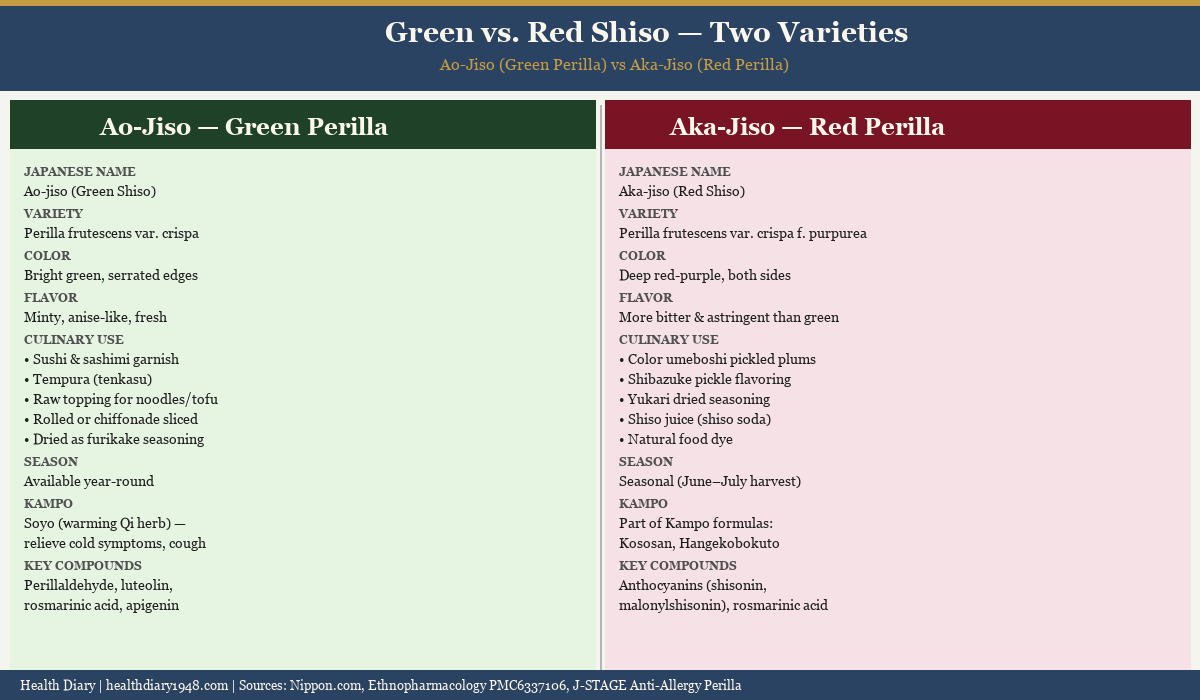
Ao-jiso (green shiso) is available year-round in Japan and globally through Asian grocery suppliers. Its flavour is bright, minty, and faintly anise-like — far fresher than the more assertive Vietnamese perilla (Perilla frutescens var. frutescens, tía tô in Vietnamese), which is a related but distinct botanical variety used differently in Southeast Asian cooking. Green shiso is the variety used in Kampo as 蘇葉 (Soyo), the formally classified warming herb.
Aka-jiso (red shiso) is seasonal, harvested primarily from June to July in Japan, when the leaves reach their peak pigmentation. Its flavour is more bitter and astringent than green shiso, making it less suitable for eating raw in large quantities. Its primary role is as a natural dye and flavour contributor — most famously in umeboshi, but also in shibazuke (Kyoto-style pickled cucumber and eggplant) and the dried seasoning yukari. The red colour it imparts to umeboshi is not just aesthetic: the combination of perilla's acidity and pigments creates a visually distinctive product that has become inseparable from Japanese culinary identity.
A note for readers familiar with Vietnamese cuisine: while Vietnamese perilla (tía tô) and Japanese shiso come from the same genus and species, they represent different cultivated varieties with meaningfully different aroma profiles and cultural applications. Vietnamese tía tô has a stronger, more pungent flavour suited to meat dishes, hot pot, and soups, while Japanese shiso is prized for its delicate, clean fragrance — a botanical sibling with a different culinary personality.
Important Considerations
Shiso consumed as a culinary herb — in the quantities typical of Japanese cooking — has a well-established safety record and is widely considered safe for most adults. It has been part of the human diet for thousands of years, and no adverse effects have been documented from normal food-level consumption.
However, several considerations apply when shiso is consumed in concentrated supplement or extract form, or when individuals have particular health conditions:
- Blood-thinning medications: Some compounds in perilla, including components of its essential oil, have been associated with anticoagulant properties in preliminary research. Individuals taking warfarin or other blood-thinning medications should consult a healthcare practitioner before using perilla seed oil or concentrated perilla leaf extract as a supplement.
- Pregnancy and breastfeeding: There is insufficient clinical data to establish the safety of concentrated shiso extracts during pregnancy or breastfeeding. Culinary use is generally regarded as safe, but supplemental doses should be discussed with a qualified practitioner.
- Rare allergy: Contact dermatitis from perilla has been documented, primarily in agricultural workers handling the plant repeatedly. Anaphylactic reactions are extremely rare but have been reported in the literature. Individuals with known sensitivity to other Lamiaceae family members (mint, basil, sage) may wish to exercise caution.
- Children: No specific safety data exists for large or supplemental doses in children. Culinary exposure is normal and not a concern.
- Limited human clinical evidence: The phytochemical research on shiso is promising but predominantly based on cell models and animal studies, with only a handful of small human trials. A 2019 systematic review in PMC (PMC6337106) noted that toxicological profiles of perilla's aromatic compounds are significantly lacking. Enthusiastic claims about shiso's health properties often outrun the actual evidence base.
- Quality variability: As with all herbal products, the concentration of active compounds in commercially sold shiso supplements or extracts can vary widely depending on growing conditions, harvest timing, and processing methods.
Frequently Asked Questions
Is shiso the same as Vietnamese perilla (tía tô)?
They are closely related but botanically distinct cultivated varieties of the same species. Japanese shiso is Perilla frutescens var. crispa, while Vietnamese tía tô is typically Perilla frutescens var. frutescens. The difference shows up in the leaf shape, aroma intensity, and flavour profile. Japanese shiso has a more delicate, minty-anise flavour suited to raw garnishing, while Vietnamese perilla is more pungent and used in hot dishes. The phytochemical composition overlaps significantly, though the proportions of individual compounds may differ between varieties.
Can I eat shiso leaves every day?
Green shiso as a culinary herb — in the quantities typical of Japanese meals — has been consumed regularly for centuries without documented adverse effects. Many Japanese people eat it daily as part of normal cooking. If you are interested in shiso as a concentrated supplement or extract rather than a food, it would be worth discussing with a healthcare practitioner, particularly if you take any medications. Individual responses vary considerably.
What does the research say about shiso and allergies?
The most direct human clinical evidence comes from a 2004 randomised controlled trial by Takano et al. involving 29 patients with seasonal allergic rhinoconjunctivitis. Participants receiving a Perilla frutescens extract enriched for rosmarinic acid showed significantly better responder rates for nasal and eye symptoms compared to placebo. This is encouraging, but a single small trial does not constitute established evidence, and the study used a standardised extract rather than whole shiso leaves. More rigorous and larger trials are needed before any definitive conclusions can be drawn.
What is the difference between green shiso (ao-jiso) and red shiso (aka-jiso)?
Both are Perilla frutescens var. crispa but differ in pigmentation, flavour, and seasonal availability. Ao-jiso (green) is available year-round, with a bright minty flavour ideal for garnishing raw fish and as a tempura leaf. Aka-jiso (red) is seasonal (June–July), more bitter and astringent, and is used primarily to colour umeboshi pickled plums and contribute to shibazuke pickles. From a traditional Kampo perspective, it is primarily the green leaf (蘇葉, Soyo) that appears in formal herbal formulations, though red shiso has its own traditional applications in digestive and warming contexts.
Does shiso interact with any medications?
At culinary quantities, shiso is not known to cause meaningful drug interactions for most people. However, concentrated perilla seed oil and high-dose extracts may have anticoagulant properties. People taking blood-thinning medications such as warfarin, aspirin at therapeutic doses, or other anticoagulants should consult a doctor before using shiso in supplement form. If you are on any prescription medications, it is always worth mentioning new supplements or significant dietary changes to your healthcare provider.
Is shiso safe during pregnancy?
Culinary use of shiso — as a garnish or flavouring in normal food amounts — is generally considered safe and has been part of Japanese diet for centuries, including for pregnant women. Concentrated extracts or supplements present a different situation: there is insufficient safety data for high-dose perilla preparations in pregnancy, and caution is appropriate. As always with any herbal use during pregnancy, a qualified healthcare practitioner should be consulted before making supplemental use a regular practice.
A Note on Wellness Tracking
One of the most practical aspects of incorporating traditional herbs like shiso into a wellness routine is paying attention to your own responses over time. Many people find that keeping a simple daily log — noting how they feel after meals, sleep quality, digestive comfort — helps them understand which foods and habits make a meaningful difference for their body, rather than relying solely on population-level research averages.
Health Diary is designed around exactly this idea: a private, personal space to track your wellness patterns over time, built around the philosophy that informed self-observation is one of the most underutilised tools in personal health. Whether you are exploring shiso tea as part of a seasonal ritual or simply curious about integrating more traditional Japanese culinary herbs into your cooking, tracking your experience consistently is one of the most evidence-based things you can do for yourself.
About This Article
Written by: Health Diary Editorial Team — our writers research health and wellness topics using peer-reviewed sources, government health publications, and traditional reference texts before drafting.
Editorial review: This article has been reviewed by the Health Diary editorial team for clarity, structure, and adherence to our sourcing standards. Key claims were cross-checked against NCCIH guidelines, NIH PubMed peer-reviewed studies, and the ethnopharmacological literature (PMC6337106, PMC10747482) where applicable. It is not a clinical review and should not replace consultation with a licensed healthcare practitioner.
Reviewed on: June 14, 2026.
Editorial process: We cite peer-reviewed and government sources where possible. When a clinical reviewer is added to this article, attribution will appear here with verifiable credentials.
References
- Takano H, Osakabe N, Sanbongi C, et al. Extract of Perilla frutescens enriched for rosmarinic acid, a polyphenolic phytochemical, inhibits seasonal allergic rhinoconjunctivitis in humans. Experimental Biology and Medicine (Maywood). 2004;229(3):247-254.
- Kim YJ, et al. Anti-Inflammatory Activity of the Constituents from the Leaves of Perilla frutescens var. acuta. Pharmaceuticals. 2023;16(12).
- Asif M, et al. Ethnomedicinal, Phytochemical and Pharmacological Investigations of Perilla frutescens (L.) Britt. Evidence-Based Complementary and Alternative Medicine. 2019.
- Comprehensive Review of Perilla frutescens: Chemical Composition, Pharmacological Mechanisms, and Industrial Applications. Foods (MDPI). 2025.
- Anti-Inflammatory and Antipruritic Effects of Luteolin from Perilla Leaves. PMC6271665.
- Kosuna K. Anti-Allergic Components of Perilla (シソの抗アレルギー成分について). Journal of the Society of Cosmetic Chemists of Japan. 1994;27(4).
- Nippon.com. Shiso: A Small Leaf with a Huge Role in Japanese Dishes.
- Anthocyanins in perilla plants and dried leaves. Phytochemistry. 2018.