Sleep Herbs in Asian Traditions: Plants Used for Rest and Calm in Asian Wellness
Explore herbs traditionally associated with rest and calm in Asian wellness — sour jujube seed, lotus embryo, jujube, reishi mushroom, and magnolia bark — with their cultural contexts and simple tea preparations.
Medical Disclaimer: This content is for educational and informational purposes only and is not medical advice. The information presented is not intended to diagnose, treat, cure, or prevent any disease. Always consult a licensed healthcare practitioner before starting any new herbal practice or supplement. Statements regarding traditional herbal use have not been evaluated by the FDA.
Affiliate Disclosure: This article contains affiliate links. We may earn a commission if you purchase through these links, at no additional cost to you. We only recommend products we believe align with our editorial standards.
Long before modern sleep science, cultures across East Asia had already developed thoughtful relationships with plants associated with rest, calm, and the settling of the mind. From the simmered seed teas of classical Chinese wellness practice to the bitter evening infusions enjoyed in Chinese households, these herbs occupy a unique place in the region's wellness traditions — not as remedies, but as companions to the natural rhythm of winding down.
This article explores five herbs traditionally associated with calm and restful evenings in Asian wellness contexts: sour jujube seed (suanzaoren), lotus embryo (lian zi xin), red date (hong zao), reishi mushroom (lingzhi), and magnolia bark (houpu). Each carries its own cultural story, preparation tradition, and flavor character. Understanding them in their historical context offers a richer appreciation of Asian wellness philosophy — one where sleep is understood as an expression of overall balance, not simply the absence of wakefulness.
What Are Asian Sleep Herbs, and How Were They Traditionally Understood?
In classical Chinese wellness frameworks, restless evenings or difficulty settling into sleep were often interpreted through the lens of internal imbalance — specifically, patterns described as "heart blood deficiency" (xin xue bu zu) or "heart fire" (xin huo) disturbing the spirit (shen). Unlike modern sleep aid categories that target neurological pathways directly, traditional Chinese wellness focused on nourishing and calming the underlying pattern rather than suppressing symptoms.
This is why many herbs associated with rest in Chinese tradition are described as "calming the spirit" (an shen) or "clearing heart fire" (qing xin jiang huo) — language that reflects a holistic model of the body rather than clinical pharmacology. These are cultural and philosophical frameworks, not medical diagnoses. Individual experiences with these herbs vary considerably, and their effects — if any — are likely subtle and cumulative rather than immediate.
Sour Jujube Seed (Suanzaoren): China's Most Recognized Rest Herb
Perhaps no herb is more closely associated with rest in Chinese wellness tradition than suanzaoren (酸枣仁) — the dried, roasted seed of the wild jujube plant (Ziziphus jujuba var. spinosa). It is important to note that this is distinct from the jujube fruit commonly found in Chinese cooking: suanzaoren is specifically the seed of the wild (sour) variety, with a notably different character.
Suanzaoren's role in Chinese wellness history is ancient. The formula known as Suanzaoren Decoction (酸枣仁汤) was first documented in Jingui Yaolue (Synopsis of Prescriptions of the Golden Chamber) by Zhang Zhongjing (approximately 152–219 CE), making it one of the oldest named wellness formulas in the Chinese classical corpus [1]. The classical formula combines suanzaoren with licorice root, anemarrhena, poria mushroom, and ligusticum — a combination traditionally intended for what the text describes as "deficiency heat disturbing the spirit," characterized by restlessness in the evenings.
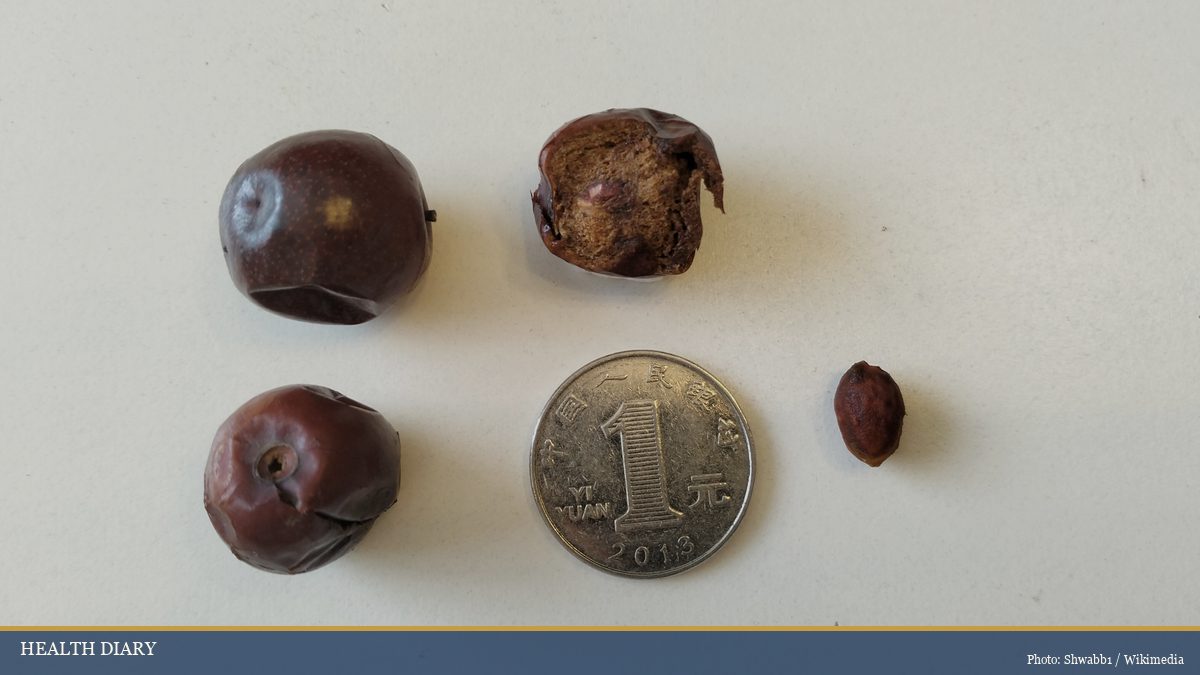
The classical commentary in Chinese wellness literature describes suanzaoren as sweet, sour, and balanced in temperature — entering the heart, liver, and gallbladder meridians — with the primary function of "nourishing heart blood and calming the spirit" (养心安神, yang xin an shen) [2]. According to Zhongyao Xue (Chinese Materia Medica) on 中医世家, suanzaoren is specifically indicated for "deficiency restlessness and insomnia, palpitation, and excessive sweating" — all understood within the context of deficiency patterns rather than primary sleep disorders.
Modern research has taken interest in suanzaoren's bioactive profile. A 2024 bibliometric review published in Foods identified over 130 bioactive compounds in sour jujube seeds, with saponins (jujuboside A and B) and flavonoids (including spinosin) identified as the characteristic compounds showing the strongest activity on central nervous system-related endpoints in laboratory settings [3]. A meta-analysis of 13 randomized controlled trials involving 1,454 patients found that suanzaoren-containing formulae showed favorable outcomes compared to placebo, with proposed mechanisms involving GABAergic and serotonergic pathways [1]. However, these studies evaluated multi-herb formulas, not isolated suanzaoren — making it difficult to attribute effects to the seed alone.
In contemporary practice, suanzaoren is available as roasted seeds for home simmering, and as pre-packaged tea bags in Asian grocery stores and herbal shops. The taste is mildly sour with earthy undertones. Individual responses vary considerably; what supports evening calm for one person may not have the same effect for another.
Lotus Embryo Tea (Lian Zi Xin): The Bitter Evening Tradition
The lotus plant (Nelumbo nucifera) is one of the most symbolically rich plants in Asian culture, associated across traditions with purity, spiritual cultivation, and calm. Within Chinese wellness practice, multiple parts of the lotus are used for different purposes — and the lotus seed embryo, known as lian zi xin (莲子心), holds a specific place in the folk tradition of calming the heart.
Lian zi xin is the tiny, bright-green germ found at the center of mature lotus seeds. It is notably distinct from lotus seeds themselves (lian zi), which are white, starchy, and mild-flavored. The embryo is intensely bitter — a quality that, within Chinese wellness philosophy, is associated with a "cooling" action and the ability to "clear heart fire" (清心降火, qing xin jiang huo) [4].
Lian zi xin cha (莲子心茶) — lotus embryo tea — has a folk tradition in China, particularly as an evening beverage for those who feel overheated, restless, or have difficulty settling. Traditional Chinese wellness texts note its use for "disturbed spirit due to heart fire" — a constitutional pattern rather than a medical diagnosis. Because of its intense bitterness, it is commonly blended with chrysanthemum flowers (another classically cooling herb) to create a more palatable beverage.
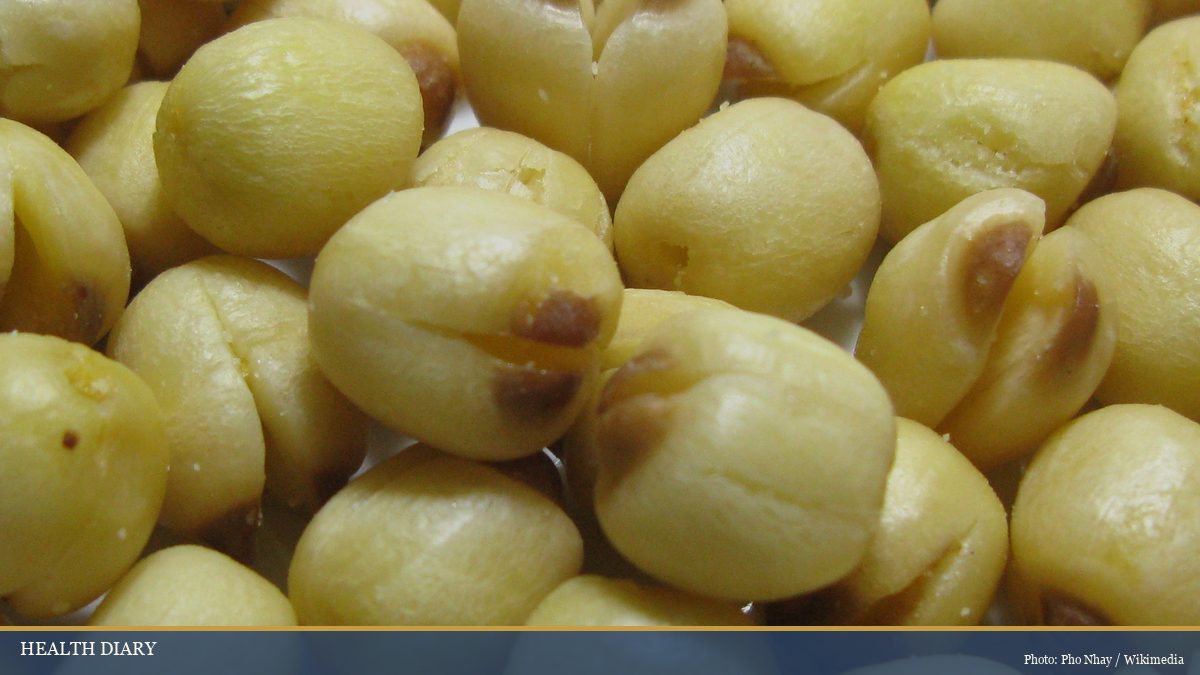
A 2021 review in the Journal of Ethnopharmacology examined the phytochemistry and pharmacology of Plumula Nelumbinis (lian zi xin), identifying bisbenzylisoquinoline alkaloids — neferine, liensinine, and isoliensinine — as the primary active compounds [4]. Animal and cell-based studies have examined these alkaloids for cardiovascular and calming effects, though human clinical evidence remains limited. The research history of lian zi xin spans more than 1,400 years of documented use in Chinese materia medica texts.
In traditional practice, lian zi xin is steeped briefly (2–5 minutes) in hot water, often alongside chrysanthemum and goji berries to balance the bitterness. Those with cold constitutions or sensitive digestion are traditionally cautioned to use it in moderation. Individual experiences with bitter herbs vary considerably — the intensity can be surprising for those unfamiliar with the taste.
Red Date (Jujube) for Evening Calm: The Household Herb
Red dates — hong zao (红枣) — are among the most ubiquitous wellness foods in Chinese culinary tradition. Distinct from the sour jujube seed discussed earlier, hong zao refers to the dried fruit of the common jujube (Ziziphus jujuba) — sweet, red-brown, and familiar in Chinese soups, teas, and congees.
Within Chinese folk tradition, red dates carry a reputation for "nourishing blood and calming the spirit" (养血安神, yang xue an shen). They are described as sweet and warm, entering the heart and spleen meridians — a tonic food rather than a strong herb, appropriate for regular inclusion in the diet. The gentle warming quality makes them a natural choice for evening preparations.
The folk tradition of combining red dates with longan fruit (guiyuan, 桂圆) for evening teas reflects the concept of "double nourishing" — both ingredients are described as nourishing heart blood and settling the spirit, with longan adding a sweet, floral note. This combination appears in Chinese culinary wellness traditions from southern China, where it is simmered as a bedtime drink particularly during cooler months.
Red dates are widely available, mild in flavor, and generally regarded as a gentle food-grade ingredient with a long culinary history. Unlike more specialized herbs, hong zao requires no special preparation — pitted dates can be simmered simply in water for 20–30 minutes to produce a lightly sweet, warming tea. They are also frequently combined with lotus seeds and goji berries. As always, individual responses to any food or herbal ingredient vary; those on blood-thinning medications should consult a healthcare practitioner before regular high-dose use.
Reishi Mushroom: The Spirit Herb for Calm
Reishi — known in Chinese as lingzhi (灵芝) and in Japanese as reishi (霊芝) — holds a position in Chinese wellness tradition that few plants can match. Its name translates roughly as "spiritual potency" (ling) + "essence" (zhi), reflecting its classical status as a supreme tonic associated with longevity, spiritual cultivation, and the calming of the mind.
The earliest systematic classification of lingzhi appears in the Shennong Bencao Jing (Divine Farmer's Classic of Materia Medica), written between approximately 206 BCE and 220 CE. The text categorizes six types of lingzhi by color and places the mushroom in the "imperial herb" (superior) category — herbs held in the highest esteem for daily tonic use [5]. The classical description emphasizes lingzhi's ability to "replenish qi, ease the mind, and calm the spirit" (安神, an shen) — a function that has made it central to Chinese wellness traditions focused on evening calm and mental settledness.
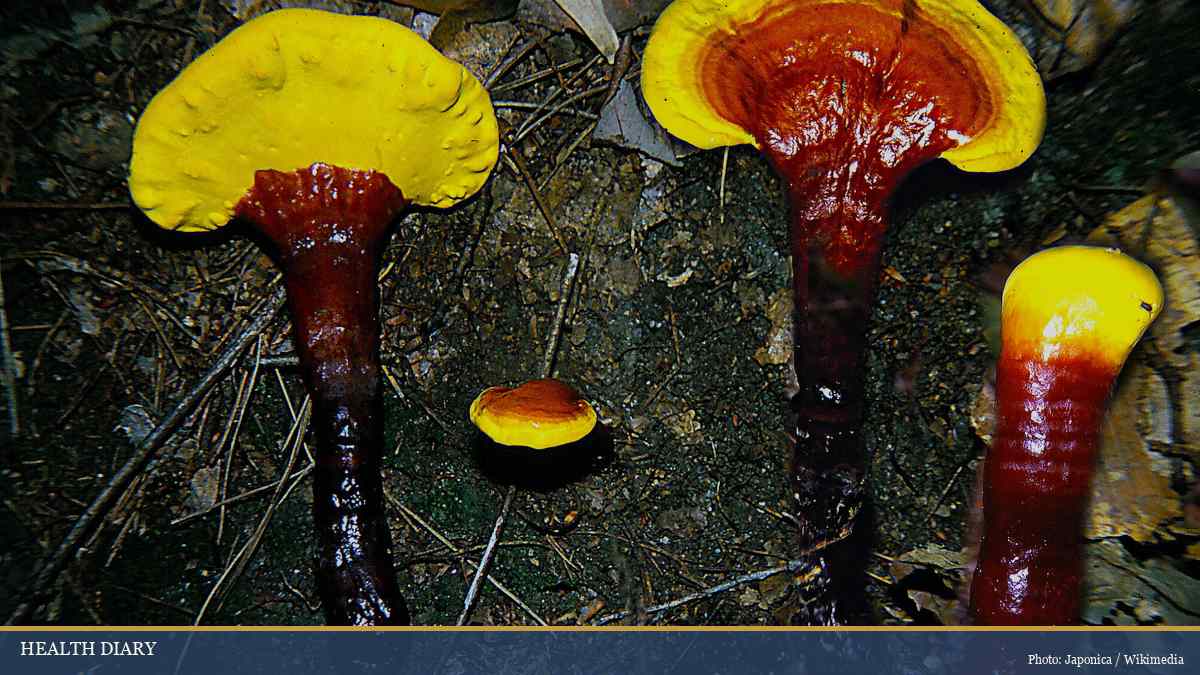
The NCBI Bookshelf chapter on Ganoderma lucidum (authored by Wachtel-Galor et al.) notes that classical texts recommend lingzhi for "dizziness, insomnia, palpitation, and shortness of breath," reflecting its traditional role as a spirit-calming herb in the Chinese system [5]. Modern analysis has identified over 400 bioactive compounds in reishi, including polysaccharides, triterpenes (ganoderic and lucidenic acids), and peptidoglycans — components under active study for immunomodulatory and neuroprotective properties.
In Japanese wellness tradition, reishi has been similarly valued as a calming herb — reishi no ki (霊芝の木) — with preparations traditionally simmered as decoctions. The earthy, mildly bitter flavor of reishi tea reflects its rich triterpene content.
For home preparation, dried sliced reishi is typically simmered in water for 30–45 minutes at low heat, producing a dark, amber-colored tea with a distinctly earthy, slightly woody flavor. It pairs naturally with red dates or goji berries, which soften the bitterness. Reishi has a long safety record as a traditional tonic, though those on immunosuppressants or blood-thinning medications should seek practitioner guidance before regular use. Responses to reishi vary considerably between individuals.
Magnolia Bark (Houpu) in Chinese Wellness Tradition
Magnolia bark — houpu (厚朴) — is one of the fifty fundamental herbs in Chinese wellness tradition, derived from the bark of Magnolia officinalis. Its name reflects its character: "hou" (thick) refers to the substantial bark, while "pu" (plain, unadorned) suggests its grounding, straightforward quality.
Unlike the herbs discussed above, houpu is primarily known in Chinese wellness tradition for its role in compound formulas — particularly those addressing patterns involving digestive constraint, qi stagnation, and dampness. It appears in classical formulas such as Banxia Houpu Tang (半夏厚朴汤), traditionally used for a pattern described as "plum pit qi" (sensation of something stuck in the throat connected to emotional constraint), and Ping Wei San (平胃散) for digestive discomfort [6].
Within these compound formula contexts, houpu's warming, aromatic (citrus-floral) character contributes to a calming and centering effect — not as a primary sleep herb, but as one ingredient within a broader wellness formulation. It is important to note that houpu is not typically consumed as a standalone herbal tea in Chinese folk tradition, and it is not recommended for independent supplementation outside of qualified TCM practitioner guidance. Its active compounds, magnolol and honokiol, have been studied in laboratory settings but human clinical evidence remains limited [6].
Houpu is included here for historical and cultural completeness — as a fascinating example of how Chinese wellness tradition uses aromatic barks within compound formulas — rather than as a recipe suggestion. Those interested in houpu-based formulations should consult a qualified Traditional Chinese wellness practitioner.
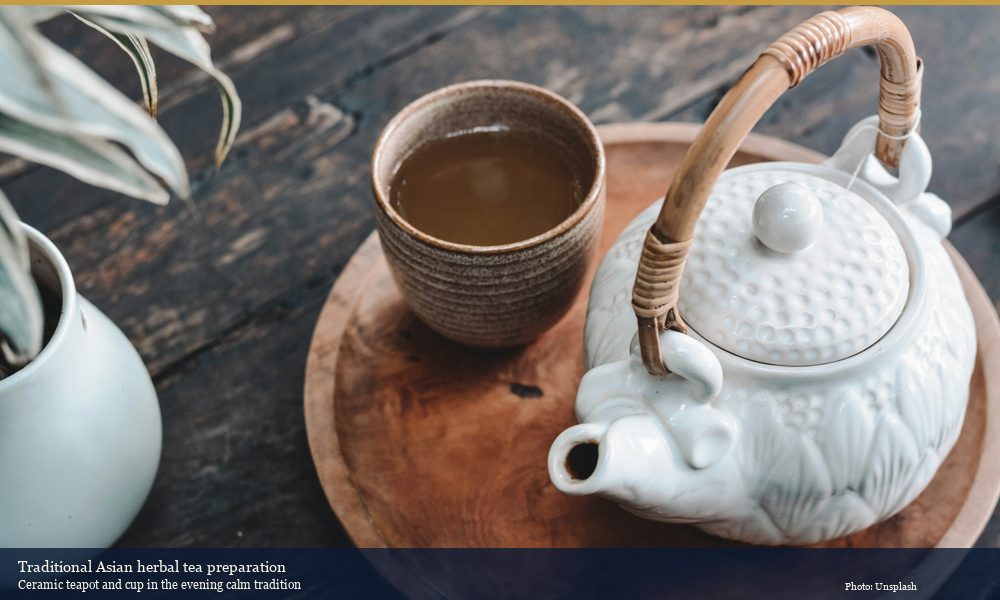
How to Make Simple Sleep-Supporting Herbal Teas at Home
The herbs most accessible to home preparation are sour jujube seed, red date, longan, lotus seeds, and reishi mushroom. Below are three simple preparations drawn from Chinese folk tradition. These are not clinical prescriptions — they are cultural wellness practices with long culinary histories.
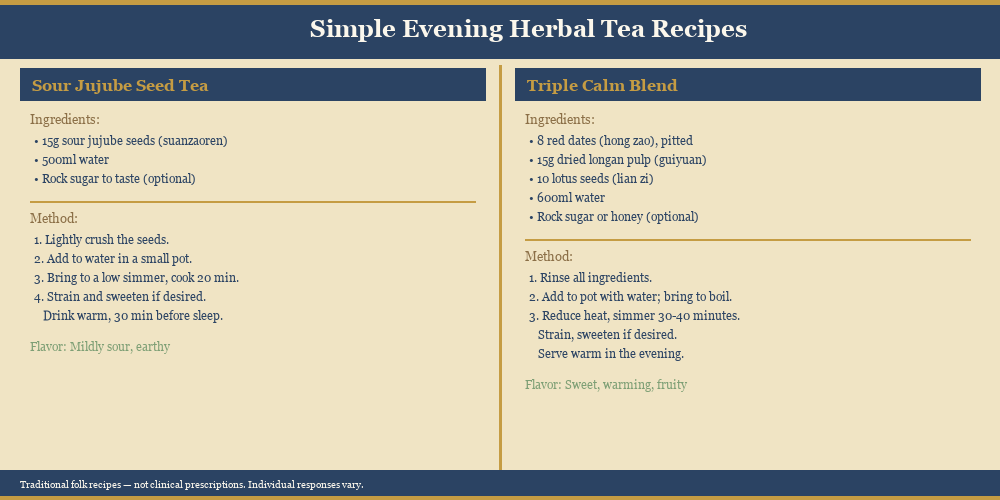
Recipe 1: Sour Jujube Seed Tea (Suanzaoren Cha)
Use approximately 15g of roasted sour jujube seeds (available at Chinese herbal shops or online). Lightly crush the seeds in a mortar or with the flat of a knife. Add to 500ml of cold water in a small pot. Bring to a gentle simmer and cook on low heat for 20 minutes. Strain through a fine mesh strainer. Sweeten lightly with rock sugar if desired. Drink warm, approximately 30 minutes before your intended bedtime. The flavor is mildly sour with a pleasant earthy character.
Recipe 2: Red Date, Longan, and Lotus Seed Tea
Combine 8 pitted red dates (hong zao), 15g dried longan pulp (guiyuan), and 10–12 lotus seeds (lian zi) in a pot with 600ml of water. Bring to a boil, then reduce heat and simmer for 30–40 minutes until the liquid is fragrant and lightly colored. Strain if preferred, or drink with the softened fruit. Sweeten with a small amount of rock sugar or honey. This warming, sweet tea is a classic Chinese folk preparation for cooler evenings.
Recipe 3: Chrysanthemum, Lotus Embryo, and Goji Blend
Steep 5g dried chrysanthemum flowers, 2g lotus embryo (lian zi xin), and 10g goji berries in 400ml of hot water (just below boiling — around 85°C) for 5–8 minutes. The chrysanthemum and goji berries help balance the bitterness of the lotus embryo. This is a lighter, more delicate evening blend — pale golden with floral and mildly bitter notes. Traditionally consumed in China as a cooling evening tea.
Individual responses to herbal preparations vary considerably. What supports restful evenings for one person may not be appropriate for another. These recipes are folk traditions, not clinical recommendations.
Important Considerations and Limitations
Before exploring any of these herbal preparations, it is worth understanding their limitations and potential considerations:
- Not substitutes for clinical care: Sleep difficulties can have many underlying causes — medical, psychological, and environmental. These herbal traditions are not substitutes for evaluation by a qualified healthcare provider. NCCIH notes that cognitive behavioral therapy for insomnia (CBT-I) has the strongest evidence base for sleep difficulties [7].
- Drug interactions: Sour jujube seed, reishi mushroom, and red dates may interact with blood-thinning medications (anticoagulants), diabetes medications, and immunosuppressants. Consult your healthcare provider if you take prescription medications.
- Pregnancy and breastfeeding: Pregnant and breastfeeding individuals should consult a qualified practitioner before using any herbal preparations, including these folk traditions.
- Children: Preparations intended for adults are not automatically appropriate for children. Seek pediatric practitioner guidance.
- Quality variability: The quality, potency, and safety of herbal products varies widely depending on sourcing, processing, and storage. Purchase from reputable suppliers with clear sourcing information.
- Magnolia bark specifically: Houpu should not be self-administered as a supplement. Its use is traditionally within compound TCM formulas under practitioner guidance, not as a standalone herbal tea.
- Individual variation: Effects of herbal preparations are highly individual. What works well for one person may not suit another.
Frequently Asked Questions
What is sour jujube seed (suanzaoren) and how is it different from red dates?
Sour jujube seed (suanzaoren) is the dried, roasted seed from the wild, sour jujube plant — a small, tart fruit quite different from the common cultivated red date (hong zao). The seed has a mildly sour, earthy flavor and has been documented in Chinese wellness formulas for nearly 2,000 years. Red dates (hong zao) are the sweet dried fruit of the common jujube, widely used in Chinese cooking as a gentle tonic food. The two come from related plants but are used quite differently in Chinese wellness traditions.
Can I drink suanzaoren tea every day?
In Chinese folk tradition, suanzaoren-based teas are sometimes consumed regularly over a period of weeks as part of an evening wellness routine. However, daily use is best explored under the guidance of a qualified TCM practitioner, who can assess whether it is appropriate for your individual constitution. Those on medications — particularly central nervous system medications — should consult a healthcare provider before regular use. Individual responses vary considerably.
What does lotus embryo (lian zi xin) taste like, and how bitter is it?
Lotus embryo is intensely bitter — noticeably more so than green tea or coffee. The bitterness comes from its alkaloid compounds (neferine, liensinine). Chinese folk tradition recommends blending it with chrysanthemum flowers and goji berries to create a more balanced, palatable flavor. Many people find a small amount (2–3g per brew) is sufficient to provide the characteristic bitter note without overwhelming the drink. Those sensitive to bitter flavors may prefer to use a smaller amount initially.
Is reishi mushroom safe for long-term use?
Reishi (lingzhi) has a long history of use as a daily tonic in Chinese and Japanese wellness traditions, and is generally considered safe for most healthy adults. However, those taking anticoagulants, immunosuppressants, or diabetes medications should consult a healthcare provider before regular use, as reishi may influence these drug categories. NCBI's herbal reference chapter notes most adverse effects in research were mild. Quality matters — choose reishi products from reputable sources with clear origin information.
What time of day should I drink these herbal teas?
In Chinese folk tradition, herbs associated with evening calm are typically consumed 30–60 minutes before the intended bedtime, in a warm and settled environment. Evening herbal tea rituals in Asian traditions are as much about the wind-down practice itself — slowing down, sitting quietly, sipping something warm — as about any specific botanical effect. Starting a consistent pre-sleep routine is itself a recognized behavioral component of sleep hygiene.
Where can I find these herbs outside of Asia?
Sour jujube seeds (suanzaoren), red dates (hong zao), lotus seeds, and dried longan pulp are widely available in Chinese grocery stores and Asian supermarkets in most major cities outside Asia. They are also available through reputable online herbal suppliers. Reishi mushroom is now widely sold as whole dried slices, powders, and tea bags through health food stores and specialist herbal retailers. Lotus embryo (lian zi xin) may require a Chinese herbal medicine shop or specialty online source.
About This Article
Written by: Health Diary Editorial Team — researchers and writers focused on Asian wellness traditions and cultural herbal practices.
Editorial review: This article has been reviewed by the Health Diary editorial team for clarity, structure, and adherence to our sourcing standards. Key claims were cross-checked against NCCIH, NIH PubMed, NCBI Bookshelf, and peer-reviewed pharmacognosy literature where applicable. It is not a clinical review and should not replace consultation with a licensed healthcare practitioner.
Reviewed on: June 16, 2026.
Editorial process: We cite peer-reviewed and government sources where possible. When a clinical reviewer is added to this article, attribution will appear here with verifiable credentials.
This article explores herbs in Asian wellness traditions for educational purposes only. These are not treatments for sleep disorders. Consult a qualified healthcare provider before using herbal preparations.
References
- Zhou Q-H, et al. "Suanzaoren Formulae for Insomnia: Updated Clinical Evidence and Possible Mechanisms." Frontiers in Pharmacology, 2018, 9:76. PMC5811769
- 中医世家 (zysj.com.cn). 酸枣仁 — 中药材. zysj.com.cn [Chinese materia medica reference; native-zh source]
- Ruan W, et al. "Sour Jujube (Ziziphus jujuba var. spinosa): A Bibliometric Review of Its Bioactive Profile, Health Benefits and Trends in Food and Medicine Applications." Foods, 2024, 13(5):636. PMC10930723
- Luo S, et al. "Plumula Nelumbinis: A review of traditional uses, phytochemistry, pharmacology, pharmacokinetics and safety." Journal of Ethnopharmacology, 2021. ScienceDirect
- Wachtel-Galor S, et al. "Ganoderma lucidum (Lingzhi or Reishi) — Herbal Medicine." In: Herbal Medicine: Biomolecular and Clinical Aspects, 2nd ed. NCBI Bookshelf, 2011. NBK92757
- Subhuti Dharmananda. "Magnolia Bark: An Important Herb of Chinese Herbal Formulas." Institute for Traditional Chinese Herbal Studies. itmonline.org
- National Center for Complementary and Integrative Health (NCCIH). "Sleep Disorders and Complementary Health Approaches." NIH. nccih.nih.gov
- Shennong Bencao Jing (Divine Farmer's Classic of Materia Medica), c. 206 BCE–220 CE. Classical Chinese text; lingzhi classified as a superior-grade spirit-calming herb.