Spring Wellness Traditions: An Asian Seasonal Guide
An overview of spring wellness traditions across China, Japan, Korea, and Vietnam — the Wood element, liver care, gentle movement, and seasonal spring health habits.
Medical Disclaimer: This content is for educational and informational purposes only and is not medical advice. The information presented is not intended to diagnose, treat, cure, or prevent any disease. Always consult a licensed healthcare practitioner before starting any new herbal practice or supplement. Statements regarding traditional herbal use have not been evaluated by the FDA.
Affiliate Disclosure: This article contains affiliate links. We may earn a commission if you purchase through these links, at no additional cost to you. We only recommend products we believe align with our editorial standards.
When the first warm days arrive and buds push open along bare branches, something shifts. People sleep a little differently, crave lighter meals, and feel the pull to step outside. Long before anyone measured hormones or daylight hours, the wellness traditions of East Asia noticed this and built a seasonal philosophy around it. Across China, Japan, Korea, and Vietnam, spring is treated not simply as a change in weather but as a distinct energetic season with its own foods, movements, and moods.
This guide offers an overview of spring wellness traditions as understood in traditional East Asian thought — why spring is linked to the Wood element and the liver, how the same idea surfaces in four different cultures, what modern research has begun to explore, and gentle ways some people bring these practices into daily life. Think of it as a map of the season; for deeper dives, we cover spring foods and spring teas in separate companion articles.
Why Spring Has Its Own Rhythm in Eastern Traditions
In much of East Asian medicine, the body is seen as part of nature rather than separate from it. A central idea, translated as "nourishing life" (養生, yangsheng in Chinese, dưỡng sinh in Vietnamese), holds that living in step with the seasons keeps the body in balance. A peer-reviewed overview of biological rhythm in traditional Chinese medicine describes this as "harmony between human and nature," with seasonal and daily rhythms interpreted through Yin-Yang and the Five Elements. [1] Under this view, each season invites a different posture: winter draws energy inward for storage and rest, while spring is the season of emergence, when what was dormant begins to move. The classical texts describe spring as the time when "all things flourish," and recommend adjusting sleep, movement, diet, and mindset to match that upward momentum rather than fighting it.
How Does Traditional Chinese Medicine View Spring?
In Traditional Chinese Medicine (TCM), spring corresponds to the Wood element and to the Liver (Can) organ network. Wood is associated with growth, upward movement, the color green, and the sour taste. Because the liver in this system governs the smooth flow of qi (vital energy) and dislikes stagnation, spring is considered the season when liver energy naturally rises and expands — a good time, traditionally, to keep that flow easy and unobstructed.
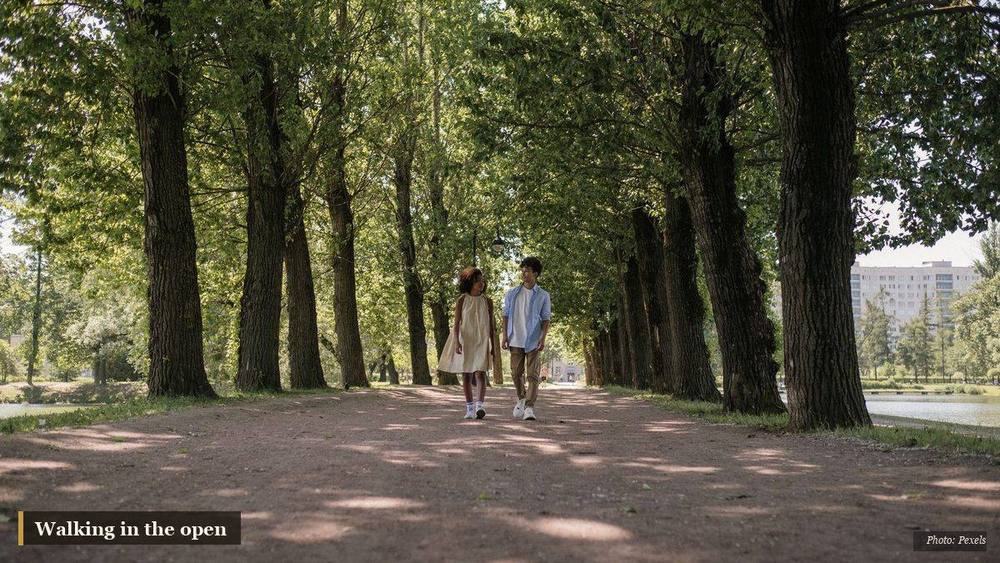
The oldest source for this thinking is the Huangdi Neijing (Yellow Emperor's Inner Classic), whose chapter on "regulating the spirit according to the four seasons" advises that in the three months of spring one should sleep a little later, rise early, walk unhurriedly in the open, let the hair down, and keep the body relaxed and the intentions gently alive. Going against this spring current, the text warns, may burden the liver. [2]
Diet follows the same logic. A widely repeated principle, echoed by China's public health educators, is to "reduce sour and increase sweet" (省酸增甘) during spring. Sour flavors are considered astringent and inward-pulling, which is thought to restrain the liver's outward spring movement, while gently sweet and mild foods are said to nourish the spleen and steady digestion. [3] The same guidance stresses keeping the mood open and unhurried, since frustration and pent-up anger are traditionally believed to disturb liver qi.
What Do Spring Traditions Look Like Across Asia?
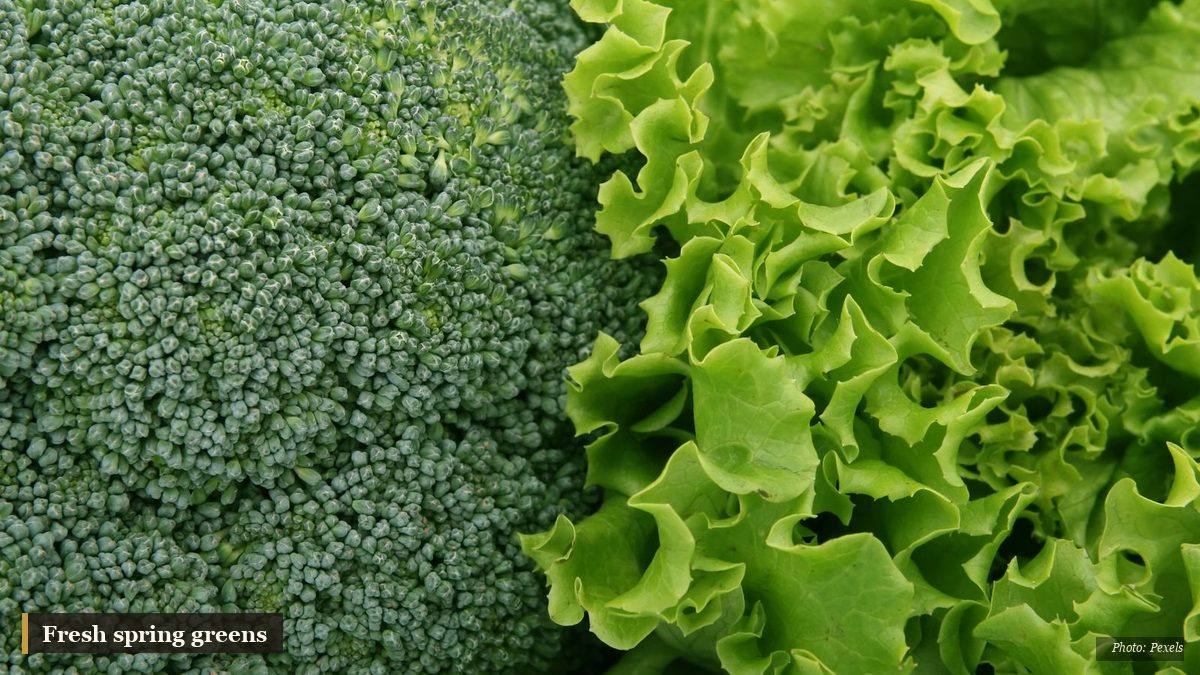
What makes spring so interesting is that four neighboring cultures took the same Wood-and-Liver idea and expressed it in their own kitchens and gardens. The vocabulary changes; the underlying rhythm stays remarkably consistent.
China. Spring wellness (春季养生) centers on caring for the liver (养肝): light, fresh, gently sweet foods, green vegetables and sprouts, unhurried early-morning movement, and an easy temperament. Layering clothing rather than shedding it too quickly — the folk phrase "春捂" (spring covering) — reflects caution about spring's changeable weather.
Japan. Japanese spring eating revolves around shun (旬), the peak moment when an ingredient is at its most vibrant. Its signature foods are sansai — wild mountain vegetables such as fuki-no-tou (butterbur sprouts), warabi (bracken), and taranome. Their bitterness is welcomed rather than avoided; in Japanese medicinal-diet (yakuzen) thinking, spring is linked to the liver, and bitter seasonal vegetables are said to help "wake up" a body that grew sluggish over winter. [4]
Korea. Korean spring brings bom namul (봄나물), the first wild seasonal greens, and ssuk (mugwort), whose earthy fragrance signals the season and which has been folded into home cooking for generations. The impulse is to eat lighter and fresher after a heavier winter table — a reset that mirrors the Chinese emphasis on gentle, green spring food.
Vietnam. Vietnamese dưỡng sinh (nurturing life) applies the âm dương (Yin-Yang) balance of "heating" and "cooling" foods to the season. Spring meals lean toward thanh đạm — light and clean — favoring green vegetables that, in the Five Elements color scheme, correspond to Wood and the liver (can) over heavy, sour, or greasy dishes as the weather warms.
The Five Elements and the Season of Wood
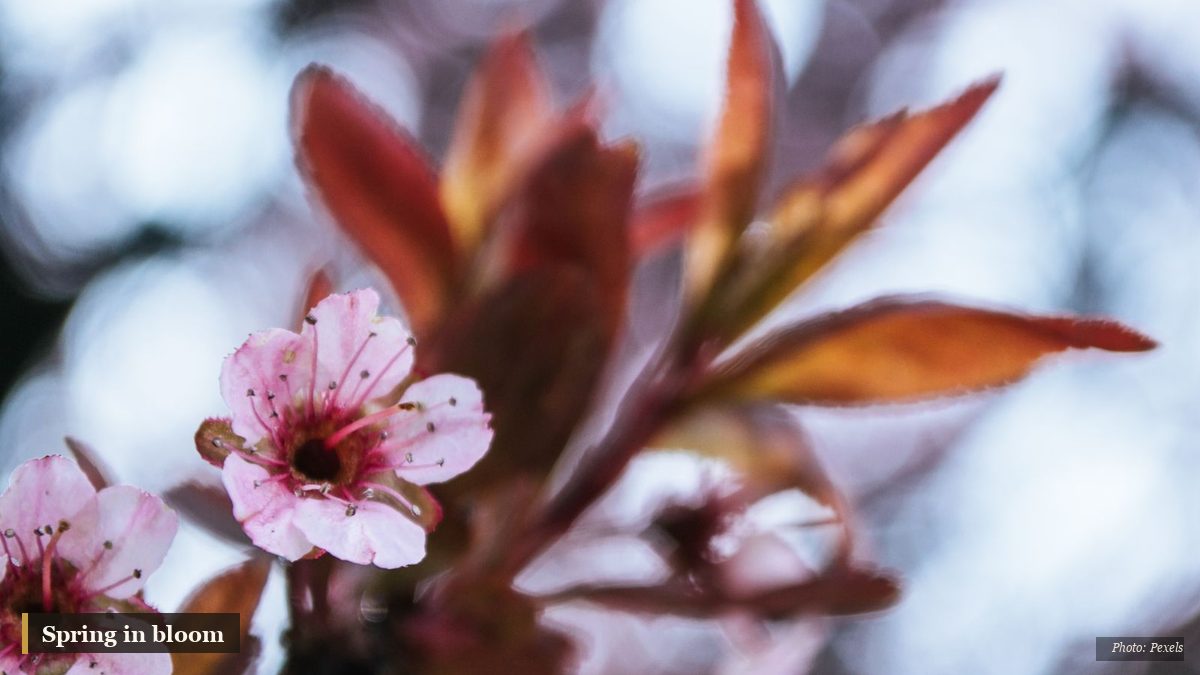
To see why these traditions line up so neatly, it helps to picture the Five Elements (Wu Xing) as a wheel of the year. Each element pairs with a season, an organ network, a color, and a flavor. Spring sits with Wood; summer with Fire; late summer with Earth; autumn with Metal; winter with Water.
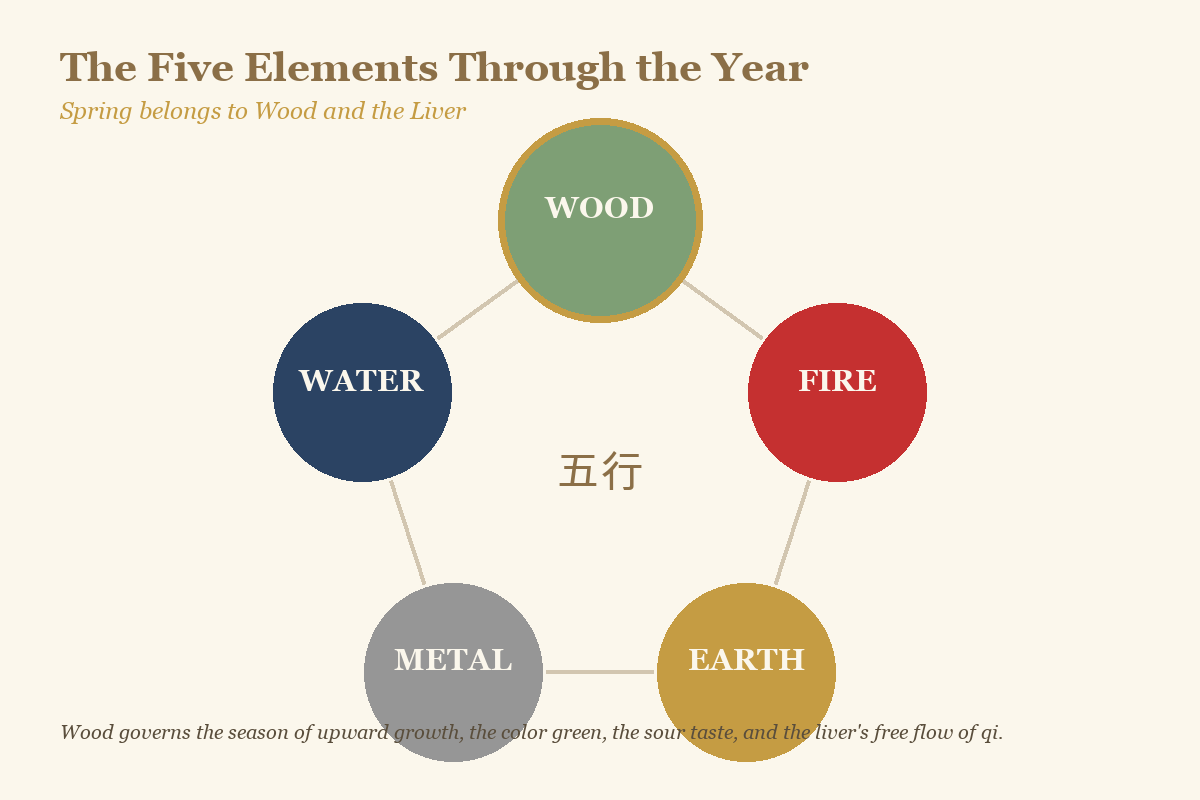
The wheel is best read not as biology in the modern clinical sense but as a memory system — grouping the color green, the sour taste, new growth, and the liver's "free flow" quality into one easy-to-remember pattern. When traditional writers say "eat green in spring" or "keep the liver qi moving," they are drawing on this map, which makes the scattered spring customs across Asia feel like variations on one theme rather than unrelated folklore.
What Does Modern Research Suggest About Spring Habits?
It is important to be clear-eyed here: the classical seasonal framework is a philosophy of living, not a set of clinical trials, and much of it has not been tested in the way modern medicine tests a drug. What we can say is that several of spring's low-risk habits overlap with areas researchers have begun to examine.
The idea that daily and seasonal rhythms shape wellbeing is itself an active field; the TCM literature on biological rhythm frames seasonal adjustment as a form of preventive self-care rather than treatment. [1] Gentle spring movement also has a research-friendly parallel. Tai chi and qigong — the unhurried, flowing practices often recommended as one eases into the season — are described in a peer-reviewed review as mind-body exercises that combine movement, breathing, and mental focus. [5] The U.S. National Center for Complementary and Integrative Health notes that these practices are generally safe and that research suggests possible benefits for balance and stability, particularly in older adults. [6]
None of this proves the traditional claims, nor is it meant to. It simply shows that the season's gentlest recommendations — move a little more, get outdoors, eat lighter and greener, keep a calm mood — sit comfortably alongside general wellness guidance. The more specific traditional claims about the liver remain a cultural framework rather than established medical fact.
How Do People Bring Spring Wellness Into Daily Life?
For most people, spring wellness is less about strict rules and more about small seasonal adjustments. Common threads across the traditions include:
- Rising with the light. The classical advice to rise early and begin the day gently is one of spring's simplest habits — a short morning routine timed to the lengthening daylight.
- Walking in the open. The Neijing's image of "walking unhurriedly in the courtyard" translates easily into a modern outdoor walk — the most accessible spring practice of all.
- Gentle, flowing movement. Many people ease into the season with slow movement — stretching, tai chi, or qigong — rather than sudden intense exercise, letting the body loosen after winter.
- Eating lighter and greener. Shifting toward fresh green vegetables and mild flavors, away from heavy winter fare, is the shared instinct from Beijing to Hanoi. (Our companion article on spring foods goes deeper.)
- A seasonal reset. Whether Japanese spring cleaning or a general declutter, many traditions pair freshening the home with an inner sense of starting over.
- Keeping an easy mood. Because spring is linked to the liver's "free flow," traditional counsel emphasizes not letting stress and irritation build up — an idea that needs no translation.
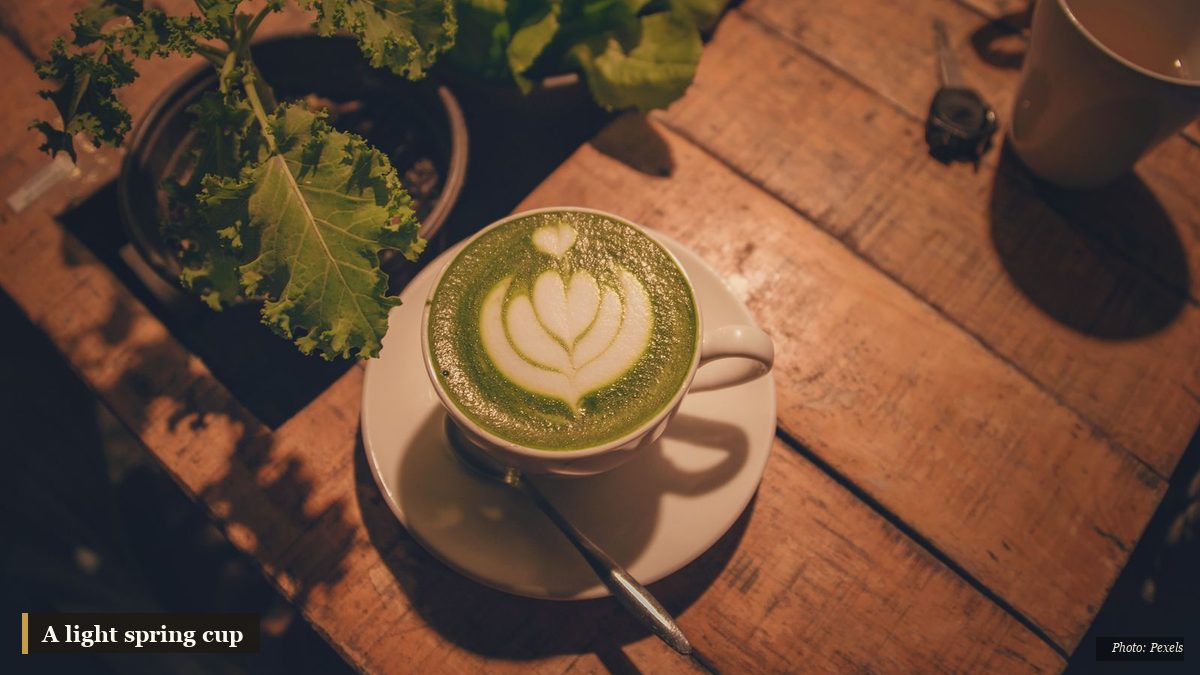
A cup of light spring tea often accompanies these routines; we explore seasonal spring teas in a dedicated companion piece. Individual experiences vary considerably; what feels right for one person may not suit another, and personal experimentation under practitioner guidance is always recommended.
Important Limitations and Considerations
Spring wellness traditions are gentle by design, but "seasonal" does not mean "risk-free." A few honest cautions:
- Spring is allergy season. The same blossoming that inspires spring rituals also fills the air with tree and grass pollen, which triggers allergic rhinitis — sneezing, runny nose, and itchy eyes — in many people. If time outdoors leaves you congested, that is worth discussing with a clinician; the NCCIH notes that some complementary approaches have modest evidence while others do not. [7]
- Some celebrated spring greens are allergens or need proper preparation. Foraged greens can be misidentified, some require correct cooking to be safe, and mugwort in particular is a known allergen for some people. Buy from reputable sources and prepare foods properly.
- The weather is genuinely unstable. The folk wisdom of layering ("春捂") exists for a reason — warm afternoons can turn cold quickly in early spring. Dress in adjustable layers rather than rushing into summer clothing.
- Herbs and teas can interact with medication. If you take prescription medication, are pregnant or breastfeeding, or are choosing foods for young children, check with a healthcare practitioner before adopting new herbal habits, however traditional.
- Ease into movement. Even gentle practices like tai chi can cause temporary muscle soreness when you are starting out; increase activity gradually rather than all at once. [6]
- Individual responses differ. Traditional seasonal advice was written for general populations, not for any specific medical condition. What is nourishing for one body may not suit another.
Frequently Asked Questions
What are spring wellness traditions?
Spring wellness traditions are seasonal habits — around food, movement, sleep, and mood — that East Asian cultures developed to live in step with spring. In this framework, spring corresponds to the Wood element and the liver, so the customs emphasize lighter green foods, gentle movement, rising early, and keeping a calm, unhurried mind. They are general lifestyle practices rather than treatments for any condition.
Why is spring linked to the liver in Chinese medicine?
In the Five Elements system, spring pairs with Wood, and Wood corresponds to the liver network, said to govern the smooth flow of qi. Because spring is a season of upward growth, traditional texts describe liver energy as naturally rising then — hence the focus on keeping that flow easy through light food, movement, and an even mood. This is a traditional framework, not a modern clinical description of liver function.
What foods are traditionally eaten in spring across Asia?
The shared instinct is lighter, fresher, and greener: green vegetables and gently sweet, mild foods in China; bitter wild mountain vegetables (sansai) in Japan; wild spring greens (bom namul) and mugwort in Korea; and light, clean (thanh đạm) green-vegetable meals in Vietnam. Our companion article on spring foods covers these in more detail.
Is walking really part of a spring wellness routine?
Yes — and it may be the oldest recommendation of all. The classical Chinese text on seasonal living advises walking unhurriedly in the open during spring, and getting outdoors as the days lengthen is one of the season's most accessible habits. Just be mindful of pollen if you have seasonal allergies.
Do I need to follow all of these traditions to benefit?
Not at all. Most people pick one or two small adjustments — an earlier start, an outdoor walk, a lighter plate — rather than overhauling their lives. These traditions are flexible by nature, and individual responses vary, so keep what feels good and leave the rest.
A Note on Tracking Your Spring Habits
One quiet advantage of seasonal wellness is that it offers a natural moment to reset your routines. As spring begins, it can be useful to notice what changes — your sleep timing, your morning energy, how a lighter diet or a daily walk feels over a few weeks. A simple record helps you see your own patterns instead of guessing. This is the kind of gentle, non-clinical self-observation the Health Diary app is built to make easy: a place to log habits, moods, and seasonal shifts and watch how they connect over time.
A Soft Closing Note
Spring wellness traditions endure not because they promise dramatic results, but because they offer something gentler: a way of paying attention to the season and letting your habits move with it. Whether you rise a little earlier, take an unhurried walk, add more green to your plate, or simply give yourself permission to feel lighter as the world greens up, you are drawing on a very old, very human instinct. You can explore the season further through our companion guides to spring foods and spring teas whenever you are ready.
About This Article
Written by: Health Diary Editorial Team — a group of wellness writers and researchers focused on traditional East Asian health practices, with an emphasis on accuracy, cultural context, and responsible, non-clinical framing.
Editorial review: This article has been reviewed by the Health Diary editorial team for clarity, structure, and adherence to our sourcing standards. Key claims were cross-checked against NCCIH, NIH PubMed, the classical Huangdi Neijing text, and native-language sources in Chinese, Japanese, and Vietnamese. It is not a clinical review and should not replace consultation with a licensed healthcare practitioner.
Reviewed on: July 18, 2026.
Editorial process: We cite peer-reviewed and government sources where possible. When a clinical reviewer is added to this article, attribution will appear here with verifiable credentials.
References
- Zhang T, Yan L, Ma S, et al. (2016). Human Biological Rhythm in Traditional Chinese Medicine. Journal of Traditional Chinese Medical Sciences, 3(4):206–211. sciencedirect.com
- Huangdi Neijing, Su Wen, Ch. 2 — "Discussion on Regulating the Spirit According to the Four Seasons" (四气调神大论). gushiwen.cn
- Beijing Municipal Health Commission (北京市卫生健康委员会). Spring Health Cultivation (天坛科普——春季养生), 2021. wjw.beijing.gov.cn
- Taisho Health Navi (大正健康ナビ). Spring: Detox with Bitter Seasonal Vegetables (春は苦味のある旬野菜でデトックス). taisho-kenko.com
- Wang C, Huang Q, Duke S, Yang Y (2017). Tai Chi, Yoga, and Qigong as Mind-Body Exercises. Evidence-based Complementary and Alternative Medicine. PMC5244011
- National Center for Complementary and Integrative Health. Tai Chi and Qi Gong: What You Need To Know. nccih.nih.gov
- National Center for Complementary and Integrative Health. Seasonal Allergies at a Glance. nccih.nih.gov
- Thanh Niên (2024). What to Eat in Spring for Good Health? (Mùa xuân nên ăn gì để tốt cho sức khỏe?). thanhnien.vn