Traditional Asian Tonic Soups: A Seasonal Guide to Nourishing Broths
An overview of traditional Asian tonic soups across China, Korea, Japan, and Vietnam, and how these slow-simmered nourishing broths change with the seasons.
Medical Disclaimer: This content is for educational and informational purposes only and is not medical advice. The information presented is not intended to diagnose, treat, cure, or prevent any disease. Always consult a licensed healthcare practitioner before starting any new herbal practice or supplement. Statements regarding traditional herbal use have not been evaluated by the FDA.
Affiliate Disclosure: This article contains affiliate links. We may earn a commission if you purchase through these links, at no additional cost to you. We only recommend products we believe align with our editorial standards.
Somewhere in Asia right now, a pot is simmering. In Guangzhou it might be a clay pot of pork bones and dried figs murmuring on low heat for three hours; in Seoul, a whole young chicken stuffed with rice and ginseng; in a Kyoto temple kitchen, a clear broth of root vegetables and kelp; in a Hanoi home, a hen tucked in among red dates, goji berries, and a paper packet of tonic herbs. Different pots, different cooks, one deeply shared instinct: that a slowly simmered bowl of soup is one of the kindest things you can make for a body.
These traditional tonic soups — 老火湯 in Cantonese, guk and tang in Korean, canh in Vietnamese — sit at the center of Asian food-as-medicine culture. This overview looks at where the tradition comes from, how the great simmered-soup styles differ across China, Korea, Japan, and Vietnam, and how the pot quietly changes with the seasons: lighter in spring, cooling in summer, moistening in autumn, and warming in deep winter.
Why Slow-Simmered Soups Became a Pillar of Asian Kitchens
Long before refrigeration or nutrition labels, a pot of soup solved several problems at once. Gentle, prolonged simmering turns tough cuts, bones, dried goods, and hardy roots into something soft, warm, and easy to eat, drawing flavor out of scraps. For families, the elderly, new mothers, and anyone recovering from illness, a bowl of broth has long been the food you reach for first — nourishing without being heavy, comforting without much effort to chew or digest.
Out of that practicality grew a philosophy: soup became the everyday vehicle for the idea that food and wellness are inseparable — that what simmers in the pot can be tuned to the person and the season. A soup is not just dinner; it is a small, daily act of care. That is why, in so many Asian households, "have you had soup today?" carries almost the same warmth as "how are you feeling?"
What Is a Tonic Soup in Traditional Medicine?
In traditional East Asian thought, foods are not just carbohydrates and protein — they carry qualities: warming or cooling, moistening or drying, light and clearing or rich and building. A "tonic" soup (in Chinese, a 補湯 bu tang, part of the broader idea of 食療 shi liao, "food therapy") is one composed with those qualities in mind, usually to gently nourish rather than to fix a specific complaint.
A classic example is Taiwan's si shen tang (四神湯, "four-spirits soup"), described by the traditional medicine department of Taichung Veterans General Hospital as a mild, balancing dish built on four gentle ingredients — Chinese yam, poria, lotus seed, and euryale seed — simmered with pork. Because it is considered so neutral, it is offered across all four seasons, lightened in summer and given warmer additions like longan in winter (Taichung Veterans General Hospital). That idea — matching the pot to the person and the moment — is the heart of what makes a soup "tonic." Importantly, this is a traditional framework of balance and comfort, not a medical treatment.
The Great Simmered-Soup Traditions Across Asia
The same underlying instinct takes strikingly different shapes from one culture to the next. Four traditions show the range.
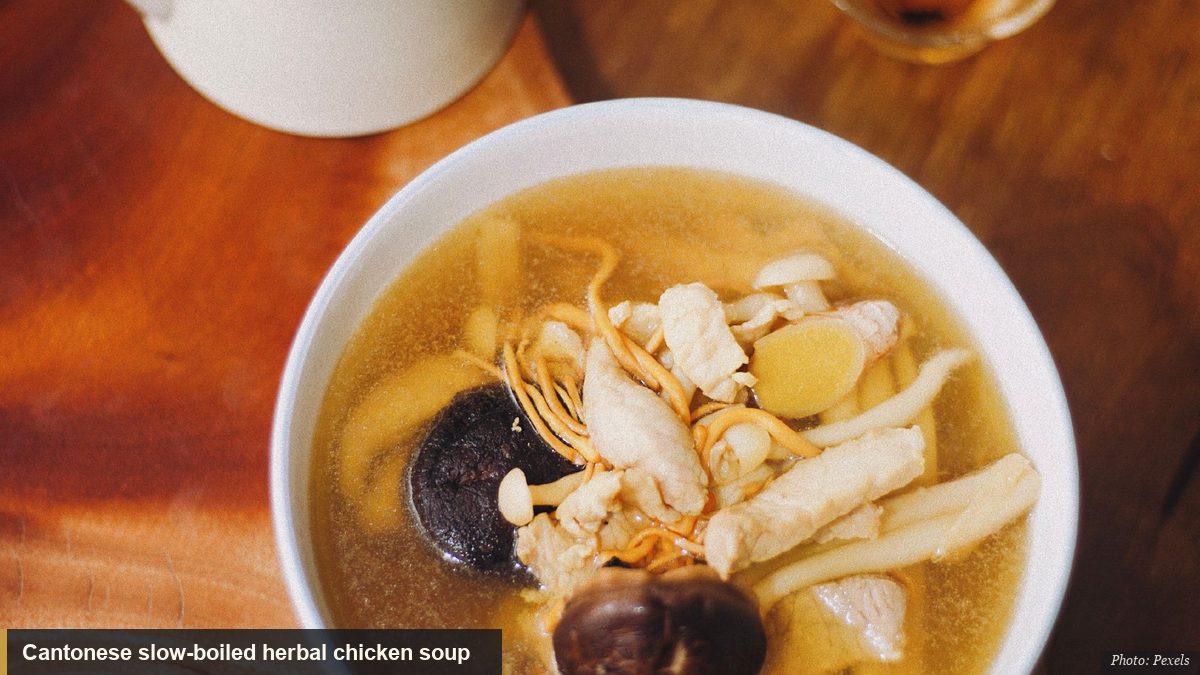
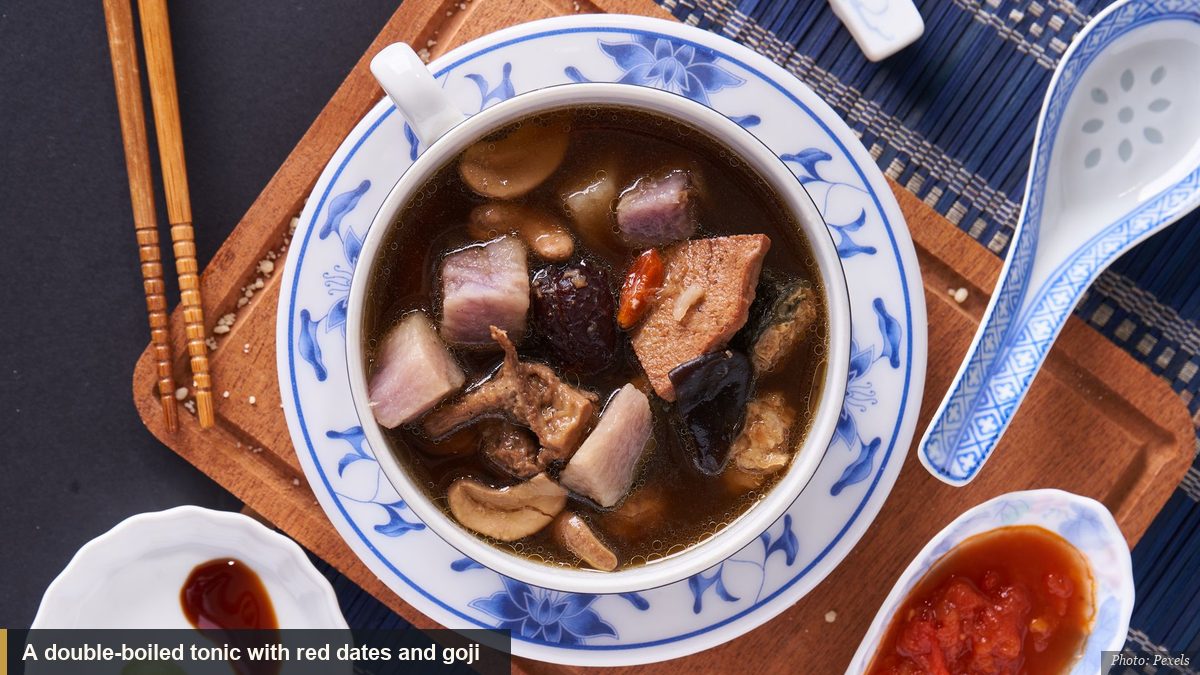
China — the slow-boiled soup (老火湯). In Cantonese cooking, lou fo tong is almost a household religion. Meat, bones, roots, dried fruit, and tonic herbs are simmered for two to four hours until the broth turns deep and savory, and the clear liquid — rather than the solids — is prized as the nourishing part. Alongside it sits the double-boiled soup (燉湯), cooked slowly in a sealed vessel set inside a larger pot of water for an especially clear, concentrated broth.
Korea — guk, tang, and samgyetang. Everyday Korean meals almost always include a soup (guk) or a heartier stew-like tang. The most famous restorative is samgyetang: a whole young chicken stuffed with glutinous rice, ginseng, and jujube, then simmered. Researchers describe it as protein-rich and containing free amino acids, polyunsaturated fatty acids, and polysaccharides, and note that it is traditionally eaten as a boyangsik — a stamina food — especially during the hottest days of summer (Jang et al., 2022). Eating piping-hot soup in the heat may sound backward, but it reflects an old logic: meeting summer's drain on the body with warmth from within.
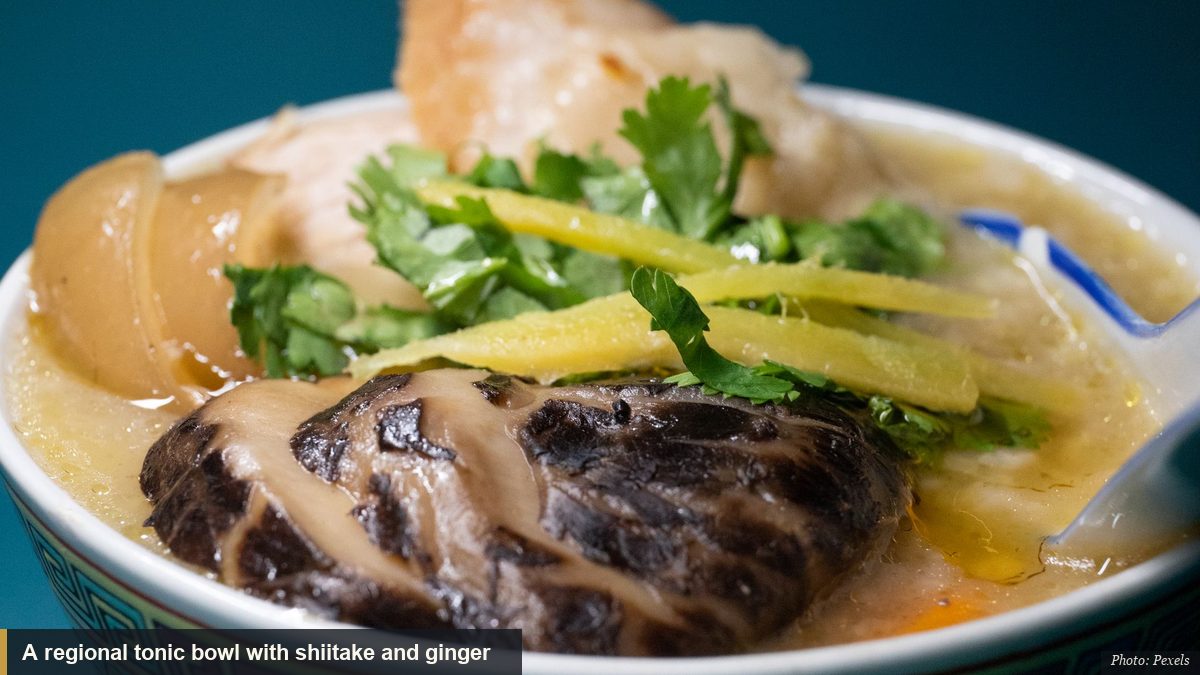
Japan — nabe and the temple soups. Japanese cuisine centers soups differently, around a delicate kelp-and-mushroom or bonito dashi. Winter brings communal nabe hot pots, while the temple tradition offers kenchinjiru, a root-vegetable clear soup that Japan's Ministry of Agriculture traces to Kenchoji temple more than seven centuries ago. In the Buddhist shojin (精進) style it uses no animal products at all — vegetables are sautéed in sesame oil, then simmered in a kombu-and-shiitake stock — a reminder that a nourishing "tonic" soup need not contain meat (Japan MAFF, Local Cuisines).
Vietnam — canh and the tonic-herb pot. Vietnamese meals are anchored by canh, a light everyday soup that balances the table. But for occasions that call for real fortification, there is gà hầm thuốc bắc — chicken slowly braised with a packet of northern tonic herbs such as lotus seed, goji, red date, codonopsis, and Chinese yam. The Ho Chi Minh City Hospital of Traditional Medicine describes it as a traditional dish used to gently nourish qi and blood, favored in winter and during convalescence or after childbirth — while cautioning that it does not suit everyone (HCMC Hospital of Traditional Medicine).
How Do Tonic Soups Change with the Seasons?
If there is one thread that ties these traditions together, it is the calendar. The pot is expected to change as the year turns, following the weather and what the body seems to crave.
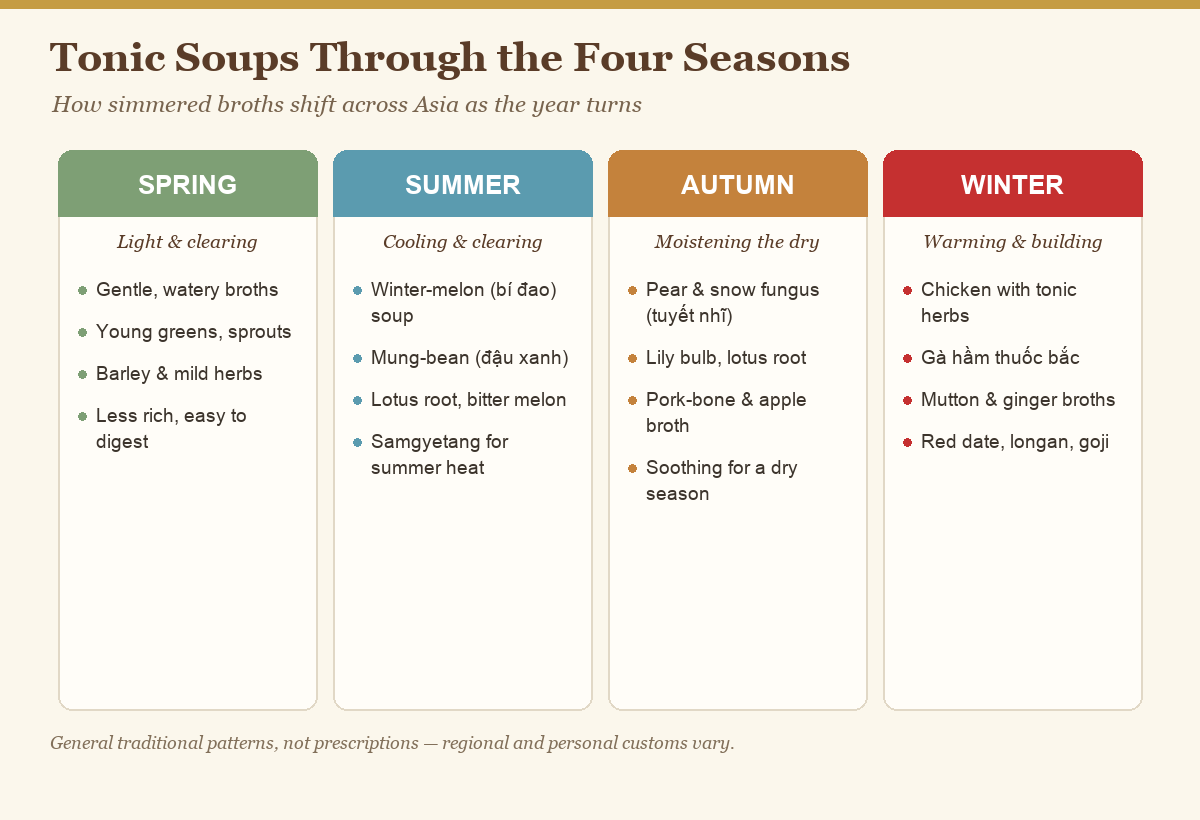
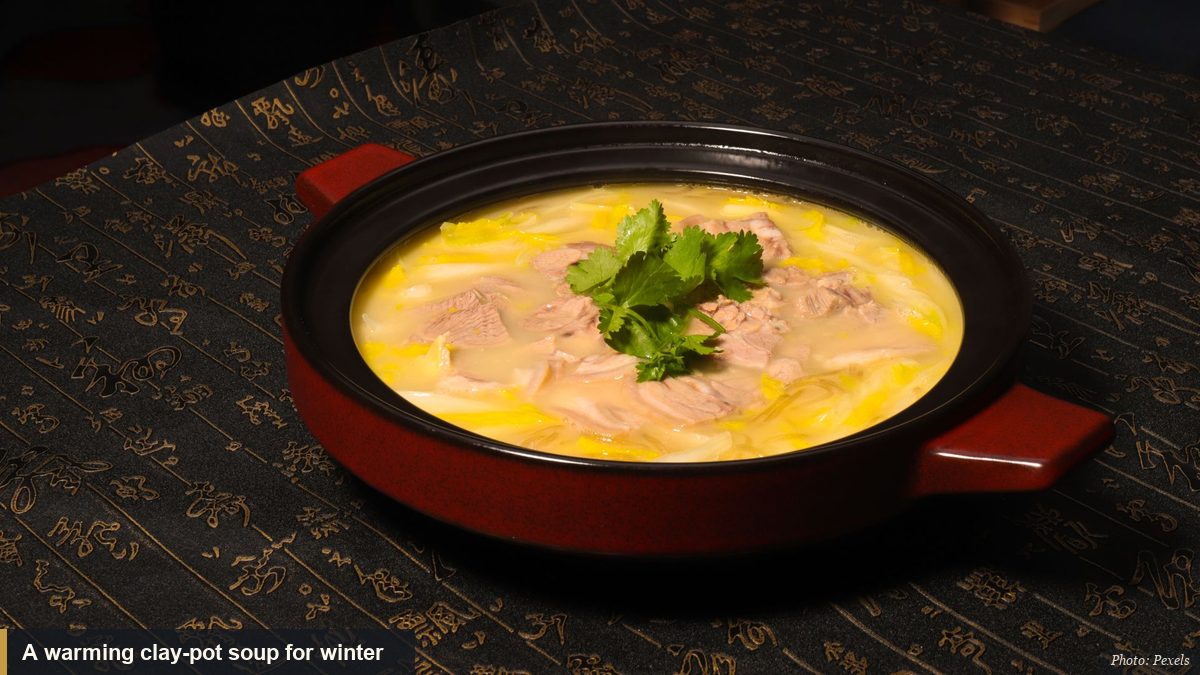
Spring soups tend to be the lightest — gentle, watery broths with young greens and mild herbs, meant to feel clearing after winter's richness. Summer shifts toward cooling: winter-melon (canh bí đao), mung-bean (đậu xanh), lotus root, and bitter melon are prized for their refreshing quality, even as Korea leans, paradoxically, on hot samgyetang to counter the heat. Autumn, the dry season, calls for moistening pots — pear and snow fungus (tuyết nhĩ), lily bulb, lotus root, and pork-bone-and-apple broths. Winter is the season of warming, building soups: chicken with tonic herbs, mutton-and-ginger broths, and pots enriched with red date, longan, and goji.
None of this is a rigid rulebook, and customs vary widely from region to region and family to family. It is better understood as a loose, sensible rhythm — reaching for lighter, cooler dishes when the weather is hot and heavier, warmer ones when it is cold, a pattern that predates thermometers but tracks them surprisingly well.
What Does Modern Research Say About Nourishing Soups?
Modern science has only lightly examined these soups, and the honest picture is one of interesting hints rather than proven claims. In a well-known laboratory study, a traditional chicken soup slowed the movement of neutrophils — immune cells involved in inflammation — in a concentration-dependent way in a test tube. The authors suggested a mild anti-inflammatory effect could partly explain the relief people report during colds, while noting this was an in-vitro finding, not clinical proof of any remedy (Rennard et al., 2000).
Bone broth, often praised as a collagen source, tells a more sobering story. When researchers analyzed home-made bone broths, the collagen-linked amino acids — glycine, proline, hydroxyproline — were present but highly variable and generally far lower than the standardized dose used in collagen research. Broth can be a pleasant, modest source of these compounds, but not a reliable, measured one (Alcock et al., 2019).
Perhaps the most useful modern insight is about salt. Broths and soups can carry a surprising amount of sodium; the American Heart Association notes that some premade soups exceed 1,000 mg of sodium per serving and recommends cooking at home, choosing low-sodium broth, and leaning on aromatics, herbs, and citrus for flavor instead of salt (American Heart Association). In other words, the wisdom of the pot is real, but so is the fine print.
How Do People Enjoy Tonic Soups at Home?
The beauty of this tradition is how approachable it is. Most tonic soups start with water, a little meat or a handful of dried goods, aromatics, and patience. A few gentle entry points:
- A simple ginger chicken soup — a light broth with chicken, ginger, and scallion, the archetypal comfort pot across the region and a natural place to begin.
- A goji berry soup — a small handful of dried goji lends colour, sweetness, and a distinctly "tonic" character to almost any clear broth.
- A lotus seed sweet soup — lotus seeds simmered into a lightly sweetened soup, a gentle, cooling treat on the dessert side.
- Everyday Vietnamese herbal soups — light canh with leafy greens, or a slow gà hầm thuốc bắc for restorative occasions.
- A red date and longan soup — dried red dates and longan simmered into a warming, naturally sweet winter pot.
The technique matters less than the spirit: keep the heat low, give it time, taste as you go, and adjust the ingredients to the weather and to how you feel. Individual responses vary considerably; what feels perfectly nourishing to one person may sit differently with another, and any move from everyday cooking toward concentrated tonic herbs is best made under a practitioner's guidance.
Important Limitations and Considerations
For all their comfort, simmered soups deserve a few honest cautions — especially the long-cooked, meat-heavy, and herb-rich ones.
- Long-simmered bone-and-meat broths concentrate purines. Chinese public-health reporting notes that very long-boiled "old-fire" soups draw purines out of meat and bones into the broth, and that Guangdong — a region famous for such soups — has a notably high rate of gout and elevated uric acid (People's Daily Health Times, 2018). Anyone with gout, high uric acid, or kidney concerns should go easy on them.
- Sodium adds up. Soups can be salty, and salt is easy to over-add when you are seasoning a big pot. If you are watching blood pressure, favor home-cooked, lightly salted broth over premade or restaurant versions.
- Tonic herbs are not neutral. Packets of northern tonic herbs (thuốc bắc / 藥材) — ginseng, codonopsis, angelica, licorice, and others — can interact with medications, including blood thinners, blood-pressure and diabetes drugs, and sedatives. If you take any prescription medicine, check with a doctor or pharmacist before regularly drinking herb-simmered soups.
- Pregnancy, breastfeeding, and existing conditions. Concentrated tonic soups differ from ordinary canh or everyday broth. Anyone pregnant, breastfeeding, or living with a chronic condition should confirm which herbs are appropriate before leaning on them.
- Individual response varies. Constitution, medications, and health history all shape how a given soup sits with you — and tonic-herb soups should be kept mild for children and used cautiously for older or medically fragile family members. When in doubt, a licensed healthcare practitioner is the right person to ask.
Frequently Asked Questions
What makes a soup a "tonic" soup rather than an ordinary one?
A tonic soup is composed with traditional qualities in mind — warming or cooling, light or building — usually to gently nourish rather than to season a meal. It often includes dried tonic ingredients such as red dates, goji, lotus seed, or ginseng and is simmered slowly. An everyday soup, by contrast, is simply part of the meal. The line between them is blurry, and the same pot can be nudged in either direction.
Is bone broth actually a good source of collagen?
It is a modest and variable one. When researchers measured home-made bone broths, the collagen-related amino acids were present but ranged widely and were generally much lower than a standardized collagen dose. Bone broth can be a nourishing, comforting food, but it should not be counted on as a precise or guaranteed source of collagen.
Can I drink tonic herbal soup every day?
Light everyday soups like canh or a simple vegetable broth are generally fine as part of a normal diet. Soups made with concentrated tonic herbs are a different matter and are traditionally used occasionally rather than daily. If you take medication, are pregnant, or have a health condition, speak with a healthcare practitioner before making herb-simmered soups a daily habit.
Are vegetarian soups considered nourishing in these traditions too?
Yes. Japan's temple kenchinjiru and many Chinese and Vietnamese vegetable soups show that a nourishing pot need not contain meat. A well-made kombu-and-mushroom dashi or a slow vegetable broth is valued for its warmth and depth, and fits the food-therapy idea just as naturally as a meat-based tonic.
A Gentle Note on Eating with the Seasons
Part of what makes this tradition rewarding is simply paying attention — noticing when the weather turns, how your body feels, and which kind of pot seems right this week. That awareness is easy to lose when every ingredient is available year-round. Keeping a simple record of what you cook and how you feel across the seasons can make these quiet rhythms visible again, and Health Diary is built around exactly that gentle habit of noticing.
A Soft Closing Note
The tonic soups of China, Korea, Japan, and Vietnam were never about a single miracle bowl. They reflect a shared, very human response to being cold, tired, unwell, or simply in need of comfort: put something good in a pot, let it simmer, and share it. You can explore the tradition one bowl at a time — a light ginger broth on a tired evening, a pear-and-fungus soup in dry autumn, a warming herb-simmered chicken in deep winter. Whatever you try, cook it gently, keep the sensible cautions in mind, listen to your own body, and enjoy the slow comfort of a simmering pot.
About This Article
Written by: Health Diary Editorial Team — a group of writers and researchers focused on traditional Asian wellness, food culture, and responsible, well-sourced health content.
Editorial review: This article has been reviewed by the Health Diary editorial team for clarity, structure, and adherence to our sourcing standards. Key claims were cross-checked against NCCIH, NIH PubMed, and the American Heart Association where applicable. It is not a clinical review and should not replace consultation with a licensed healthcare practitioner.
Reviewed on: July 18, 2026.
Editorial process: We cite peer-reviewed and government sources where possible. When a clinical reviewer is added to this article, attribution will appear here with verifiable credentials.
References
- Rennard, B.O., Ertl, R.F., Gossman, G.L., Robbins, R.A., & Rennard, S.I. (2000). Chicken Soup Inhibits Neutrophil Chemotaxis In Vitro. Chest, 118(4), 1150-1157. https://pubmed.ncbi.nlm.nih.gov/11035691/
- Alcock, R.D., Shaw, G.C., & Burke, L.M. (2019). Bone Broth Unlikely to Provide Reliable Concentrations of Collagen Precursors Compared With Supplemental Sources. International Journal of Sport Nutrition and Exercise Metabolism, 29(3), 265-272. https://journals.humankinetics.com/view/journals/ijsnem/29/3/article-p265.xml
- Jang, A. et al. (2022). Fatty acid profiles and flavour-related compounds of retorted Korean ginseng chicken soup (Samgyetang). https://pmc.ncbi.nlm.nih.gov/articles/PMC9271379/
- American Heart Association. How to Reduce Sodium in Your Diet. heart.org
- 臺中榮民總醫院 傳統醫學部 (Taichung Veterans General Hospital, Dept. of Traditional Medicine). 四神湯 (Si Shen Tang / Four Herbs Soup). vghtc.gov.tw
- 健康时报 / 人民网 (People's Daily Health Times). (2018). 广东肾病高发是因爱煲汤?(old-fire soup, purines and uric acid). paper.people.com.cn
- 農林水産省 (Japan Ministry of Agriculture, Forestry and Fisheries). けんちん汁 — うちの郷土料理 (Kenchinjiru, Local Cuisines of Japan). maff.go.jp
- Bệnh viện Y học cổ truyền TP.HCM (HCMC Hospital of Traditional Medicine). Gà hầm thuốc bắc (Thang hầm gà) — bổ dưỡng khí huyết. yhct.vn