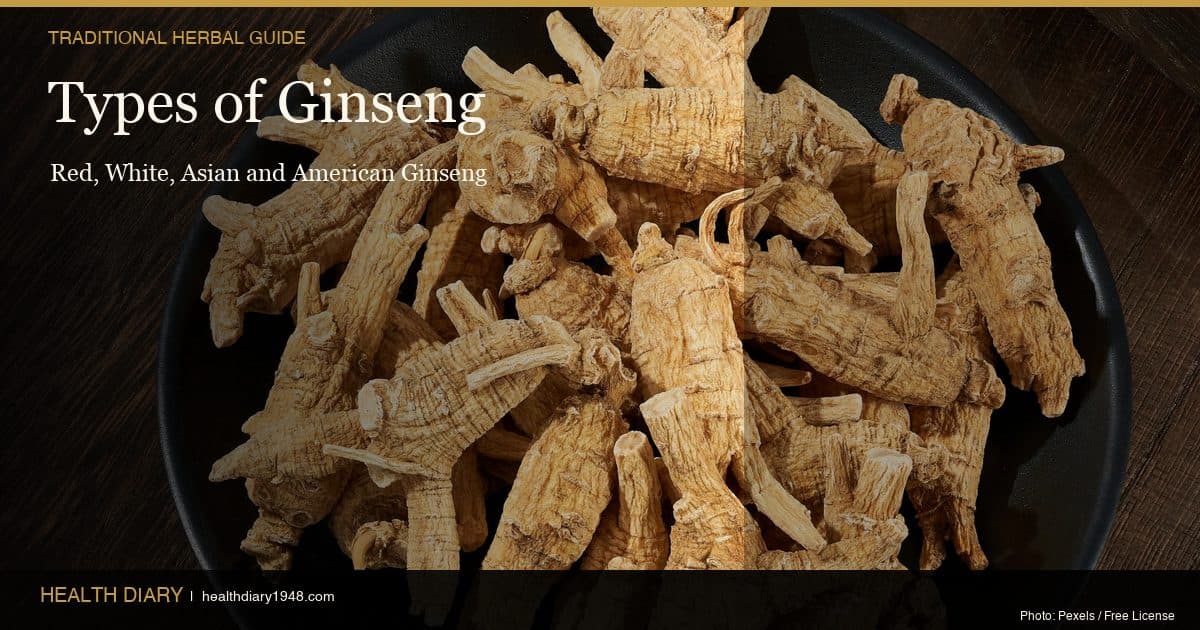
Types of Ginseng: Red, White, American, and Asian Ginseng Compared
A comprehensive guide to the main types of ginseng — red vs white processing, Asian vs American varieties, seasonal use guidelines, and the cultural traditions behind each type.
Medical Disclaimer: This content is for educational and informational purposes only and is not medical advice. The information presented is not intended to diagnose, treat, cure, or prevent any disease. Always consult a licensed healthcare practitioner before starting any new herbal practice or supplement. Statements regarding traditional herbal use have not been evaluated by the FDA.
Affiliate Disclosure: This article contains affiliate links. We may earn a commission if you purchase through these links, at no additional cost to you. We only recommend products we believe align with our editorial standards.
Walk into any well-stocked Asian herb shop and you will find at least three or four distinct varieties of ginseng displayed side by side — some reddish-brown and densely textured, others pale and papery, and still others labeled specifically as American or Korean. For newcomers, the differences can seem confusing. For practitioners steeped in traditional wellness systems, however, each variety occupies a distinct place in centuries-old frameworks for seasonal and constitutional care.
This guide explores the major ginseng types used across Asian wellness traditions — how they are processed, how traditional practitioners have distinguished their properties, and what the cultural logic behind seasonal and individual use looks like. We focus on the cultural and historical context rather than clinical claims, because that context is where the richest insight lives.
Asian Ginseng (Panax ginseng): The Foundation
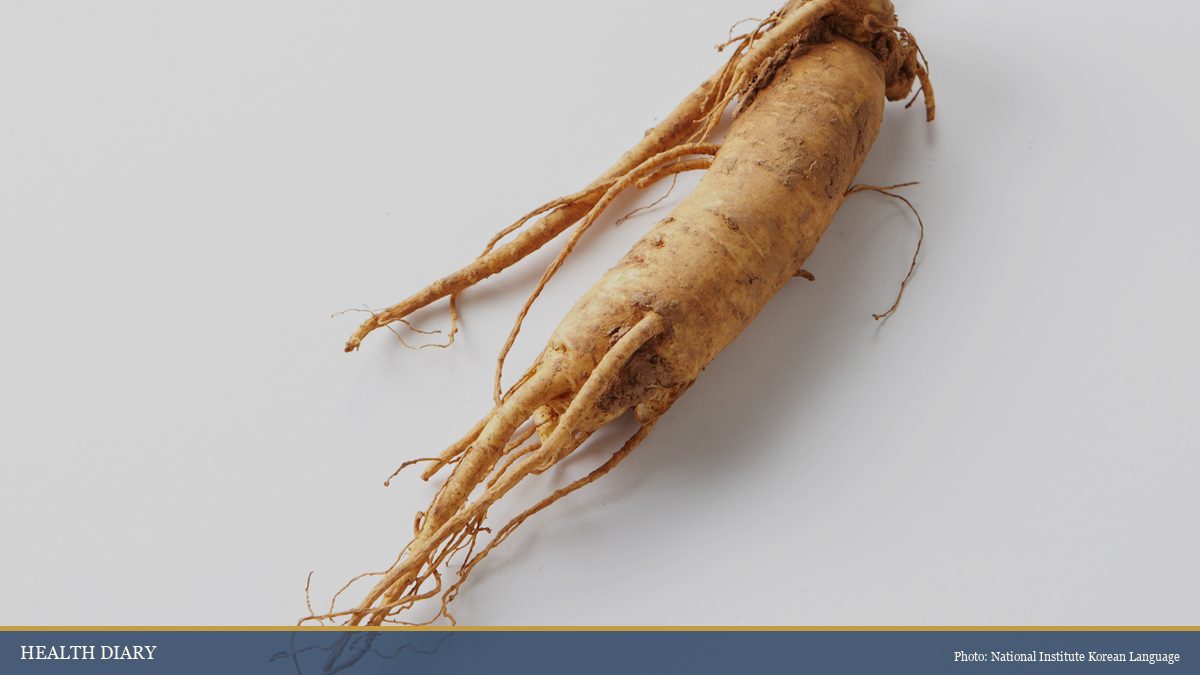
When people say simply "ginseng" without qualification, they most often mean Panax ginseng — the species native to the mountain forests of Korea, northeastern China, and the far-eastern edge of Siberia. Its Chinese name renshen (人参) and its Korean name insam (인삼) both reflect the same character meaning "man-root," referencing the root's human-like forked shape, which traditional cultures considered auspicious.
Historical texts describe ginseng as a premiere tonic in East Asian wellness traditions for over two millennia. Li Shizhen's Bencao Gangmu (本草綱目, completed 1578), the encyclopedic Chinese materia medica of the Ming dynasty, lists ginseng among the foundational tonic herbs — classifying it as sweet in flavor, slightly warm in nature, and associated with the Heart, Lung, and Spleen meridian systems in classical theory.
Cultivating Panax ginseng requires patience. The root needs five to six years of growth before harvest — during which time the soil must be carefully managed to prevent disease and nutrient depletion. This extended cultivation cycle has historically made quality ginseng a premium commodity across East Asia, traded along the same routes as silk and porcelain.
From a phytochemical standpoint, Asian ginseng contains a complex profile of ginsenosides — the group of steroidal saponins considered responsible for its characteristic properties. A 2020 study in Biomolecules by Chen, Balan, and Popovich identified 50 distinct ginsenosides in Asian ginseng tissues, with fine roots showing the highest overall concentration (approximately 142 mg/g dry weight). Among these, ginsenoside Rf is considered exclusive to Asian ginseng — serving as a chemical fingerprint that distinguishes it from its American cousin.
Red Ginseng vs White Ginseng: The Processing Difference
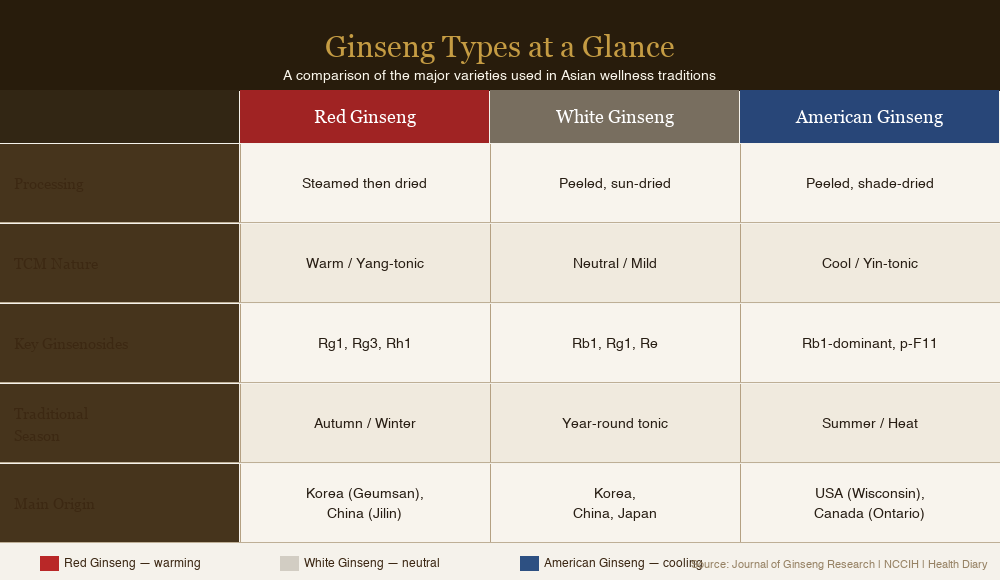
Both red and white ginseng start from the same plant — Panax ginseng root harvested after five or six years. What separates them is not genetics but the post-harvest process, and that process has profound effects on the root's final chemical composition and its traditional classification within wellness frameworks.
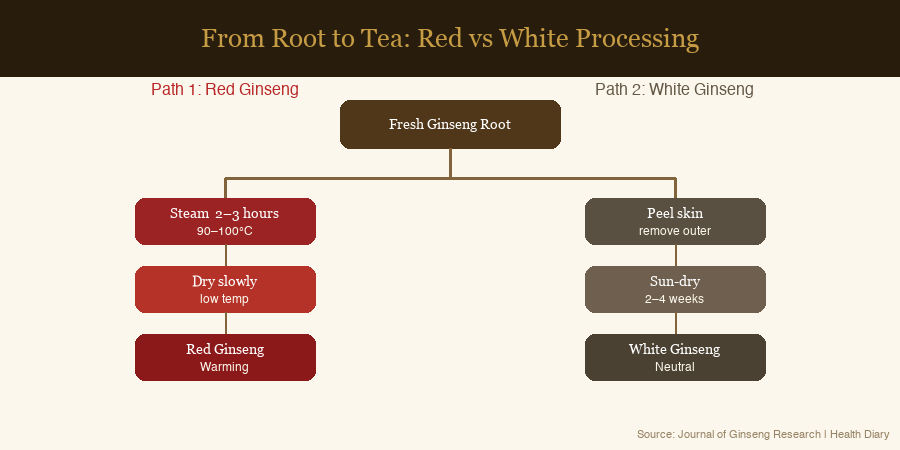
White ginseng is produced by first peeling the fresh root (removing the outer skin), then drying it — traditionally in the sun over two to four weeks, though modern methods may use controlled drying chambers. The result is a pale, yellowish-beige root with a mild, slightly sweet flavor. In traditional frameworks, white ginseng is considered neutral to mildly warm, making it appropriate as a general everyday tonic without the more intensely warming properties associated with the red form.
Red ginseng, by contrast, is steamed — whole, unpeeled — at approximately 90–100°C for two to three hours before drying. This heat treatment triggers a cascade of chemical transformations. Research published in the Journal of Ginseng Research by In et al. (2016) documented these changes in detail: steaming generates new ginsenosides — including Rg3, Rh1, and 20(S,R)-Rg2 — that are absent or present only in trace amounts in fresh or white ginseng. Meanwhile, the malonyl-ginsenosides found in fresh root (including malonyl-Rb1 and malonyl-Rg1) decrease substantially because they are thermally unstable. The Maillard reaction also produces compounds like arginine-fructose that contribute to red ginseng's characteristic reddish-brown color.
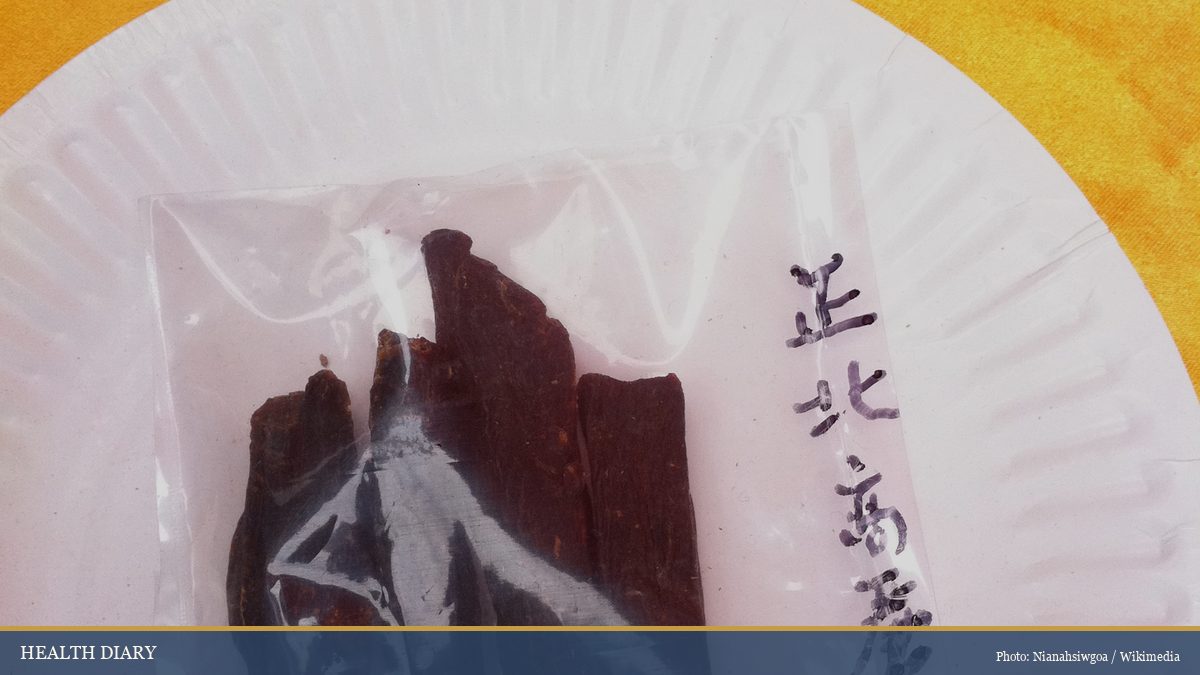
This is the scientific basis for a distinction that Korean and Chinese traditional practitioners had long made on empirical grounds: steamed red ginseng was considered more warming, more tonifying for yang energy, and more appropriate for states of cold deficiency, while the milder white form was better suited to those who found the red variety too stimulating.
The tradition of red ginseng processing in Korea dates back remarkably far. According to historical scholarship, the preparation method was documented in the GoRyeoDoGyeong (고려도경) — a record written by the Chinese envoy Xu Jing in 1123 CE during the Goryeo dynasty — giving Korean red ginseng over 900 years of documented tradition. The characterization study on Korean Red Ginseng notes that this tradition continued through the Joseon period and became so economically significant that production was placed under a government monopoly during the Japanese colonial period (1908–1996).
Individual responses to red versus white ginseng vary considerably; what feels appropriately stimulating to one person may feel too intense for another, and personal experimentation under practitioner guidance is always recommended.
American Ginseng (Panax quinquefolius): The Cooling Variety
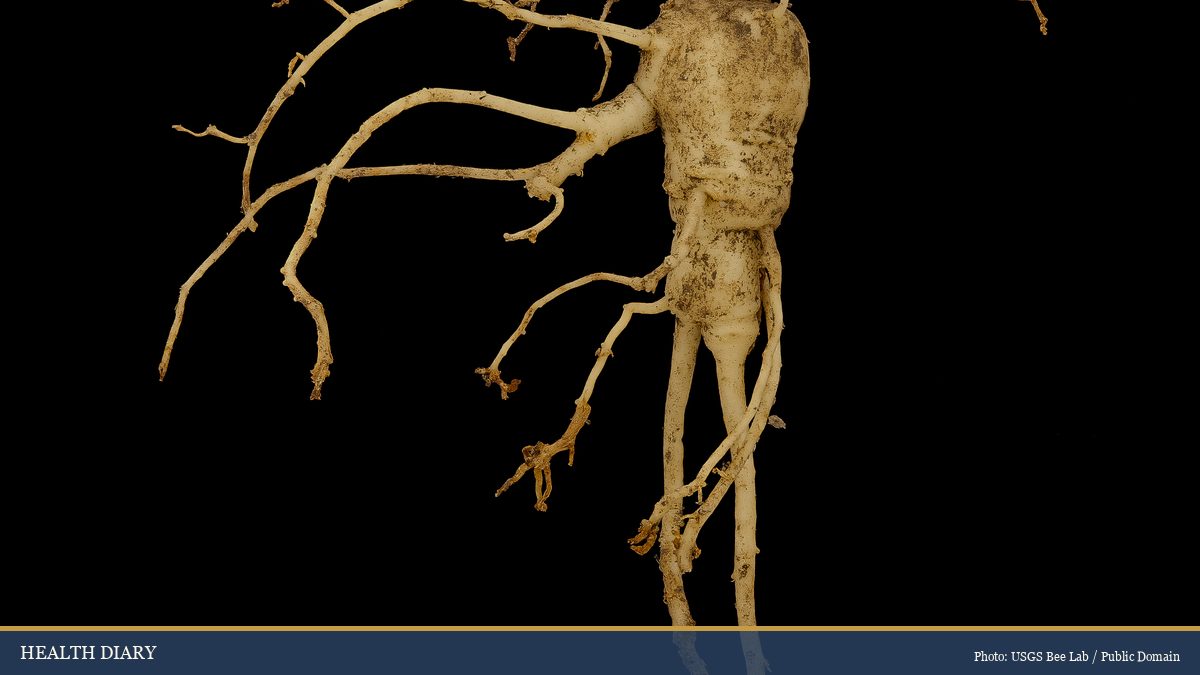
The story of American ginseng in Asian wellness traditions is itself a fascinating piece of cultural history. Panax quinquefolius — native to the deciduous forests of eastern North America from Wisconsin to Quebec — was not part of the original Chinese or Korean pharmacopeia. Its introduction to Asian markets in the early 18th century, reportedly through Jesuit missionary Father Joseph-François Lafitau who recognized its similarity to Asian ginseng in 1716, sparked a trade that within decades made Wisconsin and Ontario major suppliers to Chinese buyers.
What made American ginseng so attractive was not just its availability but its perceived difference in nature. Traditional Chinese practitioners who began working with the new root concluded that it occupied a distinctly different position in the yin-yang framework: where Asian ginseng was warm and yang-tonic, American ginseng was cool and yin-tonic — "enhancing yin energy, helping to cool the body and alleviate heat-related conditions," as described in a 2025 review in the Journal of Ginseng Research by Yang et al. examining traditional versus physiological temperature effects.
This cooling, yin-nourishing classification made American ginseng particularly prized in summer and in situations where a person was considered to have excess heat or yang — conditions where the more warming Asian ginseng might be inappropriate. Folk tradition suggested it could be used to "remove heat and promote the production of body fluids," making it suitable when someone felt depleted by heat rather than by cold.
The ginsenoside profile of American ginseng differs meaningfully from its Asian counterpart. The 2020 Biomolecules study by Chen et al. confirmed that American ginseng has 43 identifiable ginsenosides, with Rb1 predominating in the root tissues and a ginsenoside called p-F11 exclusive to the species (analogous to how Rf is exclusive to Asian ginseng). The ratio of Rg1 to Rb1 tends to be lower in American ginseng — a difference that traditional practitioners could not have measured but that modern phytochemistry has since characterized.
Today the primary commercial cultivation regions for American ginseng are Marathon County, Wisconsin and Ontario, Canada — where the climate and soil conditions mirror the plant's native forest habitat.
Individual experiences with American ginseng vary considerably, and those taking medications for blood sugar or blood pressure should consult a healthcare provider before incorporating it into their routine.
Korean vs Chinese Ginseng Sources
Within the category of Asian ginseng (Panax ginseng), two primary geographic sources dominate global supply: Korea and China's Jilin Province. Both grow the same species but under conditions that practitioners and quality specialists have long distinguished.
Korean ginseng — historically called Goryeo ginseng (고려인삼) after the kingdom from which it took its name — is centered in Geumsan County (금산군) in South Chungcheong Province. The FAO has recognized the Geumsan Traditional Ginseng Agricultural System as a Globally Important Agricultural Heritage System, acknowledging over 500 years of continuous cultivation tradition in the region. Geumsan now hosts the country's largest ginseng processing and trading markets, and its name is synonymous in Korean culture with premium ginseng quality.
Korean quality traditions emphasize strict grading of the root — size, age (6-year preferred for red ginseng), surface texture, and the presence of the characteristic forked shape all factor into traditional assessments. The Korea Ginseng Corporation (KGC), whose Cheong Kwan Jang brand controls approximately 80% of the Korean red ginseng market, traces its institutional roots to the Royal Household's Samjeonggwa department established in 1899.
Chinese ginseng production is concentrated in Jilin Province, particularly the Changbai Mountain (長白山) region — what researchers at PMC have noted produces 80% of China's ginseng output and roughly 60–70% of world supply by volume. Changbai ginseng commands the highest ginsenoside content among Jilin regions, at approximately 19.36 mg/g in studies analyzing regional varieties. Historically, Jilin's cultivation was centered around counties including Changbai, Fusong, Jingyu, and Ji'an — areas where the volcanic soils and forested mountain climate create conditions well-suited to the plant's requirements.
Traditional quality markers recognized by Chinese practitioners include deep color, firm texture, the number of rings visible on the root neck (more rings = older), and the presence of characteristic surface wrinkles. Whether Korean or Chinese ginseng is "better" is a question that largely depends on the specific use context and the individual practitioner's training — both represent authentic expressions of the same traditional herb.
Which Ginseng for Which Season?
One of the more practical frameworks to emerge from classical East Asian wellness traditions is the idea of seasonal matching — choosing one's tonic herb according to the season's energy rather than using the same preparation year-round. This reflects a broader logic in traditional systems that viewed health as dynamic, requiring different support across the year.
The general seasonal framework that has been passed down through Chinese and Korean folk practice suggests:
- Summer and heat conditions: American ginseng (cool, yin-nourishing) was traditionally favored during hot months, or when someone felt depleted from heat, excessive perspiration, or dry conditions. Folk practitioners considered it appropriate when warming herbs might add to internal heat.
- Autumn and Winter: Korean red ginseng — warming, yang-tonic — was historically considered appropriate during colder months, especially for those showing patterns of cold extremities, low energy, or what traditional frameworks called "yang deficiency." The warming quality of the steaming process aligned with the season's need.
- Year-round or daily tonic use: White ginseng, with its more neutral nature and milder profile, was often the choice for ongoing, moderate supplementation across seasons — particularly for those who found the red variety too stimulating or warming.
It is worth noting that the 2025 Journal of Ginseng Research review found that clinical trials do not show significant changes in actual body temperature after consuming either variety — suggesting that the "warming" and "cooling" designations are traditional energetic categories rather than literal thermogenic effects. Nonetheless, these frameworks have guided cultural practice for centuries and remain influential in how practitioners approach herb selection.
Individual responses vary considerably; some people find warming preparations energizing, others find them unsettling, and personal constitution, health history, and season all play into what works best for a given individual.
How Do People Prepare Different Types of Ginseng?
How ginseng is prepared also varies by type, reflecting the same traditional logic that underlies the yin-yang classification:
- Red ginseng slices in hot water: A traditional Korean preparation involves simmering sliced red ginseng root in water for 30–60 minutes, producing a deep amber, earthy tea. This long steeping extracts the ginsenosides that have already been partially transformed by the initial steam processing.
- White ginseng powder or decoction: White ginseng is often ground into fine powder for use in teas or soups, or simmered as a decoction. Its milder flavor makes it more versatile in food-based applications.
- American ginseng cold brew or light simmer: In folk practice, American ginseng was sometimes prepared as a cooler or shorter infusion — reflecting the traditional logic that an already-cooling herb should be treated accordingly.
- Whole root simmered in soup: Across Korean, Chinese, and broader East Asian traditions, the whole root — red or white — was added to long-simmered soups with chicken, jujube dates, and other tonic ingredients. Samgyetang (삼계탕), the Korean ginseng chicken soup traditionally consumed on the three hottest days of summer, is perhaps the most famous example — illustrating that cultural logic does not always follow straightforward temperature matching.
For detailed brewing and preparation guidance, see our dedicated articles on ginseng tea preparation.
Frequently Asked Questions
What is the main difference between red ginseng and white ginseng?
Both come from the same plant — Panax ginseng — but are processed differently. Red ginseng is steamed whole at 90–100°C for several hours then dried, which generates new ginsenosides (including Rg3) and gives the root its characteristic reddish color. White ginseng is peeled and sun-dried without steaming, resulting in a milder, neutral profile. Traditional frameworks generally consider red ginseng more warming and yang-tonic, and white ginseng more neutral and suitable for everyday use.
Is American ginseng the same as Asian ginseng?
No — they are different species. Asian ginseng is Panax ginseng, native to Korea and northeastern China. American ginseng is Panax quinquefolius, native to eastern North America. Both belong to the Panax genus and share some ginsenosides, but they have distinct chemical profiles — ginsenoside Rf is exclusive to Asian ginseng and p-F11 to American ginseng. Traditional Chinese practice classifies them differently: Asian ginseng as warming/yang-tonic, and American ginseng as cooling/yin-tonic.
Can I take ginseng every day?
Many people incorporate white ginseng or American ginseng into daily wellness routines. Traditional frameworks generally suggest moderate, consistent use rather than large occasional doses. That said, individual responses vary considerably, and the NCCIH notes that short-term use of Asian ginseng (up to 6 months) appears safe for most adults. Those taking blood thinners, diabetes medications, or immunosuppressants should consult a healthcare practitioner before making ginseng a daily habit.
Which ginseng is best for summer?
According to traditional Chinese wellness frameworks, American ginseng is traditionally favored during hot summer months due to its cooling, yin-nourishing nature. White ginseng is also considered moderate enough for year-round use. Korean red ginseng, classified as warming in traditional frameworks, is more often associated with autumn and winter use in folk tradition — though individual responses vary and personal constitution matters.
Does ginseng interact with medications?
Yes. The NCCIH notes that Asian ginseng may interact with blood thinners (like warfarin), diabetes medications (potentially affecting blood sugar levels), and medications for immune conditions. It may also affect how the liver processes certain drugs. American ginseng carries similar interaction cautions. If you take any regular medications, discussing ginseng use with your healthcare provider is strongly recommended before starting.
What is Korean red ginseng (홍삼) specifically?
Korean red ginseng (홍삼, hong-sam) is Panax ginseng root — specifically 5–6 year roots from Korea — that has been steamed and dried using a traditional method documented in Korean records since at least 1123 CE. This processing creates a distinct ginsenoside profile with higher Rg3 content than white ginseng. Production is concentrated in Geumsan County, recognized by the FAO as a heritage agricultural system with over 500 years of tradition. Korea Ginseng Corporation's Cheong Kwan Jang brand is among the most well-known commercial producers.
What Are the Important Safety Considerations?
Before incorporating any form of ginseng into your wellness practice, consider the following:
- Medication interactions: All ginseng varieties may interact with blood-thinning medications, diabetes drugs, and immunosuppressants. The NCCIH advises discussing ginseng use with a healthcare provider if you take any medications.
- Pregnancy and breastfeeding: Animal studies suggest potential risks during pregnancy. Ginseng use during pregnancy or breastfeeding is generally not recommended without medical guidance.
- Children: Traditional use in children is not well-documented, and caution is appropriate.
- Stimulant sensitivity: Some people experience insomnia, headache, or digestive discomfort — particularly with red ginseng. Starting with smaller amounts and observing individual response is prudent.
- Quality variability: Ginseng products vary widely in ginsenoside content. Standardized extracts from established producers tend to offer more consistent potency than generic powders.
Individual responses to ginseng vary considerably. What suits one person's constitution and season may not suit another's.
About This Article
Written by: Health Diary Editorial Team — specialists in traditional Asian wellness documentation and herbal culture.
Editorial review: This article has been reviewed by the Health Diary editorial team for clarity, structure, and adherence to our sourcing standards. Key claims were cross-checked against NCCIH (nccih.nih.gov), NIH PubMed, the Journal of Ginseng Research, and FAO heritage documentation where applicable. It is not a clinical review and should not replace consultation with a licensed healthcare practitioner.
Reviewed on: June 16, 2026.
Editorial process: We cite peer-reviewed and government sources where possible. When a clinical reviewer is added to this article, attribution will appear here with verifiable credentials.
References
- Chen W, Balan P, Popovich DG. "Comparison of Ginsenoside Components of Various Tissues of New Zealand Forest-Grown Asian Ginseng (Panax ginseng) and American Ginseng (Panax quinquefolius L.)." Biomolecules. 2020. https://pmc.ncbi.nlm.nih.gov/articles/PMC7175180/
- In G, et al. "In situ analysis of chemical components induced by steaming between fresh ginseng, steamed ginseng, and red ginseng." Journal of Ginseng Research. 2016. https://pmc.ncbi.nlm.nih.gov/articles/PMC5489774/
- Yang et al. "The clearing-up of misunderstanding on body temperature changes and heat responses after Panax ginseng or Panax quinquefolium intake." Journal of Ginseng Research. 2025. https://pmc.ncbi.nlm.nih.gov/articles/PMC12223523/
- National Center for Complementary and Integrative Health. "Asian Ginseng." NCCIH, NIH. https://www.nccih.nih.gov/health/asian-ginseng
- Journal of Ginseng Research. "Characterization of Korean Red Ginseng (Panax ginseng Meyer): History, preparation method, and chemical composition." 2015. https://www.sciencedirect.com/science/article/pii/S1226845315000421
- FAO. "Korea Geumsan Traditional Ginseng Agricultural Heritage System." Globally Important Agricultural Heritage Systems. https://www.fao.org/giahs/giahs-around-the-world/korea-geumsan-traditional-ginseng-system/en
- PMC. "Characteristics of Panax ginseng Cultivars in Korea and China." 2020. https://pmc.ncbi.nlm.nih.gov/articles/PMC7321059/
- Wikipedia Korea. "홍삼 (Korean Red Ginseng)." https://ko.wikipedia.org/wiki/%ED%99%8D%EC%82%BC
- Britannica. "Bencao Gangmu — Li Shizhen." Encyclopaedia Britannica. https://www.britannica.com/topic/Bencao-gangmu