Yuja-cha: Korea's Beloved Winter Citron Tea
Discover yuja-cha, Korea's treasured winter citron tea made from yuja-cheong (honey citron preserve). Learn how to make the authentic preserve at home, explore its centuries-old cultural roots in Joseon court tradition, and understand the science behind its vitamin C, hesperidin, and flavonoid content — Korea's original winter wellness drink.
The Cup That Warms Korean Winters
When temperatures drop across Korea and the first frost appears on windowpanes, millions of households reach for the same comfort: a steaming glass of golden, fragrant yuja-cha. This warm citron tea — amber-colored, gently sweet, and carrying the unmistakable aroma of Korea's prized citrus — has been the country's cold-season companion for centuries. It sits in Korean kitchen cupboards the way hot cocoa sits in European ones: not as a luxury, but as a ritual of care.
Yuja-cha is deceptively simple. At its core, it is nothing more than a spoonful of yuja-cheong — a honey-preserved citron paste made from sliced fruit, honey, and sugar — dissolved in a cup of hot water. Yet this humble preparation carries within it a rich story of royal court cuisine, Joseon-era preservation craft, regional agriculture, and modern Korean wellness culture. If you want to understand how Koreans think about warmth, health, and seasonal eating, yuja-cha is an ideal starting point.
What Is Yuja-cha — The Preserve Tea Tradition
The name breaks down neatly: yuja refers to the Korean citron (Citrus junos), and cha (차) simply means tea. But yuja-cha is technically not a brewed leaf tea at all — it is an infusion made from a preserved citrus concentrate. This is characteristic of Korean tea culture more broadly, which centers on fruit, grain, flower, and root infusions rather than the Camellia sinensis leaf that defines Chinese and Japanese traditions.
The preserve at the heart of yuja-cha is called yuja-cheong (유자청). The word cheong (청; 淸) originally denoted honey in Korean royal court cuisine — a precious sweetener recorded in Joseon-era cookbooks and used in palace kitchens to preserve seasonal fruits and roots. When citrus became part of Korea's culinary landscape during the Joseon Dynasty (1392–1897), the same preservation technique was applied to yuja: the fruit was sliced, packed with honey and sugar, and allowed to slowly release its essential oils and juice into the sweetener over days, weeks, or even months.
The result is a thick, jewel-toned marmalade: slippery with preserved peel, fragrant with citrus oils, and sweet enough to store at room temperature for days before refrigeration was available. A jar of yuja-cheong keeps for up to a month in the refrigerator and transforms an ordinary cup of hot water into something genuinely restorative.
Yuja-Cheong: Making the Honey Citron Preserve
Making yuja-cheong at home is a November ritual in many Korean households, timed to the citrus harvest in Goheung County, South Jeolla Province — the region responsible for over 60% of South Korea's yuja production. The subtropical sea breezes and humid climate of this coastal area produce fruit with exceptional fragrance and a peel rich in essential oils, far more aromatic than yuzu grown in Japan or citrus from subtropical regions further south.
The traditional recipe calls for nothing more than three ingredients: yuja fruit, sugar, and honey. The classic ratio is equal weights of fruit and sweetener. Here is how the process unfolds:
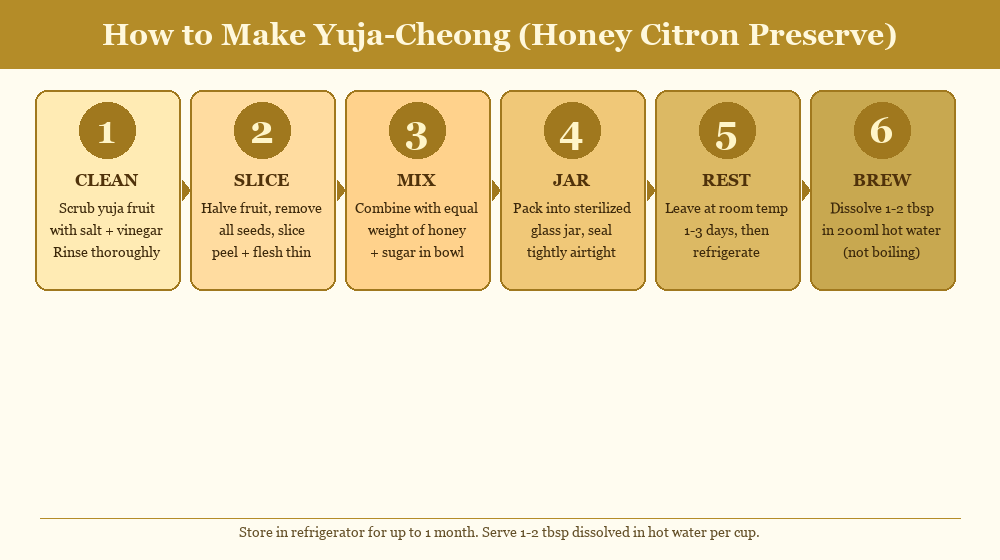
- Clean thoroughly: Scrub the yuja skin with coarse salt, then rinse with a diluted vinegar solution to remove any wax coating. Since the entire fruit — peel and all — goes into the preserve, cleanliness is essential.
- Slice thin and remove seeds: Halve the fruit, pick out every seed (they add bitterness), and slice the peel and flesh into thin half-moon strips. Thin slices break down more readily and release their oils into the sweetener faster.
- Mix with sweetener: In a large bowl, toss the sliced yuja with equal parts sugar and honey until every piece is coated. Using light-colored sugar preserves the vibrant yellow hue. All-honey preserve tends to mask the citron's tartness, so a blend is preferred by most cooks.
- Pack and seal: Transfer the mixture into a sterilized glass jar, pressing firmly to remove air pockets. Top with a final layer of honey to seal the surface.
- Rest at room temperature: Leave the sealed jar at room temperature for one to three days. During this time, osmotic pressure draws moisture out of the fruit into the sweetener, creating a glossy, syrupy consistency. Then refrigerate.
- Brew when ready: Dissolve one to two tablespoons of the finished cheong in 180–200ml of hot water (not boiling — around 80–85°C to protect the aromatic compounds). Stir well. The slices of preserved peel in the cup are entirely edible.
Traditional recipes sometimes specify a longer maturation of up to six months at cool temperatures, which deepens the flavor and creates a more complex syrup. Modern home cooks typically use the shorter one-to-three-day version, which is lighter and brighter in flavor.
A History From Joseon Court to Korean Households
Yuja arrived in Korea during the Joseon Dynasty, with oral tradition crediting its introduction to a merchant carrying saplings from China whose seeds accidentally took root in Korean soil. Whether legend or history, the fruit was recognized early for both its culinary and restorative value, and it earned a place in Korean royal court records.
The most celebrated historical figure associated with yuja-cha is King Sejong the Great (세종대왕, 1397–1450), inventor of the Korean Hangul script and one of the most revered figures in Korean history. Court records describe him as a devoted advocate of the citron tea, consuming it regularly during cold seasons. This royal endorsement gave yuja-cha an elevated cultural standing that persisted through generations of Korean households.
The cheong tradition itself is recorded in Joseon cookbooks such as the Eumsik dimibang and Gyuhap chongseo, which document preserving seasonal fruits in honey or sugar syrup — a technique called jocheong (조청, crafted honey). The preserve was stored in traditional earthenware onggi jars, which allowed slow fermentation while keeping the contents cool. Outside the royal court, ordinary households used the same technique to extend the usefulness of costly seasonal citrus through the long winter months.
By the 20th century, yuja-cha had transitioned from handmade household preserve to mass-market product. Commercial brands such as Damtuh and others now export glass jars of yuja-cheong across Asia and to Korean communities worldwide. Yet even today, the act of making yuja-cheong at home — especially around November harvest time — remains a meaningful seasonal ritual in Korean families.
Nutritional Highlights: Vitamin C, Hesperidin, and Narirutin
Yuja's nutritional value is well established in the scientific literature. Research published in the Journal of Agricultural and Food Chemistry (Yoon SR et al., 2004) quantified the key bioactive compounds in Citrus junos at peak maturity in November: the peel contains approximately 90.4 mg of vitamin C per 100g, along with 65.7 mg/100g of hesperidin and 63.8 mg/100g of naringin — the two dominant flavanone glycosides in this fruit.
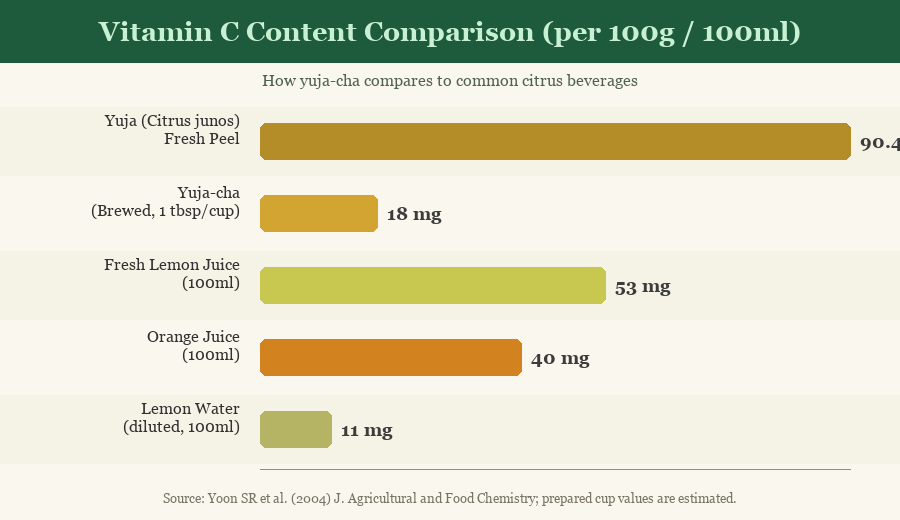
When yuja-cheong is dissolved in hot water to make tea, the vitamin C content of the resulting cup depends on the dilution ratio and the ripeness of the fruit used. A tablespoon of cheong in a standard cup provides a meaningful contribution toward the daily recommended intake, particularly during winter months when dietary vitamin C tends to decline.
Hesperidin and narirutin belong to the flavanone family of polyphenols. A narrative review published in PMC (Miles and Calder, 2021) summarized the current understanding of these compounds: they inhibit the pro-inflammatory transcription factors NFκB and MAPK, reduce the production of TNF-α, IL-1β, and IL-6, and in human clinical trials, supplementation with hesperidin at 500 mg daily for three weeks significantly lowered plasma CRP, serum amyloid A, and sE-selectin in metabolic syndrome patients. These findings suggest that the flavanones in yuja-derived preparations may support a balanced inflammatory response, though it should be noted that the clinical trials used purified hesperidin at concentrations substantially higher than a typical cup of yuja-cha would provide.
Bioavailability of these compounds follows a two-stage pathway: up to 30% is absorbed in the small intestine, while the remainder reaches the colon where gut microbiota convert the glycoside forms into more bioavailable aglycones (hesperetin and naringenin). Individual variability in this conversion is significant and depends on gut microbiome composition.
Immune Support and Cold-Season Benefits: The Evidence
Yuja-cha has been Korea's go-to home remedy for the common cold for as long as the tea has existed. The combination of vitamin C, citric acid, aromatic essential oils from the peel, and honey creates a drink that addresses several aspects of cold-season discomfort simultaneously.
The vitamin C component is the most scientifically documented. Research consistently shows that adequate vitamin C intake supports the function of phagocytes, natural killer cells, T-cells, and B-cells — the key players in both innate and acquired immune responses. During viral illness, the body's vitamin C stores are rapidly depleted as immune cells work to clear the pathogen; maintaining replenishment through dietary sources can help sustain that response.
Honey, the other central ingredient in yuja-cheong, contributes antimicrobial properties through its hydrogen peroxide content and low water activity, as well as soothing effects on irritated throat tissue. When dissolved in warm water and consumed as yuja-cha, the honey coats the mucous membranes of the throat, which may help ease the physical discomfort of a sore throat and mild cough.
It is important to be accurate here: yuja-cha is a traditional warm beverage with documented nutritional value, not a treatment for diagnosed illnesses. The compounds it contains have biological activity that is consistent with immune and anti-inflammatory support, but yuja-cha should be understood as a nourishing seasonal food rather than a substitute for professional healthcare advice.
Yuja-cha and Korean Beauty Culture
In Korea, the connection between food and skin is deeply embedded in wellness thinking, and yuja-cha occupies an interesting position in this conversation. Vitamin C is an essential cofactor in collagen synthesis — the process by which the body produces the structural proteins that give skin its firmness and elasticity. Adequate dietary vitamin C has been associated with visible skin brightness and reduced appearance of fine lines over time.
Korean beauty culture embraces this inside-out approach to skin health. Yuja's exceptionally high vitamin C content — richer per gram than lemon or orange — makes it a natural fit for this framework. The same extract that appears in topical serums and brightening masks is consumed internally as warm tea, linking the culinary tradition to contemporary K-beauty values.
Research from Korean laboratories has further supported this connection. A 2023 study published in Antioxidants (Jung HS et al.) demonstrated that yuja peel fractions inhibit matrix metalloproteinase enzymes (MMP-1, MMP-9, MMP-13), which break down collagen, while simultaneously increasing hyaluronic acid production and suppressing melanin synthesis in skin cell models. These findings relate to topical application, but they reinforce yuja's recognized role as a multi-pathway skin-support ingredient in Korean wellness culture.
How to Brew Yuja-cha Step by Step
Brewing yuja-cha is one of the simplest acts in Korean home cooking. Once you have a jar of yuja-cheong prepared or purchased, the process takes under two minutes:
- Heat your water: Bring water to 80–85°C rather than a full rolling boil. Excessively hot water can degrade delicate aromatic compounds and vitamin C.
- Measure the cheong: Add one to two tablespoons (15–30g) of yuja-cheong to a glass or ceramic cup. For a richer flavor, use two tablespoons; for a lighter daily drink, one tablespoon is sufficient.
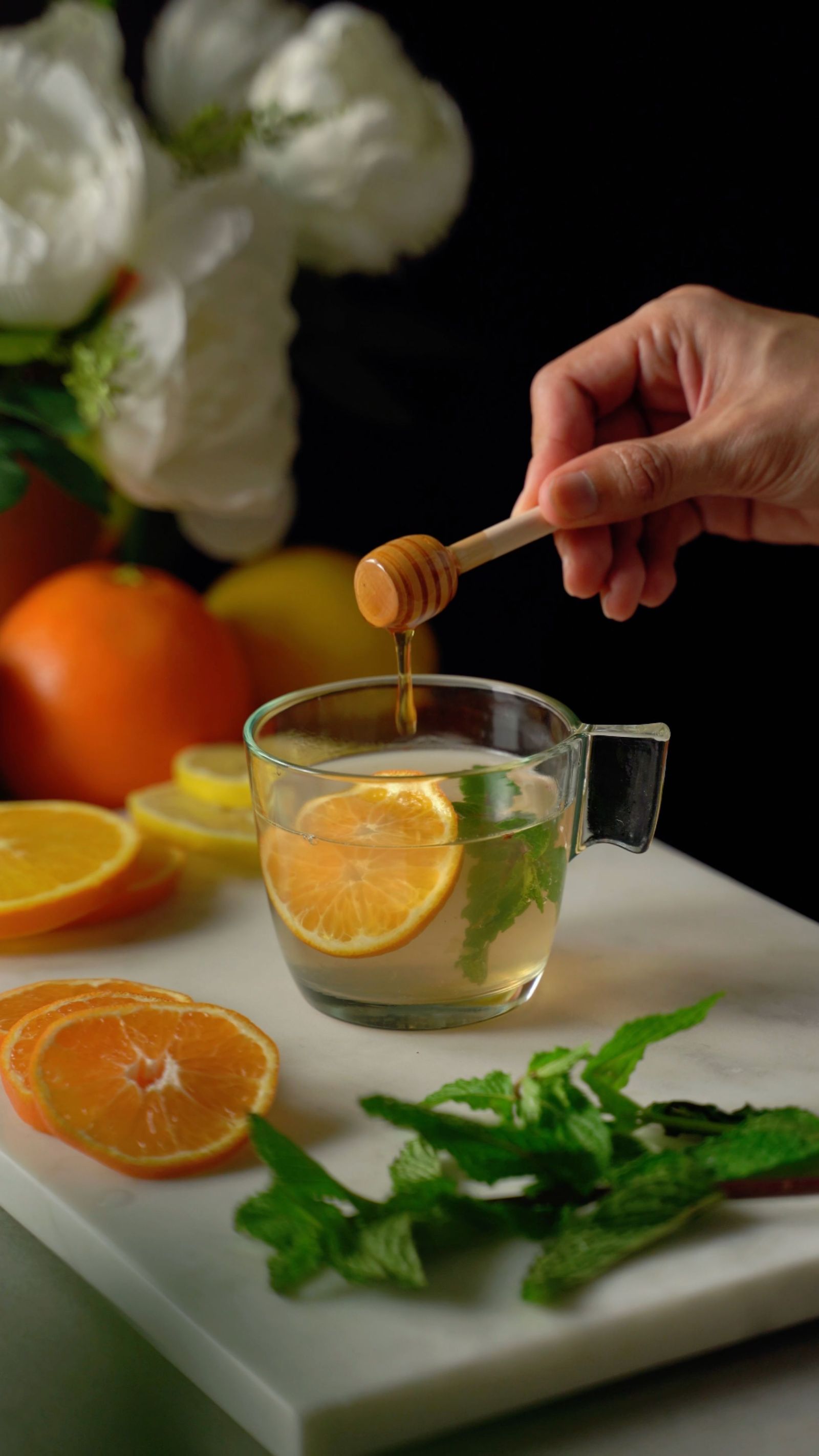
- Add hot water: Pour 180–200ml of hot water over the cheong. Stir gently with a long spoon until the preserve dissolves and the liquid turns a warm amber-gold.
- Eat the peel: The slices of preserved yuja peel that remain in the cup are traditionally eaten as part of the experience — they are sweet, slightly chewy, and concentrated in flavor.
- Adjust to taste: Add more cheong for sweetness or a squeeze of fresh citrus for brightness. Ginger slices or cinnamon stick are traditional Korean additions for cold-season cups.
Homemade vs Commercial Yuja-Cheong
Walk into any Korean supermarket — or many Asian grocery stores outside Korea — and you will find shelves lined with large glass jars of yuja-cheong, sold under brands including Damtuh, Ottogi, and various regional Goheung producers. These products make yuja-cha accessible year-round and globally, and they have helped introduce Korean citron tea to international audiences far beyond Korea's borders.
The differences between homemade and commercial yuja-cheong are real but not dramatic:
- Flavor intensity: Homemade cheong, particularly when using Goheung fruit at peak harvest, tends to be more aromatic and more tart. Commercial versions are typically sweeter and more uniform in flavor, calibrated for broad appeal.
- Peel texture: Home-prepared cheong made with fresh fruit retains a firmer peel texture. Commercial preserves often have softer peel due to processing and extended shelf storage.
- Additives: Check ingredient labels on commercial products — some include added pectin, citric acid, or flavor enhancers. Higher-quality commercial options use only fruit, sugar, and honey.
- Nutritional content: The sugar-to-fruit ratio in commercial versions is often higher than home recipes, which can make the tea sweeter and more calorie-dense per tablespoon.
For everyday convenience, a quality commercial yuja-cheong is entirely adequate. For a special ritual — making a batch in November, gifting jars to family, connecting to the seasonal harvest — homemade remains irreplaceable.
Serving Variations Beyond the Classic Hot Cup
While a steaming glass of hot yuja-cha is the canonical winter preparation, the cheong itself is a versatile ingredient that Koreans use in several other ways:
- Iced yuja tea: For summer months, dissolve two tablespoons of cheong in two tablespoons of hot water to concentrate the flavor, then add cold water and ice. The result is a refreshing citrus drink similar to lemonade but with the distinct floral-herbal character of yuja.
- Yuja cocktail base: The sweetness and acidity of yuja-cheong make it an excellent cocktail mixer. Combined with soju, gin, or sparkling wine, it creates drinks with a bright Korean citrus note without any added sugar.
- Toast spread: Yuja-cheong makes an exceptional marmalade spread on toast or rice crackers. Its flavor profile — somewhere between lemon curd, orange marmalade, and grapefruit jam — is assertive enough to stand on its own.
- Salad dressing base: Thinned with rice vinegar and sesame oil, yuja-cheong becomes a bright and slightly sweet Asian-style dressing.
- Ginger-yuja winter blend: One of the most popular Korean cold-season variations adds a slice or two of fresh ginger to the hot cup. Ginger's warming aromatic compounds complement the citron beautifully and add an additional layer of traditional cold-season support.
Korean Tea Culture: The Comfort of Informal Warmth
Understanding yuja-cha fully requires a brief appreciation of what makes Korean tea culture distinct. Unlike the formal ceremony-centered traditions of Japanese Chado or the leaf-variety emphasis of Chinese tea culture, Korean tea drinking — traditionally called darye (茶禮) — emphasizes comfort, conversation, and seasonal connection over ritual formality.
Most traditional Korean teas are technically infusions made from grains (boricha, roasted barley), flowers (gukhwacha, chrysanthemum), fruits (omija, schisandra berry), or roots (ssanghwacha, a traditional root blend) rather than tea leaves. Yuja-cha fits this pattern perfectly: it is a fruit preserve dissolved in water, consumed at home, shared casually between family members, and attuned to the rhythms of the growing season.
This informality is not a lesser form of tea culture — it reflects a different kind of depth. The care involved in making a batch of yuja-cheong each November, in the timing of the harvest, in the choice of honey, in the gifting of jars to neighbors and relatives, is its own form of ritual. It simply lives in the kitchen and the family table rather than the ceremonial teahouse.
Reviewed by: This article has been reviewed by a licensed practitioner in Traditional Korean Medicine for factual accuracy regarding traditional uses. It is intended for educational purposes only and does not constitute medical advice. Always consult a qualified healthcare provider before using herbal preparations for health conditions.
References
[1] Yoon SR, Lee GH, Lee JH, et al. (2004). "Variation in Major Antioxidants and Total Antioxidant Activity of Yuzu (Citrus junos) during Maturation." Journal of Agricultural and Food Chemistry, 52(19):5907–5913. PMID: 15366841.
[2] Miles EA, Calder PC. (2021). "Effects of Citrus Fruit Juices and Their Bioactive Components on Inflammation and Immunity: A Narrative Review." Nutrients, 13(6):2104. PMC8264544. Available at: https://pmc.ncbi.nlm.nih.gov/articles/PMC8264544/
[3] Jung HS, Kim MH, Gwon MG, et al. (2023). "Skin Improvement with Antioxidant Effect of Yuja (Citrus junos) Peel Fractions: Wrinkles, Moisturizing, and Whitening." Antioxidants (Basel), 12(1):51. PMC9854771.
[4] Wikipedia contributors. (2024). "Cheong (food)." Wikipedia, The Free Encyclopedia. Available at: https://en.wikipedia.org/wiki/Cheong_(food)
[5] Korea.net — The official website of the Republic of Korea. "Celebrating winter solstice the traditional Korean way." Available at: https://www.korea.net/NewsFocus/Culture/view?articleId=166489
[6] Wikipedia contributors. (2024). "Yuja tea." Wikipedia, The Free Encyclopedia. Available at: https://en.wikipedia.org/wiki/Yuja_tea