Artichoke Tea: Vietnam's Traditional Wellness Drink from the Da Lat Highlands
Educational guide to artichoke (atisô / Cynara scolymus) in Vietnamese tradition — French colonial origins in Đà Lạt, traditional cooling properties, trà atisô culture, cynarin bile research, clinical studies, and important safety considerations.
Medical Disclaimer: This content is for educational and informational purposes only and is not medical advice. The information presented is not intended to diagnose, treat, cure, or prevent any disease. Always consult a licensed healthcare practitioner before starting any new herbal practice or supplement. Statements regarding traditional herbal use have not been evaluated by the FDA.
Affiliate Disclosure: This article contains affiliate links. We may earn a commission if you purchase through these links, at no additional cost to you. We only recommend products we believe align with our editorial standards.
Walk into almost any Vietnamese café, market stall, or family kitchen in the summer months, and you are likely to encounter it: a large glass pitcher filled with a pale golden-amber liquid, slightly bitter on the tongue, cooling as it goes down. This is trà atisô — artichoke tea — one of the most beloved and culturally embedded wellness beverages in Vietnam. It is sold bottled on every street corner in Đà Lạt, brewed at home from dried flowers and leaves across the country, and carried as a specialty souvenir by Vietnamese travelers returning from the misty central highlands.
What makes the artichoke's story in Vietnam particularly fascinating is how recently it arrived — and how completely it was adopted. Introduced by the French during the colonial era, this Mediterranean thistle found a second home in the cool, fertile highlands of Lâm Đồng province, and was absorbed so thoroughly into Vietnamese herbal tradition that many Vietnamese consider it simply a Vietnamese plant. Today, atisô Đà Lạt (Đà Lạt artichoke) is a recognized regional specialty, its dried flowers exported to Vietnamese communities worldwide. The leaf has its own classification in Vietnamese traditional medicine (y học cổ truyền), its own pharmacopeia entry, and its own body of seasonal wellness wisdom.
This guide covers the artichoke's origins in Vietnam, what traditional Vietnamese medicine says about it, how trà atisô is prepared, what early modern research has begun to explore about its key compounds, and the important safety considerations every person should know before making it a regular part of their routine.
Artichoke in the Highlands of Vietnam
The globe artichoke (Cynara scolymus, also classified as Cynara cardunculus var. scolymus) is native to the western Mediterranean — North Africa and southern Europe — where it has been cultivated as a vegetable and medicinal plant since antiquity. It was a prized food in ancient Greece and Rome, and was subsequently spread across Europe by Arab traders and later by French royal cuisine, which elevated the artichoke head to a delicacy.
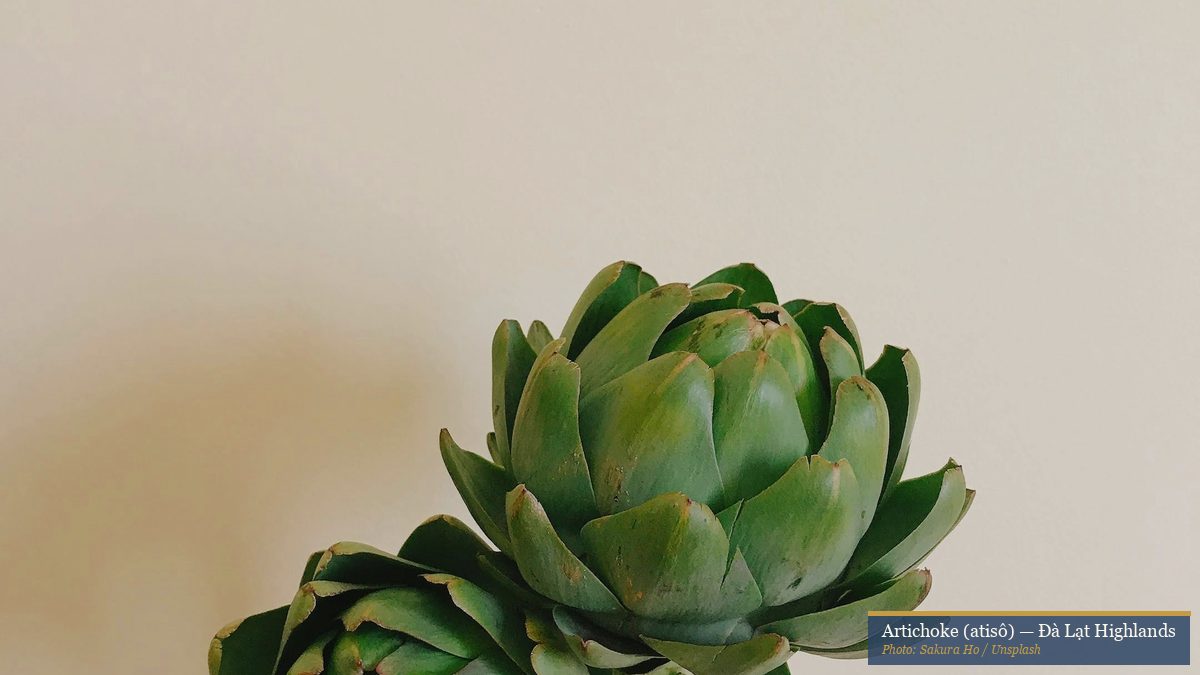
Vietnam's relationship with the artichoke began during the French colonial period, roughly in the 1940s, when French administrators and settlers introduced the plant to the highlands they were developing as a temperate retreat. The cool, misty climate of Đà Lạt — situated at approximately 1,500 meters elevation in the Lâm Đồng highlands — proved remarkably hospitable to the artichoke, which requires cool temperatures and well-drained, fertile soil. The red basalt soils of the region, rich in minerals and well-suited to cool-season crops, gave Đà Lạt artichokes a particularly robust flavor and dense phytochemical profile.
While the French initially cultivated artichoke primarily as a vegetable — harvesting the immature flower heads to eat the heart and leaf bases, as in European tradition — the local Vietnamese herbal tradition quickly found different value in the plant. Rather than eating the vegetable heart, Vietnamese practitioners and families began using the leaves, stems, and whole dried flowers as material for medicinal teas and decoctions. This is a meaningful cultural divergence: where European tradition sees artichoke primarily as food, Vietnamese tradition adopted it almost entirely as a beverage herb. The dried whole flower head — bông atisô khô — became the signature preparation of Đà Lạt, a distinctive golden-purple bloom that opens beautifully when placed in a glass teapot and can be steeped multiple times. It became one of the defining souvenir products of the highland city and a symbol of Đà Lạt's cool-climate specialty agriculture.
Today, Lâm Đồng province produces the vast majority of Vietnam's artichoke crop, with cultivation also present in Ha Giang, Lao Cai, and Vinh Phuc provinces. The artichoke has become so integrated into Vietnamese herbal commerce and consumer culture that it is difficult to imagine the tradition without it — a testament to how naturally it fit the country's existing frameworks for cooling summer herbs and liver-supporting plants.
What Traditional Vietnamese Medicine Says About Artichoke
In Vietnamese traditional medicine (y học cổ truyền / Đông y), artichoke occupies a well-defined place in the category of cooling, liver-supporting herbs. The classification used in Vietnamese pharmacopeia references and clinical hospital sources describes artichoke as having a vị ngọt hơi đắng, tính mát — sweet taste with slight bitterness, and a cooling (mát) thermal nature [1]. Some clinical references categorize the thermal nature more specifically as tính lạnh (cold nature), a slightly stronger classification [2]. The nuance between mát (moderately cooling) and lạnh (cold) reflects regional variation in traditional classification systems — a normal feature of herbal medicine traditions where practitioners in different localities may categorize the same plant differently based on clinical observation.
The core traditional functions attributed to artichoke in Vietnamese practice include:
- Thanh nhiệt, giải độc — clearing summer heat and detoxifying; artichoke is specifically positioned as a warm-season herb, consumed most traditionally during the hot months when the body is described as accumulating excess heat
- Bổ gan, bảo vệ gan — supplementing and protecting the liver; artichoke's association with liver health is one of its oldest and most consistent traditional attributions in Vietnamese practice
- Lợi mật — benefiting bile; promoting the flow and production of bile, which in traditional medicine connects to fat digestion and the liver's filtering function
- Thanh lọc máu — blood purification; a broader cooling and filtering function attributed to many bitter herbs in the Vietnamese pharmacopeia
- Lợi tiểu — diuretic; promoting urination and fluid elimination, traditionally used for patterns of heat-related fluid retention
- Khai vị, hỗ trợ tiêu hóa — appetite stimulation and digestive support; the bitter compounds in artichoke stimulate digestive secretions, a mechanism recognized in both traditional and modern frameworks [3]
A specific piece of traditional Vietnamese wisdom worth noting: artichoke's cooling nature makes it most suitable for individuals with a warm or heat-prone constitution, and most appropriate as a seasonal summer preparation. Vietnamese sources consistently caution against heavy use by those with a tỳ vị hư hàn constitution — spleen-stomach deficiency-cold pattern — characterized by chronic loose stools, cold extremities, poor appetite, and generally weak digestion. For these individuals, a cooling herb may aggravate the underlying constitutional imbalance. This is a nuance that most English-language artichoke articles omit entirely.
Vietnamese tradition also uses all parts of the artichoke plant, not just the leaf: the dried flower heads (bông atisô), the leaves (lá atisô), the roots (rễ atisô), and the stems (thân atisô) are all documented in traditional Vietnamese preparations. This whole-plant approach differs significantly from the standardized artichoke leaf extract (ALE) format that most Western clinical research has studied — an important distinction when interpreting evidence.
How to Make Artichoke Tea: Vietnam's Favorite Wellness Drink
Artichoke tea holds a distinctive place in Vietnamese beverage culture: unlike many traditional herbal teas that are prepared specifically for medicinal purposes and consumed in small therapeutic doses, trà atisô has become a mainstream everyday drink — refreshing, widely available, and enjoyed as much for its flavor as for its traditional health associations. Understanding the different preparation forms helps clarify what the tradition actually involves.
Dried Whole Flower Tea — Bông Atisô Khô
The most distinctive Vietnamese preparation and the one most associated with Đà Lạt's identity as a specialty herb producer. A single large dried artichoke flower head is placed in a glass teapot, steeped in hot water (approximately 90–95°C) for 5–10 minutes, then topped up repeatedly as the flower opens over successive steeps. The tea has a pale golden-amber color, a mild bitterness, and a slightly sweet finish. The visual drama of the dried flower slowly opening in hot water has made this preparation particularly popular in cafés and as a hospitality beverage. Traditional dosage guidance from Vietnamese sources suggests 1–2 dried flowers per day is a typical moderate use [1].
Dried Leaf Tea — Trà Lá Atisô
Dried artichoke leaves — a standardized medicinal preparation — are simmered or brewed as a decoction. Traditional Vietnamese dosage for dried leaf is 5–10g per day, divided across multiple servings. The leaf tea tends to be more bitter than the flower tea, with a stronger earthy quality. This preparation is closer to the standardized artichoke leaf extract (ALE) that most clinical research has studied, though the concentration and standardization differ substantially from commercial extracts.
Fresh Leaf Preparation
For those with access to fresh artichoke leaves — available at highland markets and specialty Vietnamese grocers — fresh leaf can be used in larger quantities: Vietnamese traditional dosage guidance recommends 10–20g of fresh leaf per day [3]. Fresh leaf preparations include decoctions (sắc — simmering in water until reduced) and fresh juice pressed from the leaves, traditionally consumed in small amounts.
Commercial Bottled Artichoke Tea
Perhaps the most commonly consumed form in modern Vietnam: commercially bottled or canned artichoke tea, widely available in convenience stores, supermarkets, and from street vendors throughout the country. These mass-produced preparations vary considerably in artichoke concentration and typically contain added sugar. They represent the commodification of the traditional tea into an everyday consumer product — more culturally significant than medically specific.
Vietnamese families typically position artichoke tea as a seasonal summer cooling drink, served cold or at room temperature, and associate it particularly with hot-weather months when the body's accumulated heat calls for clearing herbs. This seasonal framing is traditional — artichoke tea as a year-round daily supplement is a more modern marketing development than an authentic traditional practice. Individual responses to artichoke tea vary considerably; what one person finds pleasantly cooling and refreshing, another may find too bitter or too cooling for their constitution.
What Research Has Begun to Explore About Artichoke Leaf
Modern scientific investigation of artichoke has identified several pharmacologically interesting compound families in the leaf and flower. The research base is more developed than many traditional herbs, including some meaningful human clinical data — though important caveats apply when interpreting the evidence.
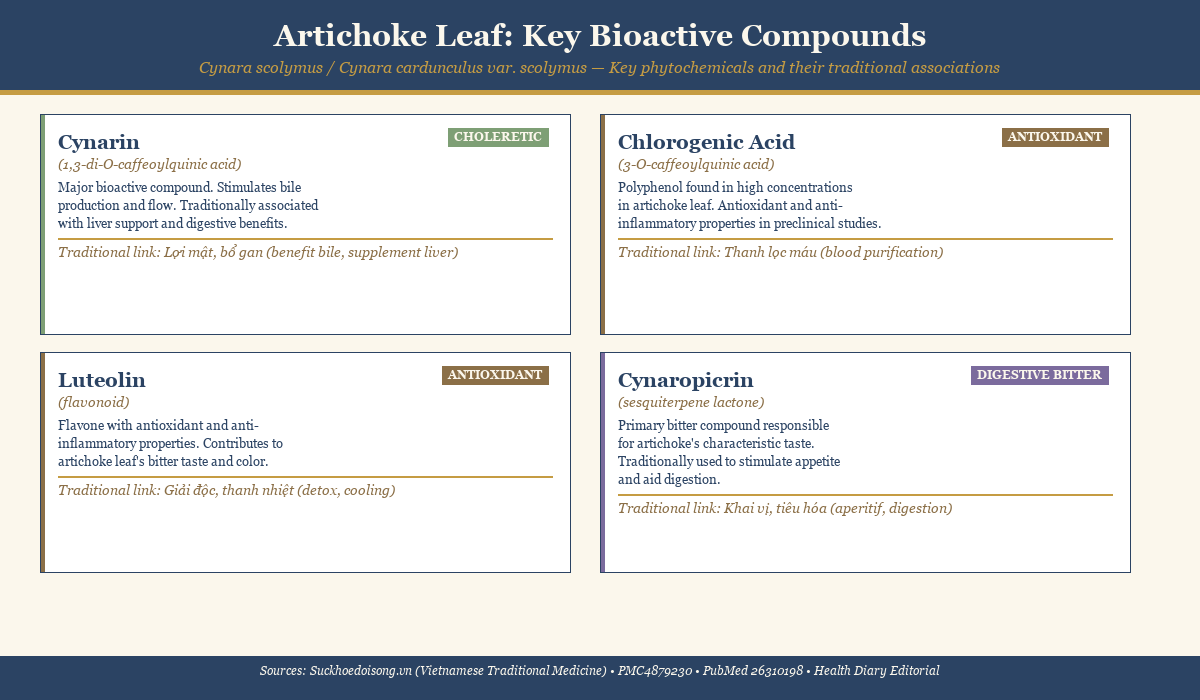
Key Bioactive Compounds
Four compound families have attracted the most research attention in artichoke leaf [4]:
- Cynarin (1,3-di-O-caffeoylquinic acid) — the primary phenolic acid most closely associated with artichoke's choleretic (bile-stimulating) effects. Vietnamese traditional sources note that cynarin may increase bile secretion stimulation approximately fourfold compared to baseline — a claim derived from European pharmacological research that underlies the traditional lợi mật attribution [1].
- Chlorogenic acid (3-O-caffeoylquinic acid) — a polyphenol found in high concentrations in artichoke leaf, with antioxidant and anti-inflammatory properties documented in preclinical research. Chlorogenic acid is also found in significant quantities in coffee and other plants.
- Luteolin — a flavone contributing to artichoke's antioxidant activity and bitter taste profile, with anti-inflammatory properties in laboratory models.
- Cynaropicrin — the primary sesquiterpene lactone responsible for artichoke's characteristic bitterness, with traditional use as a digestive bitter and aperitif agent.
Human Clinical Evidence — Liver Enzymes in NASH
One of the more rigorous human studies on artichoke extract is a randomized double-blind clinical trial involving 60 patients with nonalcoholic steatohepatitis (NASH), published in the Iranian Red Crescent Medical Journal [5]. Participants received either 2,700 mg of Cynara scolymus extract daily or placebo for two months. The artichoke group showed a statistically significant reduction in liver enzymes: ALT dropped from 81.77 to 38.40 mg/dL (p<0.001), and AST from 45.53 to 24.60 mg/dL (p<0.001). Total cholesterol fell from 206.47 to 182.87 mg/dL, and triglycerides from 193.37 to 154.50 mg/dL — neither of which showed meaningful change in the placebo group. The researchers concluded the study demonstrated "potential hepatoprotective activity and hypolipidemic effect" of artichoke extract in NASH management, with no adverse events reported.
This is a meaningful study in several ways: the patient population (NASH) is clinically significant, the endpoint (liver enzymes) is objective, and the design (double-blind, placebo-controlled) is methodologically sound. However, with 60 participants over two months and no independent replication to date, it represents preliminary evidence rather than established proof. The dose used (2,700 mg extract) is substantially higher than what a typical cup of traditional artichoke tea delivers.
Lipid Profile — Systematic Review Evidence
A 2017 systematic review and meta-analysis pooled data from 9 randomized controlled trials involving 702 subjects to examine artichoke extract's effects on blood lipids [6]. The pooled results showed statistically significant reductions in total cholesterol (weighted mean difference −17.6 mg/dL), LDL cholesterol (−14.9 mg/dL), and triglycerides (−9.2 mg/dL). HDL cholesterol showed no meaningful change. The authors concluded that artichoke extract supplementation was associated with significant lipid reductions and may be synergistic with conventional lipid-lowering therapy.
An earlier double-blind RCT in 75 adults with elevated cholesterol (total cholesterol 6.0–8.0 mmol/L) tested 1,280 mg of standardized artichoke leaf extract daily for 12 weeks [7]. Total cholesterol decreased 4.2% in the treatment group vs. an increase of 1.9% in the control group (p=0.025). The effect was modest and statistically significant for total cholesterol, though LDL, HDL, and triglyceride differences were not significant in this study — possibly because the participant population was relatively healthy compared to the NASH study.
Digestive Function — Dyspepsia and IBS
A multicenter double-blind RCT tested a combination of artichoke extract (100 mg) and ginger extract (20 mg) against placebo in 126 patients with functional dyspepsia [8]. At 14 days, the treated group showed significant improvement in overall symptoms (p=0.017) vs. no significant improvement in placebo. By 28 days, 86.2% of the treated group showed clinical improvement compared to 24.6% in placebo. Nausea, epigastric fullness, bloating, and epigastric pain all improved significantly. No significant adverse effects were reported.
Separate post-marketing surveillance in 279 IBS patients found a 26.4% reduction in IBS incidence after 2 months of artichoke leaf extract use. While post-marketing surveillance is lower-quality evidence than an RCT, the consistency with the dyspepsia findings suggests the choleretic and digestive effects may be genuine.
Across all of this research, the honest summary is: artichoke leaf extract contains pharmacologically interesting compounds, particularly cynarin and chlorogenic acid; some human clinical evidence for liver enzyme improvement, modest lipid effects, and digestive symptom relief exists; but most studies use concentrated standardized extracts at doses substantially higher than traditional tea preparations. Traditional trà atisô delivers a real but variable dose of these compounds. None of the research constitutes proof that artichoke tea treats or prevents any disease — and individual responses vary considerably.
How Vietnamese Families Incorporate Artichoke
The integration of artichoke into Vietnamese daily life goes beyond simple herbal medicine — it is woven into regional identity, seasonal ritual, and the landscape of hospitality.
Summer Cooling Ritual
The most culturally embedded use is seasonal: throughout the hot summer months (tháng hè), artichoke tea serves as the Vietnamese family's preferred cooling and heat-clearing beverage. A large pot is often brewed in the morning and left to cool, to be consumed throughout the day by family members as an alternative to plain water or sugary drinks. This is not primarily a medicinal practice — it is a cultural habit with traditional roots, analogous to other seasonal cooling drinks in East and Southeast Asian traditions.
The Đà Lạt Connection — Tourism and Regional Pride
For Vietnamese tourists and city dwellers, visiting Đà Lạt almost always involves purchasing dried whole artichoke flowers to bring home. The whole flower tea has become one of the most recognized specialty products of the highland city, alongside strawberry jam, dried flowers, and fresh vegetables. Artichoke tea shops in Đà Lạt often feature elaborate glass teapot displays where the dried flowers slowly open during service — a visual experience as much as a culinary one. This tourism dimension has reinforced artichoke tea's cultural prestige and accessibility throughout the country.
Artichoke in Vietnamese Cooking
Beyond tea, artichoke leaves and stems are used in Vietnamese cooking, particularly in canh atisô — artichoke soup, typically prepared with pork ribs or chicken, producing a clear, slightly bitter broth that is consumed as part of a full Vietnamese meal. This positions artichoke within the Vietnamese food-medicine continuum, where soups and broths are as much wellness preparations as culinary dishes.
Vietnamese families who use artichoke regularly typically do so as a seasonal summer habit — a large pot of cool tea on the table during hot weather, or a warming bowl of artichoke soup during the dry season. Individual experiences with artichoke vary considerably; some people find the flavor deeply enjoyable and the cooling effect tangible, while others find it too bitter or notice digestive sensitivity. Observing your own response over time, particularly noting whether your constitution aligns with what traditional Vietnamese medicine describes as suitable for cooling herbs, is more informative than general claims.
Important Considerations Before Regular Use
Artichoke has a long history of use as both food and medicine and is generally considered safe for most healthy adults in traditional tea amounts. However, several clinically meaningful considerations apply — particularly for anyone planning to use concentrated extracts or consuming large daily quantities of tea.
- Gallbladder and bile duct obstruction — important contraindication: Artichoke's choleretic effect — stimulating bile flow — is one of its most studied and traditionally recognized actions. However, this same mechanism makes artichoke preparations potentially harmful for people with gallstones or bile duct obstruction. Increased bile flow in the presence of gallstones or blocked ducts can cause biliary colic (severe abdominal pain) or worsen the obstruction. Anyone with known gallbladder disease, gallstones, or bile duct problems should consult their doctor before using artichoke preparations beyond occasional culinary amounts.
- Asteraceae family allergy: Artichoke belongs to the daisy family (Asteraceae / Compositae). People with known allergies to related plants — chrysanthemum, marigold, ragweed, chamomile, or echinacea — may experience cross-reactive allergic responses including contact dermatitis or, in rare cases, anaphylaxis. Hello Bacsi specifically lists Asteraceae allergy as a contraindication for artichoke extract use [3].
- Cold constitution and digestive sensitivity: Vietnamese traditional sources consistently identify people with spleen-stomach cold constitution (tỳ vị hư hàn) — marked by chronic loose stools, cold extremities, fatigue, and weak digestion — as unsuitable candidates for regular artichoke consumption [2]. The cooling nature of artichoke may aggravate these patterns, leading to increased digestive discomfort and loose stools over time.
- Overuse risks: Vinmec's clinical reference notes that consuming excessive quantities of artichoke tea (they cite the example of more than 2 liters daily) carries risks including electrolyte imbalance, mineral depletion (chromium, zinc, manganese), and digestive disruption from excess bile stimulation [2]. Traditional dosage guidance — 5–10g dried leaf or 10–20g fresh leaf per day — exists for good reason.
- Pregnancy and children: Artichoke is not recommended for children under 12 years old per Vietnamese clinical sources [3]. Safety data in pregnancy and breastfeeding is insufficient for confident recommendations; pregnant women should consult their healthcare provider before use beyond normal culinary amounts.
- Potential interactions with medications: Artichoke's effects on bile flow and liver enzyme metabolism suggest the theoretical possibility of interactions with medications processed through the liver (drugs relying on CYP450 pathways) and with medications for cholesterol or blood sugar. While this has not been conclusively demonstrated in human trials, people taking prescription medications for these conditions should discuss artichoke use with their prescribing physician before regular use of concentrated extracts.
- Stomach ulcers and gastritis: Vietnamese clinical sources list stomach ulcers and gastritis as contraindications for artichoke extract use, given the potential for bile stimulation to irritate an already inflamed gastric lining [3].
- Extract concentration vs. traditional tea: The clinical trials reviewed above used standardized artichoke leaf extracts at doses of 1,280 mg to 2,700 mg daily — substantially more concentrated than a typical cup of traditionally brewed artichoke tea. The benefits observed in clinical research may not translate directly to traditional tea consumption, and conversely, the traditional tea form delivers a gentler, more variable dose that may be more appropriate for everyday wellness use.
Frequently Asked Questions About Artichoke Tea (Trà Atisô)
What is trà atisô and how is it different from artichoke as a vegetable?
Trà atisô refers to tea made from the leaves, stems, and/or dried whole flower heads of the artichoke plant (Cynara scolymus). In Western culinary tradition, artichoke is primarily consumed as a vegetable — specifically the immature flower head, where the base of the bracts (leaf-like scales) and the heart are eaten. In Vietnamese tradition, the plant was adopted almost entirely for its beverage use: the dried whole flower (bông atisô khô) and the leaves (lá atisô) are brewed as tea, not eaten. The flavor profile of artichoke tea — mildly bitter, slightly sweet — reflects the phytochemical compounds in the leaves and flower, particularly cynarin and cynaropicrin. It is a distinct culinary and cultural tradition from Italian or French artichoke cuisine.
Can I drink artichoke tea every day during summer?
Many Vietnamese families do drink artichoke tea regularly during summer months as a cooling herbal beverage, and this aligns with the plant's traditional classification as a seasonally appropriate, heat-clearing herb. For most healthy adults without the contraindications described above, moderate daily use of traditional-strength artichoke tea during hot weather is unlikely to cause harm. Vietnamese dosage guidance suggests 5–10g dried leaf (or 1–2 dried flowers) per day as a typical range. Avoiding very large quantities (multiple liters daily) is advisable based on Vietnamese clinical cautions about electrolyte imbalance and digestive disruption. Individual responses vary considerably — some people find daily artichoke tea gently beneficial, others find it too cooling for extended use.
What does the research say about artichoke and liver health?
The most direct human clinical evidence comes from a double-blind RCT in 60 patients with nonalcoholic steatohepatitis (NASH), which found significant reductions in liver enzymes ALT and AST after two months of artichoke extract (2,700 mg/day) [5]. Animal studies and laboratory research support antioxidant and hepatoprotective mechanisms. These findings align with the traditional Vietnamese attribution of bổ gan (liver support) to artichoke. However, the clinical research is preliminary: the 60-patient NASH study has not been independently replicated, and the extract doses used far exceed what typical tea preparations contain. The research is encouraging but does not constitute proof that artichoke tea treats liver disease.
Who should avoid artichoke preparations?
Several groups should exercise caution or avoid artichoke preparations: people with gallstones or bile duct obstruction (the choleretic effect may worsen symptoms or trigger biliary colic); people with known allergy to the daisy family (Asteraceae) including chrysanthemum, chamomile, or ragweed; people with a cold-type body constitution per Vietnamese traditional medicine (chronic loose stools, cold extremities, weak digestion); people with stomach ulcers or active gastritis; children under 12; and pregnant women. People taking prescription medications for cholesterol, blood sugar, or liver conditions should consult their prescribing physician before using concentrated artichoke extracts.
Is Đà Lạt artichoke tea the same as artichoke leaf extract supplements?
No — there are meaningful differences in dose, form, and concentration. Đà Lạt artichoke tea (whether made from dried flowers or dried leaves) delivers a moderate and variable dose of bioactive compounds per cup, including cynarin, chlorogenic acid, and luteolin, in a traditional aqueous preparation. Commercial artichoke leaf extract (ALE) supplements are standardized concentrated extracts, typically delivering 300–500 mg of extract per capsule, with specified levels of cynarin or total caffeoylquinic acids. The clinical trials reviewed in this article used these standardized extracts at 1,280–2,700 mg/day — not traditional tea. This doesn't mean traditional tea has no value, but it does mean that research findings from high-dose extract studies should not be directly extrapolated to everyday tea drinking.
Exploring Artichoke Further
For those drawn to Vietnamese herbal beverage traditions, artichoke offers a genuinely distinctive entry point — it is one of the few herbs where the full sweep of the cultural journey is visible: a Mediterranean plant, adopted by colonial agriculture, transformed by local herbal wisdom into a distinctly Vietnamese tradition, now exported to Vietnamese communities worldwide. The dried whole flower tea, in particular, carries something of that story in its visual drama and distinctive flavor.
If you are curious about how artichoke tea fits into your personal wellness practice, beginning with the traditional seasonal approach — drinking it as a warm-weather cooling beverage rather than a year-round supplement — aligns most closely with how the tradition actually developed and keeps the dosage in a range consistent with Vietnamese traditional guidance. Tracking your personal response over several weeks, noting how your energy, digestion, and general sense of summer wellbeing shift, gives you more useful information than any general claim about artichoke's properties. Health Diary's tracking features are designed for exactly this kind of personal observation — helping you distinguish patterns that genuinely correlate with your habits from changes that would have happened anyway.
You can explore related Vietnamese herbal traditions in our companion guides on lotus leaf (lá sen) — another cooling summer herb — and gotu kola (rau má), Vietnam's most widely used everyday herb. For the broader context of liver-supporting herbs across Asian traditions, our entries on reishi mushroom and astragalus offer complementary perspectives.
A Note on Traditional Wisdom and Modern Evidence
Artichoke presents an interesting case study in the relationship between traditional herbal practice and modern research — because unlike many traditional herbs where clinical evidence remains almost entirely absent, artichoke has attracted a genuine body of controlled research. The alignment between what Vietnamese traditional medicine has said for decades (supports liver function, promotes bile flow, aids digestion) and what clinical research is beginning to demonstrate is meaningful and worth acknowledging.
At the same time, the form matters. Traditional Vietnamese trà atisô is a dilute aqueous preparation consumed as part of a seasonal dietary pattern, embedded in a cultural framework that values seasonal appropriateness, constitutional suitability, and moderate consistent use. The standardized extracts used in clinical research are concentrated pharmaceutical-grade preparations at doses that exceed traditional use by orders of magnitude. These are related but distinct things, and the cautions and benefits don't transfer perfectly between them.
The most honest and useful framing may be the simplest: artichoke has one of the more credible traditional reputations among Vietnamese herbs, and early modern research has not contradicted that reputation. For healthy adults without the contraindications described above, seasonal enjoyment of artichoke tea as part of a varied wellness routine — particularly during hot summer months, as Vietnamese tradition recommends — is a reasonable, culturally grounded choice with a safety profile supported by centuries of use and preliminary modern data. That is more than can be said for many wellness trends far more aggressively marketed.
About This Article
Written by: Health Diary Editorial Team — a small editorial group researching traditional wellness practices, herbal traditions, and quantified-self methods. Our articles draw on peer-reviewed literature, government and hospital health-authority sources (Vinmec, Sức Khoẻ & Đời Sống / Vietnam Ministry of Health media, Hello Bacsi), and primary native-language Vietnamese sources.
Editorial review: This article has been reviewed by the Health Diary editorial team for clarity, structure, and adherence to our sourcing standards. Key claims were cross-checked against PubMed/PMC peer-reviewed publications (PMC4879230, PubMed 26310198, PubMed 28609140, PubMed 18424099, PMC4411465), Vietnamese clinical hospital and health-authority sources (Vinmec, Sức Khoẻ & Đời Sống, Hello Bacsi), and traditional Vietnamese pharmacopeia references. It is not a clinical review and should not replace consultation with a licensed healthcare practitioner. When a clinical reviewer is added to this article, attribution will appear here with verifiable credentials.
Reviewed on: June 14, 2026.
Editorial process: All claims about modern evidence are linked inline to peer-reviewed publications or authoritative Vietnamese hospital and government media sources. Where human clinical evidence is limited (most traditional herb research), we describe it that way rather than overstating preclinical findings. Traditional Vietnamese medicine perspectives are sourced directly from Vietnamese clinical and health-authority sources rather than through English-language intermediaries, to preserve cultural authenticity and avoid reframing of traditional knowledge.
References
- Sức Khoẻ & Đời Sống (Vietnam Ministry of Health media). Atisô – vị thuốc bổ mát, giải độc gan nhưng dùng thế nào cho đúng? https://suckhoedoisong.vn/atiso-vi-thuoc-bo-mat-giai-doc-gan-nhung-dung-the-nao-cho-dung-169221203170448982.htm
- Vinmec International Hospital. Tác hại khi lạm dụng atisô. https://www.vinmec.com/vie/bai-viet/tac-hai-khi-lam-dung-atiso-vi
- Hello Bacsi. Cao atisô có tác dụng gì? Uống hàng ngày có tốt không? https://hellobacsi.com/duoc-lieu/thao-duoc/cao-atiso/
- Lattanzio V et al. (2015). Pharmacological Studies of Artichoke Leaf Extract and Their Health Benefits. PubMed 26310198. https://pubmed.ncbi.nlm.nih.gov/26310198/
- Rangboo V et al. (2016). The Effect of Artichoke Leaf Extract on Alanine Aminotransferase and Aspartate Aminotransferase in the Patients with Nonalcoholic Steatohepatitis. PMC4879230. https://pmc.ncbi.nlm.nih.gov/articles/PMC4879230/
- Sahebkar A et al. (2017). Lipid-lowering activity of artichoke extracts: A systematic review and meta-analysis. PubMed 28609140. https://pubmed.ncbi.nlm.nih.gov/28609140/
- Bundy R et al. (2008). Artichoke leaf extract reduces plasma cholesterol in otherwise healthy hypercholesterolemic adults: a randomized, double blind placebo controlled trial. PubMed 18424099. https://pubmed.ncbi.nlm.nih.gov/18424099/
- Giacosa A et al. (2015). The Effect of Ginger and Artichoke Supplementation on Functional Dyspepsia: A Randomised, Double-Blind, and Placebo-Controlled Clinical Trial. PMC4411465. https://pmc.ncbi.nlm.nih.gov/articles/PMC4411465/