

Traditional Korean Herbal Traditions: Hanbang, Sasang & the Dongui Bogam
A pillar guide to traditional Korean herbal traditions (hanbang): the Dongui Bogam, Sasang constitutional medicine, signature herbs, boyang foods, and herbal teas.
Medical Disclaimer: This content is for educational and informational purposes only and is not medical advice. The information presented is not intended to diagnose, treat, cure, or prevent any disease. Always consult a licensed healthcare practitioner before starting any new herbal practice or supplement. Statements regarding traditional herbal use have not been evaluated by the FDA.
Affiliate Disclosure: This article contains affiliate links. We may earn a commission if you purchase through these links, at no additional cost to you. We only recommend products we believe align with our editorial standards.
Walk through a Korean market in early autumn and you will smell it before you see it: the earthy, slightly sweet aroma of ginseng roots, the toasty warmth of roasted barley, the bright citrus of yuja preserved in honey. These are not museum pieces. They are living parts of a wellness culture that Korean families have carried for well over a thousand years, blending careful observation, seasonal cooking, and a distinctive philosophy of the body that sets Korean medicine apart from its neighbors.
Traditional Korean herbal traditions — known in Korea as hanbang (한방) — form one of East Asia's most developed systems of botanical wellness. This guide is designed as a starting point: a map of the whole landscape, from the 17th-century medical classic that made Korean medicine independent, to the constitutional theory that shapes how herbs are prescribed, to the everyday soups and teas that keep these ideas alive in modern kitchens. Along the way we will link out to deeper articles on individual herbs and teas so you can explore whatever draws your curiosity.
What Are Traditional Korean Herbal Traditions?
Traditional Korean medicine (often abbreviated TKM, and called hanbang or hanuihak in Korean) is the indigenous system of healing developed on the Korean peninsula over roughly two millennia. It shares deep historical roots with Chinese medicine — concepts such as qi (기, vital energy), yin and yang, and the harmony of body and environment appear throughout — yet over centuries it grew into something recognizably its own, with unique diagnostic ideas, home-grown herbs, and a strong emphasis on food as everyday preventive care.
At its heart, hanbang treats the body as an integrated whole rather than a collection of separate parts. A symptom is read as a signal about balance across the entire system, and the goal of a traditional practice is less to attack a single problem than to restore equilibrium so the body can find its own steadiness. Herbs, teas, acupuncture, moxibustion, and dietary adjustment are all tools toward that same aim. If you want a structured overview of the clinical side of this system, our traditional Korean medicine guide walks through its core concepts in more detail.
What makes the Korean expression of this shared East Asian heritage distinctive comes down to three threads we will follow through the rest of this article: a landmark medical text (the Dongui Bogam), a constitutional theory found nowhere else (Sasang medicine), and an unusually food-centered approach to daily wellness. Understanding those three threads is the fastest way to appreciate why Korean herbal traditions feel different from Chinese or Japanese ones.
The Dongui Bogam and the Roots of Korean Medicine
No single object represents Korean medicine more powerfully than the Dongui Bogam (동의보감, 東醫寶鑑), usually translated as "Principles and Practice of Eastern Medicine." Commissioned by King Seonjo and compiled at the royal Naeuiwon clinic by the physician Heo Jun, work began in 1596, was interrupted by war, and was completed in 1610. The finished 25-volume encyclopedia was published in 1613.
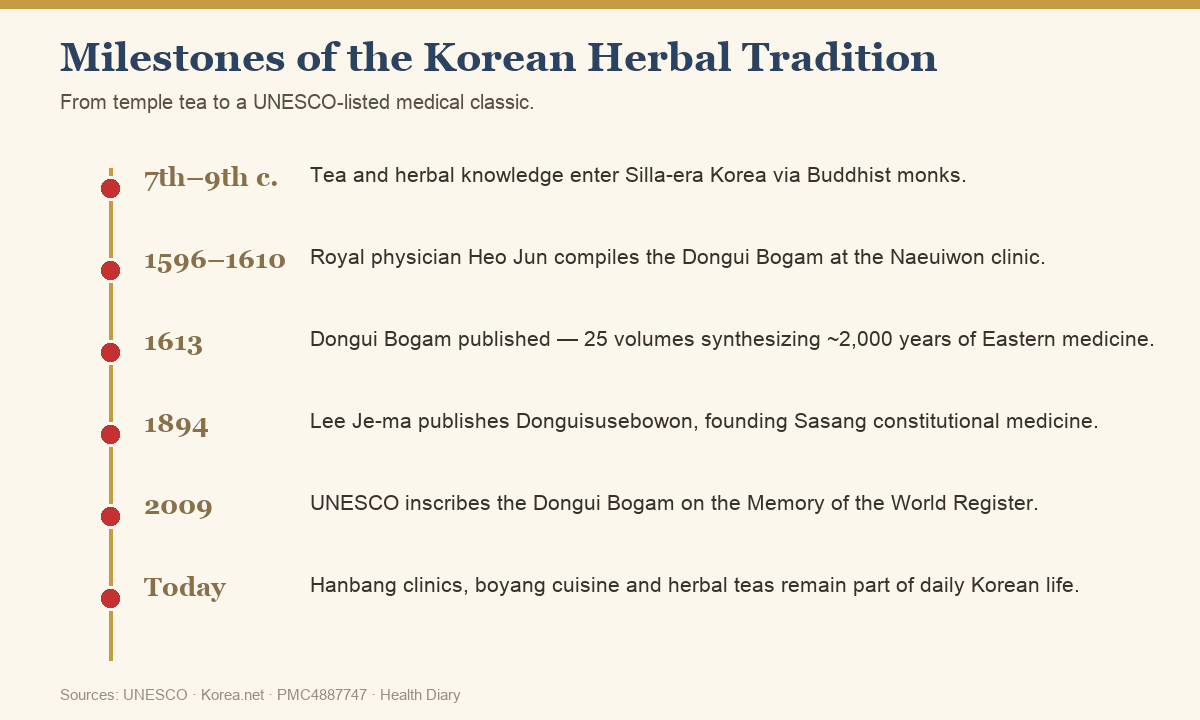
According to scholarship on its historical medical value, the Dongui Bogam did something quietly revolutionary: it organized disease around the framework of jeong-gi-shin (essence, qi, and spirit) and, in doing so, helped establish traditional Korean medicine as a tradition independent from Chinese medicine rather than a regional copy of it. Just as importantly, Heo Jun placed prevention first. As researchers summarizing the text put it, "good health regimen was emphasized as the most important approach, followed secondarily by the administration of medication."
The book was also written to be useful to ordinary people. Of the 1,403 herbs it catalogued, 637 were listed with common Korean names so that villagers — not only court physicians — could recognize and gather local plants. This democratizing spirit, together with a preventive-medicine philosophy the UNESCO nomination described as "virtually unprecedented up to the 19th century," is why the Dongui Bogam became the first medical text ever inscribed on UNESCO's Memory of the World Register, in 2009.
Understanding this history matters because it explains the character of Korean herbal culture today: pragmatic, food-friendly, prevention-minded, and proud of a text that codified centuries of accumulated observation into something a household could actually use.
How Is Korean Medicine Different from Chinese Medicine?
This is the question that most often brings people to Korean herbal traditions, and the clearest answer is a concept called Sasang constitutional medicine (사상체질의학, or SCM). Developed by the physician Lee Je-ma (1837–1900) and published in his 1894 work Donguisusebowon, Sasang medicine proposes that people are born into one of four fundamental constitutional types, and that the same herb or food can help one type while doing little — or even causing discomfort — for another.
A comparative overview published in Evidence-Based Complementary and Alternative Medicine frames the philosophical difference elegantly. Where Chinese medicine draws heavily on Taoist ideas about harmony with nature, Sasang medicine is grounded in Neo-Confucian thought and "emphasizes the importance of humans and humanity over the importance of nature." In practice, that means Korean constitutional medicine begins with the individual person — their temperament, physique, and inborn tendencies — rather than with universal patterns applied the same way to everyone.
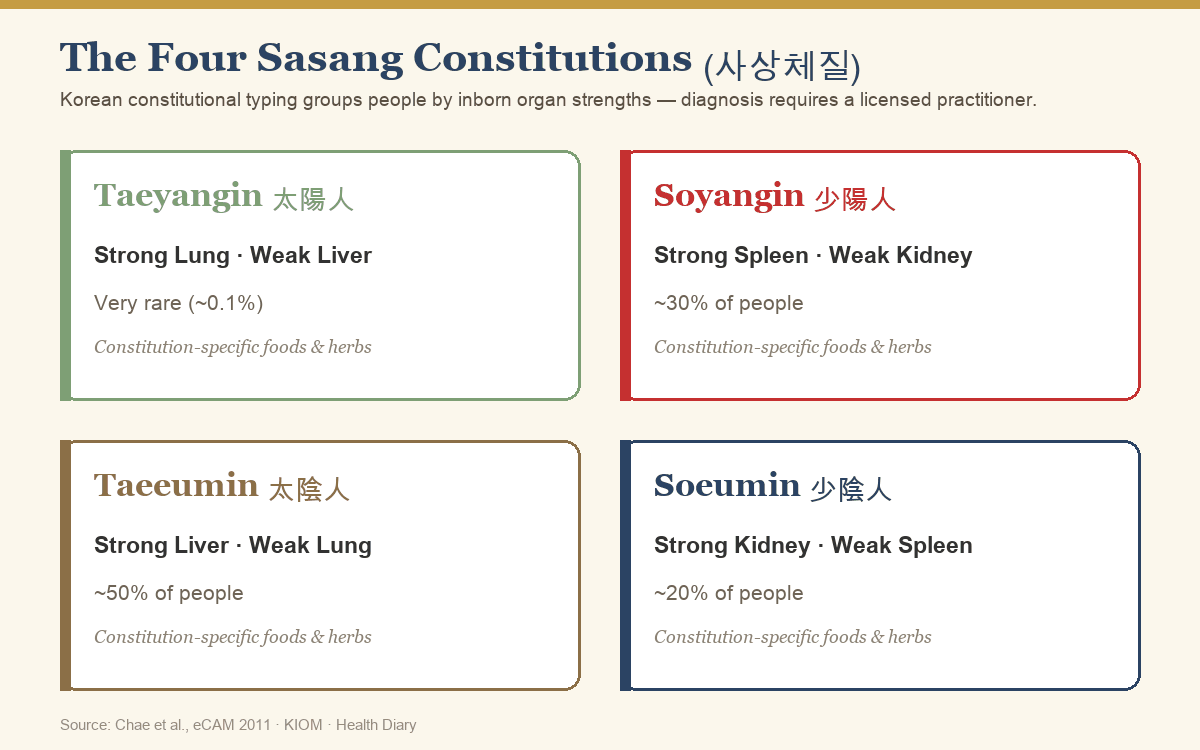
The four constitutions are each defined by a pair of stronger and weaker organ systems:
- Taeyangin (태양인) — stronger lung, weaker liver function; very rare in the population.
- Soyangin (소양인) — stronger spleen, weaker kidney function; roughly 30% of people.
- Taeeumin (태음인) — stronger liver, weaker lung function; the most common type, around half of people.
- Soeumin (소음인) — stronger kidney, weaker spleen function; roughly 20% of people.
Here is the practical detail that makes Sasang medicine genuinely distinct: herbs are sorted into four groups that correspond to the four constitutions, and, as the comparative review notes, "medicinal herbs and herbal remedies belonging to a certain constitution cannot be used for others; otherwise, this can result in no effect or an adverse effect." In other words, matching the remedy to the person is not a nicety in this system — it is the whole point. The Korea Institute of Oriental Medicine (한국한의학연구원) describes Sasang medicine as Korea's representative form of tailored, personalized care.
Because a genuine constitutional diagnosis draws on physical features, temperament, and clinical assessment together, it is meant to be made by a licensed Korean-medicine doctor (한의사) rather than guessed from an online quiz. Self-typing is a fun starting point, but the tradition itself treats professional diagnosis as essential.
The Signature Herbs of the Korean Herbal Tradition
If Sasang theory is the software of Korean herbal medicine, the herbs themselves are the hardware. A handful of botanicals appear again and again in Korean kitchens, apothecaries, and tea houses, each with centuries of traditional use behind it.
Korean ginseng (인삼, Panax ginseng) is the undisputed king. Grown for six years before harvest and often steamed and dried into "red ginseng" (홍삼), it has been traditionally valued as a restorative tonic for vitality and stamina. Ginseng is central enough to Korean identity that we devote an entire article to it — see our deep dive on Korean red ginseng in traditional Eastern medicine.
Omija (오미자, Schisandra chinensis), the "five-flavor berry," is prized for a taste that shifts across sweet, sour, salty, bitter, and pungent in a single sip — a sensory quality that traditional practice reads as touching all five elements at once. It is brewed into a ruby-red infusion enjoyed hot in winter and iced in summer; our profile of the omija berry in traditional Eastern medicine explores its flavors and folklore.
Yuja (유자, Citrus junos), the fragrant Korean citron, is preserved as a honeyed marmalade and stirred into hot water on cold days. Its bright aroma and vitamin-rich peel have made it a beloved seasonal comfort; learn more in our guide to yuja and Korean citron wellness.
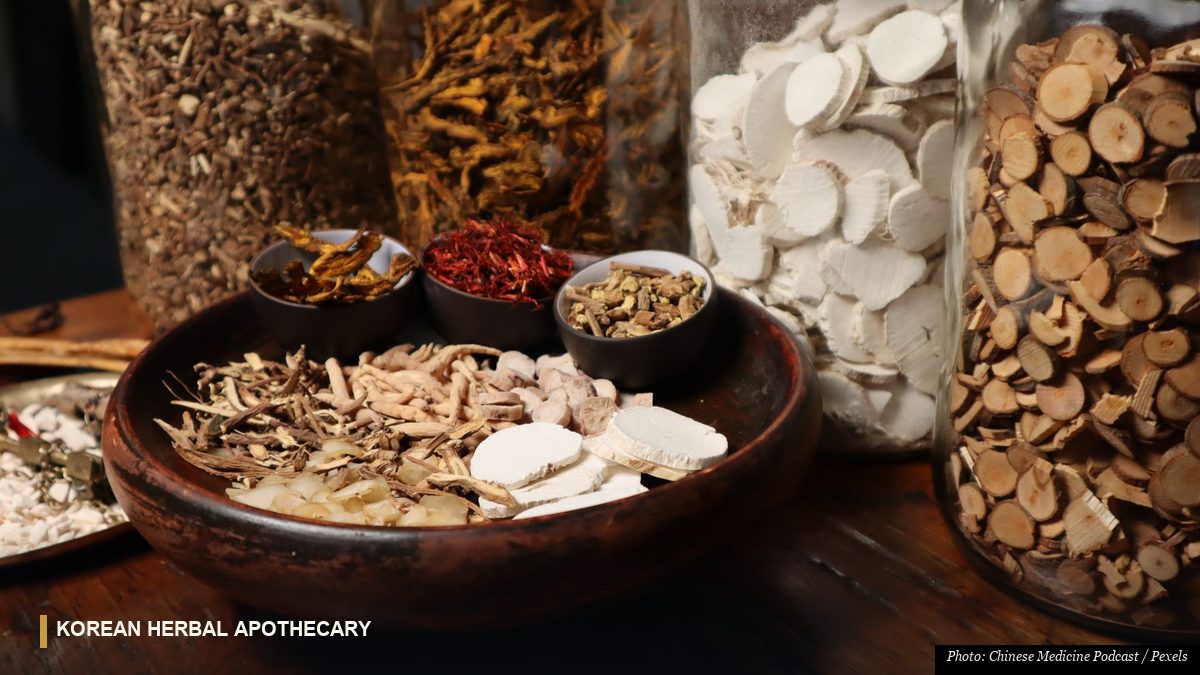
Beyond these headliners, Korean formulas frequently feature daechu (대추, jujube or red dates) for their gentle sweetness, hwanggi (황기, astragalus root) as a classic tonic herb, gamcho (감초, licorice root) to harmonize a formula's flavors, and dang-gui (당귀, Korean angelica) in women's wellness traditions. Walk past a traditional apothecary and you will see these dried roots stacked in tall glass jars, weighed on brass scales, and combined into custom blends — a scene little changed in centuries. Individual experiences vary considerably; what agrees with one person's constitution may not suit another's, and practitioner guidance is always the wiser path.
What Do Koreans Eat and Drink for Boyang?
Perhaps the most distinctive feature of Korean herbal culture is how thoroughly it lives at the dinner table. The concept of boyang (보양) — nourishing and replenishing the body — turns many herbs into ingredients rather than medicines, woven into everyday cooking as boyangsik, or restorative foods.
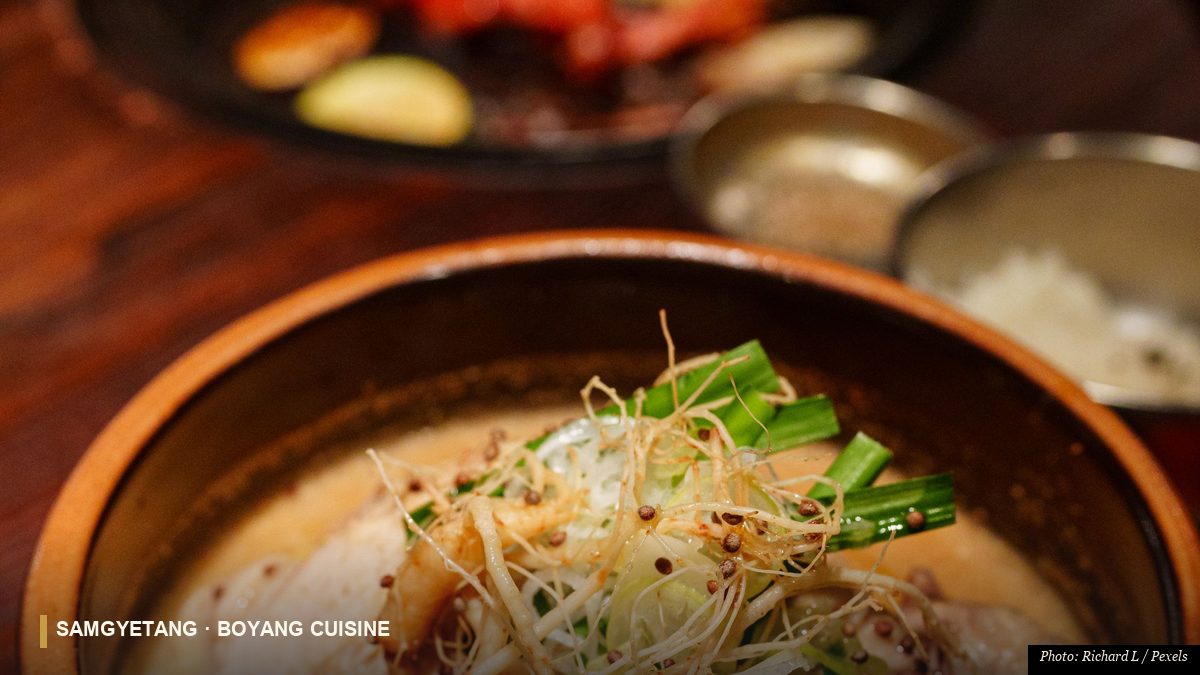
The emblem of this philosophy is samgyetang (삼계탕), ginseng chicken soup. A young whole chicken is stuffed with glutinous rice and simmered with fresh ginseng, garlic, jujube, and often chestnut, producing a milky, deeply savory broth. Koreans traditionally eat it on the hottest days of summer, following the logic of iyeol-chiyeol — "fighting heat with heat" — to replenish energy and fluids lost to sweating. Food scientists have even begun studying samgyetang's nutritional and flavor composition, reflecting how firmly the dish sits at the intersection of cuisine and tradition.
Samgyetang also offers a perfect illustration of Sasang thinking in daily life. Practitioners of Korean medicine note that its warming ginseng-and-chicken profile is considered especially fitting for the Soeumin constitution, while those of a naturally warmer Soyangin type may find it less agreeable — a reminder that even a beloved national dish is not thought to suit everyone identically. Other boyang favorites include ssanghwa-tang herbal broths and slow-simmered tonic soups that families turn to during recovery or seasonal transitions. Our article on Korean healthy aging traditions looks more closely at how fermented foods and tonic cooking fit into a lifelong wellness rhythm. Individual responses to these foods vary considerably, and what feels nourishing for one person may sit differently with another.
Korean Herbal Teas and Daily Rituals
Where boyang soups are occasional and restorative, Korean herbal teas are the gentle daily thread of the tradition. Many are technically tisanes — infusions of grains, roots, fruits, and flowers rather than true tea leaves — and they carry the everyday, unfussy warmth that defines much of Korean home wellness.
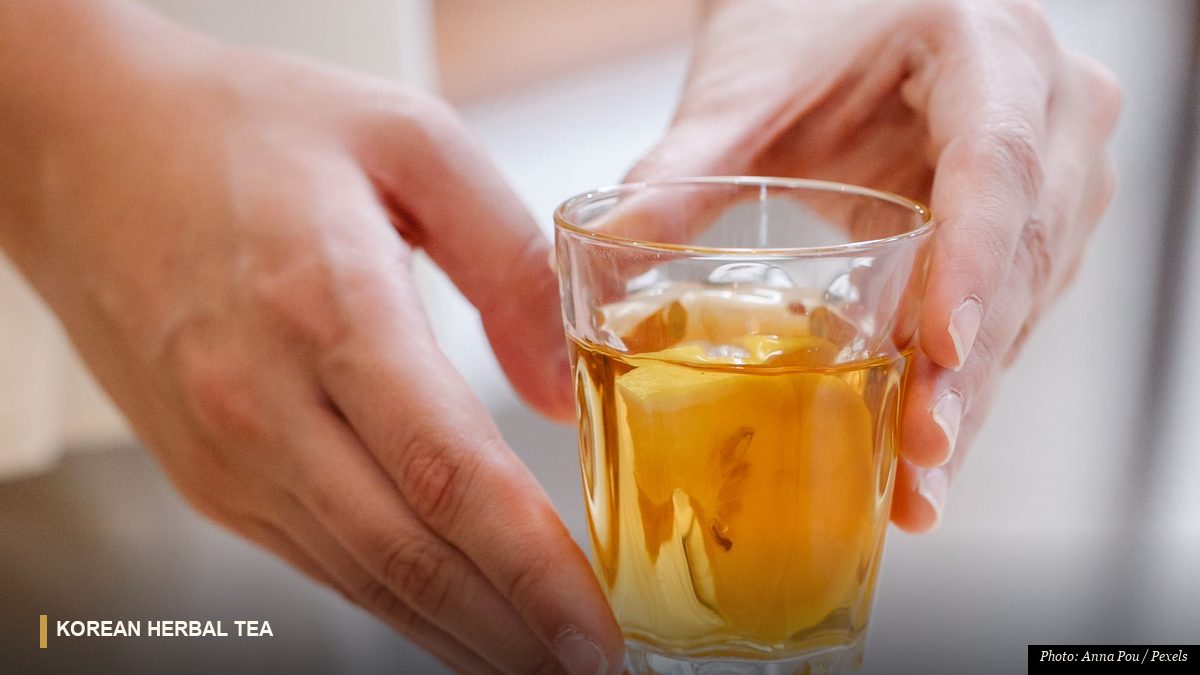
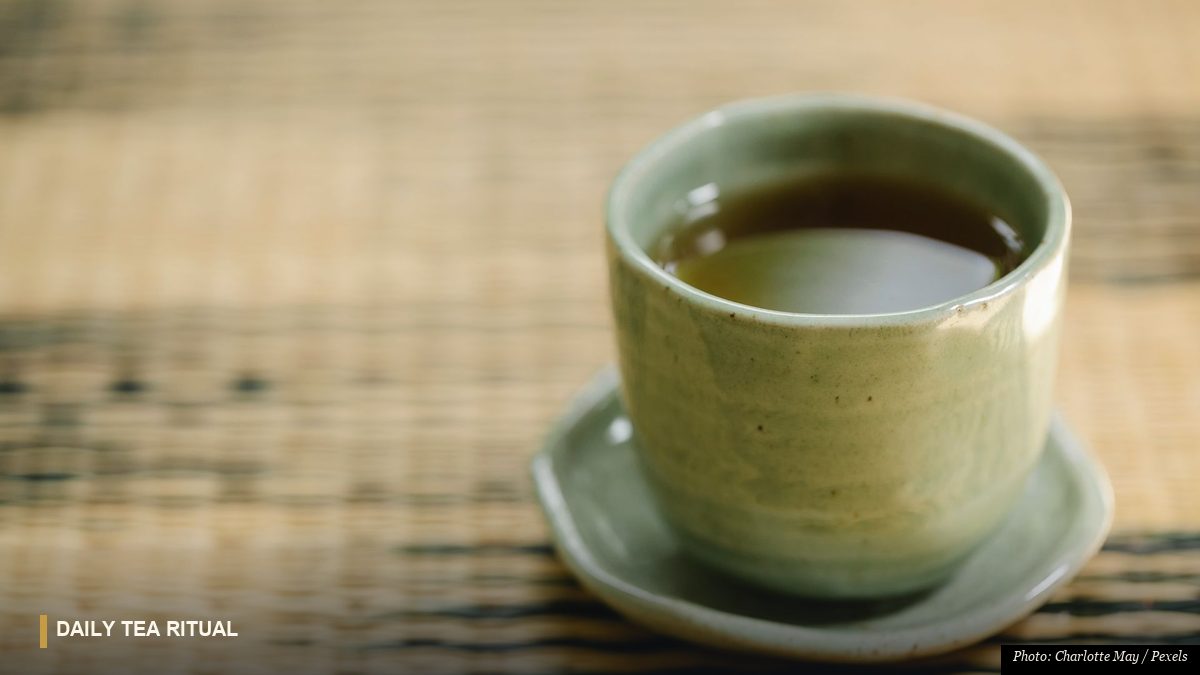
Boricha (보리차), roasted barley tea, is the quiet workhorse of the Korean home — caffeine-free, nutty, and served hot or cold as an all-day drinking water in countless households. Our guide to boricha, Korean barley tea covers how it is roasted and brewed. Yuja-cha (유자차), made by dissolving honeyed citron marmalade in hot water, is the cozy winter companion of Korean tea culture; see our dedicated piece on yuja-cha, Korean citron tea.
Then there is omija-cha, the five-flavor berry tea, and ssanghwa-cha (쌍화차), whose name means "double harmony" — a Joseon-era physician's tonic of jujube, cinnamon, licorice, ginger, and other botanicals that was later democratized through the dabang tea houses of the 1960s and 70s. Each of these brews carries its own history and its own moment in the day. For the full picture of how these rituals fit together, from temple origins to modern cafés, explore our Korean tea culture guide. As with any traditional practice, individual experiences vary considerably, and moderation is the sensible starting point.
What Does Modern Research Say About Korean Herbs?
Traditional use is one kind of evidence; modern clinical study is another, and it is important to be honest about how much — and how little — the two overlap. For most Korean herbs, contemporary research is preliminary, mixed, or still emerging, and it rarely confirms the sweeping claims sometimes attached to these ingredients.
Ginseng is the most studied. A systematic review published in PLOS One, drawing on eight Korean-language medical databases, screened 1,415 records and included 30 randomized controlled trials examining ginseng for outcomes such as exercise capacity, cognitive performance, quality of life, sleep, and more. The authors' overall read was cautious: ginseng appeared generally safe, with no serious adverse effects reported, but the evidence across conditions was inconsistent and far from conclusive.
The U.S. National Center for Complementary and Integrative Health (NCCIH) reaches a similarly measured conclusion, noting that short-term oral use of Asian ginseng in recommended amounts "appears to be safe for most people," while cautioning that research on outcomes like fatigue shows only small or mixed effects and that findings on blood sugar remain "inconclusive and conflicting." The responsible takeaway is that Korean herbs may have a meaningful place in a traditional wellness routine, but they are best understood as time-honored foods and tonics rather than proven remedies. Traditional context tells us how people have used these plants; it does not promise a specific medical outcome for any individual.
Important Limitations and Considerations
Because Korean herbal traditions are increasingly popular worldwide, it is worth being clear-eyed about their limits and cautions. None of the following is a reason for alarm, but each is a reason for care.
- Drug interactions are real. Ginseng in particular can interact with medications. Research on Korean red ginseng and the blood thinner warfarin has produced conflicting results — some studies found no significant change in clotting measures, while others documented a meaningful interaction — which is exactly why close medical monitoring is advised for anyone combining the two. NCCIH recommends that anyone taking any medication speak with a healthcare provider before using ginseng.
- Constitution matters, and it needs a professional. Sasang medicine's central rule — that a remedy suited to one constitution may be unhelpful or unsuitable for another — means self-prescribing based on a guessed type carries real risk of choosing poorly. A licensed Korean-medicine practitioner (한의사) makes this diagnosis using multiple methods together.
- Pregnancy and breastfeeding. Many traditional tonic herbs, including ginseng, are not recommended during pregnancy or breastfeeding without professional guidance. When in doubt, leave it out and ask a practitioner.
- Children and existing conditions. Potent tonic herbs are generally intended for adults. People with autoimmune conditions, bleeding disorders, hormone-sensitive conditions, or diabetes should be especially cautious, since some herbs may interact with these situations.
- Quality varies enormously. The potency and purity of ginseng, omija, and herbal blends differ widely by source, growing conditions, and processing. Products are not tightly standardized, so provenance and reputable sourcing matter.
- Individual response varies. This is the throughline of the entire tradition. Individual responses vary considerably; what works well for one person may not suit another, and personal experimentation under practitioner guidance is always recommended.
Frequently Asked Questions
What does hanbang mean?
Hanbang (한방) is the everyday Korean word for traditional Korean medicine — the indigenous system of herbs, acupuncture, moxibustion, and dietary care developed on the Korean peninsula. You will also see the term used in Korean skincare, where "hanbang ingredients" refers to botanicals like ginseng drawn from this same herbal heritage.
How is traditional Korean medicine different from traditional Chinese medicine?
The two share ancient roots and many concepts, but Korean medicine developed its own landmark text (the Dongui Bogam) and, above all, its own constitutional theory called Sasang medicine, which sorts people into four inborn types and matches herbs to the individual rather than applying the same remedy to everyone. Korean tradition also leans unusually heavily on food and tonic cooking for daily prevention.
What are the four Sasang constitutions?
They are Taeyangin, Soyangin, Taeeumin, and Soeumin, each defined by a pair of stronger and weaker organ systems. Taeeumin is the most common and Taeyangin the rarest. A genuine constitutional diagnosis is meant to be made by a licensed Korean-medicine doctor, not from a self-test.
Is Korean ginseng safe to take every day?
NCCIH notes that short-term oral use of Asian ginseng in recommended amounts appears to be safe for most people. However, ginseng can interact with medications — including blood thinners and diabetes drugs — and is not recommended in pregnancy without guidance. If you take any medication or have a chronic condition, check with a healthcare provider before making it a daily habit.
What is samgyetang and why do Koreans eat it in summer?
Samgyetang is a ginseng chicken soup made with a young whole chicken, glutinous rice, ginseng, garlic, and jujube. Koreans traditionally eat it on the hottest summer days following the idea of "fighting heat with heat," replenishing energy and fluids lost through sweating. Traditional practice considers it especially fitting for the Soeumin constitution.
Which Korean herbal tea is best for beginners?
Boricha (roasted barley tea) is the gentlest entry point — caffeine-free, mild, and enjoyed all day in Korean homes. From there, many people try yuja-cha (honeyed citron tea) for a bright, cozy flavor and omija-cha for its unusual five-flavor character. Individual taste varies, so it is worth sampling a few.
Do I need to know my Sasang constitution to enjoy Korean herbs?
Not for everyday foods and teas like boricha, yuja-cha, or a bowl of samgyetang, which are enjoyed broadly across Korea. Constitutional matching becomes more important with concentrated tonic herbs and formulas, and that is where consulting a licensed practitioner is genuinely valuable.
Bringing Korean Herbal Traditions Into a Modern Routine
One of the most appealing things about hanbang is how naturally it fits a modern wellness rhythm. You do not need a clinic to keep a jar of boricha in the fridge, stir yuja marmalade into hot water on a cold morning, or share a pot of samgyetang with family at the turn of a season. These small rituals are where a thousand-year tradition meets an ordinary week.
Because Korean wellness is so attuned to individual constitution and seasonal change, it also pairs well with simple self-observation. Noticing how a particular tea, food, or routine actually makes you feel over time — your energy, sleep, digestion, and mood — is very much in the spirit of a tradition built on attentive, personalized care. Keeping a light wellness journal or using a habit-tracking tool can help you spot your own patterns, which is exactly the kind of personal insight Sasang thinking prizes. If a practice consistently sits well with you, that is worth knowing; if it does not, that is worth knowing too.
A Soft Closing Note
Traditional Korean herbal traditions are, at their best, a philosophy of gentle attention: to the seasons, to the ingredients on your table, and to the particular body you happen to live in. From the pages of the Dongui Bogam to a steaming celadon cup of barley tea, the through-line is patience and balance rather than quick fixes. You can explore these traditions slowly, one herb or tea at a time, using the linked guides throughout this article as your map. And whenever a question crosses from curiosity into personal health, a licensed practitioner is the right companion for the next step.
About This Article
Written by: Health Diary Editorial Team — writers and researchers focused on traditional Eastern wellness, herbal history, and evidence-aware health education.
Editorial review: This article has been reviewed by the Health Diary editorial team for clarity, structure, and adherence to our sourcing standards. Key claims were cross-checked against NCCIH, NIH PubMed, peer-reviewed journals (PLOS One, Evidence-Based Complementary and Alternative Medicine), and Korean-language sources including the Korea Institute of Oriental Medicine (KIOM) and Korea.net. Native-language source verification: Korean (한국어) for traditional terminology and constitutional concepts. It is not a clinical review and should not replace consultation with a licensed healthcare practitioner.
Reviewed on: July 18, 2026.
Editorial process: We cite peer-reviewed and government sources where possible. When a clinical reviewer is added to this article, attribution will appear here with verifiable credentials.
References
- Kim NI, et al. Historical Medical Value of Donguibogam. J Korean Med Sci / PMC, 2016. https://pmc.ncbi.nlm.nih.gov/articles/PMC4887747/
- UNESCO Memory of the World. Donguibogam: Principles and Practice of Eastern Medicine. Inscribed 2009. https://www.unesco.org/en/memory-world/donguibogam-principles-and-practice-eastern-medicine
- Korea.net (Republic of Korea). What is the Dongui Bogam? https://www.korea.net/NewsFocus/Sci-Tech/view?articleId=119136
- Chae H, et al. Sasang Constitutional Medicine and Traditional Chinese Medicine: A Comparative Overview. Evidence-Based Complementary and Alternative Medicine (eCAM), 2011. https://pmc.ncbi.nlm.nih.gov/articles/PMC3176432/
- Kim JY, Pham DD. Sasang Constitutional Medicine as a Holistic Tailored Medicine. eCAM, 2009. https://pmc.ncbi.nlm.nih.gov/articles/PMC2741623/
- Korea Institute of Oriental Medicine (한국한의학연구원, KIOM). Sasang constitutional medicine resources. https://www.kiom.re.kr/
- Kim S, et al. Ginseng for Health Care: A Systematic Review of Randomized Controlled Trials in Korean Literature. PLOS One, 2013. https://pmc.ncbi.nlm.nih.gov/articles/PMC3613407/
- U.S. National Center for Complementary and Integrative Health (NCCIH). Asian Ginseng. https://www.nccih.nih.gov/health/asian-ginseng
- Lee YH, et al. Interaction between warfarin and Korean red ginseng in patients with cardiac valve replacement. International Journal of Cardiology, 2010. https://pubmed.ncbi.nlm.nih.gov/19913311/
- Utama DT, et al. Fatty acid profiles and flavour-related compounds of retorted Korean ginseng chicken soup (Samgyetang). Food Science of Animal Resources / PMC, 2022. https://pmc.ncbi.nlm.nih.gov/articles/PMC9271379/


