
White Tea Guide: Silver Needle, Types, Caffeine & Brewing
A guide to white tea — the least-processed true tea. What it really is, Silver Needle vs White Peony, the antioxidant and caffeine myths, aging, and how to brew it.
Medical Disclaimer: This content is for educational and informational purposes only and is not medical advice. It is not intended to diagnose, treat, cure, or prevent any disease. Always consult a licensed healthcare practitioner before making changes to your diet. Statements regarding traditional tea use have not been evaluated by the FDA.
Affiliate Disclosure: This article may contain affiliate links. We may earn a commission if you purchase through these links, at no additional cost to you. We only recommend products we believe align with our editorial standards.
White tea is the quietest member of the tea family — pale, delicate, and made with the lightest touch of any true tea. Prized for its silvery, downy buds and its soft, naturally sweet flavour, it is also one of the most misunderstood teas, surrounded by claims about "the most antioxidants" and "the least caffeine" that turn out to be more complicated than they sound. This guide sorts fact from folklore — part of our wider guide to Asian herbal teas.
What Is White Tea?
White tea (白茶) is the least-processed of the true teas, all of which come from Camellia sinensis. It is simply plucked, withered, and dried — with no pan-firing "kill-green" step and no rolling, the two steps that shape green and oolong teas (Chinese reference, white tea). The name comes from the fine, silvery-white down (bai hao, 白毫) that covers the unopened buds.
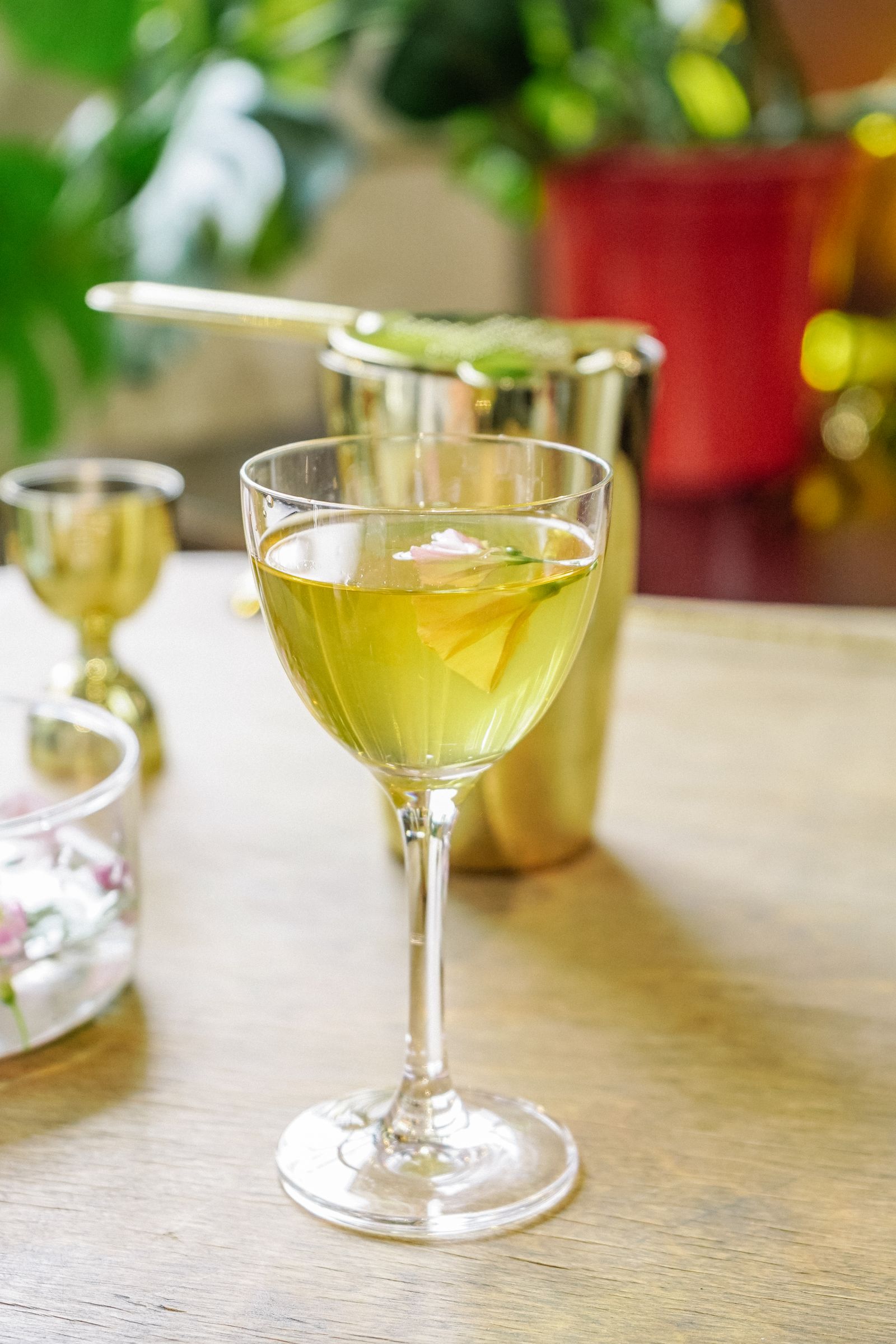
One common myth is worth correcting: white tea is often called "unoxidised" or "unprocessed," but that is not quite right. Even gentle withering triggers some enzymatic change — studies tracking the process show total polyphenols shifting measurably as the leaf withers (withering study, 2020). White tea is best described as minimally processed and lightly oxidised, not raw. If you enjoy the roasted depth of oolong or the earthiness of pu-erh, white tea sits at the opposite, most delicate end of the spectrum.
The Main Types of White Tea
White tea comes in a few classic grades, distinguished mostly by how much of the plant is used:
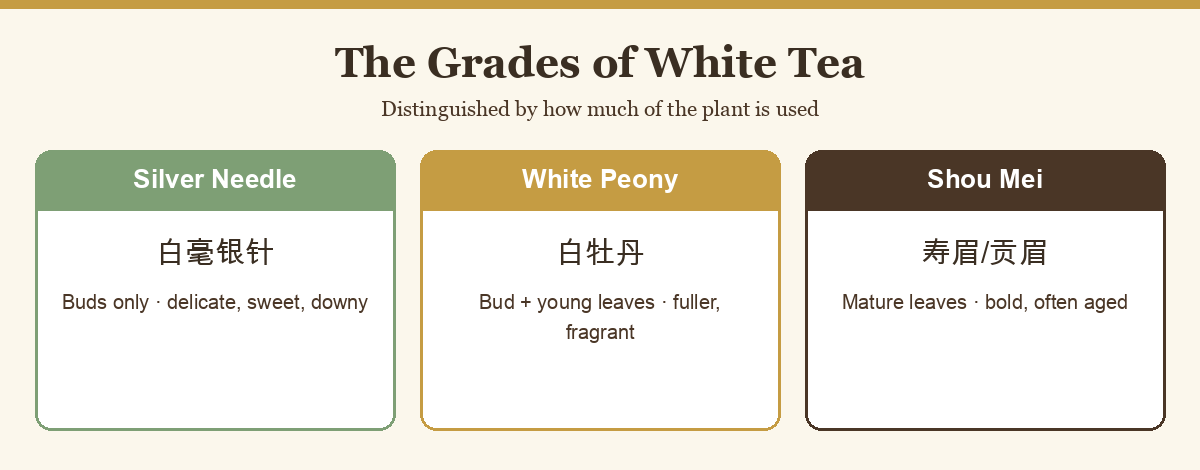
- Silver Needle (白毫银针, Bai Hao Yin Zhen) — the highest grade, made only from plump, unopened buds. Delicate, sweet, and covered in silvery down.
- White Peony (白牡丹, Bai Mu Dan) — made from a bud plus one or two young leaves; fuller-bodied and more fragrant than Silver Needle, and excellent value.
- Gong Mei / Shou Mei (贡眉 / 寿眉) — made from more mature leaves; darker, bolder, and the everyday grade often chosen for aging.
Where Does White Tea Come From?
The heartland of white tea is Fujian province in southeastern China, above all the counties of Fuding (福鼎) and Zhenghe (政和) — traditionally known as the "northern route" and "southern route" of white tea (Chinese reference). While the term "white tea" appears in texts as far back as the Song dynasty, the modern category — the pressed-bud Silver Needle we know today — traces to Fuding around the end of the eighteenth century (history of white tea). That distinction between ancient references and the modern product is a nice reminder that tea history is often less tidy than marketing suggests.
Does White Tea Have the Most Antioxidants?
You will often read that white tea has "more antioxidants than green tea." The honest answer is: not necessarily. White tea is genuinely rich in catechins and other polyphenols that act as antioxidants in laboratory tests (white tea antioxidant review). But head-to-head analyses are mixed: in some studies green tea actually shows higher catechin content and stronger antioxidant activity than white tea, because the exact numbers depend on the cultivar, the harvest, and the processing rather than on the "white" label alone (Paiva et al., 2021)(Unachukwu et al., 2010).
So enjoy white tea as a lovely, polyphenol-rich drink — just don't assume it automatically out-scores green tea. Both are excellent; neither is a magic bullet.
How Much Caffeine Is in White Tea?
Another popular belief is that white tea has the least caffeine of any tea. In reality, caffeine in white tea is highly variable, and some studies have found it to be as high as — or even higher than — green tea (Paiva et al., 2021). Bud-only teas like Silver Needle can be surprisingly caffeinated, since buds concentrate caffeine. As with every tea, your brewing time and water temperature influence the final amount at least as much as the type does. If you specifically want a caffeine-free cup, reach for a herbal tisane from our cooling herbal teas guide instead.
The Tradition of Aging White Tea
Unusually for a delicate tea, white tea is also traditionally aged. A well-known Chinese saying holds that white tea is "one year tea, three years medicine, seven years treasure" (一年茶、三年药、七年宝) — describing how its character mellows and deepens with careful storage, the colour shifting from pale jade toward amber (aged white tea, Chinese source). This is best understood as a cultural and connoisseur's saying rather than a medical claim. Aged white tea (lao bai cha) is genuinely prized — but, as with pu-erh, the outcome depends entirely on clean, dry, dark, odour-free storage. Individual responses vary considerably.
What Does Modern Research Say?
White tea's polyphenols show strong antioxidant activity in the lab, and because it comes from the same plant as green tea, much of the general tea research applies (Harvard Nutrition Source). But the human evidence is limited and, like green tea's, largely inconclusive: health authorities are clear that firm conclusions cannot yet be drawn about most claimed benefits (NCCIH). Read white tea as a pleasant, gently flavoured drink with interesting compounds — not as a treatment for anything.
How Do You Brew White Tea?
White tea is delicate, so it prefers a gentler touch than most teas: use water below boiling — around 80–90°C — to avoid scorching the tender buds, a rounded teaspoon (or more, as buds are fluffy) per cup, and a patient steep of two to five minutes. Good Silver Needle can be re-steeped several times, releasing more of its soft sweetness with each infusion. For the wider ritual of brewing, see our tea rituals and tea culture guides.
Safety and Considerations
- Caffeine. White tea contains caffeine, sometimes more than expected; be mindful in the evening and during pregnancy, when health authorities advise limiting caffeine (NCCIH).
- Medication interactions. Tea catechins can interact with some medicines, including nadolol, atorvastatin, and others; check with a pharmacist if you take prescription drugs (MSK).
- With iron and on an empty stomach. Tea can reduce iron absorption, so those managing low iron may prefer to drink it between meals.
- Beverage, not extract. These notes concern brewed tea; concentrated tea extracts are far stronger and carry more risk.
- Individual responses vary considerably.
Frequently Asked Questions
Is white tea caffeine-free?
No. White tea contains caffeine, and although it is often marketed as low, the amount is highly variable — some white teas have as much as or more than green tea (Paiva et al., 2021). Brewing time and temperature affect the final amount.
Is white tea healthier than green tea?
Not clearly. Both are catechin-rich true teas, and studies comparing them are mixed — green tea sometimes shows higher antioxidant activity. Choose based on taste and caffeine preference rather than a "healthiest" label (Unachukwu et al., 2010).
What does white tea taste like?
Delicate, soft, and naturally sweet, with floral or hay-like notes. Silver Needle is the most subtle; White Peony is fuller and more fragrant.
Can you age white tea?
Yes. White tea is traditionally aged, captured in the saying "one year tea, three years medicine, seven years treasure," with its flavour mellowing over time. This is a cultural connoisseur's tradition, not a health claim, and it depends on proper dry, dark, sealed storage (aged white tea).
How do you brew white tea?
Use water below boiling (around 80–90°C), a generous amount of the fluffy buds, and a patient two-to-five-minute steep. Avoid boiling water, which can scorch the delicate leaf.
A Note on Enjoying White Tea
White tea rewards a slow, attentive palate — its pleasures are quiet ones. Try a Silver Needle and a White Peony side by side, brew gently, and notice the soft sweetness that only minimal processing can preserve. To keep exploring Chinese tea, our oolong, pu-erh, and jasmine guides are good next stops, all within our Chinese tea tradition hub.
About This Article
Written by: Health Diary Editorial Team — writers and researchers focused on making traditional Asian wellness knowledge clear, accurate, and culturally grounded.
Editorial review: This article has been reviewed by the Health Diary editorial team for clarity, structure, and adherence to our sourcing standards. Key claims were cross-checked against peer-reviewed research, NCCIH, and native-language sources where applicable. It is not a clinical review and should not replace consultation with a licensed healthcare practitioner.
Reviewed on: August 4, 2026.
Editorial process: We cite peer-reviewed and government sources where possible, and we actively correct popular myths — such as white tea being "unprocessed," always highest in antioxidants, or lowest in caffeine — rather than repeating them.
References
- Paiva L, et al. Comparative Analysis of Polyphenols, Caffeine, and Antioxidant Activities of Green Tea, White Tea, and Flowers. Antioxidants. 2021. https://pmc.ncbi.nlm.nih.gov/articles/PMC7912137/
- Unachukwu UJ, et al. White and green teas: variation in phenolic, methylxanthine, and antioxidant profiles. J Food Sci. 2010. https://pubmed.ncbi.nlm.nih.gov/20722909/
- Changes of chemical contents during the withering process of white tea. IOP Conf Ser. 2020. https://iopscience.iop.org/article/10.1088/1755-1315/443/1/012023/pdf
- A Review on the Antioxidant and Antiaging Properties of White Tea. 2021. https://www.researchgate.net/publication/357747301
- NCCIH. Green Tea: Usefulness and Safety. https://www.nccih.nih.gov/health/green-tea
- Memorial Sloan Kettering. About Herbs — Green Tea. https://www.mskcc.org/cancer-care/integrative-medicine/herbs/green-tea
- Harvard T.H. Chan School of Public Health. Tea — The Nutrition Source. https://nutritionsource.hsph.harvard.edu/food-features/tea/
- Origins and History of White Tea. https://tea101.teabox.com/white-tea-origins
- 白茶 — Chinese reference (processing, grades, Fuding/Zhenghe). https://zh.wikipedia.org/zh-hans/白茶
- 白茶"一年茶三年药七年宝" — Chinese source (aging tradition). https://wapbaike.baidu.com/tashuo/browse/content?id=d967b903425b9e4e4b398285


