Cooling Herbal Teas: Traditional Guide to Cooling Blends
A traditional guide to cooling herbal teas — chrysanthemum, butterfly pea, lotus leaf, hibiscus, barley and more — and the cooling-versus-warming framework behind them.
Medical Disclaimer: This content is for educational and informational purposes only and is not medical advice. The information presented is not intended to diagnose, treat, cure, or prevent any disease. Always consult a licensed healthcare practitioner before starting any new herbal practice or supplement. Statements regarding traditional herbal use have not been evaluated by the FDA.
Affiliate Disclosure: This article contains affiliate links. We may earn a commission if you purchase through these links, at no additional cost to you. We only recommend products we believe align with our editorial standards.
Walk past a street-side stall in Guangzhou on a sweltering afternoon and you will find dark, faintly bitter brews poured over ice for anyone wilting in the heat. Wander a Hanoi market and you will meet jade-green pennywort drinks and pale chrysanthemum infusions sold beside the fruit. Across East and Southeast Asia, an old idea runs through the tea cup: some teas are cooling, and hot, humid weather is exactly the time to reach for them.
This guide is a tour of those cooling herbal teas — what they are, the traditional logic that calls them “cool,” and who might want to sip them with a little care. It is a companion to our look at cooling foods in an Asian summer, but here the focus is squarely on what steeps in the pot.
What Makes a Herbal Tea “Cooling”?
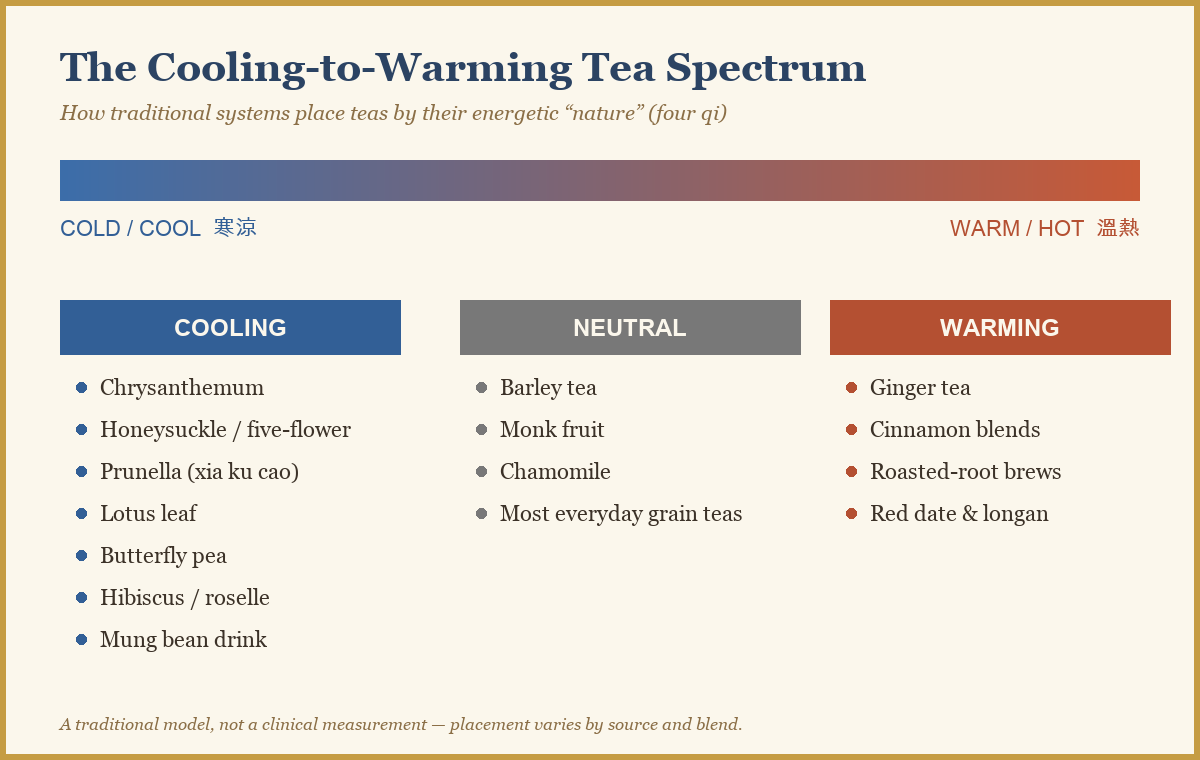
In traditional Chinese dietary thinking, every food and herb is believed to carry an energetic “nature.” These natures fall along a spectrum the classics call the four qi (四氣): cold (寒), cool (涼), neutral (平), and warm-to-hot (溫熱). A cooling tea sits on the cold-to-cool end. Vietnamese folk practice uses a close parallel — tính hàn (cold nature) and tính lüơng (cool nature) at one end, tính nhiệt (hot nature) at the other.
The crucial point — and the one newcomers find most surprising — is that “cooling” has almost nothing to do with the temperature in the cup. A steaming pot of chrysanthemum tea is still considered cooling; a warming spiced ginger brew stays warming even when iced. The label describes what a tea is traditionally believed to do inside the body, not how it feels on the tongue.
It is worth being honest from the start: this thermal classification is a traditional model refined over centuries of observation, not a system validated by modern controlled trials. Its value lies in the seasonal, balanced habits it encourages — and, as we will see, several of these cooling teas do carry genuinely interesting plant compounds.
How Do Traditional Systems Tell Cooling from Warming Teas?
Practitioners and home brewers lean on a few rough signals. Teas made from bitter or floral herbs, from plants that thrive in summer, and from blends traditionally described as “clearing heat” (清熱) tend to land in the cooling camp. Warming teas, by contrast, are often built on pungent, aromatic, or sweet-warming ingredients — ginger, cinnamon, roasted roots — and are saved for cold months.
In southern China this cooling category has its own famous name: liangcha (涼茶), literally “cool tea.” An ethnobotanical survey of the Lingnan region documented an astonishing 238 botanical taxa across 86 plant families used as liangcha, with the daisy family (Asteraceae, home to chrysanthemum) the single most common source. The survey found the primary traditional purpose recorded again and again was “clearing away heat, followed by detoxification” according to the published survey. That is the tradition in a nutshell: a whole botanical vocabulary devoted to cooling the body in a hot, damp climate.
A Guide to the Classic Cooling Herbal Teas
Ask grandmothers across the region what belongs in a summer teapot and a remarkably consistent list appears. Here are the cooling teas that come up again and again.
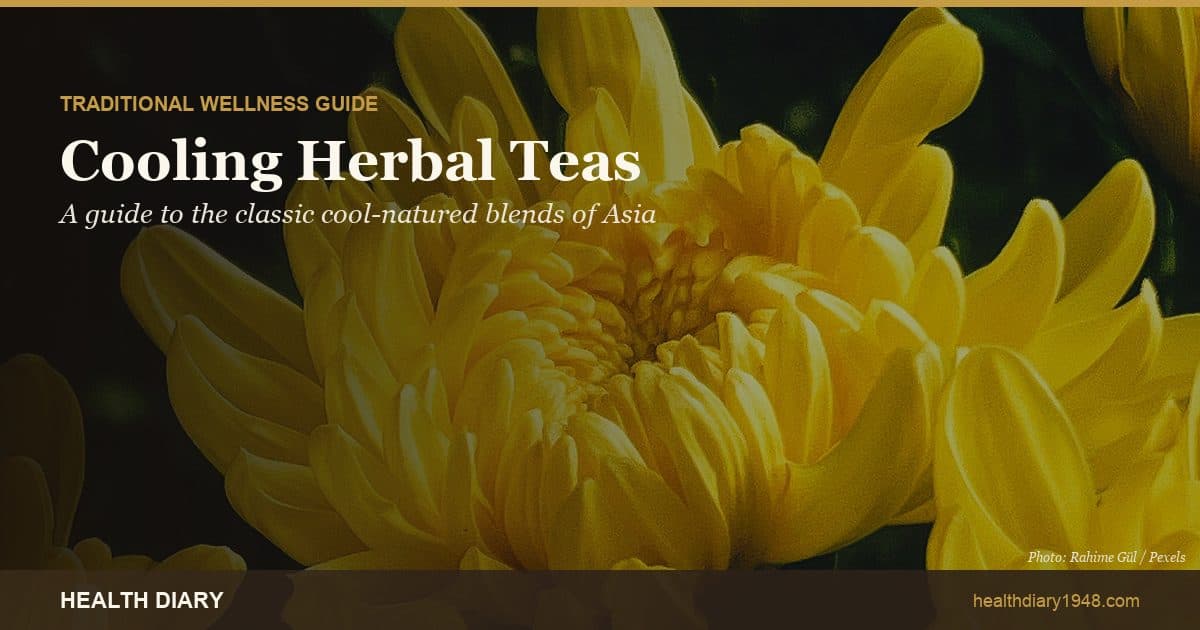
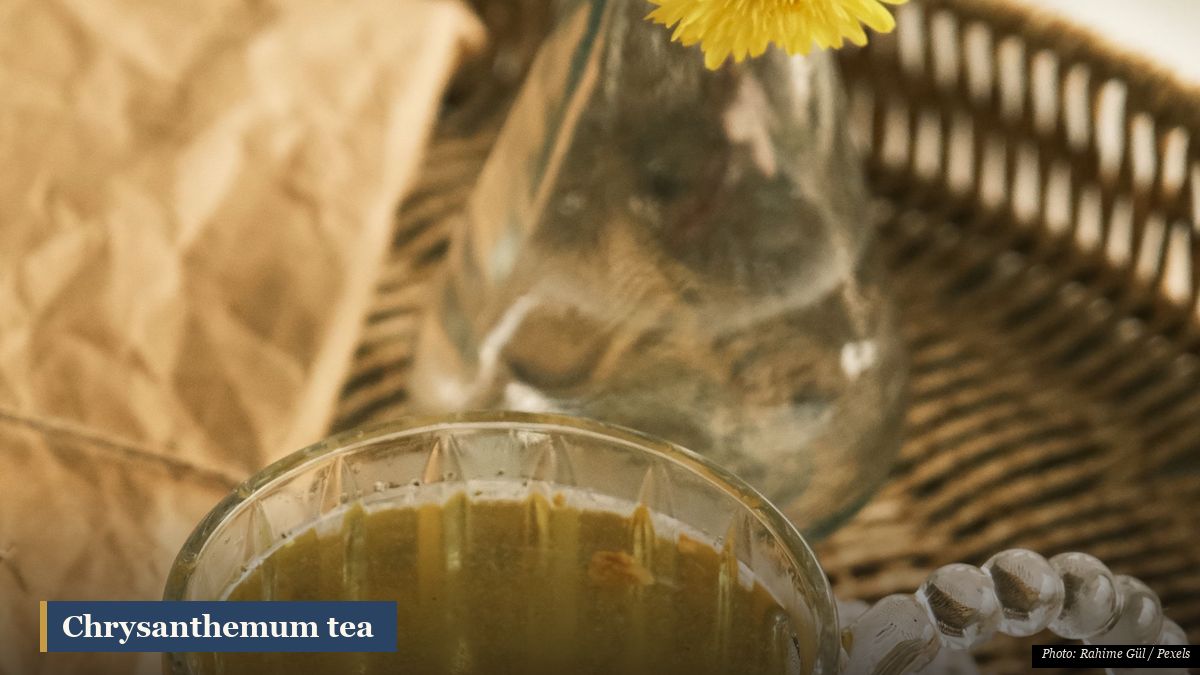
Chrysanthemum tea (菊花茶 / trà hoa cúc). The archetypal cooling flower tea, pale gold and lightly floral. In traditional practice it is classed as sweet and slightly cold, and reached for to “clear heat” and “brighten the eyes.” Its main plant compounds are the flavones luteolin and apigenin, which show antioxidant and anti-inflammatory activity in laboratory studies per a 2024 review in the Journal of Ethnopharmacology. For a deeper look, see our chrysanthemum flower tea guide and the chrysanthemum in traditional Eastern practice profile.
Five-flower tea and honeysuckle blends (五花茶). A classic Cantonese liangcha built on flowers such as honeysuckle (金銀花) and chrysanthemum, traditionally described as “clearing heat and resolving toxins.” These floral blends are the backbone of the summer liangcha stall.
Prunella tea (夏枯草, xià kũ cảo). A slightly bitter herb whose Chinese name literally means “summer-withered grass.” It is a common liangcha ingredient, often paired with monk fruit, and described in tradition as clearing “liver heat.”
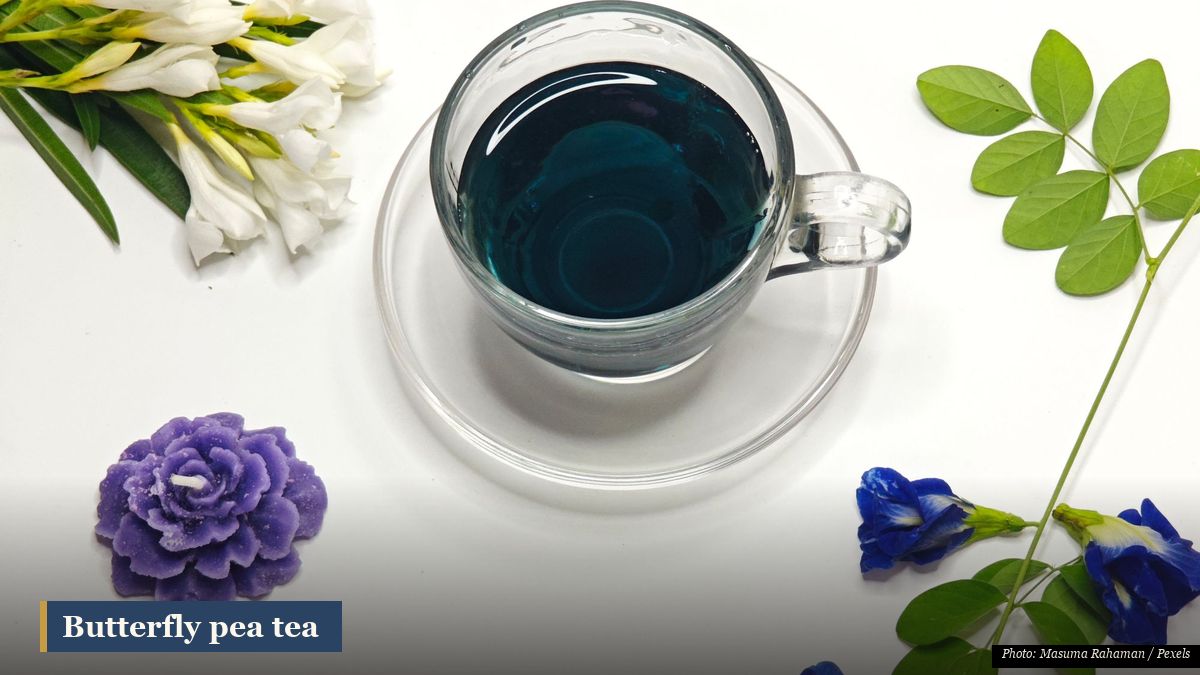
Butterfly pea tea (đậu biếc / Clitoria ternatea). The vivid blue Southeast Asian infusion, prized as much for its color as its cooling reputation. Its blue comes from a family of anthocyanins called ternatins, which show antioxidant activity in laboratory work according to reviews of the plant. Our butterfly pea tea guide covers the color-change chemistry in detail.
Lotus leaf tea (荷葉茶 / trà lá sen). Made from the broad green leaves of the lotus, considered gently cooling and long steeped in summer across China and Vietnam. See our profiles of lotus leaf in traditional practice and the broader lotus tea guide.
Monk fruit tea (羅漢果 / la hán quả). A round brown gourd, intensely sweet from compounds called mogrosides yet very low in calories. In tradition it is sweet and cool-natured, brewed to soothe the throat and quench thirst, and it often sweetens prunella and other bitter liangcha blends.
Mung bean drink (綠豆湯 / nước đậu xanh). Not a leaf infusion but a pale simmered bean “tea,” perhaps the most iconic cooling summer drink of all in Chinese and Vietnamese kitchens.
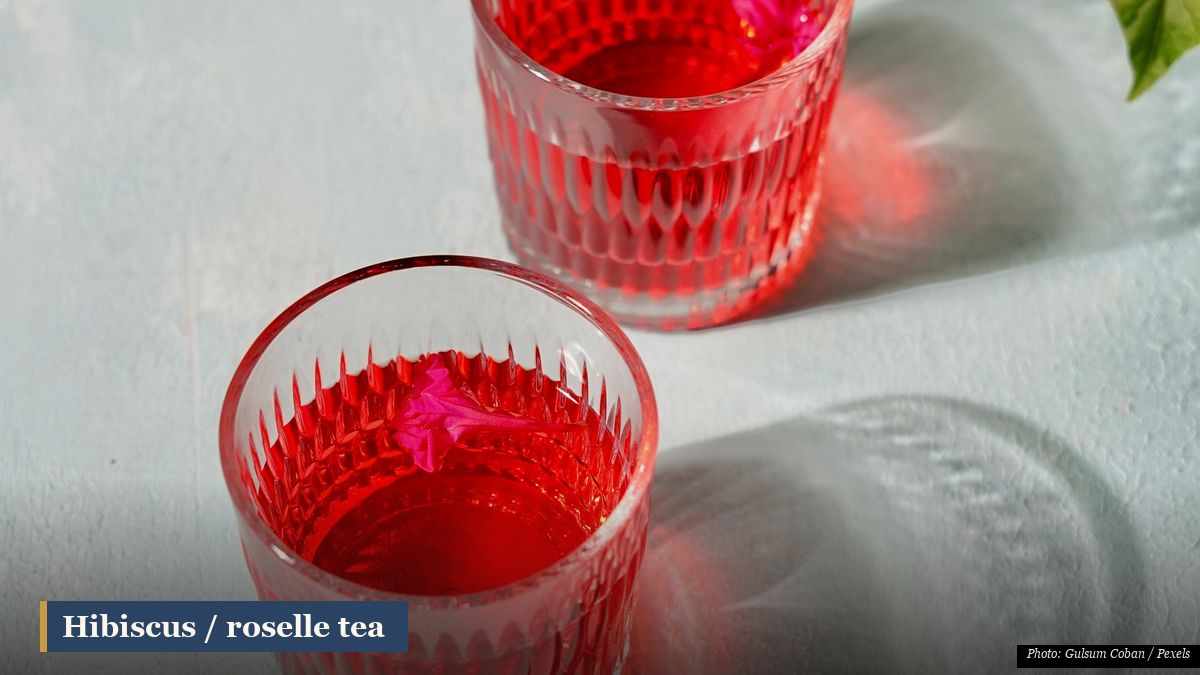
Hibiscus / roselle tea (洛神花 / trà bụp giấm). A tart, ruby-red infusion from the roselle calyx, popular from Egypt to East Asia and considered cooling and thirst-quenching in hot weather.
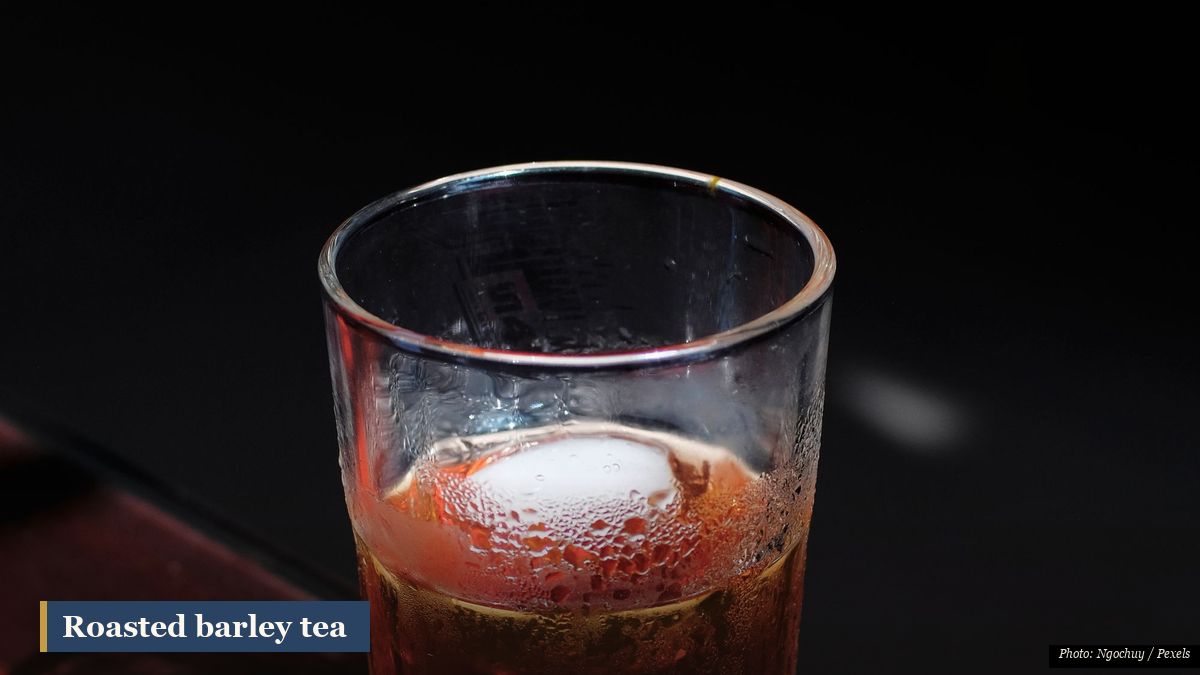
Barley tea (麥茶 / boricha). Roasted barley steeped into a nutty amber drink served cold all summer in Korea, Japan, and China as an everyday, caffeine-free thirst-quencher. Our Korean barley tea guide goes deeper.
Chamomile (an Asian cousin in the daisy family). Though European in origin, chamomile shares the daisy-family lineage of chrysanthemum and is often grouped with the gentle, calming floral infusions. The U.S. National Center for Complementary and Integrative Health notes it is likely safe in tea amounts and contains the flavonoid apigenin in its overview.
For a wider tour of the region's tea culture beyond the cooling category, our guide to traditional Asian herbal teas is a natural next stop.
What Does Modern Research Suggest About Cooling Teas?
Traditional classifications aside, a few of these teas have drawn genuine scientific curiosity — though the evidence is early and should be read with care.
Hibiscus and blood pressure. Roselle is the most-studied of the cooling teas. Meta-analyses of small randomized trials report modest reductions in systolic blood pressure among people who drank hibiscus tea — one analysis of seven trials in 362 participants found systolic readings about 4.7 mmHg lower — while the authors caution that the studies were small and varied in quality in a systematic review. It is a promising signal, not a settled conclusion.
Floral flavonoids. Chrysanthemum's luteolin and apigenin, and butterfly pea's ternatin anthocyanins, are antioxidants that behave interestingly in test tubes and animal models. That biology is a plausible hint behind the folk habits, not proof of any health outcome in people.
A note of realism. As NCCIH points out, most herbal teas have only limited human evidence for specific health uses, and “natural” does not mean risk-free — some herbal infusions interact with medications in its guidance on tea. The sensible reading is that cooling teas are pleasant, hydrating, low-calorie beverages with a few intriguing compounds, best enjoyed as part of a balanced routine rather than as remedies.
How Do People Enjoy Cooling Teas?
The pleasure of these teas is inseparable from how they are drunk. Most cooling herbal teas are prepared as a simple infusion or decoction: dried flowers, leaves, or roasted grain steeped in hot water, then often cooled and sipped through the day. In fact, the Lingnan survey found that more than 80% of traditional liangcha preparations dried the plant material before brewing.
In practice, chrysanthemum and five-flower blends are steeped for a few minutes and drunk warm or over ice; monk fruit is often cracked and simmered to sweeten a bitter blend; barley and roasted-grain teas are brewed by the jug and chilled as an all-day summer drink. Butterfly pea is frequently brightened with a squeeze of lime, which turns its blue to violet. A little rock sugar or honey is common, though many prefer the teas plain to keep them light.
Across all of it, the traditional theme is moderation and refreshment rather than dosing — these are beverages woven into daily life, not measured out like medicine.
Individual responses vary considerably; what feels refreshing and agreeable for one person may not suit another, and personal experimentation under practitioner guidance is always recommended.
Who Should Be Careful with Cooling Teas?
Cooling teas are ordinary beverages, and for most healthy people they are simply a refreshing part of hot-weather life. Still, the traditions themselves — not just modern caution — build in clear limits, and a balanced picture matters:
- Spleen-stomach cold (脾胃虛寒 / tỷ vị hư hàn). This is the caution both Chinese and Vietnamese sources emphasize most. People whose digestion already runs cold — prone to bloating, loose stools, cold hands and feet — are traditionally advised to go easy on strongly cooling teas, which are believed to further burden the digestive “spleen-stomach.” A Vietnamese Ministry of Health publication makes exactly this point, warning such individuals to be cautious in its summary of summer cooling teas.
- Not an everyday water substitute. A Hong Kong traditional-medicine explainer stresses that liangcha should not be drunk day after day in place of water, because persistently “over-clearing” heat is thought to weaken the body's warming yang — and it lists cold-constitution people, young children, the elderly, those with a cold-type cold, pregnant and postpartum women, and menstruating women among those who should be cautious in its guide.
- Pregnancy and breastfeeding. Several cooling herbs are traditionally advised against in large amounts during pregnancy. Anyone who is pregnant or breastfeeding should speak with a healthcare provider before making any herbal tea a daily fixture.
- Medication interactions. Herbal teas are not automatically safe alongside drugs. Chamomile, for example, has reported interactions with warfarin (a blood thinner) and with medications processed by the liver, per NCCIH. If you take any prescription medication, check with your doctor before drinking concentrated amounts.
- Allergies. Chrysanthemum, chamomile, and other daisy-family teas can trigger reactions in people allergic to ragweed, marigolds, or daisies. Start with a small amount if you have plant allergies.
- Added sugar. Many cooling teas are served sweetened with rock sugar, honey, or syrup. The base infusion may be light, but the sweetened versions can carry considerable added sugar.
- Individual variation. People differ. A tea that feels cooling and comfortable to one person may not agree with another, especially those with sensitive digestion.
Frequently Asked Questions
What does it mean for a tea to be “cooling” if it is served hot?
In traditional Asian thinking, “cooling” describes a tea's perceived energetic effect on the body during hot weather, not its serving temperature. A warm cup of chrysanthemum tea is still considered cooling. It is a centuries-old classification, and while it guides sensible seasonal habits, it has not been validated by modern controlled trials.
Which herbal teas are considered the most cooling?
Chrysanthemum, honeysuckle-based five-flower blends, prunella (summer-withered grass), lotus leaf, butterfly pea, mung bean drink, hibiscus/roselle, monk fruit, and barley tea are among the teas most often described as cooling across Chinese, Vietnamese, and wider Asian traditions. Bitter and floral infusions tend to fall on the cooler end of the spectrum.
Can I drink cooling herbal teas every day in summer?
Many people across Asia enjoy chrysanthemum, barley, and similar teas daily through the hot months. Traditional wisdom, however, cautions against relying on strong cooling teas as a permanent water substitute, and advises people with cold-natured digestion to be moderate. Individual responses vary, so pay attention to how your own body feels.
Do cooling teas actually lower body heat?
The “cooling” label is a traditional energetic concept rather than a measured drop in body temperature. That said, these teas are largely water, usually caffeine-free, and pleasant chilled, so they do help with hydration and comfort in hot weather. The strongest modern evidence for any specific effect is for hibiscus and blood pressure, and even that comes from small studies.
Who should avoid or limit cooling teas?
People with a cold digestive constitution (bloating, loose stools, cold extremities), young children, the elderly, those fighting a cold-type cold, and women who are pregnant, postpartum, or menstruating are traditionally advised to be cautious with strongly cooling teas. Anyone on regular medication — blood thinners in particular — should check with a healthcare provider first.
What is the difference between cooling teas and warming teas?
Warming teas are built on pungent, sweet-warming ingredients such as ginger, cinnamon, and roasted roots, and are traditionally favored in cold weather. Cooling teas lean floral, bitter, or grassy — chrysanthemum, lotus leaf, hibiscus — and are reached for in the heat. The idea is to eat and drink in dialogue with the season.
A Note on Tracking Your Seasonal Habits
Cooling teas are, at heart, a form of seasonal attention — drinking in a way that responds to the weather and to how your body feels. That is easier to sustain when you can see your own patterns: which teas left you refreshed, which felt too cold or too sweet, how your thirst and appetite shifted with the heat. Over a season, small notes like these reveal what genuinely suits you.
Health Diary is built around exactly this kind of gentle, personal tracking. If you enjoy noticing the rhythm of your own habits through the year, you can explore ways to log seasonal drinks and reflect on what works for your body.
A Soft Closing Note
The idea of cooling herbal teas has endured across so many Asian cultures for a simple reason: it makes the hottest time of year a little more livable, through the everyday pleasure of a cup. A pot of pale chrysanthemum, a glass of electric-blue butterfly pea, a jug of chilled barley tea — these are traditions of comfort as much as of balance. Approached with curiosity, moderation, and a little attention to your own constitution, they are a lovely way to drink through summer. As always, let your own experience and, where needed, a trusted healthcare practitioner be your guide.
About This Article
Written by: Health Diary Editorial Team — a group of writers and researchers focused on making traditional Asian wellness practices accessible, accurate, and responsibly framed for a modern audience.
Editorial review: This article has been reviewed by the Health Diary editorial team for clarity, structure, and adherence to our sourcing standards. Key claims were cross-checked against NCCIH, NIH PubMed / PMC, and peer-reviewed ethnobotany and nutrition literature where applicable. It is not a clinical review and should not replace consultation with a licensed healthcare practitioner.
Reviewed on: July 16, 2026.
Editorial process: We cite peer-reviewed and government sources where possible. When a clinical reviewer is added to this article, attribution will appear here with verifiable credentials.
References
- Zhang H, Yao Q, Song J, et al. “Ethnobotanical survey of cooling herbal drinks (liangcha) from southern China.” Journal of Ethnobiology and Ethnomedicine, 2014. https://pmc.ncbi.nlm.nih.gov/articles/PMC3926322/
- Shen C-Y, et al. “Chrysanthemum morifolium as a traditional herb: A review of historical development, classification, phytochemistry, pharmacology and application.” Journal of Ethnopharmacology, 2024. https://www.sciencedirect.com/science/article/abs/pii/S0378874124004975
- “Roselle (Hibiscus sabdariffa) for hypertension in adults — systematic review and meta-analysis of randomized trials.” PMC, 2010–2022. https://pmc.ncbi.nlm.nih.gov/articles/PMC7182310/
- “Clitoria ternatea: Perspectives on Its Application in Foods and Potential Health Benefits.” PMC, 2025. https://pmc.ncbi.nlm.nih.gov/articles/PMC12609804/
- National Center for Complementary and Integrative Health. “Chamomile: Usefulness and Safety.” https://www.nccih.nih.gov/health/chamomile
- National Center for Complementary and Integrative Health. “Tea.” https://www.nccih.nih.gov/health/tea
- Sức khỏe & Đời sống (Vietnam Ministry of Health). “4 loại trà thanh nhiệt, giải độc cơ thể trong mùa hè.” https://suckhoedoisong.vn/...
- Cigna HK. “中醫涼茶功效、禁忌及什麼人不適合饮用 (Herbal cooling tea: benefits and cautions).” https://www.cigna.com.hk/...