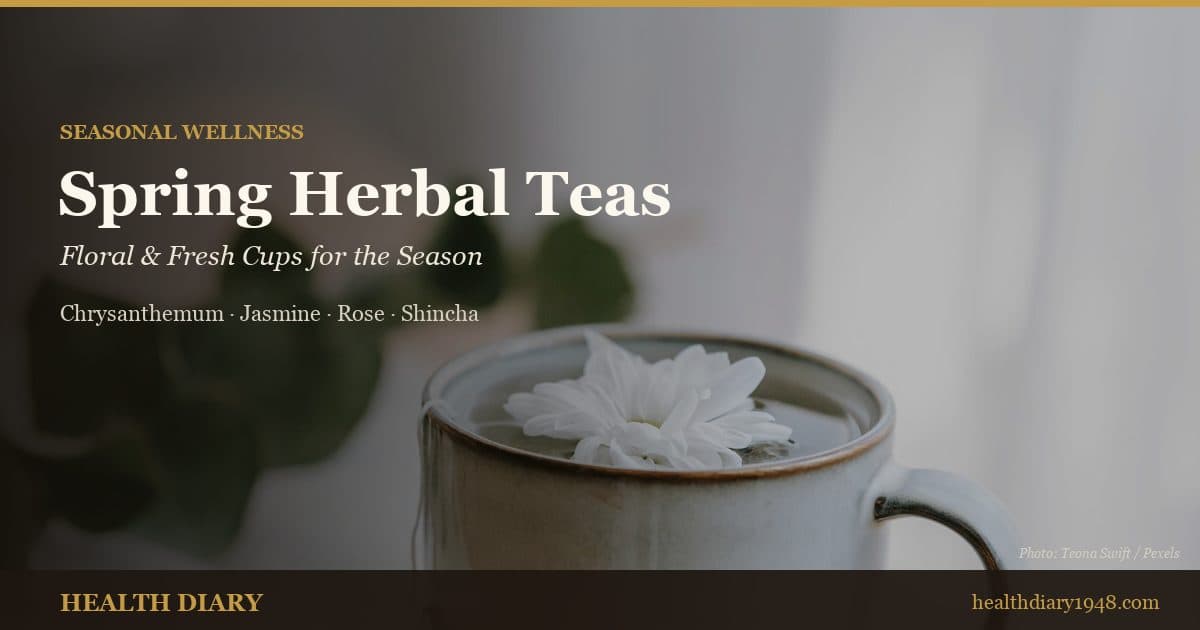
Spring Herbal Teas: Floral & Fresh Cups for the Season
A seasonal guide to spring herbal teas across Asia — floral, fresh green, and liver-soothing cups traditionally enjoyed as the year warms.
Medical Disclaimer: This content is for educational and informational purposes only and is not medical advice. The information presented is not intended to diagnose, treat, cure, or prevent any disease. Always consult a licensed healthcare practitioner before starting any new herbal practice or supplement. Statements regarding traditional herbal use have not been evaluated by the FDA.
Affiliate Disclosure: This article contains affiliate links. We may earn a commission if you purchase through these links, at no additional cost to you. We only recommend products we believe align with our editorial standards.
There is a particular kind of cup that belongs to spring. After a winter of dark, warming brews — roasted teas, ginger, spiced decoctions — the first mild mornings seem to call for something lighter: a pale floral infusion, a fresh green tea still tasting of new leaves. Across much of East and Southeast Asia, this shift is not just a matter of taste; it reflects a centuries-old idea that each season asks for a slightly different cup.
This guide looks at the herbal teas traditionally enjoyed in spring across Chinese, Japanese, Vietnamese and wider Asian traditions — the floral teas, the first-flush green teas, and the gentle liver-soothing blends that mark the turn of the year. For a broader tour of Asian herbal teas year-round, see our guide to traditional Asian herbal teas, and follow the links below to the detailed profiles of each tea.
Why Spring Calls for a Lighter Cup
In the traditional Chinese view of the year, spring belongs to the Wood element and is associated with the liver — the organ system thought to govern the smooth flow of qi, or vital energy, and the emotional ease that comes with it (see our guide to the Five Elements). According to the Beijing Municipal Administration of Traditional Chinese Medicine, spring is a time to "nourish yang energy and help it rise," and light, aromatic flower teas are considered especially well suited to this gentle upward, outward movement.[1]
The Vietnamese tradition of Đông y frames the season in strikingly similar terms. Spring corresponds to Wood and the liver, a time when — as one article in the Ministry of Health newspaper Sức khỏe & Đời sống puts it — the eating principle turns toward light meals, cooling foods, and gentle infusions rather than heavy, rich fare.[2] In both traditions the logic is the same: after winter's density, spring is for lightening up, and tea is one of the simplest ways to do it.
How Traditional Asian Systems View Spring Teas
What the classic texts describe as "soothing the liver" (疏肝, shū gān) is, in everyday terms, closer to easing tension and letting things move freely again. Traditional practitioners have long reached for fragrant flowers in spring precisely because their aromatic, uplifting quality was thought to help qi that feels "stuck" begin to circulate. Jasmine tea, for instance, is described by the Beijing TCM administration as a premier spring choice, valued for gently regulating what the tradition calls liver-qi stagnation (理肝郁).[1]
Crucially, these traditions do not treat every spring tea as universally good for everyone. The same sources are careful to note temperature and constitution: chrysanthemum is considered cooling and better suited to those who feel warm or "heaty," while rose and osmanthus are considered mildly warming.[1] A person who runs cold, or who has a delicate stomach, is traditionally advised to be more sparing with the cooling flowers. This idea — that the right cup depends on the person, not just the season — runs through every tradition we cover below.
Which Herbal Teas Are Traditionally Enjoyed in Spring?
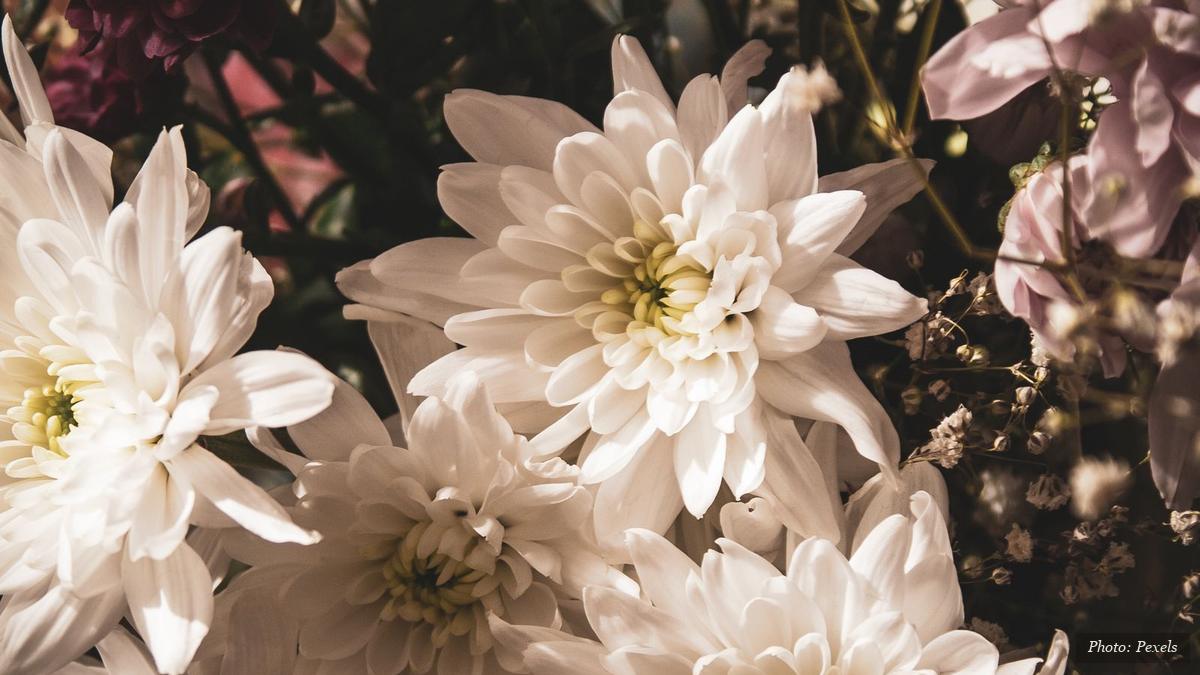
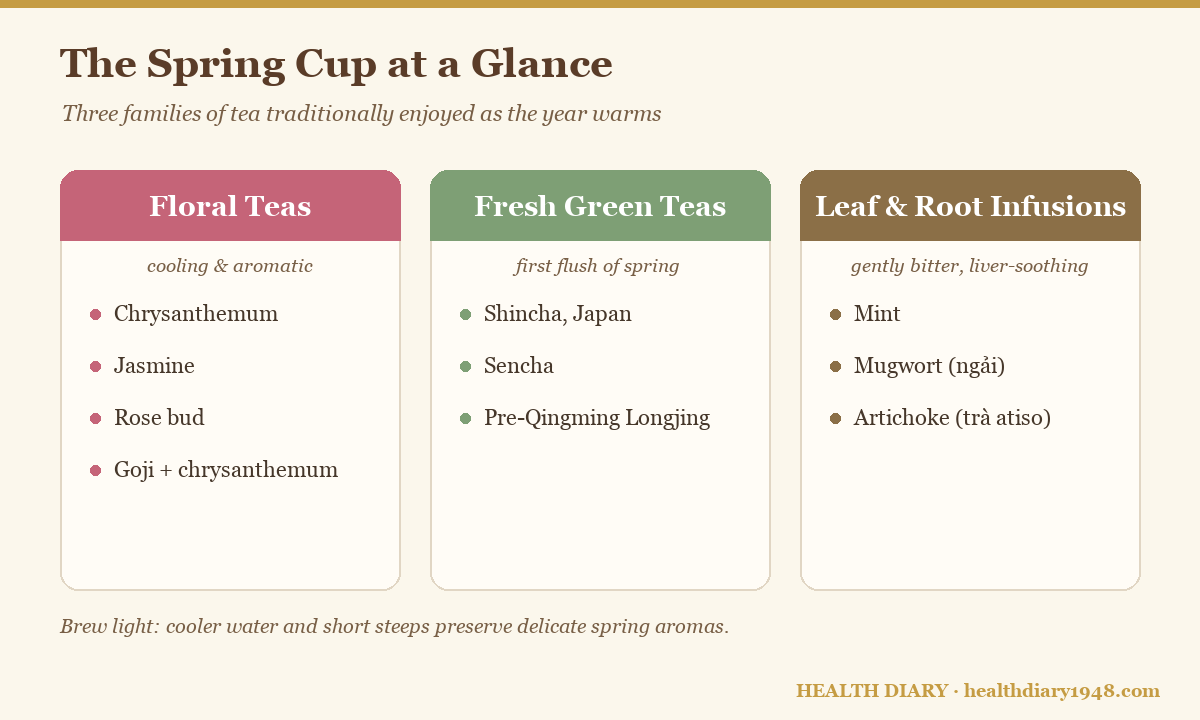
"Spring tea" is really a small family of drinks rather than a single beverage. Here are the ones most consistently associated with the season across Asian traditions:
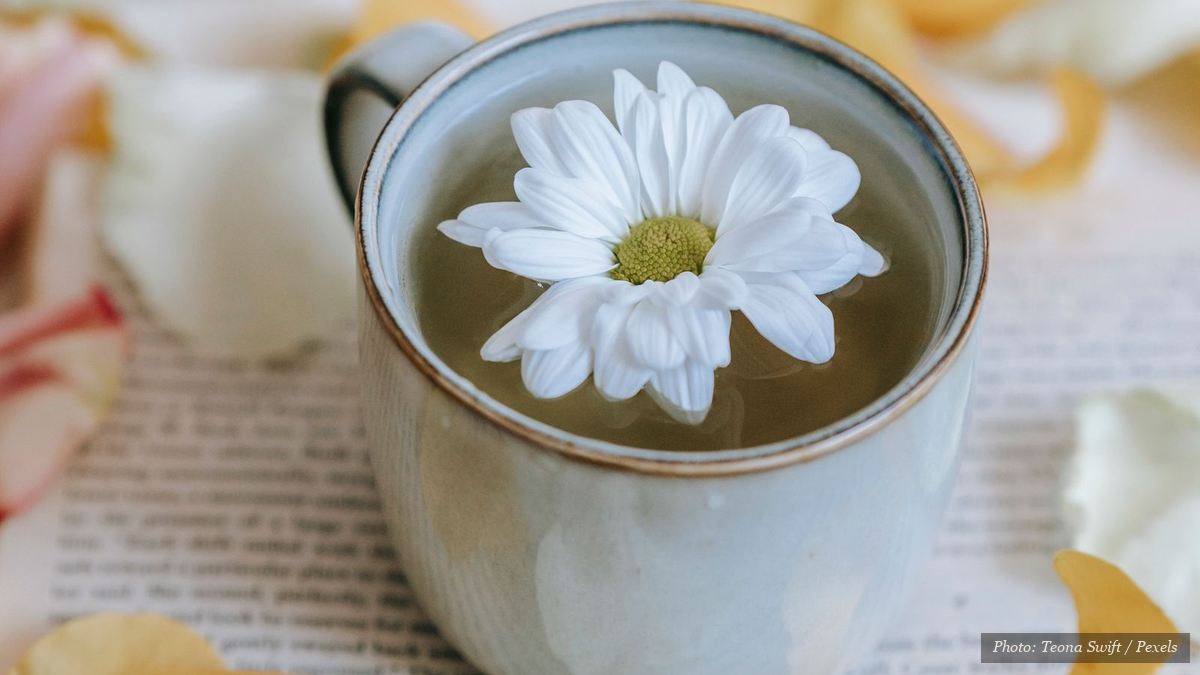
- Chrysanthemum tea (菊花茶) — perhaps the archetypal spring flower tea, cooling and pale gold, traditionally enjoyed when the days warm and eyes feel tired. See our full chrysanthemum tea guide.
- Goji-and-chrysanthemum (杞菊) — a classic pairing recommended by the Guangdong Provincial Administration of TCM for spring, combining cooling chrysanthemum flowers with sweet goji berries and traditionally associated with the liver and the eyes.[3] Explore each half in our goji berry tea guide.
- Jasmine tea — fragrant green tea scented with jasmine blossoms, singled out in Chinese tradition as a leading spring drink for its uplifting aroma.
- Rose bud tea (玫瑰花茶) — mildly warming and floral, long favoured in spring for its association with easing tension and lifting mood.
- Mint tea — cooling and reviving, a natural fit as the weather turns and appetites lighten.
- Mugwort and other leaf infusions (ngải) — in Vietnamese and wider folk practice, tender spring leaves are gathered and infused as part of seasonal rituals.
- Artichoke tea (trà atiso) — a Vietnamese spring favourite, gently bitter and traditionally used to cool the liver; see our artichoke tea guide.
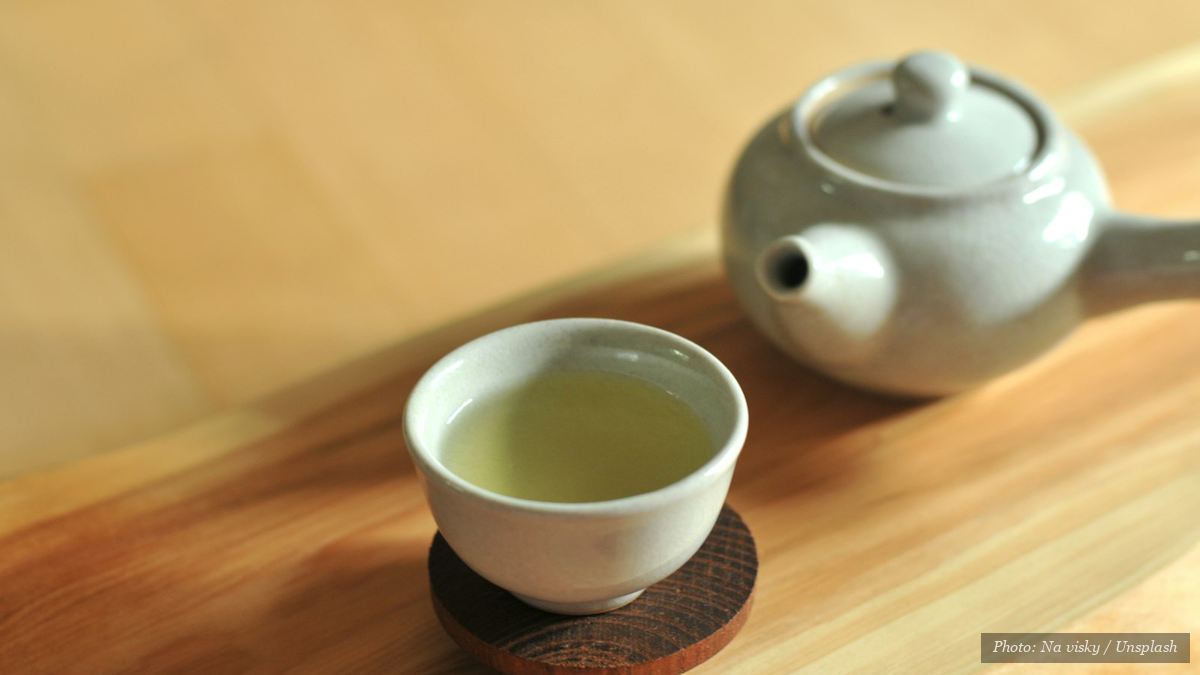
Alongside these herbal and floral infusions, spring is also the season of the year's freshest true teas, made from the leaves of Camellia sinensis. In Japan, the first flush harvested from late April into May is celebrated as shincha (新茶), or "new tea" — leaves that have accumulated amino acids such as L-theanine over the winter dormancy, giving the brew its prized sweet, grassy freshness.[4] In China, the most sought-after green teas are picked before the Qingming festival in early April — the famous "pre-Qingming" (明前) Longjing among them. For the Japanese side of this fresh-green tradition, see our guides to sencha and matcha.
What Does Modern Research Suggest About These Teas?
It is worth being honest here: the modern evidence for most spring teas is early, small in scale, and far from conclusive. These are pleasant traditional beverages with some interesting preliminary findings, not proven remedies.
For peppermint, a small 2025 randomized placebo-controlled trial reported greater short-term cognitive performance and cerebral blood-flow activity in participants given peppermint tea, though the authors stress the modest sample size and the need for replication.[5] For rose, a randomized controlled trial in Taiwanese adolescents found that drinking rose tea over several menstrual cycles was associated with less menstrual distress,[6] and a later meta-analysis of Rosa damascena trials pointed in a broadly similar direction while noting that the evidence remains limited.[7]
For the fresh green teas of spring, the National Center for Complementary and Integrative Health notes that green tea has been studied for effects on some heart-disease risk factors such as blood pressure and cholesterol, but describes the evidence as limited.[8] The Pharmaceutical Society of Japan similarly frames green tea's catechins and theanine as an active area of molecular research rather than settled fact.[4] The responsible reading is the same throughout: enjoy these teas for their taste and ritual, and treat any wellness angle as a gentle traditional association rather than a guarantee.
How Do You Brew Spring Herbal Teas at Home?
Spring teas reward a light hand. The delicate flowers and young leaves that define the season are easily overwhelmed by water that is too hot or steeping that runs too long.
- Floral teas (chrysanthemum, rose, jasmine, goji-chrysanthemum): use water that has come off the boil and cooled slightly, around 85–90°C. A small handful of dried blossoms — a few chrysanthemum flowers, six to ten rose buds — steeped for two to three minutes yields a fragrant, pale infusion. Many people add a couple of goji berries or a thin slice of rock sugar for gentle sweetness.
- Fresh green teas (shincha, sencha, pre-Qingming green): these are the most heat-sensitive of all. Cooler water, around 70–80°C, and a short steep of one to two minutes preserves the sweet, grassy character and keeps bitterness at bay.
- Mint and leaf infusions: more forgiving — near-boiling water and a three- to four-minute steep suit them well.
A traditional habit worth borrowing is to match the cup to the moment and to your own constitution: a cooling chrysanthemum or mint infusion on a warm, bright afternoon; a gently warming rose bud tea on a cool, damp spring morning. Traditional Chinese sources are explicit that these flowers are not one-size-fits-all — chrysanthemum suits those who feel warm, while rose suits those who run cooler.[1]
Individual responses vary considerably; what works well for one person may not suit another, and personal experimentation under practitioner guidance is always recommended.
Important Limitations and Considerations
Spring teas are gentle, everyday drinks, but "natural" does not mean "risk-free." A few points deserve real attention:
- Caffeine in fresh green teas. Shincha, sencha and pre-Qingming green teas are true teas and contain caffeine. The NCCIH notes that green tea can interact with certain medications — including the beta-blocker nadolol, the statin atorvastatin, and raloxifene — and that people who are pregnant should keep caffeine intake moderate and consult their provider.[8]
- Goji berries and blood thinners. The popular goji-and-chrysanthemum spring blend deserves caution for anyone on warfarin. Case reports describe markedly elevated INR and bleeding in warfarin patients who consumed goji, which appears to inhibit the CYP2C9 enzyme that clears the drug.[9] If you take warfarin or another anticoagulant, speak with your doctor before adding goji to your routine.
- Chamomile and floral teas with medications. The NCCIH notes that chamomile may interact with warfarin and with drugs metabolized by the liver.[10] As a general rule, herbs can interact with prescription medicines, so check first if you take any.
- Constitution and cold stomachs. Traditional sources caution that cooling flowers such as chrysanthemum are not ideal for people with a "cold" constitution or a delicate digestion, and advise against drinking them on an empty stomach or continuously for long stretches.[1][2]
- Pregnancy, breastfeeding and children. Little is firmly established about many herbal teas during pregnancy or breastfeeding; the Vietnamese Ministry of Health article specifically advises pregnant women to consult a doctor first.[2] When in doubt, keep infusions weak and occasional, and ask a practitioner.
- Individual variation. People respond differently to the same tea. Start with a mild brew, notice how you feel, and adjust.
Frequently Asked Questions
What are the best herbal teas for spring?
In Asian traditions, the teas most associated with spring are light and floral or fresh and green: chrysanthemum, jasmine, rose bud, mint, the goji-and-chrysanthemum blend, and Vietnamese artichoke tea, along with first-flush green teas such as Japanese shincha and pre-Qingming Chinese green tea. The common thread is lightness — spring is traditionally a time to move away from heavy winter brews toward brighter, gentler cups.
Why is spring linked to the liver in Chinese and Vietnamese traditions?
Both Traditional Chinese Medicine and Vietnamese Đông y place spring in the Wood element, which is associated with the liver and the smooth flow of energy. In this framework, spring is seen as the natural time to keep things light and "flowing," which is why fragrant, gently bitter, and cooling teas are traditionally favoured. This is a cultural and philosophical model, not a medical claim about the organ itself.
Can I drink chrysanthemum tea every day in spring?
Many people enjoy a mild chrysanthemum infusion regularly through the warmer months. Traditional sources, however, describe it as cooling and suggest that those with a cold constitution or sensitive digestion go easy, avoid drinking it on an empty stomach, and not use it continuously for very long stretches. Individual responses vary.
Does goji or chrysanthemum tea interact with any medications?
Goji berries may interact with warfarin and other blood thinners, with case reports of elevated bleeding risk, and chamomile has also been reported to interact with warfarin and liver-metabolized drugs. Fresh green teas contain caffeine and can interact with certain medications too. If you take any prescription medicine, check with your doctor or pharmacist before making a tea a daily habit.
Is fresh spring green tea like shincha better than regular green tea?
"Better" is really a matter of taste and season. Shincha and other first-flush green teas are prized because the leaves accumulate amino acids over winter, giving an unusually sweet, fresh flavour when brewed soon after harvest. Nutritionally they are still green tea; the appeal is freshness and seasonal ritual rather than a fundamentally different drink.
A Note on Noticing What Works for You
Part of what makes seasonal tea rewarding is simply paying attention — noticing which cup you reach for on the first warm afternoon of the year, which floral aroma lifts your mood, and how a small morning ritual settles the start of a busy day. Some people find it helpful to keep a light record of the teas they try and the moments that suit them, the way they might jot down sleep or mood, so that patterns emerge over a season. Health Diary is built around exactly that kind of gentle, personal tracking, and if you are unsure where to begin, our overview of Asian herbal teas is a good map.
A Soft Closing Note
Spring herbal teas are not a shortcut to health, and they were never meant to be. They are something quieter: a seasonal habit of pausing, warming a light cup, and choosing a drink that fits the brightening days. Follow the links to whichever flower or fresh green tea calls to you, brew it with a gentle hand, and let curiosity — not claims — lead the way into the season.
About This Article
Written by: Health Diary Editorial Team — a group of writers and researchers focused on traditional wellness practices and Asian herbal traditions.
Editorial review: This article has been reviewed by the Health Diary editorial team for clarity, structure, and adherence to our sourcing standards. Key claims were cross-checked against NCCIH, NIH PubMed, and government traditional-medicine sources where applicable. It is not a clinical review and should not replace consultation with a licensed healthcare practitioner.
Reviewed on: July 18, 2026.
Editorial process: We cite peer-reviewed and government sources where possible. When a clinical reviewer is added to this article, attribution will appear here with verifiable credentials.
References
- Beijing Municipal Administration of Traditional Chinese Medicine. 春天说饮茶 (On Drinking Tea in Spring). 2021. https://zyj.beijing.gov.cn/sy/whkp/202103/t20210304_2298812.html
- Sức khỏe & Đời sống (Vietnam Ministry of Health). 4 loại trà thảo dược dưỡng gan (4 herbal teas that nourish the liver). 2025. https://suckhoedoisong.vn/4-loai-tra-thao-duoc-duong-gan-169250924184900704.htm
- Guangdong Provincial Administration of Traditional Chinese Medicine. 疏风清热、养肝护目的春季养生茶 (Spring wellness teas that clear wind-heat and nourish the liver and eyes). http://szyyj.gd.gov.cn/zyyfw/ysbj/content/post_4093857.html
- Pharmaceutical Society of Japan. 分子レベルで解き明かされる緑茶(日本茶)の効能 (Green tea's effects at the molecular level). https://bukai.pharm.or.jp/bukai_kanei/topics/topics55.html
- Netzler, R. et al. A Randomized Placebo-Controlled Clinical Trial Exploring the Short-Term Cognitive and Cerebrovascular Effects of Consuming Peppermint Tea. Human Psychopharmacology, 2025. https://pmc.ncbi.nlm.nih.gov/articles/PMC11973245/
- Tseng, Y. F. et al. Rose tea for relief of primary dysmenorrhea in adolescents: a randomized controlled trial in Taiwan. Journal of Nursing Research, 2005. https://pubmed.ncbi.nlm.nih.gov/16154059/
- Effects of Rosa damascena on menstruation-related pain, headache, fatigue, anxiety, and bloating: A systematic review and meta-analysis of randomized controlled trials. 2021. https://pmc.ncbi.nlm.nih.gov/articles/PMC8395985/
- National Center for Complementary and Integrative Health. Green Tea: Usefulness and Safety. NIH. https://www.nccih.nih.gov/health/green-tea
- Rivera, C. A. et al. Probable Interaction Between Lycium barbarum (Goji) and Warfarin. Pharmacotherapy, 2012. https://pubmed.ncbi.nlm.nih.gov/22392461/
- National Center for Complementary and Integrative Health. Chamomile: Usefulness and Safety. NIH. https://www.nccih.nih.gov/health/chamomile