

Traditional Soups and Broths of Asia: Tonics, Congee & Everyday Bowls
A guide to Asia’s soups and broths — everyday canh, guk, and miso soup, Cantonese tonic soup, congee, samgyetang, and pho — and what the evidence really says.
Medical Disclaimer: This content is for educational and informational purposes only and is not medical advice. It reflects traditional Chinese, Japanese, Korean, and Vietnamese cultural practices and folk wellness traditions and is not intended to diagnose, treat, cure, or prevent any disease. Always consult a licensed healthcare practitioner before making significant dietary changes. Statements regarding traditional foods have not been evaluated by the FDA.
Affiliate Disclosure: This article may contain affiliate links. We may earn a commission if you purchase through these links, at no additional cost to you. We only recommend products we believe align with our editorial standards.
Ask a grandmother anywhere in Asia what to eat when you are tired, unwell, cold, or simply home, and the answer is almost always the same: soup. A bowl of clear broth, a slow-simmered tonic, a pot of rice porridge — across China, Japan, Korea, and Vietnam, soup is the quiet centre of the meal and the first thing offered to anyone who needs care. It is comfort, hospitality, and folk wisdom ladled into a single bowl.
This guide is the hub for our writing on Asia's soups and broths. It looks at why soup matters so much here, walks through the everyday bowls and the great tonic and signature soups, and weighs honestly what science can and cannot say — including the popular claims about bone broth. For the broader philosophy of food-as-wellness, see our Asian food therapy hub; this one stays focused on the pot.
Why Is Soup So Central to the Asian Table?
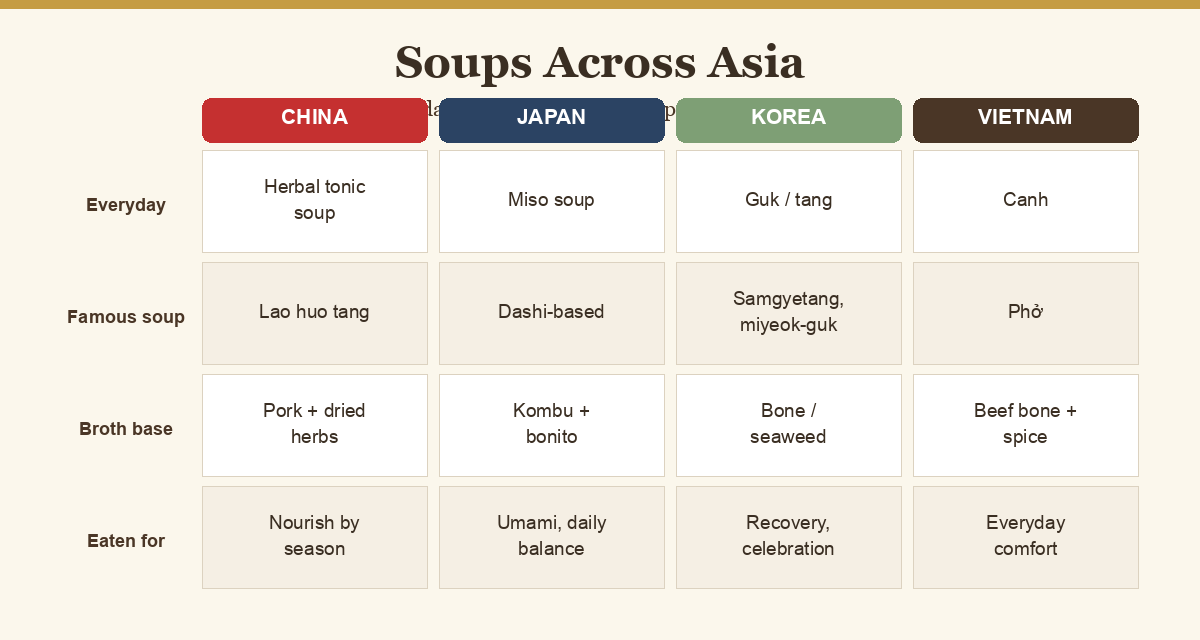
In much of Asia, a meal without soup can feel incomplete. The Japanese template of ichijū-sansai — "one soup, three dishes" — makes a bowl of miso soup a structural part of the everyday meal, not an optional starter. Korean tables almost always include a guk or tang; Vietnamese family meals are built around rice with a canh; and Chinese meals frequently open or close with soup.
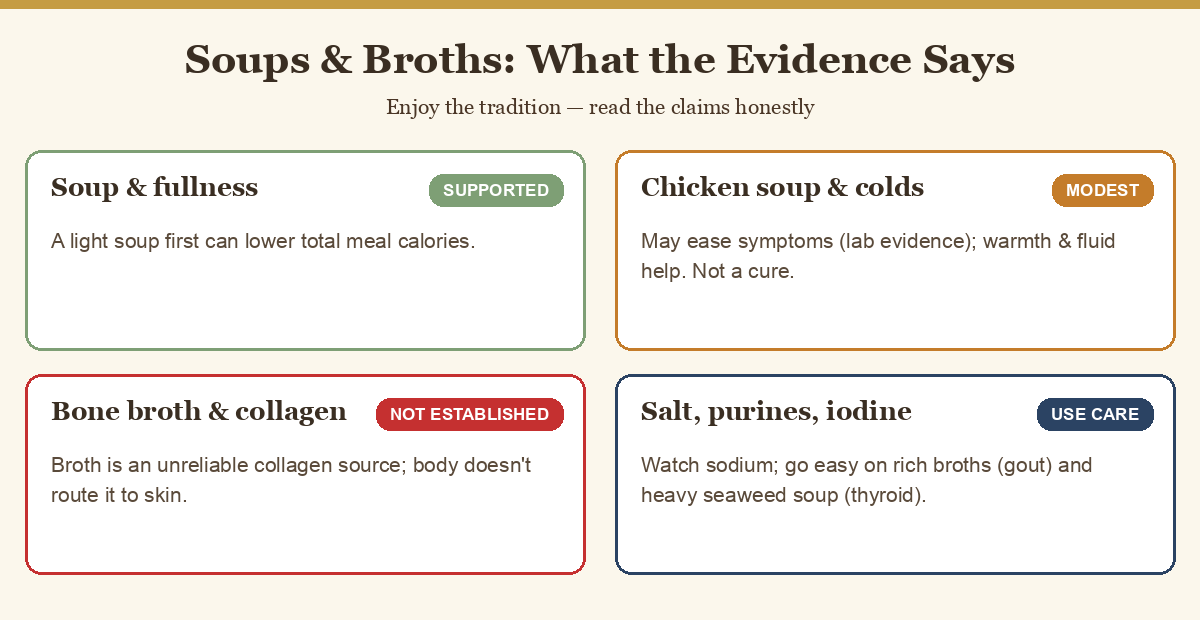
There is a practical logic beneath the custom. Soup is mostly water, which makes it filling for relatively few calories: controlled studies have found that starting a meal with a light soup can meaningfully reduce total energy intake, because water bound into food satisfies more than water drunk on the side (Flood & Rolls, 2007). At the population level, regular soup eaters tend to have lower overall dietary energy density and better diet quality (Zhu & Hollis, 2014). In other words, the tradition of a soup at every meal is both cultural and quietly sensible.
The Everyday Bowl — Canh, Guk, and Miso Soup
Most Asian soup is not ceremonial at all — it is the plain, daily bowl. In Vietnam, canh is a light broth of vegetables, sometimes with a little meat or seafood, spooned over rice to round out the meal. In Korea, everyday guk ranges from soybean-paste stews to clear radish soups. In Japan, the daily miso soup is built on dashi, the umami stock of kombu kelp and dried bonito whose savoury depth was traced to glutamate by the chemist Kikunae Ikeda in 1908 (Government of Japan, dashi).
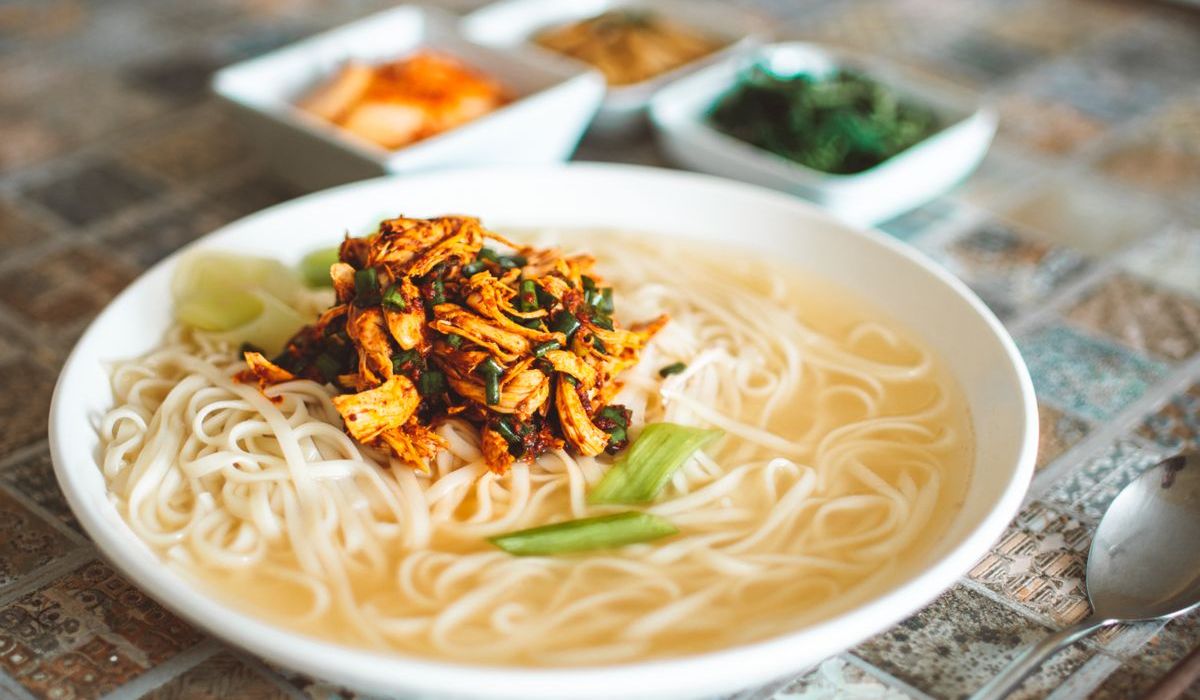
These humble soups do real nutritional work: they are an easy way to fold more vegetables into a meal. Japan's agriculture ministry actively promotes vegetable-packed miso soup for exactly this reason (MAFF, Japan). The same instinct shapes the whole region's tables, and it pairs naturally with the seasonal eating explored in our seasonal wellness traditions guide.
Congee — The Comfort of Rice Porridge
If there is one dish the whole region reaches for in sickness and recovery, it is congee — rice slow-cooked in plenty of water until soft and soothing (zhōu in Chinese, cháo in Vietnamese, juk in Korean). Gentle, warm, and easy to eat, it has been the classic convalescent and comfort food for centuries, served plain to a queasy stomach or dressed up with ginger, chicken, or century egg for an everyday breakfast.
It is worth being honest that congee's convalescent reputation rests mostly on long tradition and common sense — a soft, hydrating, easily digested food is a reasonable choice when appetite is low — rather than on clinical trials. That is exactly how the tradition itself regards it: as gentle nourishment, not a remedy.
Tonic Soups — "Medicine in a Bowl"
At the other end of the spectrum sits the tonic soup, where soup edges closest to folk medicine. The classic example is Cantonese lao huo tang (老火汤), "old-fire soup," simmered for hours with meat and a changing cast of dried herbs, roots, and fruits. A remarkable ethnobotanical survey documented 113 different plant species used in these soups, chosen according to the drinker's symptoms and constitution, most often to "clear heat" in the body's traditional framework (Zhang et al., 2018).
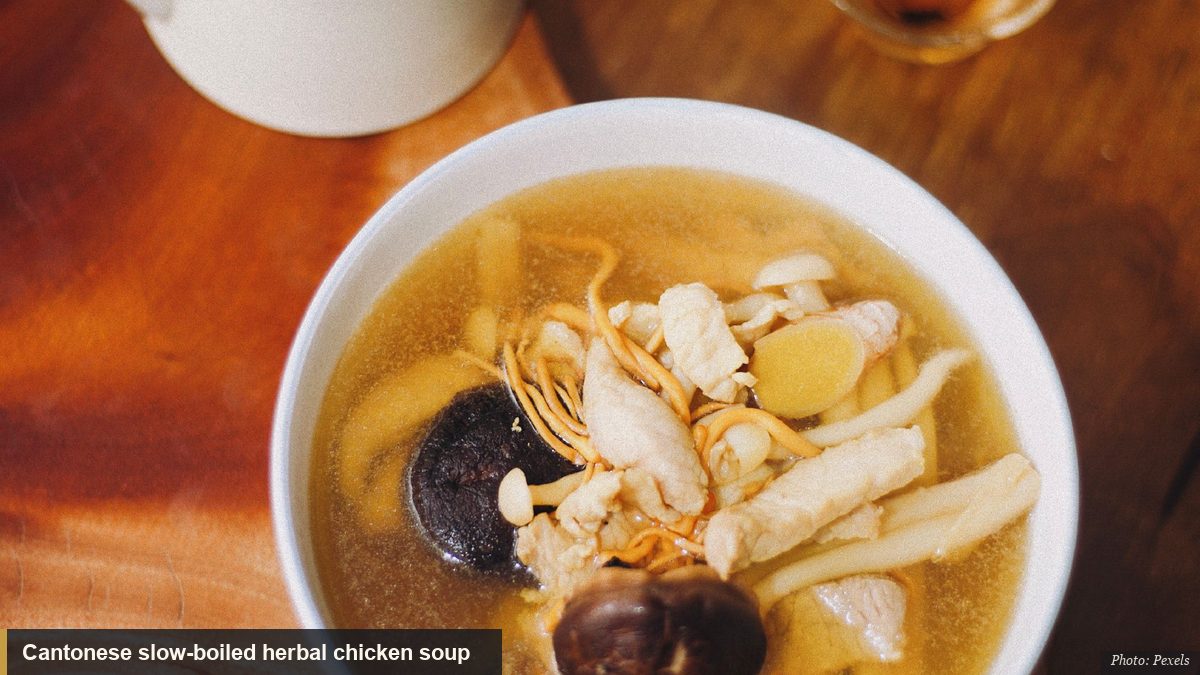
This is the same "food and medicine share one origin" (药食同源) logic that runs through Chinese herbal tradition — the belief that the right ingredients, gently simmered, nourish according to the season and the person — an idea shared across Vietnamese and Korean traditions and framed by yin and yang and the five elements. Sweet tonic soups follow the same idea: our guides to red date and longan soup, goji berry soup, and lotus seed sweet soup show the gentler, dessert-side version. 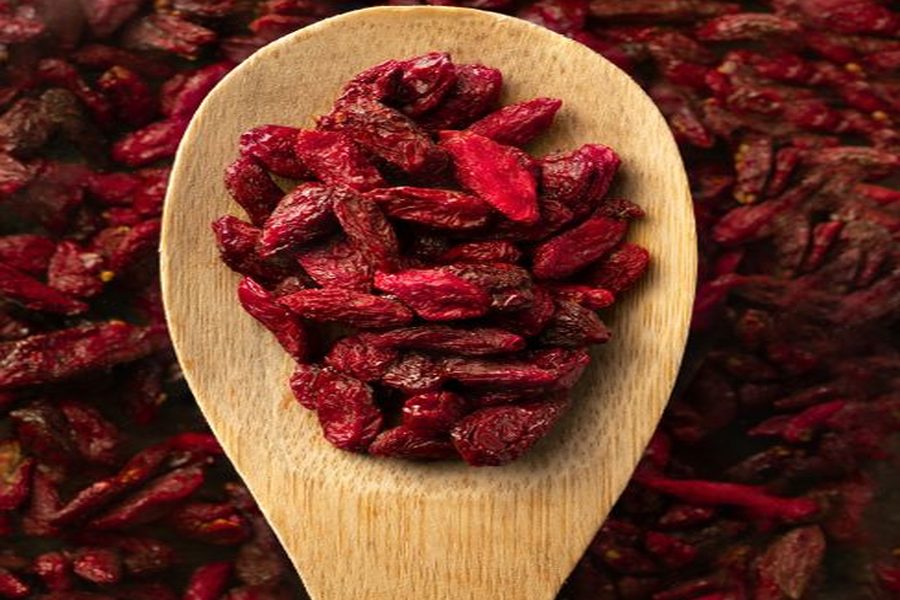 These are best enjoyed as nourishing cultural food rather than treatment, and individual responses vary considerably.
Signature Soups Across the Region
Every culture has its landmark bowls. Korea's ginseng chicken soup tradition peaks in samgyetang — a whole young chicken stuffed with glutinous rice, ginger-scented broth, ginseng, and jujube, eaten piping hot on the hottest summer days under the "fight heat with heat" custom (samgyetang study, 2022). Another Korean icon is miyeok-guk, seaweed soup traditionally eaten after childbirth and on birthdays to honour one's mother.
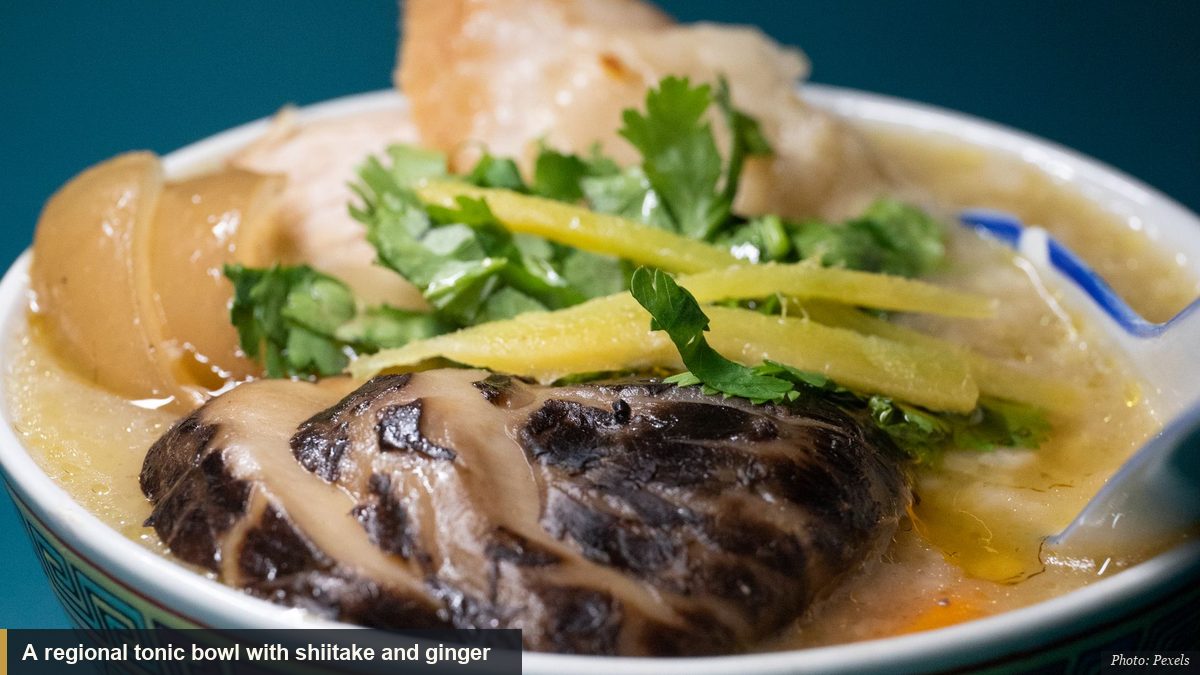
Vietnam's phở is really a broth masterpiece: a stock simmered for hours from beef bones with charred ginger and onion, star anise, cinnamon, and cloves, a dish that emerged in northern Vietnam around the turn of the twentieth century (Phở, Vietnamese reference). Japan's miso soup, built on dashi, is the everyday counterpart, while the whole region shares a love of seasonal tonic soups. Many of these are warming winter staples — see our warming winter foods guide — and belong to the same nourishing tradition as Vietnamese herbal soups, and pair naturally with a warm cup from our Asian herbal teas guide.
What About Bone Broth and Collagen?
No soup topic attracts more modern hype than bone broth, often sold as a way to rebuild your skin and joints through its collagen. Here the evidence calls for real caution.
A 2019 analysis found that bone broth delivers far less of the key collagen-building amino acids than a studied therapeutic collagen dose, with wide variation between recipes — so a cup of broth is an unreliable "collagen source" (Alcock et al., 2019). Harvard's nutrition experts add the more basic point: the body breaks any dietary collagen down into amino acids and does not ship them straight to your skin, and even the evidence for isolated collagen supplements is limited and often industry-funded (Harvard Nutrition Source). None of this makes broth worthless — it offers protein, minerals, warmth, and hydration, and it is a lovely base for vegetables — but the specific "broth rebuilds your collagen" claim is not well supported. Enjoy it as good food, not as a supplement.
The Art of the Broth
What unites great Asian soups is patience. A clear tonic soup or a phở broth is built over hours of gentle simmering, skimming impurities, and layering aromatics so that flavour develops without turning harsh. Japanese cooks lean on the elegant chemistry of awase dashi, combining kombu's glutamate with bonito's inosinate for an umami effect greater than either alone (Government of Japan). Vietnamese cooks char ginger and onion before adding them to phở stock for depth and fragrance.
The craft is not fussy so much as unhurried — a reminder that the best soups reward time and attention rather than special equipment. It is the culinary cousin of the patience prized in our tea culture and wellness practices traditions.
What Does Modern Research Say?
Beyond the satiety findings above, a few threads of research touch these traditions — always modestly.
Chicken soup and colds. The famous 2000 study in Chest found that "grandma's" chicken soup had a mild, dose-dependent anti-inflammatory effect on immune cells in a laboratory dish — a plausible reason it may soothe cold symptoms, though this was test-tube work, not proof that soup shortens an illness (Rennard et al., 2000). The warmth, fluid, and comfort likely matter as much as any compound.
Fermented soy soups. Miso is a fermented soy food, and a randomised trial found that fermented soy can favourably affect cholesterol levels (fermented soy RCT, 2021). The important caveat is miso's high salt, discussed below — the sensible move is to load the bowl with vegetables and go easy on added salt. As with all of this, read the science as "gently supportive of a good habit," not as a health claim.
Important Limitations and Considerations
- Sodium is the big one. The WHO recommends under 2,000 mg of sodium a day, yet a single serving of canned soup or a salty broth can carry 800–1,000 mg or more (WHO)(Mayo Clinic). Cooking soup at home lets you control the salt.
- Rich, long-boiled broths and gout. During long simmering, purines pass from meat into the broth (purines in broth, 2021), and higher intake of meat and seafood is linked to greater gout risk (Choi et al., 2004). Those with gout or high uric acid should go easy on heavy meat broths.
- Seaweed soup and iodine. Miyeok-guk is very iodine-rich — one bowl can far exceed the daily recommendation — so those who are pregnant, nursing, or managing a thyroid condition should enjoy it in moderation and seek advice (postpartum iodine survey, 2021).
- Herbal tonic soups can interact with medicine. Ginseng and other tonic herbs may interact with medications such as blood thinners; herbal ingredients are not tightly regulated, so check with a clinician if you take prescription drugs (NCCIH).
- Individual responses vary considerably. The tonic-soup tradition itself is individualised by "constitution" — there is no one-size-fits-all bowl, and soup is not a substitute for medical care.
Frequently Asked Questions
Is bone broth actually healthy?
Bone broth is a nourishing, hydrating food that provides protein and minerals and makes a great base for vegetables. But the popular claim that it rebuilds your skin or joint collagen is not well supported — broth delivers unreliable, generally low amounts of the relevant amino acids, and the body does not route dietary collagen straight to those tissues (Alcock et al., 2019). Enjoy it as good food, and watch the salt.
What is Cantonese "old-fire" soup (lao huo tang)?
It is a soup simmered for hours with meat and a rotating mix of dried herbs, roots, and fruits, traditionally chosen to suit the season and the drinker's constitution — a bowl that sits at the border of food and folk medicine (Zhang et al., 2018).
Why do Koreans eat seaweed soup on birthdays?
Miyeok-guk was traditionally eaten by mothers after childbirth, so eating it on your birthday is a way of remembering and honouring your mother. Because seaweed is very high in iodine, those with thyroid conditions or who are pregnant should enjoy it in moderation (iodine survey, 2021).
Is congee good when you are sick?
Traditionally, yes — congee is soft, warm, hydrating, and easy to digest, which makes it a sensible choice when appetite is low. Its role is comfort and gentle nourishment rather than a proven treatment, which is exactly how the tradition regards it.
Does chicken soup really help a cold?
It may ease symptoms. Laboratory research found a mild anti-inflammatory effect from chicken soup, and the warmth, fluid, and comfort genuinely help you feel better, though soup does not tackle the underlying infection itself (Rennard et al., 2000).
Is miso soup healthy despite the salt?
Miso is a fermented soy food with some favourable signals for cholesterol, but it is high in sodium. The best approach is to fill the bowl with vegetables, keep added salt light, and enjoy it in normal portions (fermented soy RCT).
A Note on Making Soup a Habit
You do not need a special recipe to bring this tradition home. A simple vegetable canh, a pot of congee on a slow morning, or a weekend tonic soup captures most of what makes these bowls so beloved. If you like building gentle routines, noting which soups you make and how they suit the season can turn an occasional effort into a comforting weekly rhythm. Our reader quiz can help you find a starting point, and our guides to tonic soups, ginger chicken soup, and Vietnamese herbal soups offer easy first bowls.
A Soft Closing Note
The soups and broths of Asia were never really about a single magic ingredient. They are about care simmered slowly — a warm bowl offered to a tired body, a recovering friend, or a family gathered around rice. Whether you are drawn to the depth of a phở broth, the comfort of congee, or the old-fire patience of a tonic soup, the invitation is the same: take your time, fill the pot with good things, and let a warm bowl do its quiet, nourishing work. To keep exploring, wander into our Asian food therapy hub, the seasonal wellness traditions guide, or the healthy aging traditions that these bowls have long supported.
About This Article
Written by: Health Diary Editorial Team — writers and researchers focused on making traditional Asian wellness knowledge clear, accurate, and culturally grounded.
Editorial review: This article has been reviewed by the Health Diary editorial team for clarity, structure, and adherence to our sourcing standards. Key claims were cross-checked against peer-reviewed research, the WHO, Harvard Nutrition Source, Mayo Clinic, and NCCIH where applicable. It is not a clinical review and should not replace consultation with a licensed healthcare practitioner.
Reviewed on: August 4, 2026.
Editorial process: We cite peer-reviewed and government sources where possible, and we clearly separate traditional cultural practice from established medical evidence — for example, flagging that bone-broth collagen claims and congee's convalescent role are not proven by clinical trials.
References
- Alcock RD, Shaw GC, Burke LM. Bone Broth Unlikely to Provide Reliable Concentrations of Collagen Precursors. Int J Sport Nutr Exerc Metab. 2019. https://pubmed.ncbi.nlm.nih.gov/29893587/
- Flood JE, Rolls BJ. Soup preloads reduce meal energy intake. Appetite. 2007. https://www.sciencedirect.com/science/article/abs/pii/S0195666307002760
- Zhu Y, Hollis JH. Soup consumption, dietary energy density and diet quality. Br J Nutr. 2014. https://www.cambridge.org/core/journals/british-journal-of-nutrition/article/878E630DD29562D3CE48CEAC0C34FC03
- Zhang L, et al. Plants for making Cantonese slow-cooked soup. J Ethnobiol Ethnomed. 2018. https://ethnobiomed.biomedcentral.com/articles/10.1186/s13002-018-0206-y
- Rennard BO, et al. Chicken soup inhibits neutrophil chemotaxis in vitro. Chest. 2000. https://pubmed.ncbi.nlm.nih.gov/11035691/
- Purines and uric acid in Chinese chicken broth. Foods. 2021. https://www.ncbi.nlm.nih.gov/pmc/articles/PMC8624923/
- Choi HK, et al. Purine-rich foods and the risk of gout in men. N Engl J Med. 2004. https://www.nejm.org/doi/full/10.1056/NEJMoa035700
- Fermented soy product and cholesterol (RCT). 2021. https://www.ncbi.nlm.nih.gov/pmc/articles/PMC7915103/
- Fatty acids and flavour of samgyetang. 2022. https://pmc.ncbi.nlm.nih.gov/articles/PMC9271379/
- Dietary iodine intake in postpartum Korean women (miyeok-guk). 2021. https://www.ncbi.nlm.nih.gov/pmc/articles/PMC8623058/
- Harvard T.H. Chan School of Public Health. Collagen — The Nutrition Source. https://nutritionsource.hsph.harvard.edu/collagen/
- World Health Organization. Sodium reduction — fact sheet. https://www.who.int/news-room/fact-sheets/detail/sodium-reduction
- Mayo Clinic. Helpful ways to reduce your sodium intake. https://newsnetwork.mayoclinic.org/discussion/helpful-ways-you-can-reduce-your-sodium-intake/
- NCCIH. Using Dietary Supplements Wisely. https://www.nccih.nih.gov/health/using-dietary-supplements-wisely
- Government of Japan. What is dashi? (washoku / umami). https://www.gov-online.go.jp/eng/publicity/book/hlj/html/201911/201911_04_en.html
- 農林水産省 (MAFF). 具だくさんおみそ汁 (vegetable-rich miso soup). https://www.maff.go.jp/j/keikaku/syokubunka/culture/wagohan/articles/2109/spe1_01.html
- 食药同源 (food and medicine share one origin). Chinese reference. https://zh.wikipedia.org/zh-hans/食药同源
- Phở — history and Vietnamese food culture. Vietnamese reference. https://vi.wikipedia.org/wiki/Phở


