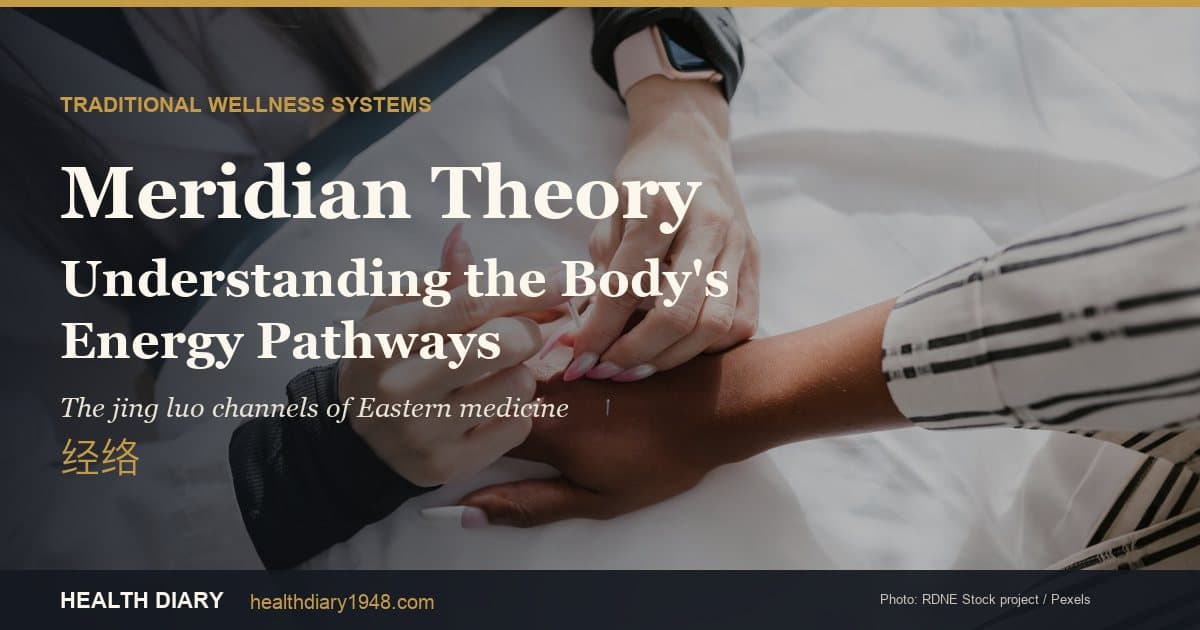
Meridian Theory: Understanding the Body's Energy Pathways
What are meridians? Explore jing luo — the twelve regular meridians, the Ren and Du extraordinary vessels, how acupuncture uses them, and what modern research says.
Medical Disclaimer: This content is for educational and informational purposes only and is not medical advice. The information presented is not intended to diagnose, treat, cure, or prevent any disease. The meridian system described here is a conceptual model from traditional East Asian medicine, not a scientifically verified anatomical structure such as the nervous or circulatory system. Always consult a licensed healthcare practitioner before starting acupuncture, acupressure, or any new wellness practice. Statements regarding traditional practices have not been evaluated by the FDA.
Affiliate Disclosure: This article contains affiliate links. We may earn a commission if you purchase through these links, at no additional cost to you. We only recommend products we believe align with our editorial standards.
Look closely at an acupuncture chart and you will see the body mapped as a network of lines running from fingertips to face, chest to toes, each dotted with named points. Those lines are the meridians, or jing luo (经络) — the channels through which, in traditional East Asian thought, vital energy is said to flow. They are the framework behind acupuncture, acupressure, and much of the theory in this Wellness Systems series.
This guide sits alongside our companion pieces on qi, the vital energy the channels are said to carry, and the broader logic of yin and yang and the five elements. Here we cover what meridians are, where the idea came from, the twelve regular meridians and the eight extraordinary vessels, how acupuncture and acupressure use them — and, honestly, what modern research does and does not support.
What Are Meridians (Jing Luo)?
The Chinese term jing luo (经络) joins two words. Jing (经) means a "channel" or "warp thread" — the main, deep, vertical routes. Luo (络) means "net" or "collateral" — the finer branches that web outward from them. A classical definition preserved in the Lingshu (灵枢, the "Spiritual Pivot" half of the Yellow Emperor's Inner Classic) puts it compactly: "the meridians run deep within; the branches that run crosswise are the collaterals; the offshoots of the collaterals are the grandchild vessels" (经脉为里,支而横者为络,络之别者为孙).
In this model, the meridians are understood as the pathways along which qi and blood circulate, linking the internal organs to the surface of the body and knitting every part into one connected whole. It is essential to say clearly from the start: this is a conceptual map built by careful observation over centuries, not a description of a physical tube or wire that a modern anatomist can dissect. We return to that point in the research section below.
Where Does Meridian Theory Come From?
The meridian system was gathered together roughly two thousand years ago in the Huangdi Neijing (Yellow Emperor's Inner Classic). Its Lingshu section devotes an entire chapter — 《灵枢·经脉》 ("On the Meridians") — to tracing each channel's route. That chapter opens with the Lung channel: "The lung, hand-taiyin channel, begins in the middle burner, descends to connect with the large intestine…" and does the same for all twelve, noting where each starts, where it travels, and which organ it belongs to.
By this time meridian theory had already fused with the wider vocabulary of Chinese cosmology — the interplay of yin and yang and the correspondences of the five elements. Each channel carries a yin or yang character and an organ association, so the map of the body became a map of the same forces the rest of traditional medicine describes. For two millennia it has been the shared reference for acupuncture, moxibustion, tui na massage, and much of herbal practice.
The Twelve Regular Meridians
The heart of the system is the set of twelve regular meridians (十二经脉, shi'er jingmai), sometimes called the twelve principal channels. According to the Guangdong Provincial Administration of Traditional Chinese Medicine, each is named for a limb (hand or foot), a yin-yang quality, and the organ it is said to serve. They divide neatly into four groups of three:
- Three hand yin channels — Lung (手太阴肺经), Pericardium (手厥阴心包经), Heart (手少阴心经)
- Three hand yang channels — Large Intestine (手阳明大肠经), Triple Burner (手少阳三焦经), Small Intestine (手太阳小肠经)
- Three foot yang channels — Stomach (足阳明胃经), Gallbladder (足少阳胆经), Bladder (足太阳膀胱经)
- Three foot yin channels — Spleen (足太阴脾经), Liver (足厥阴肝经), Kidney (足少阴肾经)
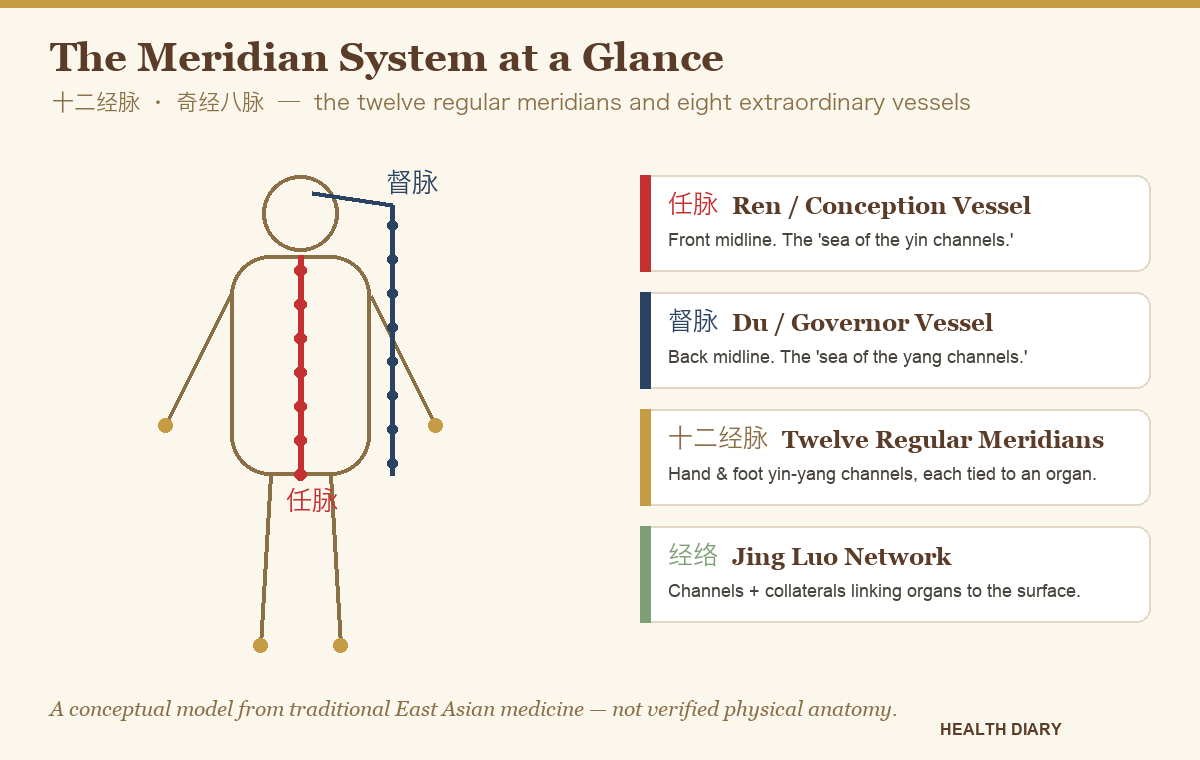
Each yin channel is paired with a yang channel through an interior-exterior relationship (Lung with Large Intestine, Heart with Small Intestine, and so on). Classical theory holds that qi and blood flow through all twelve in an unbroken daily circuit, "flowing and irrigating the whole body in an ordered, interlocking sequence" — from Lung to Large Intestine to Stomach and onward, returning at last to begin again. It is a tidy, self-contained model of internal circulation, and its elegance is a large part of why it endured.
The Eight Extraordinary Vessels: The Ren and Du Channels
Beyond the twelve run the eight extraordinary vessels (奇经八脉, qi jing ba mai). Longhua Hospital of the Shanghai University of Traditional Chinese Medicine describes them as eight channels that "run their own separate course" outside the regular twelve: the Governor (督脉, Du), Conception (任脉, Ren), Penetrating (冲脉, Chong), Belt (带脉, Dai), and four paired yin and yang linking and heel vessels. Unlike the twelve, they do not attach directly to individual organs; instead they act as reservoirs, absorbing the overflow of qi and blood from the regular channels and releasing it back when needed — like lakes balancing the level of the rivers that feed them.
Two of the eight are prominent enough that many practitioners treat them almost as honorary regular channels. The Du mai (督脉), or Governor Vessel, runs up the midline of the back and is traditionally called the "sea of the yang channels" because it is said to govern all the body's yang. The Ren mai (任脉), or Conception Vessel, runs up the midline of the front and is called the "sea of the yin channels," traditionally linked to nourishment and, in classical texts, to gestation. Together they form the vertical axis that many qigong and meditation practices visualize as the "microcosmic orbit."
How Do Acupuncture and Acupressure Use the Meridians?
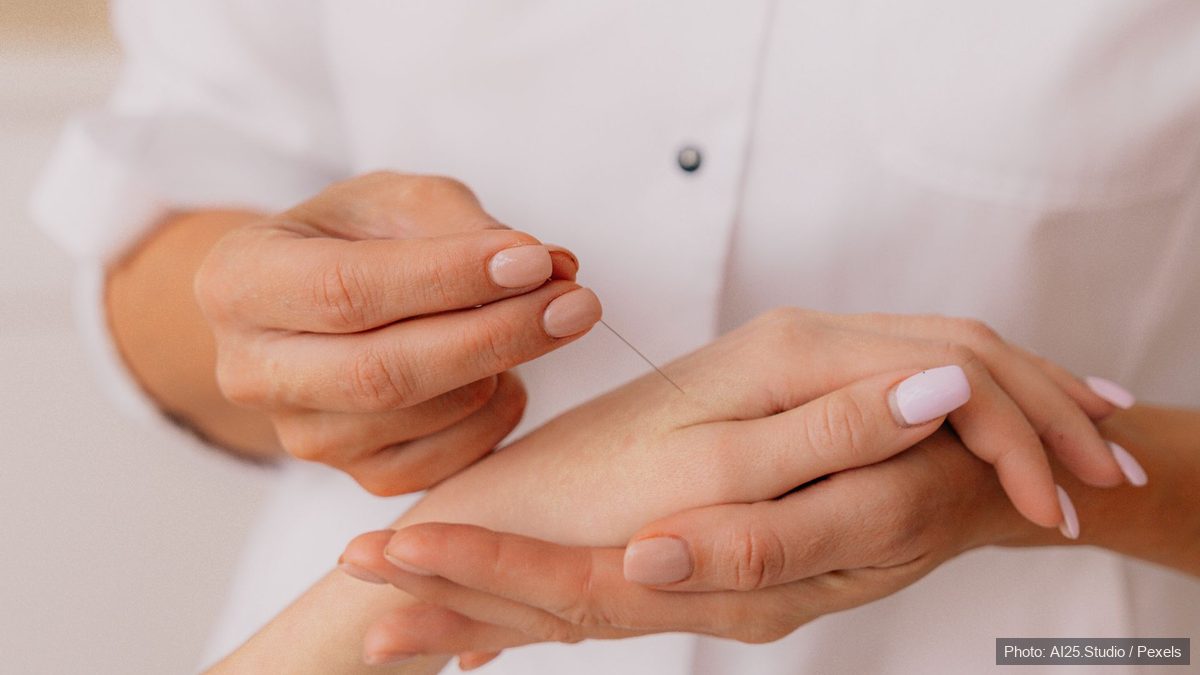
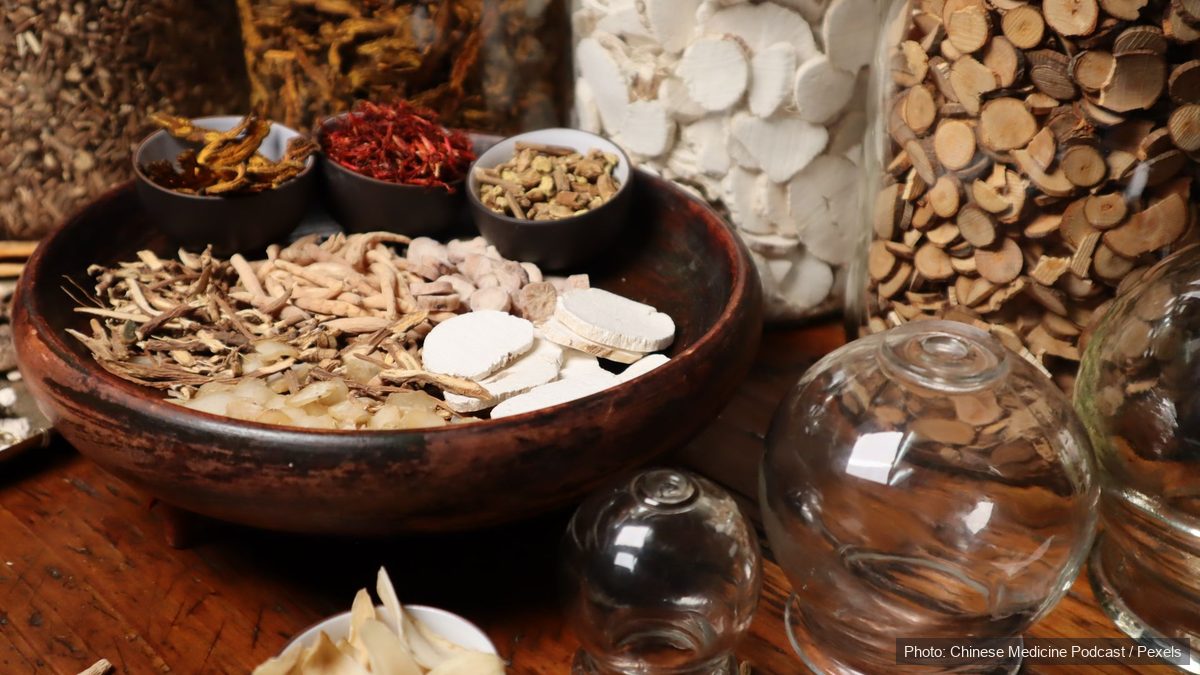
The meridians matter in practice because of what sits along them: the acupoints (穴位), several hundred named locations where the channels are considered most accessible from the surface. In acupuncture, a practitioner inserts fine, sterile needles at selected points; in acupressure and tui na massage, the same points are worked with fingers and hands; in moxibustion, a warming herb is burned near them. The traditional aim is the same — to influence the flow of qi along the relevant channel.
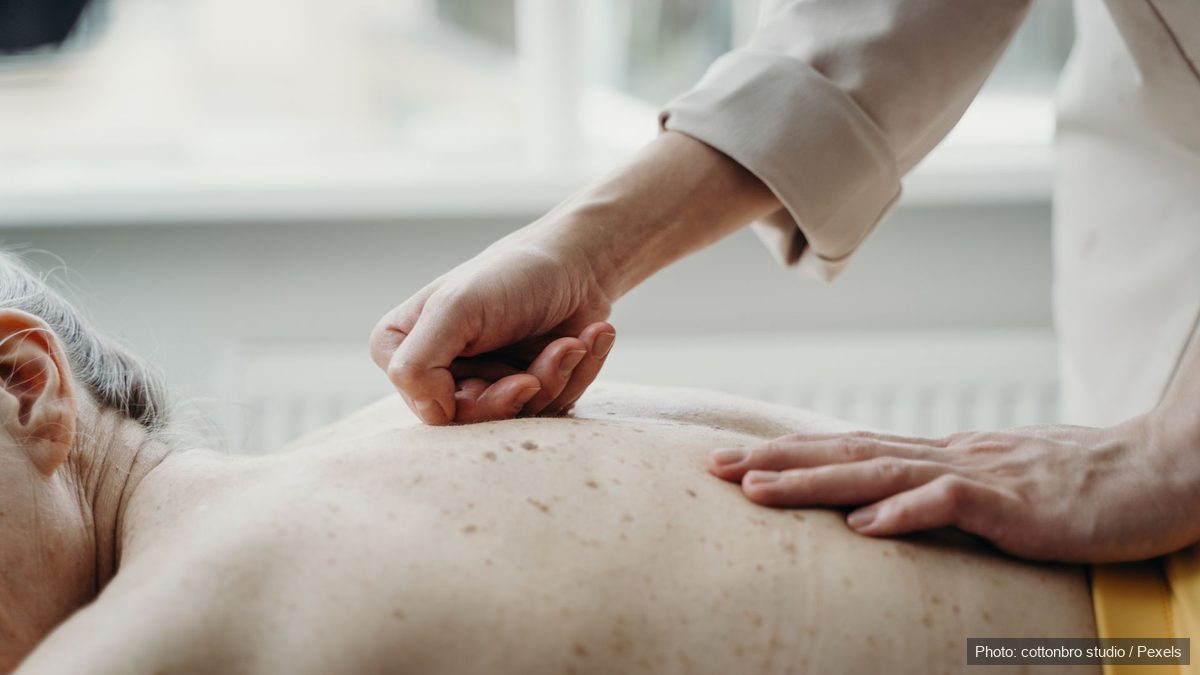
A familiar example is the point Hegu (合谷, Large Intestine 4), in the web between thumb and index finger, a classic acupressure location; another is Zusanli (足三里, Stomach 36), below the knee. Notice that many well-known points lie far from the organ their channel is named for — a point on the foot belonging to the "Bladder channel," for instance. In the classical model, that distant connection is exactly the idea: the channel links surface to interior. Individual responses vary considerably, and any needling should be done only by a qualified, licensed practitioner.
What Does Modern Research Say About Meridians?
Here is the honest answer, and it deserves plain language. The meridians are a conceptual model from the ancient world, and no meridian has been shown to correspond to a discrete anatomical structure. Careful studies have not found a nerve, blood vessel, or channel-like conduit that follows the classical meridian lines. Even a 2011 review in Evidence-Based Complementary and Alternative Medicine that set out to find a physical basis for the channels conceded that "the basis of the nature and material of acupuncture points and meridians has not been resolved" and that "much work is still needed to delineate their anatomical basis." Its proposal — that the body's fascia (connective-tissue) network might be the substrate — remains an interesting hypothesis, not an established fact.
Modern investigation tends to study acupuncture through ordinary physiology rather than through the channels themselves. A 2019 paper in the same journal noted that acupoints are areas rich in nerve endings, blood vessels, and immune cells, and proposed that needling works through the nerve-endocrine-immune system — while admitting the relationships "have not been specifically elaborated yet." In other words, the leading scientific explanations reach for nerves and biochemistry, not for qi flowing down a meridian.
What about the clinical results? The U.S. National Center for Complementary and Integrative Health (NCCIH) offers a balanced summary. For some kinds of chronic pain — low-back and neck pain, osteoarthritis — it reports that acupuncture was more effective than no treatment, with relief "comparable to that of nonsteroidal anti-inflammatory drugs", and that moderate-quality evidence suggests it may reduce the frequency of migraines. But NCCIH flags a crucial caveat: "the difference between acupuncture and no treatment was greater than the difference between acupuncture and sham acupuncture" — meaning much of the measured benefit may reflect a placebo response rather than the exact points chosen. Tellingly, NCCIH's own explanation of how acupuncture might work never mentions meridians or qi. The most defensible view today is the historian's: meridian theory is a durable cultural framework that organized centuries of observation and still guides a practice some people value — without mistaking the map for verified anatomy.
Meridians Beyond China: Japan and Korea
The channel system traveled with Chinese medicine across East Asia. In Japan it is keiraku (経絡), the foundation of keiraku chiryo (meridian therapy) and of finger-pressure shiatsu (指圧), the massage tradition that works the same points without needles — part of the wider world of Japanese wellness and Kampo. In Korea it is gyeongnak (경락), woven through traditional Korean medicine (한의학) and its own styles of acupuncture and hand therapy, alongside the food and tea customs we explore in our Korean tea culture guide.
The same channels also underlie many movement and breathing traditions. Practitioners of qigong and tai chi often describe guiding attention along the Ren and Du vessels, and the gentle, channel-aware body awareness in our guide to traditional relaxation practices draws on the same map.
How Some People Engage With Meridian Ideas Today
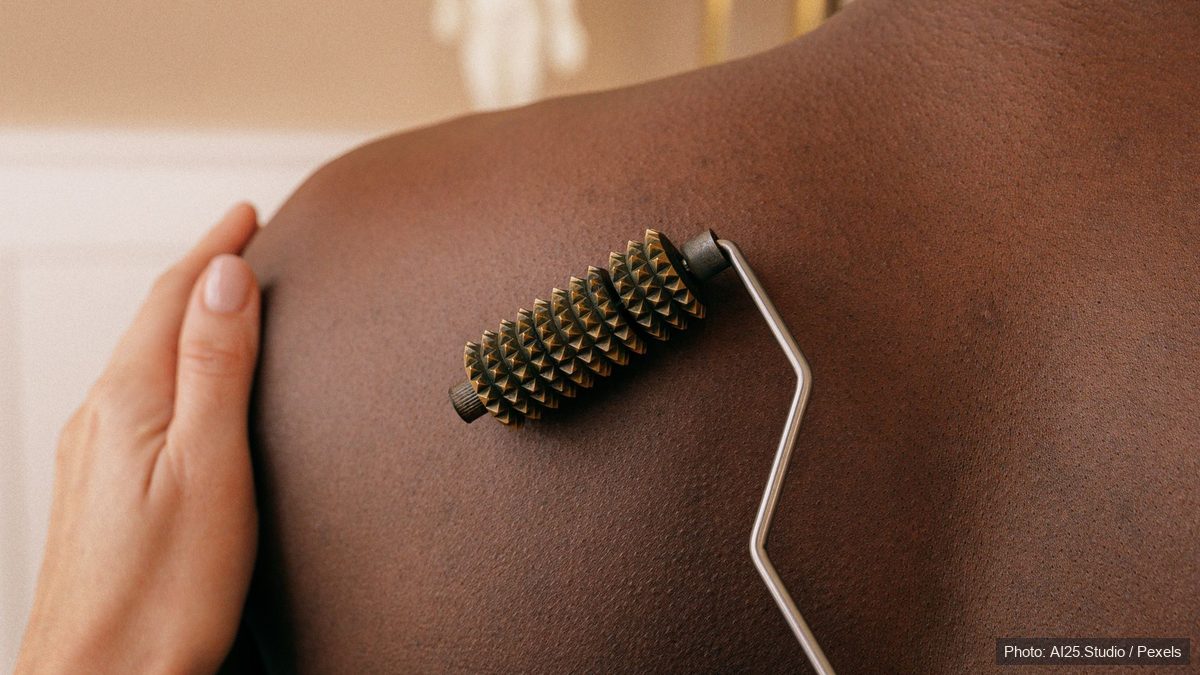
Understood as a traditional framework rather than a medical fact, meridian thinking still offers low-stakes ways to connect with an old body of practice:
- Gentle self-acupressure — resting a thumb on a classic point such as Hegu during a stressful moment, as a mindful pause rather than a remedy
- Channel-aware movement — following the breath along the front and back midlines in qigong or tai chi
- Seeing a licensed acupuncturist — for those curious to experience the tradition in trained hands
- Reading the classics as culture — approaching the meridian map the way one might approach any rich historical model of the body
Individual experiences vary considerably; these are cultural practices to explore with curiosity and professional guidance, not prescriptions or substitutes for medical care.
Important Limitations and Considerations
- Not a verified anatomy. Meridians are a conceptual model; they have not been shown to be a physical structure, and channel diagnosis is not a substitute for medical evaluation.
- Choose a qualified practitioner. Acupuncture should be performed only by a licensed professional using sterile, single-use needles. NCCIH notes that improperly delivered acupuncture can cause infections, punctured organs, or nerve injury.
- Tell your doctor. Mention any acupuncture or acupressure you are considering, especially if you have a bleeding disorder, take blood thinners, or have a pacemaker (which can be affected by electroacupuncture).
- Pregnancy and specific points. Some acupoints are traditionally avoided during pregnancy; seek a practitioner experienced in prenatal care and consult your physician first.
- Do not delay conventional care. A meridian-based interpretation of a symptom should never postpone seeing a licensed healthcare professional for persistent or serious problems.
Frequently Asked Questions
What are meridians in simple terms?
In traditional East Asian medicine, meridians (jing luo) are the mapped channels along which qi and blood are said to flow, connecting the organs to the surface of the body. They are a conceptual framework used to organize acupuncture and acupressure — not a physical structure like a nerve or vein that modern anatomy has confirmed.
How many meridians are there?
The core system has twelve regular meridians, each associated with an organ, plus eight "extraordinary" vessels that act as reservoirs — most famously the Ren (Conception) and Du (Governor) channels running up the front and back midlines. Counting the extraordinary vessels, most classical descriptions work with twenty principal channels in all.
Are meridians scientifically proven?
No. No meridian has been shown to correspond to a specific nerve, blood vessel, or other anatomical structure, and reviews acknowledge the anatomical basis "has not been resolved." Some clinical studies suggest acupuncture may help certain kinds of pain, but much of that effect appears similar whether or not the classical points are used. It is best understood as a traditional model, not verified biology.
What is the difference between the twelve meridians and the eight extraordinary vessels?
The twelve regular meridians are each tied to an organ and carry qi in a fixed daily circuit. The eight extraordinary vessels are not attached to individual organs; they run separately and act as reservoirs that absorb and release the overflow of qi and blood from the twelve, helping to regulate the whole system.
Do acupressure and acupuncture use the same points?
Largely, yes. Both work with the acupoints located along the meridians — acupuncture with fine needles, acupressure and tui na with finger and hand pressure, and moxibustion with gentle warmth. Acupressure is something some people try gently at home, while needling should be left to a licensed practitioner.
A Note on Tracking Your Wellness Routines
Whatever you make of the underlying theory, anyone exploring acupuncture, acupressure, or channel-based movement benefits from paying attention to how they actually feel over time. Some people keep a paper journal; others use a wellness diary app such as Health Diary to log sessions, sleep, and mood alongside their routines — and look back to see which habits genuinely made a difference for them.
A Gentle Closing Note
The meridians began as a careful attempt to map how the body's parts connect — channels running deep, collaterals webbing outward, an ordered circuit linking hand to foot and surface to organ. Two thousand years on, they remain the language of acupuncture across China, Japan, and Korea, even as modern science studies the practice through nerves and biochemistry instead. You do not need to accept the metaphysics to find the map worth understanding. To continue through the foundations of this tradition, see our companion guides to qi, yin and yang, and the five elements, or see the whole system at work in our guide to Chinese longevity traditions.
About This Article
Written by: Health Diary Editorial Team — a group of writers with backgrounds in cultural wellness, East Asian philosophy, and traditional health practices from across Asia.
Editorial review: This article has been reviewed by the Health Diary editorial team for clarity, structure, and adherence to our sourcing standards. Key claims were cross-checked against NCCIH, NIH PubMed, classical sources including the Lingshu, and Chinese government and academic TCM sources where applicable. It is not a clinical review and should not replace consultation with a licensed healthcare practitioner.
Reviewed on: July 17, 2026.
Editorial process: We cite peer-reviewed and government sources where possible. When a clinical reviewer is added to this article, attribution will appear here with verifiable credentials.
References
- 《灵枢·脉度》·《灵枢·经脉》 [Lingshu, "Vessel Measurements" and "On the Meridians" chapters], via 重庆市潼南区卫生健康委员会 (Chongqing Tongnan District Health Commission), 经络概述. cqtn.gov.cn
- 十二经脉循行 [The Circulation of the Twelve Meridians] — 广东省中医药局 (Guangdong Provincial Administration of Traditional Chinese Medicine). szyyj.gd.gov.cn
- 奇经八脉 [The Eight Extraordinary Vessels] — 上海中医药大学附属龙华医院 (Longhua Hospital, Shanghai University of TCM). zyxyfy.com
- Bai, Y., Wang, J., Wu, J. P., et al. (2011). Review of Evidence Suggesting That the Fascia Network Could Be the Anatomical Basis for Acupoints and Meridians in the Human Body. Evidence-Based Complementary and Alternative Medicine. pmc.ncbi.nlm.nih.gov/articles/PMC3092510
- Li, N. C., et al. (2019). A New Perspective of Acupuncture: The Interaction among Three Networks Leads to Neutralization. Evidence-Based Complementary and Alternative Medicine. pmc.ncbi.nlm.nih.gov/articles/PMC6409053
- National Center for Complementary and Integrative Health (NCCIH). Acupuncture: Effectiveness and Safety. nccih.nih.gov
This article explores a traditional conceptual framework for educational purposes. It is not medical advice.