Qigong Basics: A Beginner's Guide to This Ancient Practice
Learn qigong basics: what qigong (气功) is, its history, the three components — posture, breath, intention — how it differs from tai chi, and beginner forms like Ba Duan Jin.
Medical Disclaimer: This content is for educational and informational purposes only and is not medical advice or exercise instruction. The information presented is not intended to diagnose, treat, cure, or prevent any disease. Movement descriptions in this article are cultural illustrations only — always learn qigong from a qualified instructor, and consult a licensed healthcare practitioner before starting any new movement or wellness practice. Statements regarding traditional practices have not been evaluated by the FDA.
Affiliate Disclosure: This article contains affiliate links. We may earn a commission if you purchase through these links, at no additional cost to you. We only recommend products we believe align with our editorial standards.
Visit almost any public park in China at sunrise and you will see them: groups of people, many of them older adults, moving slowly through flowing postures in near silence. This is qigong (气功) — one of Asia's oldest movement traditions, and one of the most approachable for complete beginners.
This guide opens our Stress & Balance series: what qigong actually is, where it came from, how it differs from tai chi, which forms beginners meet first, and what modern research has — and has not — found so far, connected along the way to the broader world of traditional Asian wellness routines.
What Is Qigong?
The word qigong joins two Chinese characters: qi (气), often translated as "vital energy" or "life breath," and gong (功), meaning skill cultivated through steady practice — together, roughly "energy work." The U.S. National Center for Complementary and Integrative Health (NCCIH) describes it as a practice developed in China thousands of years ago that combines regulated breathing, gentle movement, posture, and mental focus into a single mind-body activity.
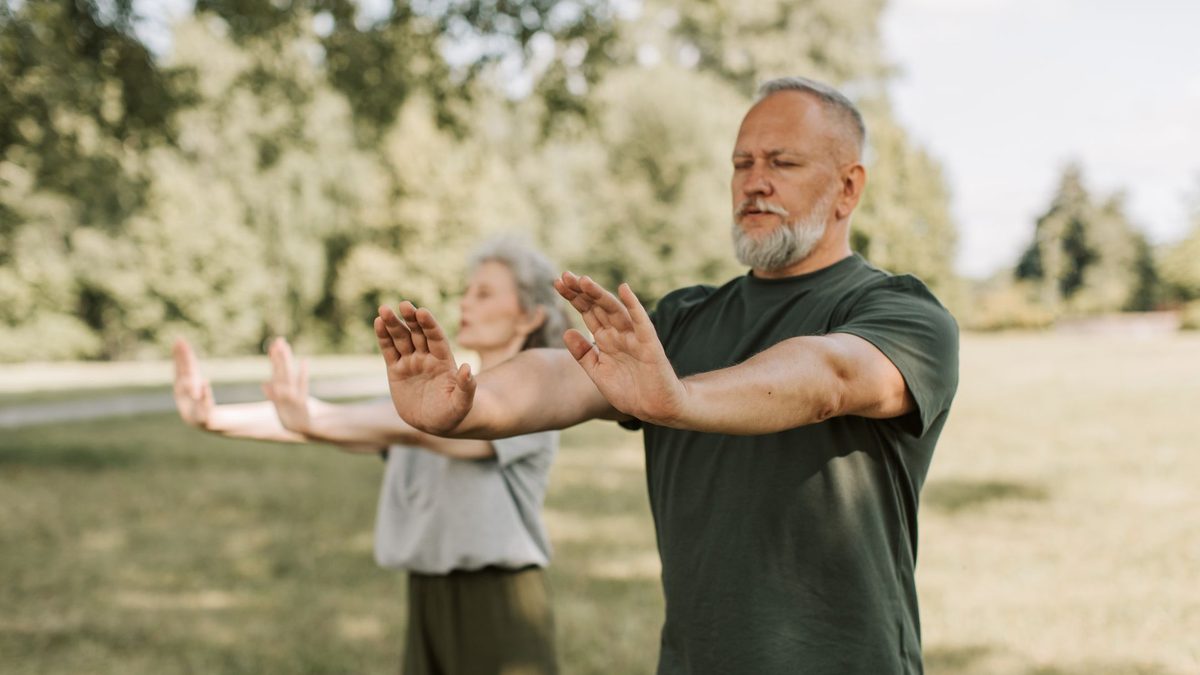
Unlike many modern workouts, qigong is not about effort or intensity. Sessions can be practiced standing, sitting, or even lying down, and the movements are deliberately slow, repetitive, and low impact. In traditional Chinese thought, the aim is to keep qi flowing smoothly through the body — the same framework behind acupuncture, herbal practice, and the Chinese longevity traditions we have explored elsewhere. Taken literally or not, the practical experience is slow, mindful movement paired with unhurried breathing.
A Brief History: From Silk Scrolls to City Parks
Qigong's family tree reaches back to ancient daoyin (导引) — "guiding and stretching" exercises recorded in early Chinese texts. In 1973, archaeologists at the Mawangdui tombs near Changsha uncovered a Western Han silk scroll, the Daoyin tu, showing dozens of figures in stretching and breathing postures — several strikingly similar to movements still practiced today.
The most popular beginner form, Ba Duan Jin (八段锦), first appears by name in Song dynasty writings, and today's standing sequence took shape in Qing dynasty illustrated manuals. Between 2001 and 2003, a Beijing Sport University team commissioned by the General Administration of Sport of China collected historical versions, consulted folk lineage holders, and published a standardized Health Qigong: Ba Duan Jin. According to the administration's own account, by 2018 China counted more than 35,000 registered practice sites and roughly five million regular practitioners, with member organizations in over fifty countries.
That mix of ancient roots and modern standardization is part of why qigong travels so well. Like the gentle daily movement woven into Japanese healthy aging traditions and Korean healthy aging customs, it asks for consistency, not athleticism.
The Three Components: Posture, Breath, and Intention
Traditional teaching organizes qigong around the "three regulations" (三调, san tiao):
- Regulating the body (调身) — posture and alignment: a relaxed, upright frame with knees soft, spine long, shoulders released.
- Regulating the breath (调息) — slow, even breathing into the lower abdomen, coordinated with each movement rather than forced.
- Regulating the mind (调心) — gentle attention: awareness rests on the breath, the movement, or a point in the body.
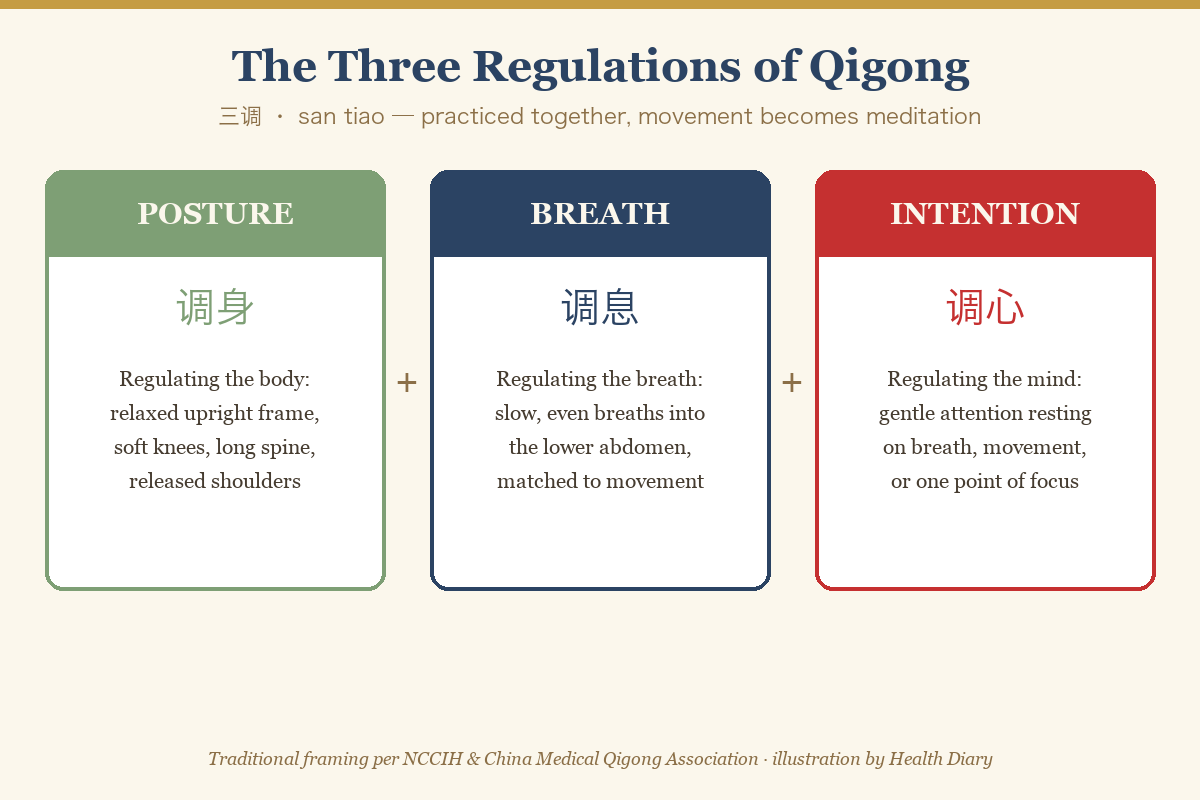
When all three come together, the practice becomes a moving form of meditation — the same arm movement performed with scattered attention and held breath is, in the traditional view, simply not qigong. Readers who enjoy the calming rituals in our guide to Asian relaxation tea traditions will recognize the idea: slow the body down and invite the mind to follow.
What Is the Difference Between Qigong and Tai Chi?
Beginners often use the two names interchangeably — both are slow, flowing Chinese movement arts practiced side by side in the same parks. The simplest distinction:
- Qigong is the broader umbrella: hundreds of exercise sets, many short, simple, and repetitive, designed purely for cultivating breath, posture, and attention.
- Tai chi (taijiquan) is a specific internal martial art. Its forms are longer choreographed sequences — often 24 to 108 postures — richer but considerably harder to memorize.
A common summary among teachers: all tai chi contains qigong, but not all qigong is tai chi. For someone starting from zero, sets such as Ba Duan Jin are usually easier to learn because the movements are discrete and forgiving. The Cleveland Clinic, writing about tai chi, notes that beginners should feel no sharp pain and work within their limits, and that chair-based versions exist for people with balance concerns — advice that applies equally to qigong.
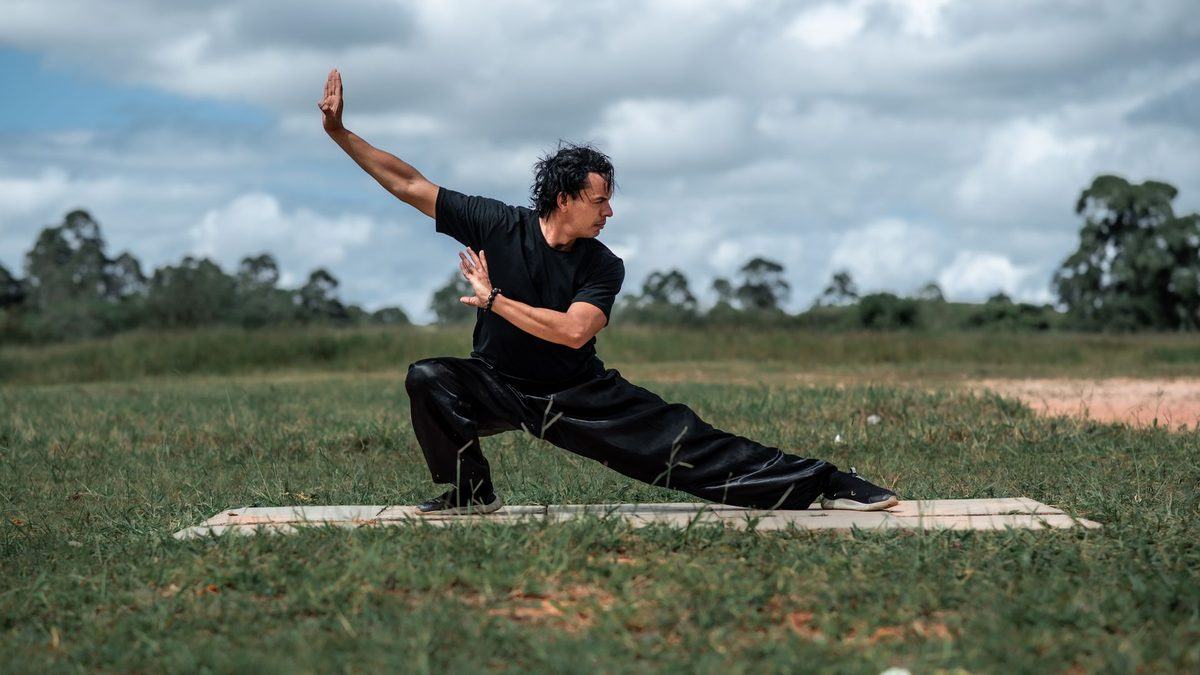
Which Qigong Forms Suit Beginners?
Two entry points come up again and again in classes worldwide.
Ba Duan Jin (八段锦) — the Eight Brocades
The name literally means "eight sections of brocade." According to the China Medical Qigong Association, the character 锦 (brocade) suggests something precious and silk-like — eight movements strung together as smoothly as woven fabric. The full set takes ten to fifteen minutes and requires no equipment.
To give a flavor — as cultural description, not exercise instruction — the first movements are traditionally pictured like this:
- "Two Hands Hold Up the Heavens" (两手托天理三焦) — standing tall, the hands interlace and float from the belly to overhead, palms turning skyward as the body lengthens with an inhale, then softens down with the exhale.
- "Drawing the Bow to Shoot the Hawk" (左右开弓似射雕) — from a wider stance, the arms open as if slowly drawing an archer's bow, the gaze following the extended hand, first to one side and then the other.
- "Separating Heaven and Earth" (调理脾胃须单举) — one palm presses gently upward while the other presses downward, a soft opposing stretch through the torso before the hands exchange places.
Written descriptions cannot convey timing, alignment, or breath coordination. If these movements intrigue you, the right next step is a class with a qualified instructor rather than imitating text or videos alone.
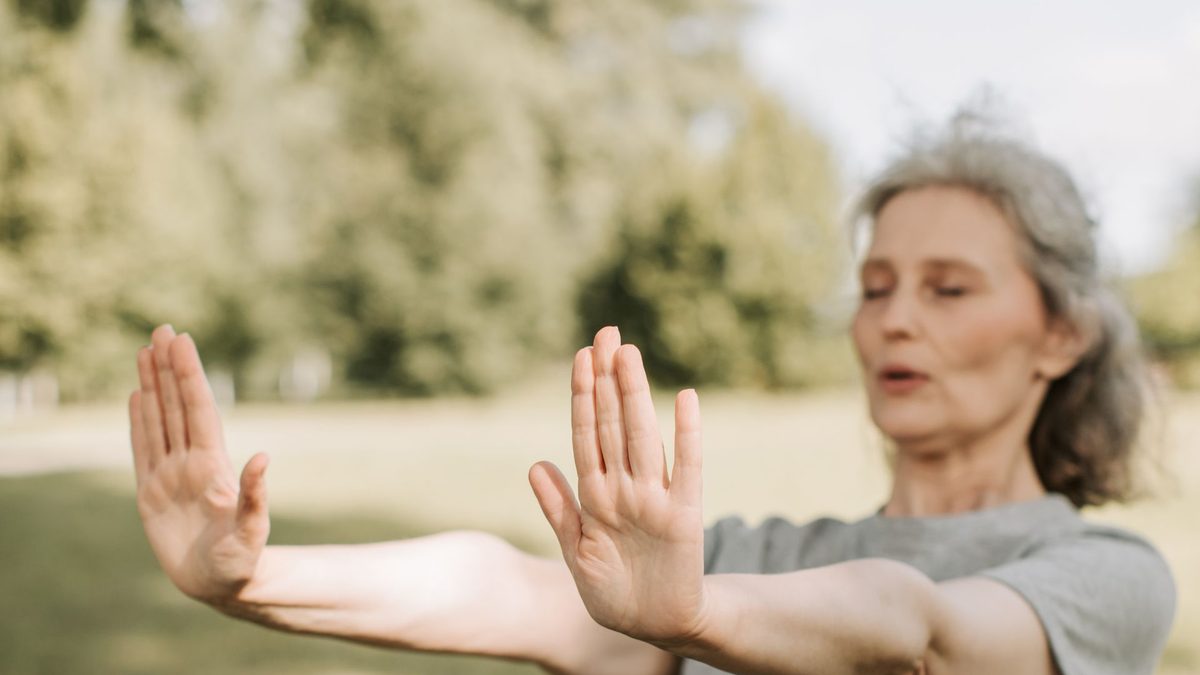
Zhan Zhuang (站桩) — standing like a post
The other classic entry point involves almost no movement at all. Zhan zhuang, or "standing post," asks the practitioner simply to stand still — feet shoulder-width apart, knees slightly soft, arms rounded as if holding a large paper lantern — breathing slowly and releasing tension. Beginners typically start with one or two minutes; most people find that standing truly still and relaxed is surprisingly demanding, which is exactly the point.
What Does Modern Research Suggest About Qigong?
Research interest has grown steadily, though the honest summary is: promising, preliminary, and mixed.
Balance and older adults. This is the strongest area so far. NCCIH notes that a 2019 review found sufficient evidence to consider qigong useful for balance training and fall prevention. A 2022 meta-analysis in Frontiers in Medicine pooling 17 randomized trials of Ba Duan Jin in 1,267 adults aged 60+ found meaningful improvements in standard balance measures — while flagging real limitations: high heterogeneity, nearly all trials conducted in China, and no participant blinding.
Stress and mood. A 2024 systematic review in Healthcare examined nine randomized trials and found significantly lower perceived stress compared with no treatment — but no significant advantage over active comparison therapies, and only one included trial was rated high quality. The authors concluded that further validation is needed before qigong can be recommended as an evidence-based approach to stress.
Safety. Across studies, qigong appears to be a gentle, well-tolerated activity; NCCIH reports that most trials found no negative side effects, with occasional mild muscle soreness the most common complaint. That safety profile — not any dramatic claimed effect — is a large part of its appeal.
In short, modern science neither confirms the traditional qi framework nor dismisses the practice: slow, mindful movement practiced consistently may be a worthwhile habit, especially for balance in later life, while bigger claims await better trials.
How Some People Begin a Qigong Practice
A few patterns repeat across traditions and modern classes:
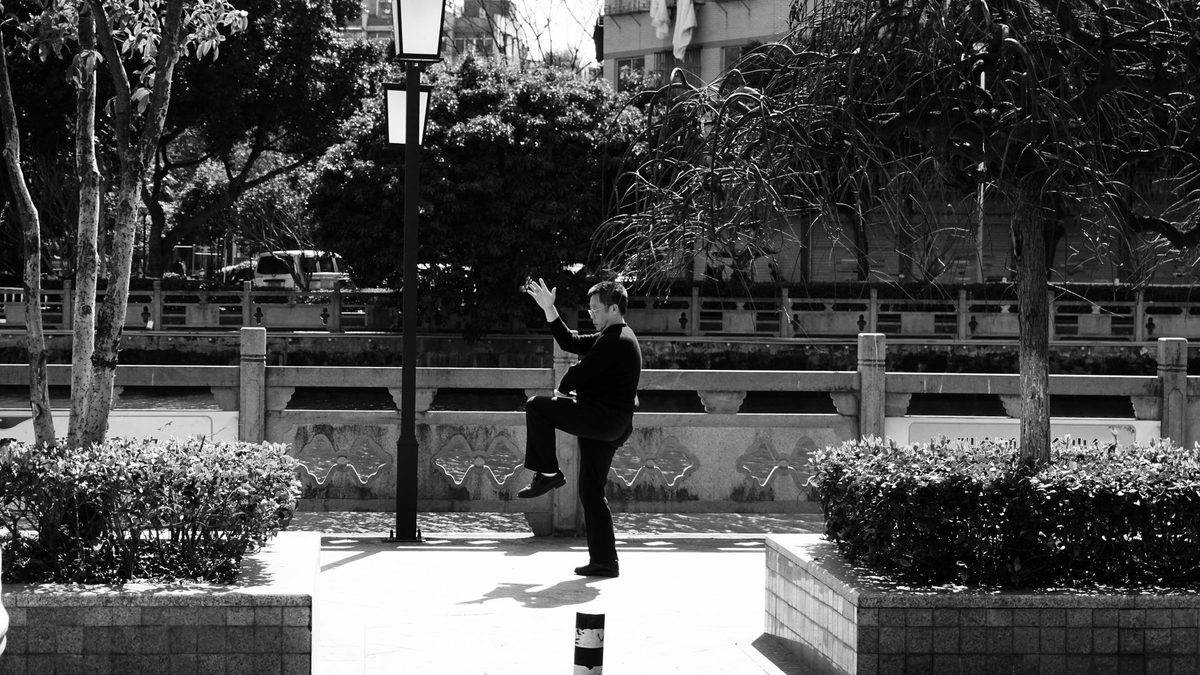
- Morning practice, outdoors when possible. A fixed time and place makes a small practice stick; ten to fifteen minutes is a realistic start.
- Learning one form well. Most teachers suggest staying with Ba Duan Jin or simple standing practice for months — depth beats variety for beginners.
- Finding a teacher first. A few in-person sessions catch alignment habits videos never will — soft knees, released shoulders, unforced breath.
- Pairing it with existing rituals. Some people fold a short practice into their evening wind-down alongside the nighttime wellness habits and traditional sleep practices found across Asia; others pair it with morning tea.
- Keeping expectations quiet. In Vietnam, related gentle practices fall under dưỡng sinh — "nourishing life" — a phrase that captures the spirit better than any fitness goal. Similar ideas run through Vietnamese longevity traditions and Japan's Kampo-influenced wellness culture: small, consistent, unhurried habits.
Individual responses vary considerably; what feels calming and sustainable for one person may not suit another, and gentle experimentation under a qualified instructor's guidance is always recommended.
Important Limitations and Considerations
Qigong is gentle, but gentle is not the same as "for everyone." A few honest cautions:
- It is not a treatment. Qigong should never replace medical care, prescribed medication, or physical therapy. If you are managing a health condition, talk with your healthcare provider first.
- Pregnancy. NCCIH notes that qigong's safety during pregnancy has not been studied; pregnant readers should consult their healthcare provider before beginning.
- Knee and joint concerns. Several movements involve held, slightly bent-knee stances. People with knee, hip, or lower-back issues should tell their instructor, keep stances high and shallow, and stop if anything hurts — no qigong posture should produce sharp pain.
- Dizziness and balance problems. Slow standing practice can occasionally bring on light-headedness in those prone to low blood pressure or vertigo. Practicing near a wall or sturdy chair — or starting seated — is a sensible precaution.
- Evidence limitations. Much of the research is preliminary and study quality is uneven. Approach any strong marketing claim about qigong with healthy skepticism.
- Teacher quality varies. There is no single global credential for qigong instruction. Look for verifiable training lineage or certification through recognized bodies, and be wary of anyone promising specific medical outcomes.
Individual experiences vary considerably.
Frequently Asked Questions
Is qigong suitable for complete beginners?
Yes — it is one of the most beginner-friendly movement traditions in Asia: short, slow, low-impact forms adaptable to standing, seated, or supported positions. Even so, learning from a qualified instructor from the start is strongly recommended, since posture and breathing details are hard to absorb from text or video alone.
How long should a beginner practice qigong each day?
Most teachers suggest ten to fifteen minutes daily rather than long occasional sessions — a complete Ba Duan Jin round fits comfortably in that window. Beginners doing standing practice often start with one to two minutes and build up gradually.
Do I need special equipment or clothing for qigong?
No equipment is needed. Loose, comfortable clothing, flat stable shoes, and a quiet space roughly the size of a yoga mat are enough. This simplicity is a big reason the practice spread so widely among older adults.
Can older adults practice qigong safely?
Research to date suggests qigong is generally well tolerated by older adults, and balance in this group is the best-studied outcome. Still, anyone with heart conditions, joint replacements, osteoporosis, or a history of falls should check with a healthcare provider first and tell their instructor, who can adapt stances or offer seated versions.
Is qigong a religious practice?
Not inherently. Qigong grew up alongside Daoist, Buddhist, and medical traditions in China, but the health-oriented forms taught in parks and community centers — including the standardized Ba Duan Jin — are secular exercise sets practiced simply as mindful movement.
A Note on Tracking Your Practice
Because qigong works through consistency rather than intensity, the most useful habit a beginner can build is simply noticing: how many days you practiced, how your body felt afterward, how your sleep and stress moved over a month. Some people keep a paper journal; others use a wellness diary app such as Health Diary to log practice days alongside sleep and mood notes. Patterns you can see are easier to keep.
A Gentle Closing Note
Qigong asks very little: a few quiet minutes, a patch of floor, and attention to your own breath. For over a thousand years, and now in standardized forms practiced by millions, it has offered a way to begin the day slowly and deliberately. If this guide has made you curious, let your first step be equally modest: find a local class, watch a session in a park, and see how the practice feels from the inside. And if slow rituals appeal to you more broadly, our guide to calming herbs in Asian traditions continues the same unhurried conversation.
About This Article
Written by: Health Diary Editorial Team — a group of writers with backgrounds in cultural wellness, movement traditions, and traditional health practices from across Asia.
Editorial review: This article has been reviewed by the Health Diary editorial team for clarity, structure, and adherence to our sourcing standards. Key claims were cross-checked against NCCIH, NIH PubMed, and official Chinese sport-administration sources where applicable. It is not a clinical review and should not replace consultation with a licensed healthcare practitioner or qualified instructor.
Reviewed on: July 16, 2026.
Editorial process: We cite peer-reviewed and government sources where possible. When a clinical reviewer is added to this article, attribution will appear here with verifiable credentials.
References
- National Center for Complementary and Integrative Health (NCCIH). Qigong: What You Need To Know. https://www.nccih.nih.gov/health/qigong-what-you-need-to-know
- Oh, J.-H., Sung, S.-H., Park, J.-K., Jang, S., Shin, B.-C., & Lee, S. (2024). Qigong Therapy for Stress Management: A Systematic Review of Randomized Controlled Trials. Healthcare (Basel), 12(23), 2342. https://pmc.ncbi.nlm.nih.gov/articles/PMC11641396/
- Guo, L., Liu, Z., & Yuan, W. (2022). The effect of Baduanjin on the balancing ability of older adults: A systematic review and meta-analysis. Frontiers in Medicine, 9, 995577. https://www.frontiersin.org/journals/medicine/articles/10.3389/fmed.2022.995577/full
- 国家体育总局 (General Administration of Sport of China). (2021). 健身气功·八段锦的编创与推广 [The Creation and Promotion of Health Qigong Ba Duan Jin]. https://www.sport.gov.cn/n20001280/n20745751/n20767239/c21422641/content.html
- 中国医学气功学会 (China Medical Qigong Association). 中国医学气功学会推荐功法——八段锦 [Recommended Practice — Ba Duan Jin]. https://www.cmqg.cn/Home/Details/70e21ffb-2599-4edb-afc6-8c6563704745
- Cleveland Clinic Health Essentials. Slow and Steady: The Health Benefits of Tai Chi. https://health.clevelandclinic.org/the-health-benefits-of-tai-chi
This article explores a traditional movement practice for educational purposes. It is not medical advice or exercise instruction.