

Healthy Aging Traditions in Asia: Longevity the Old Way
A pillar guide to healthy aging traditions in Asia — the shared principles of gentle eating, lifelong movement, purpose and community across Japan, China, Korea and Vietnam.
Medical Disclaimer: This content is for educational and informational purposes only and is not medical advice. The information presented is not intended to diagnose, treat, cure, or prevent any disease. Nothing here is a promise of a longer life. Always consult a licensed healthcare practitioner before starting any new dietary, herbal, or exercise practice. Statements regarding traditional practices have not been evaluated by the FDA.
Affiliate Disclosure: This article contains affiliate links. We may earn a commission if you purchase through these links, at no additional cost to you. We only recommend products we believe align with our editorial standards.
Walk through a park at dawn in Naha, Chengdu, Seoul, or Hanoi and you will see a version of the same quiet scene: older people moving slowly through the forms of tai chi, tending a vegetable plot, gathering in small clusters to talk before the day’s heat arrives. These are not health programs. They are ordinary mornings — and yet, taken together over a lifetime, habits like these are part of why several corners of East and Southeast Asia are home to some of the world’s longest-lived people. The island of Okinawa became famous as one of the planet’s original “Blue Zones,” and it is far from alone; from the mountain county of Bama in southern China to the fermented-food kitchens of Korea and the herb gardens of Vietnam, the region has long treated growing old well as something you practice daily rather than something that simply happens to you.
This page is a map of that whole landscape. It gathers the common threads that run through healthy aging traditions across Asia — the gentle way of eating, the lifelong low-key movement, the emphasis on purpose and belonging, the seasonal, plant-forward table — and then travels country by country to see how each culture gave those shared ideas its own shape. Along the way it links out to deeper guides on the individual foods, movement practices, and national traditions that make up the wider collection, so you can follow whichever thread interests you. Think of this article as the trunk of a tree; the linked pieces are its branches. One honest note before we begin: these are cultural and lifestyle traditions, not a treatment plan or a guarantee of extra years. What they offer is a thoughtful, time-tested way of living — best appreciated with curiosity, and alongside your regular healthcare.
What Do Asia’s Healthy Aging Traditions Have in Common?
Spend time with the longevity cultures of Asia and a striking thing emerges: their specific foods and rituals differ enormously, but the underlying principles are remarkably consistent. Strip away the local color and roughly four ideas recur everywhere. The first is moderation at the table — eating simply, mostly from plants, and stopping before fullness rather than after it. The second is movement woven into daily life — not intense exercise but a lifetime of walking, gardening, and gentle practices like tai chi and qigong. The third is purpose and community — a reason to get up in the morning and a web of relationships that lasts into very old age. And the fourth is living with the seasons — adjusting food and rest to the rhythm of the year rather than against it.
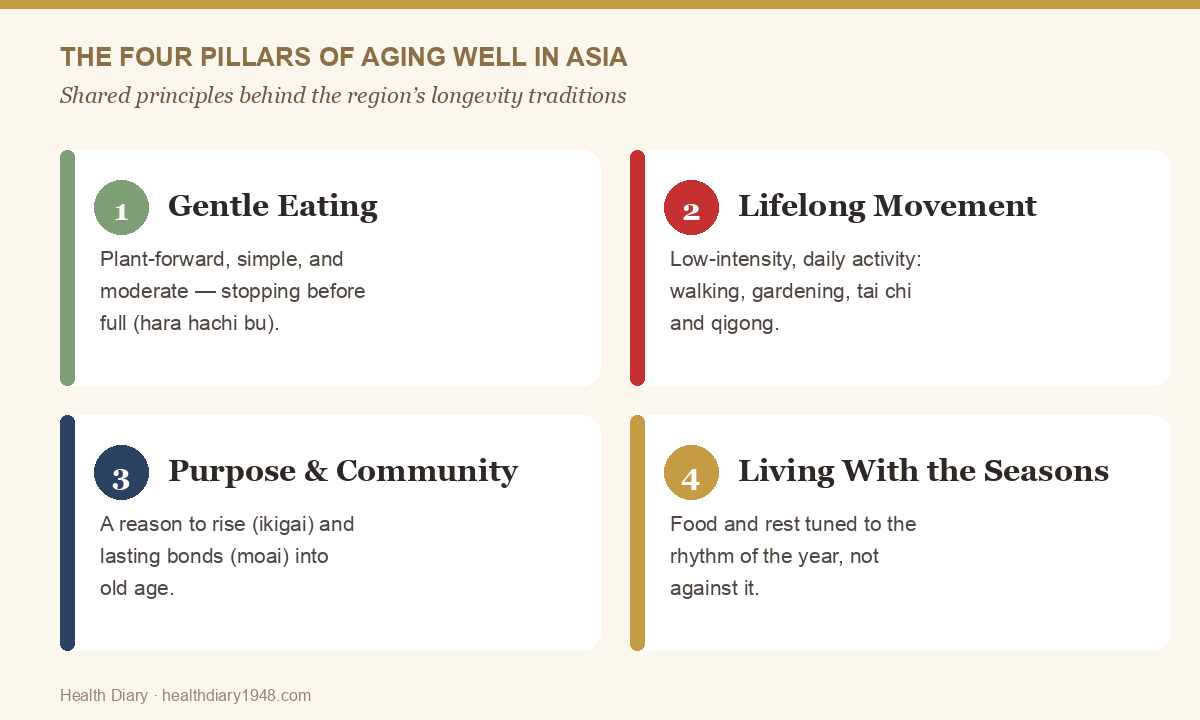
What is notable is how well this folk consensus lines up with what global health bodies now recommend. The World Health Organization frames healthy ageing not as the absence of disease but as maintaining the functional ability to do the things you value — and it names a balanced diet, regular physical activity, avoiding tobacco, and supportive social environments across the whole life course as the core levers, noting that some 80-year-olds retain the physical and mental capacities of a much younger person.5 That is, almost line for line, the same short list that Asian tradition arrived at centuries ago through lived experience. The rest of this guide unpacks each pillar in turn, then shows how four cultures express them.
How Does Eating Less, Gently, Fit Into Longevity?
If one habit sits at the center of Asian healthy aging, it is a certain gentleness around food — eating enough, but rarely to excess. The most quoted example comes from Okinawa, where a Confucian-rooted saying, hara hachi bu, reminds people to eat until they are about eighty percent full and then set down their chopsticks. It sounds trivial, but the arithmetic of a lifetime is not. The long-running Okinawa Centenarian Study — which has examined more than a thousand centenarians since 1975 — found that older Okinawans historically ate roughly ten to fifteen percent fewer calories than standard guidelines would predict, without any sense of deprivation, thanks to a diet built around low-calorie, high-volume plant foods.7
Researchers Bradley and Craig Willcox, who lead that study, argued in a widely cited 2007 paper that the traditional Okinawan diet — sweet potato, vegetables, tofu, modest fish, very little meat or sugar — functioned as a mild, naturally occurring form of caloric restriction, the one intervention most consistently linked to longer lifespan in animal research.1 The same instinct appears far from Okinawa. In the mountain villages of Bama in Guangxi, China, elders traditionally ate frugally and plainly — corn and beans, seasonal vegetables, local hemp-seed oil, meat only occasionally — a simple, low-calorie pattern that Chinese reporting has repeatedly tied to the area’s unusual number of centenarians, alongside physical labor and a calm temperament.9
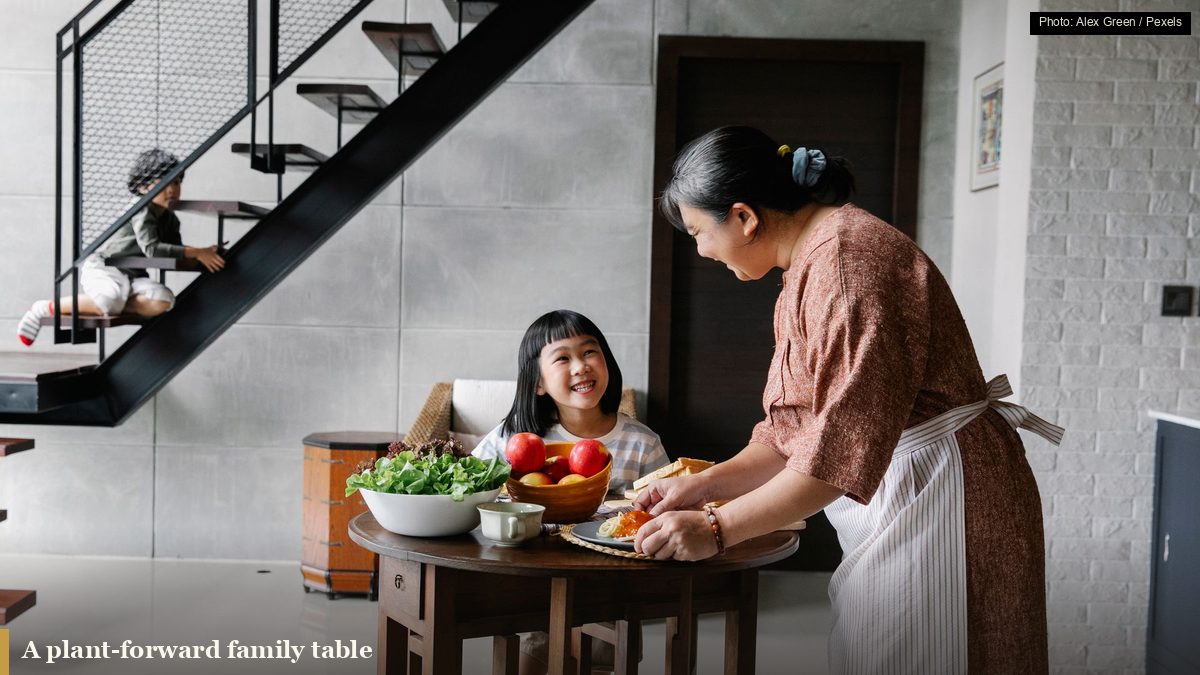
The through-line is not any single miracle ingredient but a whole style of eating: plant-forward, minimally processed, moderate in portion, and rich in variety. This is exactly the pattern our companion guide to traditional longevity foods of Asia explores food by food, and it draws on the broader philosophy set out in our overview of traditional Asian food therapy, where meals are chosen for their qualities and not only their flavor. It is worth saying plainly that eating this way is a cultural practice associated with wellbeing, not a proven route to a longer life — and that individual responses to any diet vary considerably from person to person.
Why Is Lifelong Gentle Movement So Central?
The second shared pillar is movement — but not the gym-and-marathon kind. Across Asia’s longevity cultures, physical activity tends to be low in intensity, high in frequency, and woven so thoroughly into daily life that people rarely think of it as “exercise” at all. Okinawan elders traditionally kept large gardens and squatted, rose, and walked constantly; Bama’s centenarians famously walked steep mountain paths into great old age.9 Layered on top of this natural activity are the region’s signature mind-body arts, above all the slow, flowing sequences of tai chi and the breath-led postures of qigong.
Here the modern evidence is genuinely encouraging. A 2023 systematic review and meta-analysis in BMC Geriatrics pooled seventeen randomized trials of more than two thousand older adults and found that tai chi and qigong produced a small but statistically significant improvement in cognitive function, along with gains in physical function.2 The U.S. National Center for Complementary and Integrative Health reaches a similarly measured conclusion, noting that tai chi may reduce the rate of falls in community-dwelling seniors by around nineteen percent — a meaningful figure, since falls are a leading cause of disability in later life — while carrying a very good safety profile.6
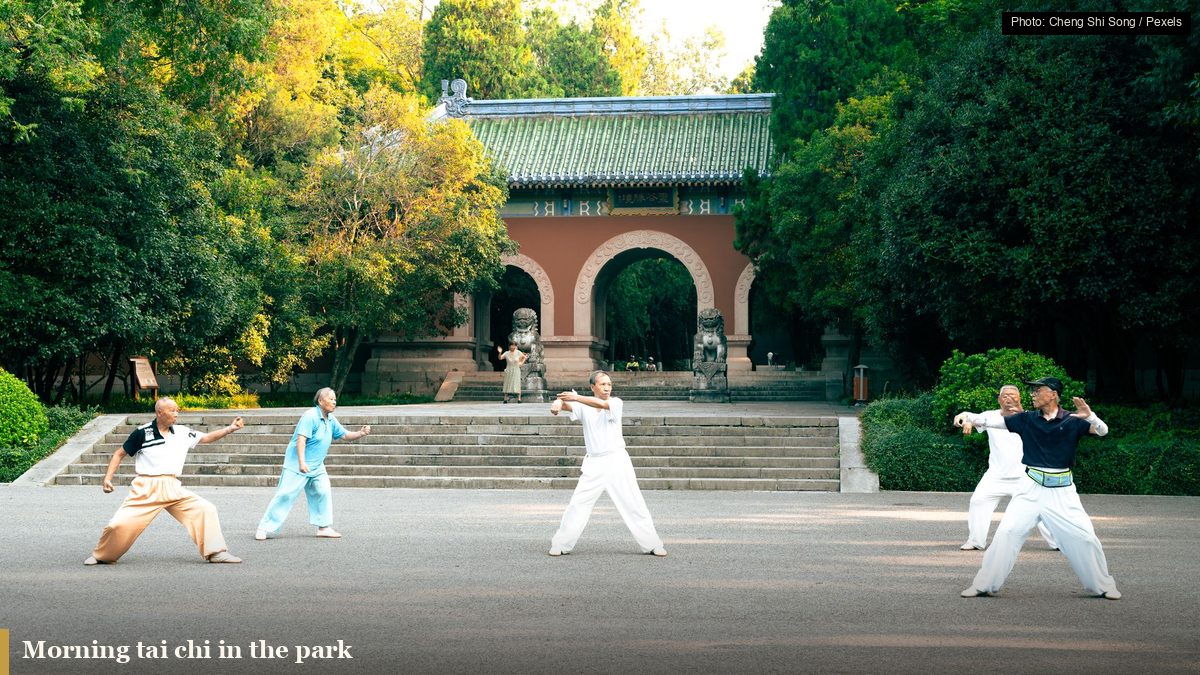
If you want to try either practice, our beginner guides are the natural next step: a gentle introduction to tai chi for beginners and a companion guide to qigong basics walk through the first forms and breathing patterns. Both belong to the same worldview that shapes so much of Asian wellness — the balancing of opposing forces described in our guide to yin and yang. The key idea for aging well is consistency over intensity: a short daily practice sustained across decades appears to matter far more than any single strenuous session. Individual experiences vary considerably, and anyone with a heart condition, joint problems, or balance concerns should check with a practitioner before beginning.
What Role Do Purpose and Community Play in Aging Well?
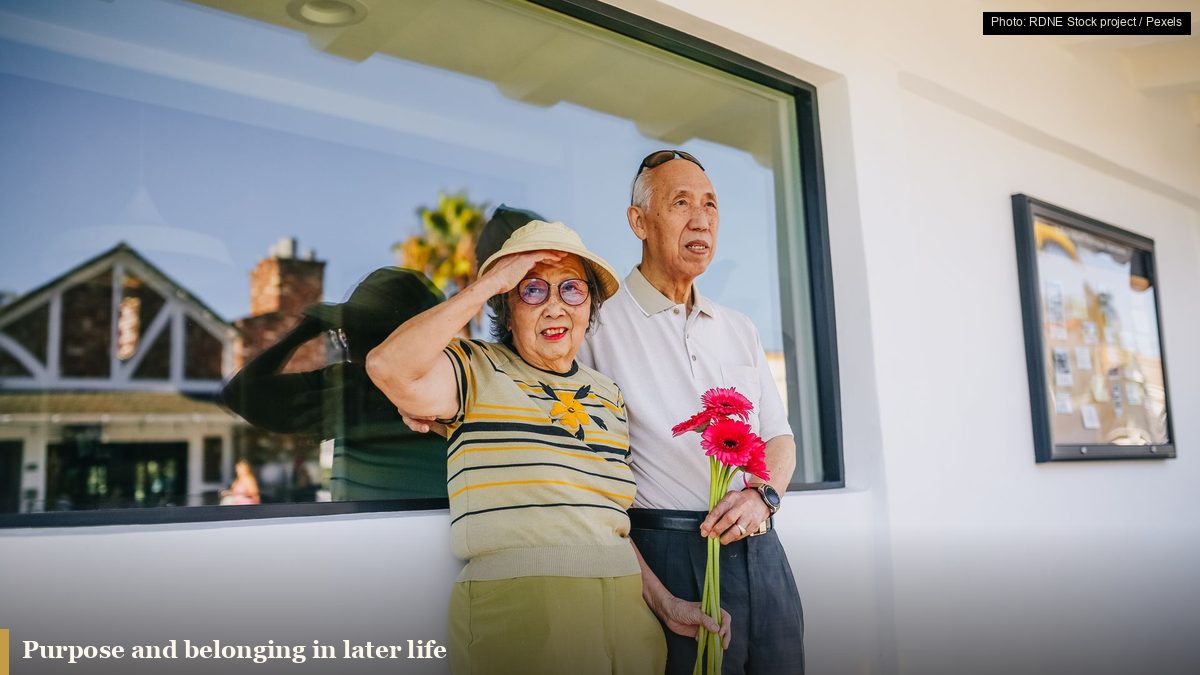
The third pillar is the one most easily overlooked in a supplement-focused culture, yet it may be the most powerful: a sense of meaning and a durable web of relationships. In Okinawa the idea has a name — ikigai, loosely “a reason to get up in the morning” — and it is treated as ordinary rather than lofty, found in tending a garden, minding great-grandchildren, or passing a craft to the next generation. This is not merely sentimental. The Ohsaki Study, a prospective cohort of more than forty-three thousand Japanese adults followed for seven years, reported that people who lacked a sense of ikigai had roughly a fifty percent higher risk of death during the study period, an association especially pronounced for cardiovascular causes.4
Alongside purpose sits belonging. Okinawa’s moai — small, lifelong mutual-support groups that often form in childhood and endure into a person’s hundreds — give elders steady companionship, practical help, and a reason to stay socially engaged when many of their Western counterparts grow isolated. Modern public health has caught up to what these traditions assumed: the WHO explicitly counts supportive social environments among the pillars of healthy ageing, and has treated social connection as a global health priority in its own right.5 The lesson that travels well is simple: aging traditions in Asia rarely separate the body from the life around it. A person is nourished by their relationships and their sense of usefulness as much as by their soup.
One Philosophy, Four Homelands of Aging Well
What makes Asia’s longevity story so rich is that a shared set of principles grew into four distinct national traditions, each with its own foods, vocabulary, and emphasis. Seeing them side by side is the clearest way to appreciate the tradition’s range — and each deserves its own deeper guide, linked below.
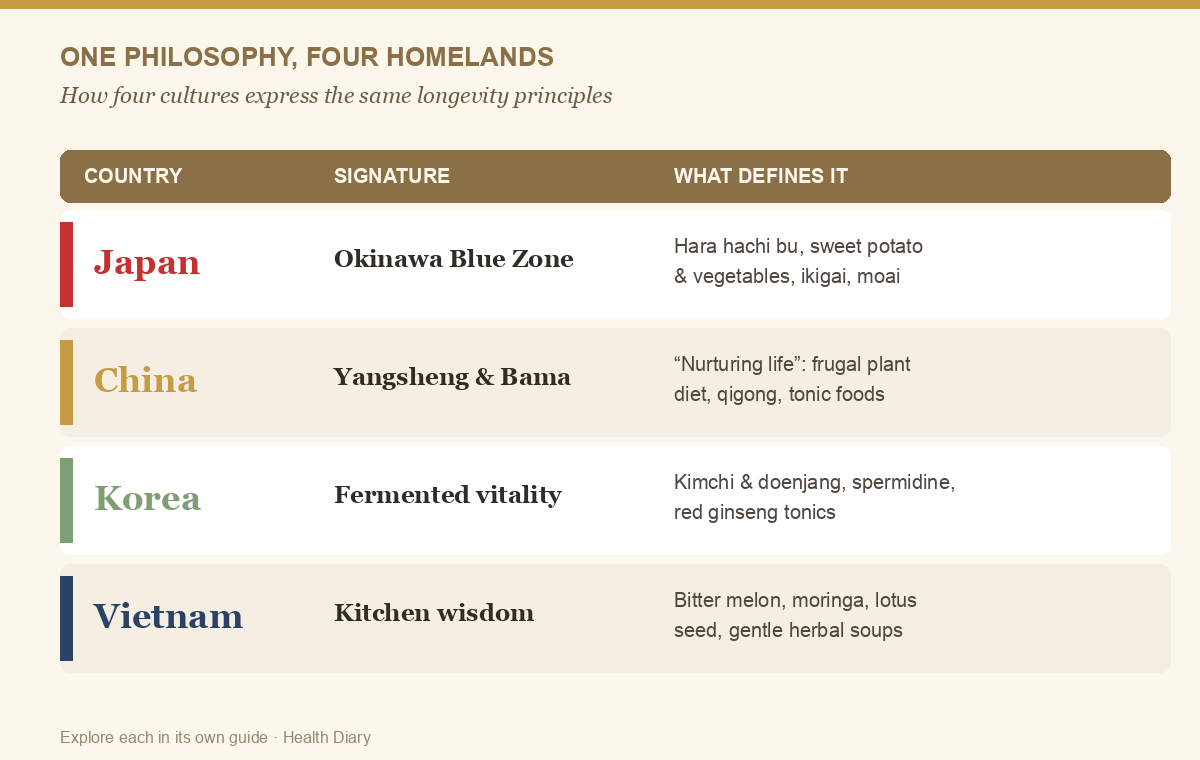
In Japan, the story centers on Okinawa, the original Asian Blue Zone, where hara hachi bu, a sweet-potato-and-vegetable diet, ikigai, and moai combine into perhaps the most-studied longevity culture on earth. It is also a cautionary tale: native Japanese research on healthy longevity has documented an “Okinawa crisis,” in which younger generations adopting a more Westernized, fast-food diet have begun to lose the island’s longevity edge — vivid proof that these are lifestyle traditions, not genetic guarantees.8 Our full guide to Japanese healthy aging traditions explores Okinawa, hara hachi bu, and ikigai in depth.
In China, healthy aging is inseparable from yangsheng — the ancient art of “nurturing life” through diet, movement, rest, and emotional balance — and from famous longevity pockets like Bama County, whose plain, plant-forward eating and lifelong activity have made it a national symbol of long life.9 The tradition also leans on tonic foods, qigong, and revered roots like ginseng, whose long cultural history is traced in our complete guide to ginseng. Our overview of Chinese longevity traditions follows this thread from Eight Treasures congee to Bama’s centenarians.
In Korea, the accent falls on fermentation and restorative foods. Kimchi, doenjang, and other fermented staples are everyday companions, and Korean nutrition research has begun connecting such foods to healthy-aging compounds like spermidine, while prizing tonic ingredients including red ginseng.10 That heritage runs through our guide to Korean healthy aging traditions and our closer look at Korean red ginseng. In Vietnam, the wisdom is quieter and kitchen-based: bitter melon, moringa, lotus seed, and gentle herbal soups, prepared by steaming and stewing rather than frying, form the backbone of elder-care cooking — a tradition captured in our guide to Vietnamese longevity traditions. Four homelands, four flavors — but read any of them through the lens of moderation, movement, purpose, and season, and the same grammar is unmistakable.
How Do You Build These Traditions Into Daily Life?
The most encouraging thing about Asian healthy aging is that almost none of it requires anything exotic. What it requires is rhythm — small, repeated choices arranged into a day and a year. In practice, that means a plant-forward plate eaten a little short of full; some form of gentle movement most days; time spent with people and on things that give the day meaning; and enough good rest. Vietnamese elder-care cooking illustrates the food side beautifully, favoring easily digested, restorative dishes — chicken broth, quail porridge with lotus seed for calm sleep, red-bean porridge — cooked simply and eaten in variety rather than excess.11
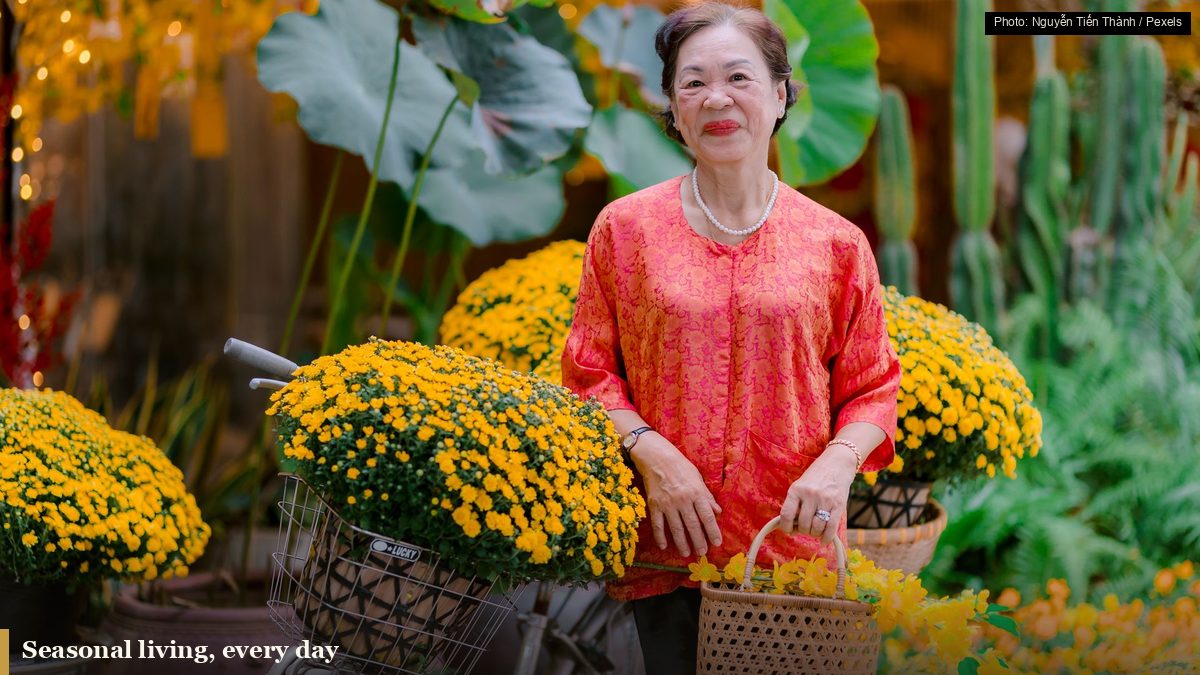
Rest is its own pillar. Across the region, sleep and seasonal living are treated as active parts of aging well rather than afterthoughts, a subject our guide to traditional sleep practices in Asia takes up in detail. Seasonal eating — warming, restorative foods in winter and cooling, hydrating ones in summer — flows from the same worldview mapped in our guide to five elements theory, and finds gentle daily form in the tonic broths gathered in our overview of traditional Asian tonic soups. For a practical, hour-by-hour picture of how all this fits together, our guide to daily wellness routines inspired by Asian traditions assembles morning rituals, movement, tea, and seasonal eating into a realistic rhythm. Start with one habit, not ten — and remember that individual responses vary, so let what genuinely suits you guide the pace.
What Does Modern Research Say About Asian Longevity Traditions?
Science approaches these traditions with real interest and appropriate caution, and the honest summary is that the picture is encouraging but incomplete. On the promising side, a 2025 critical review in Current Research in Nutrition and Food Science examined the dietary patterns of five Blue Zones, Okinawa among them, and found that their predominantly plant-based eating — whole grains, legumes, and vegetables with few processed foods — correlated with better maintenance of telomere length, the protective caps on our chromosomes associated with cellular aging, largely by lowering oxidative stress and inflammation.3 Much of what these traditions recommend — more plants, moderate portions, seasonal variety, daily movement, strong social ties — overlaps comfortably with mainstream preventive advice.
Where researchers urge restraint is in over-reading any of it. The same Blue Zone review cautions that its findings are strongly shaped by regional culture and environment and may not transfer neatly to other populations.3 Longevity is woven from genetics, environment, healthcare, and luck as much as from diet and movement, and no single tradition can be isolated as the cause. The native-Japanese “Okinawa crisis” literature makes the point from the other direction: when the traditional lifestyle fades, so does the longevity advantage — strong evidence that behavior matters, but also that these are fragile cultural achievements rather than fixed traits.8 The most responsible reading treats Asia’s aging traditions as a rich, plausible, well-aligned framework for living well — not as a proven formula for extending life.
Important Limitations and Considerations
Asia’s healthy aging traditions are a cultural and lifestyle heritage, not a substitute for medical care. Several cautions deserve genuine attention.
- These are traditions, not treatments. Adopting a plant-forward diet or a tai chi habit is a lifestyle choice, not a way to manage a diagnosed condition. If you have symptoms that concern you, see a qualified clinician rather than relying on dietary or movement changes.
- Longevity has many causes. Genetics, clean environment, healthcare access, and social policy all shape how long populations live. Copying a Blue Zone menu does not import its whole context, and results in any individual are never guaranteed.
- Tonic herbs and supplements can interact with medication. Popular longevity ingredients such as ginseng may affect blood sugar, blood pressure, or bleeding and can interact with prescription drugs. If you take any medication, talk to your doctor or pharmacist before adding concentrated tonic herbs.
- Movement must match ability. Even gentle practices like tai chi and qigong can strain a body with heart, joint, or balance problems. Begin slowly, ideally with a qualified instructor, and stop if something hurts.
- Pregnancy, illness, and older frailty. Some traditional tonic foods and fasting-style eating are not appropriate during pregnancy, acute illness, or for frail elders with specific nutritional needs. Individual guidance matters more than any general rule.
Individual experiences vary considerably; what suits one person may not suit another, and the safest way into these traditions is a slow, curious one taken alongside your regular healthcare.
Frequently Asked Questions
What are the healthy aging traditions in Asia based on?
Most rest on four recurring ideas: gentle, plant-forward eating without overfilling; lifelong low-intensity movement such as walking, gardening, tai chi, and qigong; a strong sense of purpose and community; and living in tune with the seasons. Different countries express these ideas through different foods and rituals, but the underlying principles are strikingly similar and line up well with modern healthy-ageing guidance.
Is Okinawa really a “Blue Zone,” and does that still hold true?
Okinawa was one of the original regions identified for its exceptional concentration of centenarians, and the long-running Okinawa Centenarian Study has documented its traditional low-calorie, plant-rich diet since 1975. However, native Japanese research describes an “Okinawa crisis” in which younger generations eating a more Westernized diet are losing that advantage — a reminder that the benefit came from lifestyle, not simply from being Okinawan.
What is hara hachi bu?
Hara hachi bu is an Okinawan practice of eating until you are about eighty percent full and then stopping. Combined with a naturally low-calorie, plant-forward diet, it results in eating somewhat fewer calories over a lifetime without a sense of deprivation. It is a mindful-eating habit associated with wellbeing, not a strict diet or a guaranteed longevity technique.
Do tai chi and qigong actually help older adults?
The evidence is encouraging. A 2023 meta-analysis of seventeen randomized trials found small but significant improvements in cognitive and physical function among older adults, and health authorities note that tai chi may reduce fall rates by around nineteen percent with a very good safety record. As gentle, consistent practices they are widely considered suitable for many older people, though anyone with health concerns should check with a practitioner first.
Can I follow these traditions if I’m not from Asia?
Yes. The core principles — eat mostly plants and stop before full, move gently every day, cultivate purpose and close relationships, rest well, and follow the seasons — are universal and translate easily to any culture. The most respectful approach is to learn the ideas from their source traditions rather than treating single foods as isolated “superfoods.”
Which foods are most associated with Asian longevity traditions?
Recurring examples include sweet potato, tofu and soy, leafy and seasonal vegetables, whole grains, legumes, fermented foods like kimchi and miso, green tea, and tonic ingredients such as goji, lotus seed, and ginseng. What matters most, though, is the overall pattern — plant-forward, varied, minimally processed, and moderate — rather than any one hero ingredient. Our longevity-foods guide explores the individual foods in detail.
Do these traditions really make people live longer?
They are associated with longevity in certain populations, and their principles align well with mainstream preventive health advice, but no tradition has been proven to extend an individual’s lifespan. Longevity depends on genetics, environment, healthcare, and chance as well as lifestyle. It is most honest to treat these practices as a sensible, culturally rich way to live well, not as a formula for more years.
A Note on Tracking Your Wellness Journey
One idea that Asian aging traditions and modern wellness share is that patterns matter more than single days. A traditional practitioner reads how a person’s energy, digestion, sleep, movement, and mood shift across seasons and years — and you can bring that same long-view attention to your own life. Keeping a simple record of which foods, routines, and habits genuinely seem to suit you, and which do not, turns vague memory into something useful — information far more valuable to share with a practitioner than a hazy recollection. This kind of gentle, patient self-observation is exactly what the Health Diary approach is built around.
A Soft Closing Note
Asia’s healthy aging traditions are best appreciated not as a shortcut or a set of miracle foods but as a long, quiet habit of tending to the whole of a life — the plate, the body, the relationships, and the seasons. Whether you arrived here curious about Okinawa’s Blue Zone, about a single tonic food, or about the whole philosophy, the branches of this collection are yours to wander: the shared longevity foods of Asia, the daily wellness routines that carry them, and the national traditions of Japan, China, Korea, and Vietnam. Explore slowly, stay curious, and let a qualified practitioner and your own regular healthcare guide any step you take.
About This Article
Written by: Health Diary Editorial Team — researchers specializing in Asian wellness traditions, longevity culture, and food and movement history.
Editorial review: This article has been reviewed by the Health Diary editorial team for clarity, structure, and adherence to our sourcing standards. Key claims were cross-checked against the World Health Organization, NCCIH, and peer-reviewed literature (including the Okinawa Centenarian Study, a 2023 BMC Geriatrics meta-analysis, and the Ohsaki ikigai cohort), with native-language verification through Japanese (J-STAGE 健康長寿), Chinese (新华网 巴马), Korean (경향신문 건강 노화), and Vietnamese (VOV) sources. It is not a clinical review and should not replace consultation with a licensed healthcare practitioner.
Reviewed on: August 3, 2026.
Editorial process: We cite peer-reviewed and government sources where possible. When a clinical reviewer is added to this article, attribution will appear here with verifiable credentials.
References
- Willcox BJ, Willcox DC, Todoriki H, et al. “Caloric restriction, the traditional Okinawan diet, and healthy aging: the diet of the world’s longest-lived people and its potential impact on morbidity and life span.” Annals of the New York Academy of Sciences. 2007;1114:434-455. https://pubmed.ncbi.nlm.nih.gov/17986602/
- Park M, Song R, Ju K, et al. “Effects of Tai Chi and Qigong on cognitive and physical functions in older adults: systematic review, meta-analysis, and meta-regression of randomized clinical trials.” BMC Geriatrics. 2023. https://pmc.ncbi.nlm.nih.gov/articles/PMC10242998/
- Mohol P, Ghosh A, Kulkarni S. “Blue Zone Dietary Patterns, Telomere Length Maintenance, and Longevity: A Critical Review.” Current Research in Nutrition and Food Science. 2025;13(2). https://www.foodandnutritionjournal.org/volume13number2/blue-zone-dietary-patterns-telomere-length-maintenance-and-longevity-a-critical-review/
- Sone T, Nakaya N, Ohmori K, et al. “Sense of life worth living (ikigai) and mortality in Japan: Ohsaki Study.” Psychosomatic Medicine. 2008;70(6):709-715. https://pubmed.ncbi.nlm.nih.gov/18596247/
- World Health Organization. “Ageing and health.” WHO fact sheet, 2024. https://www.who.int/news-room/fact-sheets/detail/ageing-and-health
- National Center for Complementary and Integrative Health (NCCIH). “Tai Chi and Qi Gong: In Depth.” NIH. https://www.nccih.nih.gov/health/tai-chi-and-qi-gong-in-depth
- Willcox DC, Willcox BJ, Suzuki M. “The Okinawa Centenarian Study.” okinawacentenarian.org. https://okinawacentenarian.org/the-study
- “健康長寿へ向けた沖縄の課題と取り組み (Challenges and initiatives toward healthy longevity in Okinawa).” 健康教育 (Journal of Health Education). 2016;24(4):245. https://www.jstage.jst.go.jp/article/kenkokyoiku/24/4/24_245/_pdf
- “有些‘长寿之乡’只是噱头?我们去广西巴马看了看 (A field report on the Bama longevity village).” 新华网 (Xinhua). 2018. https://www.xinhuanet.com/politics/2018-12/21/c_1123883379.htm
- 정창화 (Jung Chang-hwa). “취약 계층을 위한 ‘건강 노화 식단’, 따로 있다 (A distinct healthy-aging diet for vulnerable groups).” 경향신문 (Kyunghyang Shinmun). 2025. https://www.khan.co.kr/article/202502020800011
- “Những món ăn giúp người cao tuổi hồi phục và khỏe hơn mỗi ngày (Foods that help older adults recover and stay healthier).” VOV (Voice of Vietnam). 2024. https://vov.vn/suc-khoe/nhung-mon-an-giup-nguoi-cao-tuoi-hoi-phuc-va-khoe-hon-moi-ngay-post1255265.vov


