

Traditional Relaxation Practices Across Asia: A Guide
A guided map of traditional relaxation practices across Asia — qigong, meditation, tea rituals, onsen bathing, forest walks, and evening routines — with links to detailed guides.
Medical Disclaimer: This content is for educational and informational purposes only and is not medical advice. The information presented is not intended to diagnose, treat, cure, or prevent any disease. Always consult a licensed healthcare practitioner before starting any new herbal practice or supplement. Statements regarding traditional herbal use have not been evaluated by the FDA.
Affiliate Disclosure: This article contains affiliate links. We may earn a commission if you purchase through these links, at no additional cost to you. We only recommend products we believe align with our editorial standards.
Every culture has its ways of unwinding, but East Asia turned relaxation into something closer to a craft. Across China, Japan, Korea, and Vietnam, calm was never treated as a luxury for spare moments — it was built into the shape of an ordinary day: a slow sequence of movements in the morning park, a pot of tea poured with unhurried attention, a hot soak after sundown, a walk beneath trees taken for no reason except the trees themselves.
This guide is a map, not a deep dive. It gathers the major traditional relaxation practices across Asia into six families — movement, breath and stillness, tea rituals, warmth and water, time in nature, and evening wind-down routines — explains where each comes from and what early research suggests, and points you toward our fuller guides on every practice.
What Are Traditional Relaxation Practices?
Modern health agencies use the term "relaxation techniques" for practices — deep breathing, progressive muscle relaxation, guided imagery — that aim to trigger the body's natural relaxation response: slower breathing, lower blood pressure, and a settled, calm feeling, essentially the physiological opposite of fight-or-flight (NCCIH). The evidence base is still modest and condition-specific, but the underlying idea — that calm is a skill the body can practice — is one researchers take seriously.
What is striking is how long Asian traditions have organized daily life around the same intuition. Centuries before anyone measured cortisol, communities across the region developed repeatable, teachable rituals of calm — some physical, some social, some sensory — sharing one logic: relaxation is not collapsing onto a sofa; it is a gentle activity you do, regularly, with attention.
How Do Asian Traditions Think About Relaxation?
The classical root is often traced to the Huangdi Neijing (Yellow Emperor's Inner Classic), whose opening chapter offers a famous prescription: 恬淡虚无,真气从之,精神内守,病安从来 — roughly, "in tranquil calm and emptiness, true qi follows; when the spirit is guarded within, how can illness arrive?" (Suwen, ch. 1). Calm, in this view, is a daily discipline that protects health — not a reward for finishing your work.
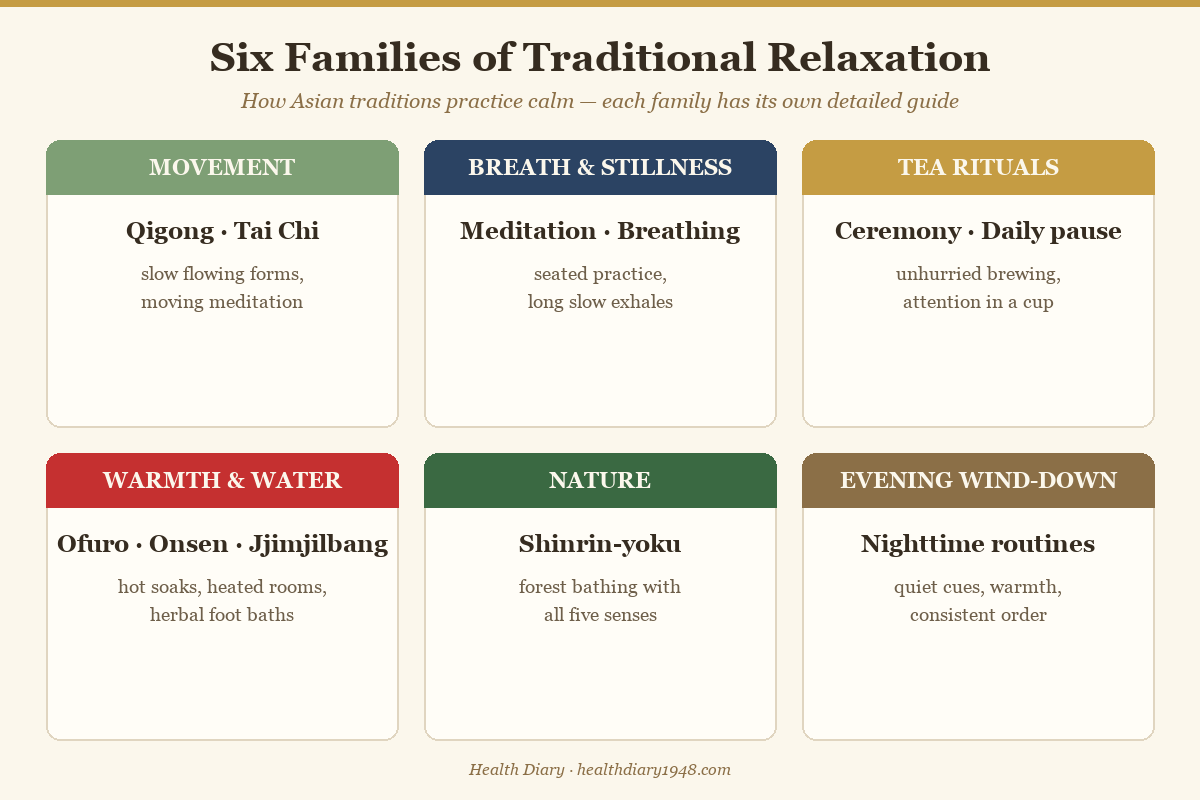
Just as important is the principle of 动静合宜 — the right balance of movement and stillness. As a People's Daily health column explains, tai chi is understood as "external movement with internal stillness," while qigong and meditation are "external stillness with internal movement"; stillness is never mere inaction (People's Daily). That balance gives us a practical map of six families of practice:
- Movement — slow, flowing forms such as qigong and tai chi.
- Breath and stillness — seated meditation and breathing traditions.
- Tea rituals — unhurried brewing and sipping as a pause built into the day.
- Warmth and water — Japanese ofuro and onsen, Korean jjimjilbang, herbal foot baths.
- Nature — shinrin-yoku, the Japanese practice of "forest bathing."
- Evening wind-down — the small rituals that close the day and prepare for sleep.
These groupings are cultural, not clinical — a way of describing when and how these practices show up in daily life, not a promise of any effect. Here is each family in turn.
Movement as Meditation: Qigong and Tai Chi
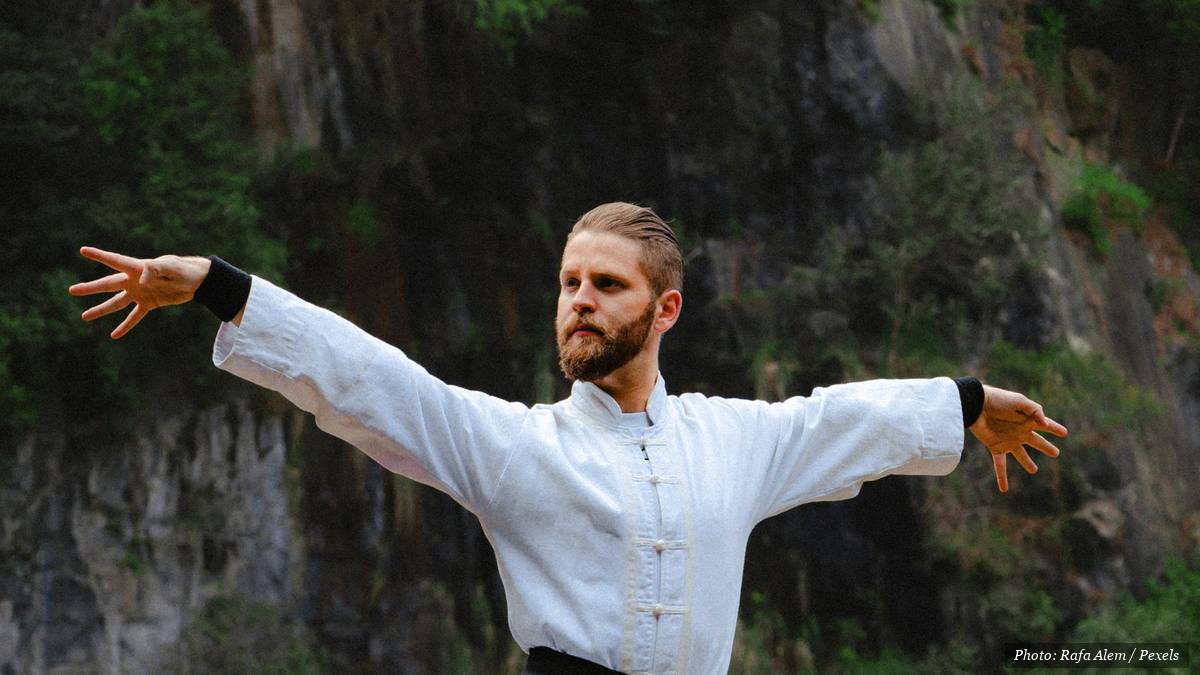
In parks across China — and increasingly everywhere — mornings begin with people moving in slow, deliberate arcs. Qigong (气功) coordinates gentle posture, breath, and intention into simple repeated movements; tai chi (taiji) grew out of a martial art and links longer, flowing sequences into a kind of moving meditation. Both are traditionally described as calming the mind by giving it one unhurried thing to do.
Modern research is cautiously encouraging. A 2024 systematic review and meta-analysis of eleven randomized trials with 1,323 participants found that taiji practice was associated with a small-to-moderate reduction in perceived stress compared with no intervention, though the authors flagged real limitations — variable study quality, high heterogeneity, and no significant changes in objective markers such as blood pressure (Kraft et al., 2024). In other words: promising, preliminary, and worth practicing for how it feels rather than for guaranteed numbers.
If slow movement appeals to you, our beginner's guide to qigong walks through the three components and starter forms like Ba Duan Jin, while the companion tai chi beginner's guide covers styles, first steps, and how the two practices differ.
Breath and Stillness: Meditation and Breathing Traditions
The still half of the movement-stillness balance is just as rich. Buddhist and Taoist traditions across Asia refined seated meditation — from Zen's spare attention to the breath to Vietnamese and Chinese temple practices — into methods ordinary households borrowed in small doses: a few quiet minutes before an altar, a slow exhale before beginning work. Breathing itself was treated as a trainable art, with techniques that lengthen the exhale, drop the breath into the belly, and give a racing mind a place to rest.
This is also where traditional practice and modern research overlap most comfortably: slow, deep breathing is one of the core techniques health agencies list for producing the relaxation response, with evidence suggesting modest reductions in blood pressure among its better-studied uses (NCCIH). Our guide to Asian breathing traditions collects the main techniques and where they come from, and the overview of meditation traditions across Asia maps the seated practices — Zen, Vipassana-influenced styles, Taoist quiet sitting — and how beginners approach them.
The Quiet Ritual of Tea
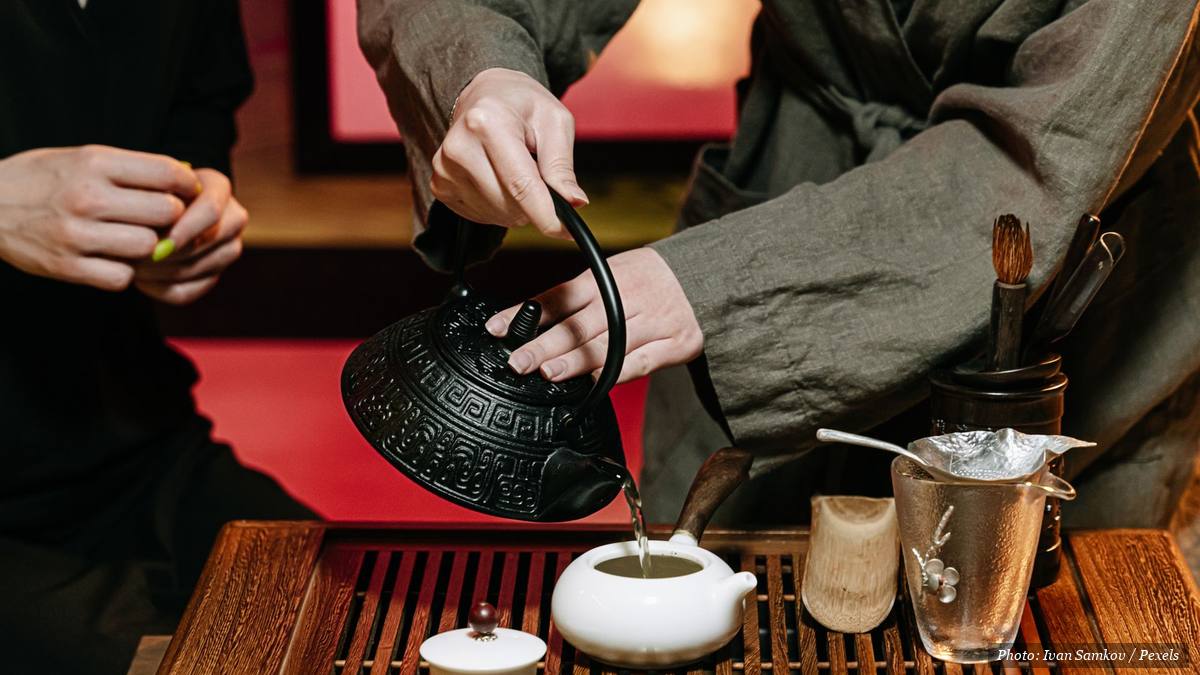
Not all relaxation looks like exercise. Across the region, the act of brewing tea — heating water, warming the pot, waiting out the steep — functions as a built-in pause: a few minutes in which nothing is asked of you except attention. Japan formalized this most completely in the tea ceremony, where every gesture is choreographed toward presence, but the everyday versions matter just as much: an afternoon pot shared in a Chinese teahouse, a Korean citron tea stirred in winter, a Vietnamese lotus tea poured for guests.
We have mapped this family in detail elsewhere. Start with relaxation tea traditions across Asia for the calming corner of the tea world, then go deeper with our guides to traditional tea rituals and the Japanese matcha ceremony. If you are choosing a cup rather than a ceremony, the traditional Asian herbal teas guide sorts the region's infusions by purpose, including gentle evening options.
Warmth and Water: Ofuro, Onsen, Jjimjilbang, and Foot Baths
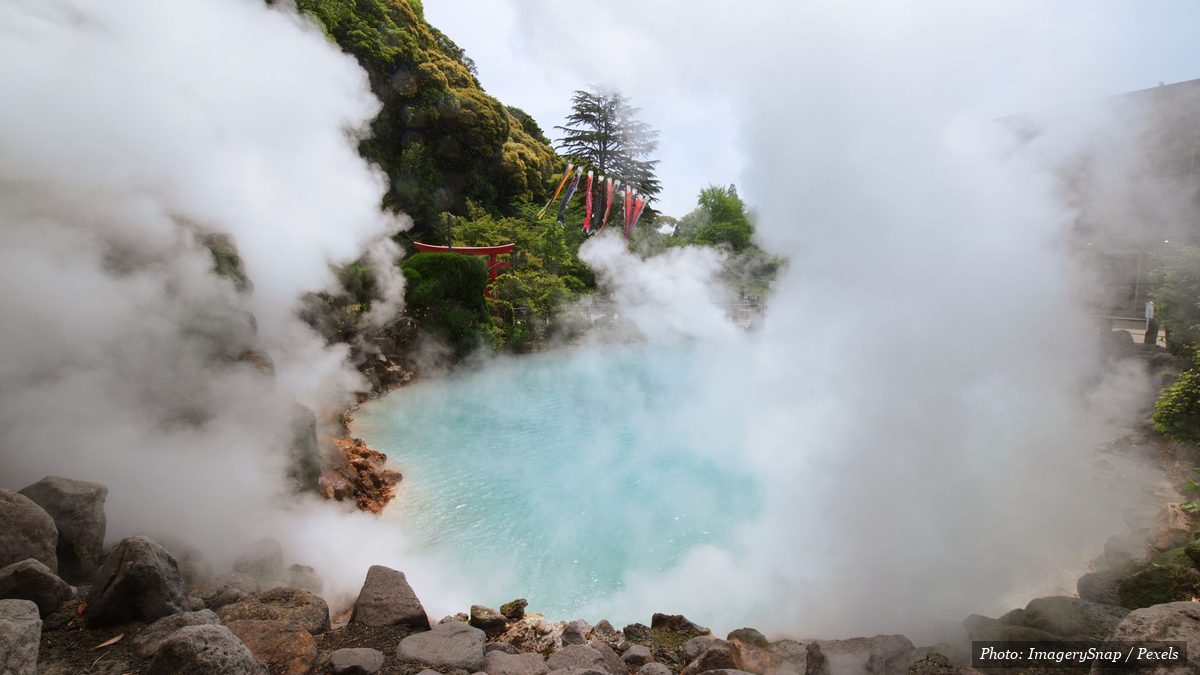
Heat is one of Asia's oldest relaxation technologies. In Japan, the evening ofuro — a deep, hot household soak taken after washing — marks the boundary between the working day and rest, and communal onsen (hot spring) bathing extends the same ritual into volcanic landscapes. The habit has drawn genuine scientific curiosity: a cross-sectional survey of more than 11,000 older adults in the onsen town of Beppu found that habitual hot-spring bathing after 7 p.m. was associated with a roughly 15% lower prevalence of hypertension, with the authors suggesting lower stress and easier sleep onset as possible explanations — while stressing that this kind of study cannot show cause and effect (Yamasaki et al., 2022).
Korea's version is the jjimjilbang, a bathhouse of heated rooms where families spend whole evenings cycling between warm floors, saunas, and cool rest areas. Korean health guidance treats it as a fatigue-and-stress ritual with rules: keep heat sessions to 20–30 minutes, rest at least 30 minutes afterward, skip alcohol and caffeine, and match the room temperature to your constitution (Hidoc). And across China and Vietnam, the humblest member of this family — a warm herbal foot bath before bed, often with ginger or mugwort — brings the same logic down to a basin of water. It features in many of the traditional nighttime wellness habits we cover separately.
Shinrin-Yoku: Letting a Forest Slow You Down
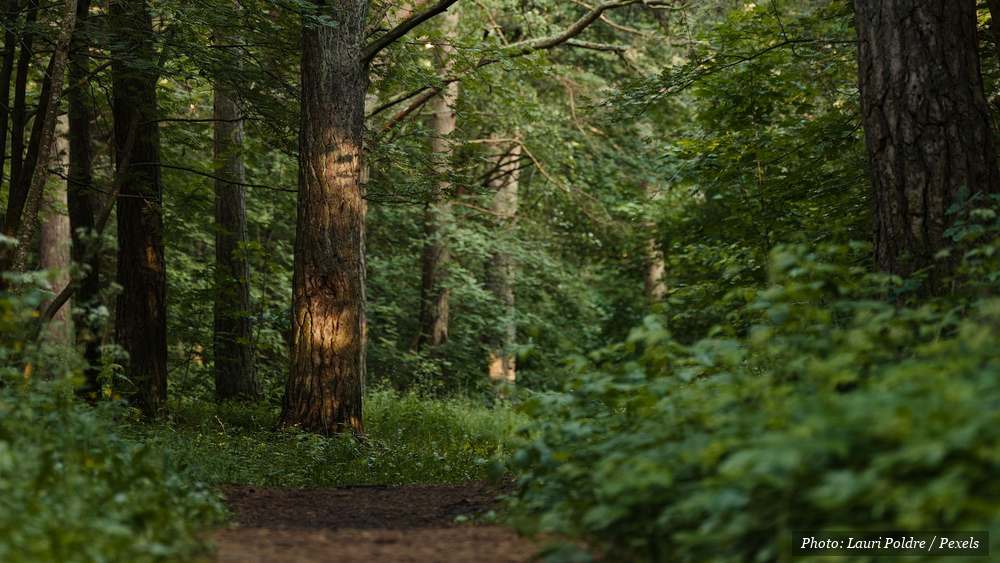
Shinrin-yoku (森林浴), usually translated as "forest bathing," is the practice of walking slowly through a forest and taking in the atmosphere with all five senses. Unusually for this list, its name is modern: Japan's Forestry Agency coined the term in 1982 as an invitation to "bathe" in the forest the way one might bathe in a hot spring, and it has since spread worldwide under its Japanese name (Japan Forestry Agency). The label is new; the habit of seeking calm under trees is anything but.
It is also one of the better-measured practices here. In field experiments across 24 forests in Japan, young adults who viewed or walked in forest settings showed lower salivary cortisol (down 13–16%), a slower pulse, slightly lower blood pressure, and markedly higher parasympathetic ("rest-and-digest") nervous activity than the same subjects in city environments (Park et al., 2010). The exposures were short and the subjects were all young men, so the findings are preliminary — but they echo what practitioners of Japan's calm-centered lifestyle have long assumed. Time in nature threads through many of the customs in our guide to Japanese healthy aging traditions.
How Do People Wind Down in the Evening?
Most of these practices converge on the evening, where Asian traditions are especially deliberate about closing the day. A common pattern repeats across cultures: quiet the household after dinner; take warmth — a bath, a foot soak, or a caffeine-free drink; and give the mind routine rather than stimulation. The point is consistency, the same cues arriving in the same order each night.
If you want to build an evening sequence of your own, our overview of traditional sleep practices across Asia maps the full landscape, the guide to bedtime herbal tea traditions covers the region's wind-down cups, and the broader tour of Asian daily wellness routines shows how mornings and evenings fit together into a whole day's rhythm. Individual experiences vary considerably; what works well for one person may not suit another, and personal experimentation under practitioner guidance is always recommended.
Important Limitations and Considerations
Traditional relaxation practices are gentle, but they are not automatically right for everyone. A few points deserve honest attention:
- Heat and the heart. Hot baths, onsen, and jjimjilbang raise heart rate and shift blood pressure. Korean health guidance specifically warns that people with heart disease, high blood pressure, diabetes, or cerebrovascular conditions face real risks in high-heat rooms, including fainting (Hidoc). If you have a cardiovascular condition, ask your doctor before adopting hot bathing, and keep sessions short and well-hydrated.
- Pregnancy. Prolonged high heat — very hot baths, saunas, long jjimjilbang sessions — is generally discouraged during pregnancy; anyone pregnant should check with their maternity care provider before using heat-based practices.
- Not a substitute for mental health care. Relaxation techniques may help with everyday stress, but persistent anxiety or low mood deserves professional attention. NCCIH is explicit that these practices should not replace conventional care or delay seeing a qualified professional (NCCIH).
- Rare paradoxical reactions. A small number of people report increased anxiety or intrusive thoughts during relaxation or meditation exercises, and there are rare reports of symptoms worsening in people with epilepsy or certain psychiatric conditions. If a practice reliably makes you feel worse, stop and seek guidance.
- Physical limits. Tai chi and qigong are low-impact but still physical; people with balance issues or joint problems should start with a teacher and, where relevant, medical advice.
- Evidence is early. Much of the research above is short-term, small, or observational. These practices are best treated as pleasant, low-risk daily rituals — not therapies with proven outcomes.
Frequently Asked Questions
Which traditional relaxation practice should I try first?
Start with the family that matches your temperament. If sitting still sounds unbearable, begin with slow movement (qigong or tai chi) or a forest walk. If your body is tired but your mind is racing, warmth — a hot bath or foot soak — is the gentlest entry. If you want something social and sensory, tea rituals are the easiest to adopt. There is no wrong door; consistency matters more than the choice.
Do these practices actually reduce stress?
Early research is encouraging but not conclusive. Forest bathing studies show short-term drops in stress markers such as cortisol, and a 2024 meta-analysis found small-to-moderate reductions in perceived stress with taiji practice — but studies are often small, short, and methodologically limited. It is most accurate to say these practices may help many people feel calmer, and that they carry little downside for healthy adults.
Is shinrin-yoku just walking in the woods?
Essentially yes — with a change of intent. Forest bathing is done slowly, without a destination, phone away, paying deliberate attention to smells, sounds, and light. The Japanese Forestry Agency, which coined the term in 1982, describes it as receiving the forest with all five senses. A hiking pace aimed at covering distance is exercise; shinrin-yoku is closer to unhurried noticing.
How long should an onsen or jjimjilbang session last?
Korean guidance suggests keeping any single heat session to about 20–30 minutes, followed by at least 30 minutes of rest, with water breaks and no alcohol. Similar common sense applies to hot baths and onsen: soak until comfortably warm, not until dizzy. People with heart or blood pressure conditions should get medical advice before heat bathing at all.
Can I combine several of these practices?
Traditionally, that is exactly the point — they were parts of one day, not competing programs. A common combination is gentle movement in the morning, tea as a daytime pause, and warmth plus an early wind-down in the evening. Start with one habit, let it settle for a few weeks, then layer in another. Individual experiences vary considerably.
A Note on Tracking What Actually Relaxes You
Relaxation is personal: the friend who swears by cold-morning tai chi may sleep no better than you do after a hot foot bath. Some people find it helpful to keep a light record — which practice they tried, at what time of day, and how the evening or night went — and let a few weeks of notes reveal what genuinely works for their body. Health Diary is built around exactly that kind of gentle, personal tracking, so patterns can speak instead of trends.
A Soft Closing Note
The traditions in this guide disagree about many things — whether calm is found in movement or stillness, in solitude or company, in a forest or a bathhouse. But they agree on the essential point the Neijing made over two thousand years ago: tranquility is something you practice, a small discipline woven into ordinary days. Pick one door, walk through it slowly, and follow the links above whenever a practice invites a closer look.
About This Article
Written by: Health Diary Editorial Team — a group of writers and researchers focused on traditional wellness practices and Asian herbal traditions.
Editorial review: This article has been reviewed by the Health Diary editorial team for clarity, structure, and adherence to our sourcing standards. Key claims were cross-checked against NCCIH, NIH PubMed, and peer-reviewed journals where applicable. It is not a clinical review and should not replace consultation with a licensed healthcare practitioner.
Reviewed on: July 16, 2026.
Editorial process: We cite peer-reviewed and government sources where possible. When a clinical reviewer is added to this article, attribution will appear here with verifiable credentials.
References
- National Center for Complementary and Integrative Health. Relaxation Techniques: What You Need To Know. NIH. https://www.nccih.nih.gov/health/relaxation-techniques-what-you-need-to-know
- Park, B. J., Tsunetsugu, Y., Kasetani, T., Kagawa, T., & Miyazaki, Y. The physiological effects of Shinrin-yoku (taking in the forest atmosphere or forest bathing): evidence from field experiments in 24 forests across Japan. Environmental Health and Preventive Medicine, 2010. https://link.springer.com/article/10.1007/s12199-009-0086-9
- Kraft, K., Waibl, P. J., & Meissner, K. Stress reduction through taiji: a systematic review and meta-analysis. BMC Complementary Medicine and Therapies, 2024. https://pmc.ncbi.nlm.nih.gov/articles/PMC11149313/
- Yamasaki, S., Tokunou, T., Maeda, T., & Horiuchi, T. Hot spring bathing is associated with a lower prevalence of hypertension among Japanese older adults: a cross-sectional study in Beppu. Scientific Reports, 2022. https://www.nature.com/articles/s41598-022-24062-3
- 林野庁 (Japan Forestry Agency). 森林浴 ―いつでも森と、心をほどく。(Shinrin-yoku — unwinding the heart with the forest). https://www.rinya.maff.go.jp/j/sanson/kassei/sangyou/shinrin-yoku.html
- 하이닥 (Hidoc). 건강에 도움되는 찜질방 이용법 5가지 (Five healthy ways to use a jjimjilbang). https://news.hidoc.co.kr/news/articleView.html?idxno=250
- 人民日报海外版 (People's Daily Overseas Edition). 精神内守身堪健 动静合宜寿自高 (Guarding the spirit within; balancing activity and stillness). 2013. http://paper.people.com.cn/rmrbhwb/html/2013-03/01/content_1205419.htm
- Huangdi Neijing, Suwen ch. 1 — 上古天真论 (Discourse on the Heavenly Truth of Remote Antiquity). Classical text, c. 2nd century BCE. https://ctext.org/huangdi-neijing/shang-gu-tian-zhen-lun/zhs


