Medical Disclaimer: This content is for educational and informational purposes only and is not medical advice. It reflects traditional Asian cultural practices and folk wellness traditions and is not intended to diagnose, treat, cure, or prevent any disease. Always consult a licensed healthcare practitioner before starting any new herbal practice, dietary change, or supplement. Statements regarding traditional herbal use have not been evaluated by the FDA.
Affiliate Disclosure: This article may contain affiliate links. We may earn a commission if you purchase through these links, at no additional cost to you. We only recommend products we believe align with our editorial standards.
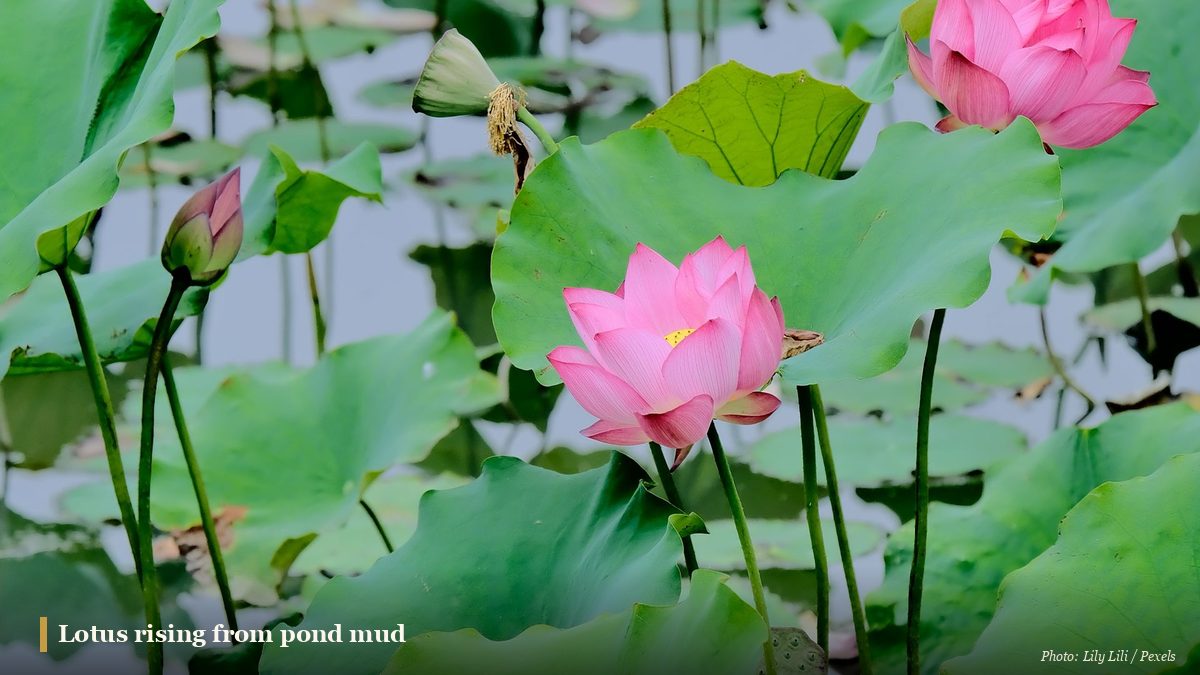
Few plants have been loved as completely as the lotus. It rises each morning out of pond mud, opens a flower of almost impossible cleanliness, and then, when the petals fall, leaves behind a strange perforated seed pod that Asian kitchens and apothecaries have used for well over a thousand years. The botanical name is Nelumbo nucifera — the sacred lotus — known in Chinese as 莲 (lián) and in Vietnamese simply as sen. What makes it remarkable is not any single benefit but its completeness: leaf, flower, stamen, seed, the tiny green heart inside the seed, and the underwater rhizome are all gathered, eaten, brewed, and prescribed, each for something different.
This guide is a hub for that whole plant. We will trace why the lotus became sacred from India to Japan, look at what botanists find genuinely astonishing about it, and then walk part by part through how traditional Chinese and Vietnamese practices use the leaf (荷叶, hà diệp), the seed (莲子, liên tử), the seed heart (莲心, tâm sen), the root, and the flower and stamens (莲须, liên tu). Along the way we will see what modern laboratory research has begun to suggest — carefully, because most of it is still preliminary — and where caution matters. Throughout, you will find links to deeper profiles of each lotus part so you can follow whichever thread interests you.
Why Has the Lotus Been Considered Sacred Across Asia?
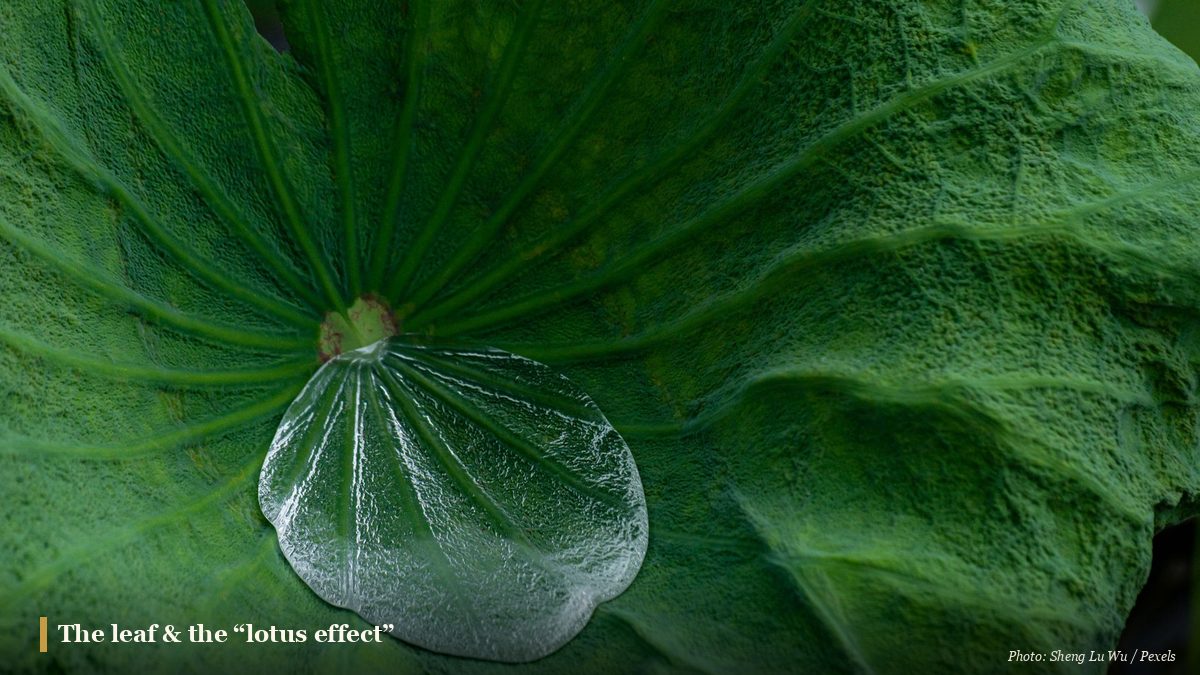
The lotus carries a symbolic weight that few plants can match, and the reason is written into how it grows. Rooted in dark, oxygen-poor mud, it sends its flower up through the water to open spotlessly clean above the surface — the leaves and petals shed water and dirt so effectively that scientists named the phenomenon the "lotus effect." For the cultures that grew up around it, that daily rise from mud to blossom became an unmistakable image of purity emerging from difficulty, of the spirit unstained by its surroundings.
In Buddhism the lotus is perhaps the single most recurring plant symbol: figures of enlightenment are seated on lotus thrones, and the flower stands for awakening that grows out of, but is not soiled by, the ordinary world. Hinduism links the lotus to creation and to several deities; across East and Southeast Asia the flower appears in temple carving, poetry, textiles, and cuisine. In Vietnam the lotus is cherished as an unofficial national flower, and its image threads through everything from folk songs to the ritual of lotus-scented tea. We explore this symbolic world in depth in our companion guide to the lotus flower in Asian culture.
There is a botanical fact that gives this symbolism unexpected literal force. Lotus fruits are among the longest-living seeds ever documented: a lotus seed recovered from a dry lakebed in Liaoning, China, was radiocarbon-dated to roughly 1,300 years old and still germinated (Sun et al., Journal of Experimental Botany, 2025; Shen-Miller et al., Seed Science Research, 2002). A plant whose seed can sleep for twelve centuries and still wake up makes a fitting emblem of rebirth and endurance.
What Is Nelumbo Nucifera, Botanically?
The sacred lotus is a perennial aquatic plant, the best-known member of the small family Nelumbonaceae. Despite the resemblance, it is not a true water lily; the two families are only distantly related, and the lotus differs in holding its large round leaves and its flowers on stalks well above the water rather than floating on it. Those leaves can span more than half a meter, are coated in a microscopically rough, water-repellent wax, and are the source of the "lotus effect" that inspired a whole field of self-cleaning surface engineering.
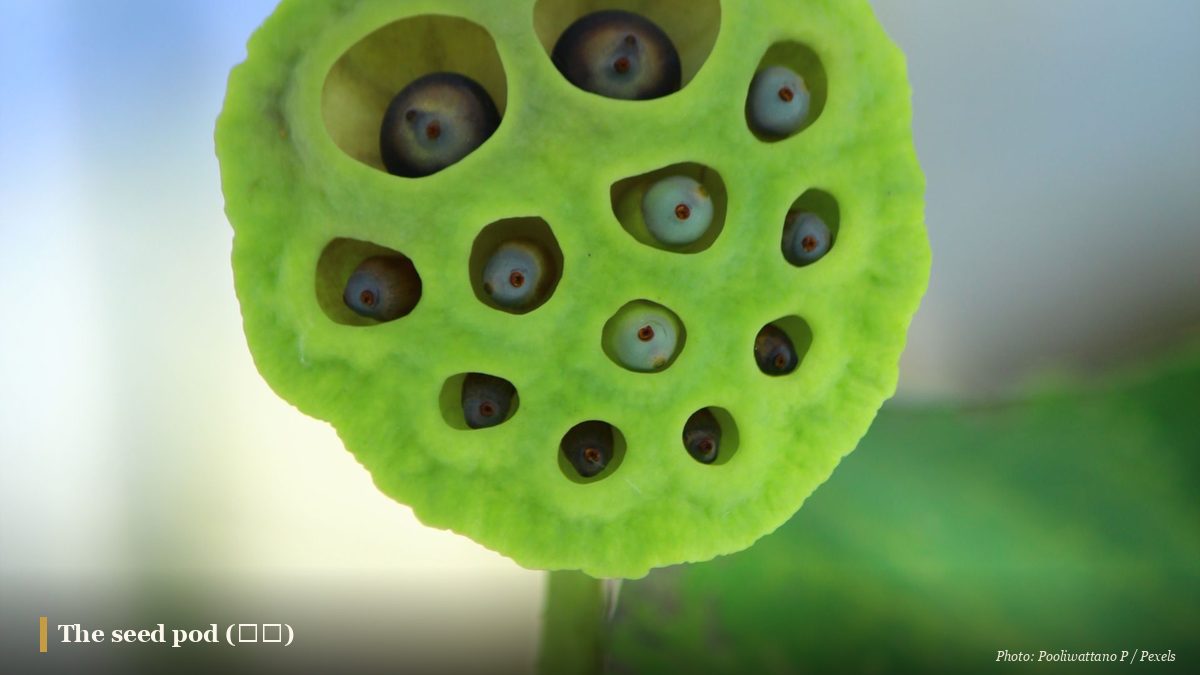
After the flower is pollinated, the receptacle at its center swells into the distinctive flat-topped, perforated seed pod — the "shower head" shape familiar from flower markets — with individual seeds nestled in its holes. Below the water, the plant spreads through a jointed, sausage-like rhizome buried in the mud: this is the crunchy "lotus root" of Asian cooking. What the botanists behind the ancient-seed research emphasize is how the fruit is built to last — a dense, wax- and suberin-sealed pericarp, high levels of protective flavonoids and polyphenols, unusually heat-stable proteins, and large starch reserves that together let the seed survive centuries of dormancy (Sun et al., 2025). A single plant, in other words, is engineered for both a spectacular annual bloom and near-geological patience.
What Are the Parts of the Lotus, and What Is Each Used For?
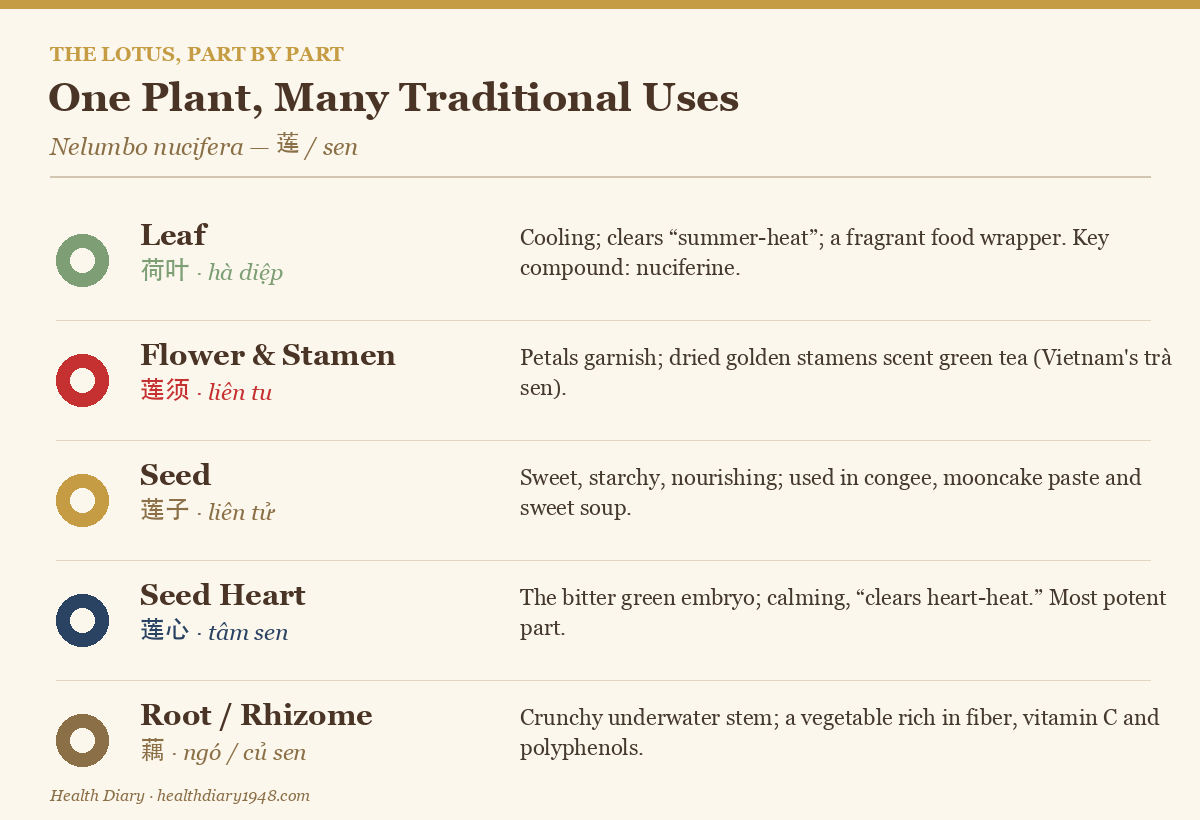
The defining feature of the lotus in traditional Asian practice is that almost nothing goes to waste. A 2022 review describes Nelumbo nucifera as a plant used across Asia as both herbal material and functional food, with the rhizome, seed, leaf, flower, and stamen all put to work (Paudel & Panth review, 2022). Traditional Chinese medicine, in fact, regards several lotus parts as distinct herbs with distinct classical characters, and Vietnamese practice mirrors this closely. The diagram below maps the plant; the sections that follow take each part in turn.
The Leaf (荷叶, hà diệp)
The broad round leaf is one of the most-used parts. In classical Chinese practice, dried lotus leaf (荷叶, hé yè) is described as bitter and neutral and is traditionally associated with clearing "summer-heat," settling the digestion in hot damp weather, and cooling the blood (Zhongyi Shijia TCM materia medica). In kitchens across Asia the fresh leaf is also a natural wrapper — sticky rice and steamed dishes are parcelled in it so the food takes on a faint green fragrance. Its signature compound is nuciferine, the alkaloid that gives the leaf its identity in the laboratory. For the full story of this part, see our detailed guide to lotus leaf in traditional Eastern medicine.
The Seed (莲子, liên tử)
The pale, starchy seeds are the lotus at its most food-like. Dried lotus seeds (莲子, lián zǐ) are described in Chinese practice as sweet, astringent, and neutral — a gentle tonic traditionally linked with the spleen and with a settled, calm state of mind. They appear in countless dishes: simmered into congee, ground into paste for mooncakes, and, in Vietnam, cooked into the beloved sweet soup chè hạt sen. That dessert is a tradition in its own right, which we cover in our guide to lotus seed sweet soup. Because the seed is mild and nourishing, it is one of the easiest ways for a newcomer to meet the plant.
The Seed Heart (莲心, tâm sen)
Split a lotus seed and you find a tiny green embryo curled inside — the "heart of the seed," called 莲心 (lián xīn) in Chinese and tâm sen in Vietnamese, and known botanically as Plumula Nelumbinis. This is the most pharmacologically pointed part of the whole plant, and the most bitter. Traditional practice regards it very differently from the sweet seed around it: the heart is described as bitter and cold, entering the Heart channel, and is classically used to "clear heart-heat" and quiet a restless mind (Nguyen Tri Phuong Hospital materia medica). In Vietnam a pinch of dried tâm sen is brewed as a bitter bedtime tea; the great Vietnamese pharmacologist Đỗ Tất Lợi recorded it as bitter and cold with a calming, spirit-quieting character (Đỗ Tất Lợi, Medicinal Plants and Herbs of Vietnam). Because of this calming reputation it sits naturally alongside the rest-promoting plants we cover in our guides to sleep herbs in Asian traditions and bedtime herbal tea traditions.
The Root or Rhizome (ngó / củ sen)
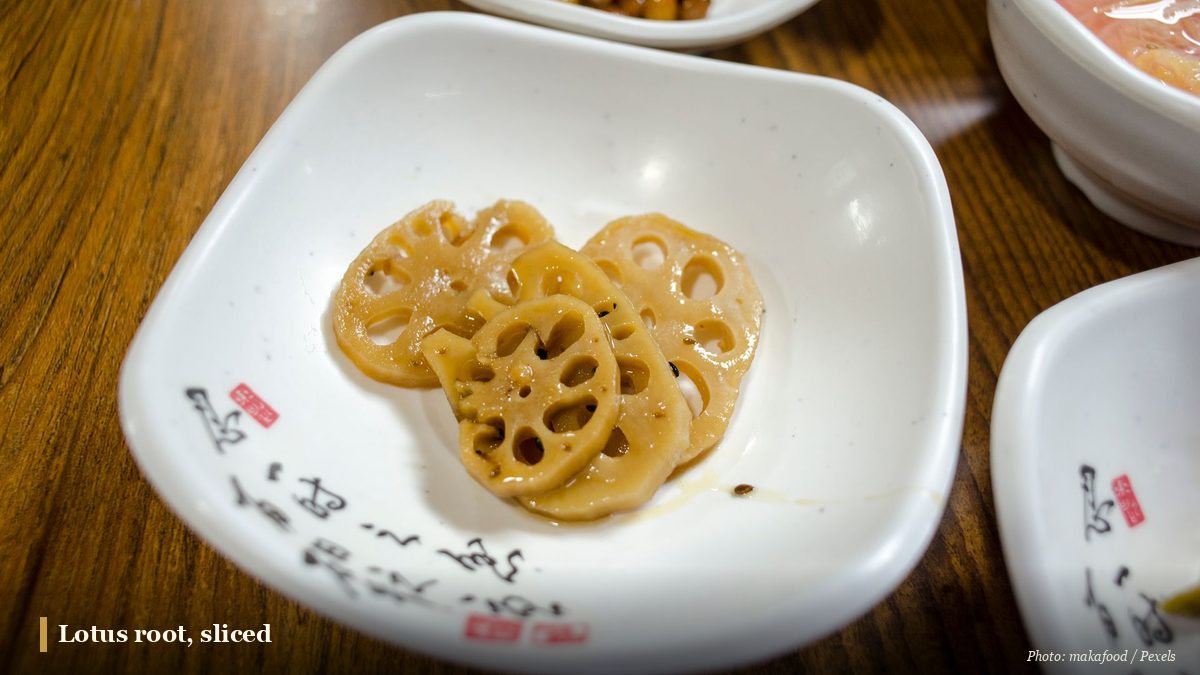
Buried in the mud, the lotus rhizome is a genuine vegetable — crisp, mild, and full of decorative holes when sliced crosswise. It is stir-fried, simmered in soups, braised, and pickled throughout China, Vietnam, Japan, and Korea. Nutritionally it is a respectable everyday food: analyses put fresh lotus root at roughly 16 grams of carbohydrate, a few grams of dietary fiber, and a useful amount of vitamin C and potassium per 100 grams, along with a range of polyphenols (Zhu et al., Foods, 2024). The young, tender growing tip of the rhizome — ngó sen in Vietnamese — is prized shredded into cool, tangy salads. Of all the lotus parts, the root is the one you are most likely to simply enjoy as dinner.
The Flower and Stamens (莲须, liên tu)
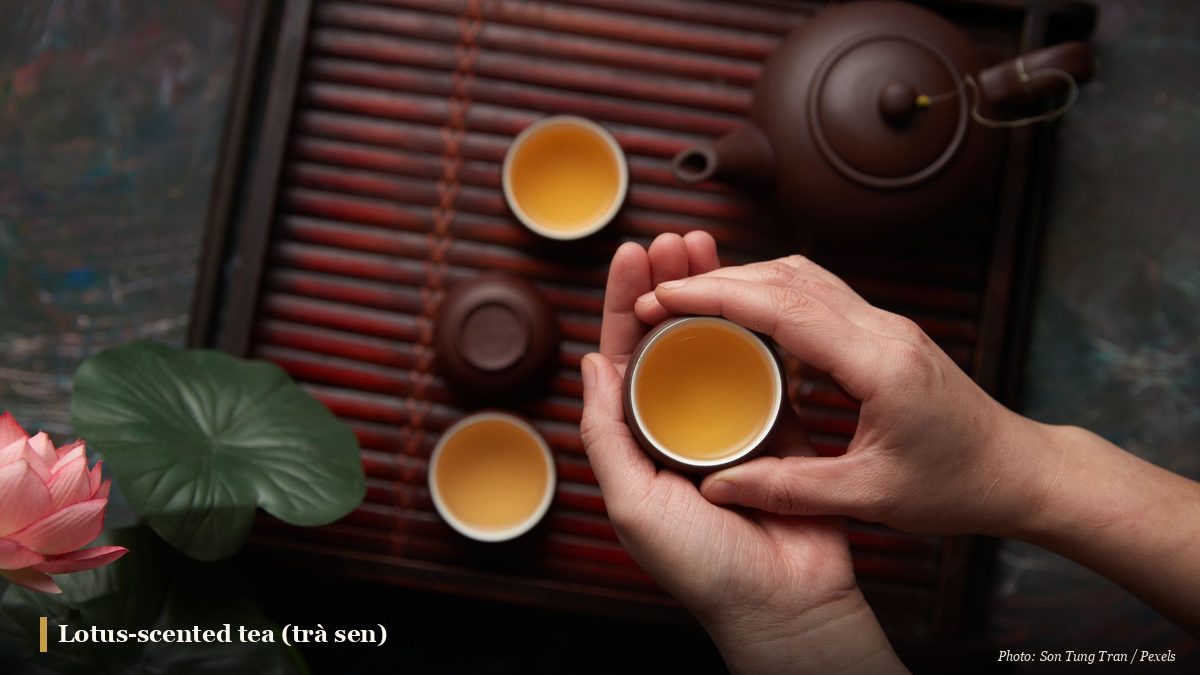
The flower is not only for the eye. Its golden stamens are collected and dried as their own material — 莲须 (lián xū) in Chinese, liên tu in Vietnamese — described in classical practice as sweet and astringent. Most famously, the fragrant stamens and the rice-like grains at their base are used to scent tea: in Hanoi, green tea layered with fresh lotus stamens over many days becomes trà sen, the celebrated lotus tea of West Lake (Tây Hồ). The petals themselves are eaten as a delicate garnish and floated in drinks. We trace the whole world of lotus infusions in our guide to lotus tea, and the flower's cultural life in the lotus flower culture guide.
How Does Traditional Eastern Medicine View the Lotus?
What ties these scattered parts together is the logic of traditional Chinese and Vietnamese medicine, where a plant is understood less by a list of active ingredients than by its character — its temperature, its taste, and the organ systems it is thought to influence. Seen this way, the lotus is a study in useful contrasts. The seed is sweet and neutral and nourishing; the seed's heart is bitter and cold and clearing; the leaf is cooling and lifting; the stamen is astringent and consolidating. One plant supplies a whole small palette of actions.
Much of this rests on the framework of yin and yang and the five elements, in which "heat" and "cold," "damp" and "dry" are qualities to be balanced rather than symptoms to be attacked. The bitter, cold seed-heart is used to draw down an "over-heated" heart-mind; the cooling leaf is a classic summer material; the astringent stamen is thought to "hold things in." Vietnamese thuốc Nam practice adapts the same reasoning to local plants and kitchens, and the lotus sits at its heart — you can see how it fits the larger picture in our pillar on traditional Vietnamese herbal traditions. None of this is a modern clinical claim; it is a centuries-old system of categories that tells you how the tradition thinks, and it is best appreciated on those terms.
What Does Modern Research Say About Lotus Compounds?
Over the past two decades, laboratories have begun to examine what is actually inside the lotus, and the chemistry turns out to be as compartmentalized as the tradition suggested. It is worth stating plainly up front: the great majority of this work is in cells and animals, not in large human trials, so it points to plausible mechanisms rather than proven benefits. A 2025 review counted 51 distinct alkaloids in the plant and stressed that "the majority of evidence is derived from preclinical models, with a notable lack of human studies" (Lotus alkaloids review, Int. J. Molecular Sciences, 2025). Read in that spirit, the findings are genuinely interesting.
The leaf is defined chemically by aporphine alkaloids, above all nuciferine. This is the same compound the Chinese Pharmacopoeia uses as the quality-control marker for lotus leaf, and Chinese pharmacology reviews associate it in laboratory models with lipid-lowering, blood-sugar-lowering, and anti-inflammatory activity (Chen et al., J. Nanjing Univ. TCM, 2021). Intriguingly, nuciferine also appears to act on the brain: a 2025 rodent study reported that it shortened the time to fall asleep and deepened sleep, apparently by way of the serotonin system rather than the pathway that sedatives use (Nuciferine sleep study, Int. J. Neuropsychopharmacology, 2025). That gives a possible mechanism for the leaf's — and the seed-heart's — long calming reputation, though again only in animals so far.
The seed heart carries a different chemical family: bisbenzylisoquinoline alkaloids, chiefly neferine, liensinine, and isoliensinine. A dedicated review of Plumula Nelumbinis catalogs preliminary antihypertensive, anti-arrhythmic, and anti-inflammatory activity for these compounds — while also noting, importantly, that at high concentrations some of them can disturb heart-cell calcium handling, a reminder that "active" cuts both ways (Plumula Nelumbinis review, J. Ethnopharmacology, 2021). The seed and rhizome, by contrast, are studied more as nutritious foods rich in starch, fiber, protein, and polyphenol antioxidants than as concentrated remedies (Zhu et al., 2024). The honest summary: the traditional map of the plant lines up surprisingly well with its chemistry, some early findings are encouraging, and none of it is a substitute for medical care.
How Do People Use the Lotus in Everyday Life?
For most people, the lotus is not a supplement bottle but a set of small, pleasurable rituals. In Vietnam the most refined of these is trà sen, the lotus tea of West Lake, in which green tea is scented over days with fresh lotus stamens until it takes on the flower's cool sweetness; a cup of it is a quiet ceremony as much as a drink. The bitter seed-heart tea, brewed from a small pinch of dried tâm sen, is a traditional evening ritual reached for on restless nights. On the sweeter side, chè hạt sen — lotus-seed sweet soup — is served at celebrations and on hot afternoons, and dried lotus seeds are simmered into congee as a gentle, settling food.
In the kitchen the root does the heavy lifting: sliced into soups for its crunch, stir-fried, braised with pork, or shredded raw into the tangy Vietnamese lotus-stem salad. The leaf becomes a fragrant wrapper for rice; the petals garnish and perfume. Many people fold these gentle lotus rituals into a broader habit of calming, caffeine-light evening drinks — a theme we explore in our guide to relaxation tea traditions of Asia — and into the wider Vietnamese culture of eating for longevity described in our guide to Vietnamese longevity traditions. If you want to go deeper on brewing specifically, our lotus tea guide walks through the different infusions and how they are made. Individual responses vary considerably; what works well for one person may not suit another, and personal experimentation is always best done under the guidance of a qualified practitioner.
Important Limitations and Considerations
Because the lotus is so familiar as food, it is easy to forget that some of its parts are pharmacologically active — and "natural" is never a synonym for "safe." A responsible reading of the tradition has to include its cautions.
- The seed-heart is the potent part. Tâm sen is not the mild seed. Vietnamese clinical sources give a modest traditional dose (on the order of a few grams of dried material a day), advise dry-roasting it before use, and warn that prolonged use can lead to alkaloid build-up. It is specifically discouraged for people with low blood pressure or a weak, "cold" constitution (Nguyen Tri Phuong Hospital). Its blood-pressure-lowering reputation is exactly why caution is needed if you already run low or take blood-pressure medication.
- Herb–drug interactions. Plant compounds can interact with medications, sometimes through the same liver enzymes that process pharmaceuticals. The NCCIH notes that some herbs alter drug metabolism enough to matter clinically and that combinations with blood thinners deserve particular care (NCCIH, herb–drug interactions). If you take prescription medication, speak with your doctor or pharmacist before adding concentrated lotus preparations.
- Quality and correct identification. Herbal safety begins with knowing exactly what you have. WHO guidance on herbal processing stresses accurate botanical identification and control of contaminants, because misidentification and adulteration are real risks in unregulated markets (WHO herbal processing guidelines). Buy from reputable sources; be especially wary of products marketed as "blue lotus," which is a different plant (Nymphaea) with its own concerns.
- Pregnancy, breastfeeding, and children. Safety data for concentrated lotus preparations in these groups is limited. If you are pregnant, nursing, or considering giving lotus preparations to a child, do not proceed without professional advice.
- Food versus remedy. Enjoying lotus root in a soup or a few lotus seeds in a dessert is ordinary eating. Taking concentrated extracts, strong seed-heart infusions, or standardized supplements is a different matter and warrants the same care as any active preparation.
Individual experiences vary considerably. The safest way to explore the lotus is to start where it is gentlest — the food — and to involve a licensed practitioner before using its more concentrated parts.
Frequently Asked Questions
Which parts of the lotus can you actually use?
Almost all of them. Traditional Asian practice uses the leaf, the flower and its stamens, the seed, the tiny green embryo inside the seed (the "seed heart"), and the underwater rhizome, or "lotus root." Each is treated differently — the seed and root are foods, the leaf and stamen are brewed, and the bitter seed-heart is the most concentrated. This whole-plant use is what makes the lotus unusual.
What is the difference between the lotus seed and the lotus seed heart?
The seed (莲子, liên tử) is the pale, starchy, mildly sweet part used in soups, congee, and desserts — gentle and food-like. The seed heart (莲心, tâm sen) is the small green embryo curled inside it, which is intensely bitter, cold in character, and traditionally brewed as a calming bedtime tea. The seed is nourishing; the seed heart is the pharmacologically active part and calls for more caution.
Is lotus tea caffeinated?
It depends on the tea. Vietnamese lotus tea (trà sen) is usually green tea scented with lotus, so it contains the caffeine of the green tea base. A tea made purely from dried lotus seed-heart (tâm sen) or lotus petals contains no tea leaf and so is naturally caffeine-free, which is part of why the seed-heart infusion is favored in the evening. Individual responses to caffeine vary.
Can I eat lotus root raw?
Young, tender lotus root is shredded raw into salads in Vietnam and elsewhere, but most cooks prefer to blanch or cook it, both for texture and because raw aquatic vegetables can carry waterborne parasites if not from a controlled source. Cooking it lightly keeps the signature crunch while being the safer choice.
Does lotus help with sleep?
The lotus seed-heart has a long traditional reputation as a calming, "heart-clearing" evening tea, and early laboratory work on nuciferine, a lotus-leaf compound, has shown sleep-promoting effects in animals by way of the serotonin system. That is a plausible mechanism, not proof in people — human studies are lacking. Some people find a gentle bedtime ritual helpful, but persistent insomnia deserves a conversation with a clinician.
Is "blue lotus" the same as the sacred lotus?
No. The sacred lotus discussed here is Nelumbo nucifera. "Blue lotus" usually refers to Nymphaea caerulea, a water lily from a different plant family with its own distinct compounds and safety questions. They are often confused in online marketing, so check the botanical name before buying anything.
Where can I learn about specific lotus parts?
This article is a hub. For deeper profiles, follow the links throughout — our guides to the lotus leaf, lotus seed sweet soup, lotus tea, and the lotus flower in Asian culture each cover traditional use, preparation, and safety in more detail.
A Note on Tracking Your Lotus Journey
Traditional lotus culture has always been observational. A grandmother noticed which cup settled the mind on a sleepless night and which foods felt cooling in the summer heat, then adjusted with the season and the person in front of her. That habit of patient attention translates well to modern life. If you decide to explore any part of the lotus, it helps to notice — ideally in a simple journal or app — how a given tea, soup, or infusion actually makes you feel over days and weeks, rather than expecting a single dramatic change. If you are curious how your own preferences fit within the wider world of Asian herbal traditions, you might enjoy our short interactive Vietnamese herbs quiz linked with this article. Tracking is not about chasing outcomes; it is about coming to know your own patterns.
A Soft Closing Note
The lotus rewards a slow acquaintance. You might begin with the gentlest thing — a bowl of lotus-seed sweet soup, a stir-fry of crisp lotus root — and let curiosity carry you outward to the fragrant tea, the bitter evening infusion, the long cultural story of the flower. What holds it all together is the plant's quiet completeness: a single species that feeds, scents, calms, and symbolizes, rising every morning out of the mud unmarked. Approached with curiosity and respect for its limits, it offers a beautiful window into how Asian cultures have lived alongside one plant for centuries. Some people explore this tradition by starting with one familiar part and following a single thread — a cup of lotus tea, a bowl of lotus-seed soup — through the guides linked here. And if you enjoy comparing traditions, our complete guide to ginseng makes a natural companion to this one.
About This Article
Written by: Health Diary Editorial Team — a group of writers focused on traditional Asian wellness, herbal history, and culturally grounded, responsibly sourced health content.
Editorial review: This article has been reviewed by the Health Diary editorial team for clarity, structure, and adherence to our sourcing standards. Key claims were cross-checked against NIH PubMed/PMC, NCCIH, WHO guidance, and native-language Chinese and Vietnamese sources including the Chinese Pharmacopoeia quality standard for lotus leaf, Vietnamese hospital materia medica, and the works of Đỗ Tất Lợi. It is not a clinical review and should not replace consultation with a licensed healthcare practitioner.
Reviewed on: August 3, 2026.
Editorial process: We cite peer-reviewed and government sources where possible, alongside primary traditional references. When a clinical reviewer is added to this article, attribution will appear here with verifiable credentials.
References
- Sun H, Xin J, et al. Unveiling the secrets of lotus seed longevity: insights into adaptive strategies for extended storage. Journal of Experimental Botany. 2025;76(4):1147–1163. academic.oup.com
- Shen-Miller J, et al. Sacred lotus, the long-living fruits of China Antique. Seed Science Research. 2002. cambridge.org
- Neuroprotective Potential of Major Alkaloids from Nelumbo nucifera (Lotus). International Journal of Molecular Sciences. 2025. PMC12428744
- Sedative and hypnotic effects of nuciferine: enhancing rodent sleep via serotonergic system modulation. International Journal of Neuropsychopharmacology. 2025;28(5):pyaf019. academic.oup.com
- Plumula Nelumbinis: a review of traditional uses, phytochemistry, pharmacology, pharmacokinetics and safety. Journal of Ethnopharmacology. 2021. sciencedirect.com
- Paudel KR, Panth N. Lotus (Nelumbo nucifera) and Its Bioactive Phytocompounds. Review, 2022. PMC8833568
- Zhu X, et al. Evaluation of Nutrient Composition and Functional Active Substances in Various Lotus Roots. Foods. 2024;13(14):2297. doi.org/10.3390/foods13142297
- Chen C, Xie Y, Huang L, et al. Advances in the pharmacological actions of nuciferine (荷叶碱药理作用的研究进展). Journal of Nanjing University of Traditional Chinese Medicine. 2021. njucm.edu.cn
- 荷叶 / 莲子 / 莲子心 (Lotus leaf, seed, and seed-heart materia medica). Zhongyi Shijia (中医世家). zysj.com.cn
- Tâm sen (Liên tâm / Plumula Nelumbinis) — Dược liệu. Bệnh viện Nguyễn Tri Phương. bvnguyentriphuong.com.vn
- Đỗ Tất Lợi. Những cây thuốc và vị thuốc Việt Nam (Medicinal Plants and Herbs of Vietnam). First published 1962. archive.org
- Herb–Drug Interactions: What the Science Says. NCCIH, National Institutes of Health. nccih.nih.gov
- WHO guidelines on good herbal processing practices for herbal medicines (TRS 1010, Annex 1). World Health Organization. who.int
This article is for educational purposes only and reflects traditional Asian cultural practices. It does not constitute medical advice. Consult a qualified healthcare provider before starting any herbal practice or making changes to your health routine.