Medical Disclaimer: This content is for educational and informational purposes only and is not medical advice. It reflects traditional Chinese, Japanese, Korean, and Vietnamese cultural practices and folk wellness traditions and is not intended to diagnose, treat, cure, or prevent any disease. Always consult a licensed healthcare practitioner about stress, sleep, or any health concern. Individual results are not guaranteed.
Affiliate Disclosure: This article may contain affiliate links. We may earn a commission if you purchase through these links, at no additional cost to you. We only recommend products we believe align with our editorial standards.
In a hurried world, the traditions of Asia hold a quietly radical idea: that rest is a skill worth practising. A long soak in a hot spring, an unhurried walk among trees, a slow cup of tea at dusk, a few deep breaths before sleep — across China, Japan, Korea, and Vietnam, cultures have refined countless ways to let the body and mind settle. Far from being idle time, deliberate relaxation was treated as essential maintenance for a healthy life.
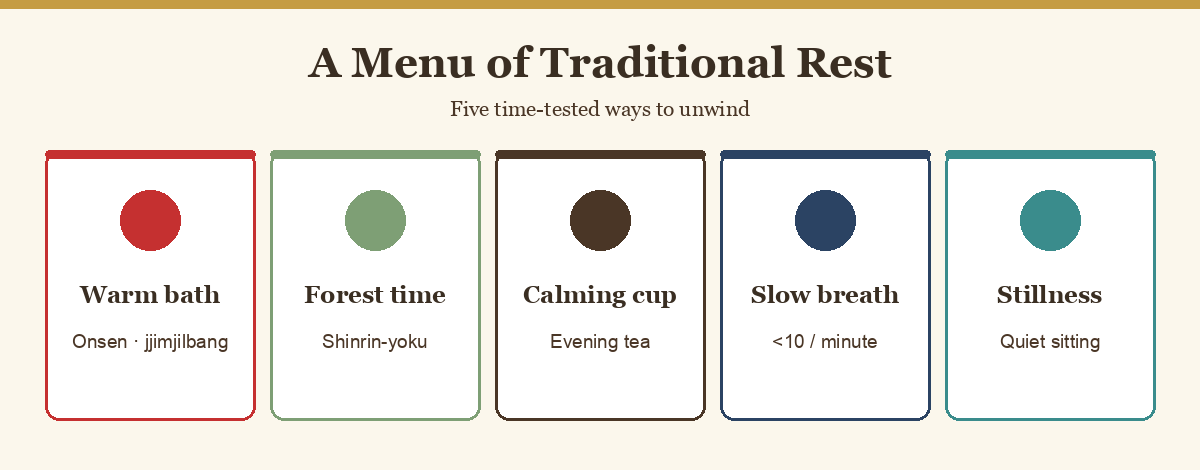
This guide is the hub for our writing on traditional relaxation. It looks at what "rest" really means in these cultures, walks through the great calming practices — bathing, nature, tea, breath, and stillness — and weighs honestly what modern research suggests. For the more active side of the tradition (tai chi, qigong, and moving practice), see our wellness practices hub; this one is about winding down.
What Does "Relaxation" Mean in Asian Traditions?
In these traditions, relaxation is not the absence of activity — it is the active cultivation of calm. Chinese wellness speaks of jìng yǎng (静养, "rest through stillness") and yǎng xīn (养心, "nourishing the heart-mind"): deliberately slowing the pace of life and quieting the emotions. The classical Huangdi Neijing captures the ideal in a famous line — "tranquil and free of ambition, the true energy follows; keep the spirit within, and how could illness arise?" Calm, in other words, was seen as a foundation of health.
The same instinct runs through Daoist philosophy, where wu wei (無為, "effortless non-forcing") and qīng jìng (清静, clarity-and-quiet) describe a return to an uncontrived, natural ease rather than passivity. Vietnam's dưỡng sinh tradition lists rest and emotional balance among its core pillars, and even codified a dedicated thư giãn (relaxation) exercise. Crucially, none of these traditions saw rest as laziness. A calm heart-mind was thought to let energy flow smoothly and to protect against the wear of constant stress — a strikingly modern idea dressed in old language. This idea of calm as something you practise ties relaxation closely to the region's meditation traditions, the gentle movement of tai chi and qigong, and the theory of qi and yin and yang.
The Relaxation Response — Where East Meets Science
In the 1970s, the Harvard cardiologist Dr. Herbert Benson gave this ancient wisdom a modern name: the relaxation response. Studying practitioners of meditation, he described a measurable physiological state — the opposite of "fight or flight" — marked by a slower heart rate, lower blood pressure, easier breathing, and reduced stress hormones (Benson-Henry Institute).
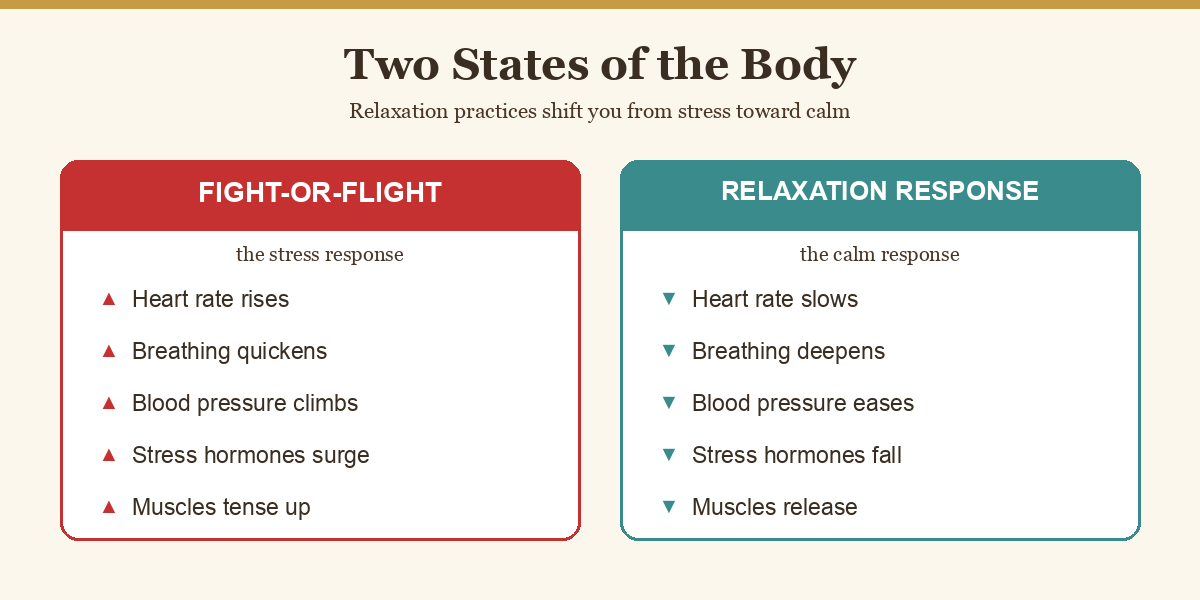
The concept is a useful bridge: it shows that the calm the Eastern traditions cultivated through bathing, breath, and stillness corresponds to a real, elicitable bodily state. The US National Center for Complementary and Integrative Health now catalogues these as "relaxation techniques" — deep breathing, progressive muscle relaxation, guided imagery, and more — noting they are generally safe and modestly helpful for stress and anxiety (NCCIH).
Warm-Water Bathing — Onsen, Tōji, and the Bathhouse
Few relaxation rituals are as beloved as the hot bath. Japan's onsen (hot-spring) culture stretches back well over a thousand years, and gave rise to tōji — "hot-spring recuperation," a tradition of week-long spring stays with repeated daily bathing to rest and recover, often timed to the farming calendar (Tokyo Weekender).
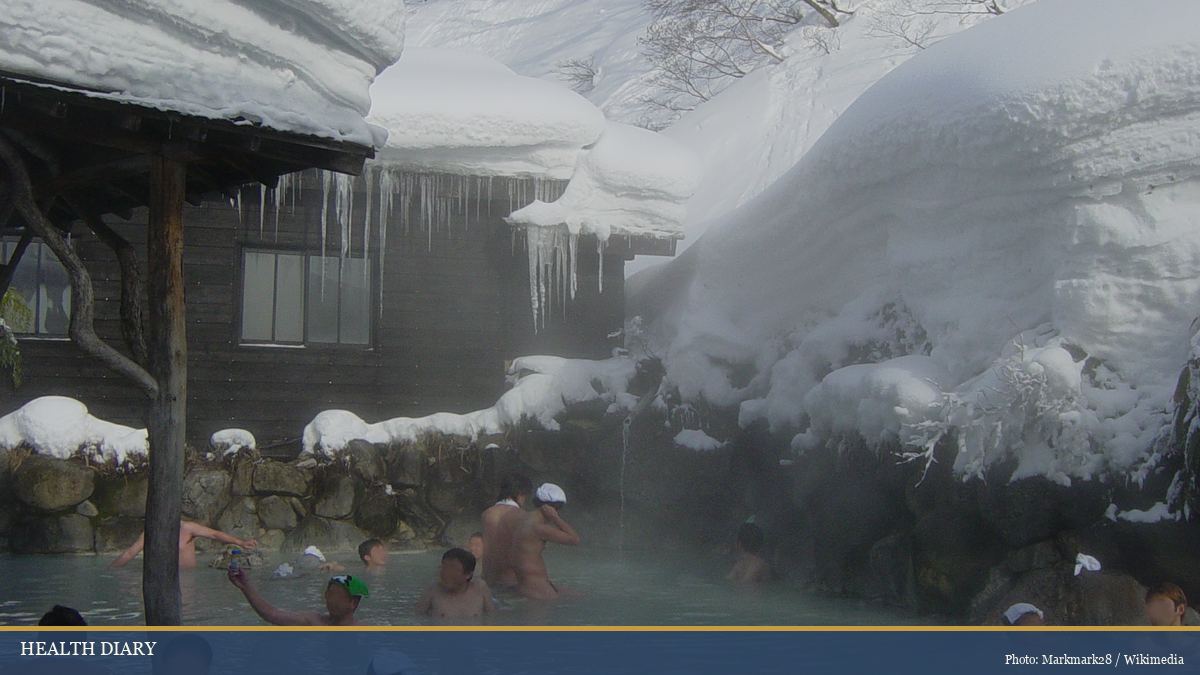
Korea developed its own communal bathing culture, from the historic steam rooms (hanjeungmak) to the modern jjimjilbang, spaces built for soaking, sweating, resting, and socialising at an unhurried pace. There is real science behind the pleasure: a systematic review found that a warm bath or shower of around 40–42°C, taken one to two hours before bed, helped people fall asleep faster and rate their sleep as better, by nudging the natural drop in core body temperature that cues sleep (Haghayegh et al., 2019). The warmth relaxes muscles, the ritual marks the end of the day, and the shared, unhurried setting encourages a mental gear-change that is hard to rush. A warm evening soak pairs naturally with the bedtime tea traditions, nighttime wellness habits, and healthy aging traditions of the region.
Nature and Stillness — Forest Bathing
Japan also gave the world shinrin-yoku, "forest bathing" — a term coined by its forestry agency in 1982 for the simple practice of spending unhurried, senses-open time among trees. It asks for nothing athletic: no destination, no step count, just slow attention to light, scent, and sound.
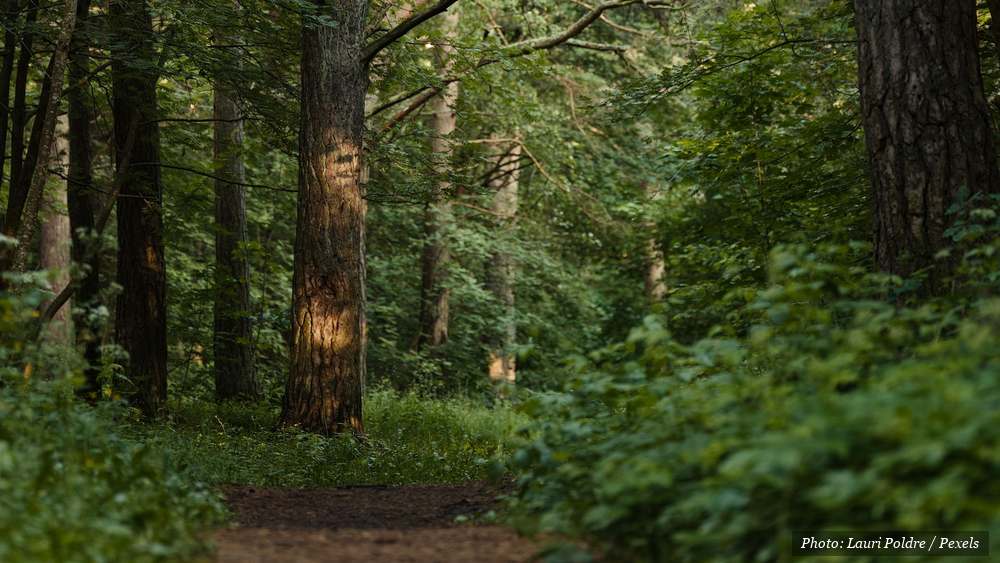
Research has taken an interest. A meta-analysis found that time in forest settings was associated with lower levels of the stress hormone cortisol compared with urban environments — though the authors are careful to note that expectation effects and study differences make firm causal claims difficult (Antonelli et al., 2019). Whatever the mechanism, the practice reflects a deep Daoist and Zen intuition that stillness in nature restores something in us. Our guide to traditional relaxation practices across Asia collects more of these customs.
The Calming Cup — Tea and Relaxation
Few images say "unwind" like a warm cup held in both hands. Beyond the ritual itself, tea contains L-theanine, an amino acid almost unique to the tea plant. Randomised trials suggest L-theanine may ease stress-related symptoms and improve some measures of sleep and calm (Hidese et al., 2019), with an acute anti-stress effect on heart rate and stress markers as well (Kimura et al., 2007).
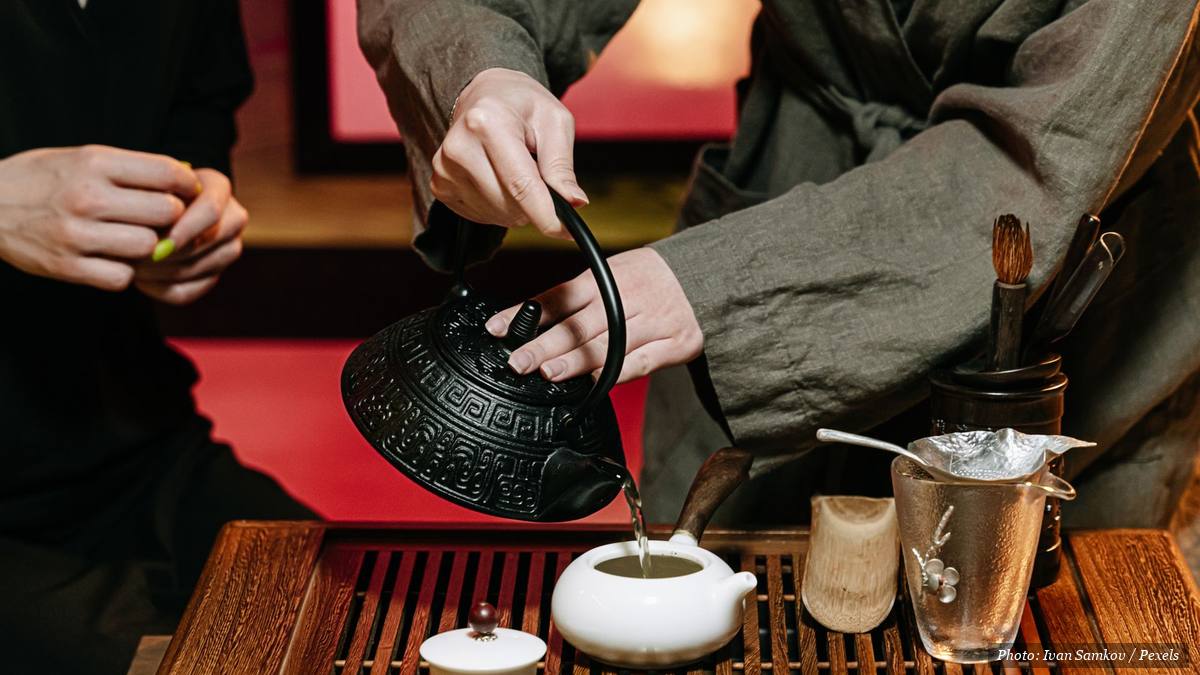
An important honesty note: the doses used in those trials (around 200 mg) are far higher than the amount in a normal cup of tea, so the calming effect you feel likely owes as much to the warmth, pause, and ritual as to the compound itself — which is rather the point. Our guides to relaxation tea traditions and bedtime herbal teas explore the calming cup in full, within the wider world of Asian herbal teas.
Breath and Gentle Meditation for Unwinding
The most portable relaxation tool of all is the breath. A systematic review found that slow breathing — roughly fewer than ten breaths a minute — is associated with greater heart-rate variability and a shift toward the calming, "rest and digest" branch of the nervous system, along with subjective feelings of relaxation and reduced anxiety (Zaccaro et al., 2018).
Gentle, seated meditation works toward the same settled state. This is the calming, rest-focused side of the region's contemplative traditions — less about training attention for its own sake, more about letting the mind come to rest. Our guides to breathing traditions and meditation traditions go deeper, and a few conscious breaths make a fine companion to any of the rituals above. Individual experiences vary considerably.
Rest, Sleep, and the Art of Slowing Down
Underlying all of these practices is a cultural respect for rest itself. Where modern life often frames slowing down as time wasted, these traditions see it as time invested — the bath, the tea, the quiet evening walk are all ways of drawing a line between the busy day and restful night.
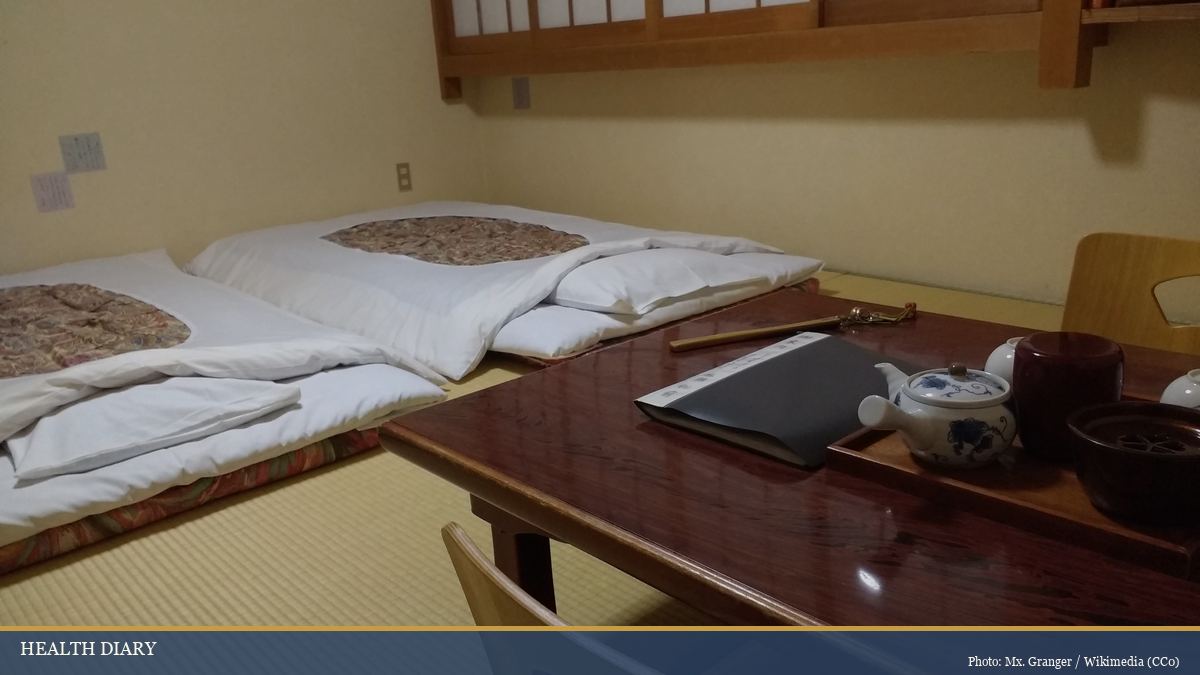
Vietnam's dưỡng sinh tradition puts this plainly, describing relaxation as letting the mind "actively rest" to ease tension and support better sleep. Good sleep, in turn, is the foundation the whole system rests on — a theme we explore in our guides to traditional sleep practices, sleep herbs, and nighttime wellness habits.
What Does Modern Research Say?
The honest summary is encouraging but measured. Relaxation techniques as a whole offer a real, if modest, benefit for stress and anxiety, are low-cost and low-risk, and tend to work better the more you practise them (NCCIH). Warm bathing before bed has a reliable, if small, effect on how quickly people fall asleep (Haghayegh et al., 2019). Slow breathing measurably shifts the nervous system toward calm (Zaccaro et al., 2018).
Where the evidence is softer, it is worth saying so. Meditation shows moderate benefit for anxiety but, in the most rigorous review, no clear edge over active alternatives such as exercise (Goyal et al., 2014), and the forest-bathing cortisol findings come with real caveats (Antonelli et al., 2019). Read the whole field as "gentle, low-risk practices that genuinely help many people feel calmer" — not as remedies.
That framing is not a weakness — it is the honest strength of the tradition. These are not interventions you take when something is already wrong so much as habits that make everyday life a little softer at the edges. Used consistently, and alongside proper care when it is needed, they cost little and ask nothing but a few minutes of your attention.
Important Limitations and Considerations
- Hot bathing carries real risks. Very hot water (above ~42°C) strains the heart, and the temperature shock of moving between a cold room and a hot bath causes thousands of sudden deaths a year in Japan, mostly among older adults. Warm the changing area, keep water moderate, avoid bathing after alcohol or a heavy meal, and take special care if you have heart or blood-pressure conditions.
- Relaxation is not always effortless. A minority of people find that deep relaxation or meditation brings up anxiety or intrusive thoughts; the NCCIH advises easing in gently and notes extra caution for those with epilepsy or certain psychiatric or trauma histories (NCCIH).
- Tea is not a sleeping pill. The calming evidence for L-theanine largely comes from supplement doses far above a cup of tea; and many teas contain caffeine, so choose caffeine-free options in the evening.
- Not a substitute for care. Persistent stress, anxiety, or insomnia deserves professional attention; these practices complement, not replace, medical care.
- Individual responses vary considerably. The most effective relaxation practice is the one you actually enjoy and return to.
Frequently Asked Questions
What is the relaxation response?
It is a term coined by Dr. Herbert Benson for a measurable state of calm — the physiological opposite of the fight-or-flight stress response — marked by a slower heart rate, lower blood pressure, and reduced stress hormones. It can be elicited through breath, meditation, and other relaxation techniques (Benson-Henry Institute).
Does forest bathing really work?
Studies associate time among trees with lower stress-hormone levels and a calmer state, though researchers caution that expectation and study limitations make firm conclusions difficult (Antonelli et al., 2019). Many people find it genuinely restful, and it carries essentially no risk.
Is a hot bath good before bed?
For many people, yes. A warm bath or shower (around 40–42°C) taken one to two hours before bed can help you fall asleep faster by aiding your body's natural temperature drop (Haghayegh et al., 2019). Keep the water moderate and mind the safety cautions if you have heart concerns.
What tea helps you relax?
Teas containing L-theanine (such as green tea) and caffeine-free calming herbal infusions are traditional evening choices. The calming effect shown in studies came mostly from concentrated supplements, so the warmth and ritual of a slow cup matter as much as the compound (Hidese et al., 2019). Pick caffeine-free options at night.
Is meditation proven to reduce stress?
There is moderate evidence that meditation can ease anxiety and, to a lesser degree, stress — but the most rigorous review found it was not clearly better than other active approaches like exercise (Goyal et al., 2014). It is a helpful, low-risk tool, not a miracle fix.
What is a Korean jjimjilbang or Japanese onsen for?
Both are places to slow down: to soak in warm water, rest, and often socialise. They are historically rooted in bathing-for-recovery customs, and the warm-water relaxation they offer has genuine, if modest, calming and sleep benefits (Tokyo Weekender).
A Note on Building a Relaxation Ritual
Relaxation rewards rhythm more than effort. A warm bath most evenings, a caffeine-free tea before bed, five slow breaths when you feel wound up, a weekend walk among trees — small, repeated cues teach the body to let go. If you enjoy noticing patterns, a short note on what helped you unwind and how you slept can quietly reveal what works for you. Our reader quiz can help you find a starting point, and our guides to relaxation teas, breathing, and evening rituals offer easy first steps.
A Soft Closing Note
The relaxation traditions of Asia were never about grand escapes. They are about small, repeatable moments of ease — steam rising from a bath, sunlight through leaves, a warm cup at dusk, one long breath out. Whichever calms you most, the invitation is the same: give yourself permission to slow down, and let rest be something you practise rather than something you wait for. To keep exploring, wander into our wellness practices hub, the healthy aging traditions these habits support, or the calming world of Asian herbal teas.
About This Article
Written by: Health Diary Editorial Team — writers and researchers focused on making traditional Asian wellness knowledge clear, accurate, and culturally grounded.
Editorial review: This article has been reviewed by the Health Diary editorial team for clarity, structure, and adherence to our sourcing standards. Key claims were cross-checked against NCCIH, peer-reviewed reviews, and the Benson-Henry Institute where applicable. It is not a clinical review and should not replace consultation with a licensed healthcare practitioner.
Reviewed on: August 4, 2026.
Editorial process: We cite peer-reviewed and government sources where possible, and we pair each benefit with its honest caveat — for example, noting the expectation-effect caveat on forest bathing and the supplement-dose caveat on relaxing tea.
References
- Zaccaro A, et al. How Breath-Control Can Change Your Life: Slow Breathing. Front Hum Neurosci. 2018. https://www.frontiersin.org/journals/human-neuroscience/articles/10.3389/fnhum.2018.00353/full
- Antonelli M, et al. Forest bathing (shinrin-yoku) and cortisol: systematic review and meta-analysis. Int J Biometeorol. 2019. https://link.springer.com/article/10.1007/s00484-019-01717-x
- Haghayegh S, et al. Before-bedtime passive body heating to improve sleep. Sleep Med Rev. 2019. https://www.sciencedirect.com/science/article/abs/pii/S1087079218301552
- Goyal M, et al. Meditation Programs for Psychological Stress and Well-being. JAMA Intern Med. 2014. https://jamanetwork.com/journals/jamainternalmedicine/fullarticle/1809754
- Hidese S, et al. Effects of L-Theanine on Stress-Related Symptoms and Cognition (RCT). Nutrients. 2019. https://www.ncbi.nlm.nih.gov/pmc/articles/PMC6836118/
- Kimura K, et al. L-Theanine reduces psychological and physiological stress responses. Biol Psychol. 2007. https://pubmed.ncbi.nlm.nih.gov/16930802/
- NCCIH. Relaxation Techniques: What You Need To Know. https://www.nccih.nih.gov/health/relaxation-techniques-what-you-need-to-know
- Mayo Clinic. Relaxation techniques: Try these steps to lower stress. https://www.mayoclinic.org/healthy-lifestyle/stress-management/in-depth/relaxation-technique/art-20045368
- Benson-Henry Institute for Mind Body Medicine (Herbert Benson, the relaxation response). https://bensonhenryinstitute.org/mission-history/
- The Healing Power of Tōji: Japan's Ancient Bath Therapy. Tokyo Weekender. https://www.tokyoweekender.com/art_and_culture/history/the-healing-power-of-toji-japans-ancient-bath-therapy/
- Heat-shock bathing safety data, Japan. Nippon.com. https://www.nippon.com/en/japan-data/h00623/
- Huangdi Neijing, Suwen (恬淡虚无, 精神内守). Classical text. https://neijing.5000yan.com/suwen/
- 森林浴とメンタルヘルス (forest bathing, Japanese medical column). https://heisei-ikai.or.jp/column/mental-health-forest-bath/
- 찜질방 / 한증막 — Korean bathing and rest culture. https://ko.wikipedia.org/wiki/찜질방
- BS Nguyễn Văn Hưởng — Phép thư giãn trong dưỡng sinh (Vietnamese relaxation method). https://vusta.vn/phep-thu-gian-trong-phuong-phap-duong-sinh-cua-bs-nguyen-van-huong-p81866.html




