

Traditional Daily Wellness Habits from Asia: Small Rituals, Long Life
The small daily habits behind Asian wellness — yangsheng, hara hachi bu, daily walking, tea, regular sleep, and ikigai — and what modern research really says.
Medical Disclaimer: This content is for educational and informational purposes only and is not medical advice. It reflects traditional Chinese, Japanese, Korean, and Vietnamese cultural practices and folk wellness traditions and is not intended to diagnose, treat, cure, or prevent any disease. Always consult a licensed healthcare practitioner before making significant lifestyle changes. Individual results are not guaranteed.
Affiliate Disclosure: This article may contain affiliate links. We may earn a commission if you purchase through these links, at no additional cost to you. We only recommend products we believe align with our editorial standards.
The secret of the world's longest-lived communities was never a single miracle food or heroic workout. It was the shape of an ordinary day — how they woke, ate, moved, drank, connected, and slept, repeated gently over a lifetime. Across China, Japan, Korea, and Vietnam, wellness has always been understood less as an occasional effort and more as a set of small daily habits, woven so deeply into life that they barely feel like effort at all.
This guide is the hub for our writing on traditional daily wellness habits. It walks through the day from morning to night, looks at the old principles that tie the habits together, and weighs honestly what modern research says about each one. It is a doorway to our deeper guides, not a rulebook.
What Makes a "Daily Wellness Habit"?
In East Asian tradition, the art of everyday health has a name: yangsheng (养生), "nourishing life." Its guiding principles are strikingly simple and appear in the very first chapter of the classical Huangdi Neijing: 食饮有节 (eat and drink with moderation), 起居有常 (keep a regular daily routine), and 不妄作劳 (do not overexert) — follow these, the text says, and you may live out your natural span in good health (Huangdi Neijing).
The emphasis is on consistency over intensity. Yangsheng is prevention rather than repair, built from small, repeatable adjustments — eating a little less, sleeping and rising at regular times, moving often, harmonising with the seasons (yangsheng overview). This is exactly what makes it powerful, and it connects daily habits to the region's broader healthy aging traditions and the theory of yin and yang. Vietnam's dưỡng sinh shares the same everyday, preventive spirit.
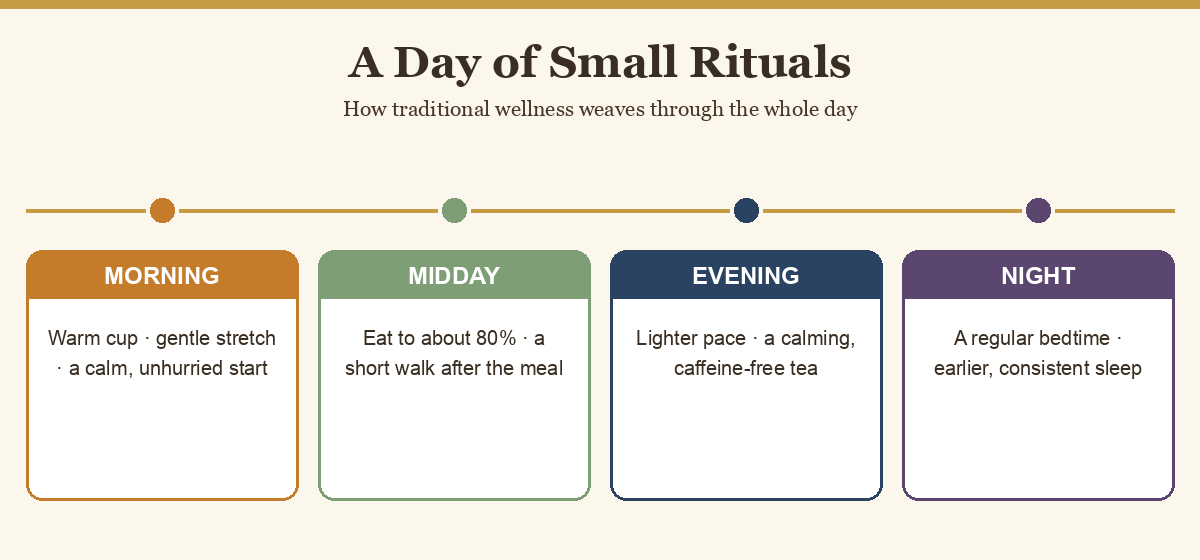
Morning — A Gentle Start
The traditional day begins unhurriedly. Many households start with a cup of warm water or tea, a few minutes of gentle stretching or movement, and a calm rather than frantic first hour. Korean wellness writing highlights morning stretching for circulation, a light breakfast, and an early, regular start as habits of those who age well.
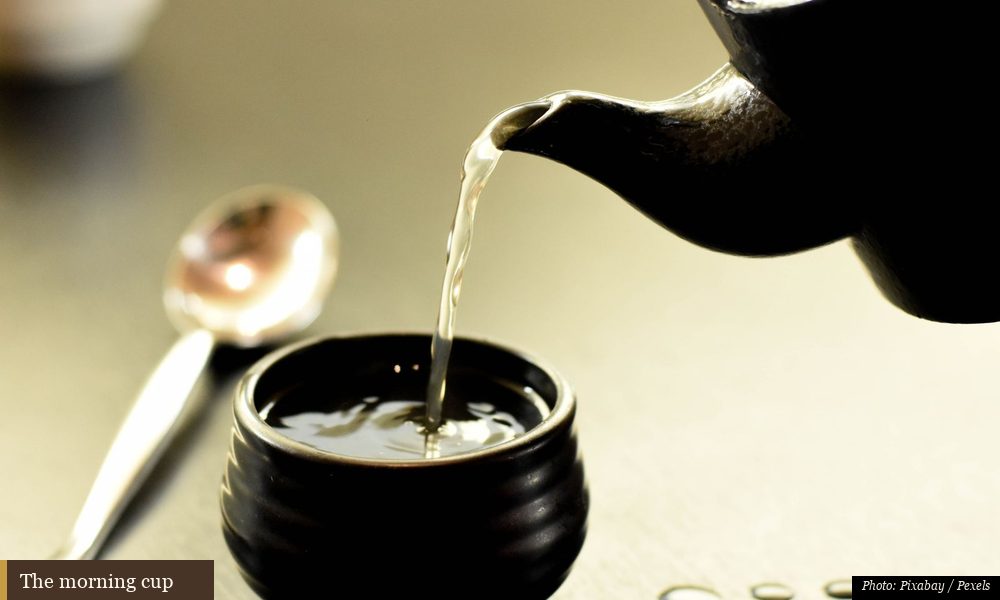
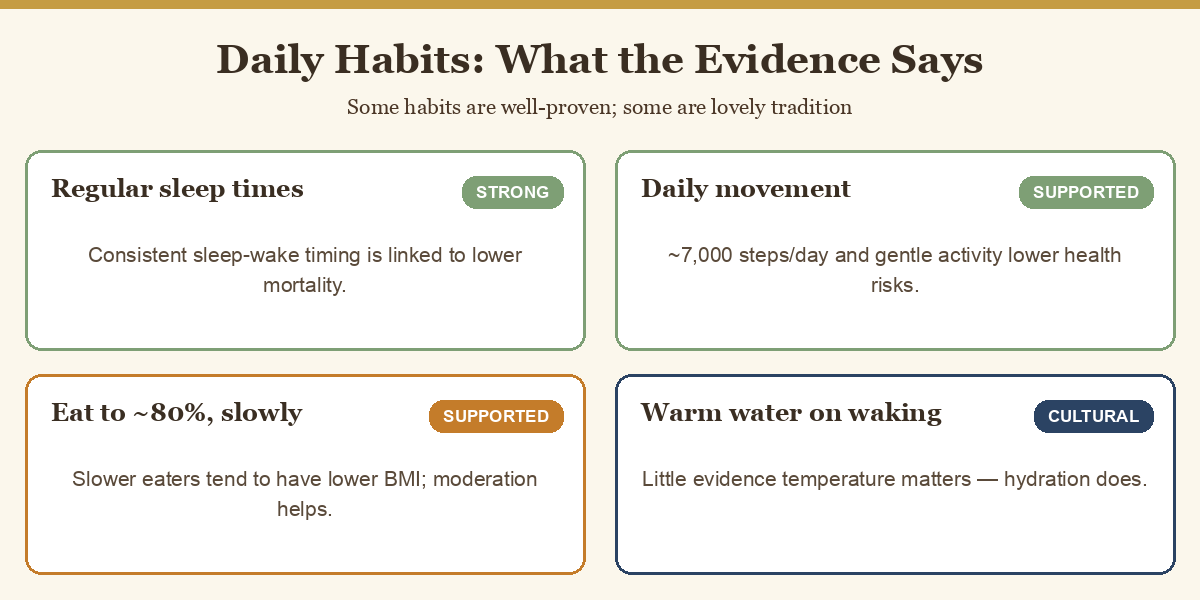
The famous "warm water on waking" custom deserves an honest footnote: while it is a beloved habit across the region, there is little firm evidence that water temperature itself changes your health — staying hydrated matters far more than whether the water is warm or cold (MD Anderson). Enjoy the warm cup for the comfort and ritual it brings — the value is as much in the calm, deliberate start it signals as in the water itself. A gentle morning also pairs naturally with the daily tea rituals that punctuate life across Asia.
Eating — Hara Hachi Bu and the Slow Meal
Perhaps the most famous Asian daily habit is hara hachi bu (腹八分目) — the Okinawan practice, rooted in Confucian moderation, of eating until you are about 80% full rather than stuffed (Omron Healthcare). The habit dovetails with the Neijing's "eat with moderation," and studies of traditional Okinawans found they historically consumed around 10–15% fewer calories than typical, alongside low rates of age-related disease (Willcox et al., 2007).
Eating slowly is part of the same wisdom: a review of many studies found that slower eaters tend to have a lower body-mass index, likely because eating slowly gives fullness time to register (Yuan et al., 2021). Chinese and Vietnamese food traditions echo this with "eat with moderation, chew thoroughly, eat at regular times" (Beijing UCM). It all fits the seasonal, varied approach in our Asian food therapy and seasonal wellness guides. One honest caveat: some scholars note that older Okinawans ate lightly partly because food was scarce, not purely by philosophy — so take "80%" as a gentle guideline, not a rule.
Movement Woven Through the Day
Rather than a single daily "workout," the tradition favours movement folded into ordinary life: walking to the market, sitting and rising from the floor, gardening, and the parks full of people practising tai chi and qigong at dawn.
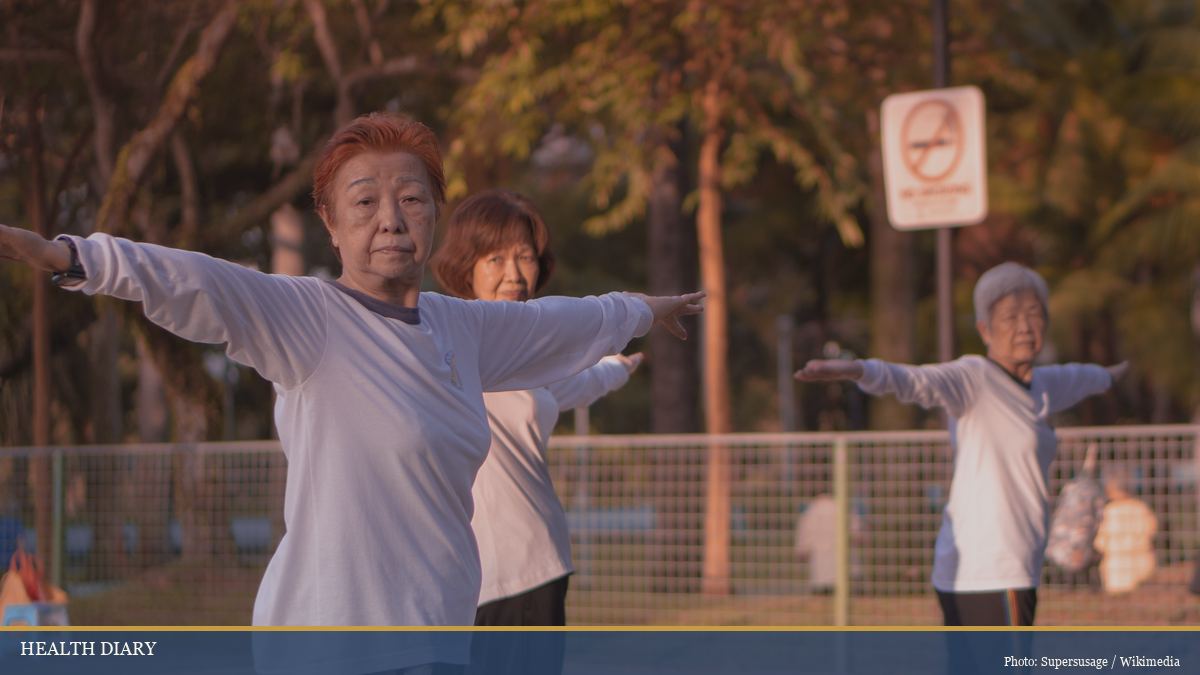
Modern research firmly favours gentle, frequent movement. The World Health Organization advises 150–300 minutes of moderate activity a week and stresses that "every move counts" (WHO, 2020). A daily walk is enough to matter: around 7,000 steps a day is associated with substantially lower cardiovascular risk and mortality, comparable to the marketing-driven 10,000-step goal (Harvard Health). A particularly elegant habit is the after-meal stroll: light walking after eating blunts blood-sugar spikes more than the same walk beforehand (Engeroff et al., 2023), and gentle practices like tai chi carry strong safety and balance evidence (NCCIH).
Hydration and the Daily Cup
Fluids are woven through the Asian day, most often as tea. Adequate hydration is real and worthwhile — roughly 3.7 litres of total daily fluids for men and 2.7 for women, from all drinks and food combined, with more needed in heat or activity (Mayo Clinic).
The cultural preference for warm drinks and the avoidance of ice-cold water is a genuine and lovely tradition, but, as noted above, it is best understood as custom rather than proven medicine. The deeper wellness value of the daily cup lies in the pause it creates — a rhythm of small breaks that our guides to traditional hydration practices and tea rituals explore, within the wider world of Asian herbal teas.
Evening — Winding Down and Regular Sleep
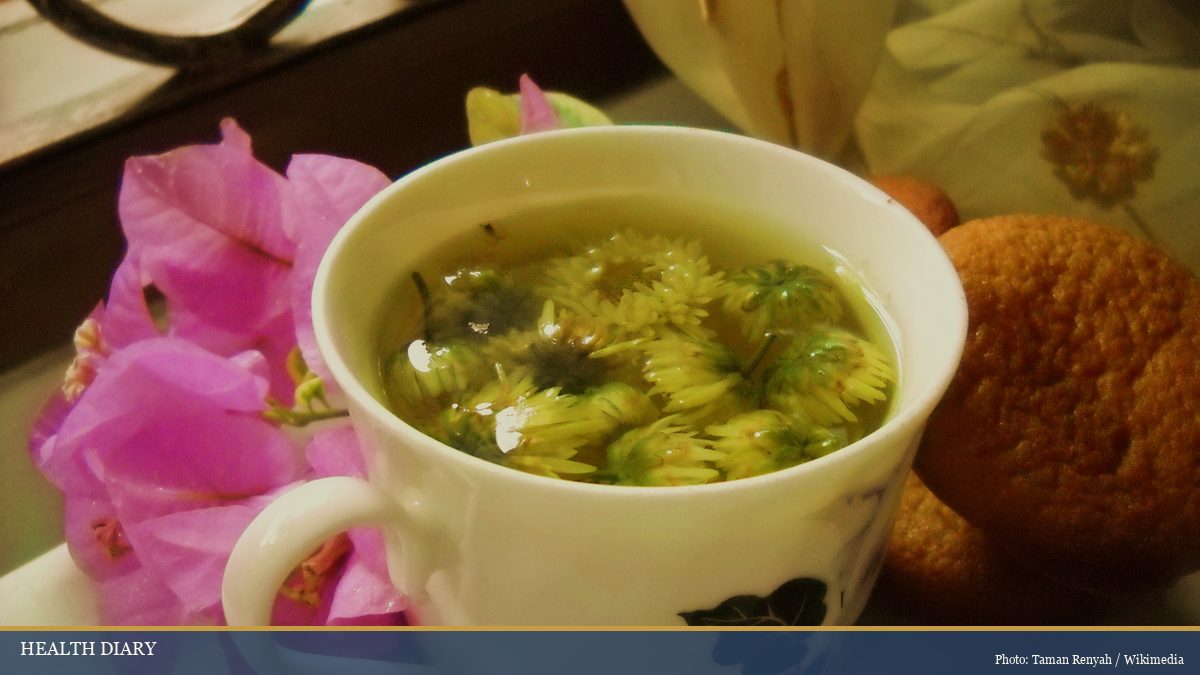
If mornings begin gently, evenings end gently too. The traditional day winds down with a lighter pace, an earlier night, and often a calming ritual — a warm bath, a caffeine-free tea, a little quiet. These small closing cues act as a signal to the body that the day's work is done, easing the transition into rest. The Neijing even prescribes seasonal sleep timing, sleeping earlier in winter to conserve energy.
Modern sleep science strongly validates the underlying principle of regularity. A large 2024 study of nearly 61,000 adults found that consistent day-to-day sleep and wake times were linked to a 20–48% lower risk of death — and that this regularity predicted mortality even more strongly than total sleep duration (Windred et al., 2024). It is a striking modern echo of the ancient 起居有常, "keep a regular routine." Our guides to relaxation practices, nighttime wellness habits, and bedtime teas cover the evening in detail.
Purpose and Connection — Ikigai and Community
The most surprising "daily habit" is not physical at all. Japanese culture speaks of ikigai (生き甲斐), a sense that life is worth living — a reason to get up in the morning. A large prospective study in Japan found that people who reported no sense of ikigai had a markedly higher risk of death over the following years than those who felt their life had purpose (Sone et al., 2008).
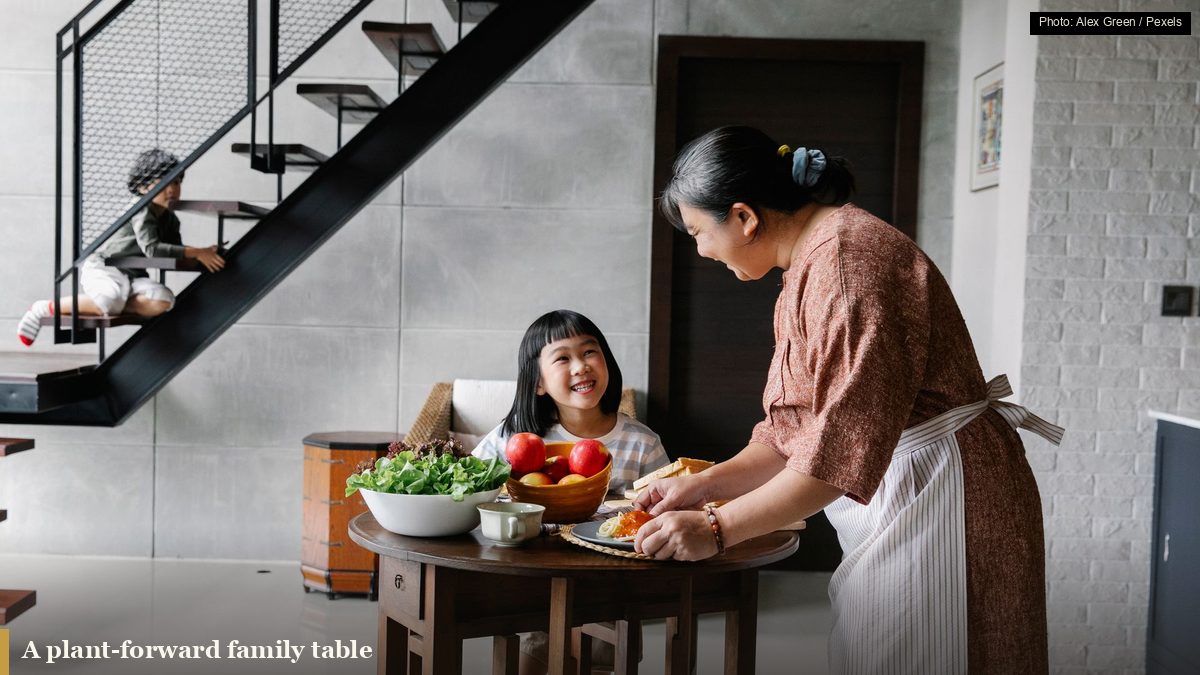
Connection matters just as much. In Okinawa, the tradition of the moai — a lifelong circle of friends who support one another — and the daily anchor of shared family meals give structure and belonging to ordinary days (Blue Zones). Purpose and community are, quietly, among the most powerful daily wellness habits of all. They cost nothing, ask only that we show up for other people and for something we care about, and they weave the smaller physical habits into a life that feels worth tending. They run through our Japanese healthy aging and longevity foods guides.
What Does Modern Research Say?
The encouraging news is that the daily-habit approach aligns well with modern evidence — and it helps to know which parts are solid and which are mostly cultural.
Well supported: the value of regularity. Both sleep-timing consistency (Windred et al., 2024) and the science of habit formation point the same way — habits form by repeating an action in a stable daily context, taking on average about two months to feel automatic (not the mythical 21 days) (Lally et al., 2010). Daily movement, moderate eating, and a sense of purpose all have real, if modest, backing (WHO)(Sone et al., 2008).
Mostly cultural: the "warm water is better than cold" belief has little scientific backing (MD Anderson), and the Okinawa longevity data, while inspiring, is observational — shaped by genes, activity, and community as much as by any single habit. Read the tradition as a wise, low-risk template rather than a set of proven prescriptions.
Important Limitations and Considerations
- Associations are not proof. Much of the longevity evidence (Okinawa, ikigai) is observational; these habits are linked to good outcomes but cannot be shown to single-handedly cause them.
- Hydration needs vary. Fluid targets depend on your body, activity, climate, and health conditions; some heart or kidney conditions require limits — follow your provider's advice (Mayo Clinic).
- "Eat to 80%" is a guideline, not a diet. Anyone with a history of disordered eating, or who is pregnant, underweight, or managing a medical condition, should not restrict intake without professional guidance.
- Start where your body is. Gentle movement like tai chi is safe for most, but those who are frail or have health conditions should begin under supervision (NCCIH).
- Individual responses vary considerably. The best daily habits are the sustainable ones that fit your life — consistency beats perfection.
Frequently Asked Questions
What is hara hachi bu?
Hara hachi bu is the Okinawan and Confucian practice of eating until you are about 80% full rather than completely full. It is associated with the traditionally modest calorie intake of long-lived Okinawans, and it echoes the classical advice to "eat with moderation" (Omron Healthcare).
Is warm water better than cold water?
It is mostly a cultural preference. There is little firm evidence that water temperature changes digestion or health — the body quickly brings liquids to its own temperature, and staying hydrated matters far more than whether water is warm or cold (MD Anderson).
Does walking after meals help?
Yes, modestly. Light walking after eating helps blunt blood-sugar spikes more than the same walk before a meal (Engeroff et al., 2023), and around 7,000 steps a day is linked to notably lower cardiovascular risk (Harvard Health).
What are the Okinawan daily habits for a long life?
They include eating to about 80% full (hara hachi bu), a plant-forward seasonal diet, natural movement woven through the day, a strong sense of purpose (ikigai), and lifelong community ties (moai) (Blue Zones).
How long does it take to build a daily habit?
On average about two months — one study found a median of 66 days for a behaviour to feel automatic, with a wide range, and repeating it in a consistent daily context is key. Missing an occasional day does not derail the process (Lally et al., 2010).
Does a regular sleep schedule really matter?
Very much. A large 2024 study found that consistent sleep and wake times were linked to a substantially lower risk of death — in some analyses more strongly than how many hours people slept (Windred et al., 2024).
A Note on Starting Small
The beauty of this tradition is that it asks for very little at once. Pick one habit — an after-dinner walk, a regular bedtime, eating a little slower, a warm cup at the same time each day — and let it settle before adding another. Because these habits are gentle and cumulative, they suit quiet tracking: a simple daily note on what you kept up can make the rhythm visible and keep it going. Progress here is measured not in dramatic before-and-after moments but in the steady accumulation of unremarkable good days, which is exactly why the approach lasts. Our reader quiz can help you find where to begin, and our guides to daily tea rituals, Asian wellness routines, and healthy aging offer plenty of easy starting points.
A Soft Closing Note
The daily wellness habits of Asia were never about dramatic transformation. They are about the quiet accumulation of good ordinary days — a gentle morning, an unhurried meal, a walk after dinner, a shared cup, a regular night's sleep, and a reason to wake up tomorrow. Whichever small habit you choose to begin with, the invitation is the same: start small, stay consistent, and let the days do the work. In the end, a well-lived life is largely made of well-lived ordinary days. To keep exploring, wander into our hubs on wellness practices, seasonal wellness, and relaxation.
About This Article
Written by: Health Diary Editorial Team — writers and researchers focused on making traditional Asian wellness knowledge clear, accurate, and culturally grounded.
Editorial review: This article has been reviewed by the Health Diary editorial team for clarity, structure, and adherence to our sourcing standards. Key claims were cross-checked against the WHO, NCCIH, peer-reviewed research, and native-language sources where applicable. It is not a clinical review and should not replace consultation with a licensed healthcare practitioner.
Reviewed on: August 4, 2026.
Editorial process: We cite peer-reviewed, government, and classical sources where possible, and we clearly separate well-evidenced habits (sleep regularity, daily movement) from mostly-cultural beliefs (such as warm-water preference).
References
- Lally P, et al. How are habits formed: Modelling habit formation in the real world. Eur J Soc Psychol. 2010. https://onlinelibrary.wiley.com/doi/abs/10.1002/ejsp.674
- Windred DP, et al. Sleep regularity is a stronger predictor of mortality risk than sleep duration. SLEEP. 2024. https://www.ncbi.nlm.nih.gov/pmc/articles/PMC10782501/
- Engeroff T, et al. Acute postprandial glycemic response to exercise: systematic review with meta-analysis. Sports Med. 2023. https://www.ncbi.nlm.nih.gov/pmc/articles/PMC10036272/
- Yuan S, et al. Self-Reported Eating Speed and Indicators of Obesity: Systematic Review and Meta-Analysis. Healthcare. 2021. https://www.ncbi.nlm.nih.gov/pmc/articles/PMC8619990/
- Sone T, et al. Sense of Life Worth Living (Ikigai) and Mortality in Japan: Ohsaki Study. Psychosom Med. 2008. https://journals.lww.com/psychosomaticmedicine/abstract/2008/07000/sense_of_life_worth_living__ikigai__and_mortality.12.aspx
- Willcox BJ, et al. Caloric Restriction, the Traditional Okinawan Diet, and Healthy Aging. Ann NY Acad Sci. 2007. https://pubmed.ncbi.nlm.nih.gov/17986602/
- Bull FC, et al. WHO 2020 guidelines on physical activity and sedentary behaviour. Br J Sports Med. 2020. https://www.ncbi.nlm.nih.gov/pmc/articles/PMC7719906/
- NCCIH. Tai Chi: What You Need To Know. https://www.nccih.nih.gov/health/tai-chi-what-you-need-to-know
- Mayo Clinic. Water: How much should you drink every day? https://www.mayoclinic.org/healthy-lifestyle/nutrition-and-healthy-eating/in-depth/water/art-20044256
- Harvard Health Publishing. Just 7,000 daily steps reduces heart disease risk. https://www.health.harvard.edu/heart-health/just-7000-daily-steps-reduces-heart-disease-risk
- MD Anderson Cancer Center. Is drinking hot water better than cold? https://www.mdanderson.org/cancerwise/are-there-health-benefits-to-drinking-hot-water.h00-159855345.html
- Huangdi Neijing (食饮有节, 起居有常, 不妄作劳). Classical text. https://en.wikipedia.org/wiki/Huangdi_Neijing
- What Is Yangsheng? Health Preservation in Chinese Medicine. https://ccmu.edu/knowledge-center/what-is-health-preservation-yangsheng/
- Beijing University of Chinese Medicine. 《内经》论饮食养生 (dietary nourishment). https://www.bucm.edu.cn/kxyj/dd618667510340198af0cec86c845d0a.htm
- Omron Healthcare (Japan). 腹八分目で健康寿命を延ばす (hara hachi bu). https://www.healthcare.omron.co.jp/resource/column/life/35.html
- Blue Zones. Moai — Okinawan lifelong support groups. https://www.bluezones.com/2018/08/moai-this-tradition-is-why-okinawan-people-live-longer-better/


